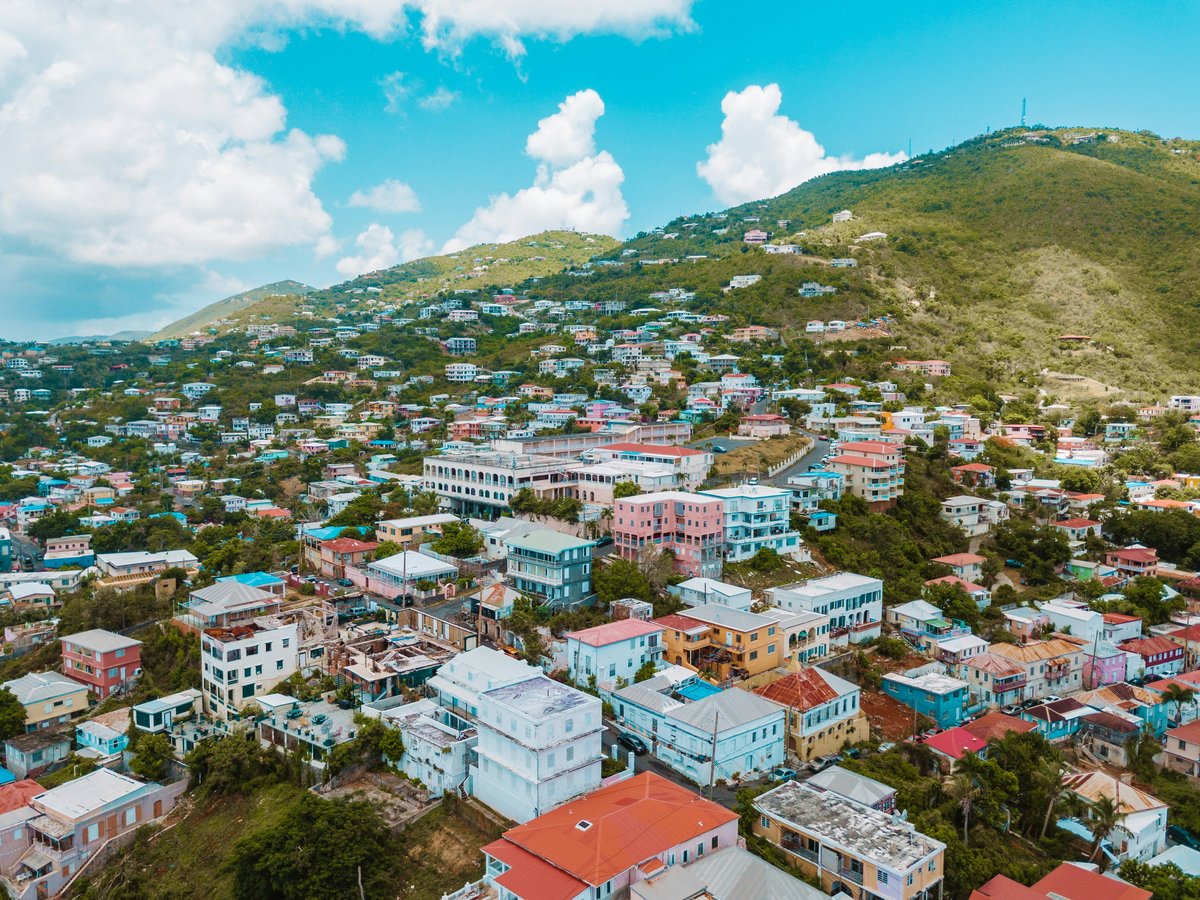
August in St. Thomas sits at the heart of Atlantic hurricane season. The 6-month window runs from June through November, with the statistical peak falling between mid-August and mid-October. St. Thomas lies roughly 1,100 miles (1,770 km) southeast of Miami, directly in the path of systems that form off the West African coast. Average daily highs reach 28.6°C (83°F) with overnight lows near 26.7°C (80°F), which sounds manageable until 78% humidity adds a perceptible 2-3°C to the way the air feels on your skin. A still afternoon in Charlotte Amalie can feel stifling.
Rainfall reaches 133mm across roughly 16 days, the second-wettest month after October. The pattern tends to be predictable. Mornings along the north shore start bright and calm. Clouds gather through midday, and a hard downpour usually sweeps through between 2pm and 5pm before clearing. The hillsides above Red Hook look almost impossibly green compared to photographs from the drier winter months.
This is deep off-season. In a typical August week, one or two cruise ships might call at Havensight or Crown Bay, a fraction of the daily arrivals in February. You can walk the arc of Magens Bay, the island's most popular beach, on a Tuesday morning without encountering another tourist. Several restaurants in Frenchtown and the Charlotte Amalie waterfront reduce hours or close for summer maintenance. Accommodation rates fall to their annual low. Coki Beach on the northeast shore, packed during cruise season, might have 15 people on it at noon on a Wednesday.
Why visit in August
- Accommodation rates drop 30-50% below peak season (December through April), making August the least expensive month on the island
- Beaches like Magens Bay, Lindquist Beach, and Sapphire Beach are nearly empty on weekdays, a genuine contrast to the shoulder-to-shoulder cruise-season experience
- Ocean temperatures reach roughly 29°C (84°F), the warmest of the year and comfortable for extended snorkeling without a wetsuit
- The island's hillsides and forests are at peak greenery from summer rains, making overlook points like Drake's Seat unusually photogenic
Worth knowing
- Peak Atlantic hurricane season runs through August and September, and St. Thomas has no geographic shelter from direct hits; travel insurance covering weather cancellation is not optional
- Roughly 16 days of measurable rain, with afternoon downpours intense enough to cancel boat excursions and close beach access temporarily
- Reduced restaurant and bar hours across Frenchtown, Havensight, and the Charlotte Amalie waterfront, with some operators closed entirely for annual maintenance through September
- Mosquitoes and no-see-ums are at their most aggressive in the humid rainy months; exposed skin after sunset near any standing water is asking for trouble
Best for
Think twice if
August mornings start bright and calm, with northeast trade winds offering temporary relief along the coast. Clouds build over the central hills by midday, and sharp downpours sweep across the island most afternoons between 2pm and 5pm. The rain rarely lasts beyond 30 minutes, and evenings typically clear. Humidity stays high enough that your skin feels damp even during dry spells, particularly in the sheltered streets of the historic district where colonial-era buildings trap still air. North-facing beaches catch more breeze. The ocean holds its warmest temperatures of the year, comfortable for hours of swimming without a rash guard for warmth.
Seasonal caution
- Atlantic hurricane season peaks mid-August through mid-October; St. Thomas lies in the primary storm track and has experienced catastrophic direct hits (Hurricane Irma, September 2017); monitor NOAA's National Hurricane Center daily throughout your stay
- Heat index regularly exceeds 32°C (90°F) in sheltered inland areas and the narrow streets of the historic district, where buildings block the trade winds; limit midday exertion and stay hydrated
Year-round climate
Averages from the last 5 years.
| Month | Avg high (°C) | Avg low (°C) | Rainfall (mm) |
|---|---|---|---|
| Jan | 26 | 25 | 33 |
| Feb | 26 | 24 | 72 |
| Mar | 26 | 24 | 32 |
| Apr | 26 | 25 | 65 |
| May | 27 | 26 | 78 |
| Jun | 28 | 26 | 73 |
| Jul | 28 | 26 | 88 |
| Aug | 29 | 27 | 133 |
| Sep | 29 | 27 | 117 |
| Oct | 29 | 27 | 145 |
| Nov | 28 | 26 | 116 |
| Dec | 27 | 25 | 50 |
Best things to do in August
Morning snorkeling at Coki Beach
water sportsCoki Beach on the northeast shore offers some of the best shore-entry snorkeling on St. Thomas, with coral formations starting within 15 meters (50 feet) of the sand. Sea turtles, blue tang, and sergeant majors are regulars. Arrive before 9am to have the reef largely to yourself.
Warmest water of the year and no cruise-ship snorkel excursion groups competing for reef spaceBooking tipNo booking needed; gear rental is available on-site at the beach
Self-guided Charlotte Amalie historic walk
cultureA route through the old Danish colonial town covering the 99 Steps, a staircase built from ship ballast bricks by the Danes in the 1700s, Blackbeard's Castle at the hilltop, and Fort Christian near the waterfront. The walk covers about 2 km and takes roughly 90 minutes at a comfortable pace.
The cruise-ship crowds that normally pack this route are absent in August; you can photograph the 99 Steps without anyone else in frameSunset catamaran sail off the west end
sailingSeveral operators run late-afternoon sails from Charlotte Amalie or Crown Bay, heading west toward the open Caribbean. The sail catches the trade winds, and the water stays warm enough for a swim stop along the way.
August sunsets are often spectacular because afternoon storm clouds on the western horizon create vivid color displays as they break apart; the warm evening air at 26-27°C makes the open deck comfortableBooking tipBook 2-3 days ahead; operators run smaller groups in off-season and may cancel if headcount is too low
Deep-sea fishing off the North Drop
fishingThe North Drop, a steep underwater ledge roughly 20 miles north of St. Thomas, is one of the Caribbean's premier blue marlin grounds. Charter boats out of Red Hook target marlin, wahoo, and mahi-mahi on full-day trips.
Blue marlin season peaks July through September in these waters; August coincides with the USVI Open Atlantic Blue Marlin Tournament and the fishery is at its most productiveBooking tipBook charter boats at least a week in advance; the tournament draws additional vessels and narrows availability in late August
Day trip to St. John via the Red Hook ferry
day tripThe Red Hook ferry to Cruz Bay on St. John runs roughly every hour, and the 20-minute crossing puts you within reach of Trunk Bay, the Reef Bay Trail, and the snorkeling grounds of the Virgin Islands Coral Reef National Monument, established in 2001 off St. John's south shore.
Fewer day-trippers from cruise ships means the National Park's beaches are genuinely uncrowded; the Reef Bay Trail is at its most lush after weeks of summer rainBooking tipCatch the 8am or 9am ferry to maximize beach time before afternoon showers; confirm the return schedule, as rough weather can cancel late crossings
Kayaking Mangrove Lagoon
natureA marine sanctuary on St. Thomas's southeast shore where mangrove-lined waterways shelter juvenile fish, rays, and sea turtles. Guided kayak tours cover roughly 3 km of sheltered channels.
The lagoon stays sheltered from open-ocean swells, so it remains paddleable even when afternoon weather makes exposed beaches less appealing; warm August water brings more juvenile marine life into the shallowsBooking tipMorning tours before 11am are best; the lagoon heats up significantly by afternoon
Beach morning at Brewer's Bay
beachA locals' beach near the University of the Virgin Islands campus on the west side. The bay has a gentle sand bottom, a reef on the east side for snorkeling, and almost no tourist infrastructure. Bring your own shade and water.
Even by off-season standards, Brewer's Bay sees almost no tourist traffic in August; you might share the sand with a handful of UVI students and a few local familiesWhat to eat in August
In season: fruit
Caribbean sugar mango
Local mango season peaks June through August. The small, fiber-free sugar mango variety appears at roadside fruit stands across the island, intensely sweet with a perfumed aroma that fills the bag before you open it.
Genip
Clusters of green-shelled fruit sold by the bunch at Market Square in Charlotte Amalie. Crack the thin skin to find tangy-sweet, gelatinous flesh somewhere between a lychee and a grape in texture. Peak season runs July through September.
On menus now
Kallaloo
Rich, thick soup made from dasheen leaves, okra, hot pepper, and often crab or salt fish. The leafy greens reach peak growth during the rainy months, and you'll find it at lunch spots around Tutu and the east end.
Street food peaks
Roasted breadfruit
Starchy, chestnut-like fruit roasted whole over charcoal or sliced and fried as a side. Breadfruit trees produce heavily in late summer, and the smoky smell of one roasting in someone's yard is a specific August marker on St. Thomas.
What to drink
Soursop juice
Fresh-pressed juice from the spiny green soursop fruit, which peaks in Caribbean summer. Tart, creamy, slightly floral, served ice-cold at local fruit vendors and restaurants across the island.
Regular events in August
USVI Open Atlantic Blue Marlin TournamentFree
One of the Caribbean's most prestigious offshore fishing tournaments, hosted annually from the St. Thomas waterfront. Teams from across the Americas compete over several days, with weigh-ins and dockside events open to spectators at the marina.
Late August, typically the last full week of the monthArt Thursday in Charlotte AmalieFree
Monthly evening art walk through galleries and pop-up exhibitions in the historic district along Main Street and the waterfront. Local painters, photographers, and sculptors display work, and several galleries serve drinks.
First Thursday of each month, typically 5pm to 8pmMarket Square Farmers MarketFree
Weekly open-air market at Rothschild Francis Square in Charlotte Amalie with local produce, fresh-pressed tropical juices, baked goods, and prepared Caribbean dishes. The August selection tends to feature peak-season fruits like genip and sugar mango.
Every Saturday morning, approximately 7am to noonBest places this August
Magens Bay
beachThe island's most recognized beach, a long crescent of white sand backed by steep green hills. In August, you might find entire sections of the beach to yourself on a weekday. The bay is sheltered enough that even on choppy days the swimming area stays calm. A small shaded pavilion near the entrance provides cover when the afternoon rain arrives.
North ShoreBlackbeard's Castle
historic siteA National Historic Landmark perched on a hill above Charlotte Amalie. The watchtower dates to the Danish colonial period, and the hilltop catches the trade winds, making it noticeably cooler than the streets below. The view takes in the harbor, the cruise ship berths (largely empty this month), and the islands stretching south toward St. Croix.
Charlotte AmalieDrake's Seat
viewpointA hillside overlook on Route 40 between Charlotte Amalie and Red Hook, named for Sir Francis Drake. The view looks north across Magens Bay and out to the British Virgin Islands. The surrounding vegetation reaches its most intense green in August after weeks of steady rain, and the contrast against the blue water below is striking.
Crown MountainCathedral of Saints Peter and Paul
historic siteBuilt in 1806, this cathedral in Charlotte Amalie is one of the oldest Catholic churches in the U.S. territories. The stone interior offers genuine relief from August's humidity, and the architecture reflects the island's layered Danish, French, and American colonial history. Morning visits tend to be quietest.
Charlotte AmalieLindquist Beach
beachA protected beach on the northeast tip of St. Thomas with soft white sand and clear water. Quieter than Magens Bay even during peak season, Lindquist in August is often deserted entirely. A strip of sea grape trees along the shore provides natural shade for setting up without an umbrella.
East EndFrenchtown
neighborhoodA waterfront neighborhood west of Charlotte Amalie, settled by fishing families from St. Barthélemy in the 1800s. St. Anne Chapel, built in 1921, anchors the community. The area has a handful of year-round restaurants and a working fishing dock where local boats bring in the daily catch. In August, Frenchtown feels more residential than tourist-facing, which is part of what makes it worth visiting.
FrenchtownLionel Roberts Park
parkA community sports field in the Sub Base area west of Charlotte Amalie. In August, local baseball and cricket games happen here on weekends. There is no tourist draw in the traditional sense, but sitting on the concrete bleachers watching a Saturday afternoon game offers a window into St. Thomas's everyday community life that most visitors never encounter.
Sub Base
Your packing checklist
Tick items off as you pack. Your progress saves in this browser.
All packed — have a great trip.
Insider tips
Red Hook on the east end has more restaurants and bars operating on regular hours in August than Charlotte Amalie does, because Red Hook's businesses serve local and boater traffic rather than cruise passengers. If you want reliable dinner options, base yourself on that side of the island.
The safari buses (open-air jitney trucks) along Route 30 between Charlotte Amalie and Red Hook operate on reduced frequency in August. The last bus back from Red Hook often leaves before 6pm. Confirm the schedule at the stop, or save a taxi driver's number.
Check NOAA's National Hurricane Center forecast every morning before planning your day. Locals do this reflexively from August through October. A named storm 5 days out means you start thinking about contingency plans rather than waiting for an official warning.
The Cathedral Church of All Saints on Garden Street, built in 1848, stays open for visitors most mornings and offers the coolest interior in Charlotte Amalie. It is an overlooked stop on the walking route between the waterfront and Blackbeard's Castle, and worth 15 minutes even if you are not particularly interested in churches.
Avoid these mistakes
- Booking an all-day outdoor excursion that spans the 2pm-to-5pm afternoon rain window. The showers can be intense enough to cancel boat trips mid-route, and you will spend 2 hours sitting under a canopy waiting it out. Plan outdoor activities for mornings and keep afternoons flexible.
- Arriving without travel insurance that explicitly covers hurricane-related trip interruption. A tropical storm warning can ground flights 48 hours before the storm arrives, and airlines are not required to compensate for weather cancellations. The cost of a policy is minor compared to a lost week of non-refundable bookings.
- Underestimating the sun because the temperature does not sound extreme. The air reads 29°C, which seems modest, but a UV index above 11 combined with high humidity means sunburn happens faster than in drier heat. Reapply sunscreen every 90 minutes, not the 2-hour interval you might use at higher latitudes.
Practical tips for August
Book accommodations with flexible cancellation policies; most St. Thomas hotels and vacation rentals offer these during hurricane season, and you should treat this as non-negotiable. Confirm restaurant hours before traveling to Charlotte Amalie or Frenchtown, as posted hours online may not reflect August closures. Rental cars are the most practical way to get around the island, since safari bus service runs on reduced schedules and taxis can be harder to flag down outside the main tourist areas. The Cyril E. King Airport on the west side of the island maintains direct flights from Miami, Atlanta, and several other mainland hubs year-round, though flight frequency drops from winter levels. If you are taking the ferry from Red Hook to St. John, note that departures may be cancelled in rough weather without much advance notice. St. Thomas scores 6.2/10 for solo-traveler safety (see the TTDI Solo-Safety Index), so standard precautions apply after dark, particularly outside the well-lit areas of Charlotte Amalie and Red Hook. Currency is the U.S. dollar, and major U.S. cellular carriers operate without roaming charges across the territory.
FAQ
Is August a good time to visit St. Thomas?
August is a mixed proposition. Accommodation costs reach their lowest point of the year, beaches are nearly deserted, and the ocean is at its warmest for water activities. The significant downside is hurricane risk, since the Atlantic season's most active stretch begins in mid-August. If you are comfortable monitoring forecasts and booking with flexible cancellation, August can work well for budget-minded travelers who want solitude. If weather uncertainty stresses you, the dry season from December through April is considerably safer.
What is the weather like in St. Thomas in August?
Warm and humid with regular afternoon rain. Temperatures sit in a narrow band through the high 20s Celsius (low 80s Fahrenheit), and the humidity makes it feel several degrees warmer. Rain falls on more than half the days, concentrated in sharp afternoon showers that typically clear within 30 minutes. Mornings are usually the best window for outdoor activities. The trade winds help noticeably along the north coast, but inland and sheltered parts of Charlotte Amalie can feel considerably hotter.
Is St. Thomas crowded in August?
Not at all. August sits in the deep off-season. Cruise ship arrivals drop to a handful per week, and shops along the Charlotte Amalie waterfront that cater to cruise passengers operate on reduced hours or close entirely. Beaches that fill up in February may have only a dozen visitors on a weekday. Red Hook and the east end remain slightly more active because they serve the local and sailing community rather than depending on cruise traffic.
Do I need travel insurance for a trip to St. Thomas in August?
It is strongly recommended. A tropical storm or hurricane watch can be issued with as little as 48 hours' notice, potentially grounding flights and shutting down the island for several days. Airlines are not obligated to reimburse weather-related cancellations. A policy covering trip interruption and weather delays is a practical necessity for any Caribbean island during the August-through-October corridor.
Can I still take the ferry to St. John from St. Thomas in August?
Yes. The Red Hook to Cruz Bay ferry operates year-round, running approximately every hour with a crossing time of about 20 minutes. That said, crossings may be cancelled without much notice during rough weather or approaching storm conditions. Check the schedule the morning of your planned trip, and have a backup plan for the day in case the crossing is down.
Last verified by automated review (v1.7.2) on . What is automated review?