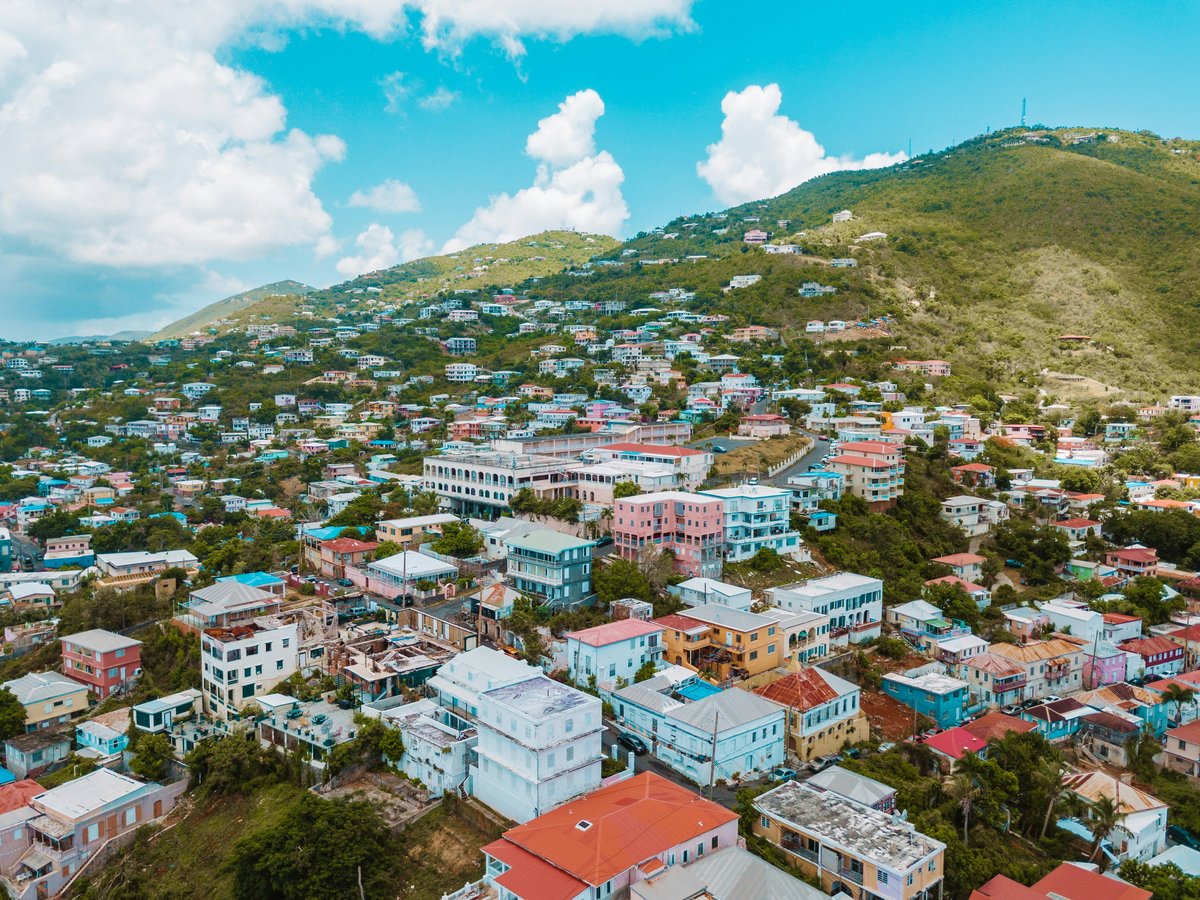
Is St. Thomas safe?
St. Thomas scores 6.2 out of 10 for solo-traveler safety (see the TTDI Solo-Safety Index). It's a U.S. territory, so 911 works and federal law applies. The real risks are property crime in Charlotte Amalie once cruise ships depart, aggressive taxi pricing without meters, and left-side driving that catches Americans off guard. Frenchtown and Red Hook feel safer after dark for solo visitors.
Charlotte Amalie empties out around 5pm when the cruise ships pull away from Havensight and Crown Bay. That transition is when the mood shifts. The waterfront shopping strip, packed with cruise passengers during the day, goes quiet fast. Back Street, one block uphill from Main Street, is where the USVI Police Department concentrates its patrols after dark for good reason. Muggings and phone-snatchings happen along this stretch, and they tend to target people walking alone. Stay on the waterfront side of Main Street after sunset, and you'll likely have no trouble. Fort Christian, built in 1672, stays lit and well-patrolled at night. Frenchtown, a 10-minute walk west of the cruise port, has a different feel entirely. The smell of grilled mahi-mahi drifts out of restaurants along the harbor, and the small-boat marina keeps foot traffic going past 9pm. Hook, Line & Sinker serves fish tacos for around $14 at the bar, where solo diners sit without feeling awkward. Red Hook on the east end, where the St. John ferry departs, has a similar after-dark ease. Duffy's Love Shack stays busy until midnight, and the walk back to nearby hotels along Route 32 is well-lit.
The taxi system on St. Thomas runs without meters. Fares are set by the Virgin Islands Taxi Commission and posted at the airport and cruise terminals, but drivers sometimes quote higher rates to solo passengers who don't know the schedule. The fare from Cyril E. King Airport to Red Hook runs about $15 per person in a shared van, roughly $24 for a solo ride. Ask the driver to confirm the rate before you get in. Shared safari-style open-air trucks, called dollar rides by locals, run along Route 30 between Charlotte Amalie and Red Hook for $2-3. They're a decent way to meet other travelers during daylight hours. Service stops around 7pm. After that, solo visitors rely on taxis or rental cars. Mind you, St. Thomas drives on the left side of the road, a holdover from Danish colonial rule, but most cars are American-style with the steering wheel on the left. That puts the driver on the wrong side for judging oncoming traffic on the steep, winding roads around Route 33 toward Magens Bay. If the narrow switchbacks and the afternoon heat give you pause, stick with taxis for the first day or two.
Solo women report feeling comfortable in Frenchtown and the Red Hook area at night but less so walking alone through the neighborhoods uphill from Charlotte Amalie's Main Street. The residential areas of Tutu and Estate Thomas have higher property crime rates, and they lack the street lighting and foot traffic that keep the tourist zones feeling safe. Stick to areas where you can hear other people and see lit storefronts. For meeting other solo travelers on day one, the ferry to St. John from Red Hook, a 20-minute crossing at around $7 each way, puts you shoulder to shoulder with hikers and beach-goers headed for Trunk Bay. Small-group snorkeling tours at Coki Beach run around $65-80 per person with no single supplement. That said, Coki Beach itself has a reputation for pushy drink vendors and hair-braiders who follow you down the sand. A firm "no thanks" handles it, but the persistence can wear on you. Sapphire Beach, 10 minutes east by taxi, is quieter. The water there runs warm, around 28°C in September, with visibility that tends to hold at 15-20 meters on calm days.
September sits at the peak of Atlantic hurricane season. St. Thomas took a direct hit from Hurricane Irma in September 2017, a Category 5 storm with 185 mph winds. Maria followed two weeks later. The island rebuilt, but the experience left marks on the infrastructure. Cell service can still drop in the hills above Charlotte Amalie during heavy rain. VITEMA, the territorial emergency management agency, pushes alerts through the same Wireless Emergency Alert system used on the mainland, so keep your phone charged. The heat is the other constant. Current conditions sit around 28°C with humidity at 85% and a feels-like temperature near 31°C. You'll feel the thickness of the air the moment you step off the plane. Drink water before you feel thirsty. The tap water is desalinated and safe, though it carries a flat, slightly mineral taste that takes a day to get used to. Sunset comes early in September, around 6:15pm, and full darkness follows within 20 minutes. Plan your route back to your hotel before the light goes.
Emergency number: 911
Official travel advisories
Normal precautions the most cautious of 1 government assessment
- Government of CanadaLevel 1Take normal security precautions View advisory
Verified from the issuing governments' own feeds.
Areas to avoid
- Back Street (Charlotte Amalie) after dark
- Tutu neighborhood at night
- Estate Thomas after dark
- Residential hillside neighborhoods above Main Street at night
Common concerns
- Unmetered taxi overcharging for solo passengers who don't know the posted fare schedule
- Property crime in Charlotte Amalie after cruise ships depart around 5pm
- Left-side driving with American-style steering on steep, winding roads
- Peak hurricane season from August through October
- Aggressive beach vendors and hair-braiders at Coki Beach
- Limited public transit after 7pm
- Cell service drops in hilly areas during heavy rain
Last verified by automated review (v1.7.2) on . What is automated review?