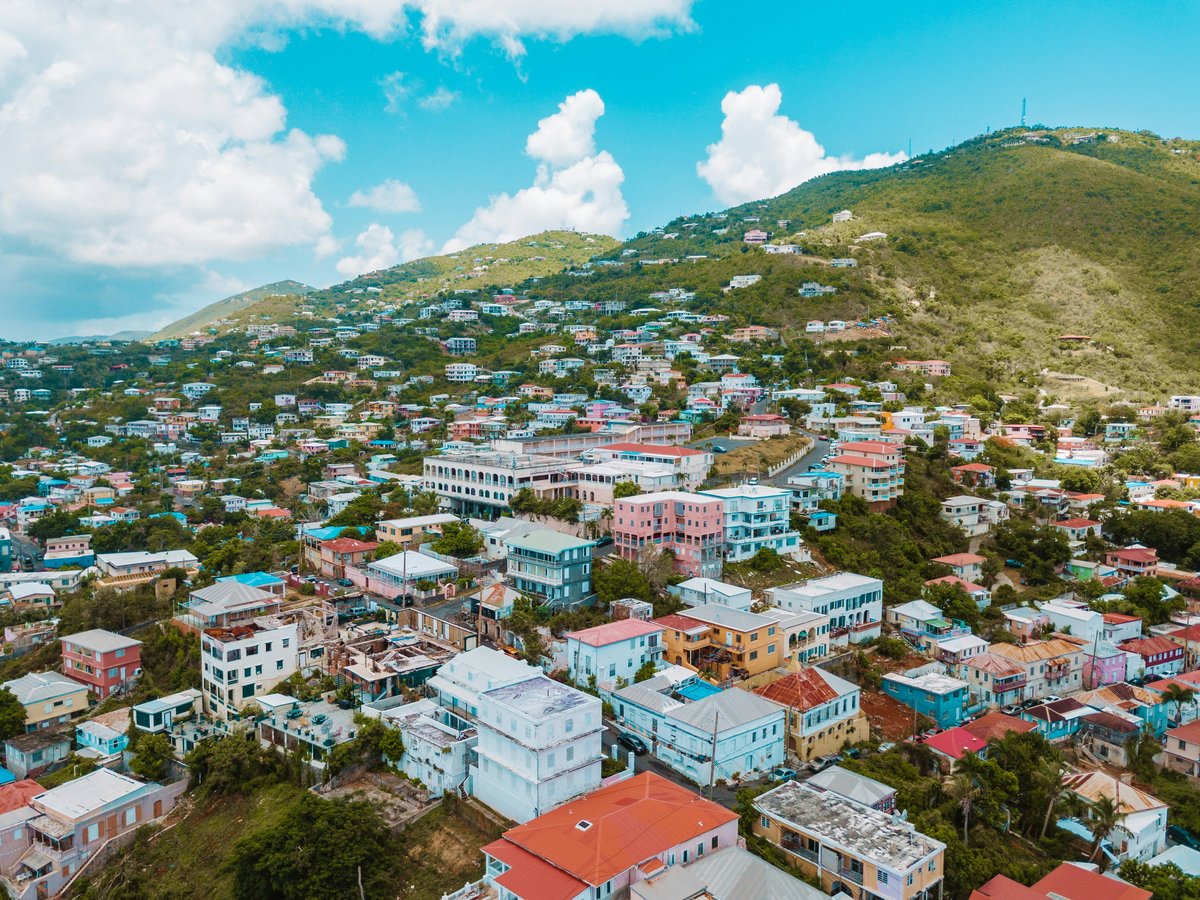
St. Thomas stretches about 13 miles east to west and 4 miles north to south, with most visitor activity concentrated along the southern coastline. Charlotte Amalie, the territorial capital, sits in a deep natural harbor near the island's center. Neighborhoods spread from there in both directions. Head west past the old submarine base and you reach Frenchtown, a fishing community with roots in St. Barthélemy. East of town, the Havensight cruise port gives way to a resort corridor that ends at Red Hook, the ferry gateway to St. John about 30 minutes by car from downtown. The hills above climb steeply to Crown Mountain at roughly 1,556 feet, and the north shore stays quieter, anchored by Magens Bay. Open-air safari buses run the main routes along Veterans Drive and Route 38 toward the east end for about $2 per ride. The island scores 8.2 out of 10 for family friendliness (see the TTDI Family-Friendliness Index), with the calmest beach water and most family-oriented resorts clustered along the southern east end. Most accommodations fall into 3 zones. Downtown Charlotte Amalie has a handful of historic hotels. The stretch between Bolongo Bay and Secret Harbour holds the resort options. Red Hook splits the difference with marina-side inns and a walkable restaurant scene.
Neighborhoods
-
Charlotte Amalie (Downtown)
The old Danish colonial grid still shapes the streets here, and you can feel the worn ballast-brick paving underfoot on the narrower alleys. Dronningens Gade, known as Main Street, runs parallel to the harbor with duty-free jewelry and liquor shops occupying 18th and 19th century stone warehouses. Step inside one of these shops on a hot afternoon and the thick stone walls drop the temperature by several degrees. One block uphill, Vimmelskafts Gade (Back Street) feels noticeably calmer, with local lunch spots serving pates (fried dough stuffed with saltfish or chicken) and West Indian fabric stores. The 99 Steps, which number 103 in total, were built from ship ballast bricks and climb from Kongens Gade toward Blackbeard's Castle, a National Historic Landmark watchtower with views across the harbor. Cathedral of Saints Peter and Paul on Kronprindsens Gade dates to 1806, and its Gothic tower doubles as a useful orientation point when you lose your bearings in the alleys. Noise levels on Veterans Drive depend entirely on the cruise schedule. When 3 or 4 ships dock at once, the waterfront sidewalks pack shoulder to shoulder and the air turns thick with cologne samples wafting from duty-free entrances. On ship-free days, Raadets Gade goes quiet enough to hear roosters crowing from Government Hill.
- Best for
- History-focused travelers, duty-free shoppers, and anyone arriving by cruise who wants to explore on foot rather than board an excursion bus
- Key streets
- Dronningens Gade (Main Street) for shopping, Vimmelskafts Gade (Back Street) for local food, Norre Gade past the historic synagogue, Crystal Gade, and the 99 Steps connecting Kongens Gade to the hilltop landmarks
-
Frenchtown
Frenchtown sits on a small peninsula west of Charlotte Amalie, about a 5-minute drive from the center of town. The community descends from French Huguenot families who migrated from St. Barthélemy in the mid-1800s, and older residents still speak a Creole patois locally called Cha Cha. St. Anne Chapel, founded in 1921, anchors the neighborhood's Catholic identity near the waterfront. St. Thomas scores 7.5 out of 10 for LGBTQ+ friendliness (sourced from TTDI's editorial rubric), and Frenchtown's bar scene has historically been one of the island's more relaxed spots on that front. The restaurant strip along the boardwalk area has been the island's strongest dining corridor for two decades, with kitchens that cook from the day's catch rather than a frozen supply chain. Walk past on a Friday evening and the smell of grilled mahi-mahi and garlic butter carries from the open-air dining rooms clear to the parking lot. The fishing boats still come in to the small harbor, and you might see nets drying on the dock pilings if you wander down before 08:00.
- Best for
- Couples and food-focused travelers who want strong restaurants within walking distance, without the cruise ship crowds that pack downtown on port days
- Key streets
- Honduras Road for the restaurant strip, the Frenchtown boardwalk and marina, and the residential lanes behind St. Anne Chapel where traditional Creole-style houses still have steep corrugated tin roofs painted in faded pastels
-
Havensight
Havensight is where the large cruise ships dock, and the area's personality pivots with the flow of passengers. Havensight Mall and nearby Yacht Haven Grande offer duty-free shopping in a more modern, air-conditioned setting than the historic warehouses downtown. On heavy cruise days, 8,000 to 12,000 passengers can pass through between 08:00 and 16:00, and the sidewalks fill with the steady rumble of rolling suitcases. Lionel Roberts Park sits nearby and hosts community events and the occasional carnival concert. The architecture is mostly functional concrete from the 1970s and 1980s. That said, the waterfront walkway between Yacht Haven Grande and the cruise dock catches a cool breeze in the afternoon and faces west toward Water Island for sunset views. Restaurants here tend to serve safe, tourist-priced menus. A burger and a beer runs about $22 to $28, roughly $5 to $8 more than the same meal would cost in Red Hook or Frenchtown.
- Best for
- Cruise ship passengers on a tight turnaround who need shopping, food, and a taxi stand concentrated in one walkable area
- Key streets
- The Havensight Mall strip along the port road, Yacht Haven Grande's marina boardwalk with its higher-end shops and restaurants, and the connecting road to Route 30 (Veterans Drive) heading east toward Red Hook or west into Charlotte Amalie
-
Red Hook
Red Hook sits at the island's eastern tip, roughly 30 minutes from Charlotte Amalie depending on the Route 38 traffic. The ferry terminal sends boats to Cruz Bay, St. John every hour or so, and that transit function keeps the area lively past sunset. American Yacht Harbor marina gives the neighborhood a boating-community feel, with sailboat masts visible from most restaurant patios. St. Thomas rates 6.2 out of 10 for solo-traveler safety (see the TTDI Solo-Safety Index), and Red Hook's well-lit strip around the marina is one of the more comfortable spots to be out alone in the evening. Near the docks, the air carries diesel and salt water. Walk 2 blocks inland and the scent shifts to frangipani blossoms and charcoal smoke from backyard grills. The food scene leans casual and seafood-forward, with open-air bars playing live reggae on weekends and fish taco spots where the wahoo came off a boat that morning. A one-way ferry ticket to Cruz Bay runs about $6.50 per adult.
- Best for
- Day-trippers heading to St. John, sailors, younger travelers who want nightlife without downtown cruise crowds, and solo visitors who prefer a walkable strip with restaurants and bars
- Key streets
- American Yacht Harbor road for restaurants and bars, the ferry dock plaza, and the stretch of Route 38 (Red Hook Quarter Road) connecting east toward Sapphire Beach and the resort corridor
-
East End (Bolongo Bay to Secret Harbour)
The southern coast between Bolongo Bay and Secret Harbour forms St. Thomas's resort corridor, about a 15-minute drive east of Charlotte Amalie. The beaches here face south and tend toward calmer water than the north shore, which matters if you have small children. Bolongo Bay Beach Resort has been a fixture since the 1970s, with sand warm enough to feel through flip-flop soles running right up to the restaurant deck. Secret Harbour sits in a protected cove where sea turtles surface in the shallows near the reef line. The pace is slow. You hear steel pan music drifting from pool decks in the late afternoon and tree frogs starting their chorus around 18:30. The waters offshore fall within the boundary of Virgin Islands Coral Reef National Monument, established in 2001, and the reef system supports solid snorkeling straight off the beach. The area is spread out along the coast road, and you will need a car or frequent taxi rides to reach restaurants and grocery stores beyond the resorts. A rental car runs roughly $50 to $70 per day from December through April.
- Best for
- Families with young children, beach-focused couples, and anyone who wants calm water and resort amenities without needing to venture far from the sand
- Key streets
- Route 30 connects the resort turnoffs for Bolongo Bay and Cowpet Bay. Compass Point Road leads down to the Elysian Beach area. The road to Secret Harbour branches off about a quarter mile before Cowpet Bay.
-
Northside (Magens Bay and Hull Bay)
The north shore feels like a different island. Magens Bay sits in a horseshoe-shaped cove with calm, shallow water that warms to something close to bathwater by September, when air temperatures hover near 28.5 degrees Celsius and humidity sits around 81%. The beach stretches about three-quarters of a mile, with lifeguards, a snack bar, and picnic tables shaded by sea grape trees. Entry costs $5 per person. Hull Bay, farther west on Route 37, is the local surf break with small but rideable reef waves between October and April. A few beach bars operate at Hull Bay, and the crowd is almost entirely residents. The mountain roads connecting the north shore to Charlotte Amalie wind through steep switchbacks flanked by dry scrub and the occasional goat on the shoulder. The drive from Magens Bay to downtown takes about 15 minutes. St. Thomas scores 5.8 out of 10 for digital-nomad suitability (sourced from TTDI's editorial rubric), and the north shore's spotty cellular signal and thin restaurant options are part of the reason. Coki Beach, at the northeast corner near Coral World Ocean Park, draws a louder crowd with chair rentals at $15 to $20 and rum buckets sold by the pitcher.
- Best for
- Beach days away from the cruise port crowds, surfers heading to Hull Bay's reef break, and travelers who want a few quiet hours on the sand between south-shore activities
- Key streets
- Route 35 (Magens Bay Road) drops steeply from the ridge to the bay. Hull Bay Road branches off Route 37 on the northwest side. Route 38 passes Coki Beach on the northeast end near Smith Bay.
FAQ
Can you get around St. Thomas without renting a car?
It depends on where you stay. Charlotte Amalie and Red Hook both have restaurants and shops within walking distance. Safari buses, the open-air trucks with bench seating, run along the main south-shore roads and connect downtown to the east end. Reaching the north shore without a car means relying on taxis, which charge set per-person rates. A cab from downtown to the Magens Bay area runs roughly $10 to $15 per person. If your hotel sits along the east end resort corridor, you will likely want a rental for groceries and dinner options beyond the resort kitchen.
Which St. Thomas neighborhood is safest for walking at night?
The Red Hook marina strip and the Frenchtown restaurant row tend to stay busy and well-lit latest into the evening. Downtown Charlotte Amalie's main shopping streets feel fine early on, especially when cruise ship foot traffic runs heavy. After about 21:00 on quieter nights, the downtown area empties out. Locals generally suggest sticking to commercial streets and avoiding the steeper hillside residential lanes above town after dark.
Where should I base myself to visit both St. Thomas and St. John?
Red Hook makes the most practical base. The ferry crossing to Cruz Bay takes about 20 minutes, and you can walk to the dock from several Red Hook guesthouses. Over on St. John, Gibney Beach and the Catherineberg Sugar Mill Ruins are two draws worth building a day around. Cathedral Church of All Saints, founded in 1848 in Charlotte Amalie, is worth a stop if you drive Route 38 through town on the way to or from the east end.
Is St. Thomas worth visiting outside of cruise ship season?
Late September through mid-November tends to be the quietest window. Hurricane season runs June through November, which keeps visitor counts lower and hotel rates 30% to 40% below the December-through-April peak. Cruise traffic drops noticeably from mid-August through October, so Charlotte Amalie and Havensight feel more local. The water stays warm year-round and the trade winds pick up in the afternoons, carrying salt spray that cools the south-shore beaches. Peak season brings 4 to 6 ships per day on busy weeks.
What should I know about tipping and paying on St. Thomas?
St. Thomas uses the U.S. dollar and follows mainland American tipping norms. Restaurants expect 15% to 20%, and taxi drivers expect $1 to $2 per person on top of the published rate. Credit cards work at most restaurants and shops in Charlotte Amalie, Red Hook, and the resort areas. Smaller beach bars at Hull Bay and some market vendors deal in cash only. There is no sales tax in the U.S. Virgin Islands, which is part of why the duty-free shopping draws cruise passengers to the downtown and Havensight stores.
Last verified by automated review (v1.7.2) on . What is automated review?