Best Time to Visit Washington DC, by Season
Washington DC's weather swings from -2.2°C January lows to 31.4°C July highs, a 33.6°C annual range that makes the month you visit as important as where you go. This guide projects the best window for each kind of traveller from 5-year daily averages.
Published
1 September Averages 26.0°C and Half the Crowds of Cherry Blossom Season
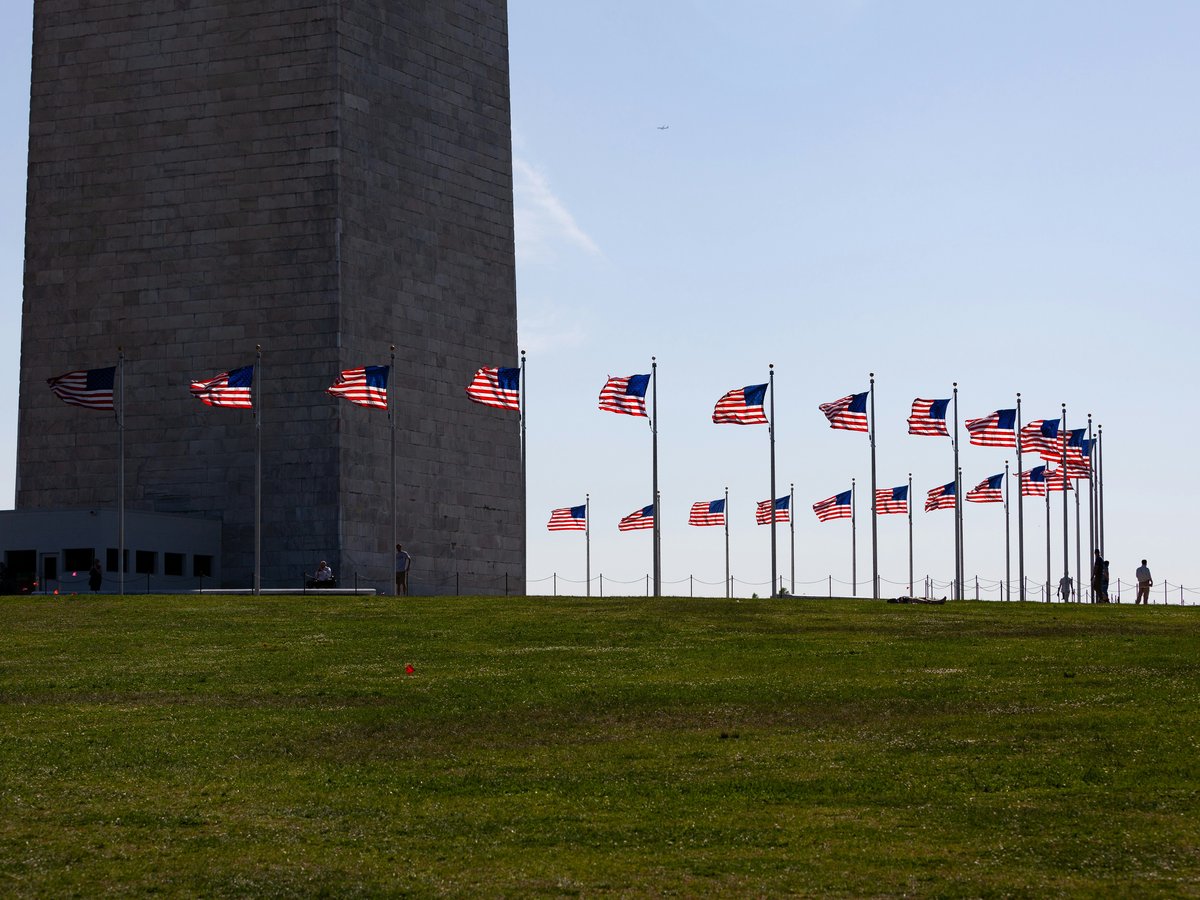
The evening light on the Washington Monument around 6 PM in late September carries a copper warmth that April cannot deliver. September averages 26.0°C for highs and 16.7°C for lows, which places the whole day in comfortable walking territory for the stretch from the Capitol to the Lincoln Memorial. April, the month everyone defaults to, manages 19.7°C highs and 8.3°C lows. That is a 6.3°C gap at the top of the range, and it shows on the ground.
An 8.3°C morning at the Tidal Basin in April means layering up. A 16.7°C evening on the National Mall in September means sitting on the grass near the Reflecting Pool in short sleeves, watching the light shift across the Lincoln Memorial. The cherry blossom crowds that pack the Tidal Basin in late March and early April have long since left by September. The school-trip wave that peaks through June at 29.3°C highs and fills the Air and Space Museum into July at 31.4°C has also cleared out.
To be fair, September still carries residual humidity from Washington's Potomac-basin summer. August averages 29.5°C for highs and 19.9°C for lows. September's 26.0°C represents a real drop from August's 29.5°C, but the moisture tends to linger into the first two weeks. By the third week the air dries, and walking Georgetown's M Street or crossing Memorial Bridge to Arlington National Cemetery feels genuinely comfortable.
The runner-up for this sweet-spot window is May, averaging 23.5°C highs and 12.9°C lows. May runs cooler and drier than September but bumps against the tail end of school-trip season on the Mall. For a traveller who wants warm weather, thin crowds, and the full run of the Smithsonian campus without queuing, late September is the pick. May is the backup. October at 20.3°C highs and 10.4°C lows is the next step down, still pleasant but noticeably cooler by evening.
A 16.7°C evening on the National Mall in September means sitting on the grass near the Reflecting Pool in short sleeves.
2 Cherry Blossom Season Sounds Perfect Until You Feel the 3.5°C March Mornings
The smell of damp earth and pale blossom drifts across the Tidal Basin well before you can see the canopy. Washington's Yoshino cherry trees tend to peak between late March and early April, and when the timing aligns, the ring of pink against the Jefferson Memorial makes you understand why people fly thousands of miles for two weeks of flowers. The weather underneath those trees tells a less flattering story. March averages 14.6°C for highs and 3.5°C for lows. April warms to 19.7°C and 8.3°C. Neither month delivers the balmy spring that blossom photographs promise.
A 3.5°C morning in March means frost is still possible along the Potomac waterfront. The 14.6°C daytime high feels mild when the sun cooperates, but the National Mall is exposed ground with wind channeling between the Washington Monument and the Capitol. April's 19.7°C highs become comfortable by afternoon, though 8.3°C mornings still need a layer if you're queuing early for the National Museum of African American History and Culture, which draws the longest line on the Mall.
The Tidal Basin during blossom weeks becomes the most congested stretch in the city. Hotel rates in April tend to peak above any other month. The blossoms themselves are ephemeral. The National Park Service cannot control the schedule, and a trip timed for early April might hit bare branches if the bloom peaked in late March, or tight buds if spring ran behind.
You'll find cherry trees beyond the Tidal Basin crowds. Kenwood in Bethesda, Maryland, northwest of the Mall, has residential streets lined with the same Yoshino variety. March and April temperatures in Bethesda are nearly identical to downtown Washington. If blossoms are non-negotiable, go in the second half of April when 19.7°C highs give warm afternoons. February at 9.0°C highs and -0.5°C lows is still winter. May at 23.5°C arrives after the petals drop, but the Mall is green and the blossom crowd is gone.
Neither month delivers the balmy spring that blossom photographs promise.
3 May at 23.5°C Is the Month Washington Locals Would Pick
Café tables along Georgetown's waterfront reappear in May, and by mid-month you can sit outside past sunset without reaching for a sweater. May averages 23.5°C for highs and 12.9°C for lows. That 12.9°C low means evenings on a Dupont Circle patio are pleasant, not chilly. Mornings on the National Mall start cool enough for a brisk walk, and by noon the temperature settles comfortably into the low twenties.
May fills the gap. April's cherry blossom crowds have gone home. The family-travel wave that arrives in June at 29.3°C and fills the Smithsonian museums through July at 31.4°C has not yet started. May falls between the two peaks, and Washington breathes.
The 23.5°C high puts May in a temperature range that works for everything Washington offers on foot. The walk from the Lincoln Memorial east past the Reflecting Pool to the Capitol is a long one. In July at 31.4°C, that walk becomes an endurance test. In March at 14.6°C, it is a brisk challenge. May splits the difference. The 7.9°C gap between May's 23.5°C and July's 31.4°C is the difference between choosing to walk and choosing the Metro.
Mind you, May does bring some spring rain to Washington's mid-Atlantic basin. Afternoon showers along the Potomac appear through late spring. The 12.9°C lows also mean that an evening at the Kennedy Center might still call for a light layer.
For families, May is the pick over summer. June through August at 29.3°C to 31.4°C highs are punishing for kids walking between the National Museum of Natural History and the Air and Space Museum. May's 23.5°C gives children outdoor time without the heat. For couples, May edges out September (26.0°C highs, 16.7°C lows) by running cooler for evening walks along the C&O Canal towpath in Georgetown.
May falls between the two peaks, and Washington breathes.
4 July Hits 31.4°C and the Smithsonian Becomes Your Air-Conditioned Refuge
The heat hits you at the top of the escalator. The Smithsonian Metro station sits underground, but the moment you surface onto the Mall in July, a wall of humid air at 31.4°C closes in. July is Washington's hottest month, averaging 31.4°C for highs and 21.4°C for lows. That 21.4°C low means nights offer little relief.
June opens the season at 29.3°C highs and 18.2°C lows. August continues at 29.5°C and 19.9°C. The three-month stretch from June through August is Washington's most demanding quarter for anyone who plans to be outside. The 2.1°C difference between June's 29.3°C and July's 31.4°C might look minor on paper, but humidity compounds the effect along the Potomac corridor.
The Smithsonian museums become the itinerary by default. The National Gallery of Art keeps its galleries cool. The National Museum of Natural History is similarly climate-controlled. You'll notice visitors moving through museums not from particular interest but because the alternative is standing on the bleached concrete of the National Mall at 31.4°C. The Lincoln Memorial, the World War II Memorial, the Martin Luther King Jr. Memorial. These are the reasons people come to Washington, and in July at 31.4°C they are best seen early or after sunset.
The one thing summer has going for it is the Fourth of July on the National Mall. If your trip targets Independence Day, July is the obvious choice despite the 31.4°C highs and 21.4°C lows. For everyone else, the temperature is a reason to choose another season.
The practical move for summer travelers is to take outdoor time early and late, spend midday inside the Smithsonian's climate-controlled galleries, and save the monuments for evening. September's 26.0°C highs and October's 20.3°C are both close enough on the calendar to be worth the wait. August at 29.5°C is marginally less punishing than July's 31.4°C, but not enough to shift the recommendation.
The Lincoln Memorial, the World War II Memorial, the Martin Luther King Jr. Memorial. In July at 31.4°C they are best seen early or after sunset.
5 October Drops to 20.3°C While the Foliage Peaks Along Rock Creek
The maples in Rock Creek Park start turning the first week of October. By mid-month, the canopy above Beach Drive goes red and gold against a sky that tends toward deep blue. October averages 20.3°C for highs and 10.4°C for lows. The 20.3°C daytime high sits in comfortable walking range. The 10.4°C evening low means you'll want a jacket after sunset but won't be driven indoors.
This is the month that Washington residents quietly prefer. September's 26.0°C highs still carry the last of summer's humidity. November drops to 13.8°C highs and 4.4°C lows, which starts to feel like a different season altogether. October lands in the narrow band between. The 5.7°C decline from September's 26.0°C to October's 20.3°C is enough to clear the air without chilling it.
Theodore Roosevelt Island, accessible by footbridge from the Rosslyn Metro station in Arlington, is one of the better spots for fall color within walking distance of central Washington. The George Washington Memorial Parkway along the Virginia side of the Potomac is another option. Both are far less congested than the National Mall, which peaks with visitors in April and summer.
Hotel rates in October tend to fall below both the April cherry-blossom premium and the family-travel rates that hold through June at 29.3°C and August at 29.5°C. The Kennedy Center and Arena Stage both open their fall seasons in October. The restaurant scene across 14th Street NW picks back up after the summer lull when Congress is out of session.
For foliage travelers, October at 20.3°C is the clear pick over November at 13.8°C. By late November the leaves are largely down and the 4.4°C lows make outdoor time a commitment. May at 23.5°C is October's spring equivalent in temperature, but October has the color. If you can visit once and cherry blossoms are not your priority, the second or third week of October might be the single best week of Washington's calendar year.
October lands in the narrow band between summer's last warmth and winter's first warning.
6 Winter Drops Below Freezing, but the National Mall Is Finally Yours
The sound of your footsteps on the gravel path between the Korean War Memorial and the Lincoln Memorial carries in January because there is almost nobody else around. January averages 6.0°C for highs and -2.2°C for lows. That -2.2°C low is genuine cold. The Potomac throws wind across the Tidal Basin and the exposed Mall. December is marginally warmer at 8.7°C highs and 0.3°C lows. February at 9.0°C and -0.5°C sits between them, a slow crawl toward spring.
The case for winter in Washington is not the weather. It is the access. The Smithsonian museums that draw lines out the door in April and July are open year-round, and in January you might have an entire gallery at the National Gallery of Art to yourself. The National Museum of African American History and Culture, which draws long waits in summer, is far easier to enter in December or January.
The National Mall in winter has a stark beauty if you dress for it. The Reflecting Pool near -2.2°C on a January morning, thin ice at the edges, the Washington Monument sharp against a grey sky. That is a photograph most visitors never see because they come in April instead.
November at 13.8°C highs and 4.4°C lows is the leading edge of the cold-weather window. It is still walkable during the day, and fall foliage has not entirely dropped by early November. December at 8.7°C and 0.3°C brings holiday lighting across the city, including the National Christmas Tree south of the White House. January is the coldest month, bottoming at -2.2°C for lows and 6.0°C for highs. February at 9.0°C and -0.5°C begins the long climb that reaches 14.6°C by March.
For budget travelers, Washington's winter is the clear pick. Hotel rates from November through February run well below the April and summer peaks. A Washington trip built around museums, monuments at dawn, and dinner on 14th Street NW works at any temperature. You'll want thermal layers for outdoor time, especially in January below -2.2°C and December near 0.3°C, but the trade-off is near-empty spaces that every other season denies you.
In January you might have an entire gallery at the National Gallery of Art to yourself.
7 The Single Best Window for Every Kind of Washington DC Traveller
Your best month in Washington depends entirely on what you came for. The 33.6°C spread between January's -2.2°C lows and July's 31.4°C highs means every month carries a distinct trade-off between comfort, crowds, and cost.
For first-time visitors who want the full Mall experience in comfortable weather, the last two weeks of September are the pick. September's 26.0°C highs and 16.7°C lows give you all-day walking weather without the summer crowds or the April price spike. The runner-up is the first three weeks of May at 23.5°C highs and 12.9°C lows, which runs slightly cooler and drier.
For cherry blossom travelers, there is no substitute for late March through early April. Accept the 14.6°C March highs or 19.7°C April highs and 8.3°C lows as the cost of admission. Go in the second half of April for warmer odds. Consider Kenwood in Bethesda, Maryland, as the low-crowd alternative to the Tidal Basin.
For families with children, May is the clear winner. The 23.5°C highs keep kids comfortable between the Mall's museums. June at 29.3°C and July at 31.4°C are too hot for the amount of walking that Washington requires. October at 20.3°C is the autumn alternative if the school calendar allows it.
For budget travelers, January at 6.0°C highs and -2.2°C lows, or February at 9.0°C and -0.5°C, delivers the lowest hotel rates and the emptiest museums. The Smithsonian charges no admission, so the cold costs only outdoor comfort. December at 8.7°C and 0.3°C lows is slightly more expensive than January due to holiday travel but still runs well below April.
For repeat visitors who have already seen the Mall, October at 20.3°C highs and 10.4°C lows is the month to explore Rock Creek Park, Georgetown's C&O Canal towpath, and the neighborhoods along 14th Street NW. November at 13.8°C and 4.4°C lows is the last comfortable month before winter sets in, and the fall restaurant season along 14th Street NW is at full strength.
The single worst month for a general visit is July. The 31.4°C highs and 21.4°C lows make outdoor time a chore, and the crowds are at their annual peak. If your only available window is June through August, go in early June at 29.3°C and 18.2°C lows, before the summer family wave fully arrives.
The 33.6°C spread between January and July means every month carries a distinct trade-off.
Last verified by automated review (v1.7.2_onboard-washington-dc-flagship-2026-08-21) on . What is automated review?