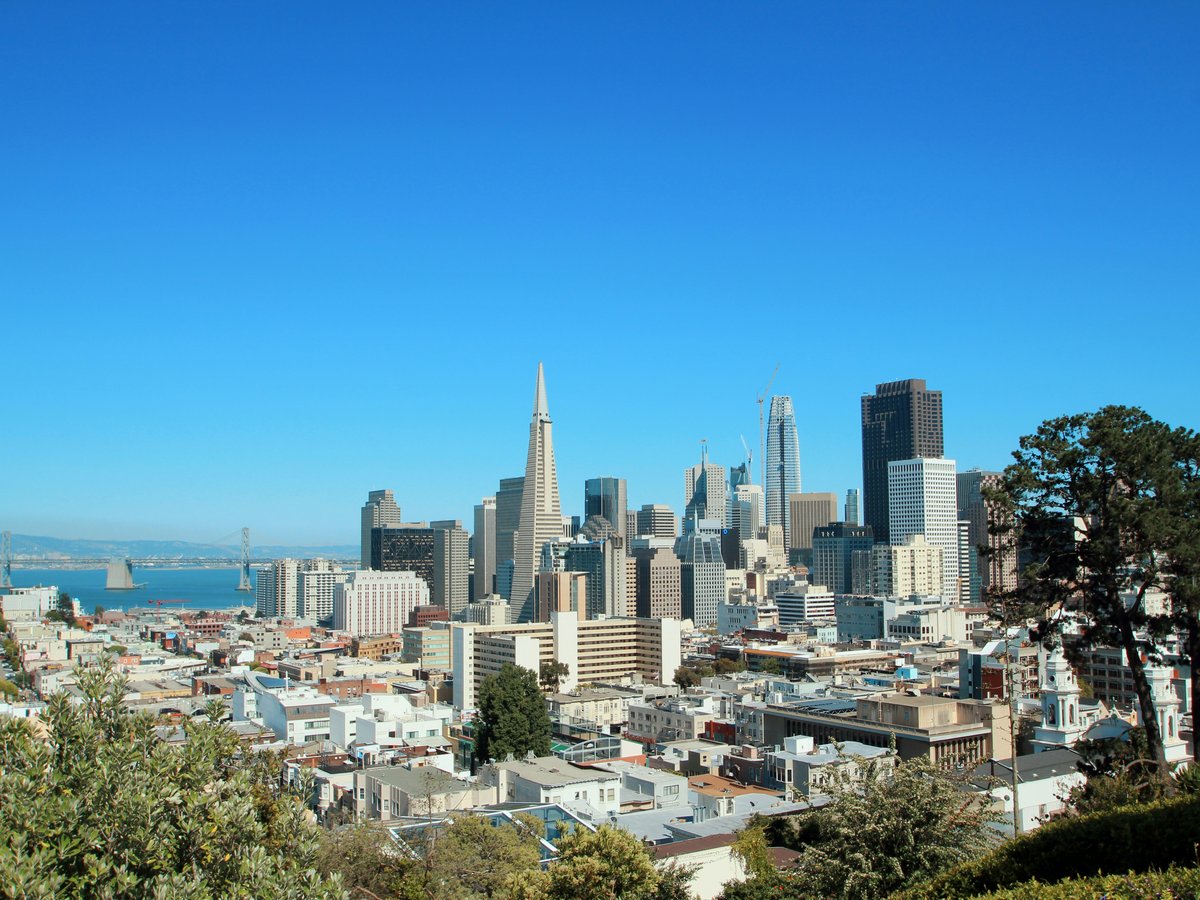
Is San Francisco good for digital nomads in 2026?
San Francisco rates 7/10 for nomads. Gigabit fibre is standard in most apartments, coworking runs $300-550/month, and the cafe-laptop culture is genuine. The catch is cost. Budget $4,800/month minimum for a furnished room, food, transit, and a hot desk. No US digital nomad visa exists. ESTA visitors from 42 countries get 90 days.
The Inner Sunset along Irving Street between 9th and 19th Avenues is likely the best neighborhood in San Francisco for a month-plus stay. Groceries at Sunset Super on Irving, a laundromat every few blocks, and furnished rooms on Craigslist or Furnished Finder for $2,200-2,800/month. AT&T Fiber and Sonic both serve the area with 1-Gbps symmetric plans running $60-80/month, though most Airbnb hosts still default to Comcast 300 Mbps. The fog rolls in around 4 PM most summer days, and you'll hear the N-Judah streetcar rattling past your window every 8 minutes until midnight. That said, the quiet residential blocks mean you can sleep, which is not guaranteed in the Mission. The Inner Richmond along Clement Street is a similar deal, maybe $100-200/month cheaper, with better Chinese food. Good Luck Dim Sum near Clement and 11th Avenue opens at 7:30 AM. Noe Valley works if your budget stretches to $3,000-3,500 for a studio. Skip SoMa for housing. The tent encampments along 6th Street smell of urine and damp concrete, and the sidewalks between Market and Howard feel deserted after 7 PM.
Coworking in SF runs expensive by global nomad standards but cheaper than a month of cafe-hopping. Canopy in Jackson Square charges around $350/month for a hot desk in a converted brick building with tall windows and natural light that might be the best workspace atmosphere in the city. Industrious in the Financial District has dedicated desks from around $550/month with private phone booths and a decent drip coffee station. Sandbox Suites near South Park in SoMa runs a no-contract hot desk at roughly $300/month in a quieter pocket where you can eat lunch on the grass. WeWork still operates multiple locations across the city with hot desks around $350-450/month, though the vibe varies between buildings. For the budget-conscious, SF Public Library's main branch at 100 Larkin Street has free WiFi at 50-100 Mbps and no time limits, though the Civic Center location means you'll navigate past homeless encampments on your way to the door before 10 AM.
SF has a genuine cafe-laptop culture, which is unusual for a US city at this price point. Sightglass Coffee on 7th Street in SoMa has long communal tables, outlets at most seats, and WiFi around 80 Mbps. Nobody will bother you for 3-4 hours if you buy a $6 pour-over. The Mill on Divisadero serves thick $5 toast and strong coffee in a warm, wood-heavy room that smells of fresh-baked bread. It gets loud after 11 AM when the stroller crowd arrives. Ritual Coffee on Valencia Street in the Mission stays tolerable for work until about 2 PM, when the afternoon social crowd fills up. Worth noting that most SF cafes do not enforce time limits on laptop workers. The one-coffee-and-out problem common in European cities barely exists here. Flywheel Coffee on Upper Haight has a quieter back room.
A realistic monthly budget for a single nomad in San Francisco sits around $4,800. That breaks down to roughly $2,500 for a furnished room or small studio in the Inner Sunset or Inner Richmond on Furnished Finder or a month-discounted Airbnb. Add $350 for a coworking hot desk, $800 for food when you cook 60% of meals (a burrito at La Taqueria on Mission Street still runs $14-16, and a Sunset Super grocery haul costs $80-100/week), $81 for a Muni monthly pass, $200 for a Mint Mobile prepaid plan plus small expenses, and $500-700 for weekend activities. That figure assumes you skip a car entirely, which is the right call. Parking alone costs $250-400/month in most neighborhoods, and Muni plus occasional Lyft rides cover the 7-by-7-mile city grid. To be fair, if you share an apartment with another remote worker through a group like Digital Nomads San Francisco on Facebook, you might drop housing to $1,800 and land closer to $4,000/month.
The US still has no digital nomad visa as of mid-2026. Citizens of the 42 Visa Waiver Program countries, including most EU nations, Japan, South Korea, Australia, and New Zealand, enter on ESTA for 90 days at $21 per application. You cannot extend ESTA. If you overstay by even a single day, you trigger a 3-year or 10-year re-entry ban depending on how long you remain. B-1/B-2 tourist visas allow 180-day stays but require a consular interview, and the legal status of remote work for a non-US employer on tourist status remains a gray area that immigration authorities have not formally clarified. Mind you, the weather will catch you off guard. San Francisco in June and July currently sits at 13-15°C with thick fog until 2 PM. Pack a fleece. The warmest stretch tends to run from September through mid-November, when the city hits 20-22°C and the sky finally clears. That late-summer window is likely the best time for a nomad stint, with stable weather and post-summer rental prices dropping 15-20% from their July peak.
Composite of cafe + coworking download speeds and reliability.
Apartment, coworking membership, food, and transit at a comfortable level.
Coworking spaces
- Canopy (Jackson Square)
- Industrious (Financial District)
- Sandbox Suites (South Park, SoMa)
- WeWork (SoMa)
- WeWork (Financial District)
- SF Public Library Main Branch (100 Larkin Street)
Visa options
No US digital nomad visa exists. ESTA (Visa Waiver Program, 42 countries, $21) gives 90 days with no extension. B-1/B-2 tourist visa allows up to 180 days via consular interview. Remote work for a non-US employer on tourist status remains a legal gray area. Overstaying ESTA triggers a 3-to-10-year re-entry ban.
Last verified by automated review (v1.7.2) on . What is automated review?