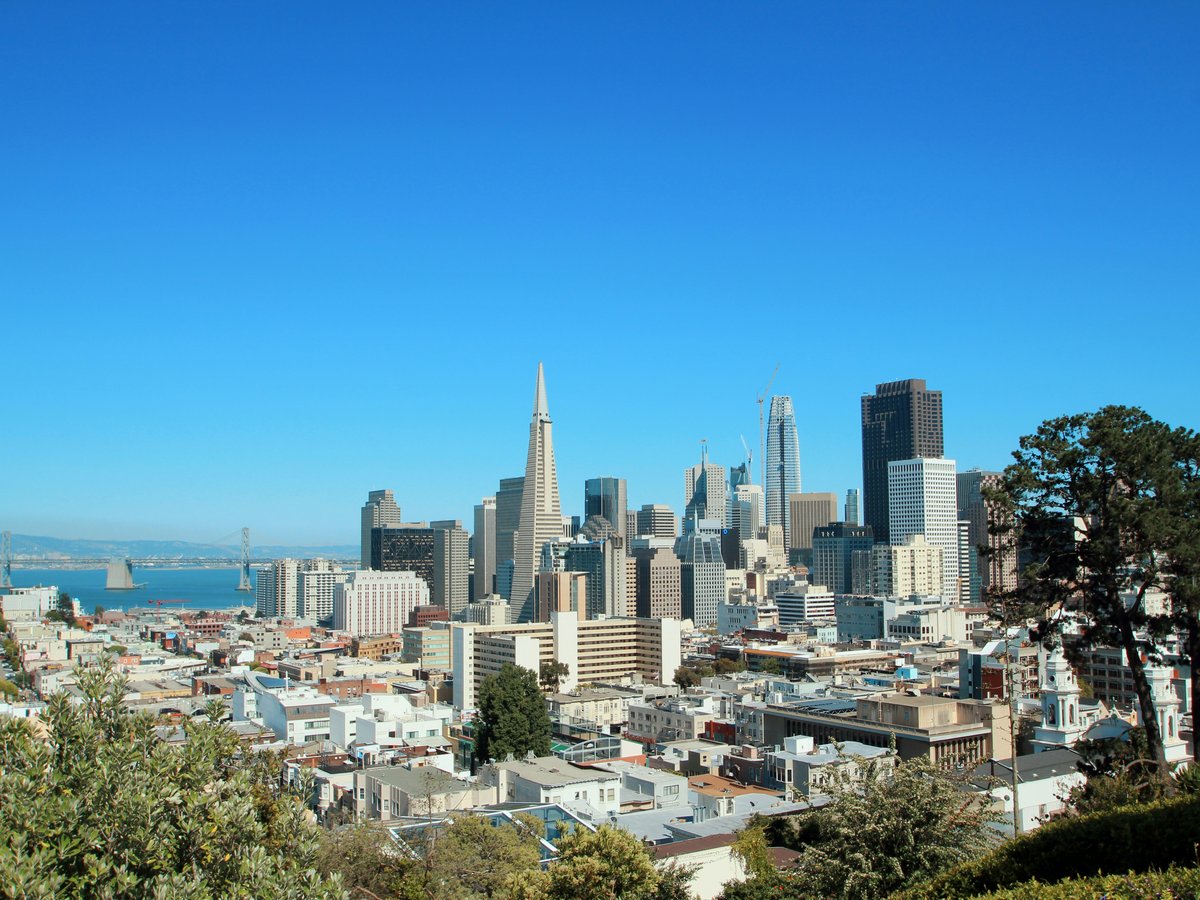
Is San Francisco LGBTQ-friendly?
San Francisco is 10/10. The city where Harvey Milk won his seat on the Board of Supervisors in 1977 has only gotten more welcoming since. The Castro remains the country's most visible queer neighborhood, Pride draws over a million people each June, and California's anti-discrimination protections are among the strongest in the US.
San Francisco scored its first queer milestone before most American cities had a conversation about it. The Tavern Guild, the country's first gay business association, formed here in 1962. Harvey Milk won his Board of Supervisors seat in 1977, and the city created a domestic partnership registry in 1991. California legalized same-sex marriage after the Supreme Court's Obergefell v. Hodges ruling in June 2015, and the state's Unruh Civil Rights Act bans discrimination based on sexual orientation and gender identity in all business establishments. San Francisco layers its own municipal protections on top. For couples visiting together, this means hotels, restaurants, and venues operate under legal obligations not to discriminate, and the culture matches the law. You will not encounter awkwardness requesting a king bed or holding hands on Market Street.
The Castro, centered on Castro Street between Market and 19th Street, is still the gravitational center. Twin Peaks Tavern at 401 Castro Street was one of the first gay bars in the city with floor-to-ceiling windows facing the street when it opened in 1972. It feels lived-in now. Warm wood, older regulars nursing drinks in afternoon light. For a night out together, Beaux at 2344 Market serves strong cocktails on a packed dance floor, while Moby Dick at 4049 18th Street has pool tables and a calmer energy on weeknights. SoMa runs darker and louder. The Eagle at 398 12th Street has a concrete patio that smells like leather and spilled beer on Sunday afternoons during their weekly Beer Bust. The Mission's queer scene leans younger and more mixed. El Rio at 3158 Mission Street hosts Salsa Sundays on an outdoor patio where the crowd is half queer, half neighborhood regulars, and the horchata runs cold.
For a couples trip, the best queer-welcoming hotels sit within walking distance of the Castro or SoMa. The Parker Guest House at 520 Church Street is a restored Edwardian with garden rooms where you can hear wind through the eucalyptus in the courtyard at night. Beck's Motor Lodge at 2222 Market Street is less polished, but the location is dead center of the Castro, and the refurbished rooms run bigger than most SF hotel rooms at roughly $180 to $220 per night. If one of you wants to browse the Castro while the other prefers the California Academy of Sciences in Golden Gate Park (founded 1853, the living roof alone is worth the $42 admission), the N-Judah Muni line connects both in about 25 minutes. Dinner together at Frances, 3870 17th Street, four blocks from the Castro, works for the couple where one is a food person and the other wants a neighborhood spot that doesn't feel like a performance. The bacon beignets still hold up.
San Francisco is one of the safest cities in the world for visibly queer travelers. Period. Same-sex couples hold hands throughout the city without drawing attention. The Tenderloin, between Union Square and Civic Center, has visible homelessness and open drug use that can feel unsettling after dark, but this applies to everyone regardless of orientation. The June Pride parade, held the last weekend of the month, draws over a million people along Market Street. Hotel rates rise 30 to 40 percent that weekend, so book 3 months ahead if you want to overlap. Outside of Pride, the Castro Street Fair on the first Sunday of October is smaller, warmer (October averages 17°C versus June's fog-chilled 15°C), and locals tend to prefer it. Worth noting that today's 12.9°C and 98% humidity fog is standard June morning weather in SF. It burns off by noon most days, and you'll want layers until it does.
Composite of legal status, social acceptance, and visible scene.
Legal status
Same-sex relations are legal
Same-sex relations are legal nationwide since Lawrence v. Texas in 2003 and marriage equality since Obergefell in 2015, reinforced by the Respect for Marriage Act. Anti-discrimination and gender-recognition rules vary significantly by state, so the experience differs between destinations.
Verified against equaldex.com and en.wikipedia.org .
The scene
The Castro (Castro Street between Market and 19th) is the historic center, with Twin Peaks Tavern and Beaux as anchor venues. SoMa runs leather and dance clubs like The Eagle and Powerhouse. The Mission skews younger and mixed, with El Rio's Salsa Sundays drawing a half-queer, half-neighborhood crowd. SF Pride draws over a million people each June. The smaller Castro Street Fair on the first Sunday of October is the locals' pick.
Safety notes
San Francisco is one of the safest cities globally for visibly queer travelers. Same-sex couples hold hands citywide without a second glance. The Tenderloin between Union Square and Civic Center feels rough after dark, but that applies to all visitors regardless of orientation. No queer-specific safety concerns exist here.
Last verified by automated review (v1.7.2) on . What is automated review?