When's the best time to visit San Francisco in 2026?
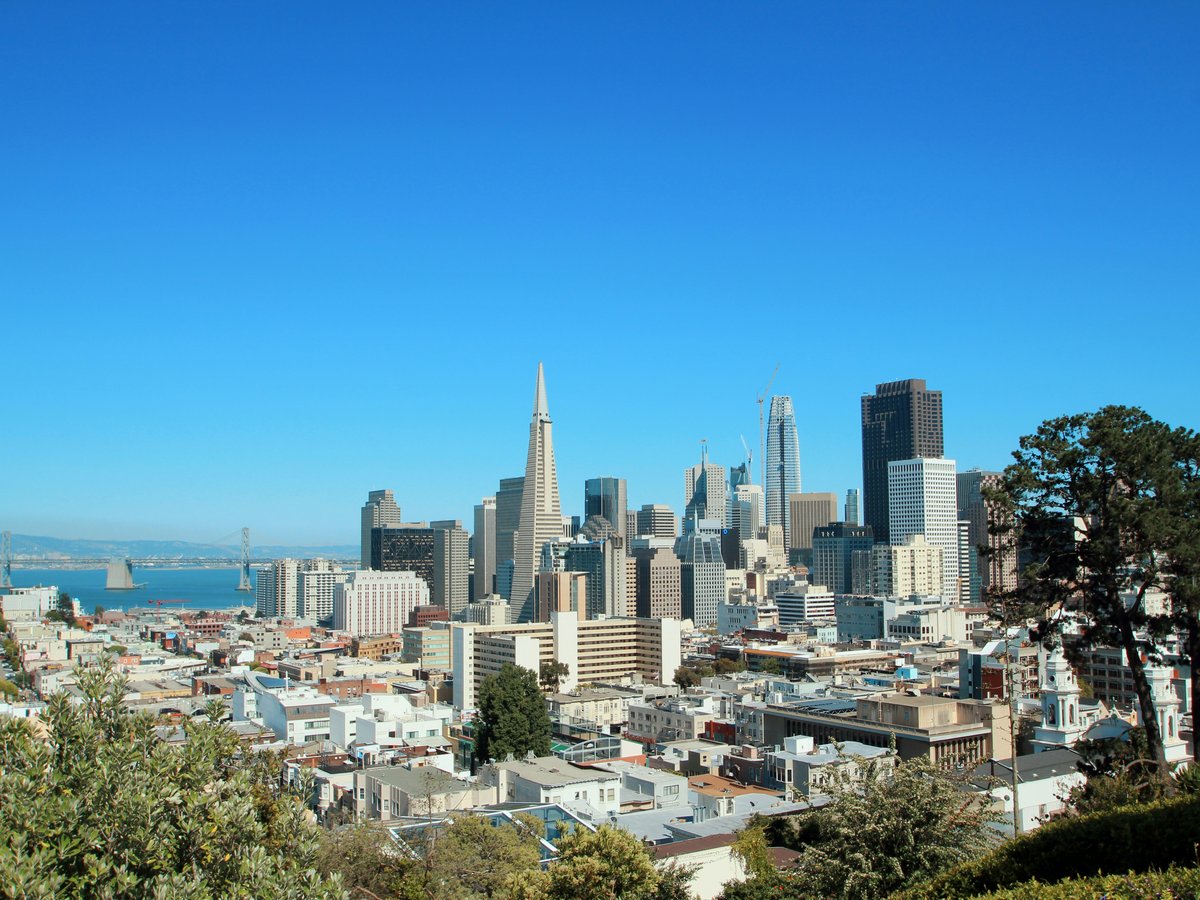
September and October are San Francisco's real summer. The fog that blankets the city from June through August retreats, afternoon highs reach 70-75°F along the Embarcadero, and hotel rates sit 15-20% below peak. First-time visitors who arrive in July expecting California sunshine find 55°F grey skies and damp Pacific wind instead.
The warmth that arrives in September changes the whole feel of the city. Amber light settles over the Painted Ladies at Alamo Square around 6pm, and the smell of roasting coffee drifts from Sightglass on 7th Street into air with a dry clarity the rest of the year lacks. You can stand at Battery Spencer on the Marin Headlands and see the full span of the Golden Gate Bridge, opened in 1937, without fog below the deck. Oracle Park hosts the final weeks of the Giants' baseball season, with upper-deck seats starting around $15 on weeknights. The Mission District warms up on these evenings. La Taqueria on 25th Street, a James Beard America's Classics winner, still draws a line by noon for its carne asada super burrito. Over on Clement Street in the Richmond, dim sum spots serve har gow and siu mai for $4-8 a plate. Valencia Street restaurant patios stay full past 9pm. Hotel rates in Union Square run $180-280 per night in these months.
Here is what trips up first-time visitors. June and July in San Francisco feel nothing like June and July in Los Angeles, 380 miles south. The Pacific High pushes cold ocean water toward the coast. The marine layer rolls through the Golden Gate strait most mornings and drops temperatures in the Sunset and Richmond districts to 54-58°F (12-14°C). The fog is so persistent that locals named it Karl. The @karlthefog Instagram account currently has over 300,000 followers. You might wake up at a hotel near Fisherman's Wharf to grey skies and a damp chill that cuts right through a t-shirt. By 2pm the sun sometimes burns through east of Van Ness Avenue, but the western half of Golden Gate Park, all 1,017 acres founded in 1870, often stays grey until late afternoon. If your trip falls in these months, pack as if you are headed to Seattle, not San Diego.
April and May sit in a useful middle zone. Rain tapers off by mid-April, with the city averaging about 1.2 inches that month compared to 4.4 inches in February. Cherry blossoms at the Japanese Tea Garden in Golden Gate Park tend to peak in late March through early April. Temperatures hover in the low 60s°F (15-17°C), comfortable enough for the 1.7-mile waterfront walk from the Ferry Building to Pier 39, though the breeze off the bay still carries a sharp salt edge. The Ferry Building, completed in 1898, is worth a morning on its own. Cowgirl Creamery sells its Mt Tam triple-cream cheese inside, and Hog Island Oyster Co. shucks Sweetwaters at the raw bar. May brings more sun to the Mission and SoMa, but fog has already started its summer creep toward Ocean Beach. These months work well if September is off the table.
December through February is the wet stretch. San Francisco records about 20 of its 23 annual inches of rainfall in those three months. The rain arrives not as drizzle but as heavy Pacific storms that soak through a cotton jacket in 10 minutes and turn the steep sidewalks of Nob Hill slippery underfoot. Wind at the Golden Gate Bridge viewpoint on the Marin side hits 30 mph on a regular basis. Alcatraz Island ferry crossings get rough enough in January that the National Park Service cancels roughly 5-8 sailings per month. The upside is price. Hotel rates in Nob Hill and the Financial District drop to $120-180 per night. The California Academy of Sciences, founded in 1853, runs its NightLife series on Thursday evenings year-round, but winter tickets are available without the 3-week advance booking the fall demands. SFMOMA on 3rd Street, founded in 1935, needs a full 3 hours on its own. Swan Oyster Depot on Polk Street, an 18-stool counter open since 1912, serves Dungeness crab through winter season.
Getting around San Francisco without a car is straightforward. BART runs from SFO to Powell Street station in about 30 minutes. A Clipper card works on Muni buses, the F-Market heritage streetcar along the Embarcadero, and the cable cars, though cable car fare is $8 per ride. Taxis and rideshares from SFO to Union Square take 20-35 minutes depending on traffic. For first-timers, the Marina and Hayes Valley make solid home bases with walkable restaurants and a calmer feel after dark than the Tenderloin or mid-Market corridor. North Beach puts you near Chinatown, City Lights Bookstore on Columbus Avenue, and some of the city's oldest Italian restaurants. Budget for $15-20 per meal in the Mission and Sunset, $30-50 at a mid-range spot in Hayes Valley or the Marina. Mind you, San Francisco is a 7-by-7-mile peninsula. Even neighborhoods that look far apart on the map are a 15-minute rideshare from each other.
Month-by-month outlook
- Jan Avoid
- Feb Avoid
- Mar Shoulder
- Apr Shoulder
- May Shoulder
- Jun Avoid
- Jul Avoid
- Aug Shoulder
- Sep Ideal
- Oct Ideal
- Nov Shoulder
- Dec Avoid
Year-round climate
Averages from the last 5 years.
| Month | Avg high (°C) | Avg low (°C) | Rainfall (mm) |
|---|---|---|---|
| Jan | 14 | 8 | 104 |
| Feb | 14 | 8 | 89 |
| Mar | 14 | 9 | 104 |
| Apr | 16 | 10 | 22 |
| May | 17 | 11 | 12 |
| Jun | 18 | 12 | 2 |
| Jul | 18 | 13 | 0 |
| Aug | 20 | 14 | 1 |
| Sep | 20 | 14 | 5 |
| Oct | 20 | 13 | 43 |
| Nov | 16 | 10 | 78 |
| Dec | 13 | 8 | 191 |
Mild year-round, 50-72°F (10-22°C). Sept-Oct warmest and clearest. June-July foggy, 54-60°F. Nearly all of the 23-inch annual rainfall lands Nov through Mar.
Last verified by automated review (v1.7.2) on . What is automated review?