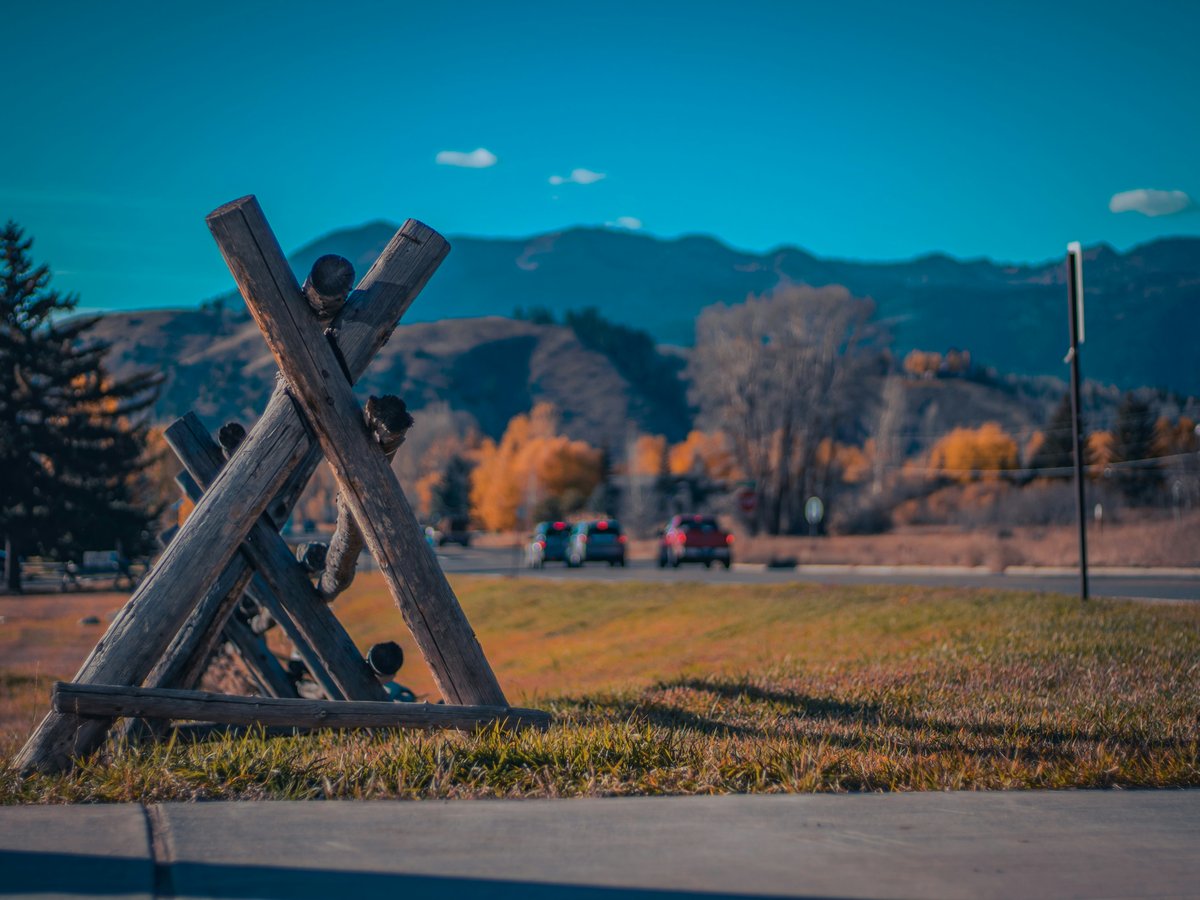
Jackson Hole is a valley, not a town. The town is Jackson, population roughly 10,500, sitting at 6,237 feet at the valley's southern end. The Teton Range walls off the west side, the Gros Ventre Range closes the east, and the Snake River threads north to south between them. Most visitors orbit between two poles about 12 miles apart. Downtown Jackson, centered on its Town Square with four elk antler arches, handles the restaurants, shops, and bars. Teton Village, northwest at the base of Jackson Hole Mountain Resort, handles the skiing and summer hiking. Wilson, a settlement of about 1,600 people west of Jackson across the Snake River, draws year-round residents who prefer quieter mornings. North of town, Highway 89 threads past the National Elk Refuge into Grand Teton National Park. The free START Bus connects key points along the valley floor, but the distances between areas still feel significant, and a car makes life noticeably easier. For arrival logistics and transit options, the Wikivoyage Jackson Hole overview covers the basics well (https://en.wikivoyage.org/wiki/Jackson_Hole#Get_in).
Neighborhoods
-
Downtown Jackson
The town of Jackson is compact enough to walk end to end in about 15 minutes. Town Square sits at the intersection of Broadway and Cache Street, framed by four arches made from thousands of shed elk antlers. Buildings stay low, mostly two and three stories, with wood and stone facades that lean Western without dipping into theme-park territory. George Washington Memorial Park is a few blocks east, a quiet patch of green that most visitors walk right past on their way to the square. The Million Dollar Cowboy Bar anchors the square's south side, its saddle barstools worn smooth from decades of use. On a mid-September morning you might step outside to 9.7 degrees Celsius, with a wind chill closer to 5, dry air at about 37 percent humidity, and an overcast sky. The crispness makes the first coffee of the day taste notably better. Pearl Avenue, one block south of Broadway, has grown into a quieter dining corridor with a handful of restaurants that take reservations seriously. North on Cache, storefronts shift between galleries, gear outfitters, and places that have outlasted several real-estate booms. Foot traffic picks up from late June through August and again during ski season, but early September is the valley's slow exhale, and you can get a table at 7 PM without a wait.
- Best for
- First-time visitors, anyone who wants walkable restaurants and shops, travelers without a car who rely on the valley's free bus connections
- Key streets
- Cache Street runs north-south as the main commercial strip. Broadway crosses east-west through Town Square. Pearl Avenue, one block south, has become the quieter restaurant row. Deloney Avenue and King Street hold side-street galleries and the Jackson Hole Playhouse.
-
Teton Village
Teton Village exists because of Jackson Hole Mountain Resort and does not pretend otherwise. The base area sits at roughly 6,311 feet, with the aerial tram climbing 4,139 vertical feet to the summit of Rendezvous Mountain at 10,450 feet. In winter this is a serious ski destination with about 2,500 acres of terrain. In summer, the tram still runs for hikers and sightseers. The village itself is walkable in about 10 minutes, with hotels, condos, and a few restaurants clustered around the tram plaza. The architecture is contemporary mountain lodge, heavy timber and natural stone. Nightly rates here tend to run 30 to 50 percent higher than equivalent lodging in town. To be fair, the trade-off is proximity. First-chair access in winter, or first-tram hiking in summer, can be worth the premium. The Mangy Moose Saloon sits right at the tram base and has been the after-ski gathering point since the late 1960s. Hikers heading down through Granite Canyon from the summit pass the Upper Granite Canyon Patrol Cabin, one of those quiet backcountry structures that reminds you how recently this was frontier. After the lifts close for the day, the village can feel remarkably still.
- Best for
- Skiers and snowboarders wanting first-lift access, summer hikers heading into Grand Teton backcountry, visitors who prefer a self-contained resort setting over a town atmosphere
- Key streets
- Teton Village Road loops through the base area. The village is more of a pedestrian campus than a street grid. The main plaza around the tram base holds most of the restaurants and rental shops.
-
Wilson
Wilson is a blink-and-miss-it settlement on WY-22 west of Jackson, on the far side of the Snake River. There is no real commercial district. What Wilson has is the Stagecoach Bar, which has been running its Sunday night live band since the 1940s. Fish Creek runs through the area, and the surrounding ranchland gives the whole place a quieter, more pastoral feel than anything in town. You might hear sandhill cranes in the morning and not much else. Housing here, while still expensive by any normal measure, tends to cost somewhat less than in-town Jackson, which is why many year-round locals have settled on this side of the river. The light is different in Wilson, too. The Tetons are closer, and in the afternoon they throw long shadows across the fields earlier than they do over town. A few vacation rentals and cabins dot the creekside roads, but there are no large hotels.
- Best for
- Couples or small groups renting a cabin, repeat visitors who already know the valley, anyone who prioritizes quiet mornings over walkable nightlife
- Key streets
- WY-22 (Teton Pass Highway) is the main artery. Fall Creek Road heads south into ranch and residential country. The small center clusters near the WY-22 and Fall Creek Road intersection.
-
Spring Creek and East Gros Ventre Butte
East Gros Ventre Butte rises about 500 feet above the valley floor on the south side of Jackson. Spring Creek Ranch sits up top, along with a handful of high-end residential properties sharing the mesa. The draw is the view. From the butte you look north across the National Elk Refuge straight at the Teton Range. On a clear day, the 13,775-foot Grand Teton fills the northern horizon. The area is entirely car-dependent. No sidewalks, no shops, no restaurants beyond what the ranch resort provides. It feels surprisingly remote given that downtown Jackson is maybe a 10-minute drive below. No traffic noise reaches the top. No bar music, no foot traffic. Mind you, the isolation means any errand, any meal out, any activity requires getting in the car and winding back down Spring Gulch Road.
- Best for
- Couples seeking seclusion and panoramic Teton views, photographers chasing sunrise and sunset light, visitors who will trade convenience for landscape
- Key streets
- Spring Gulch Road climbs the butte from the south edge of Jackson. There is one road up and one road down.
-
Highway 89 Corridor North
Highway 89/191 runs north from Jackson toward Grand Teton National Park, and this corridor holds several of the valley's key attractions outside of town. The Jackson National Fish Hatchery has operated since 1950, sitting along Flat Creek at the edge of the National Elk Refuge. About 2.5 miles from town, the National Museum of Wildlife Art occupies a sandstone building set into a hillside. The museum was founded in 1987 and holds over 5,000 works. Its architecture blends so deliberately with the surrounding rock that you might drive past without noticing. Further north past Moose Junction, the Chapel of the Transfiguration stands inside Grand Teton National Park. The chapel was built in 1925. A picture window behind its altar frames the Teton peaks instead of a painted backdrop. The Manges Cabin, a homesteader structure from 1911, and the Murie Residence both sit within the park as well, traces of the valley's ranching life before tourism took hold. This corridor is not a neighborhood in the residential sense, but several lodges and cabins along the highway put visitors within a few minutes of the park entrance, about 13 miles north of town.
- Best for
- Nature-focused visitors, wildlife watchers hoping to spot elk and moose along the refuge, anyone who wants lodging near the Grand Teton park entrance without staying inside the park itself
- Key streets
- US-89/191 is the only through road. Elk Refuge Road forks east into the refuge for winter sleigh rides, which typically run mid-December through early April. The Wikivoyage guide covers the main sights and access points in more detail (https://en.wikivoyage.org/wiki/Jackson_Hole#See).
FAQ
Is Jackson Hole safe for solo travelers?
Jackson Hole scores 8.3 out of 10 for solo-traveler safety (see the TTDI Solo-Safety Index). The town of Jackson is small, well-lit, and walkable at all hours. Crime rates in Teton County remain consistently low. The main concern for solo visitors tends to be wildlife encounters on trails rather than anything urban. Carry bear spray on any hike outside of town, and let someone know your route before heading into the backcountry. More safety details at the Wikivoyage Jackson Hole guide (https://en.wikivoyage.org/wiki/Jackson_Hole#Stay_safe).
Which area works best for families with kids?
Downtown Jackson tends to suit families best because of the walkability and range of casual dining. The fish hatchery and the wildlife museum north of town are both well-suited to kids, and Town Square itself keeps younger children entertained with the antler arches and summer evening shows. Jackson Hole rates 7.8 out of 10 for family friendliness (see the TTDI Family-Friendliness Index). Teton Village can also work for ski-focused families, though the dining there runs pricier and with fewer options.
Can you get around Jackson Hole without a car?
Within the town of Jackson, you can walk to most restaurants, shops, and galleries. The valley's free bus service runs between town, the resort, and several intermediate stops, roughly every 30 minutes in peak season. That said, reaching Grand Teton National Park trailheads, getting to Wilson, or visiting attractions along the highway corridor north of town requires a car or ride service. Rental cars book up fast in summer and ski season, so reserving ahead by several weeks is wise. More transit detail at the Wikivoyage guide (https://en.wikivoyage.org/wiki/Jackson_Hole#Get_around).
Is Jackson Hole a good base for remote work?
Jackson Hole scores 4.2 out of 10 for digital-nomad suitability (sourced from TTDI's editorial rubric). The valley has reliable internet in town and at major hotels, but coworking options are limited. Cost of living is extremely high for a small Western town, with median home sale prices well above $1 million and even modest restaurant entrees running $20 or more. Most cafes close by mid-afternoon. It works better as a week-long working trip than a long-term nomad base. For practical tips on connectivity and costs, see the Wikivoyage guide (https://en.wikivoyage.org/wiki/Jackson_Hole#Cope).
How welcoming is Jackson Hole for LGBTQ+ visitors?
Jackson Hole rates 7.5 out of 10 for LGBTQ+ friendliness (sourced from TTDI's editorial rubric). Wyoming's broader political landscape leans conservative, but Teton County has consistently voted differently from the rest of the state and tends to be more open. The town of Jackson elected an all-female, majority-LGBTQ+ town council in 2018, which received national attention. You are unlikely to encounter issues in Jackson itself, though the surrounding rural areas are more traditional.
When is the best time of year to visit Jackson Hole?
Summer, from mid-June through August, brings warm days in the 25 to 30 degree Celsius range and the longest daylight for hiking Grand Teton National Park. Ski season runs roughly early December through early April, with January and February seeing the deepest snowpack. September and October are a quieter sweet spot, with smaller crowds, fall colors along the aspens, and elk migration along the refuge corridor north of town. Shoulder months can bring rapid temperature swings, so layers are worth packing regardless of season.
Last verified by automated review (v1.7.2) on . What is automated review?