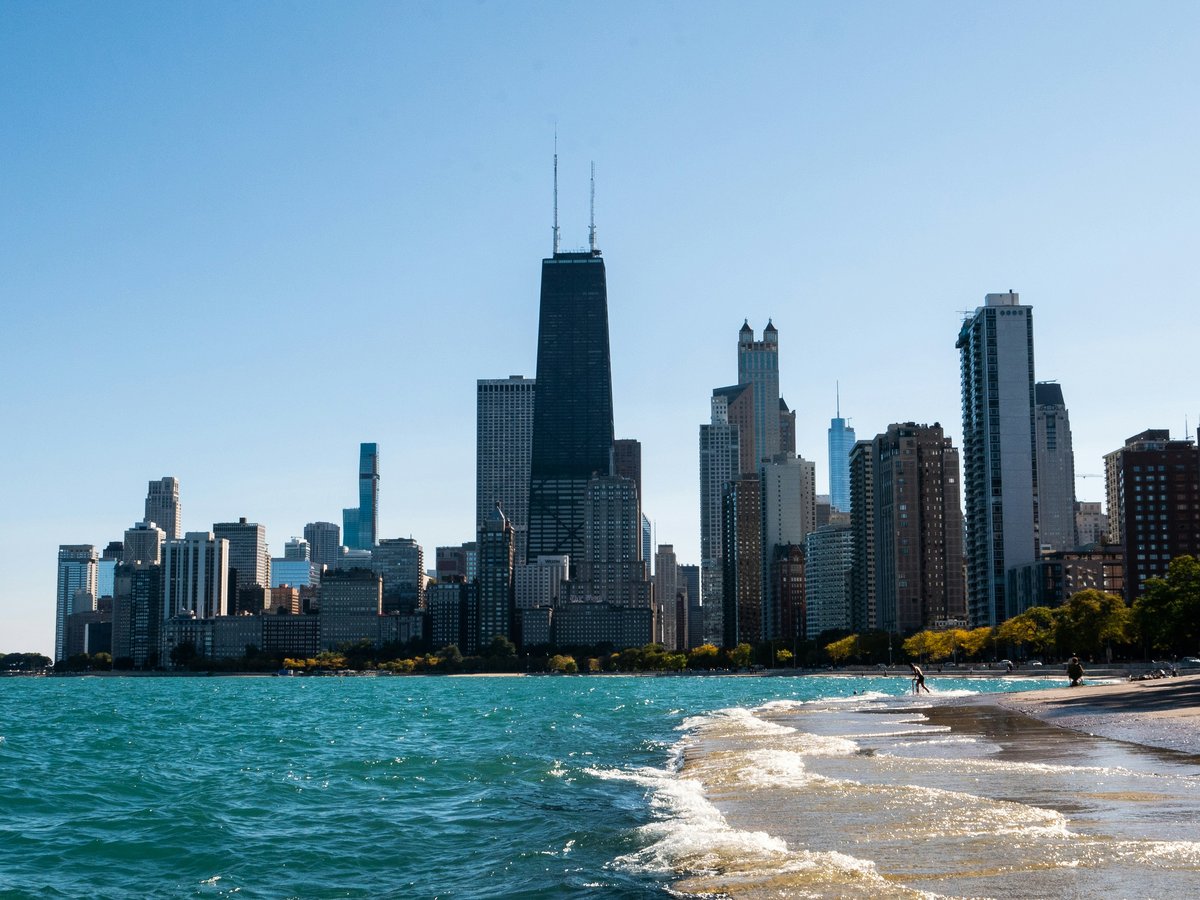
Chicago tends to get pigeonholed as an expensive city, and you'll certainly find places to empty your wallet along the Magnificent Mile. But the city's public infrastructure is staggeringly generous. Millennium Park alone would be a headline attraction in most cities. Lincoln Park Zoo has been free since 1878. The Chicago Cultural Center, a Beaux-Arts building from 1897 with the world's largest Tiffany glass dome, charges nothing. The lakefront stretches 26 miles with public beaches, and neighborhoods like Pilsen have turned entire blocks into open-air galleries. You might spend 4 or 5 full days here without paying a single admission fee and still feel like you've only scratched the surface. That said, the trick is knowing which of the big-ticket museums offer free days for residents and which ones are permanently free for everyone. This guide sorts all of that out.
Free attractions
-
Millennium Park
The 24.5-acre park opened in 2004 on what used to be Illinois Central rail yards. Cloud Gate, Anish Kapoor's 110-ton polished steel sculpture, sits at the center of AT&T Plaza. You'll find Crown Fountain's 50-foot glass towers cycling through video portraits of 1,000 Chicagoans, with water cascading down in summer. The Jay Pritzker Pavilion, designed by Frank Gehry, hosts free concerts from June through August. Lurie Garden, tucked behind the pavilion, covers 5 acres of perennial plantings and stays open year-round.
The Looppark -
Lincoln Park Zoo
One of the oldest zoos in the country, open since 1868, and it has been free for the entirety of its existence. The 35-acre grounds sit between Lincoln Park proper and the lakefront. The Regenstein Center for African Apes, the Kovler Sea Lion Pool, and the Nature Boardwalk around South Pond are all worth a slow visit. Mind you, the zoo does get crowded on summer weekends, so weekday mornings tend to be more pleasant. Open 365 days a year.
Lincoln Parkzoo -
Chicago Cultural Center
The building at 78 E. Washington Street opened in 1897 as the city's first public library. The Preston Bradley Hall dome contains 30,000 pieces of Tiffany Favrile glass and measures 38 feet in diameter. Free rotating art exhibitions fill the galleries on multiple floors. The building also hosts free concerts, lectures, and dance performances, often at midday. Worth noting, there's a Chicago Greeter desk on the first floor where you can book a free neighborhood tour.
The Loopmuseum -
National Museum of Mexican Art
Located at 1852 W. 19th Street in the Pilsen neighborhood, this museum has been free since it opened in 1987 and maintains a permanent collection of over 10,000 works spanning 3,000 years of Mexican, Latino, and Chicano art. The Day of the Dead exhibition, running annually from September through December, draws visitors from across the Midwest. It's the only Latino museum accredited by the American Alliance of Museums.
Pilsenmuseum -
Garfield Park Conservatory
This glass-house complex at 300 N. Central Park Avenue covers about 2 acres of indoor growing space, making it one of the largest conservatories in the country. Jens Jensen designed the original structure in 1908. The Palm House alone holds trees reaching 70 feet toward the glass ceiling. The Fern Room has a humid, earthy stillness to it. The outdoor gardens along the south side bloom from May through October. Always free.
East Garfield Parkconservatory -
Smart Museum of Art
The University of Chicago's fine arts museum on the main quad at 5550 S. Greenwood Avenue holds about 16,000 objects. The collection runs from ancient Asian sculpture through 20th-century American works. Exhibitions rotate every few months. Always free, and considerably less crowded than the big lakefront museums. The cafe on site is decent, too.
Hyde Parkmuseum -
Museum of Contemporary Photography
Attached to Columbia College at 600 S. Michigan Avenue, this is one of a handful of museums in the country dedicated entirely to photography. The collection holds over 15,000 prints and objects. Free admission, always. The exhibitions tend to lean toward documentary and socially engaged work. It's small enough to see in under an hour.
South Loopmuseum -
Lincoln Park Conservatory
The Victorian glass building at 2391 N. Stockton Drive has been open since 1895. Four display rooms house palms, ferns, orchids, and seasonal flower shows. The orchid collection is particularly strong. Free year-round, and it's a reliable escape from February cold. The adjacent formal gardens along Stockton Drive are at their peak from June through September.
Lincoln Parkconservatory -
Northerly Island
This 91-acre peninsula south of the Adler Planetarium was once Meigs Field airport. The city converted it to parkland starting in 2003. You'll find walking trails through restored prairie and wetland habitat, with unobstructed skyline views across Burnham Harbor. Migratory birds pass through heavily in May and September. The Huntington Bank Pavilion sits at the northern end for summer concerts, though those are ticketed.
Near South Sidepark -
Chicago Riverwalk
The 1.25-mile path runs along the south bank of the main branch of the Chicago River from Lake Shore Drive west to Lake Street. It opened in phases between 2009 and 2016. The architecture is worth the walk on its own. You can see Marina City's corncob towers, the Wrigley Building, and the old Beaux-Arts bridges from water level. Free to walk at all hours. The restaurants and kayak rentals along the way do cost money, obviously.
The Loopwalkway
Free activities
-
Lakefront Trail
The paved path runs 18.5 miles along Lake Michigan from Ardmore Avenue on the north side to 71st Street on the south side. It passes through Lincoln Park, Grant Park, Burnham Park, and Jackson Park. Runners, cyclists, and walkers share the route, though the busiest stretch between North Avenue and Navy Pier has been split into separate bike and pedestrian lanes since 2018. The views of the skyline from the path near Montrose Harbor are some of the best in the city. Oak Street Beach and North Avenue Beach sit directly along the trail and are free to use.
Citywidewalking and cycling -
Pilsen Murals Walk
The neighborhood roughly bounded by 16th Street, Cermak Road, Halsted Street, and Western Avenue has one of the densest concentrations of outdoor murals in the Midwest. The tradition goes back to the 1960s and 1970s, rooted in Mexican muralism. Many of the largest pieces cover entire building facades along 18th Street. You might notice the mix shifting as newer artists add to the collection. Some murals are explicitly political. Others are portraits or celebrations of local life. The 16th Street Metra station itself has a notable mosaic installation.
Pilsenstreet art -
Maxwell Street Market
The open-air market currently operates on Sundays from 7 AM to 3 PM on South Desplaines Street, between West Roosevelt Road and West Harrison Street. The original Maxwell Street Market dates back to 1912, and while it has moved several times, the feel persists. Vendors sell everything from tools to vintage clothing. The food stalls are the main draw. Tacos, elotes, and the original Maxwell Street Polish sausage are all available for a few dollars, but browsing is free and the atmosphere is lively. You'll hear live blues or cumbia on most Sundays.
University Villagemarket -
The 606 (Bloomingdale Trail)
This 2.7-mile elevated trail follows the path of a former rail line through Bucktown, Wicker Park, Humboldt Park, and Logan Square. It opened in 2015. The trail sits about 17 feet above street level, giving you a different angle on the neighborhood architecture. Garden plantings line much of the route. The western end connects to the paths in Humboldt Park. Free and open from 6 AM to 11 PM.
Bucktown to Logan Squarewalking and cycling -
Chicago Beach Hopping
Chicago has 26 public beaches along the lakefront, all free. North Avenue Beach has the busiest scene, with volleyball courts and a steamship-shaped beach house from 2000. Oak Street Beach sits closer to the Gold Coast high-rises and tends to attract a slightly older crowd. Montrose Beach, farther north, is quieter and has a protected dunes area. 12th Street Beach on Northerly Island is the most secluded of the major beaches. Water temperatures in Lake Michigan hover around 70 F in July and August, though they can drop quickly.
Citywidebeaches -
Art Institute of Chicago Free Days
The Art Institute at 111 S. Michigan Avenue is one of the world's major art museums, and while general admission currently runs $35 for adults, Illinois residents can visit free on certain designated days throughout the year. Children under 14 are always free. The schedule of free days for Illinois residents changes annually, so checking the museum's website before your visit is worth the 30 seconds. The Modern Wing, designed by Renzo Piano and opened in 2009, connects to Millennium Park via the Nichols Bridgeway.
The Loopmuseum free day -
Museum of Science and Industry Free Days
The MSI at 5700 S. Lake Shore Drive in Jackson Park offers free general admission days for Illinois residents scattered across the calendar year. The museum itself occupies the former Palace of Fine Arts building from the 1893 World's Columbian Exposition. It's the only remaining building from that fair still standing at its original location. The number of free days varies by year, typically falling between 10 and 20 across the calendar. Check their site for dates.
Hyde Parkmuseum free day
Free events
-
Chicago Blues Festival
Annually in June, 3 daysThe largest free blues festival in the world, running since 1984. Three days of performances across multiple stages in Millennium Park, typically in June. Past headliners have included Buddy Guy, Shemekia Copeland, and Bobby Rush. The main stage at the Jay Pritzker Pavilion seats 4,000 with lawn space for 7,000 more.
Millennium Park -
Chicago Jazz Festival
Labor Day weekend, 4 daysFree jazz performances over Labor Day weekend at the Jay Pritzker Pavilion and surrounding venues in Millennium Park. The festival has run since 1979. Sets run afternoon through evening across 4 days. The lineup tends to mix Chicago stalwarts with international acts. The grounds fill up by late afternoon on headliner nights, so arriving early is practical.
Millennium Park -
SummerDance
Fridays and Saturdays, July through SeptemberFree outdoor dancing in the Spirit of Music Garden in Grant Park, running Friday evenings and Saturday afternoons from July through September. Each session starts with a lesson in that night's style. Salsa, swing, steppin', and Bollywood have all appeared on the schedule. A live band or DJ follows the lesson. The dance floor is concrete, so comfortable shoes matter.
Spirit of Music Garden, Grant Park -
Millennium Park Summer Music Series
Mondays and Thursdays, June through AugustFree Monday and Thursday evening concerts at the Jay Pritzker Pavilion from June through August. The programming ranges from world music to indie rock to classical. The Grant Park Orchestra, which has performed free concerts in Chicago since 1935, anchors Wednesday and Friday evenings through its own separate Grant Park Music Festival series. Bring a blanket for the Great Lawn.
Jay Pritzker Pavilion, Millennium Park -
Chicago Air and Water Show
Annually in August, 2 daysThe largest free air show in the United States, held annually since 1959 over North Avenue Beach. The U.S. Navy Blue Angels or U.S. Air Force Thunderbirds alternate as the headline act. Two full days of flight demonstrations and water stunts along the lakefront. Crowds reach an estimated 2 million across the weekend. The noise from the jet passes is staggering.
North Avenue Beach -
Movies in the Parks
June through September, multiple nights weeklyThe Chicago Park District screens free outdoor films at parks across all 77 community areas from June through September. Screenings start at dusk. The full schedule goes up on the Park District website each May. Locations range from well-known parks like Wicker Park and Humboldt Park to smaller neighborhood parks. Bring your own seating.
Various Chicago parks -
Chicago Gospel Music Festival
Annually in late May or early JuneFree gospel performances in Millennium Park, typically in late May or early June. The festival has run since the early 1980s and draws nationally known choirs and soloists. The energy is high and the crowd is participatory. Sets run across the full day.
Millennium Park
Beaches and the Lakefront
Lake Michigan's western shoreline gives Chicago 26 free public beaches across roughly 26 miles. North Avenue Beach is the most popular, with lifeguards on duty from Memorial Day weekend through Labor Day. The beach house, shaped to resemble an ocean liner, has restrooms and changing facilities. Oak Street Beach, about a 10-minute walk south, sits at the base of the Gold Coast and tends to be slightly less chaotic. Montrose Beach at 4400 N. Lake Shore Drive has a large sand area and a bird sanctuary in the adjacent dunes. To be fair, the water temperature takes patience. Lake Michigan rarely tops 72 F even in late July, and a north wind can drop surface temperatures by 10 degrees overnight. Still, on a calm August afternoon, the turquoise shallows off North Avenue could pass for somewhere much farther south. The beaches are free, lifeguards are free, and there's no charge for the skyline backdrop.
Neighborhoods Worth Walking
Pilsen's 18th Street corridor is a sensory experience on its own. The smell of fresh tortillas from panaderias, the bright yellows and reds of building facades, and the murals covering nearly every available wall surface make it one of the most visually dense walks in the city. Start at the Pilsen stop on the CTA Pink Line and head west. Wicker Park and Bucktown, reachable via the Blue Line to Damen, have a different texture. Victorian greystones, independent bookshops, and coffee roasters line Milwaukee and Division. The neighborhood has changed considerably since the 1990s, and longtime residents might point that out. Hyde Park, 7 miles south of the Loop, centers on the University of Chicago's neo-Gothic campus. The Rockefeller Memorial Chapel at 5850 S. Woodlawn is worth stepping inside for the 72-bell carillon alone. Chinatown, accessible via the Red Line to Cermak-Chinatown, has a compact commercial strip along Wentworth Avenue with about 80 restaurants and shops. The Nine Dragon Wall in Ping Tom Memorial Park is a 30-foot ceramic replica of the one in Beijing's Beihai Park.
Free Architecture Viewing
Chicago's skyline is an architecture textbook, and you can study it without paying for a boat tour. The Michigan Avenue Bridge area gives you direct sightlines to the Tribune Tower's Gothic buttresses, the Wrigley Building's white terra cotta facade, and Marina City's twin cylindrical towers from 1964. Walk south along Michigan to the Art Institute and then west on Adams to see the Rookery Building at 209 S. LaSalle Street. Frank Lloyd Wright redesigned the lobby in 1905, and you can walk into the light court during business hours at no charge. The Monadnock Building at 53 W. Jackson, completed in two phases in 1891 and 1893, has walls 6 feet thick at the base. Its lobby is open to the public. The Chicago Architecture Center at 111 E. Wacker has a ground-floor scale model of the city visible through the windows even when the center is closed. The view from the Michigan Avenue Bridge at night, with the Wrigley Building lit up and the river reflecting the skyline, might be the single best free sight in the city.
FAQ
Is Lincoln Park Zoo really free, or do they charge for special exhibits?
General admission to Lincoln Park Zoo has been free since the zoo opened in 1868, and that includes all animal houses and outdoor exhibits. Some special ticketed events do occur seasonally, like ZooLights in winter, which currently runs around $5 to $7 per person on peak nights. But day-to-day zoo admission is free, 365 days a year. Parking in the lot is not free, though. It tends to run around $20 to $35 depending on the day. CTA bus routes 151 and 156 stop right at the zoo entrance.
Which major Chicago museums offer free admission days?
The Art Institute of Chicago offers free days for Illinois residents at various points throughout the year. The Museum of Science and Industry provides a similar program with free general admission days for Illinois residents. The Field Museum has also historically offered free basic admission days for Illinois residents. The Shedd Aquarium has occasionally done the same, though the schedule is less predictable. In all cases, the specific dates change annually and typically appear on each museum's website in January or early spring. The National Museum of Mexican Art, the Chicago Cultural Center, the Smart Museum of Art, and the Museum of Contemporary Photography are free every day for everyone.
Are Chicago's beaches really free to use?
All 26 of Chicago's public beaches along the lakefront are free to access and use. There are no entrance fees, no umbrella rental requirements, and lifeguards are on duty at the major beaches from Memorial Day weekend through Labor Day at no charge. You might see paid parking lots near North Avenue Beach and Oak Street Beach, but street parking and CTA access are alternatives. The beaches open at 6 AM and close at 11 PM. Swimming is only permitted when lifeguards are present, typically 11 AM to 7 PM.
Can I see Cloud Gate (The Bean) for free?
Cloud Gate in Millennium Park is free to visit at any time the park is open, which is currently 6 AM to 11 PM daily. There's no fence, no ticket, no timed entry. The sculpture sits in the open on AT&T Plaza. Early mornings before 8 AM tend to be the quietest times for photos without crowds. The surface reflects the skyline in a way that shifts depending on where you stand, and walking underneath the 12-foot arch gives you a warped panoramic view of the surrounding buildings.
What is the best free walking route for first-time visitors?
Start at Millennium Park, see Cloud Gate and the Crown Fountain, then walk south through the park to the Art Institute's Modern Wing. Cross the Nichols Bridgeway back into the park and head east to the lakefront. Follow the Lakefront Trail north past the harbor to the River Esplanade, then walk west along the Chicago Riverwalk to see the Tribune Tower, Wrigley Building, and Marina City from water level. The full loop is roughly 4 miles. If you have energy left, the CTA Brown Line or Purple Line offers a free-ish (you'll need a Ventra card, currently $2.50 per ride) elevated loop around the downtown core that passes between skyscrapers at third-floor height.
When is the best time of year to visit Chicago on a free budget?
Late June through early September concentrates the most free programming. The Blues Festival typically falls in June, SummerDance runs July through September, the Air and Water Show is in August, and the Jazz Festival lands on Labor Day weekend. Beaches are swimmable from late June through August. That said, the lakefront and parks are beautiful in October when the trees along the Lakefront Trail turn, and winter has its own appeal if you're willing to layer up. Garfield Park Conservatory and Lincoln Park Conservatory are warm, free, and green year-round. Expect average highs around 84 F in July and 32 F in January.
Last verified by automated review (v1.7.2) on June 16, 2026. What is automated review?