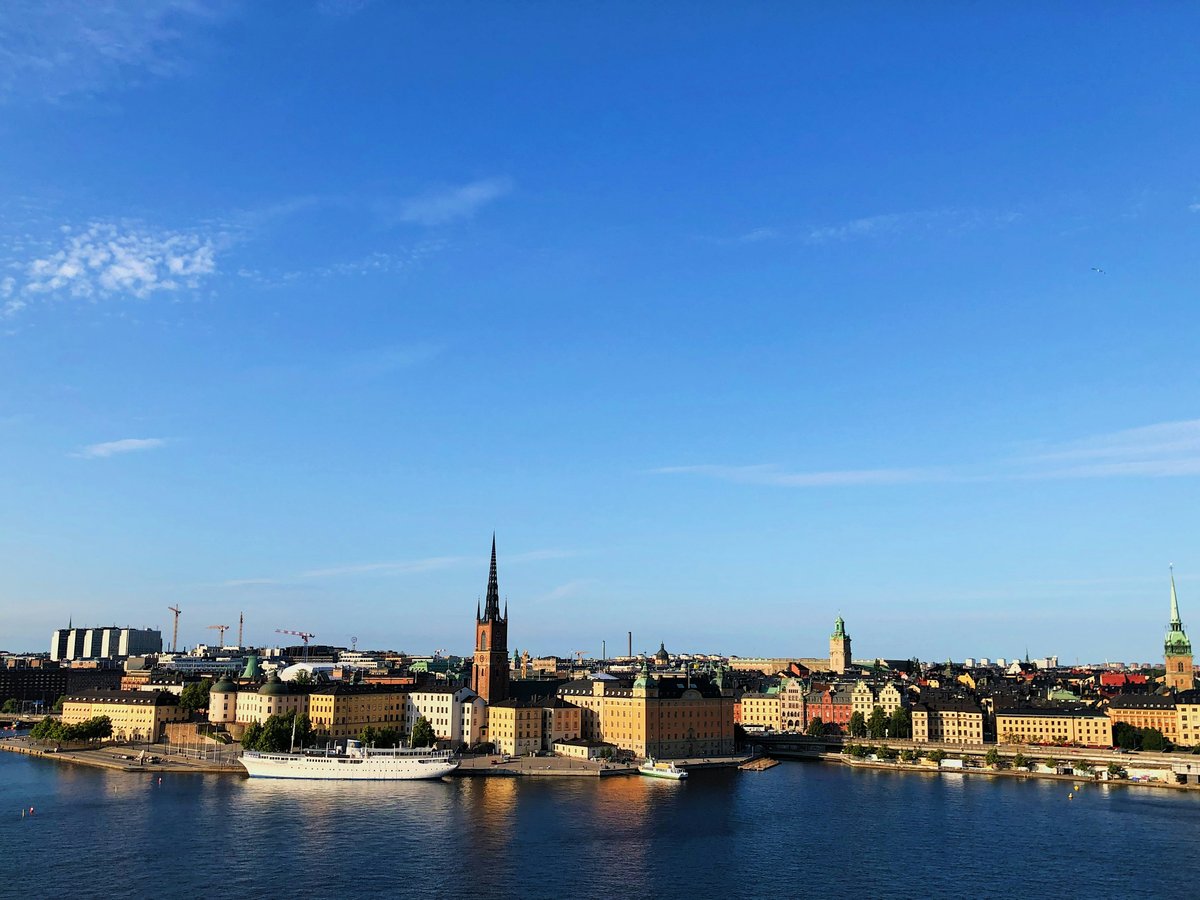
Stockholm's essential sights are shaped by crown and church, and this list follows that logic. Some palaces are still working residences: Stockholm Palace is the official residence of the Swedish monarch, while others are pleasure houses and country seats in Ekerö and Solna. The churches fill in the picture: a burial church of the Swedish kings, a Lutheran cathedral and a Roman Catholic one, along with a civic building that hosts the Nobel Prize banquet. Two entries carry UNESCO World Heritage status, one a palace and the other a cemetery, which is the stop most first-time visitors would never think to add. This list is for travellers who want the places that explain how the city was governed, buried and prayed for, not a tour of the latest photo backdrops. Expect stone, ceremony and long histories, and plan more time for the sites outside the centre than the map suggests.
-
1 Drottningholm Palace
A royal palace with UNESCO World Heritage status
Drottningholm Palace has served as a royal palace in Ekerö Municipality since 1699, and it also holds UNESCO World Heritage status, the designation that sets it apart from most royal houses in the region. Don't treat it as a quick add-on to a day in town. It sits outside the city's own municipality, so give it a proper half day, and enter latitude 59.3217, longitude 17.8864 in your map app before you leave so you aren't guessing on the way. Seasonal opening patterns change, so check the royal palaces' own page for the current schedule, not a reseller's listing. If you leave the centre once on this trip, make it this one.
Dates from 1699 · UNESCO World Heritage Site
-
2 Stockholm Palace
1 Slottsbacken, StockholmThe official residence of the Swedish monarch
Stockholm Palace, the official residence of the Swedish monarch, stands on Slottsbacken, dating from 1760 and protected as a governmental listed building complex. Don't come planning to catch sight of royalty. Come for the building itself, and for the fact that it remains the crown's working home rather than a preserved shell. Latitude 59.3267, longitude 18.0717 will put you at the door. Check visiting arrangements on the royal court's own page before you queue, because a residence still in active use sets its own terms. Of all the palaces in Stockholm, this is the one where the city's history and its present sit closest together.
Dates from 1760 · Governmental listed building complex
-
3 Stockholm City Hall
Hantverkargatan 1, SE-111 52The venue of the Nobel Prize banquet, with the restaurant Stadshuskällaren inside
Stockholm City Hall, at Hantverkargatan 1, SE-111 52, houses both the Municipal Council for the City of Stockholm and the luxury restaurant Stadshuskällaren, and it is also the venue of the Nobel Prize banquet. That last fact alone is reason enough to step inside rather than admiring it from across the water. Skip the exterior photo stop. The building dates from 1923, recent by European civic standards, and that relative youth explains the confident, unfussy feel of the place. What matters here is what happens indoors, where the city governs itself and the laureates dine. Check the city's international page for visiting details before you go.
Dates from 1923
-
4 Skogskyrkogården
A cemetery with UNESCO World Heritage status
A cemetery with UNESCO World Heritage status, Skogskyrkogården is the least obvious entry on this list and the one we'd defend hardest. Most visitors never consider a burial ground a destination. The locals know better, and they know it asks for a slower, quieter pace than any palace. Leave the tour-group tempo at the gate, keep your voice down, and remember that people come here to mourn as well as to look. Set your map to latitude 59.2756, longitude 18.0994 before you set off, and check the cemetery's own website for practical details. Give it an unhurried hour and it will stay with you longer than most of the palace rooms.
UNESCO World Heritage Site
-
5 Riddarholm Church
Birger Jarls torg 3, SE-111 28The burial church of the Swedish kings
Riddarholm Church at Birger Jarls torg 3, SE-111 28, is the burial church of the Swedish kings. The dating depends on which source you use: one record puts it at 1270, another at around 1300, but either way this is the oldest layer of Stockholm you can walk into. Don't move through it quickly on the way to somewhere grander. The reason to come is who lies here, and that takes time to settle. Visitor information sits on the royal palaces' website, which makes clear whose story this is. Read it before you go, so the names on the stones mean something when you get there.
Dates from 1270
-
6 Storkyrkan
Stockholm's Lutheran cathedral
Storkyrkan, Stockholm's Lutheran cathedral, is protected as an ecclesiastical listed building complex. The instinct to peer in from the doorway and keep moving is worth resisting here. A cathedral of this scale rewards the visitor who sits down for ten minutes and lets the space settle around them. If the surrounding streets send your phone in circles, enter latitude 59.3258, longitude 18.0706 and you'll find it. The parish runs a dedicated visitors' page, so check opening details before you plan your visit around a service. Of the churches on this list, this is the one that anchors the city's Lutheran life, and we'd treat it as a place to slow down, not a box to tick.
Ecclesiastical listed building complex
-
7 Klara Church
Klara östra kyrkogata 7A listed church in central Stockholm dating from 1572
Klara Church at Klara östra kyrkogata 7 has been part of central Stockholm since 1572, and while it is protected as an ecclesiastical listed building complex, it carries that distinction without ceremony. Locals treat it as a church in the middle of everyday life, and that is the right way to approach it. Drop in between errands rather than making a pilgrimage of it, and let a few quiet minutes break up a busy day in the centre. The church's own website carries the current details. Of everything on this list it asks the least of you, and it gives back well.
Dates from 1572 · Ecclesiastical listed building complex
-
8 German Church
Tyska Brinken, StockholmA listed church building open to visitors 10:30-16:30
The German Church on Tyska Brinken is open to visitors from 10:30 to 16:30, and those hours are firm. Showing up at dusk hoping to slip in will not work. The church is protected as an ecclesiastical listed building complex, and it deserves a slow circuit rather than a glance from the street, so arrive mid-morning while the day is still quiet and give yourself time to look up. Check the parish's web page before you go to confirm nothing has changed. The name signals a community story, and a short visit inside is the best way to start understanding it.
Ecclesiastical listed building complex
Hours: 10:30-16:30
-
9 St. Eric's Cathedral, Stockholm
Folkungagatan 46Stockholm's Roman Catholic cathedral, dating from 1892
At Folkungagatan 46, St. Eric's Cathedral gives Stockholm's religious landscape a second voice and dates from 1892, which makes it a young cathedral by European standards. We'd steer you here over the crowded headline churches if a quiet sit is what you're after, because you are far more likely to share the pews with parishioners than with a tour group. Come with no agenda beyond resting your feet and watching how a working cathedral goes about its day. The cathedral's own website lists what is on; check it before you go if you want to time a visit around a service.
Dates from 1892
-
10 Haga Palace
A royal palace in Solna dating from 1805
Haga Palace is a royal palace in Solna Municipality, dating from 1805. It is worth setting aside the assumption that every royal building worth your time stands in the centre: this one asks you to leave the old streets behind, and that shift in context is part of what makes the trip worthwhile. Enter latitude 59.3636, longitude 18.0394 before you set out so the route is clear. The palace is listed on the Swedish property board's website, which is the reliable place to check before you build a day around it. Pair the visit with a slow walk and treat it as a change of pace from the city's busier sights.
Dates from 1805
-
11 Rosendal Palace
Rosendalsvägen 49, SE-115 21A pleasure palace built in the 1820s for King Charles XIV John of Sweden
Rosendal Palace stands at Rosendalsvägen 49, SE-115 21, built in the 1820s as a pleasure palace for King Charles XIV John of Sweden, with records dating it to 1827. Leave the grand-tour mindset at home. A pleasure palace was built for ease rather than ceremony, and it rewards the same approach from you: time to wander rather than tick off rooms. Protected as a governmental listed building complex, it will be carefully kept rather than reinvented. Check the royal palaces' English-language page for current visiting arrangements before you go, because a summer house keeps its own seasons.
Dates from 1827 · Governmental listed building complex
-
12 Ulriksdal Palace
Slottsallén, SE-170 79A royal palace in Solna dating from 1645
Ulriksdal Palace, a governmental listed building in Solna Municipality, dates from 1645. We'd resist ranking palaces by fame alone: this one appears last here because the others are better known, but that is no reason to skip it. The address is Slottsallén, SE-170 79, far enough from the centre that you should plan your route before leaving and treat the journey as part of the day. Check the royal palaces' English-language page for current visiting details before committing a half day. It suits anyone who has already seen the city's headline palaces and wants a quieter royal chapter.
Dates from 1645 · Governmental listed building
Last verified by automated review (v1.7.2_fame1017b-1015-1243-20261017000336) on . What is automated review?