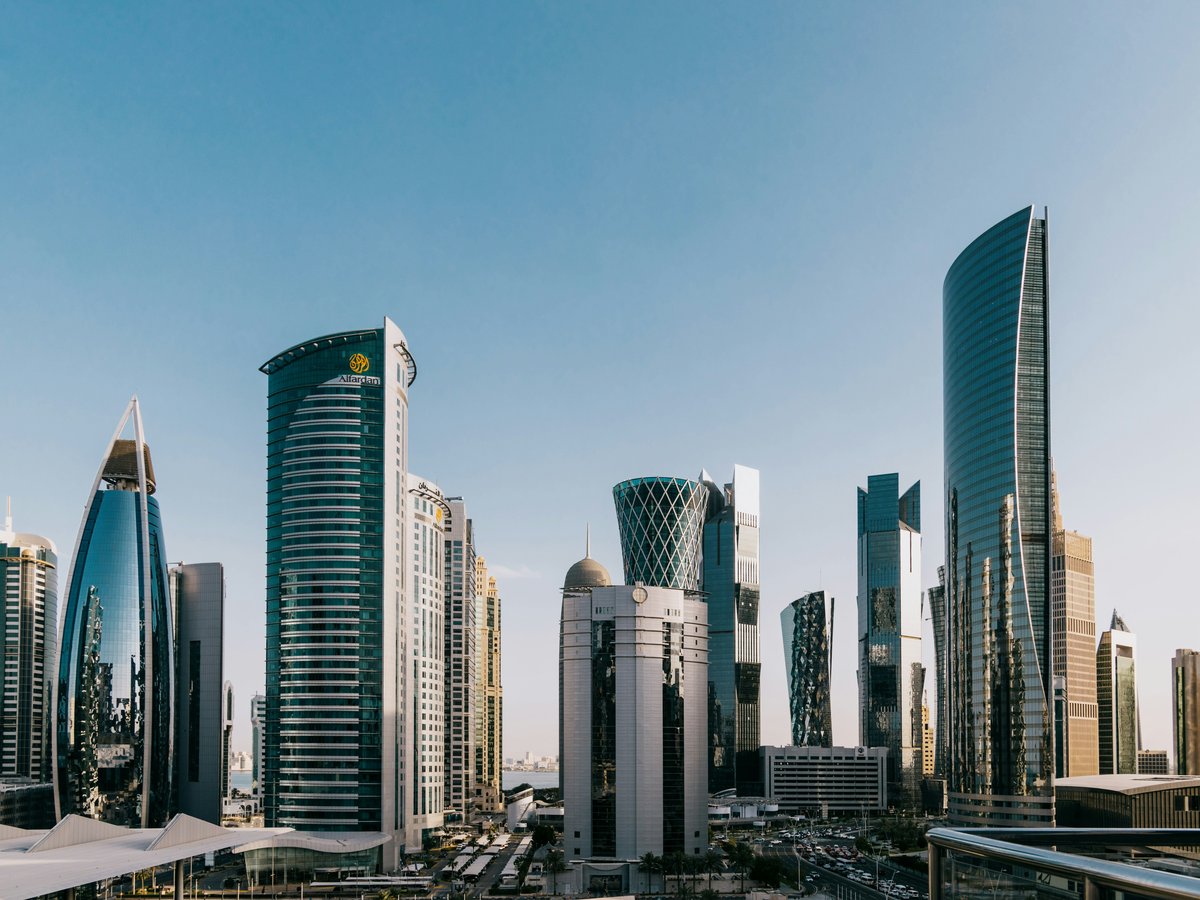
Qatar's licensing laws restrict alcohol sales to licensed hotels and a handful of private clubs, and that single rule shapes everything about Doha's nightlife. There is no independent bar street, no club district; nearly every place you'll drink after dark sits inside a 4- or 5-star hotel, from the InterContinental Doha on the West Bay beach to the Marsa Malaz Kempinski on The Pearl-Qatar. That constraint has produced something distinctive: the hotel bars of West Bay and The Pearl-Qatar have become self-contained social worlds, each with its own crowd, dress code, and unwritten rules. Thursday is the big night. Qatar's weekend falls on Friday and Saturday, so Thursday works the way Friday does in most Western cities, and by 11 PM the better-known spots in West Bay are full, the after-work crowd having filtered in around 7 PM. Doha's population is roughly 85% expatriate, and that ratio holds in the bars; you'll hear Tagalog, Arabic, Hindi, and English in a single elevator ride. Drinks are expensive. A standard cocktail runs 50 to 80 QAR at most hotel bars, and a pint of imported lager tends to sit around 45 to 65 QAR. Happy hour deals typically run from 5 PM to 8 PM at many hotel venues and can cut the price nearly in half, so we'd plan around that if the budget matters. The non-alcoholic nightlife in Souq Waqif is real. The souq stays busy past midnight, the air thick with apple-tobacco shisha smoke and the sound of oud music drifting from the cafes along its narrow lanes.
The Bar Scene in Doha
Every bar in Doha lives inside a hotel, so the range of what's available maps directly to the range of hotels on offer, and the highest concentration sits in West Bay's cluster of towers along the Corniche. The InterContinental Doha, on the beach at the northern end of West Bay, has long been home to the Belgian Cafe, a beer-focused bar with Leffe and Hoegaarden on tap and a terrace that fills on cool Thursday evenings. The Four Seasons Doha, on its own private stretch of beach, draws an older, more moneyed crowd; its Nobu Doha sits on a pier over the water, and the lounge there is a favourite for sunset drinks from October to April. The St. Regis Doha, further north toward Katara, leans formal. Collared shirts and closed-toe shoes are enforced without exception. Rooftop bars have become a competitive category in Doha. Sky View at La Cigale Hotel, on Suhaim Bin Hamad Street in the Al Sadd district, has been one of the city's best-known rooftops for years, with views across the skyline from the 15th floor, and several West Bay hotels offer outdoor terraces looking across Doha Bay toward the Museum of Islamic Art. The best season for all of them runs from October through March, when evening temperatures drop to 20 to 25 degrees Celsius. From June through September, the 40-degree heat keeps most people indoors even after dark. The Pearl-Qatar has its own bar ecosystem. The Marsa Malaz Kempinski, a palace-style hotel on the island's northern edge, runs several licensed lounges with sea views, while in the Medina Centrale area, a string of licensed restaurants lines a pedestrian boardwalk. The feel is more Mediterranean piazza than Gulf skyscraper, with tables spilling outside and the crowd there tends to be couples and small groups rather than the corporate gatherings common in West Bay. Dedicated wine bars are rare in Doha. A few hotel restaurants maintain serious wine lists, but wine-bar concepts have struggled to last in this market, and you're more likely to find a decent bottle list folded into an Italian or French restaurant menu at one of the bigger West Bay hotels. Dive bars don't exist here; the licensing structure prevents them. The closest analogue is the Irish Harp at the Sheraton Grand Doha, the pyramid-shaped hotel at the Corniche end of West Bay: dark wood, live football on the screens, pints of Guinness, and a crowd of long-term expats who have been coming for a decade. It won't win design awards, but it has an unpretentious quality the glossier West Bay lounges lack.
Clubbing in Doha
Doha's club scene is small and follows its own logic. A handful of hotel-based nightclubs in West Bay and around the West Bay Lagoon bring in international DJs who spin house, hip-hop and commercial dance music, and Mondrian Doha, the design hotel in West Bay Lagoon, has been one of the more fashion-conscious addresses, with a club space that draws a younger crowd on Thursdays. R&B nights across the city draw the biggest crowds. Dress codes are enforced strictly at the door: smart casual is the minimum everywhere, and several clubs require formal attire. For men, that means long trousers, closed shoes and a collared shirt. Shorts, sandals and sportswear will get you turned away without discussion. Women face fewer restrictions but are still expected to dress up. Traditional Qatari dress is uncommon in hotel nightclubs, as most Qatari nationals who go out tend to favour private gatherings or members-only venues. Some clubs charge cover on Thursday, with fees ranging from around 100 to 200 QAR, and that cover often includes 1 or 2 drinks. Ladies' nights remain a fixture: many venues offer free entry and complimentary drinks for women on Tuesday or Wednesday. The practice has drawn criticism, but it persists and does fill rooms midweek. Peak hours start late by Gulf standards: most clubs don't see real numbers until 11:30 PM or midnight, and doors stay open until 2 AM on weeknights and 3 AM on Thursday. Friday nights are surprisingly quiet at many clubs, because people scatter to Friday brunches at the Four Seasons or the Marsa Malaz Kempinski, beach clubs and private house parties. The crowd is predominantly expat, with a strong South Asian and Filipino presence alongside Europeans, Levantine Arabs and North Africans. Turnover in Doha's expat population means your favourite DJ night might lose half its regulars every 2 years as contracts end. That said, there's always someone new in the room on a Thursday in West Bay.
Live Music After Dark
Live music in Doha clusters in hotel lounges and restaurants rather than dedicated venues, and Filipino cover bands are the backbone of the scene. You'll find them across West Bay's hotel lobbies and bars, working through 4- to 5-hour sets that range from Whitney Houston to the Eagles with impressive technical skill. The Irish Harp at the Sheraton Grand Doha has long run live bands on weekend nights, and the room gets loud by 10 PM. For something more curated, Katara Cultural Village, on the coast between West Bay and The Pearl-Qatar, hosts concerts in its open-air amphitheatre, with past lineups that have included Arabic pop stars and occasional Western acts. The Katara website and its social media accounts carry current programming, as the schedule is irregular and weighted toward the cooler months from November through February. The Qatar Philharmonic Orchestra also performs at the Katara Opera House during its season, which runs from autumn into spring. Jazz and blues have a small foothold. A few hotel bars run jazz nights, typically on Wednesdays or Sundays, with sets that lean toward standards and smooth jazz rather than anything experimental. Arabic live music, particularly khaleeji pop and Lebanese-style entertainment with a singer backed by keyboards and percussion, appears at some restaurants in Souq Waqif and on The Pearl-Qatar. Sets tend to start around 9 PM and carry the room past midnight. The interaction between performer and audience differs from Western norms: expect requests shouted across the room and tipping the singer directly, sometimes by pressing bills into the performer's hand. Doha currently has no indie or underground music scene of the kind found in Beirut or Amman. Licensing restrictions and the high cost of venue space in West Bay and Lusail make it hard for grassroots music to take root. Occasional pop-up gigs happen at spaces like the Fire Station in Musheireb or galleries at Katara, but you'd need to follow local Instagram accounts and community groups to catch them.
Nightlife neighborhoods
-
West Bay
Doha's financial district and hotel corridor runs along the Corniche, lined with glass towers. After dark, the ground floors and upper stories light up with hotel bars and lounges. The streets themselves are quiet and car-oriented, so the nightlife moves entirely indoors, from lobby to elevator to rooftop.
- Best for
- Thursday night bar-hopping between hotel venues, rooftop cocktails from October to March, and the city's main club nights.
- Standouts
- The Belgian Cafe at the InterContinental Doha, the Irish Harp at the Sheraton Grand Doha, Nobu Doha at the Four Seasons, the St. Regis Doha lounges, and Mondrian Doha in the West Bay Lagoon area.
-
The Pearl-Qatar
An artificial island built on reclaimed land, with a Mediterranean-village look. The Medina Centrale boardwalk fills with diners and drinkers from around 8 PM, and the pace is slower and more social than West Bay. You can walk between spots here, which is unusual in car-dependent Doha, and the breeze off the water helps on warmer nights.
- Best for
- Couples and small groups looking for a sit-down evening with food and drinks. Friday brunch-to-evening transitions. Less intense than the West Bay club scene.
- Standouts
- The Marsa Malaz Kempinski's sea-view lounges, plus the licensed restaurants and shisha lounges along the Porto Arabia marina and the Medina Centrale plazas.
-
Souq Waqif
The restored traditional market stays open late, its narrow alleys lit by lanterns and thick with the sweet smoke of shisha pipes. This is Doha's non-alcoholic nightlife centre, where cafes serve karak chai (strong, sweet, milky tea with cardamom) and fresh juices. The crowd is a cross-section of the city, from Qatari families to South Asian workers to tourists, and the smell of oud perfume and roasted nuts mixes with grilled meat from the restaurant row.
- Best for
- Anyone who wants Doha after dark without alcohol. Shisha, people-watching and late-night karak. Thursday and Friday evenings are the busiest.
- Standouts
- The cafes and restaurants along the main pedestrian lanes, particularly the stretch near the Gold Souq and the Falcon Souq.
-
Lusail
Qatar's planned city north of Doha is still filling in, but the area around Lusail Boulevard and Place Vendome mall has been adding hotel venues and restaurants since the 2022 FIFA World Cup. The infrastructure is new and polished, though some blocks still feel quiet. The draw tends to be residents of Lusail's apartment towers, rather than people making the trip from across the city.
- Best for
- Residents of the northern suburbs looking for something closer to home, and visitors staying at Lusail's newer hotels.
- Standouts
- Hotels along Lusail Boulevard and the Lusail Marina area are the current concentration points for evening dining and drinks.
-
Katara Cultural Village
A beachfront cultural complex sitting between West Bay and The Pearl-Qatar, Katara is more of an evening-out destination than a nightlife district. The amphitheatre hosts concerts, galleries stay open late during exhibitions, and several restaurants serve along the waterfront. The atmosphere is family-friendly and calm, with the sound of waves against the public beach.
- Best for
- Cultural events, concert nights and a quieter waterfront dinner. Pairs well with a later move to West Bay or The Pearl-Qatar for drinks.
- Standouts
- The Katara Amphitheatre and Katara Opera House for scheduled performances, plus the row of restaurants along the beach promenade.
Safety after dark
Doha is one of the safer cities in the Gulf for a night out, and violent crime targeting tourists or nightlife-goers is rare, but a few things are worth knowing. Qatar has strict laws around public intoxication: being visibly drunk in public, outside the hotel where you were drinking, can result in a fine or arrest. Police do make arrests for this, particularly during high-profile events. Keep it together between the hotel door and your taxi.
Qatar's legal blood alcohol limit for drivers is 0.0%, meaning zero tolerance, and a single drink puts you over the limit. Uber operates in Doha, and Karwa is the state taxi company. Both are reliable for trips within the city. A ride from West Bay to The Pearl-Qatar typically costs 15 to 25 QAR.
Drink spiking is uncommon but not unheard of, particularly in the busier West Bay hotel clubs on Thursday nights. Keep your drink in hand, don't accept drinks from strangers, and stay with your group.
Scams targeting nightlife-goers are rare compared to Bangkok or Istanbul, and the most common issue is overcharging, so check the menu price before ordering. Some venues add a service charge of 10 to 15% to the bill automatically.
For women going out, Doha is generally considered safe. Unwanted attention can happen in the louder club venues, but hotel security is typically present and responsive. Revealing clothing outside the venue itself, whether in a hotel lobby, on the street or in a taxi, may attract unwanted attention or, in rare cases, a comment from authorities. Bring a cover-up for transit and change at the venue if needed.
Save your hotel's address in Arabic on your phone: some taxi drivers, particularly those new to Doha, navigate better with Arabic text or a pin dropped on Google Maps than with a spoken English address.
Practical tips
- Alcohol pricing and payment
- Most drinks at hotel bars run 45 to 80 QAR, and while credit cards are accepted everywhere, some venues add a card surcharge. Happy hours, typically 5 PM to 8 PM, can bring prices down by 30 to 50%. One thing visitors often don't anticipate is that Qatar has no off-licence alcohol retail for visitors. The Qatar Distribution Company (QDC) store in Abu Hamour is the one retail option, but purchasing there requires a liquor permit tied to a residency visa.
- Tipping customs
- Tipping is not culturally expected in Qatar the way it is in the US, though it has become common in hotel bars and restaurants. A 10% tip is generous by local standards. Check the receipt before adding anything, since some venues already include a service charge. For bartenders, leaving 5 to 10 QAR per round is appreciated but not obligatory.
- When to go out
- Thursday night is the main event. The after-work crowd arrives around 7 PM for happy hour in West Bay, energy builds after 10 PM, and most clubs peak between midnight and 2 AM. Friday nights run quieter than you might expect. Wednesday has become a secondary going-out night, partly driven by ladies' night promotions. Ramadan shifts about 11 days earlier each year, and during the month, hotel bars still serve non-Muslim guests, though some venues close entirely and those that stay open are subdued.
- Dress code enforcement
- Doormen at West Bay hotel clubs and upscale bars like those at the St. Regis Doha will turn you away for shorts, flip-flops or sportswear, and arguing won't help. Smart casual is the safe baseline everywhere. For higher-end clubs, lean toward business casual. Women have more flexibility, but heels and a going-out outfit are the norm at the busier venues.
- Getting around at night
- The Doha Metro's Red Line runs through West Bay, Msheireb and Lusail, but trains stop around 11 PM on weekdays and midnight later in the week, making it useful for getting to a venue but rarely for getting home. Uber and Karwa taxis are the reliable late-night options. Uber surge pricing can rise after 1 AM on Thursdays, so keep the Karwa app as a backup. Driving yourself means zero alcohol.
- Ramadan considerations
- During the holy month, daytime hours are quiet across Doha, with most restaurants closed until iftar (the sunset meal). Hotel bars still operate for non-Muslim guests but typically open later and close earlier, and some clubs shut for the month entirely. Live music is generally paused or reduced. Eating, drinking or smoking in public during daylight hours is prohibited by law, regardless of your religion. Souq Waqif and Katara stay busy after iftar until well past midnight.
FAQ
Can tourists drink alcohol in Doha?
Yes, at licensed venues: hotel bars, restaurants and nightclubs such as the Belgian Cafe at the InterContinental Doha or the Irish Harp at the Sheraton Grand Doha. Shops are off limits unless you hold a QDC permit tied to a Qatar residency visa. Public intoxication is illegal, so keep your drinking within the hotel and leave composed.
What night of the week is best for going out in Doha?
Thursday is Doha's main night out, equivalent to Friday or Saturday in most Western cities. The weekend falls on Friday and Saturday, which means Thursday night is when West Bay's hotel bars fill up after the work week, with Wednesday offering a secondary scene driven by ladies' night promotions at many hotel venues.
How expensive is a night out in Doha?
Drinks at hotel bars run 45 to 80 QAR each, with cocktails at the higher end, and happy hour deals from 5 to 8 PM can bring prices down to 25 to 40 QAR. Budget around 250 to 400 QAR for a night of 4 to 5 drinks plus a taxi home. Club cover charges on Thursday nights, where they apply, tend to sit between 100 and 200 QAR and usually include 1 or 2 drinks.
Is Doha safe for a night out?
Doha is generally very safe, with low rates of violent crime, but the main legal risk is public intoxication, which carries fines and potential detention. Drink-driving is zero-tolerance at 0.0% BAC, so take Uber or Karwa taxis home. Standard drink-awareness precautions apply at busier West Bay clubs on Thursday nights, and the security presence at hotel venues is strong.
What should I wear to go out in Doha?
Smart casual at minimum. Men need long trousers, closed shoes and a collared shirt for most hotel bars and all nightclubs, and shorts or sandals will get you turned away at the door. Women have more range, but going-out attire is the norm at busier venues. On streets and in taxis, more conservative dress is advisable, and many people bring a cover-up for the commute.
Can I go out during Ramadan in Doha?
Hotel bars still serve alcohol to non-Muslim guests during Ramadan, but the scene is much quieter, with some clubs closing for the month and live music generally paused. Eating, drinking and smoking in public during daylight hours is prohibited by law for everyone. The social window opens in the evenings after iftar, when Souq Waqif and Katara Cultural Village stay busy until late.
Last verified by automated review (v1.7.2) on . What is automated review?