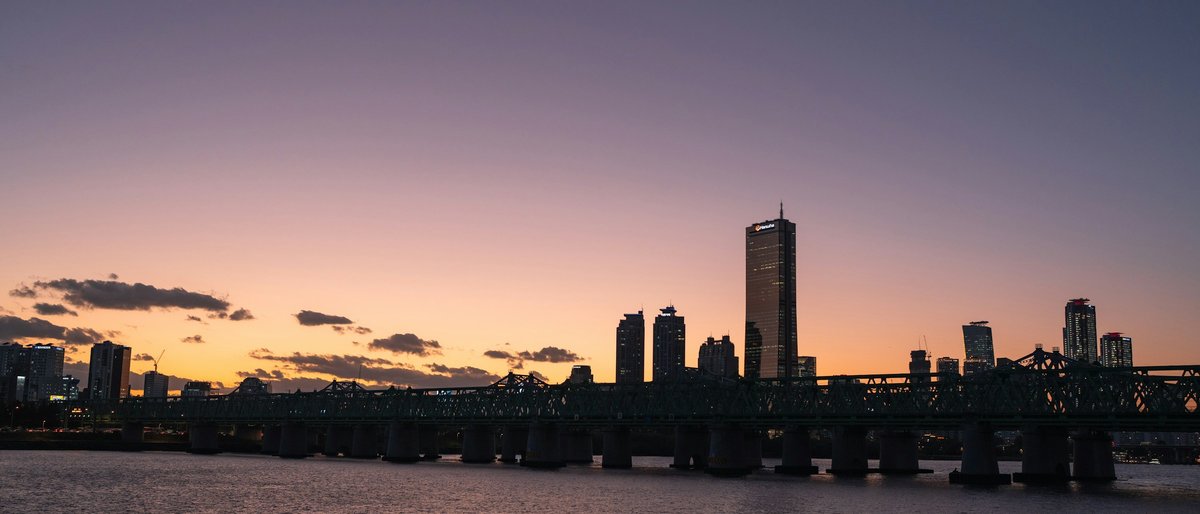
Seoul sits in a basin ringed by granite mountains, and that geographic fact shapes everything about outdoor life here. Step out of almost any subway station in the northern half of the city and you'll see ridgelines: Bukhansan to the north, Inwangsan to the west, Gwanaksan anchoring the south. The Han River cuts the whole thing in half, wide and slow, flanked by cycling paths that run for dozens of kilometers without a traffic light. It's the kind of city where a serious mountain hike and a cold beer can be separated by a twenty-minute subway ride. That contrast tends to catch visitors off guard. You'll be scrambling up exposed granite, grabbing steel cables bolted into rock, and an hour later you're back in Gangnam watching people shop. The outdoor culture here runs deep, too: Korean hikers are committed. Weekend mornings on popular trails feel like rush hour, columns of people in full technical gear moving with purpose. Spring and autumn are the prime seasons, with cherry blossoms in April and the foliage turning in late October. Summers get hot and humid, oppressive in July and August, while winters are dry and cold but often brilliantly clear. The city's trail infrastructure is well-maintained, signage is solid, and convenience stores at trailheads stock everything from kimbap to electrolyte drinks. You might be surprised how accessible serious terrain is from the center of a city of ten million people.
Outdoor activities
-
Road Cycling along the Han River Paths
The Hangang bike path network connects parks on both sides of the river, running roughly 40 kilometers from east to west through the city. The surface is smooth asphalt, mostly flat, and separated from pedestrians in most sections. You can rent bikes from unmanned stations using the Seoul Bike (Ttareungyi) app: they're cheap and available at hundreds of docking points. Serious cyclists tend to ride early mornings before the paths get crowded with walkers and families. The stretch between Yeouido and Ttukseom is pleasant, passing under bridges with the skyline shifting around you. On weekends, some sections near Banpo or Yeouido can feel congested, so plan accordingly.
- Difficulty
- Easy
- Duration
- 2-4 hours for a full river traverse
- Best season
- Spring (April-May) or Autumn (September-October)
-
Rock Climbing at Bukhansan
Bukhansan has a long history as a climbing destination, and several crags see regular traffic from the local climbing community. Insubong, the big granite face on the north side, is the most well-known: it offers multi-pitch trad routes that are serious. There are also sport climbing areas and bouldering spots scattered around the park. If you're not bringing your own gear, a few climbing gyms in the city organize outdoor trips. Worth noting: route grading follows the Korean system, which doesn't map neatly onto Yosemite Decimal or French grades, so do your homework before committing to a line. The rock is solid granite, grippy when dry, treacherous when wet.
- Difficulty
- Moderate to Expert depending on route
- Duration
- Half day to full day
- Best season
- Autumn (October-November) for dry rock and cool temps
-
Trail Running on Namsan
Namsan sits right in the middle of the city and its network of paved and unpaved paths makes it a natural spot for trail running. The loop around the mountain is roughly 8 kilometers, with some steep pitches on the north side. Most runners start from one of the lower entrances (the Hoehyeon or Huam-dong sides) and do laps or out-and-back segments. The footing is good, a mix of stone steps, packed dirt, and some paved stretches. Elevation gain is modest but steady. Early mornings and late afternoons are best; midday in summer is punishing.
- Difficulty
- Easy to Moderate
- Duration
- 1-2 hours
- Best season
- Year-round, though summer humidity makes it tough
-
Mountain Biking at Suraksan Area
Mountain biking culture in Seoul is still growing, but there are rideable trails in the hills on the city's outskirts. The area around Suraksan and the adjacent ridges in Nowon-gu has some single-track that local riders frequent. These aren't purpose-built MTB trails: they're shared hiking paths, so expect to yield to foot traffic and exercise good trail etiquette. The terrain is rooty, rocky, and technical in places. A hardtail will handle most of it, though a full-suspension bike smooths out the rougher descents. Check with local shops in Nowon for current conditions and recommended routes.
- Difficulty
- Moderate to Difficult
- Duration
- 2-4 hours
- Best season
- Autumn (September-November)
-
Paragliding at Yangpyeong
About an hour east of Seoul by car, Yangpyeong has a tandem paragliding operation that runs during favorable weather. You launch from a hillside above the Namhan River valley and the flights typically last 10 to 15 minutes, drifting over farmland and river bends. It's a popular weekend outing for Seoul residents. Reservations are generally needed, in autumn when demand spikes alongside the foliage season. The operators tend to be experienced (Korea has an active paragliding community) but as with any flight sport, cancellations due to wind or weather are common.
- Difficulty
- Easy (tandem flights require no experience)
- Duration
- Half day including travel
- Best season
- Autumn (October-November) for stable air and clear skies
-
Standup Paddleboarding on the Han River
SUP has gotten popular on the Han River over the past several years, and rental spots have popped up at several Hangang parks, near Ttukseom and Yeouido. The river is wide and the current in the central sections is gentle enough for beginners, though you should stay aware of ferry and water taxi traffic. Morning sessions before the wind picks up tend to be best. Some operators offer guided group paddles and sunset sessions. The water quality has improved significantly, though it's still not a river you'd want to swim in voluntarily.
- Difficulty
- Easy to Moderate
- Duration
- 1-2 hours
- Best season
- Late Spring through Early Autumn (May-September)
Day hikes
-
Bukhansan via Baegundae Peak
The signature Seoul hike. Baegundae is the highest peak in Bukhansan National Park at 836 meters, and the trail from Bukhansanseong Entrance is the most popular route. The first half is a wide, well-maintained path through forest. The upper section gets steeper and involves some scrambling on granite with steel cable handholds. The summit area is a slab of exposed rock with views in every direction: on clear days you can see all of Seoul spread out below and mountains stretching north toward the DMZ. It gets very crowded on weekends; weekday mornings are the move. The descent can be harder on the knees than the ascent, so take your time on the rocky steps.
- Difficulty
- Moderate to Strenuous (significant elevation gain, scrambling near summit)
- Duration
- 4-6 hours round trip
- Best season
- Autumn (October-November) for clear skies and foliage, Spring (April-May) for wildflowers
-
Gwanaksan via Gwanaksan Shelter Trail
Gwanaksan anchors the southern edge of Seoul, and its main peak sits at 632 meters. The standard route from Seoul National University side is a steady uphill grind through mixed forest with some rocky sections near the top. It's less dramatic than Bukhansan but still a proper workout. The Buddhist temple Yeonjuam near the summit is carved into a rock face and worth the detour. Gwanaksan sees fewer foreign visitors than Bukhansan, so the crowd is mostly local hikers and university students. The trail conditions are good but the upper slopes can be slippery after rain.
- Difficulty
- Moderate (steady climbing, some rocky scrambles)
- Duration
- 3-5 hours round trip
- Best season
- Autumn and Spring
-
Dobongsan Ridge Hike
Dobongsan is in the northeastern section of Bukhansan National Park, and its rocky ridgeline is more technical than the main Bukhansan trails. The route from Dobongsan Station to Manjangbong peak involves exposed rock sections with fixed ropes and some genuine scrambling. The granite formations here are dramatic: jagged spires and sheer faces that look like they belong somewhere wilder than suburban Seoul. Mind you, this is not a beginner hike; the exposure in certain sections requires confidence on rock. The views north toward Gyeonggi Province are expansive.
- Difficulty
- Strenuous (exposed scrambling, fixed ropes, significant elevation)
- Duration
- 5-7 hours round trip
- Best season
- Autumn (October-November) for dry rock and visibility
-
Achasan to Yongmasan Ridge
This is the easy-going option that still feels like a proper outing. Achasan is a low mountain on Seoul's eastern edge, and a ridge trail connects it to Yongmasan and beyond. The entire traverse stays below 300 meters, the paths are wide and well-marked, and the views over the Han River and eastern Seoul are surprisingly good for such modest elevation. You'll share the trail with morning exercise groups and elderly hikers. There are rest areas with outdoor fitness equipment scattered along the route, which is a very Korean touch. A good choice if you want to hike without committing to a full day.
- Difficulty
- Easy
- Duration
- 2-3 hours
- Best season
- Year-round (pleasant even in winter on clear days)
-
Inwangsan Shamanist Trail and City Wall
Inwangsan is a smaller mountain in western Seoul, but what makes it distinctive is the combination of the Seoul City Wall route and the shamanist shrines (gut-dang) tucked into the rocks. The trail from Muakjae station follows the old fortress wall uphill, with views over Gyeongbokgung and the Blue House area. The granite formations near the top are photogenic and the atmosphere near the shrines (colored ribbons, small offerings, incense) adds a cultural layer you don't get on other Seoul hikes. The trail is short but includes some steep stone steps.
- Difficulty
- Easy to Moderate
- Duration
- 2-3 hours round trip
- Best season
- Spring and Autumn, though winter mornings with frost on the wall are striking
-
Saryeoni Forest Path (Jeju Day Trip Alternative: Namhansanseong)
For something flatter and more contemplative, Namhansanseong is a UNESCO-listed mountain fortress about 30 minutes southeast of Seoul by bus. The wall circuit runs along a ridgeline surrounding a historic garrison town, with the trail following the fortress perimeter through mixed forest. It's not steep but the cumulative ups and downs add up over the full loop. The history here is heavy (this was a last-stand fortress during multiple invasions) and the old gates and command posts are well-preserved. The village inside the walls has traditional restaurants serving pajeon and makgeolli, which has become a post-hike tradition.
- Difficulty
- Easy to Moderate
- Duration
- 3-4 hours for the full wall circuit
- Best season
- Autumn for foliage along the fortress walls, Spring for wildflowers
Water activities
-
Kayaking on the Han River
Several outfitters along the Han River rent kayaks, with the most accessible launch points near Ttukseom, Yeouido, and Jamsil. The river is wide and calm in these sections, making it suitable for beginners, though you need to be mindful of water taxi routes and the occasional ferry wake. Morning paddles before the wind picks up tend to be smoothest. Some operators offer guided sunset trips, which give you the city skyline from water level as the lights come on. The experience is more urban than wild (you're paddling between bridges with apartment towers on both banks) but there's something appealing about that contrast.
- Difficulty
- Easy to Moderate
- Duration
- 1-3 hours
- Best season
- Late Spring through Early Autumn (May-September)
-
Windsurfing and Sailing at Misari
Misari Regatta Course in Hanam, just east of Seoul, was built for the 1988 Olympics and is still used for water sports. Windsurfing and small sailboat rentals are available, and there are a few schools that offer beginner lessons. The reservoir is relatively sheltered, so wind conditions can be inconsistent, but when a good breeze picks up it's a solid spot. The water is calmer than the open river sections. It feels a bit dated in places (some of the facilities still have that late-80s Olympic infrastructure vibe) but the water access is legitimate.
- Difficulty
- Moderate (some instruction recommended for beginners)
- Duration
- Half day
- Best season
- Summer (June-August)
-
Swimming at West Coast Beaches (Eurwangni and Muuido)
Seoul doesn't have beaches, but the west coast is closer than most people realize. Eurwangni Beach near Incheon Airport is about 90 minutes from central Seoul by car or public transit, and Muuido Island is accessible by a short ferry from nearby. The beaches are sandy with gentle gradients, though the Yellow Sea tides are dramatic: the water can retreat hundreds of meters at low tide, exposing mud flats. Swimming is best at or near high tide. The water is warmer than you might expect in July and August. These aren't tropical beaches, but for a day trip from a landlocked metropolis, they deliver.
- Difficulty
- Easy
- Duration
- Full day trip
- Best season
- Summer (July-August) for warm water
-
Canoeing and Rafting on the Namhan River
The Namhan River east of Seoul, around Yeoju and Yangpyeong, offers gentle canoeing and seasonal rafting. In summer, several operators run inflatable raft trips on sections with mild rapids (Class I to II at most) making it accessible for families and beginners. The scenery along this stretch is rural farmland and low hills, a different feel from the urban Han River. Canoe rentals for self-guided trips are available at a few spots. The water level varies significantly with summer monsoon rains, so conditions can change week to week. Check ahead before making the drive out.
- Difficulty
- Easy to Moderate
- Duration
- Half day to full day
- Best season
- Summer (June-August) for water levels and warmth
Parks & gardens
-
Seoul Forest
FreeSeoul Forest sits in Seongdong-gu along the north bank of the Han River, a large green space that opened in 2005 on the site of a former horse racing track. It's divided into themed areas: there's a deer enclosure, wetland sections, and wide lawns that fill up with picnicking families on weekends. The tree canopy is maturing nicely now, providing real shade in summer. The atmosphere is relaxed and local; you'll see people reading, napping on mats, walking dogs. The adjacent Ttukseom area connects to the river paths, so you can combine a park visit with a cycling loop.
Highlights: Deer enclosure, mature tree canopy, wetland ecology area, direct connection to Hangang bike paths
-
Changdeokgung Secret Garden (Huwon)
The rear garden of Changdeokgung Palace is one of the few places in Seoul where you'll find centuries-old forest within the city center. The garden was designed for the Joseon royal family and its ponds, pavilions, and 300-year-old trees feel removed from the urban surroundings. Access is by guided tour only, which keeps the crowds manageable and protects the landscape. The autumn foliage here is impressive: old maples turning deep red against dark wood pavilions. It's not a place to run around; it's a place to slow down.
Highlights: 300-year-old trees, lotus ponds, guided tours that limit crowds, peak foliage in late October
-
Yeouido Hangang Park
FreeYeouido's riverside park is probably the most famous stretch of the Han River parkland, largely because of the spring cherry blossom festival that draws enormous crowds in early April. Outside of blossom season, it's still a solid spot: wide paths for cycling and walking, food vendors, and good views of the river. The yeouisaemul water fountain show runs on summer evenings. To be fair, it can feel a bit hectic on warm weekends, but early morning visits are peaceful. The lawn areas are popular for picnicking, and you can rent bikes or inline skates from shops nearby.
Highlights: Cherry blossoms in early April, riverside cycling paths, water fountain displays in summer, convenience store snack culture
-
Bukhansan National Park (Urban Edge)
FreeTechnically a national park, but it starts at the edge of residential neighborhoods in northern Seoul. You can reach multiple trailheads by bus or subway, which is notable for a park with serious mountain terrain. The lower sections near the entrances function as urban green spaces: families picnic, older folks do morning exercises, and the temple at Bukhansanseong has a meditative quiet that belies the city just downhill. The granite peaks and pine forests feel like proper wilderness despite the proximity to apartment towers.
Highlights: Granite peaks visible from the city, temple grounds at Bukhansanseong, accessible by public transit, ancient fortress walls along ridgelines
-
Olympic Park
FreeBuilt for the 1988 Summer Olympics in Songpa-gu, this park has aged well. The grounds are spacious, dotted with large-scale sculptures and earthen mounds that are the remains of the Mongchontoseong fortress from the Baekje period. It's a good spot for a long walk or run on flat ground, and there's a cycling loop around the perimeter. The rose garden blooms in late May and June. The atmosphere tends to be quieter than the Hangang parks, partly because it's a bit further from the river. Local runners use the paths regularly.
Highlights: Mongchontoseong fortress ruins, large sculpture garden, rose garden in bloom May-June, flat running loop
-
Naksan Park
FreeA smaller park on the eastern section of Seoul's old city wall, Naksan offers views over the Daehangno neighborhood and toward Dongdaemun. It's not a major destination, but that's part of the appeal: it stays relatively quiet. The old fortress wall runs through the park and you can walk along it, connecting to the larger Seoul City Wall trail. Sunset from the upper section is worth the short climb. The neighborhood at the base has a bohemian feel with small galleries and cafes.
Highlights: Seoul City Wall trail segment, sunset views over eastern Seoul, quiet atmosphere compared to Namsan, small galleries in the Ihwa-dong neighborhood below
Practical tips
- Gear and Footwear
- Korean hikers take gear seriously: you'll see full Gore-Tex setups on trails where shorts and sneakers would technically suffice. That said, proper hiking shoes with ankle support and good grip on granite are worth having for Bukhansan and Dobongsan. The rock gets slick when wet. For casual trails like Achasan or Namsan, trail runners or sturdy sneakers are fine. Trekking poles are common and helpful on the steep descents. If you need to buy gear in Seoul, the Namdaemun Market area and the outdoor shops near Bukhansan trailheads have extensive selections, often at reasonable prices.
- Sun Protection and Heat
- Seoul summers are no joke. July and August combine temperatures in the mid-30s Celsius with heavy humidity, and the UV index regularly hits 8 or higher. Sunscreen, a hat, and UV-protective sleeves (which Korean hikers wear religiously) are standard kit from May through September. On exposed ridgelines like Bukhansan's upper sections, there's little shade and the reflected heat off granite amplifies things. Start early in summer; being on the trail by 6 AM is common practice among locals for good reason.
- Water and Hydration
- Carry more water than you think you need, in summer. Most popular trailheads have convenience stores (CU, GS25, 7-Eleven) where you can stock up on water, sports drinks, and snacks before heading up. Some trails have spring water taps marked along the route, but their availability varies by season and recent rainfall. For a full day on Bukhansan, two liters minimum per person is a reasonable starting point in warm weather. The good news is that vending machines and small snack shops appear at surprisingly high elevations on some Korean mountains.
- Trail Conditions and Signage
- Seoul's hiking infrastructure is well-maintained by Korean standards, which are high. Trails in Bukhansan National Park have distance markers, directional signs, and emergency location posts at regular intervals. Steel cables and metal stairs are installed on steep or exposed sections. That said, some trails close seasonally for ecological recovery or after heavy rains: check the Korea National Park Service website or app before heading out, as closures are updated regularly. After monsoon season in July-August, trail conditions on less-maintained paths can deteriorate, with washouts and loose rock.
- Public Transit to Trailheads
- One of Seoul's genuine strengths for outdoor access is the subway and bus system. Bukhansan's main trailheads are reachable from Gupabal station (Line 3) or Bukhansan Ui station (Ui-Sinseol Line). Gwanaksan is accessible from Seoul National University station (Line 2). Dobongsan station (Lines 1 and 7) puts you at the base of that mountain's trails. Most trailheads are a short bus ride or 15-minute walk from the nearest station. On weekends, buses to popular trailheads can get packed, so arriving before 8 AM helps. T-money cards work on everything.
- Seasonal Planning
- The sweet spots are April through early June and September through November. Spring brings cherry blossoms in early April and azaleas on the hillsides through May. Autumn foliage typically peaks in late October around Seoul, and the clear, dry weather makes it the most popular hiking season by far: expect crowds. Summer monsoon season (roughly late June through late July) brings heavy, concentrated rainfall that can close trails and flood riverside paths. Winter is cold and dry, with temperatures regularly below minus 5 Celsius, but clear winter days offer the best long-distance visibility from summit viewpoints.
FAQ
Do I need hiking boots for Seoul's mountain trails, or are regular sneakers okay?
It depends on the trail. For lower routes like Achasan, Namsan, or the Namhansanseong wall circuit, sturdy sneakers or trail runners are well fine: the paths are well-maintained and not technical. For Bukhansan's upper routes, Dobongsan, or anything involving granite scrambling with steel cables, proper hiking shoes with stiff soles and good grip make a real difference. The granite can be slippery, if there's any moisture, and ankle support helps on the steep descents with uneven stone steps.
How crowded are Seoul's hiking trails on weekends?
Very, on Bukhansan and during foliage season in October. The popular routes can feel like a single-file queue on Saturday and Sunday mornings. Korean hiking culture is social, so weekends are when groups head out together. If crowds bother you, weekday mornings are dramatically quieter. Starting before 7 AM on weekends also helps: you'll be coming down as the main wave heads up. Less-visited mountains like Gwanaksan or Inwangsan tend to be more manageable even on weekends.
Is the Han River clean enough for water sports like kayaking and paddleboarding?
The water quality has improved considerably over the past two decades, and the sections used for kayaking and SUP near Ttukseom and Yeouido are generally considered safe for on-water activities. That said, swimming in the Han River is not officially encouraged and most people don't. For water sports where you're on the surface rather than submerged, conditions are fine. After heavy rains, runoff can temporarily affect water quality, so it's worth checking conditions. Wear a PFD: it's required by most rental operators anyway.
What should I eat and drink after a hike in Seoul?
Post-hike eating is basically a cultural institution in Korea. Near major trailheads (at Bukhansan and Dobongsan) you'll find clusters of restaurants specializing in pajeon (savory scallion pancakes), bindaetteok (mung bean pancakes), and jokbal (braised pig's feet). These are almost always washed down with makgeolli, the milky rice wine served in brass kettles. At Namhansanseong, the village restaurants inside the fortress are known for their pajeon and tofu dishes. The combination of a hard hike followed by pajeon and makgeolli on a wooden platform is one of Seoul's genuine pleasures.
Are there any outdoor gear shops near the major trailheads?
Absolutely. The areas around popular trailheads have turned into mini outdoor retail districts. The neighborhood near Bukhansan's Bukhansanseong entrance is lined with shops selling everything from socks to full mountaineering setups. You'll find Korean brands like Black Yak, Kolon Sport, and K2 alongside international names. Prices can be competitive, for Korean brands, and end-of-season sales are worth watching for. Namdaemun Market downtown also has a dense concentration of outdoor gear vendors, often at lower prices than the brand stores.
Can I hike Seoul's mountains in winter, and what do I need?
Yes, and winter hiking is more popular than many visitors expect. Clear winter days (December through February) offer the best visibility of the year, and the bare trees open up views that are hidden by foliage in other seasons. You'll need proper layers: a moisture-wicking base, insulating mid-layer, and windproof outer shell. Microspikes or light crampons are strongly recommended for icy sections, on north-facing slopes and the steel-reinforced rock sections of Bukhansan, which ice up quickly. Trekking poles with winter baskets help on packed snow. Start earlier than in summer, as daylight fades fast: sunset comes before 5:30 PM in December.
Outdoor experiences in Seoul
 Free cancellation
 Ultimate Korea DMZ Tour from Seoul (JSA Museum & Bridge Crossing)
Outdoor experience: 7.5 hours, free cancellation.
via Viator Free cancellation
 DMZ North Korea View & Aegibong Starbucks Tour from Seoul
Outdoor experience: 5 hours, free cancellation.
via Viator Free cancellation
 DMZ Tour from Seoul Korea with North Korean Defector
Outdoor experience: free cancellation.
via Viator Free cancellation
 DMZ Small Group (Max 13) Defector, Mountain Temple & Majang Lake
Outdoor experience: free cancellation.
via ViatorLast verified by automated review (v1.7.1) on . What is automated review?