Stay in Udaipur in August
64 hotels in the Trip.com pool for Udaipur, from US$5 a night.
Opens Trip.com on Fri 6 Aug to Sun 8 Aug 2027; change the dates there.
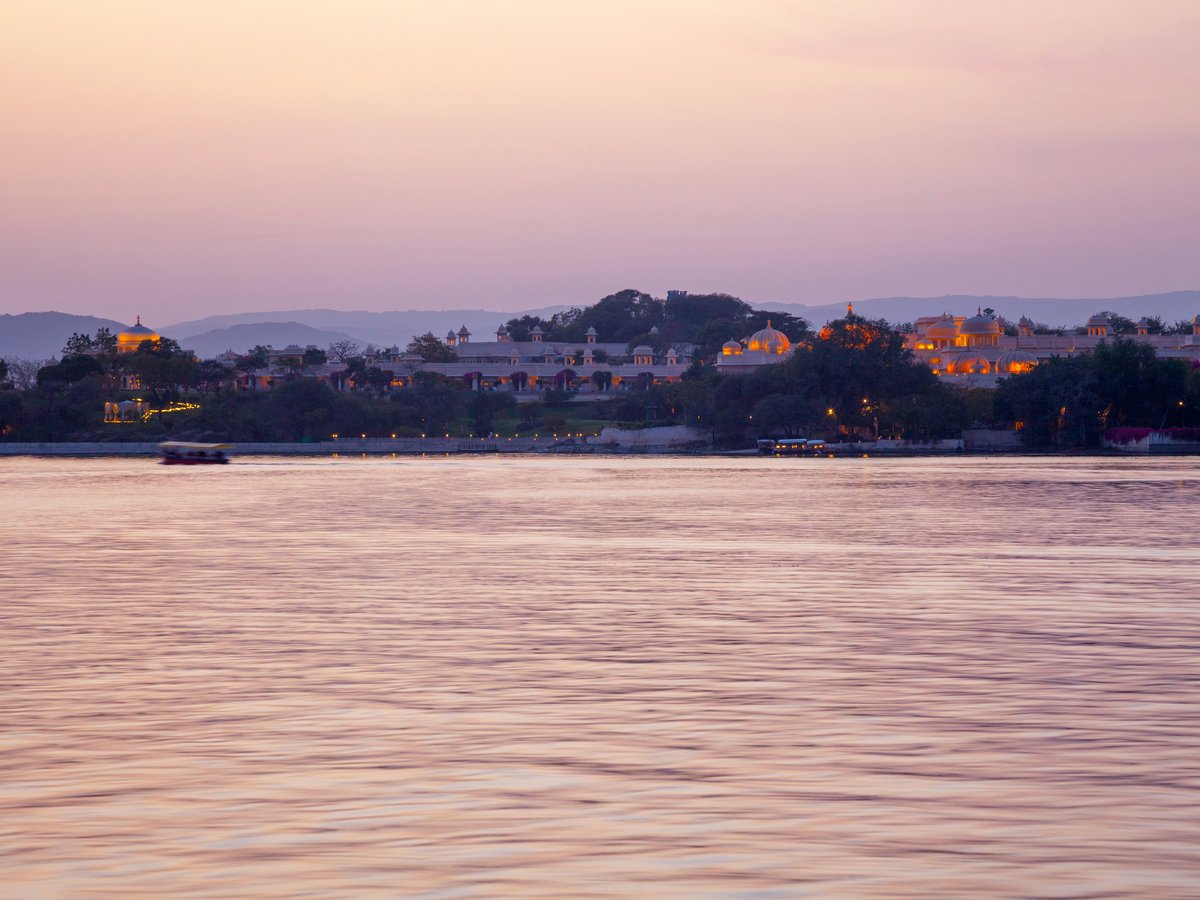
August in Udaipur means monsoon. The city receives roughly 221mm of rain across 19 days this month, second only to July's 242mm. Humidity averages 82%. Daily highs reach only about 29°C (84°F), and nights settle near 22.8°C (73°F). After 37°C in April and May, that 8-degree drop makes walking comfortable between rain spells. The Aravalli hills ringing the city turn from dry brown scrub to saturated green. Lake Pichola, often visibly receded by late spring, fills back to its stone ghats.
Rain arrives in concentrated afternoon bursts, sometimes flooding narrow lanes near Jagdish Temple within minutes. Boat rides on Pichola get cancelled regularly during the wettest stretches. Some rooftop restaurants in the Lal Ghat area close their terraces for the month. Expect to lose 2 or 3 full days to weather that pins you indoors.
For the traveler willing to get wet, Udaipur's monsoon season has genuine draws. The Teej festival procession moves through the Old City in full monsoon pageantry. The Monsoon Palace at Sajjangarh earns its name only during these weeks, with clouds rolling through the valley at eye level. Hotel rates sit at their annual floor. August delivers the city at its cheapest, greenest, and emptiest.
Why visit in August
- Hotel rates drop well below the October-through-February peak, with heritage properties in Chandpole and the Old City offering their deepest monsoon discounts of the year.
- Fateh Sagar Lake fills to capacity during the monsoon months, and the Aravalli hills turn a vivid green visible from every rooftop. The landscape looks entirely different from the dry-season version on winter postcards.
- Teej brings living monsoon traditions into the streets. It is one of Rajasthan's most important seasonal festivals and one of the few months when a tourist can witness a genuine local celebration rather than a heritage-industry recreation.
- Temperatures drop sharply from the pre-monsoon inferno, making walking between showers comfortable without heat-stress risks. August is the coolest Udaipur gets outside the December-January window.
- Major sites can be explored without queues. City Palace and Bagore-ki-Haveli, which see long waits from October through February, are nearly empty.
Worth knowing
- Rain disrupts outdoor plans on a majority of days. Afternoon downpours cancel boat rides, close rooftop dining, and flood low-lying streets with little warning.
- Persistent humidity makes even moderate temperatures feel oppressive. Cameras fog, clothes cling, and you will be damp within 15 minutes of walking outdoors. Air conditioning becomes a necessity, not a luxury.
- Mosquitoes reach their annual peak. Standing water after every rainstorm creates breeding grounds across the city, and dengue cases in Rajasthan typically rise from July through September.
- Some attractions and experiences are partially or fully unavailable. Roads to Sajjangarh Biological Park can become impassable after heavy rain, and evening lake cruises run on fewer than half the month's days.
Best for
Think twice if
Rain tends to arrive in sharp afternoon bursts rather than all-day drizzle. Mornings often start hazy or partly cloudy, giving you a 4-5 hour window for outdoor sightseeing before clouds build around noon. The humidity makes even moderate readings feel heavier on the skin. Expect overcast skies on most days, with occasional breaks of warm sunshine that turn wet pavement into a temporary steam bath. Nights are warm but manageable with air conditioning or a ceiling fan. The hills and lakes appear soft-edged through the moisture-heavy air, a quality that landscape photographers tend to prize.
Seasonal caution
- Heavy monsoon rainfall. August sits in the peak monsoon window, with individual downpours capable of flooding Old City streets within minutes. Low-lying areas near the lake ghats are particularly prone to knee-deep standing water.
- Mosquito-borne disease risk. Dengue and malaria cases in Rajasthan typically rise from July through September as standing water creates breeding grounds. Use DEET-based or picaridin repellent consistently, especially at dawn and dusk near the ghats.
- Occasional road closures. The hill road to Sajjangarh and routes to Sajjangarh Biological Park can become temporarily impassable after heavy or sustained rain. Check conditions before heading out.
Year-round climate
Averages from the last 5 years.
| Month | Avg high (°C) | Avg low (°C) | Rainfall (mm) |
|---|---|---|---|
| Jan | 23 | 10 | 11 |
| Feb | 28 | 14 | 0 |
| Mar | 32 | 19 | 7 |
| Apr | 37 | 23 | 2 |
| May | 37 | 25 | 44 |
| Jun | 35 | 25 | 135 |
| Jul | 30 | 24 | 242 |
| Aug | 29 | 23 | 221 |
| Sep | 30 | 23 | 180 |
| Oct | 30 | 20 | 35 |
| Nov | 27 | 16 | 14 |
| Dec | 24 | 12 | 7 |
Headline events
Teej (Hariyali Teej)
Late July to mid-August, varies yearly with the Hindu lunar calendar (Shukla Tritiya of Shravan)
Rajasthan's monsoon festival celebrating the arrival of the rains and the reunion of Shiva and Parvati. In Udaipur, a decorated procession winds through the Old City, with women in green and red Rajasthani dress, traditional swings called jhulas, and folk singers lining the route. Street food stalls selling ghevar and other monsoon sweets fill the surrounding lanes. The celebration is distinctly local, not a tourist production.
Best things to do in August
Watch the monsoon clouds from Sajjangarh (Monsoon Palace)
sightseeingThe hilltop palace built by Maharana Sajjan Singh sits at 944 meters above sea level, well above the city. During August, monsoon clouds roll through the valley below at eye level, wrapping the structure in mist. The palace itself is modest inside. The viewpoint is the draw.
This is the only time of year the Monsoon Palace lives up to its name. In dry months, it is a hilltop ruin with a distant view. In August, the clouds arrive.Booking tipNo booking needed. Go in the late afternoon when cloud cover tends to be thickest. The uphill road can close temporarily after heavy rain, so check conditions before heading out.
Explore City Palace's indoor galleries
cultureUdaipur's City Palace complex spans multiple enclosed rooms, courtyards, and galleries along the eastern shore of Lake Pichola. The Mardana Mahal, Zenana Mahal, and the palace museum hold Mewar-era miniature paintings, royal weapons, and textiles. The monsoon light through the courtyard arches creates soft, even illumination absent in the harsh winter sun.
Peak-season queues disappear entirely. You can spend 2-3 hours inside without rushing, and the monsoon backdrop over Pichola from the upper terraces rewards lingering.Attend the Teej festival procession in the Old City
festivalThe procession winds through the Old City's narrow lanes carrying decorated idols. Folk musicians lead the way, and the route fills with spectators and food vendors. The atmosphere is distinctly local and participatory, not tourist-oriented. The specific route varies year to year but typically passes through the main bazaar areas.
Teej is specifically a monsoon festival tied to the Shravan lunar month. It does not occur at any other time of year.Booking tipNo booking needed. Arrive at the Old City by late morning to find a good vantage point along the procession route.
Evening cultural show at Bagore-ki-Haveli
cultureThe 18th-century haveli on Gangaur Ghat hosts a nightly Dharohar folk dance performance featuring Rajasthani dance forms including Ghoomar, Bhavai (the pot-balancing dance), and Kalbelia (the serpent dance). The show runs about 1 hour in an open courtyard. During monsoon, the smaller audience creates a more intimate feel.
August's low attendance means better sightlines and a less commercialized atmosphere. On rainy evenings, the wet stone courtyard adds genuine character to the performance.Booking tipTickets available at the door. Arrive 30 minutes early for front-row seating. The show typically starts at 7 PM.
Walk the Fateh Sagar Lake promenade after rain
leisureThe eastern shore promenade draws local families in the evenings, with corn-roasters, ice cream vendors, and chai stalls along the path. The Nehru Garden island in the lake's center is accessible by boat when weather permits. After a rain shower, the air cools noticeably and the lake surface reflects the surrounding green hills.
The promenade comes alive in the evenings after monsoon rain clears the air. The post-rain cool-down makes walking comfortable, and the local crowd of families, couples, and snack vendors creates an atmosphere absent during the dry tourist season.Puppet show at Bharatiya Lok Kala Mandal
cultureThis folk-art museum, founded in 1952, hosts live Rajasthani puppet shows (kathputli) throughout the day. The puppets are hand-carved and string-controlled, performing stories from Rajasthani folklore. The museum's collection includes tribal jewelry, masks, musical instruments, and textiles from across Rajasthan and Gujarat.
An indoor activity unaffected by rain. When afternoon downpours cancel outdoor plans, the puppet shows and museum galleries fill 2-3 hours comfortably. Low-season quiet means performers often engage with small audiences directly.Booking tipNo advance booking needed. Open daily. Shows run on a loose schedule, so ask at the front desk when the next performance starts.
Take a Mewari cooking class
foodSeveral guesthouses and cooking schools in the Lal Ghat and Old City areas offer half-day classes in traditional Mewari cuisine, covering dishes like dal baati churma, gatte ki sabzi, and laal maas. The class typically includes a market visit for spices and ingredients, followed by hands-on cooking and a shared meal.
Rain makes this a reliable indoor activity, and monsoon-season ingredients like fresh ker berries and green chilies are at their peak. Low tourist volume means smaller, more personal class sizes.Booking tipBook 1-2 days ahead through your guesthouse. Most classes run in the morning to avoid afternoon rain.
What to eat in August
On menus now
Dal Baati Churma
Rajasthan's signature comfort meal. Hard wheat-flour balls baked over coals, served with a spiced lentil curry and crumbled sweet wheat mixture. The kind of hearty, warm food that pairs well with a rainy afternoon. Available at most traditional restaurants in the Old City and Chandpole area.
Ker Sangri
A distinctly Rajasthani preparation of desert beans (sangri) and dried berries (ker) cooked with spices and dried red chilies. The ker berry reaches peak harvest during the monsoon months. Tangy and slightly bitter, unlike anything in mainstream Indian cuisine. Worth seeking at restaurants specializing in traditional Mewari cooking.
Street food peaks
Mirchi Vada
Large green chilies stuffed with spiced potato filling, battered, and deep-fried. Street vendors near Hathi Pol sell them fresh through the morning hours. Monsoon weather drives demand for fried snacks across Rajasthan, and Udaipur's version tends to be milder than the Jodhpuri style.
Bhutta (roasted corn on the cob)
Monsoon-season staple sold by charcoal vendors near Fateh Sagar and Sukhadia Circle. Ears are roasted until lightly charred, then rubbed with lime, salt, and red chili powder. The corn itself tends to be smaller-kerneled and starchier than Western varieties. Available from July through September.
Festival food
Ghevar
Disc-shaped Rajasthani sweet made from flour batter, deep-fried into a honeycomb pattern, and soaked in sugar syrup. Reaches peak availability during Teej and Raksha Bandhan. Sweet shops across the Old City and Hathi Pol stock multiple varieties including mawa (milk-solid topped) and malai (cream-topped) versions.
Malpua
Sweet fried pancakes made from flour and milk, soaked in sugar syrup and sometimes topped with rabri, a thickened sweetened milk. Common across Rajasthan but particularly associated with monsoon festivals. The crispy edges and soft, syrup-soaked center make this a rich dessert rather than a light snack.
Regular events in August
Indian Independence DayFree
National holiday with flag-hoisting ceremonies, cultural programs, and school parades across the city. The main ceremony typically takes place at Maharana Bhupal Stadium, built in 1982. Government offices, banks, and some shops close for the day.
August 15Raksha BandhanFree
Pan-Indian festival celebrating the bond between siblings. Sisters tie decorative threads called rakhis on their brothers' wrists. Bazaars in the Old City and Hathi Pol sell rakhis and boxes of sweets in the weeks leading up. Not a spectator event, but the festive atmosphere and decorated shop fronts are noticeable.
Full moon of Shravan, typically mid-August (varies with lunar calendar)Janmashtami (Krishna's Birthday)Free
Birthday celebration of Lord Krishna, observed at temples across the city with midnight prayers, devotional singing, and decorated shrines. Jagdish Temple holds one of the more prominent local observances. Some temples organize dahi handi (pot-breaking) events in the afternoon.
Late August to early September, varies with lunar calendar (Ashtami of Krishna Paksha, Bhadrapada)Best places this August
Saheliyon-ki-Bari (Garden of the Maidens)
gardenThe 18th-century garden built for Mewar's royal women features gravity-fed fountains, marble elephants, kiosks, and lotus pools. During monsoon, the fountains run at full pressure and the surrounding greenery reaches peak density. The garden sits north of the Old City, about 10 minutes by auto-rickshaw from the tourist core.
Fateh Sagar areaGulab Bagh and Zoo
parkUdaipur's largest garden, founded in 1881 by Maharana Sajjan Singh, spreads across 100 acres with rose gardens, a small zoo, and a public library. The monsoon turns the grounds lush. It is one of the few green spaces in the city large enough for a proper walk under tree cover when light rain is falling.
Near City PalaceAmbrai Ghat
waterfrontThe ghat on the western shore of Lake Pichola faces City Palace and Jag Mandir, the island palace dating to 1560. During August, the lake water reaches the ghat steps, and the reflection of the palace complex in the full lake is Udaipur's most photographed monsoon view. Best visited before 8 AM for still water and soft light.
AmbraiAhar Cenotaphs
historical siteThe royal cremation ground of the Mewar dynasty, located about 2 km east of the Old City. Over 250 cenotaphs mark the sites where Mewar rulers were cremated across several centuries. Far fewer tourists visit here than the lakeside sites, and during monsoon the surrounding grounds are green and quiet. The adjacent Ahar museum holds terracotta artifacts from nearby excavations.
AharChandpole market area
market districtThe western gateway to the Old City is where local Udaipur shops for daily goods. Less touristy than the Lal Ghat and Jagdish Temple area, it has fabric shops, spice merchants, and street food vendors. During monsoon, the covered portions of the market stay dry and make for good rainy-day browsing.
ChandpoleDudh Talai and Machla Magra ropeway
viewpointA small park and viewpoint south of City Palace, overlooking Lake Pichola and the Monsoon Palace hill. A ropeway (cable car) connects the park to the Machla Magra hilltop, giving an aerial view of the green monsoon landscape and the full lake below. Worth the short ride when the weather cooperates.
Dudh Talai
Your packing checklist
Tick items off as you pack. Your progress saves in this browser.
All packed — have a great trip.
Insider tips
Morning boat rides on Lake Pichola, when they run, are more likely to depart than afternoon ones. Operators typically check conditions around 8 AM, and mornings tend to be drier. If a boat ride matters to you, try early and treat afternoon departures as unlikely.
Sweet shops along Hathi Pol sell the freshest ghevar during Teej week. The large tray-sized versions cost less per weight than the small tourist-packaged ones near Lal Ghat. Ask for mawa ghevar if you want the richest version.
Carry cash in small denominations. ATMs near the tourist core around Lal Ghat occasionally go offline during heavy storms, and many street food vendors and auto-rickshaw drivers do not accept UPI payments from foreign phones.
The best view of City Palace with the full monsoon lake in the foreground is from the western shore at Ambrai, not from the palace terraces themselves. Go before 8 AM for still water and soft light before the clouds build.
If the hill road to Sajjangarh closes after heavy rain, the guards at the base typically know by mid-morning. Ask your hotel or an auto driver to check before making the 7 km trip out there.
Avoid these mistakes
- Planning an outdoor-only itinerary with no indoor alternatives. You need at least 2 backup activities for every day. The palace galleries, Bharatiya Lok Kala Mandal, and cooking classes are your safety net when afternoon downpours hit.
- Wearing leather shoes or suede in the Old City. The lanes flood regularly, and leather takes days to dry in monsoon humidity. Pack waterproof footwear and leave anything precious at home.
- Booking a tight 3-day itinerary with no buffer. Monsoon weather is unpredictable enough that a short trip risks being spent largely indoors. Give yourself at least 5 days if traveling specifically for Udaipur in August.
- Skipping mosquito repellent in the evenings. The combination of standing water and warm nights makes dusk near the lake ghats prime mosquito territory. Dengue is a real risk in Rajasthan during monsoon months, not a theoretical one.
Practical tips for August
Book accommodation in the Old City or Lal Ghat area rather than across the lake. When heavy rain floods connecting roads, reaching restaurants and attractions on foot is far easier within the walkable core. Most heritage hotels offer walk-in monsoon discounts, so you may do better negotiating on arrival than booking online at listed rates. Carry a photocopy of your passport in a waterproof pouch. Wi-fi can drop during storms, and you may need physical ID at hotel check-ins or temple entries where your phone has no signal. The domestic terminal at Maharana Pratap Airport (UDR) is small, and flights get delayed or diverted during heavy rain. Build at least 1 buffer day into your itinerary. Auto-rickshaws tend to raise their fares during active downpours, sometimes by 50%. Agree on a price before getting in. Many shops in Hathi Pol and the Chandpole bazaar keep shortened hours during peak monsoon, typically opening around 10 AM and closing by 7 PM instead of the usual 9 AM to 9 PM window.
FAQ
Is August a good time to visit Udaipur?
It is fair at best. August sits deep in monsoon season, with rain on a majority of days and persistent humidity. If you can adapt your plans around the weather, the tradeoffs are real. A green, full-lake landscape and the Teej festival give the month a character that dry-season visits lack. But for reliable sunshine and uninterrupted outdoor exploration, the October-through-March window is clearly stronger.
What is the weather like in Udaipur in August?
Warm but not scorching, wet and sticky. Daytime temperatures are manageable compared to the brutal pre-monsoon period, but the humidity makes moderate heat feel oppressive. Rain arrives in concentrated afternoon bursts rather than all-day drizzle. Mornings are typically your best window for outdoor exploration. You will feel damp most of the time.
Is Udaipur crowded in August?
No. August is one of the quietest months for tourism. Most domestic and international visitors come between October and February. You will find shorter queues at major sites, easier restaurant reservations, and more personal service at hotels. The flip side is that some operators reduce their schedules or close temporarily.
Can you do boat rides on Lake Pichola in August?
Sometimes. Boat operators run services when weather permits, but cancellations are common during monsoon. Morning departures around 8-9 AM are more reliable than afternoon ones. Do not plan your trip around a guaranteed boat ride in August. Consider it a welcome bonus if conditions cooperate.
What should I wear in Udaipur in August?
Lightweight, quick-dry fabrics in modest cuts. Many temples expect covered shoulders and knees. Cotton absorbs moisture and stays damp for hours, so synthetic or merino blends are noticeably more comfortable. Waterproof sandals with textured soles handle the flooded streets far better than flip-flops or closed leather shoes.
Things to Do in Udaipur in August
 Free cancellation
 Private Sunrise Taj Mahal Tour from Delhi By Car -All inclusive
Day trip: 12 hours, free cancellation.
via Viator Free cancellation
 Private Udaipur Sightseeing Tour by Tuk-Tuk or Car with Driver
City tour: free cancellation.
via Viator Free cancellation
 Kumbhalgarh & Ranakpur Day Trip from Udaipur with Guide and Lunch
Day trip: 5 hours, free cancellation.
via Viator Free cancellation
 Udaipur Sightseeing Tour Package with Guide and Private Taxi
City tour: 8 hours, free cancellation.
via Viator Free cancellation
 Udaipur Sightseeing Tour by Private Car and Privet Tour Guide
Day trip: 8 hours, free cancellation.
via Viator
Udaipur Sightseeing Tour
City tour: 8 hours.
via ViatorFind a flight to Udaipur
Live fares to Udaipur appear here once cookies are accepted.
Last verified by automated review (v1.7.2) on . What is automated review?