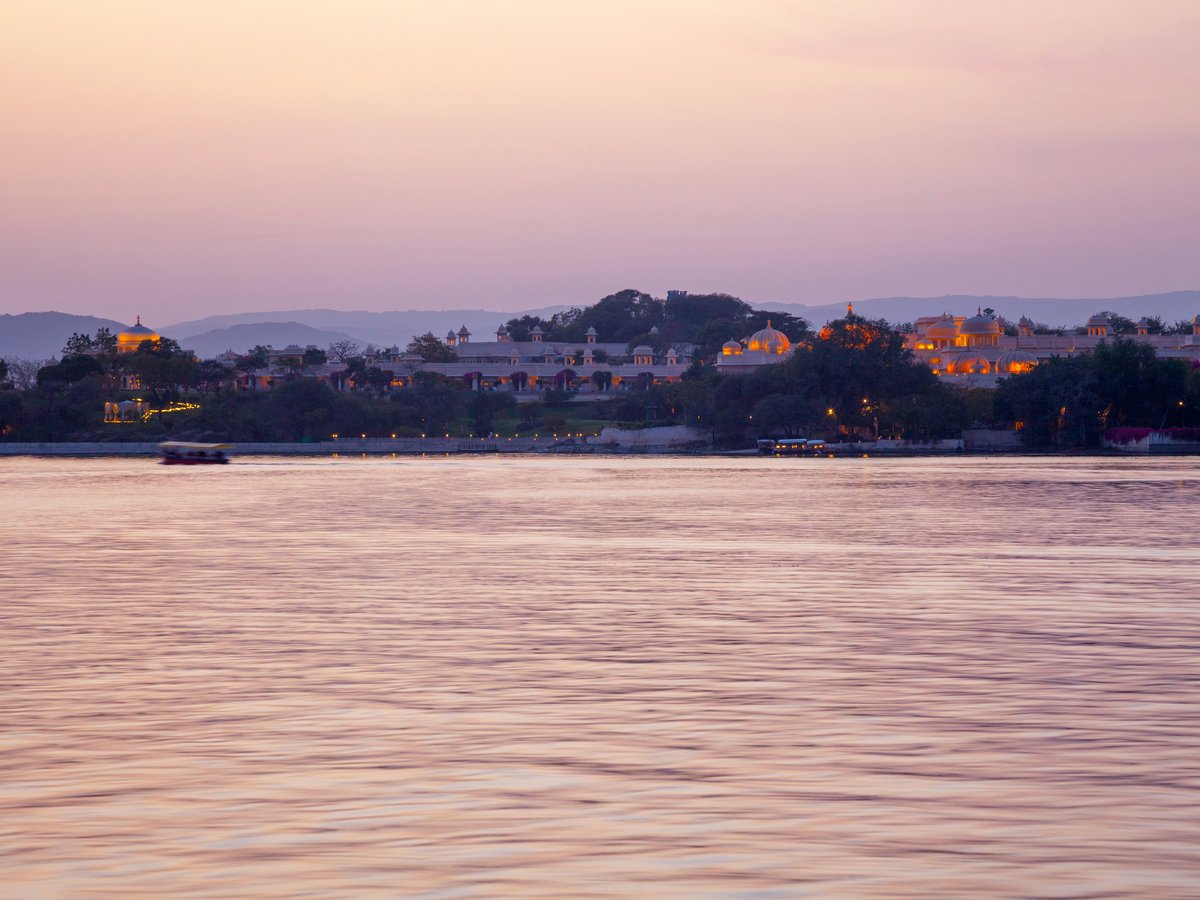
Udaipur sits in a valley of the southern Aravalli Hills at roughly 577 meters above sea level, ringed by low rocky ridges and anchored by a chain of artificial lakes. Lake Pichola, the oldest of the group, was originally dammed in the 14th century. Fateh Sagar lies to the north, connected to Pichola by a narrow canal. The Aravallis around Udaipur are old, worn-down mountains, and the terrain tends to be rocky, dry, and thorny for 8 or 9 months of the year. The Rajasthan monsoon, roughly July through September, turns everything green. In mid-August, humidity currently sits near 89% with temperatures around 23.1°C on an overcast morning, and those brown ridgelines fill in with scrubby green cover. October through March is the practical window for outdoor activity. Daytime temperatures stay between 15°C and 28°C, and the dry air means you can walk for hours without the soaking-wet discomfort of monsoon humidity. Udaipur scores 5.8/10 for solo-traveler safety (see the TTDI Solo-Safety Index), worth noting if you plan to hike or cycle alone in less-trafficked areas outside the city.
Outdoor activities
-
Cycling the Fateh Sagar loop
The paved road circling Fateh Sagar Lake runs about 6 km and is mostly flat, with the lake on one side and the low Moti Magri hill on the other. Several rental shops along Fateh Sagar Road offer single-speed bikes for 100 to 200 INR per day, roughly $1 to $2 at current exchange rates. Early mornings before 8 AM tend to give you the quietest roads and coolest air. You can extend the loop north toward Shilpgram crafts village for another 3 to 4 km of mixed terrain, where the road surface gets rougher but the views over the surrounding hills open up.
- Difficulty
- Easy
- Duration
- 1-2 hours
- Best season
- October to March
-
Horse riding through the Aravalli foothills
Operators based near villages like Titardi, about 8 km from the old city, run half-day and full-day rides through the Aravalli foothills on Marwari horses, the local breed with distinctive inward-curving ears. The trails wind through dry thorn forest and past small farms where the smell of woodsmoke from cooking fires hangs in the still morning air. Monsoon-season rides add creek crossings and patches of green scrub that are absent the rest of the year. Most operators provide helmets and basic instruction, though the rides follow well-worn paths rather than open-country routes.
- Difficulty
- Easy to moderate
- Duration
- 3-6 hours
- Best season
- October to February
-
Rock climbing and rappelling in the Aravallis
A few adventure outfits based in Udaipur run guided climbing sessions on natural rock faces in the Aravallis, typically at sites 15 to 25 km from the city center. The rock is mostly granite and quartzite, offering decent friction even when dry. Sessions generally include basic instruction, harnesses, ropes, and helmets. Worth noting that this is a guided-tour setup, not a developed crag with bolted routes, so you are working with the operator's rigging each time. The rock warms quickly in direct sun, which makes early starts practical and midday sessions uncomfortable.
- Difficulty
- Moderate
- Duration
- 3-4 hours (half day)
- Best season
- October to March
-
Mountain biking on Aravalli dirt tracks
Udaipur has a small but growing mountain biking scene, with a few operators offering guided rides on dirt tracks and single-trail paths in the Aravallis west of the city. The terrain is rocky and undulating, with short steep climbs and loose descents through dry scrub where the smell of sun-baked thorn bush is constant. Routes typically cover 15 to 30 km, passing small roadside shrines and ridge lines with open views. Bikes are usually hardtail mountain bikes in serviceable condition. The riding is technical enough to be interesting without requiring expert-level skills.
- Difficulty
- Moderate to difficult
- Duration
- 3-5 hours
- Best season
- October to February
-
Bird watching at Udaipur's lakes and wetlands
Udaipur and its surrounding wetlands attract over 200 recorded bird species, with density peaking between November and February when Eurasian migrants arrive. The marshy edges of Fateh Sagar, the shores at Badi Lake, and the wetlands near Menar village about 50 km east are the most productive spots. You might see bar-headed geese, painted storks, Indian skimmers, and several kingfisher species depending on the time of year. Mornings before 7 AM tend to yield the most sightings. An 8x42 binocular and a field guide to Indian birds will serve you well out here.
- Difficulty
- Easy
- Duration
- 2-4 hours
- Best season
- November to February
Day hikes
-
Sajjangarh (Monsoon Palace) hill trail
The road up to Monsoon Palace climbs roughly 300 meters over about 5 km from the sanctuary entrance gate. You can walk the paved road or take a slightly steeper foot trail that cuts through dry forest for parts of the ascent. Maharana Sajjan Singh built the palace at the summit as a monsoon retreat, and the panoramic view from the top covers Udaipur's lake system and the Aravalli range stretching west. The walk is mostly exposed to sun on the paved route, so morning starts before 8 AM help considerably. At the top, wind picks up and the broad perspective over the water below opens up. Entry fees apply for both the sanctuary zone and the palace.
- Difficulty
- Moderate (300m elevation gain, mostly paved)
- Duration
- 2-3 hours round trip on foot
- Best season
- October to February
-
Kumbhalgarh Fort wall walk
Kumbhalgarh Fort is about 85 km north of Udaipur, roughly a 2.5-hour drive on winding Aravalli roads. The fort's perimeter wall stretches about 36 km and is wide enough in places for 8 horses abreast. You will not cover the whole wall in a day, but a 3 to 4 hour section along the western or southern ramparts gives you open views over forested hills and occasional glimpses of villages below. The footing is uneven stone, with sections of crumbling steps and exposed ridgeline where heat radiates off the masonry after midday. Carry all your water. There is no shade on the wall itself.
- Difficulty
- Moderate to difficult (uneven stone footing, full sun exposure)
- Duration
- Full day including 2.5-hour drive each way, 3-4 hours walking
- Best season
- October to February
-
Badi Lake (Tiger Lake) circuit
Badi Lake sits about 12 km east of Udaipur's old city and is one of the quieter water bodies near town. The informal path around the lake covers roughly 4 to 5 km on flat terrain, passing through scrubland and past small farms. The lake is a reservoir with an earthen dam, and crocodiles reportedly live in the water, so the shore is for walking, not wading. Mornings here tend to be quiet, with mostly locals fishing or working near the water's edge. No entry fee, and the terrain is suitable for most fitness levels.
- Difficulty
- Easy (flat terrain, informal path)
- Duration
- 1.5-2 hours
- Best season
- October to March
-
Ranakpur Jain Temple and forest walk
The Ranakpur Jain Temple complex sits in a wooded Aravalli valley about 90 km northwest of Udaipur, surrounded by forest that reportedly supports a small leopard population. The 15th-century temple has 1,444 individually carved marble pillars, and that alone might be worth the 2-hour drive. After visiting, you can walk the forest roads and trails in the surrounding Kumbhalgarh Wildlife Sanctuary. The forest is dry deciduous, with teak and dhak trees whose leaves crunch underfoot in the cooler months. Bird life tends to be good here early in the morning. You might spot langur troops and sambar deer on the road, especially if you walk quietly.
- Difficulty
- Easy to moderate (forest terrain, some inclines)
- Duration
- Full day including 2-hour drive each way
- Best season
- October to March
Water activities
-
Boating on Lake Pichola
Lake Pichola stretches roughly 4 km long and 3 km wide at its fullest extent. Government-run boats depart from Rameshwar Ghat near the City Palace, and the standard route loops past Jag Mandir, the island palace where construction began in 1560. Sunset departures are the most sought-after and can sell out by mid-afternoon in peak season. Tickets for public boats run 400 to 800 INR per person depending on the route and timing, roughly $4 to $8. Private shikara boats cost more but can be negotiated at the ghats, where the smell of lake water and the creak of wooden hulls set the tone before you even board.
- Difficulty
- Easy (passenger activity)
- Duration
- 1-1.5 hours
- Best season
- September to March (lake levels highest post-monsoon)
-
Boating on Fateh Sagar Lake
Fateh Sagar is the second-largest lake in Udaipur's chain, and the boating here is more family-oriented and lower-key than at Pichola. Pedal boats, motor boats, and rowing boats are available from the eastern embankment. Pedal boats cost around 150 to 300 INR for 30 minutes. On calm weekday mornings the surrounding Aravalli hills reflect in the still water, and the quiet is striking after the bustle of the old city. The ride to the island garden mentioned in the parks section is the usual route from here.
- Difficulty
- Easy
- Duration
- 30 minutes to 1 hour
- Best season
- October to March
-
Kayaking on Lake Pichola
A handful of operators now offer kayaking sessions on Lake Pichola, typically launching from the ghats near Ambrai or the Hanuman Ghat side. Sessions run 1 to 2 hours and include basic instruction and equipment. The paddling is flat-water and suitable for beginners, though wind can pick up after midday. You get a low-angle view of the City Palace walls and Jag Niwas, the Lake Palace hotel, that you cannot see from higher-riding tourist boats. This is still a relatively new offering in Udaipur, so check locally for current operators and their seasonal availability.
- Difficulty
- Easy to moderate
- Duration
- 1-2 hours
- Best season
- October to February
-
Jaisamand Lake day trip
Jaisamand Lake, also called Dhebar Lake, lies about 50 km southeast of Udaipur. Maharana Jai Singh built the dam in the late 17th century, and for a time it was considered one of the largest artificial lakes in Asia. Several islands dot the water, some still home to Bhil tribal families. Boating is available from the dam area, though facilities are basic compared to the city lakes. The drive out passes through quiet Mewar countryside with dust and dry brush giving way to green after monsoon. The lake shore is productive for bird watching between November and February when migratory species arrive.
- Difficulty
- Easy
- Duration
- Full day including 1-hour drive each way
- Best season
- November to February
Parks & gardens
-
Gulab Bagh and Zoo
Gulab Bagh spreads over about 100 acres in the heart of Udaipur, making it the largest garden in Rajasthan. Maharana Sajjan Singh established it in 1881, and the old rose beds that gave the garden its name still bloom in winter, though sparser than they likely once were. The grounds hold the Saraswati Bhavan library, a small children's park with zoo animals, and wide lawns shaded by mature banyan and neem trees. On weekday mornings the paths are nearly empty, and the dappled light under the banyans feels removed from the city noise a block away.
Highlights: Saraswati Bhavan library, century-old rose beds, dense banyan canopy with heavy shade
-
Saheliyon-ki-Bari (Garden of the Maidens)
This compact garden in northern Udaipur was traditionally built for the queen and her 48 attendants. The fountains are the main draw. They are fed by a gravity-flow system from Fateh Sagar and still operate without electric pumps, which seems remarkable once you see the volume of water they move. Lotus pools line the walkways, and four marble elephants stand at the central fountain basin. The whole space takes maybe 20 minutes to walk through, but the sound of running water and the cool shade make it a solid midday retreat when temperatures are high.
Highlights: Gravity-fed fountains, lotus pools, marble elephant sculptures at the central basin
-
Sajjangarh Biological Park
This zoological garden sits at the base of the hill leading up to Monsoon Palace, about 5 km west of the city center. The park covers roughly 36 hectares of dry deciduous Aravalli forest and holds species native to the region, including leopards, hyenas, wild boar, and several deer species. The walking paths wind through fairly dense forest cover, and the air feels noticeably cooler than in the city, especially during morning hours. Keep quiet on the path and you can hear langur calls from the canopy, mixed with the dry rustle of leaf litter underfoot.
Highlights: Native Aravalli wildlife, shaded forest walking paths, views of Sajjangarh hill above
-
Nehru Garden (Fateh Sagar island)
Nehru Garden occupies a small island in Fateh Sagar Lake, reached by a short boat ride from the eastern shore. The garden itself is modest, with a few flowering beds, a central fountain, and benches along the water's edge. The real appeal is the 360-degree view of the lake and the Aravalli ridges from the island. On weekends the boat queue can stretch to 30 or 40 minutes, so weekday mornings are the better bet if you want a calm visit without the crowd.
Highlights: 360-degree lake and hill views, boat ride access, island flowering garden beds
Practical tips
- Sun protection
- Rajasthan's sun is aggressive from March through June, when temperatures in Udaipur can reach 40°C or higher. A wide-brimmed hat, SPF 50 sunscreen, and UV-blocking sunglasses are not optional for any outdoor activity. Even in the October-to-March comfortable season, midday sun at this latitude can burn exposed skin in 30 minutes. Reapply sunscreen every 2 hours if sweating.
- Hydration
- Carry at least 2 liters of water per person for any hike or ride longer than an hour. Bottled water is available throughout Udaipur for 20 to 30 INR per liter. On longer excursions like the Kumbhalgarh or Ranakpur day trips, bring 3 liters minimum. Dehydration tends to be sneaky in Rajasthan's dry air because sweat evaporates before you feel wet.
- Monsoon trail conditions
- July through September brings heavy rain that turns dirt trails to mud and fills seasonal streams. The Aravallis green up during this period, but trails around Sajjangarh and the Badi Lake circuit become slippery. Leeches appear in forested areas during peak monsoon. If you hike in these months, wear closed shoes with grip, not sandals, and ask locally about flash-flood risk in valley routes before heading out.
- Footwear and gear
- Most trails around Udaipur are rocky and uneven. Sturdy closed-toe shoes with ankle support earn their discomfort in the heat. The terrain is thorny, so flip-flops and trail sandals mean thorn punctures and twisted ankles on loose stone. For cycling, any athletic shoe works fine. Bring a headlamp if you plan to watch sunset from Sajjangarh, because the descent in fading light on uneven road is tricky.
- LGBTQ+ awareness
- Udaipur scores 3.5/10 for LGBTQ+ friendliness (sourced from TTDI's editorial rubric). Public displays of affection between same-sex couples will likely draw attention, particularly outside the tourist lakeside zone. Outdoor activities in rural areas around Udaipur are generally fine for all travelers as long as you are aware of local norms. Knowing this context before planning is useful.
- Traveling with family
- Udaipur scores 6.2/10 for family friendliness (see the TTDI Family-Friendliness Index). The lake boating, Fateh Sagar cycling loop, and park visits work well with children. The Sajjangarh and Badi Lake walks are manageable with kids over 6 or 7. The Kumbhalgarh wall is too rough and exposed for small children, and the 5-hour round-trip drive makes it a long day for anyone under 10.
FAQ
What is the best time of year for outdoor activities in Udaipur?
October through February offers the most comfortable conditions, with low humidity and pleasant daytime temperatures. March through June is hot, with Udaipur regularly reaching 40°C, which limits outdoor time to early morning and late afternoon windows. The monsoon months bring heavy rain and high humidity but a transformed green landscape. Late September can work well once the heaviest rains taper off and the lakes reach their fullest levels of the year.
Can you swim in Udaipur's lakes?
Swimming in Udaipur's main lakes is generally not done. Lake Pichola and Fateh Sagar function as water supply sources with restricted access. Badi Lake has wildlife considerations that make shoreline wading inadvisable, as mentioned in the hiking section. There are no public swimming areas or beaches on any of Udaipur's lakes. Hotels with lakeside locations often have pools, and that is likely your most practical option.
Do I need a guide for hikes near Udaipur?
For the Sajjangarh hill walk and the Badi Lake circuit, a guide is not necessary. The routes are straightforward and close to the city. For the Kumbhalgarh wall and the Ranakpur forest area, a guide or driver who knows the region helps with navigation and logistics, especially if you do not speak Hindi. Rock climbing and horse riding are guided activities by definition. Hiring a local guide for Aravalli hikes typically costs 500 to 1,500 INR for a half day.
Is Udaipur practical for remote workers who want outdoor access?
Udaipur rates 6.2/10 for digital-nomad suitability (sourced from TTDI's editorial rubric). Wi-Fi in lakeside cafes and co-working spaces around the old city is generally adequate for video calls. The compact geography means you can work a morning session and reach Fateh Sagar or the Sajjangarh foothills by early afternoon. The cycling loop is close enough to the cafe zone that you could fit a ride into a longer lunch break.
What should I wear for outdoor activities in Udaipur?
Loose, breathable, light-colored clothing that covers your arms and legs works best in Rajasthan. Covered skin also protects against thorny scrub on Aravalli trails. A cotton scarf or buff handles dust on rural roads. For temple visits at Ranakpur, covered shoulders and knees are required. During monsoon months, quick-dry fabrics are more practical than cotton, which stays damp for hours in high humidity.
Are outdoor activities around Udaipur safe for solo travelers?
Most outdoor activities within the city, like the Fateh Sagar cycling loop or park visits, are fine for solo travelers during daylight. For hikes in more remote Aravalli terrain or day trips to Kumbhalgarh, joining a small group or hiring a guide adds both safety and navigation help. Avoid isolated trails after dark. Carry a fully charged phone with local emergency numbers saved. Wikivoyage's Udaipur safety section at https://en.wikivoyage.org/wiki/Udaipur#Stay_safe covers the broader context well.
Last verified by automated review (v1.7.2) on . What is automated review?