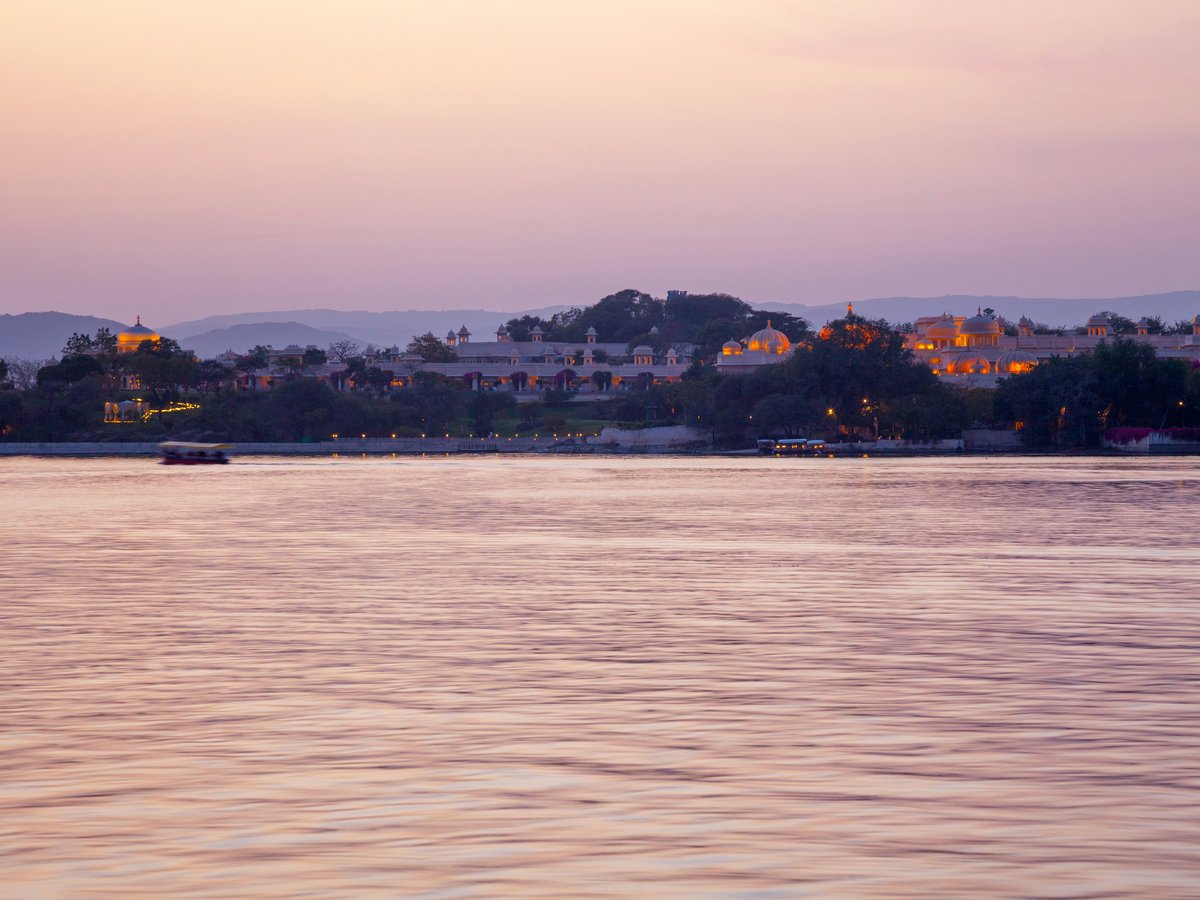
Udaipur spreads across a bowl of low Aravalli hills in southern Rajasthan, anchored by Lake Pichola, Fateh Sagar, and the smaller lakes between them. On still mornings, the white-washed havelis and City Palace facade reflect cleanly in Pichola's surface. The old city around Jagdish Chowk is walkable end to end in about 40 minutes, and you can fill 3 or 4 full days without paying entry anywhere. Stone ghats line both shores of Lake Pichola, open around the clock. Rose beds fill the grounds of Gulab Bagh. Around 6:30 PM the light off the water goes gold. With 1 USD currently sitting at about 95.7 INR, most ticketed attractions charge between ₹100 and ₹700. Every lakefront ghat, every functioning temple, and the Sajjan Niwas Garden charge nothing.
Free attractions
-
Jagdish Temple
Maharana Jagat Singh I commissioned this Vishnu temple in 1651, and its carved spire still rises about 24 meters above the surrounding rooftops of Jagdish Chowk. The exterior walls carry bands of elephants, horsemen, and celestial figures in grey-green stone. Inside, the main sanctum holds a black stone image of Lord Vishnu as Jagannath. You'll smell incense and marigold garlands before you see the entrance. No entry fee at any hour, with the first morning aarti typically around 5:15 AM.
Jagdish Chowk, Old Citytemple -
Gangaur Ghat
Wide stone steps dropping to Lake Pichola at the southern end of the old city, facing the City Palace directly across the water. On clear mornings the reflection doubles the facade. Women beat laundry against wet rock most mornings while temple bells ring from a small shrine at the top of the steps. Free and open around the clock.
Old Cityghat / viewpoint -
Ambrai Ghat
On the western bank of Lake Pichola, directly opposite the old city. From these steps you look across the water to the City Palace and the island where Jag Mandir has stood since 1560. Likely the single best sunset viewpoint in Udaipur. The stone steps drop close to water level during monsoon months. Free access, no restrictions.
West bank, near Amet Havelighat / viewpoint -
Gulab Bagh (Sajjan Niwas Garden)
Udaipur's largest garden, founded in 1881 and covering roughly 100 acres south of Lake Pichola. The name translates to Rose Garden, and the beds still hold dozens of varieties. Old banyan trees shade the walking paths, and a public library sits inside the grounds. The garden itself is free to walk through. A small zoo operates within the compound and charges a separate entry fee.
Gulab Bagh Roadpark / garden -
Neemach Mata Temple
A hilltop Shakti temple on the eastern rim of Fateh Sagar Lake. The walk up takes about 20 minutes from the road and passes through scrubby Aravalli forest. The view from the top covers Fateh Sagar below, the Aravalli ridgeline, and parts of the city stretching toward Lake Pichola. Free entry. Best in early morning light or the hour before sunset.
Fateh Sagar, East Sidetemple / viewpoint -
Karni Mata Temple (Machla Magra Hill trail)
The Mansapurna Karni Mata Ropeway charges for the cable car ride, but the walking trail up Machla Magra Hill costs nothing. The climb takes roughly 15 minutes on a paved path and opens up views across Doodh Talai Lake and the southern old city rooftops. The small temple at the summit is free to enter.
Doodh Talai areatemple / viewpoint -
Sukhadia Circle
A landscaped roundabout park at the northern tip of Fateh Sagar Lake, centered on a large illuminated fountain. Families and joggers fill the space in the evenings. Vendors sell roasted corn, kulfi, and chaat along the perimeter path. Free and open until late evening.
Fateh Sagar Northpark -
Fateh Sagar Lake Promenade
A paved lakefront path running along the eastern shore of Fateh Sagar, Udaipur's second-largest lake. Popular with joggers before sunrise and families after sunset. Bhel puri and pani puri vendors set up along the path most evenings. Free to walk at any hour.
Fateh Sagar Eastpark / promenade -
Ahar Cenotaphs (Mahasatiya)
A field of roughly 250 royal cenotaphs at Ahar, about 2 km east of the old city center. These carved stone chattris mark the cremation sites of Mewar's Maharanas across several centuries. An ASI-protected monument. Normally charges a small entry fee, but free on Republic Day (January 26), Independence Day (August 15), and World Heritage Day (April 18) under the national policy covering all centrally protected monuments and museums.
Aharheritage site / museum -
Bharatiya Lok Kala Mandal
A folk-art museum and cultural research center founded in 1952 near Chetak Circle. The collection spans Rajasthani puppetry, folk costumes, tribal ornaments, and musical instruments from across the Mewar region. Normally charges about ₹40 for Indian visitors and ₹80 for foreign visitors. Free on Republic Day and Independence Day, following standard government cultural-institution practice in Rajasthan.
Near Chetak Circlemuseum
Free activities
-
Old City Walking Route (Jagdish Chowk to the Ghats)
Start at Jagdish Chowk, where the temple spire marks the center of the old city. Head south through narrow lanes lined with haveli facades, miniature-painting shops, and chai stalls until you reach Gangaur Ghat. The walk covers about 800 meters and takes 15 to 20 minutes if you stop to look at the carved doorways and painted walls. Turn west along the lakefront toward Lal Ghat for quieter water views. No guide needed, and getting slightly lost in the lanes tends to turn up something worth seeing.
Old Citywalking route -
Hathi Pol Bazaar
Udaipur's main handicraft market street, running from Hathi Pol gate into the old city. Vendors sell Rajasthani textiles, hand-painted miniatures, silver jewelry, leather mojri shoes, and spices. Browsing costs nothing. The alley hits all the senses at once, from turmeric-yellow fabric stacked in doorways to sandalwood oil and the tap of silversmiths working in back rooms.
Old Citymarket -
Bada Bazaar
The old city's main commercial market, running roughly parallel to Hathi Pol but geared more toward everyday goods. Spice stalls, street-food vendors, fabric shops, and household-item stores. Less touristic than Hathi Pol, which tends to mean lower prices if you're buying, but the browsing is equally free. Market activity peaks between about 10 AM and 7 PM.
Old Citymarket -
Watching Miniature Painters at Work in Old City Studios
Several family-run painting studios in the lanes between Jagdish Temple and Gangaur Ghat welcome visitors to watch artists work on traditional Mewar miniatures. The technique uses brushes made from squirrel hair and natural pigments ground from stone. Watching is free, and most artists will explain the process without pressure to buy. Look for small hand-lettered signs near doorways.
Old Cityart / cultural -
Sunset Walk Along Lake Pichola's Ghats
From Gangaur Ghat, you can walk south along Lake Pichola's eastern shore for about 1 km, passing Lal Ghat and several smaller access points to the water. The path is partly on stone steps, partly on narrow lanes behind waterfront buildings. Time it for about an hour before sunset and you'll watch the light shift from white to gold on the City Palace walls across the water.
Old City lakefrontwalking route
Free events
-
Mewar Festival (Gangaur Procession)
Late March or April annually, following the Hindu calendarUdaipur's largest annual cultural event. Women carry decorated images of Goddess Gauri from old city temples through the main streets to Gangaur Ghat, accompanied by folk musicians and dancers in traditional Rajasthani dress. The procession passes through the old city's main arteries over 2 to 3 hours. Free to watch from the streets and ghats. Udaipur's version of the broader Gangaur celebration is considered the most elaborate in Rajasthan.
Old City streets, ending at Gangaur Ghat -
Evening Aarti at Jagdish Temple
Daily at sunset, approximately 6:30 to 7:00 PM depending on seasonThe daily sunset prayer ceremony fills Jagdish Chowk with the sound of bells, chanting, and the smell of camphor and ghee. Priests perform the ritual with brass oil lamps for about 20 minutes. Free and open to visitors of all backgrounds.
Jagdish Temple, Jagdish Chowk -
Hariyali Teej Procession
July or August annually, following the Hindu calendarA monsoon-season festival honoring Goddess Parvati, with decorated palanquins carried through the old city accompanied by folk songs and women in bright Rajasthani textiles. The Mewar cultural traditions add elaborate floats and traditional dance to the procession. Free to watch from the streets.
Old City streets -
Independence Day Celebrations at Maharana Bhupal Stadium
August 15 annuallyThe city's official flag-hoisting ceremony and parade at the multi-purpose stadium built in 1982. School groups, military personnel, and city officials participate. Cultural performances follow the formal ceremony. Free and open to the public.
Maharana Bhupal Stadium
Ticketed Attractions to Know About
Not everything in Udaipur is free, and knowing which sites charge helps prevent surprises at the gate. City Palace Museum is the most-visited ticketed site, with entry currently running around ₹300 for Indian visitors and ₹700 for foreign tourists. Bagore-ki-Haveli, an 18th-century mansion on Gangaur Ghat, charges about ₹100 and hosts a paid nightly Dharohar folk-dance performance at a separate ticket price. Saheliyon-ki-Bari (Garden of the Maidens) has a small entry fee as well. Boat rides on Lake Pichola to the island palaces cost ₹400 to ₹800 depending on the route and operator. Monsoon Palace (Sajjangarh) on its hilltop west of the city charges entry plus a vehicle fee for the steep drive up. Sajjangarh Biological Park, a zoological garden near the same hill, also charges separately. Worth noting that you can see much of this from the free side. The full City Palace facade is visible from Gangaur Ghat and Ambrai Ghat. The sunset silhouette of Monsoon Palace on its ridge is visible from several free hilltop temples to the east.
Seasonal Timing for Free Activities
Udaipur sits at roughly 600 meters in the Aravalli hills, which tempers the Rajasthani heat somewhat. Peak tourist season runs October through March, when daytime temperatures hover between 20°C and 28°C and rain is unlikely. Summer from April through June pushes past 40°C on many days, making extended ghat walks uncomfortable. The monsoon season from July through September transforms the city entirely. At the time of writing in mid-August, the temperature is sitting around 26.8°C but feels closer to 30°C with 68% humidity under partly cloudy skies. The lakes fill up, and the surrounding hills turn green. Fateh Sagar Lake, which can dry to a trickle by May, becomes a full basin again. To be fair, monsoon does mean occasional heavy downpours that can flood the ghat steps for a few hours, but the cooler air and the sight of the Aravallis wrapped in monsoon clouds make the climb to Neemach Mata Temple feel very different from the same walk in April.
Painted Haveli Facades in the Old City
The lanes between Jagdish Chowk and the ghats hold dozens of painted haveli facades in the traditional Mewar style. These are not modern street art installations. The paintings feature processions, hunting scenes, elephants, and floral patterns, some dating back over a century, applied directly onto whitewashed walls. You'll notice them at second-floor height, often faded but still legible. The area around Gangaur Ghat has the densest cluster. No charge to look. Many of these havelis remain occupied family homes, so you're viewing them from the street rather than entering. The style is distinct from the Shekhawati region's more famous painted havelis about 400 km to the northeast, but it draws from the same Rajput artistic tradition of narrative wall painting.
FAQ
Is it safe to walk around Udaipur alone?
Udaipur scores 5.8 out of 10 for solo-traveler safety (see the TTDI Solo-Safety Index). The old city lanes feel relatively secure during daytime, with regular foot traffic and shop owners nearby. After dark, some ghat areas and quieter lanes can feel isolated and poorly lit. Sticking to the main routes around Jagdish Chowk and Hathi Pol after about 9 PM is a reasonable precaution. Auto-rickshaw drivers sometimes quote inflated fares to solo visitors, so agree on a price before getting in. For more on common scams and safety considerations, Wikivoyage's Udaipur safety section provides regularly updated detail.
What is the best time of year to visit Udaipur for free outdoor activities?
October through February tends to be the most comfortable season for walking the ghats and climbing to hilltop temples, with mild daytime temperatures and minimal rain. The monsoon months from July to September bring cooler air and full lakes but also sporadic heavy downpours. Summer from April through June can push above 40°C, which makes extended outdoor walks difficult. Mind you, the monsoon delivers the most dramatic light for photography from the hilltop viewpoints, and the green Aravallis look nothing like their dry-season brown.
Are there free activities in Udaipur suitable for families with children?
Udaipur scores 6.2 out of 10 for family friendliness (see the TTDI Family-Friendliness Index). The ghats and lake promenades work well for children, and Gulab Bagh's open grounds provide space to run around. Kids tend to enjoy watching the miniature painters at work and feeding pigeons at Jagdish Chowk. The lakefront promenades along Fateh Sagar are stroller-accessible for most of their length. For families wanting a paid outing, Sajjangarh Biological Park has animal enclosures and a bird section at a modest ticket price.
Do Udaipur's temples require a specific dress code?
Most Hindu temples in Udaipur expect shoulders and knees to be covered. At Jagdish Temple, shoes come off before entering the inner sanctum area. You leave them on the steps or with a shoe-minder for a small tip. Leather belts and bags are sometimes asked to be left outside as well. Photography rules vary by temple. Exterior photos are generally fine, but shooting inside the sanctum during aarti ceremonies may be restricted.
What should LGBTQ+ travelers know about visiting Udaipur?
Udaipur scores 3.5 out of 10 for LGBTQ+ friendliness (sourced from TTDI's editorial rubric). While Section 377 was struck down by India's Supreme Court in 2018 and same-sex activity is decriminalized, social attitudes in Rajasthan tend to be more conservative than in cities like Mumbai or Delhi. Public displays of affection between same-sex couples may draw stares or unwanted attention in the old city and market areas. Tourist-facing hotels and restaurants in the Lal Ghat and Jagdish Chowk areas are generally welcoming, but discretion remains the practical reality for most LGBTQ+ visitors in smaller Rajasthani cities.
How much should I budget per day in Udaipur beyond the free activities?
If you're covering free attractions and activities, the main costs are accommodation, food, and transport. A hostel dorm bed in the old city currently runs about ₹400 to ₹600 per night. A basic private room with a partial lake view starts around ₹800. Street food meals like dal-baati-churma, kachori, or samosa with chai typically cost ₹30 to ₹80 each. An auto-rickshaw ride within the city center rarely exceeds ₹100. A full day of street food and auto rides might total ₹300 to ₹500, which at current exchange rates works out to under $5.50.
Last verified by automated review (v1.7.2) on . What is automated review?