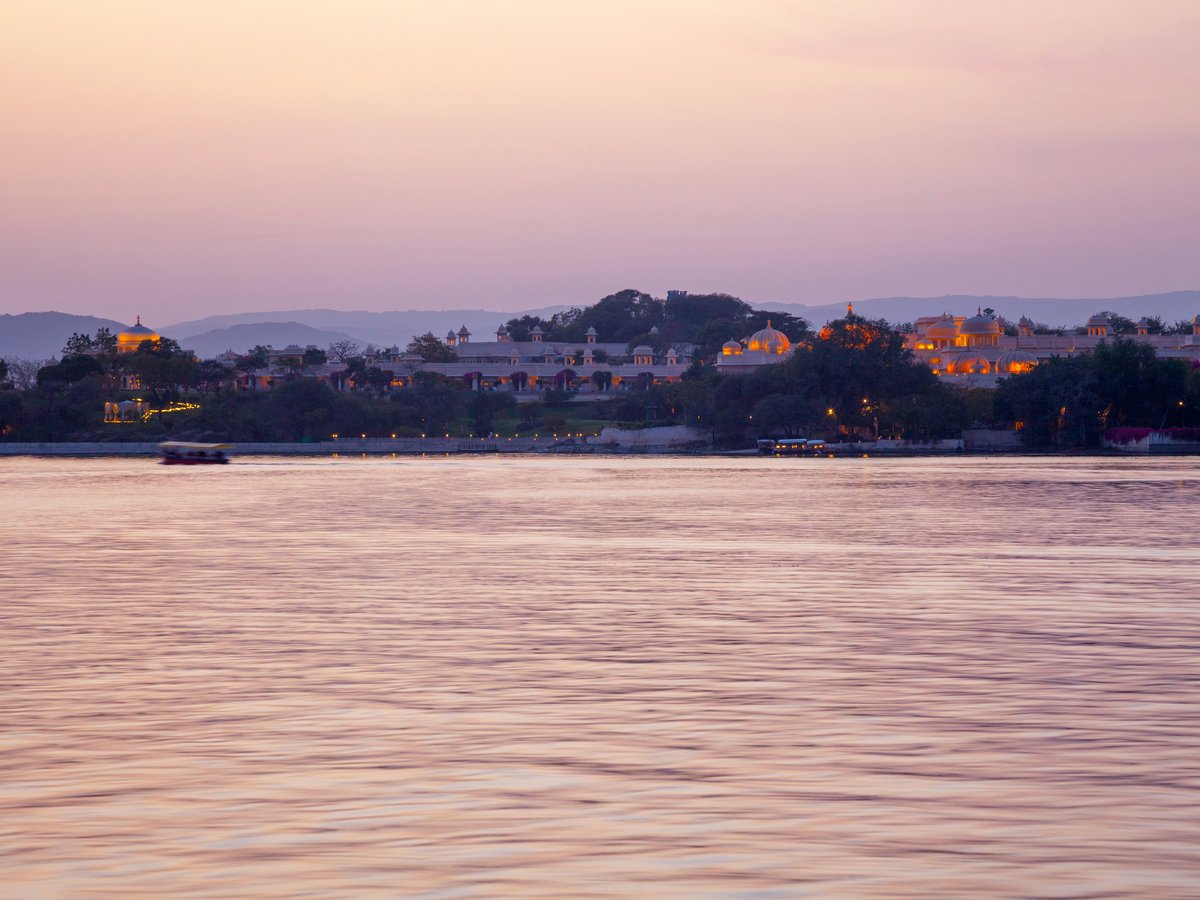
Stay in Udaipur in September
64 hotels in the Trip.com pool for Udaipur, from US$5 a night.
Opens Trip.com on Fri 3 Sep to Sun 5 Sep 2027; change the dates there.
September in Udaipur means monsoon. Rain falls on more days than not, humidity clings to your skin the moment you step outside, and the afternoon sky can go from blue to slate-grey in 20 minutes. Daytime highs sit near 30°C (85°F), which sounds manageable until you factor in the thick, wet air that follows you through the narrow lanes of Hathi Pol and Chandpole. The nights are a relief, dropping to around 22°C (72°F), cool enough for a rooftop dinner without sweating through your shirt.
The payoff, though, is real. Lake Pichola and Fateh Sagar Lake tend to be near their highest water levels by late September, after three months of monsoon feeding. The Aravalli hills that ring the city turn an almost startling green, a landscape that disappears entirely by mid-October. Monsoon Palace, the hilltop folly purpose-built as a monsoon-watching retreat, finally lives up to its name. And the tourist crowds that pack Lal Ghat and the City Palace courtyards from November through February are largely absent.
You will lose time to rain. Some boat operators on the lakes reduce their schedules or suspend service during heavy downpours. Unpaved roads near the Ahar Cenotaphs get muddy, and the afternoon storms can turn the old city's cobbled lanes into temporary streams.
Why visit in September
- Lake Pichola and Fateh Sagar tend to be near peak water levels, giving the lakefront, island palaces, and Gangaur Ghat reflections their most photogenic backdrop of the year.
- Heritage hotel rates in the old city commonly drop 30-50% from peak-season pricing, and domestic flights to Udaipur (UDR) from Delhi and Mumbai sit near annual lows.
- Temperatures around 30°C are roughly 7 degrees cooler than the punishing April-May heat, making walking through the old city and climbing to Monsoon Palace far more comfortable.
- Major sites like City Palace and Bagore-ki-Haveli are nearly empty compared to the winter months, letting you linger without shuffling past tour groups.
Worth knowing
- Rain on roughly half the month's days means outdoor plans need real flexibility, and afternoon downpours can last 2-3 hours.
- The persistent humidity makes the moderate temperature feel heavier than the numbers suggest, especially in the enclosed bazaar lanes around Bada Bazaar.
- Mosquito activity rises noticeably near the lakeshores and in lower-lying areas after dusk, with dengue risk elevated across Rajasthan during monsoon.
- Some boat and adventure operators near Fateh Sagar run reduced schedules or pause entirely during heavy rain weeks.
Best for
Think twice if
September sits in the tail of the monsoon, which runs June through September across Rajasthan. The heaviest months are July (242mm) and August (221mm), so September's 180mm across 16 rainy days typically represents a slight easing. Mornings tend to start clear and warm, with clouds building through midday and rain arriving most often between 2pm and 6pm. The occasional dry stretch of 2-3 consecutive days breaks through, especially in the final week. Nights cool noticeably and can feel pleasant on a dry rooftop. At 79%, the humidity rarely dips below the mid-70s and seldom reaches uncomfortable peaks above 85%.
Seasonal caution
- Monsoon downpours can cause localized street flooding in low-lying parts of the old city, particularly around Chand Pole and the Ahar area. Avoid wading through standing water, which may conceal open drains.
- Mosquito-borne illness risk (dengue, chikungunya) rises during monsoon across Rajasthan. Apply DEET-based repellent consistently near the lakes from late afternoon onward.
- Wet stone steps at the ghats and at hill-top sites like Sajjangarh become genuinely slippery. Multiple visitors are treated for falls each monsoon season. Rubber-soled footwear is not optional.
Year-round climate
Averages from the last 5 years.
| Month | Avg high (°C) | Avg low (°C) | Rainfall (mm) |
|---|---|---|---|
| Jan | 23 | 10 | 11 |
| Feb | 28 | 14 | 0 |
| Mar | 32 | 19 | 7 |
| Apr | 37 | 23 | 2 |
| May | 37 | 25 | 44 |
| Jun | 35 | 25 | 135 |
| Jul | 30 | 24 | 242 |
| Aug | 29 | 23 | 221 |
| Sep | 30 | 23 | 180 |
| Oct | 30 | 20 | 35 |
| Nov | 27 | 16 | 14 |
| Dec | 24 | 12 | 7 |
Best things to do in September
Monsoon Palace sunset viewing
sightseeingSajjangarh Palace sits at 944 meters on a hilltop west of the city, built in the 1880s by Maharana Sajjan Singh specifically as a monsoon observation point. The terrace looks out over the valley and Lake Pichola below. On a clear September evening, layered cloud formations light gold and pink, with rain curtains visible in the distance over the Aravallis. The breeze at that altitude is the coolest you'll feel all day.
September delivers exactly the conditions this palace was designed to frame. The monsoon clouds, green valley floor, and distant rain veils create a view that does not exist from October through May.Booking tipArrive by 5pm. The palace gate closes at 6pm. Hire a return auto-rickshaw with waiting time rather than hoping to flag one on the hill road after sunset.
Rooftop dinner along Lal Ghat
diningSeveral restaurants along Lal Ghat offer open-air rooftop seating with direct views of the illuminated City Palace across the water. September's evening temperatures make rooftop dining comfortable without the December chill or the May swelter. You might need to duck under a canopy for a passing shower, which tends to pass in 15-20 minutes.
Mild evenings, a full lake reflecting palace lights, and no need to book days ahead. In peak season these rooftops fill by 6pm and turn away walk-ins.Booking tipWalk in on weeknights. Weekend evenings during Ganesh Chaturthi festivities may draw more domestic visitors.
Bharatiya Lok Kala Mandal puppet show
cultureThis folk-art museum and performance hall, founded in 1952, hosts traditional Rajasthani kathputli (string puppet) shows daily. The hand-carved wooden puppets, dressed in miniature Rajasthani costumes, enact stories from Mewar folklore. Shows run 30-45 minutes and cost around 80-100 INR.
An indoor cultural experience tailor-made for rainy September afternoons. The low tourist count means you may have the small theatre nearly to yourself, which makes the performance feel oddly personal.Booking tipCheck show times on arrival. Morning and early afternoon slots run regularly.
Morning walk through Gulab Bagh
natureRajasthan's largest public garden, established in 1881 and originally named Sajjan Niwas Garden, covers roughly 100 acres near the old city. The monsoon transforms it. Rose beds, century-old banyan trees, and lotus pools look lush and wild in a way the dry season never allows. The scent of wet earth and flowering shrubs hangs in the air before 9am.
September's rains push the garden to its greenest and most fragrant state of the year. Early morning temperatures sit around 24-25°C, comfortable for a long walk before the humidity thickens.Booking tipThe garden is free and opens at sunrise. Go before 9am to catch the best light and cool air.
Monsoon photography at Gangaur Ghat
photographyThis stepped ghat on Lake Pichola's eastern shore, between Lal Ghat and the City Palace walls, offers water-level views across to Jag Mandir island. With the lake near full, the reflections of whitewashed buildings and palace walls are sharp and unbroken. September's overcast sky acts like a giant softbox, eliminating the harsh midday shadows that plague dry-season shots.
Full lake levels create mirror reflections unavailable when water drops and exposes mud banks from October onward. The diffused monsoon light is consistently better for architectural photography than direct sun.Sajjangarh Biological Park visit
natureA 36-hectare zoological park at the foot of the Monsoon Palace hill, home to leopards, wolves, hyenas, spotted deer, and migratory birds in semi-natural enclosures. The monsoon brings the park's dry deciduous forest to peak density. Animals are noticeably more active under overcast skies than during the scorching dry months.
September's cooler, cloudy conditions mean the animals venture out during daytime rather than hiding in shade. Peacocks display after rain. The surrounding forest at its densest makes the walk between enclosures feel immersive.Booking tipCombine with a Monsoon Palace visit on the same afternoon. The park entrance sits at the base of the same access road.
Exploring the old city bazaars
shoppingThe market lanes around Hathi Pol, Bada Bazaar, and the silver jewelry shops of Mochiwada are worth a slow morning when the sky cooperates. Silver filigree work, Mewar-school miniature paintings, leather juttis, and handmade paper are Udaipur specialties. September's low tourist traffic shifts the dynamic. Shopkeepers have time to chat about their craft rather than cycling through sales pitches.
Fewer foreign tourists means less aggressive haggling and more genuine conversation with artisan vendors. The narrow lanes stay shaded and relatively cool even at midday, making a 2-hour wander manageable.Booking tipStart at Hathi Pol gate and work south toward Jagdish Temple. Most shops open by 10am.
What to eat in September
On menus now
Ker Sangri
A signature Rajasthani preparation of desert beans (ker berries) and long sangri pods cooked with dried red chilies, amchur, and a touch of yogurt. The fresh ker berry appears during the monsoon months, carrying a sharper, tangier bite than the sun-dried version served the rest of the year.
Bajra Roti
Thick flatbread ground from pearl millet, served with a smear of white butter and garlic chutney. The new bajra harvest begins arriving at Udaipur's grain markets in late September, and the fresh-milled flour carries a nuttier sweetness than stored grain.
Street food peaks
Bhutta
Monsoon street food at its peak. Vendors line the Fateh Sagar promenade and Hathi Pol with charcoal braziers, roasting fresh corn cobs rubbed with lime juice, salt, and red chili powder. The smoky char and the tang of lime cut through the sticky air. Typically 20-30 INR per cob.
Pyaaz Pakora
Onion fritters dipped in spiced chickpea batter and fried until the edges shatter. Served with green mint-coriander chutney at every tea stall in the old city during rainy afternoons. Monsoon comfort food across Rajasthan, and September keeps the tradition running strong.
Mawa Kachori
Udaipur's signature sweet. A deep-fried pastry shell filled with mawa (reduced milk solids), crushed cardamom, and pistachios, soaked in thin sugar syrup. Available year-round from shops near Bada Bazaar, but the monsoon-cool evenings make the rich sweetness sit better than in the summer heat.
Regular events in September
Ganesh ChaturthiFree
The 10-day Hindu festival marking Lord Ganesha's birth. Families across Udaipur install painted clay Ganesha idols in homes and neighborhood pandals. Processions carry decorated idols through the old city's lanes with drums, brass bands, and colored powder. The celebration builds to Anant Chaturdashi, when the idols are immersed in Lake Pichola and Fateh Sagar in energetic processions that can block traffic in the old city for hours.
Varies by Hindu lunar calendar, typically falls between late August and mid-September. The immersion procession (Anant Chaturdashi) follows 10 days after the opening.Hindi Divas (Hindi Day)Free
National observance on September 14 marking the 1949 adoption of Hindi as an official language. Schools and cultural institutions in Udaipur hold poetry readings, essay competitions, and literary events. Not a public holiday, but you may notice programs at cultural venues and university campuses around Sukhadia Circle.
September 14Teacher's Day (Shikshak Divas)Free
Celebrated on September 5 to mark the birthday of Dr. Sarvepalli Radhakrishnan, India's second president. Schools hold special assemblies and recognition events. As a visitor you won't participate directly, but flower vendors do brisk business that morning and school entrances are decorated with marigold garlands across the city.
September 5Best places this September
Monsoon Palace (Sajjangarh)
palaceThe hilltop palace was purpose-built for watching the monsoon season unfold below. September delivers exactly those conditions. The green valley, clouds at eye level, and rain curtains over the Aravallis create the single most month-specific view in Udaipur.
Sajjangarh (western outskirts)Lake Pichola
lakeThe 14th-century artificial lake sits near its highest water levels by late September. Jag Mandir, the island palace begun in 1560, appears to float above the waterline rather than perch on exposed stone foundations. When a dry window opens, the boat ride gives close views of the island palaces backed by green hills.
Old CityCity Palace
palaceUdaipur's largest palace complex stretches along Lake Pichola's eastern shore, with courtyards, carved balconies, and Mewar-history museums. September's low visitor count lets you study the silver-work collection and miniature painting galleries without queuing. The lakeside balconies catch a breeze off the full water below.
Lal GhatGulab Bagh and Zoo
gardenRajasthan's largest public garden reaches peak green coverage during the monsoon. The banyan canopy, rose beds, and lotus ponds benefit visibly from the rains, and the grounds feel wilder and more overgrown than their manicured winter state.
Near City PalaceBagore-ki-Haveli
museumAn 18th-century haveli on Gangaur Ghat, now a museum of Mewar-era daily life. The interior rooms with painted walls, period costumes, and turbans from across Rajasthan are entirely rain-proof and fill a solid 1-2 hours. The evening Dharohar folk-dance show runs year-round in the courtyard, though heavy rain occasionally moves it indoors.
Gangaur GhatFateh Sagar Lake
lakeThe second major lake, north of Lake Pichola, connected by a canal. Nehru Garden sits on a small island in the center. September water levels tend to be high, and the lakeside promenade fills with local families in the evenings. Food carts along the promenade serve roasted corn and chai.
Fateh SagarAhar Cenotaphs
monumentOver 250 royal chhatris (domed cenotaphs) commemorating Mewar rulers across several centuries, standing in a quiet complex 2km east of the city center. The site sees almost no visitors even in winter, and in September you will likely have it entirely to yourself. Carved marble canopies against monsoon cloud formations photograph well, especially on partly cloudy mornings.
Ahar
Your packing checklist
Tick items off as you pack. Your progress saves in this browser.
All packed — have a great trip.
Insider tips
The hours between 7am and 10am are typically the driest window in September. Stack outdoor sightseeing in that slot and save indoor venues like the City Palace museums and Bharatiya Lok Kala Mandal for the afternoon rain.
The Ambrai side of Lake Pichola, across Chand Pole bridge from the old city, gets fewer touts and offers arguably better sunset views looking back at the illuminated palace facade. The 10-minute walk across is worth it.
Auto-rickshaw drivers have fewer fares in monsoon and negotiate more readily than in winter. A return trip from the old city to Monsoon Palace with 30 minutes of waiting time should run 250-350 INR. Some drivers quote double that initially.
During Ganesh Chaturthi, watch the idol processions from a Lal Ghat rooftop rather than street level. The narrow lanes fill wall-to-wall with celebration crowds, and the aerial view of decorated idols moving through the old city is a better vantage.
If the Ahar Cenotaphs are on your list, visit on a partly cloudy morning rather than in flat grey overcast. The carved marble domes need some directional light to show their detail, and the contrast against broken monsoon clouds is the best frame you'll get all year.
Avoid these mistakes
- Booking an afternoon open-boat tour on Lake Pichola without checking the weather. September afternoons frequently bring rain that cancels service with little notice. Morning slots have better odds, and confirming with the operator by 8am saves a wasted trip to the dock.
- Wearing leather shoes or fashion sandals to the ghats. The wet stone steps at Gangaur Ghat and around the City Palace waterfront send multiple visitors to clinics with fall injuries each monsoon. Rubber-soled, water-friendly footwear is the minimum.
- Assuming dry-season boat schedules apply. Operators on both lakes adjust frequency and sometimes suspend entirely during heavy rain weeks. The Jag Mandir boat, for instance, may run fewer daily departures than its winter timetable.
- Skipping insect repellent near the lakes at dusk. The mosquito population spikes during Udaipur's monsoon, and the Ambrai waterfront and Fateh Sagar promenade are the highest-exposure zones after 5pm.
Practical tips for September
Book heritage hotels by contacting the property directly rather than through aggregator sites. In September, many Lal Ghat and lakeside guesthouses offer walk-in or direct-booking rates below their listed online prices because occupancy sits well under 50% and they want to avoid paying commission. The airport (UDR) serves domestic flights from Delhi (1hr 15min), Mumbai (1hr 30min), and Jaipur (45min), with September fares typically near their annual floor. Auto-rickshaws are the main city transport. There is no meter. Agree on a fare before getting in. For temple visits to Jagdish Temple and others, carry a scarf or shawl to cover shoulders and knees. Most restaurants in the old city stay open through monsoon, though a few seasonal lakeside stalls near Fateh Sagar close during August and September. Confirm any boat or outdoor activity the morning of your planned outing, as operators cancel with short notice.
FAQ
Is September a good time to visit Udaipur?
It depends on what you value. September sits in the tail of the monsoon, so rain falls on more than half the days and the humidity is high. That's a genuine drawback for anyone with a rigid outdoor itinerary. On the other hand, the lakes are full, the Aravallis are green, the crowds are thin, and hotel rates drop substantially from winter highs. If you're flexible and don't mind rearranging a day around weather, September has its own appeal. For reliable dry conditions, October or November are safer picks.
What is the weather like in Udaipur in September?
Expect average highs of 29.6°C (85°F) and lows of 22.5°C (72°F). Total rainfall is around 180mm spread across 16 days, mostly in afternoon downpours rather than all-day grey drizzle. Humidity averages 79%. Mornings typically start partly clear and warm, with clouds building around midday. The final week of September tends to see the monsoon beginning to taper, with longer dry stretches appearing between showers.
Is Udaipur crowded in September?
No. September is among the lowest-traffic months of the year. The main tourist season runs October through March, peaking in December and January. In September you can walk through City Palace without tour-group congestion, find lakefront restaurant tables at sunset without reservations, and rarely queue for anything. Domestic visitor numbers bump modestly during Ganesh Chaturthi week, but that is minor compared to winter volumes.
Can you do boat rides on Lake Pichola in September?
Sometimes, but not reliably on any given day. Boat operators run services when conditions allow and cancel during active rainfall or when the lake surface is choppy. Morning trips before the typical afternoon rain pattern have the best odds. When boats do run, the ride is arguably better than in dry season because the lake sits near its peak level and the island palaces are backed by green hills rather than brown scrub.
What should I pack for Udaipur in September?
Rain-ready gear is the priority. A lightweight waterproof jacket beats an umbrella in the narrow old city lanes. Waterproof sandals with treaded soles handle the slippery ghat steps. Quick-dry natural-fiber clothing manages the humidity better than synthetics. DEET-based mosquito repellent is necessary for evenings near the lakes. A dry bag protects electronics during sudden downpours. A light long-sleeve layer covers temple dress codes and cooler nights.
Things to Do in Udaipur in September
 Free cancellation
 Private Sunrise Taj Mahal Tour from Delhi By Car -All inclusive
Day trip: 12 hours, free cancellation.
via Viator Free cancellation
 Private Udaipur Sightseeing Tour by Tuk-Tuk or Car with Driver
City tour: free cancellation.
via Viator Free cancellation
 Kumbhalgarh & Ranakpur Day Trip from Udaipur with Guide and Lunch
Day trip: 5 hours, free cancellation.
via Viator Free cancellation
 Udaipur Sightseeing Tour Package with Guide and Private Taxi
City tour: 8 hours, free cancellation.
via Viator Free cancellation
 Udaipur Sightseeing Tour by Private Car and Privet Tour Guide
Day trip: 8 hours, free cancellation.
via Viator
Udaipur Sightseeing Tour
City tour: 8 hours.
via ViatorFind a flight to Udaipur
Live fares to Udaipur appear here once cookies are accepted.
Last verified by automated review (v1.7.2) on . What is automated review?