Compare every Spain city in September →
Stay in Madrid in September
149 hotels in the Trip.com pool for Madrid, from US$7 a night.
Opens Trip.com on Fri 25 Sep to Sun 27 Sep 2026; change the dates there.
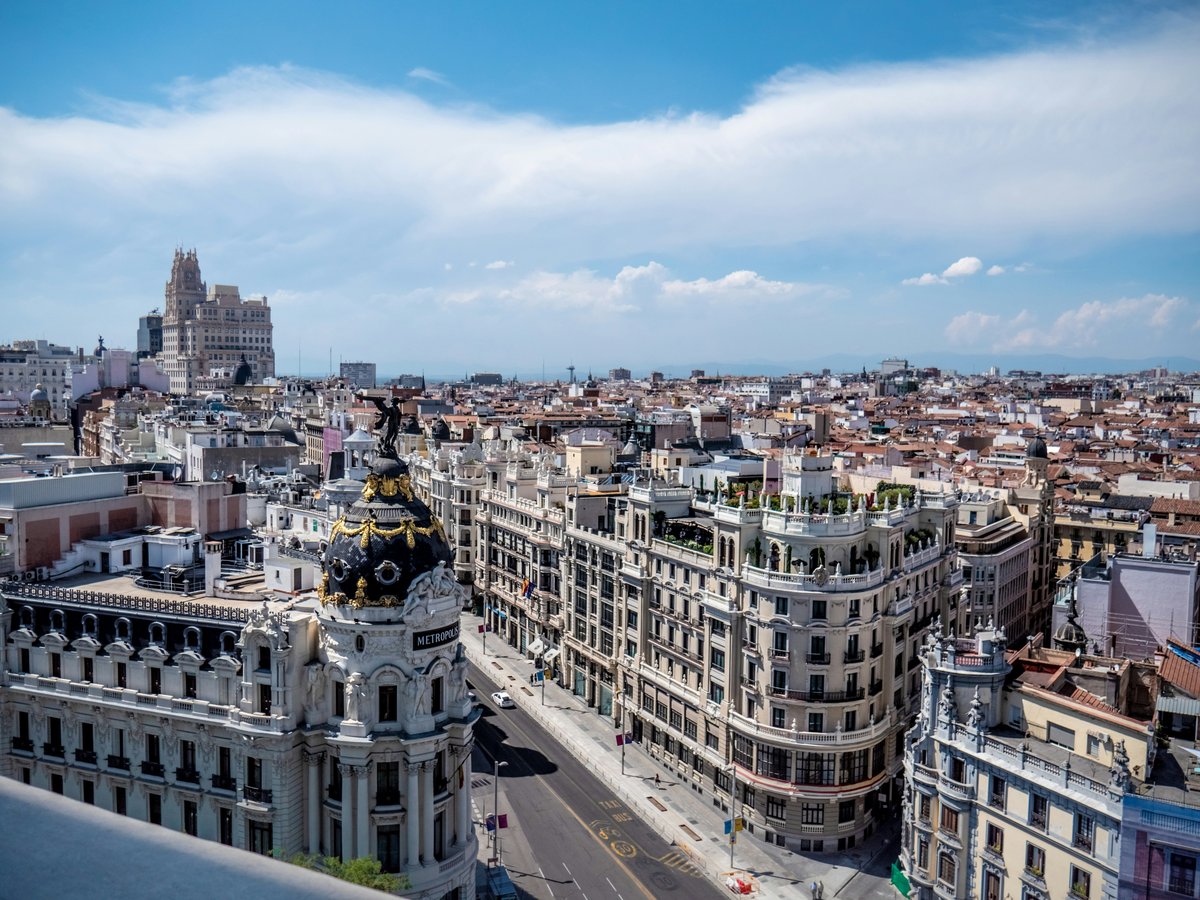
The single most important thing about Madrid in September is that the city comes back to life. August is when madrileños flee to the coast, and entire blocks in Chamberí and Malasaña go dark. Paper signs on restaurant doors read 'cerrado por vacaciones' for 3 to 4 weeks straight. By the second week of September, those doors swing open. Teatro Real announces its new season. Galleries along Calle Doctor Fourquet in Lavapiés hang fresh shows. The Paseo del Arte museums launch their autumn programming.
Daytime highs average 26.5°C (80°F) and lows settle around 14.9°C (59°F), which feels like a different climate from July and August's 35°C (95°F). Those summer months can pin you indoors from noon to 6pm, when the stone streets of Sol and Salamanca radiate stored heat. September is walking weather. Rain picks up to about 77mm across 6 days, typically in short afternoon bursts that clear within the hour. Humidity sits around 53%, which feels dry compared to most coastal European cities.
Hotel prices drop 20-30% from summer peak rates. The terraza season in La Latina and Plaza de Olavide in Chamberí still has warm enough evenings to linger over a copa de tinto. Queues at the Prado's free evening sessions shrink from 45 minutes in peak summer to 10 or 15. If you want to eat at the kind of neighborhood spot in Lavapiés that does not take reservations, September is when you can get a table.
Why visit in September
- Temperatures drop from 35°C (95°F) summer averages to 26.5°C (80°F), making all-day walking through Retiro and the Austrias comfortable for the first time since May
- Madrid's cultural season launches in September. Teatro Real opens its opera program, the Prado and Reina Sofía debut autumn exhibitions, and independent galleries along Calle Doctor Fourquet hold opening-night events
- Hotel rates fall 20-30% from July and August peak while the weather remains warm enough for outdoor dining every evening
- Locals return from August holidays, so neighborhood restaurants, bakeries, and small shops across Chamberí, La Latina, and Malasaña reopen to full capacity
- Evening temperatures around 15°C (59°F) hit the sweet spot for Madrid's terraza culture, comfortable without the suffocating summer heat that made sitting outside before 9pm punishing
Worth knowing
- Rain returns after the bone-dry summer months (3mm in July, 6mm in August), jumping to 77mm across 6 days. Visitors who packed for endless sunshine get caught out
- The first week of September is still hit-or-miss. Some restaurants and small shops in Malasaña and Lavapiés stay shuttered until the second Monday of the month as owners trickle back from the coast
- Early September can still produce isolated days above 33°C (91°F), especially in the first 10 days. The heat breaks on average, but not always on a clean schedule
- Daylight hours shorten noticeably, from nearly 15 hours in June to about 12.5 hours by late September. Sunset shifts from 9:30pm to around 8pm, cutting into those long summer evenings
Best for
Think twice if
September marks Madrid's transition from scorching summer to comfortable autumn. The average high of 26.5°C (80°F) feels genuinely pleasant after July and August's 35°C (95°F). Nights cool to 14.9°C (59°F), enough that you'll reach for a light jacket on evening walks through Retiro or along the Manzanares. Rain returns after the dry summer, with 77mm falling across about 6 days, typically as short afternoon showers that clear within 30 to 60 minutes. Humidity averages 53%, which reads as comfortable and dry by most European standards. Mornings tend toward clear, bright skies over the Meseta Central, with clouds building in the afternoon on days when rain does come. Early September can still surprise with the occasional hot day touching 33°C (91°F), particularly in the first 10 days, but the overall trend points firmly downward toward autumn.
Year-round climate
Averages from the last 5 years.
| Month | Avg high (°C) | Avg low (°C) | Rainfall (mm) |
|---|---|---|---|
| Jan | 11 | 2 | 46 |
| Feb | 14 | 3 | 24 |
| Mar | 16 | 5 | 103 |
| Apr | 20 | 8 | 59 |
| May | 25 | 12 | 43 |
| Jun | 30 | 17 | 30 |
| Jul | 35 | 20 | 3 |
| Aug | 35 | 21 | 6 |
| Sep | 27 | 15 | 77 |
| Oct | 22 | 12 | 73 |
| Nov | 15 | 6 | 40 |
| Dec | 11 | 4 | 50 |
Holidays and festivals in September
Public holidays
- Day of Asturias(Día de Asturias)8 September 2026
- Day of Extremadura(Día de Extremadura)8 September 2026
- National Day of Catalonia(Diada Nacional de Catalunya)11 September 2026
- Feast of Our Lady of Bien Aparecida(Festividad de la Bien Aparecida)15 September 2026
Best things to do in September
Walk the Paseo del Arte during autumn exhibition launches
cultureThe Prado, Reina Sofía, and Thyssen-Bornemisza line Madrid's Paseo del Arte within a 15-minute walk of each other. September is when all three debut their autumn temporary exhibitions, often the strongest programming of the year. The cooler weather makes the 2-3 hour museum visit feel less like an escape from heat and more like a proper cultural afternoon.
Autumn exhibition programming launches in September across all three major museums, with new temporary shows replacing the summer displaysBooking tipBuy timed tickets online for the Prado and Reina Sofía at least 2-3 days ahead for weekends. The Prado offers free entry Monday to Saturday from 6-8pm and Sundays from 5-7pm, with September queues far shorter than summer.
Terraza evenings in La Latina and Chamberí
food and drinkMadrid's outdoor terrace culture depends entirely on temperature. September evenings settle around 15-20°C (59-68°F), warm enough to sit outside in a light layer without the suffocating 35°C heat that made terrazas before 9pm miserable in summer. Plaza de Olavide in Chamberí and the streets around Calle Cava Baja in La Latina fill with locals reclaiming their evening ritual after August exile.
September's 15-20°C evenings hit the comfort sweet spot, with none of summer's oppressive late-night heat and none of October's occasional chillSunday morning at El Rastro flea market
shoppingMadrid's open-air flea market stretches from La Latina's Plaza de Cascorro south toward the Río Manzanares every Sunday morning. Over 3,500 stalls sell antiques, vintage clothing, leather goods, and secondhand books across dozens of side streets. The whole experience takes 2-3 hours if you browse properly.
September Sundays are the first in months without 35°C heat making the open-air market feel like an endurance test. Browsing is pleasant rather than punishing.Booking tipArrive by 10am to beat the mid-morning crowds. The antique dealers along Calle de los Estudios tend to pack up by 2pm.
Afternoon in Parque del Retiro
outdoorsMadrid's 125-hectare central park becomes comfortable again after 2 months of 35°C heat that kept all but the most determined joggers indoors at midday. September light through the tree canopy along the Paseo de las Estatuas has a golden, lower-angle quality. The Palacio de Cristal, which hosts rotating Reina Sofía contemporary art exhibitions, catches that light in a way the harsh overhead summer sun never produces.
Retiro is finally walkable at midday after the July-August heat. The lower September sun creates noticeably different light through the park's mature trees.Explore Matadero Madrid's autumn season launch
cultureThe converted early-20th-century slaughterhouse in Arganzuela now houses one of Madrid's most interesting cultural centers. Its brick-and-iron industrial pavilions along the Manzanares river host theatre, dance, contemporary art, cinema, and design exhibitions. September is when the autumn programming lands, typically some of the most experimental work of the year.
Matadero launches its autumn arts season in September with new theatre, dance, and installation programming. The opening-month shows tend to draw the strongest Madrid audiences.Booking tipCheck Matadero's website in early September when the autumn calendar publishes. Weekend performances sell out faster than weeknight ones.
Vendimia day trip to a wine harvest
day tripSeptember is grape harvest season across central Spain's wine regions. The D.O. Vinos de Madrid appellation is under an hour from the city center, with bodegas offering harvest tours and grape-stomping events. Ribera del Duero, about 2.5 hours north, runs larger-scale vendimia festivals in towns like Peñafiel and Aranda de Duero. You'll smell the fermenting must before you see the vineyards.
September is the vendimia, the annual grape harvest. This is the only month you can visit working harvests and participate in grape-stomping events at nearby bodegas.Booking tipBook vendimia visits 2-3 weeks ahead, especially for Saturday slots. Many bodegas cap group sizes at 15-20 people.
Sunset at Templo de Debod
sightseeingThe 2nd-century BC Egyptian temple, relocated stone-by-stone to Madrid's Parque del Oeste in 1968, faces west over the Casa de Campo tree line. The reflecting pool catches the sky. September's lower sun angle warms the sandstone in a way the overhead summer light does not. The smell of pine from the surrounding parkland mixes with the evening cool.
September sunsets arrive around 8:30pm rather than midsummer's 10pm, making golden hour accessible without staying out past dinner. Crowds thin compared to peak summer.Opening night at Teatro Real
cultureMadrid's opera house, facing the Palacio Real across Plaza de Oriente, opens its season in September. The opening productions are typically the most anticipated performances of the year, drawing Madrid's cultural establishment. Even if opera is not your thing, the building itself, restored in the 1990s for roughly 150 million euros, rewards a guided tour of the auditorium and backstage.
Teatro Real's season opens in September with its marquee productions. This is the one month when the energy around the opera house is at its peak.Booking tipSeason-opening performances sell out within days of going on sale, usually in July. Check the Teatro Real website early. Weeknight performances after opening week are easier to get.
What to eat in September
In season: fruit
Higos frescos (fresh figs)
Spanish fig season peaks in September. Green and purple varieties from Extremadura and Andalucía appear at Mercado de Maravillas and neighborhood fruterías across the city, soft and fragrant at a fraction of northern European prices. Look for the dark-skinned brevas, which have a honeyed sweetness that fades within days of picking.
Uvas de mesa (table grapes)
The vendimia (grape harvest) floods Madrid's markets through September. The oval Aledo grapes from Alicante province and Moscatel from Málaga are the ones to look for at Mercado de Antón Martín and local fruterías. Firm-skinned, sweet, and sold by the kilo.
On menus now
Cocido madrileño
Madrid's defining chickpea-and-meat stew returns to restaurant menus as September temperatures drop from the summer highs. Served in 3 courses, starting with the broth, then chickpeas and vegetables, then the meats. A proper cocido is a 2-hour lunch event, and September is when locals start craving it again after months of gazpacho and salmorejo.
Membrillo con Manchego (quince paste with cheese)
Quince arrives at Madrid markets in late September, and dulce de membrillo, the firm amber-colored paste cooked from the fruit, starts appearing fresh rather than year-old. Paired with a wedge of Manchego from La Mancha, it is one of the simplest and best tapas in the Spanish repertoire. September membrillo has a brightness that the shelf-stable versions lack.
What to drink
Mosto
Fresh unfermented grape juice from the September vendimia harvest, available at traditional bars and wine shops. Sweet, cloudy, and practically zero-alcohol, mosto appears briefly in early autumn and disappears by November. It tends to show up first at old-school tascas in La Latina and Lavapiés.
In markets
Setas de temporada (seasonal wild mushrooms)
Wild mushrooms begin appearing at Madrid markets in late September, particularly boletus (porcini) and níscalos (saffron milk caps) from the forests of Soria and Burgos to the north. Early arrivals are prized and priced accordingly. Restaurants across Chamberí and Salamanca start running setas specials by the third week of the month.
Regular events in September
DCODE Festival
Annual music festival held at the campus of Universidad Complutense de Madrid, drawing a mix of Spanish and international indie, rock, and electronic acts. Single-day format with multiple stages. Attendance typically runs around 30,000 to 40,000. The campus location on the western edge of Madrid is reachable by metro (Ciudad Universitaria station).
First or second weekend of SeptemberLa Vuelta a España final stageFree
The last stage of Spain's Grand Tour cycling race typically finishes with a ceremonial loop through central Madrid. Riders pass along the Paseo del Prado, around Cibeles, and down the Paseo de la Castellana. Thousands line the barriers along the route, and the atmosphere on the final straight has genuine sporting electricity. Free to watch from the roadside.
Mid-September (final Sunday of the 3-week race)Mercedes-Benz Fashion Week Madrid
Spain's primary fashion week takes over the IFEMA convention center with runway shows, presentations, and industry events. The main shows are trade-only, but satellite events, pop-up shops, and after-parties in Salamanca and Malasaña give the city a fashion-forward charge for the week. Spanish designers like Pertegaz and newer names share the calendar.
Mid-September (typically 4-5 days)Fiestas de la Melonera (Arganzuela neighborhood festival)Free
Arganzuela's patron saint celebrations bring outdoor concerts, food stalls, carnival rides, and street processions to the area around Paseo de las Delicias and Matadero. It is a working-class neighborhood party, not a tourist event. The watermelon-themed tradition (melón = melon) dates back to the district's old market gardens. Free outdoor concerts run nightly.
Mid-September (around September 15)Noche Europea de los Investigadores (European Researchers' Night)Free
Madrid participates in this EU-wide science outreach evening with free talks, lab tours, experiments, and demonstrations at universities and research centers across the city. The Complutense, Autónoma, and Carlos III campuses all run open-door programs. Good for families and genuinely interesting even if you are not a science person.
Last Friday of SeptemberBest places this September
Parque del Retiro
parkMadrid's 125-hectare central park becomes a different experience in September. The Palacio de Cristal hosts rotating Reina Sofía exhibitions in a glass pavilion that catches the lower autumn light. La Rosaleda rose garden often produces a second bloom in early autumn. The rowboat lake is pleasant without the 35°C heat that makes summer boating feel like a sauna. Morning joggers reclaim the gravel paths from the Paseo de las Estatuas south toward the Ángel Caído statue.
RetiroMatadero Madrid
cultural centerThe converted slaughterhouse complex along the Manzanares river in Arganzuela launches its autumn arts season in September. The industrial brick pavilions, dating to 1911, now house theatre spaces, contemporary art galleries, a cinema, and a design center. The central plaza between pavilions is one of Madrid's most striking architectural spaces, and the walk south along the renaturalized Manzanares riverbank to get there is worth the trip from Legazpi metro.
ArganzuelaTemplo de Debod and Parque del Oeste
monument and viewpointThe Egyptian temple in Parque del Oeste faces west toward the Casa de Campo, and September's earlier sunsets (around 8:30pm versus midsummer's 10pm) make golden hour accessible. The surrounding park, with its mature pines and rose garden, smells of warm resin on September afternoons. The crowds thin from peak summer, and you can often get the reflecting pool view without fighting for position.
MoncloaCalle Doctor Fourquet gallery corridor
gallery districtThis single street in Lavapiés concentrates about a dozen contemporary art galleries that open new shows in September. Thursday and Friday evening openings (inauguraciones) are free, often serve wine, and draw a mixed crowd of artists, collectors, and neighborhood regulars. The street connects to the broader Lavapiés gallery scene that has grown up around the Reina Sofía's southern entrance.
LavapiésJardín Botánico de Madrid
gardenThe 18th-century botanical garden adjacent to the Prado begins its autumn transition in late September. The dahlia collection peaks this month with hundreds of varieties in bloom. The greenhouse sections, which feel suffocating in summer, become comfortable. Entry costs a few euros, and it's a calm 1-2 hour break from the Paseo del Arte museum circuit next door.
RetiroPlaza de Olavide
plazaThis circular plaza in residential Chamberí is a local gathering spot, not a tourist destination. September evenings fill the surrounding terrazas with neighborhood regulars. The bars and restaurants that ring the plaza serve straightforward tapas and cañas (small draught beers) at prices well below the Salamanca or Sol equivalents. Sunday morning vermut here is a Chamberí ritual.
ChamberíMercado de Maravillas
marketMadrid's largest traditional market, in the Tetuán neighborhood near Cuatro Caminos metro, is where locals shop for produce rather than pose for photos. September brings peak-season figs, early mushrooms, and vendimia grapes at prices that make the tourist-oriented Mercado de San Miguel feel like an airport shop. The fish section alone, with 60-plus stalls, is worth the detour north of the center.
Tetuán
Your packing checklist
Tick items off as you pack. Your progress saves in this browser.
All packed — have a great trip.
Insider tips
The free hours at Madrid's top museums are a September sweet spot. The Prado is free Monday through Saturday 6-8pm and Sundays 5-7pm. In July and August, the queues for free entry stretch 45+ minutes in the heat. By mid-September, they drop to 10-15 minutes. The Reina Sofía is free Monday and Wednesday through Saturday after 7pm, and all day Sunday. September crowds are manageable at both.
Skip Mercado de San Miguel for an actual meal and head to Mercado de Maravillas in Tetuán or Mercado de San Fernando in Lavapiés instead. Both are real neighborhood markets with stalls selling seasonal produce, fresh fish, and prepared food at local prices. San Miguel is fine for a quick tapa and a glass of wine, but the markup is steep and the quality is uneven.
Sunday afternoon vermut is a Madrid ritual that peaks in September, when locals return from the coast and the weather is right for lingering outdoors. Bars across La Latina and Chamberí pour vermut de grifo (vermouth on tap) served with a few olives and potato chips. Plaza de Olavide in Chamberí is ground zero. Arrive before 1pm on Sundays to claim a terrace seat.
For the best September light photographs of the Palacio Real, head to the Jardines de Sabatini on the north side around 7-7:30pm. The lower autumn sun hits the limestone facade at an angle you cannot get in summer, when the light comes from almost directly overhead. The formal hedgerows frame the shot naturally.
If you are visiting in the first week of September, check restaurant Instagram accounts before walking over. Many post their reopening date in late August. Arriving at a locked door in Malasaña because 3 of 5 places on your list are still on August vacation is a distinctly September frustration that 10 minutes of scrolling prevents.
Avoid these mistakes
- Packing only summer clothes. September nights in Madrid drop to 15°C (59°F), a 12-degree swing from the afternoon high. Visitors who arrive with only shorts and t-shirts from a July mindset end up buying overpriced layers on Gran Vía by day two.
- Planning the first 3 days of a trip in the first week of September and expecting everything to be open. The vuelta al cole (return from summer holidays) takes the full first 7-10 days to complete. Some neighborhood restaurants, small galleries, and specialist shops stay shuttered until the second Monday of the month. Schedule your restaurant-heavy plans for week two.
- Underestimating the rain after a summer of bone-dry weather reports. July drops 3mm total. August drops 6mm. September drops 77mm. Visitors who checked the weather in June and assumed the pattern holds get caught without so much as a folding umbrella.
- Spending every day in Sol and Gran Vía and missing what makes September special. The neighborhoods where locals live, places like Chamberí, Conde Duque, and Lavapiés, are at their best this month, freshly reopened and full of regulars. The tourist circuit looks roughly the same in September as it does in July. The residential quarters do not.
Practical tips for September
September marks la vuelta al cole across Madrid, and public transport gets noticeably busier during weekday rush hours (8-9:30am and 6-8pm) starting the second week. Buy a 10-trip Abono Transporte card or use a contactless bank card at metro turnstiles to skip ticket queues. The Prado, Reina Sofía, and Thyssen-Bornemisza all operate their full autumn hours by mid-September, but check websites for any transitional schedules in the first week. Restaurant reservations become advisable again for Friday and Saturday evenings in La Latina and Malasaña, after 2 months of easy walk-in dining during the August quiet. Dress across Madrid trends smart-casual. While there is no strict dress code outside Teatro Real or high-end Salamanca restaurants, madrileños tend to dress up rather than down, and you will feel it if you walk into a Chamberí restaurant in hiking shorts. Spain's tipping culture is modest. Rounding up or leaving 5-10% at sit-down restaurants is standard. Counter service and tapas bars expect no tip. Major attractions like the Palacio Real and the Prado accept timed online tickets, and buying ahead saves 20-30 minutes versus the ticket window, even in shoulder-season September. Madrid's tap water is excellent (it comes from the Sierra de Guadarrama reservoirs north of the city), so refill a bottle rather than buying plastic.
FAQ
Is September a good time to visit Madrid?
September is one of the 3 best months to visit Madrid, alongside October and May. The brutal summer heat (35°C daily highs in July and August) drops to a comfortable 26.5°C (80°F). The cultural season launches with new exhibitions at the Prado, Reina Sofía, and Thyssen-Bornemisza, plus Teatro Real's opera season opener. Hotel prices ease 20-30% from summer peak. The main drawbacks are moderate rain (77mm across 6 days) and some restaurants remaining closed the first week as owners return from August vacation. From the second week onward, the city is at full strength with the best weather it has had since May.
What is the weather like in Madrid in September?
Expect average highs of 26.5°C (80°F) and lows of 14.9°C (59°F), with about 77mm of rain spread across 6 days. Humidity averages 53%, which feels comfortable and dry. Early September can still produce the occasional hot day above 33°C (91°F), especially in the first 10 days, but by mid-month the trend is firmly autumnal. The temperature swing between day and night is significant, around 12 degrees, so layering is essential. Most rain comes as brief afternoon showers rather than all-day downpours. Madrid sits at 667 meters elevation, so the air tends to feel dry even on rainy days.
Is Madrid crowded in September?
September is moderately busy but significantly less crowded than June through August. The peak summer tourist flow eases, and while locals return from vacation (adding to metro and restaurant traffic), the overall atmosphere is more relaxed. You can visit the Prado without the long summer queues, claim terrace tables in La Latina that were impossible in July, and walk through Retiro without competing for bench space. The one exception is the first weekend, when returning madrileños and lingering summer tourists can overlap briefly.
What should I wear in Madrid in September?
Light layers are the answer. Daytime temperatures of 26-27°C (around 80°F) call for cotton or linen, but evenings drop to 15°C (59°F), so you'll need a jacket or cardigan after sunset. Madrileños dress relatively smart compared to most European cities, so dark jeans and a clean shirt work better than athletic wear for restaurants and evening outings. Bring comfortable shoes with some grip for the cobblestoned streets in La Latina and Austrias, which get slippery in the rain. Sunglasses and sunscreen are still necessary at Madrid's elevation.
Are there any major festivals in Madrid in September?
September does not have a single dominant festival on the scale of San Isidro in May or Madrid's Christmas celebrations. The month is defined more by the collective reopening of the cultural calendar than by one headline event. That said, DCODE Festival brings live music to the Universidad Complutense campus in early September. La Vuelta a España cycling race typically finishes with a stage through central Madrid in mid-September. Mercedes-Benz Fashion Week takes over IFEMA. And several neighborhoods hold patron saint fiestas, with La Melonera in Arganzuela being the liveliest.
Things to Do in Madrid in September
 Free cancellation
 Avila & Segovia Tour with Tickets to Monuments from Madrid
Day trip: 9 hours, free cancellation.
via Viator Free cancellation
 Three Cities in One Day: Segovia, Avila and Toledo from Madrid
Day trip: 12 hours, free cancellation.
via Viator Free cancellation
 Toledo Tour from Madrid: Cathedral, Synagogue & St. Tome's Church
Day trip: 8 hours, free cancellation.
via Viator Free cancellation
 Madrid Essential: Historic Center, Plaza Mayor & Royal Palace
City tour: 2.5 hours, free cancellation.
via Viator Free cancellation
 Toledo Half or Full Day Tour with Optional Lunch from Madrid
Day trip: free cancellation.
via Viator Free cancellation
 From Madrid: Toledo & Segovia Day Tour with Lunch & Tickets
Day trip: 11 hours, free cancellation.
via ViatorFind a flight to Madrid
Live fares to Madrid appear here once cookies are accepted.
Last verified by automated review (v1.7.2) on . What is automated review?