Compare every Spain city in July →
Stay in Madrid in July
149 hotels in the Trip.com pool for Madrid, from US$7 a night.
Opens Trip.com on Fri 2 Jul to Sun 4 Jul 2027; change the dates there.
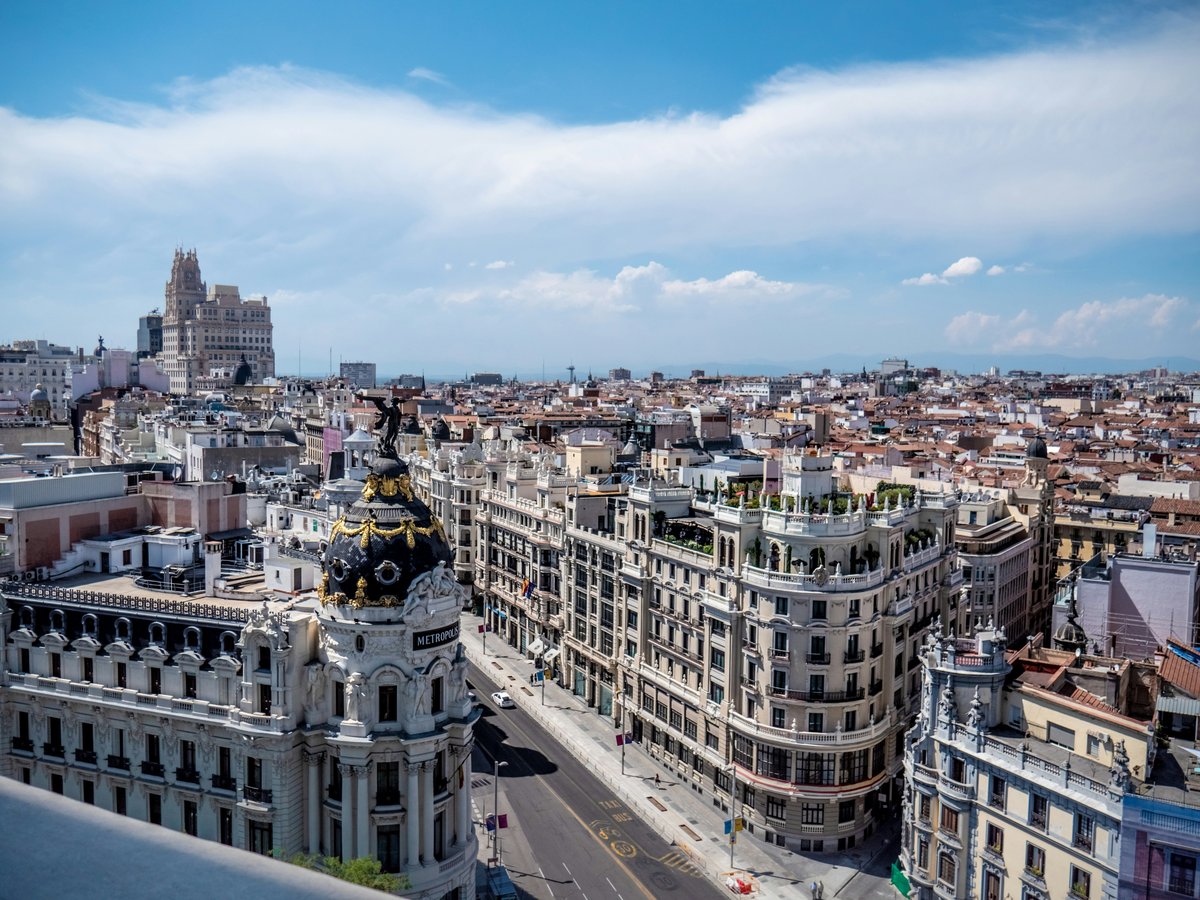
July in Madrid means heat, and you need to know that before anything else. The average high reaches 34.7°C (94°F), but that number understates the midday reality. Afternoons regularly push past 38°C (100°F), especially during the first and third weeks when heat waves roll in from North Africa. Humidity stays around 31%, so you won't feel the sticky suffocation of a coastal city like Barcelona or Valencia. But the dry blaze of sun on Gran Vía at 3 p.m. will still send you looking for shade. Rain is functionally nonexistent. The 5-year average is 3mm for the entire month.
To be fair, Madrid knows how to handle its own summer. The city shifts to a later rhythm that might seem extreme if you're not used to it. Lunch happens at 2:30 p.m., shops close until 5, dinner reservations start at 10 p.m., and the terrazas in neighborhoods like Malasaña and La Latina fill up closer to 11. Early July typically brings the final days of Orgullo de Madrid, one of Europe's largest Pride celebrations, which floods the Chueca neighborhood with over 1.5 million visitors. Veranos de la Villa, the city's main summer arts program, runs outdoor concerts and film screenings at Matadero Madrid and Conde Duque after 9 p.m., when temperatures drop toward a more tolerable 25°C (77°F).
The honest trade-off comes down to timing. You get guaranteed sunshine, 15 hours of daylight, and a Madrid that stays up past midnight eating on terraza after terraza along Madrid Río and the plazas of La Latina. But you lose the comfortable 22°C walking weather that makes May and October the top months for first-time visitors. Many smaller shops and family restaurants in Chamberí and Lavapiés close for vacaciones starting mid-July. If you can restructure your day around the Spanish schedule and embrace the late-night energy, July works. If you want to sightsee on foot from 10 a.m. to 6 p.m., pick another month.
Why visit in July
- Virtually zero chance of rain. July averages 3mm across the entire month, and most years see no measurable precipitation at all.
- Madrid's summer cultural calendar fills the evenings. Veranos de la Villa runs outdoor performances nightly at Conde Duque and Matadero Madrid, and Noches del Botánico brings international acts to the Complutense botanical garden through early August.
- Over 15 hours of daylight, with sunset around 9:45 p.m., leaves 2-3 hours of warm twilight for rooftop bars and terraza dining along streets like Calle de Ponzano in Chamberí.
- The dry heat at 31% humidity is easier on the body than the same temperature in coastal Spanish cities. Shade is genuinely effective, and the evenings cool down enough for comfortable outdoor dining by 10 p.m.
Worth knowing
- Daytime temperatures regularly exceed 38°C (100°F) during heat waves, and outdoor sightseeing between 1 p.m. and 6 p.m. becomes genuinely unpleasant and potentially dangerous.
- Many family-owned restaurants, independent shops, and smaller businesses in neighborhoods like Chamberí and Lavapiés begin closing for summer vacaciones in mid-July, which narrows your options noticeably.
- International tourist numbers peak in July. Lines at Museo del Prado and Palacio Real grow longer than in spring or autumn, often exceeding 45 minutes by 11 a.m. without advance tickets.
- Air conditioning coverage is inconsistent. Some older pensiones and budget hotels in Malasaña and Lavapiés lack it entirely, and Metro platforms can feel suffocating during evening rush hour.
Best for
Think twice if
July is Madrid's second-hottest month after August. Relentless sunshine and essentially no rain define the 31 days. The average high reaches 34.7°C (94°F) with lows around 20.2°C (68°F), though heat waves from North Africa can push afternoon readings past 40°C (104°F) for stretches of 3-5 days. Humidity sits at 31%, which makes shade genuinely effective. Step out of direct sun and you'll feel a noticeable drop in perceived temperature. Evenings tend to cool into the low 20s by 10 p.m., which is why outdoor dining starts so late. The UV index typically reaches 10-11 at midday, among the highest in Western Europe. Madrid sits on a high plateau at 650 meters (2,130 feet), which intensifies the direct sun even though the air stays dry.
Seasonal caution
- Heat waves (olas de calor) are common in July, with temperatures exceeding 40°C (104°F) for 3-5 consecutive days. Spain's AEMET weather agency issues orange and red heat alerts. During red alerts, authorities recommend avoiding prolonged outdoor exposure between noon and 6 p.m.
- The UV index in Madrid reaches 10-11 at midday in July, among the highest in Western Europe. Sunburn can develop in under 15 minutes of direct exposure for fair skin, even if the dry air makes it feel less intense.
- Dehydration risk is high due to the dry heat. At 31% humidity, sweat evaporates quickly and you may not realize how much fluid you're losing. Plan for 2-3 liters of water daily minimum.
Year-round climate
Averages from the last 5 years.
| Month | Avg high (°C) | Avg low (°C) | Rainfall (mm) |
|---|---|---|---|
| Jan | 11 | 2 | 46 |
| Feb | 14 | 3 | 24 |
| Mar | 16 | 5 | 103 |
| Apr | 20 | 8 | 59 |
| May | 25 | 12 | 43 |
| Jun | 30 | 17 | 30 |
| Jul | 35 | 20 | 3 |
| Aug | 35 | 21 | 6 |
| Sep | 27 | 15 | 77 |
| Oct | 22 | 12 | 73 |
| Nov | 15 | 6 | 40 |
| Dec | 11 | 4 | 50 |
Holidays and festivals in July
Public holidays
- Santiago Apóstol(Santiago Apóstol)25 July 2027
- Day of the Cantabrian Institutions(Día de las Instituciones de Cantabria)28 July 2027
Headline events
Orgullo de Madrid (Madrid Pride)
Late June through first week of July, with the main parade on the first Saturday of July
One of Europe's largest Pride celebrations, regularly drawing over 1.5 million people to central Madrid. The main parade marches from Atocha to Plaza de Colón, and the Chueca neighborhood becomes the epicenter of a week of concerts, parties, art installations, and cultural events. The scale transforms the entire city center for roughly 10 days.
Best things to do in July
Late-night terraza dining across La Latina and Malasaña
food and drinkMadrid's outdoor dining culture reaches its fullest expression in July. Terrazas spill across sidewalks and plazas, tables fill from 10 p.m. onward, and the warm dry air makes eating outside genuinely comfortable once the sun drops. Calle de la Cava Baja in La Latina and the streets around Plaza del Dos de Mayo in Malasaña concentrate dozens of options within easy walking distance.
Sunset at 9:45 p.m. creates 2-3 hours of warm twilight, terrazas expand to maximum outdoor capacity, and the zero rain risk means restaurants commit fully to their outdoor setups.Booking tipMost terrazas don't take reservations. Arrive by 9:30 p.m. to grab a table without waiting, or prepare to queue after 10:30 p.m. on Fridays and Saturdays.
Veranos de la Villa outdoor performances
cultureMadrid's city-run summer arts festival stages concerts, dance, theatre, circus, and film screenings across venues like Matadero Madrid, Centro Cultural Conde Duque, and various city parks. Performances start at 9:30 or 10 p.m. when the heat breaks. The programming mixes Spanish and international acts across genres.
The festival launches in late June or early July and the opening weeks typically feature the strongest lineup. By August, some programming thins out as performers and audiences scatter.Booking tipTickets go on sale 2-3 weeks before each performance. Popular shows at Conde Duque's courtyard sell out within days, so check the schedule early.
Rooftop bars and azoteas at sunset
nightlifeMadrid's rooftop bar scene peaks in July when every hotel and cultural center opens its terrace. The Azotea del Círculo de Bellas Artes on Calle de Alcalá offers 360-degree views over the city for around 5€ entry. The dry air and clear skies mean visibility stretches to the Guadarrama mountains on most evenings.
Zero rain risk, clear skies nearly every evening, sunset at 9:45 p.m. extends the golden-hour window, and warm evenings around 25°C make rooftops comfortable well past midnight.Booking tipThe Círculo de Bellas Artes rooftop fills quickly after 8 p.m. on weekends. Arrive by 7:30 to secure a spot without standing in line.
Early morning walks through Parque del Retiro
outdoorsThe 125-hectare park is one of the few places in central Madrid where July mornings feel genuinely cool. The tree canopy over the main paths, the shade along the Paseo de la Argentina, and the breeze off the Estanque Grande keep temperatures 4-5°C below the surrounding streets before 10 a.m. The rose garden (Rosaleda) still has some late blooms in early July.
By 11 a.m. in July, the park becomes uncomfortably hot except in the densest shade. The 7-10 a.m. window is when locals walk, jog, and do outdoor yoga, and it's the only time the park feels calm rather than scorched.Day trip to the Sierra de Guadarrama
outdoorsThe mountain range north of Madrid, accessible in 45-60 minutes by Cercanías train from Chamartín station, runs 8-10°C cooler than the city. The village of Cercedilla sits at 1,200 meters and serves as a trailhead for pine-forested walks and natural swimming pools (pozas) in mountain streams. The contrast with Madrid's heat is immediate and dramatic.
July is when the temperature difference between Madrid's plateau and the sierra becomes most dramatic. Trails are dry and fully accessible, and the mountain streams still carry enough snowmelt to keep the natural pools refreshingly cold.Booking tipCercanías trains on the C-8 line to Cercedilla run roughly every 30-60 minutes. Weekend trains fill up by mid-morning in July, so board at Chamartín before 9 a.m.
Noches del Botánico concert series
cultureAn outdoor concert series staged in the Real Jardín Botánico Alfonso XIII at the Complutense University campus. The setting is a botanical garden under the stars, with performances starting around 10 p.m. The lineup mixes international headliners with Spanish artists across jazz, rock, folk, and world music.
The series runs from mid-June through late July, and the July dates often feature the biggest headliners. The botanical garden setting is cooler than the city center and the open-air format captures the best of Madrid's summer evenings.Booking tipHeadline shows sell out weeks in advance. Check the lineup and buy tickets as soon as they go on sale. General admission seats fill from the front, so arrive when doors open for the closest spots.
Night visits to Museo del Prado and Museo Reina Sofía
cultureBoth museums offer extended evening hours during summer months, and visiting after 6 p.m. means cooler temperatures outside, thinner crowds inside, and the chance to walk through the Paseo del Arte corridor at dusk. The Prado's Velázquez and Goya rooms feel different in evening light, quieter and more contemplative than the morning rush.
The summer schedule extends closing times, and the Prado traditionally offers free admission in the final 2 hours before closing. Pairing a late museum visit with a 10 p.m. dinner nearby on Calle de las Huertas makes the most of July's shifted schedule.Booking tipEven with extended hours, the Prado's free-entry window fills fast in July. Arrive 15-20 minutes before the free period starts and queue at the Jerónimos entrance, which tends to be shorter than the Goya door.
Sunset at Templo de Debod
outdoorsThis 2nd-century BC Egyptian temple in Parque del Oeste, gifted to Spain by Egypt in 1968, faces west over the Casa de Campo parkland. In July, the 9:45 p.m. sunset turns the reflecting pool amber and the sky behind the temple shifts through a 30-minute color sequence. The crowd is mostly locals and the mood is calm.
July's late sunset at 9:45 p.m. means you can arrive at a reasonable hour and still catch the full light show. The dry air produces sharper, more vivid sunsets than the hazier months of spring.What to eat in July
In season: fruit
Sandía
Spanish watermelon from Almería and Murcia hits peak sweetness in July. Fruit stalls across Madrid sell chilled slices, and whole melons at supermarkets run under 4€. After a hot afternoon, cold sandía is the most popular snack in every park and plaza in the city.
On menus now
Gazpacho
Peak season for this cold tomato soup, served at nearly every restaurant in Madrid from June through September. July tomatoes from Andalucía are at their ripest, and most places serve gazpacho as a complimentary starter or in a tall glass as a drink. The best versions taste of raw tomato and good olive oil, nothing else.
Salmorejo
Thicker, creamier cousin of gazpacho, originally from Córdoba but available at every other tapas bar in Madrid by July. Topped with diced jamón serrano and hard-boiled egg, it tends to be more filling. Worth noting that locals often prefer salmorejo to gazpacho.
Melón con jamón
The classic Spanish summer starter. Ripe cantaloupe melon paired with thin slices of jamón ibérico or serrano. July melons from the Castilla-La Mancha region south of Madrid reach their sweetest point, and you'll see this on nearly every menu from mid-June onward.
What to drink
Tinto de verano
Madrid's preferred summer drink over sangría, which most locals consider a tourist order. Red wine mixed with gaseosa (lemon-lime soda) over ice, typically 3-4€ at a terraza. Lighter and cheaper than sangría, and the drink you'll see Madrileños ordering on a July evening.
Horchata de chufa
Cold tiger-nut milk from Valencia that peaks in demand during Madrid's hottest months. Served ice-cold from specialized horchaterías, often with fartons, which are soft sugar-dusted pastry sticks for dipping. The combination of sweet, cold, and slightly nutty hits differently at 35°C.
Regular events in July
Veranos de la Villa
Madrid's city-run summer arts festival spanning music, theatre, dance, cinema, and circus at Matadero Madrid, Conde Duque, and other venues. Over 100 performances across the summer, most starting after 9:30 p.m.
Early July through late AugustNoches del Botánico
Outdoor concert series at the Complutense University botanical garden, with a mix of Spanish and international artists performing under the stars.
Mid-June through late JulyFiestas de la Virgen del CarmenFree
Neighborhood celebrations honoring the patron saint of sailors, centered on July 16. The Chamberí neighborhood holds traditional street festivities with live music, food stalls, and a local procession.
Around July 16Cine de Verano (Summer Outdoor Cinema)Free
Open-air film screenings at parks and cultural centers across Madrid, including Parque de la Bombilla and the Conde Duque courtyard. Films screen after 10 p.m. once full dark arrives.
Throughout July and AugustBest places this July
Matadero Madrid
cultural centerA former slaughterhouse converted into Madrid's largest contemporary arts center, and the main venue for Veranos de la Villa summer performances. The industrial architecture creates natural shade, and the evening events make it a July destination after dark. The complex sits along Madrid Río with views of the Manzanares.
ArganzuelaParque del Retiro
parkMadrid's 125-hectare central park is the city's lung in July. The Estanque Grande (boating lake), the Crystal Palace, and the shaded paths along the Paseo de la Argentina offer some of the only comfortable outdoor space in central Madrid before 10 a.m. The rose garden (Rosaleda) holds late blooms in early July.
RetiroTemplo de Debod
viewpointA 2nd-century BC Egyptian temple in Parque del Oeste that faces directly west, making it Madrid's best sunset viewpoint. The reflecting pool amplifies the light. In July, the 9:45 p.m. sunset creates a long golden hour that draws locals with blankets and drinks.
MoncloaAzotea del Círculo de Bellas Artes
rooftop barThe rooftop terrace of this Calle de Alcalá cultural center offers 360-degree views over Madrid's skyline for around 5€ entry. On clear July evenings, you can see the Guadarrama mountains to the north. The bar serves cocktails and the vibe is relaxed rather than clubby.
CentroMadrid Río
parkThe 10-kilometer linear park along the Manzanares River, built over the former M-30 motorway. The tree-lined paths, fountains, and play areas provide relief from the heat, especially in the evening. The stretch between Puente de Segovia and Matadero is the most developed.
ArganzuelaMercado de San Fernando
marketA neighborhood market in Lavapiés with food stalls, a small bar scene, and regular cultural events. Cooler than outdoor terrazas, less touristy than Mercado de San Miguel near Plaza Mayor, and a good midday refuge from the heat. Prices run 30-40% lower than the San Miguel stalls.
LavapiésCasa de Campo
parkMadrid's largest park at over 1,700 hectares, originally a royal hunting ground. The lake, the pine forest, and the sheer distance from traffic make it noticeably cooler than the city center. The teleférico (cable car) from Parque del Oeste crosses over the treetops and offers a breeze and views.
Moncloa-Aravaca
Your packing checklist
Tick items off as you pack. Your progress saves in this browser.
All packed — have a great trip.
Insider tips
Madrid's tap water comes from the Sierra de Guadarrama reservoirs and is consistently ranked among the best in Spain. Skip the bottled water entirely. Refill at any public fountain marked with a brass or iron spout. You'll save 2-3€ every time you'd otherwise buy a bottle near a tourist site.
For terrazas without the tourist markup, skip Plaza Mayor and head to Plaza de Olavide in Chamberí. The circular plaza fills with locals every evening, the drinks run 30-40% cheaper than the historic center, and the atmosphere is more neighborhood than postcard. Calle de Ponzano, a few blocks south, has a similar density of good bars.
The Prado traditionally offers free admission in the final 2 hours before closing. In July, with extended summer hours, this lands in the cooler early evening. Combine it with a 10 p.m. dinner in the Barrio de las Letras, a 5-minute walk south.
Avoid the Metro between 6 and 8 p.m. in July. Platform temperatures climb into the high 30s and the older lines (1, 2, 3) lack modern ventilation. Walk, take a bus (most are air-conditioned), or wait until after 8:30 p.m. when it calms down.
If you're in Madrid during the first week of July for Orgullo, the neighborhood of Chueca transforms completely. But the surrounding streets of Malasaña and Fuencarral get the spillover crowds with shorter lines for bars. The parade route from Atocha to Colón fills by early afternoon, so stake out a spot by noon if you want to see it up close.
Avoid these mistakes
- Scheduling outdoor walking tours or open-air sightseeing between 1 p.m. and 5 p.m. The sun is at its most intense over Madrid's wide, exposed boulevards. Heat stroke is a real risk for visitors who underestimate 38°C+ dry heat. Move outdoor plans to 9-11 a.m. or after 7 p.m.
- Booking a budget hotel or pension without confirming it has air conditioning. Some older buildings in Malasaña and Lavapiés rely on thick stone walls for cooling. That worked before climate change pushed July averages higher. Check reviews specifically mentioning July or August stays before booking.
- Trying to eat dinner at 7 or 8 p.m. and finding only tourist-oriented restaurants with laminated photo menus. In July, most local kitchens don't open until 9 or 9:30 p.m. Adjust your schedule, or you'll eat overpriced paella near Sol while the good food happens 2 hours later.
- Underestimating water intake because the dry heat feels less oppressive than humid heat. At 31% humidity, sweat evaporates quickly and you don't feel as wet as you would in, say, Lisbon or Barcelona. Dehydration sneaks up. Carry water constantly and drink before you feel thirsty.
Practical tips for July
Book museum tickets for Museo del Prado and Museo Reina Sofía online 1-2 weeks ahead. Walk-up lines in July regularly exceed 45 minutes by 11 a.m. The Metro runs until 1:30 a.m. every night, which suits July's late schedule, though platform temperatures on older lines can reach the high 30s during evening rush. Many pharmacies (farmacias) stock electrolyte sachets (sales de rehidratación) over the counter for 2-3€, and they're worth picking up on day one if you're not used to the heat. Siesta hours, roughly 2-5 p.m., are observed in July more than any other month. Shops in residential neighborhoods close during this window, and attempting to run errands will leave you standing in front of locked doors. Plan indoor activities like museums, cinemas, or shopping centers for the hottest stretch. The Cercanías commuter trains to the Sierra de Guadarrama run every 30-60 minutes from Chamartín station if you need a cooler day. If you're visiting during the first week for Orgullo, book accommodation in Chueca or Malasaña at least 2-3 months ahead, as rooms sell out early and prices rise sharply for the parade weekend.
FAQ
Is July a good time to visit Madrid?
It depends entirely on your heat tolerance. July averages 34.7°C (94°F) with highs regularly exceeding 38°C, which makes midday outdoor sightseeing uncomfortable to dangerous. That said, Madrid compensates with a strong summer cultural program through Veranos de la Villa, terraza dining that extends past midnight, and essentially zero rain across the entire month. If you adopt the local schedule of resting during siesta hours and going out after 8 p.m., July has its own appeal. For a first visit focused on museums and walking tours, May, June, or October will give you a much more comfortable experience.
What is the weather like in Madrid in July?
Hot and dry. The average high is 34.7°C (94°F) with lows around 20.2°C (68°F). Rainfall is negligible at 3mm for the entire month, and humidity sits at a comfortable 31%. Heat waves from North Africa can push temperatures past 40°C (104°F) for stretches of 3-5 days. Evenings tend to cool enough for comfortable outdoor dining by 10 p.m., but the hours between 1 and 6 p.m. are intense. The UV index reaches 10-11, so sun protection is non-negotiable.
Is Madrid crowded in July?
Tourist crowds at major attractions like Museo del Prado, Palacio Real, and Plaza Mayor are at or near their annual peak, with noticeably longer queues than in spring or autumn. At the same time, a significant portion of Madrid's resident population leaves for the coast or countryside, especially from mid-July onward. The result is a city that feels simultaneously more touristy in the center and quieter in residential neighborhoods like Chamberí, Arganzuela, and Tetuán. Many local businesses close for vacaciones starting mid-month.
How hot does it really get in Madrid in July?
The average high of 34.7°C (94°F) is consistent, but heat waves are the real story. Multiple-day stretches above 40°C (104°F) happen most years. Madrid sits on a high plateau at 650 meters (2,130 feet), which intensifies direct sun exposure. The saving factor is the low humidity at 31%, which means shade provides genuine relief and your body's cooling system works. Locals manage by staying indoors from roughly 1-5 p.m. and shifting everything later. Expect to drink 2-3 liters of water daily minimum.
What should I do in Madrid in July to avoid the heat?
Structure your days around it. Visit Parque del Retiro before 10 a.m. when the tree canopy keeps it 4-5°C cooler than the surrounding streets. Spend the 1-5 p.m. window in air-conditioned museums like the Prado or Reina Sofía, or in a cinema or shopping center. Reserve evenings for outdoor dining on terrazas, rooftop bars like the Azotea at Círculo de Bellas Artes, and the Veranos de la Villa performances at Matadero Madrid that start after 9:30 p.m. A day trip to the Sierra de Guadarrama via the Cercanías train from Chamartín station puts you 8-10°C cooler within an hour.
Things to Do in Madrid in July
 Free cancellation
 Avila & Segovia Tour with Tickets to Monuments from Madrid
Day trip: 9 hours, free cancellation.
via Viator Free cancellation
 Three Cities in One Day: Segovia, Avila and Toledo from Madrid
Day trip: 12 hours, free cancellation.
via Viator Free cancellation
 Toledo Tour from Madrid: Cathedral, Synagogue & St. Tome's Church
Day trip: 8 hours, free cancellation.
via Viator Free cancellation
 Madrid Essential: Historic Center, Plaza Mayor & Royal Palace
City tour: 2.5 hours, free cancellation.
via Viator Free cancellation
 Toledo Half or Full Day Tour with Optional Lunch from Madrid
Day trip: free cancellation.
via Viator Free cancellation
 From Madrid: Toledo & Segovia Day Tour with Lunch & Tickets
Day trip: 11 hours, free cancellation.
via ViatorFind a flight to Madrid
Live fares to Madrid appear here once cookies are accepted.
Last verified by automated review (v1.7.2) on . What is automated review?