Compare every Spain city in February →
Stay in Madrid in February
149 hotels in the Trip.com pool for Madrid, from US$7 a night.
Opens Trip.com on Fri 5 Feb to Sun 7 Feb 2027; change the dates there.
February in Madrid is cold, quiet, and cheap. That's the headline. Daytime highs hover around 14°C (58°F) under pale winter sun, while nights drop to 3°C (38°F) with a dry, biting wind off the Castilian meseta. You'll need a proper winter coat, but you likely won't need an umbrella. February averages only 24mm of rain across 5 days, making it one of the driest months of the year. The city sits at 667 meters (2,188 feet) above sea level on an exposed plateau, and that altitude tends to sharpen the chill.
The real draw of February is what's missing. The summer hordes that pack the Museo del Prado in July are gone. Hotel rates in Malasaña and Salamanca drop to their annual floor. Restaurants in Chueca and La Latina that require reservations 2 weeks out in October will seat you on the spot. Madrid's population of roughly 3.3 million keeps the city alive year-round, so nothing feels shuttered the way a beach town might in winter. Locals are still filling the terrazas on sunny afternoons, though they'll be wearing scarves and ordering café con leche instead of cañas.
February also brings two of Madrid's most distinctive cultural events. ARCO Madrid, one of Europe's top contemporary art fairs, takes over the IFEMA exhibition grounds in late February, drawing collectors and dealers from 30-plus countries. And Carnaval de Madrid fills the streets of the centro with parades and costumes, typically in the second or third week of the month depending on when Easter falls. The finale, the Entierro de la Sardina in the Paseo de la Florida, is one of those strange, wonderful Madrid traditions that feels like it hasn't changed in 200 years. To be fair, these events alone probably don't warrant a trip, but they add genuine texture to what might otherwise feel like a standard low-season European city break.
Why visit in February
- Hotel rates in central neighborhoods like Malasaña and Sol drop 30-40% from the May-October average, and many 4-star properties run promotions to fill rooms
- The Museo del Prado, Museo Reina Sofía, and Thyssen-Bornemisza are all walkable from each other along the Paseo del Arte, and February crowds are thin enough to stand in front of Guernica without being elbowed
- ARCO Madrid in late February is one of Europe's 3 largest contemporary art fairs, and the entire city participates with gallery openings in Lavapiés and Chamberí throughout the week
- Rainfall averages only 24mm across 5 days, far drier than March (103mm) or January (46mm), so you get more outdoor hours than you'd expect for winter
- Carnaval brings free parades, street performances, and the gloriously odd Entierro de la Sardina procession to the city center
Worth knowing
- Nighttime temperatures around 3°C (38°F) with wind chill off the meseta can feel genuinely raw, especially if you're walking back from dinner in Barrio de las Letras after midnight
- Daylight runs roughly 7:30am to 6:30pm, giving you about 11 hours of light compared to nearly 16 in June. Late afternoon sightseeing at Templo de Debod loses its sunset advantage by 6pm
- The Parque del Retiro and other green spaces look bare and brown. If you're coming for Instagram-friendly gardens, wait until April when the Rosaleda starts blooming
- Some terrazas (outdoor dining patios) close entirely or operate with limited hours. Rooftop bars like the Círculo de Bellas Artes terrace may be chilly even with heaters
Best for
Think twice if
February in Madrid is cold and dry. The city sits on the high Castilian plateau at 667 meters, which means crisp, clear days with good visibility but a noticeable chill, especially in shade and after sunset. Morning frost is possible but rare in the city center. The meseta wind can make 14°C feel closer to 10°C. Rain, when it comes, tends to be light and brief. You might get 3-4 fully sunny days in a row followed by a grey, drizzly afternoon. Humidity sits at 70%, which feels moderate given the cool temperatures. The sky is often a clean, high blue, and the winter light on the sandstone buildings along Gran Vía has a clarity you won't see in summer's haze.
Seasonal caution
- Overnight temperatures occasionally dip below 0°C (32°F) on the coldest February nights, particularly in parks and open areas outside the city center. The wind chill off the meseta plateau can make 3°C feel significantly colder
Year-round climate
Averages from the last 5 years.
| Month | Avg high (°C) | Avg low (°C) | Rainfall (mm) |
|---|---|---|---|
| Jan | 11 | 2 | 46 |
| Feb | 14 | 3 | 24 |
| Mar | 16 | 5 | 103 |
| Apr | 20 | 8 | 59 |
| May | 25 | 12 | 43 |
| Jun | 30 | 17 | 30 |
| Jul | 35 | 20 | 3 |
| Aug | 35 | 21 | 6 |
| Sep | 27 | 15 | 77 |
| Oct | 22 | 12 | 73 |
| Nov | 15 | 6 | 40 |
| Dec | 11 | 4 | 50 |
Holidays and festivals in February
Public holidays
- Day of Andalucía(Día de Andalucía)28 February 2027
Headline events
ARCO Madrid
Late February (typically the last full week, Wednesday through Sunday)
One of Europe's top 3 contemporary art fairs, held at the IFEMA exhibition grounds. Around 200 galleries from more than 30 countries show work across 6 halls. The event triggers a city-wide wave of satellite exhibitions, gallery openings in Lavapiés and Chamberí, and special programming at the Museo Reina Sofía and CaixaForum. Art collectors and curators fly in specifically for this week.
Best things to do in February
Explore the Prado and Paseo del Arte without summer crowds
cultureThe Museo del Prado holds over 8,000 paintings, and in February you can stand in front of Velázquez's Las Meninas or Bosch's The Garden of Earthly Delights with genuine space around you. The Thyssen-Bornemisza and Reina Sofía are within a 15-minute walk along the tree-lined Paseo del Arte.
February visitor numbers drop 40-50% from summer peak. No queues at the Prado entrance most weekday mornings. Free entry windows (Monday-Saturday evenings) are usable without 45-minute waits.Booking tipThe Prado offers free entry Monday to Saturday from 6pm to 8pm and Sundays from 5pm to 7pm. In February you can walk in at 6:05pm and get nearly 2 hours.
Eat cocido madrileño on a proper Thursday
foodThursday is traditionally cocido day in Madrid. Tabernas along Calle de la Cava Baja in La Latina and old-school restaurants in Chamberí serve the 3-course chickpea stew as a lunchtime set menu. The meal takes at least 90 minutes and involves more food than most people expect.
Cocido is a cold-weather dish. Eating it in February, when you've been walking in 8°C air all morning, is the way locals experience it. Restaurants stop serving it by late March.Booking tipPopular cocido spots fill their Thursday seatings by Wednesday evening. Reserve 2-3 days ahead, especially for lunch between 1:30pm and 3pm.
ARCO week gallery crawl through Lavapiés and Chamberí
cultureDuring ARCO week in late February, dozens of independent galleries in Lavapiés, Doctor Fourquet street, and Chamberí open new exhibitions to coincide with the fair. Many host free opening-night events with wine. The concentration along Calle del Doctor Fourquet in Lavapiés is particularly dense, with 8-10 galleries within a 400-meter stretch.
ARCO triggers a synchronized opening across Madrid's gallery scene. The satellite shows and free openings only happen this week. The rest of the year, these galleries operate on staggered schedules.Booking tipGallery openings are free and don't require reservations. ARCO itself costs around 38 euros for a day pass. Student discounts available.
Watch the Entierro de la Sardina procession
cultureThe Burial of the Sardine is Carnaval's closing ceremony. A mock funeral procession carries a papier-mâché sardine through the streets to the Fuente de los Pajaritos in the Casa de Campo park. Participants wear black mourning clothes and fake-cry. Goya painted this scene in 1812, and the tradition hasn't changed much since.
This only happens once a year, on the Wednesday after Carnaval weekend. The exact date shifts with Easter but typically falls in mid-to-late February.Booking tipFree and open to anyone. The procession starts in the early evening near the Iglesia de San Antonio de la Florida and ends at Casa de Campo. Arrive 30 minutes early to find a good vantage point.
Sunday morning at El Rastro flea market
shoppingMadrid's famous open-air flea market stretches from La Latina metro station down Calle de la Ribera de Curtidores toward the Ronda de Toledo. Over 1,000 stalls sell antiques, vintage clothing, old books, and assorted oddities. The market has operated on this same route since the 1740s.
February's low tourist numbers mean fewer crowds and more room to browse. Sellers are more willing to negotiate prices in the slow season. The cold keeps the casual browsers away, leaving more serious buyers.Booking tipNo booking needed. Go between 9am and 11am for the best selection before the lunch crowd arrives. Pickpockets work the crowd, so keep valuables in front pockets.
Sunset at Templo de Debod
sightseeingThis 2,200-year-old Egyptian temple sits in the Parque del Oeste near Plaza de España. It was gifted to Spain by Egypt in 1968 after the Aswan Dam construction. The reflecting pool in front of it catches the winter sky. February sunsets happen around 6:15pm, early enough to combine with dinner.
February's clear, dry skies produce some of Madrid's sharpest sunsets. The low winter sun angle creates longer, more colorful light shows than the abrupt summer sunsets. Fewer tourists means you can claim a spot by the reflecting pool.Booking tipFree and open access. Arrive by 5:30pm to get a seat on the low wall facing west.
Winter vermut crawl through Malasaña
food and drinkVermut (vermouth on tap) is Madrid's aperitivo tradition, and February is when it feels most natural. Bars in Malasaña around Plaza del Dos de Mayo serve house-made vermut with a free tapa of olives or chips. A glass typically costs 2-3 euros. You can hit 4-5 bars in a 30-minute walking radius.
The vermut hour tradition (noon to 2pm on weekends) is a cold-weather ritual. In summer, locals shift to beer. February weekends are when the neighborhood bars fill with locals doing their vermut rounds, and you blend right in.Booking tipNo reservations needed. Start around noon on Saturday or Sunday. Follow the foot traffic around Plaza del Dos de Mayo.
Flamenco in Barrio de las Letras
cultureThe literary quarter between Sol and the Prado holds several intimate flamenco venues (tablaos) where performances run nightly. The smaller rooms seat 40-80 people, putting you within a few meters of the performers. February shows tend to feature local Madrid-based artists rather than touring companies.
In February, tablaos aren't competing with outdoor summer programming, so the roster leans toward serious performers rather than tourist-friendly revues. Ticket availability is better, and some venues offer drink-included deals to fill winter seats.Booking tipBook 3-4 days ahead for weekend shows. Weeknight performances are usually available same-day.
What to eat in February
In season: fruit
Naranjas sanguinas
Blood oranges from Valencia reach their peak sweetness in February. You'll find them at Mercado de San Fernando in Lavapiés and at fruit stalls throughout the city. The juice is a deep, almost wine-colored red, tart and complex.
On menus now
Cocido madrileño
Madrid's signature winter stew of chickpeas, pork belly, morcilla (blood sausage), chorizo, vegetables, and bone marrow. Served in 3 courses called vuelcos. The broth comes first with thin fideos noodles, then the chickpeas and vegetables, then the meats. February is peak cocido weather, and classic tabernas in La Latina like those along Calle de la Cava Baja serve it as a Thursday tradition. A full cocido typically runs 15-22 euros.
Callos a la madrileña
Slow-braised tripe with chorizo, morcilla, and pimentón in a thick, peppery tomato sauce. A cold-weather dish that locals eat at lunch, not dinner. February's chill makes it feel right in a way it never would in July.
Street food peaks
Churros con chocolate
Fried dough sticks with thick, nearly pudding-like hot chocolate for dipping. A February morning ritual. Chocolatería San Ginés near Sol has been serving them since 1894 and stays open 24 hours. The chocolate at San Ginés is denser than most, almost too thick to drink.
What to drink
Orujo
A grape pomace spirit from Galicia and Cantabria, served as a digestif after heavy winter meals. February is when you'll see locals ordering it most. The herbal variety (orujo de hierbas) has a greenish tint and a medicinal warmth that suits the cold.
Festival food
Buñuelos de viento
Light fried pastry puffs filled with cream or chocolate, traditionally associated with Carnaval and the pre-Lenten period. Bakeries across Chamberí and Salamanca display trays of them starting in early February.
Regular events in February
Carnaval de MadridFree
A week of parades, costume contests, live music, and street performances across the city center. The main parade runs along the Paseo de la Castellana on Saturday, with floats and comparsas (dance troupes). Smaller neighborhood celebrations pop up in Malasaña, Lavapiés, and La Latina. The week closes with the Entierro de la Sardina on Wednesday.
Mid-to-late February (the week before Ash Wednesday, exact dates shift with Easter)Gastrofestival Madrid
A 2-week food festival where over 200 restaurants across Madrid offer special prix-fixe menus, cooking workshops, and food-themed cultural events. Participating restaurants span from casual Lavapiés tapas bars to Michelin-starred dining rooms in Salamanca. Prix-fixe menus typically run 25-45 euros for multi-course meals.
Late January through mid-FebruaryMadrid Fusión
An international gastronomy congress that brings chefs, food writers, and industry figures to the Palacio de Congresos. Professional-oriented but open to the public for some sessions. The event reliably generates buzz across Madrid's restaurant scene for the surrounding weeks.
Late January to early FebruaryDía de San ValentínFree
Valentine's Day on February 14 is commercially observed in Madrid, though with less intensity than in the US. Restaurants in Chueca and Barrio de las Letras run special dinner menus. The Parque del Retiro and Templo de Debod see couples at sunset. Chocolate shops in Salamanca do brisk business.
February 14Best places this February
Mercado de San Miguel
marketThis iron-and-glass market hall from 1916 sits next to Plaza Mayor. In February, the heated interior makes it an ideal lunch stop between sightseeing. The oyster and cava stalls are less mobbed than in summer, and you can find a spot at the standing bars. Expect to spend 15-25 euros grazing across 3-4 stalls.
SolCaixaForum Madrid
museumThe vertical garden on the exterior wall is green even in February. Inside, the rotating exhibitions tend toward photography and contemporary art. The building itself, a converted 1899 power station with a floating upper structure, is worth seeing for the architecture alone. Free admission for CaixaBank customers.
Paseo del ArteMercado de San Fernando
marketA neighborhood market in Lavapiés where locals shop for groceries alongside small tapas bars and wine stalls. Less polished than San Miguel, more authentic. The Saturday afternoon crowd is a mix of young Lavapiés residents and families. Blood oranges from Valencia are piled high at the fruit stalls in February.
LavapiésParque del Retiro
parkMadrid's 125-hectare central park is bare in February, the trees stripped down to branches. That said, the Palacio de Cristal (a glass pavilion from 1887 that hosts Reina Sofía exhibitions) is at its most photogenic with low winter light streaming through the iron-and-glass frame. The rowboats on the Estanque Grande are still operating on warmer days.
RetiroCírculo de Bellas Artes rooftop
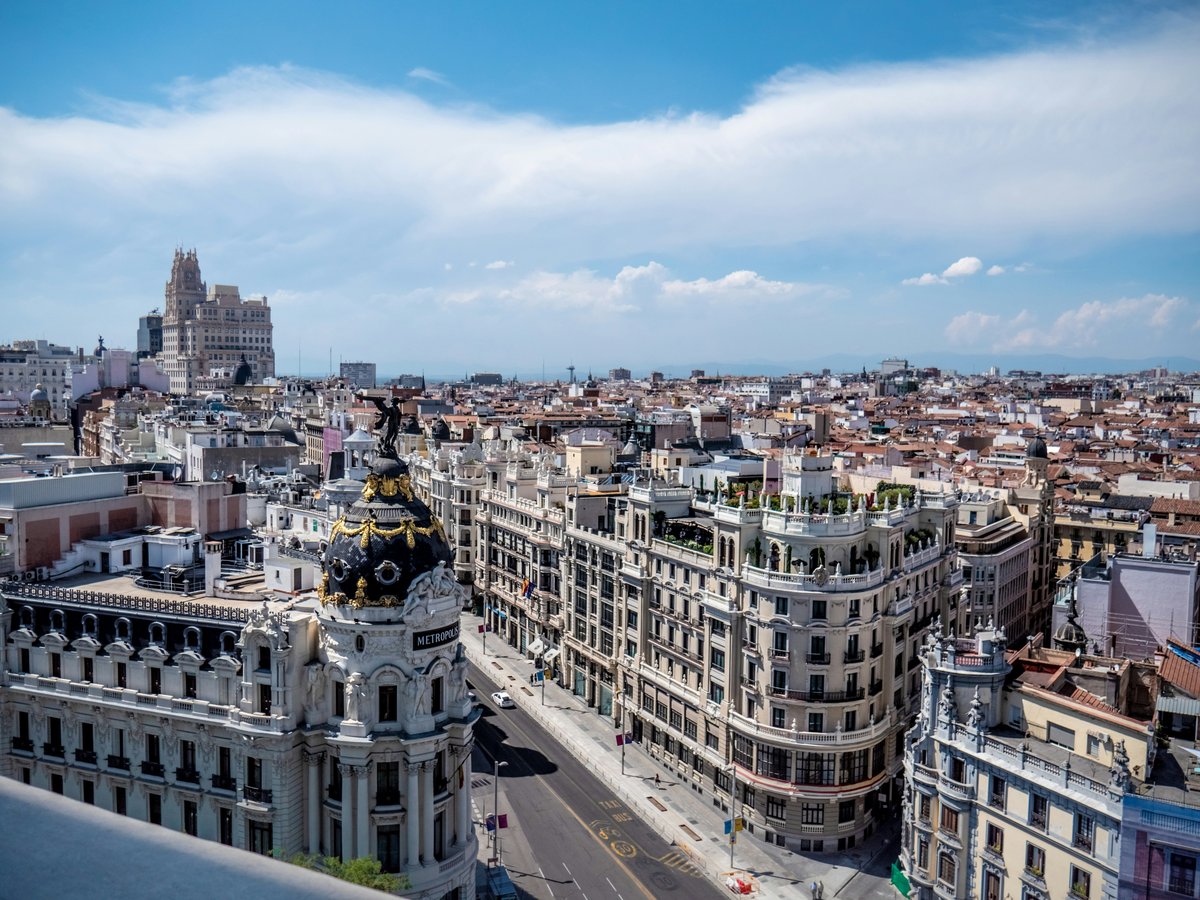
viewpointThe rooftop terrace of this 1920s cultural center on Calle de Alcalá offers a 360-degree panorama of the Madrid skyline, including the Metropolis Building and the Telefónica tower on Gran Vía. Entry costs around 5 euros. On a clear February day, you can see the snow-capped Sierra de Guadarrama mountains 50 kilometers to the north.
CentroBarrio de las Letras (Huertas)
neighborhoodThe literary quarter where Cervantes, Lope de Vega, and Quevedo lived in the 1600s. Bronze quotations are embedded in the sidewalks. In February, the narrow streets are quiet enough to read them without dodging tourist groups. The flamenco tablaos along these streets run nightly shows with better availability than summer.
Barrio de las LetrasIglesia de San Antonio de la Florida
churchA small church near the Manzanares river with ceiling frescoes painted by Goya in 1798. The brushwork is still remarkably fresh. Entry is free, and in February you'll likely have the space to yourself. It's also the starting point for the Entierro de la Sardina procession during Carnaval week.
MoncloaCalle del Doctor Fourquet gallery strip
gallery districtAn 8-10 gallery concentration along one 400-meter street in Lavapiés. During ARCO week in late February, all of them open new shows simultaneously. The rest of the month, you can still walk the strip in about 90 minutes and see contemporary photography, painting, and installation work for free.
Lavapiés
Your packing checklist
Tick items off as you pack. Your progress saves in this browser.
All packed — have a great trip.
Insider tips
Madrid eats late. Lunch starts at 2pm, dinner at 9:30pm or later. If you show up at a restaurant at 7pm expecting dinner, you'll find an empty room and a confused waiter. Time your cocido lunch for 2pm on a Thursday and you'll eat alongside the regulars in La Latina.
The Prado's free evening window (6-8pm Monday through Saturday) is genuinely usable in February. In summer, the line for free entry stretches 45 minutes. In February, you walk in. Head straight to the Velázquez rooms on the first floor, which empty out fastest.
Mercado de San Miguel is fine for a quick graze, but locals tend to eat at Mercado de San Fernando in Lavapiés or Mercado de la Cebada in La Latina. Prices run 30-40% lower and the tapas portions are bigger. San Fernando's Saturday afternoon crowd is where you'll hear more Spanish than English.
The Sierra de Guadarrama mountains are 50 minutes by Cercanías train from Chamartín station. In February, there's often snow above 1,800 meters. You can ski at Navacerrada or Valdesquí on a day trip and be back in Madrid for dinner. Lift tickets run around 25-35 euros.
If you're visiting during Carnaval, the neighborhood parties in Malasaña and Lavapiés are more fun than the official Paseo de la Castellana parade. The bars stay open late, people costume-up with more creativity, and the atmosphere is loose and local.
Avoid these mistakes
- Packing for mild European winter and underestimating Madrid's cold. The city's 667-meter elevation and exposed plateau location make 3°C nights feel significantly colder than 3°C in Barcelona or Lisbon. Bring a real winter coat, not a light jacket.
- Planning outdoor activities for after 6pm without realizing the sun sets around 6:15-6:30pm in February. A sunset visit to Templo de Debod needs to start by 5:30pm. An afternoon in Retiro Park should wrap by 5pm unless you enjoy bare trees in the dark.
- Eating dinner at 7pm or 8pm and wondering why the restaurant is empty and the kitchen seems half-asleep. In Madrid, 9:30pm is early for dinner. The kitchen hits its stride around 10pm. Showing up at 7pm marks you as a tourist and likely gets you B-team service.
- Assuming February rain will ruin the trip based on other Spanish cities. Madrid in February averages only 24mm of rain across 5 days. Compare that to March at 103mm. February is one of the driest months, and most days are clear.
Practical tips for February
Book flamenco shows and ARCO tickets 1-2 weeks ahead, especially for the final ARCO weekend when day-trippers from Barcelona and Lisbon fly in. Thursday cocido lunches at popular La Latina tabernas fill up by Wednesday, so reserve early in the week. The Metro runs until 1:30am (2am on Fridays and Saturdays), which aligns well with Madrid's late dining schedule. A 10-trip Metrobús ticket costs around 12.20 euros and covers both Metro and city buses. The Madrid Tourist Card (1-5 days) includes the Prado, Reina Sofía, and Thyssen plus public transport, and can save 20-30% over individual tickets if you plan to hit all three museums. Most shops close on Sundays except in the tourist zones around Sol and Gran Vía. Carry cash for El Rastro flea market on Sunday mornings, as many stall vendors don't take cards. Spanish dress in February trends smart-casual, and Madrid is more fashion-conscious than Barcelona. You won't need shorts or sandals at any point. If you're doing a day trip to Segovia or Toledo, add an extra layer. Both cities sit at similar or higher altitude and can feel 2-3°C colder than Madrid, with more wind.
FAQ
Is February a good time to visit Madrid?
February is a genuinely good time if you're focused on museums, food, and culture rather than outdoor lounging. You get Madrid's lowest hotel prices of the year, thin crowds at the Prado and Reina Sofía, and two strong cultural events in ARCO and Carnaval. The tradeoff is cold weather (highs of 14°C / 58°F, lows of 3°C / 38°F) and bare parks. If warm terrace dining and long evening light matter to you, May or October would serve you better.
What is the weather like in Madrid in February?
Cold and dry. Average highs reach 14.2°C (58°F) and lows drop to 3.2°C (38°F). Rainfall averages only 24mm across about 5 days, making it one of Madrid's driest months. Humidity sits around 70%. The sky is often clear, but a persistent wind off the Castilian plateau makes the cold feel sharper than the numbers suggest. You'll want a proper winter coat, scarf, and gloves. Frost is possible overnight but rare in the city center.
Is Madrid crowded in February?
No. February is one of the quietest months for tourism. Hotel occupancy drops well below the summer and holiday-season peaks. The exception is the final week of February during ARCO Madrid, when the city sees an influx of art-world visitors and hotel rates in the centro tick up slightly. El Rastro flea market on Sundays is still busy year-round, but the Prado and Reina Sofía have noticeably shorter lines.
Can you do day trips from Madrid in February?
Yes, but bring extra layers. Segovia (30 minutes by AVE high-speed train) and Toledo (33 minutes by AVE) are both feasible day trips. Both cities sit at similar or higher elevations and tend to run 2-3°C colder than Madrid in February. Segovia's Roman aqueduct and roast suckling pig (cochinillo) restaurants make it a strong winter day trip. The Sierra de Guadarrama offers skiing at Navacerrada, about 50 minutes by Cercanías commuter rail from Chamartín station.
What should I eat in Madrid in February?
February is peak season for cocido madrileño, a 3-course chickpea and meat stew traditionally served on Thursdays at tabernas in La Latina and Chamberí. Callos a la madrileña (tripe stew) is another cold-weather classic. Churros con chocolate at Chocolatería San Ginés, open since 1894, hit differently when it's 5°C outside. Blood oranges from Valencia are at their sweetest. During Carnaval, bakeries stock buñuelos de viento, light fried pastry puffs filled with cream.
Things to Do in Madrid in February
 Free cancellation
 Avila & Segovia Tour with Tickets to Monuments from Madrid
Day trip: 9 hours, free cancellation.
via Viator Free cancellation
 Three Cities in One Day: Segovia, Avila and Toledo from Madrid
Day trip: 12 hours, free cancellation.
via Viator Free cancellation
 Toledo Tour from Madrid: Cathedral, Synagogue & St. Tome's Church
Day trip: 8 hours, free cancellation.
via Viator Free cancellation
 Madrid Essential: Historic Center, Plaza Mayor & Royal Palace
City tour: 2.5 hours, free cancellation.
via Viator Free cancellation
 Toledo Half or Full Day Tour with Optional Lunch from Madrid
Day trip: free cancellation.
via Viator Free cancellation
 From Madrid: Toledo & Segovia Day Tour with Lunch & Tickets
Day trip: 11 hours, free cancellation.
via ViatorFind a flight to Madrid
Live fares to Madrid appear here once cookies are accepted.
Last verified by automated review (v1.7.2) on . What is automated review?