Compare every Spain city in January →
Stay in Madrid in January
149 hotels in the Trip.com pool for Madrid, from US$7 a night.
Opens Trip.com on Fri 1 Jan to Sun 3 Jan 2027; change the dates there.
The first thing to know about January in Madrid is that the month has two distinct personalities. For the opening six days, the city still buzzes with holiday energy leading up to Día de Reyes on January 6, the gift-giving climax of the Spanish Christmas season. The Cabalgata de Reyes parade on the evening of January 5 draws somewhere around 700,000 spectators along its route from Nuevos Ministerios to Plaza de Cibeles, and the mood on the streets feels genuinely electric. Then, almost overnight, Madrid downshifts into its quietest stretch of the year.
Expect daytime temperatures around 10.5°C (51°F) and nights that drop to 1.5°C (35°F), cold enough for frost on clear mornings. Madrid sits at 667 meters (2,188 feet) on the Meseta Central, and that elevation gives the winter air a dry bite that might surprise you for a city this far south. The upside is the light. January skies tend to be clear and sharp, that high-plateau blue that makes the sandstone facades along Gran Vía glow in the late afternoon. You'll likely see rain on about 7 days across the month, usually short spells that clear within an hour or two.
This is deep low season for tourism. The Museo del Prado and Museo Reina Sofía have the kind of breathing room you won't find between April and October. Hotel rates drop noticeably once the Reyes festivities end. The tradeoff is real, though. Terraza culture, the open-air dining that defines Madrid from May through September, is off the table. Sunset arrives before 6 PM. Some smaller neighborhood restaurants in places like Lavapiés and Chamberí close for a week or two of vacation. If you can handle cold weather and shorter days, January rewards you with a more local, less tourist-oriented version of the city.
Why visit in January
- Hotel rates in central neighborhoods like Malasaña and La Latina drop 30-50% compared to peak season in May and October, with 3-star doubles available from roughly 60-80 EUR per night
- The Cabalgata de Reyes parade on January 5 and Día de Reyes on January 6 are among Madrid's most spectacular public celebrations, and most visitors from outside Spain have never experienced them
- No queues at major museums. Tickets for the Museo del Prado, which can sell out 2-3 days ahead in spring, are readily available for same-day entry throughout January
- Madrid's cold weather comfort food, cocido madrileño and callos a la madrileña in particular, peaks in January when every traditional tavern runs these dishes daily
Worth knowing
- Temperatures regularly dip near or below freezing after dark, and the wind on open plazas like Plaza Mayor can feel sharp enough to cut short an evening walk
- Daylight hours are short at roughly 9.5 hours, with sunset before 6 PM, which limits sightseeing time for outdoor attractions like Parque del Retiro and Templo de Debod
- Some smaller restaurants, family-run shops, and a handful of cultural venues close for 1-2 weeks in mid-to-late January for annual vacation
- Outdoor terraza dining is essentially unavailable, which removes one of Madrid's defining pleasures
Best for
Think twice if
January in Madrid is cold, dry, and bright. The high Meseta plateau means low humidity despite the chill, and clear days are common. Mornings tend to start with frost that burns off by mid-morning. Rain typically falls in brief spells rather than all-day drizzle, and you might get a full week of unbroken sunshine. The wind on exposed streets and plazas can make 10°C feel more like 5°C. Snow is rare in the city center, appearing perhaps once every 3-4 years, though the Sierra de Guadarrama mountains visible to the north carry a white cap through the entire month.
Seasonal caution
- Overnight temperatures can drop below 0°C (32°F) on clear nights, particularly in the first two weeks of January. If you are walking back to your hotel late at night through open areas like Parque del Retiro's surroundings, expect frost on the ground and genuinely bitter cold
- The Sierra de Guadarrama, a popular day trip from Madrid, gets real winter conditions in January with snow, ice, and temperatures well below freezing at altitude. Hikers need proper winter gear and should check AEMET forecasts before heading up
Year-round climate
Averages from the last 5 years.
| Month | Avg high (°C) | Avg low (°C) | Rainfall (mm) |
|---|---|---|---|
| Jan | 11 | 2 | 46 |
| Feb | 14 | 3 | 24 |
| Mar | 16 | 5 | 103 |
| Apr | 20 | 8 | 59 |
| May | 25 | 12 | 43 |
| Jun | 30 | 17 | 30 |
| Jul | 35 | 20 | 3 |
| Aug | 35 | 21 | 6 |
| Sep | 27 | 15 | 77 |
| Oct | 22 | 12 | 73 |
| Nov | 15 | 6 | 40 |
| Dec | 11 | 4 | 50 |
Holidays and festivals in January
Public holidays
- New Year's Day(Año Nuevo)1 January 2027
- Epiphany(Día de Reyes / Epifanía del Señor)6 January 2027
Headline events
Cabalgata de Reyes and Día de Reyes
January 5 evening (parade), January 6 (public holiday)
Spain's most important gift-giving holiday. On the evening of January 5, the Cabalgata parade brings three elaborate royal floats through central Madrid from Nuevos Ministerios to Plaza de Cibeles, with performers throwing candy to roughly 700,000 spectators lining the route. January 6 is the actual Día de Reyes, a public holiday when families exchange gifts and eat Roscón de Reyes. The atmosphere in the days leading up to it is closer to what Christmas Eve feels like in other countries. Worth noting that the city essentially shuts down on January 6 itself.
Best things to do in January
Watch the Cabalgata de Reyes parade
festivalThe Three Kings parade on January 5 evening runs from Nuevos Ministerios down Paseo de la Castellana and Paseo de Recoletos to Plaza de Cibeles. Elaborate floats, marching bands, dancers, and performers throw thousands of kilos of candy to the crowds. The atmosphere along the route is chaotic and joyful in a way that few public events in Europe match.
This only happens on January 5. It is Spain's biggest annual parade and the emotional centerpiece of the Spanish Christmas season.Booking tipArrive at least 90 minutes early to claim a spot along Paseo de Recoletos, where the route is narrower and the floats pass closer. Families with children gravitate toward Cibeles, so the stretch near Colón tends to be slightly less packed.
Explore the Museo del Prado without crowds
museumThe Prado's collection of Velázquez, Goya, and El Greco is one of the deepest in the world, and January gives you room to stand in front of Las Meninas without a crowd 4 deep. The museum is open every day except January 1 and January 6 afternoon. Free entry is available daily from 6 PM to 8 PM on weekdays and 5 PM to 7 PM on Sundays.
Visitor numbers drop roughly 40-50% from peak months. You can move through the Goya rooms at your own pace instead of being herded through.Booking tipThe free evening hours still draw a line, but it moves fast in January. Arriving at 5:45 PM on a weekday typically means a 10-minute wait at most.
Shop the Rebajas winter sales
shoppingSpain's official winter sales season, the Rebajas, starts around January 7 and runs into February. Discounts of 30-70% appear at everything from Zara's flagship on Gran Vía to independent boutiques in Chueca and along Calle de Fuencarral. The Salamanca district's luxury shops along Calle de Serrano also participate, with markdowns on Spanish leather goods and fashion.
The Rebajas are regulated by Spanish commerce law and January is the opening month. First-week discounts tend to be the deepest before popular sizes sell out.Take the cocido madrileño route through La Latina and Chamberí
foodMultiple traditional restaurants offer cocido madrileño as a fixed lunch special, typically on Wednesdays and Sundays. The dish takes hours to prepare, so restaurants that serve it commit fully to the tradition. A typical cocido lunch with bread and wine runs 15-22 EUR per person. The neighborhood of La Latina has the highest concentration of places serving it.
Cocido is a cold-weather dish that peaks in January and February. Many restaurants only add it to the menu from November through March. The experience of eating a three-course stew after walking through 5°C streets is part of the point.Booking tipCall ahead or arrive before 1:30 PM on Sundays. Cocido is cooked in limited batches and popular spots run out by 2:30 PM.
Visit Museo Reina Sofía for Guernica
museumThe Reina Sofía houses Picasso's Guernica along with major works by Dalí and Miró. January's low visitor numbers mean you can sit on the bench across from Guernica and take in the 3.5-by-7.8-meter canvas without being pushed along. The museum's free hours are Monday and Wednesday through Saturday from 7 PM to 9 PM.
The room containing Guernica gets genuinely packed from April through September. In January, you might share it with 15 people instead of 150.Catch a flamenco show in a small tablao
cultureFlamenco tablaos operate year-round, but January's smaller audiences mean you're more likely to get a close seat in an intimate venue. The neighborhoods of Lavapiés and La Latina have several traditional tablaos where performers play to rooms of 30-60 people. Expect to pay 25-40 EUR per person including a drink.
With fewer tourists in January, tablaos are easier to book for prime evening shows that sell out weeks ahead during peak season. The small room, cold night outside, and close proximity to the performers makes for an intense experience.Booking tipBook 2-3 days ahead for Friday or Saturday night shows. Midweek shows are generally available same-day.
Sunday morning at El Rastro flea market
marketMadrid's famous open-air flea market fills the streets of La Latina every Sunday from roughly 9 AM to 3 PM. Stalls line Calle de la Ribera de Curtidores and the surrounding side streets selling everything from antique furniture to secondhand books to leather goods. January mornings at El Rastro are cold but manageable in a warm coat, and the crowds are a fraction of what they become in spring.
The same market in May or October is packed shoulder to shoulder. January gives you room to browse, negotiate, and stop for a caña at one of the bars along Calle de la Cava Baja afterward without fighting for a table.Sunset at Templo de Debod
sightseeingThis 2nd-century-BC Egyptian temple sits in Parque del Oeste near Plaza de España and faces west over the Casa de Campo parkland. January sunsets hit around 5:50 PM and the low winter sun lines up with the temple in a way that draws photographers. The surrounding park is quiet on January evenings and the light turns the sandstone warm amber for about 20 minutes.
The winter sun angle creates a more dramatic alignment with the temple than in summer months. Fewer visitors means you can set up without competing for position. The cold air tends to produce clearer skies and sharper colors at sunset.Booking tipArrive by 5:15 PM to get a good spot on the wall overlooking the reflecting pool.
What to eat in January
In season: fruit
Naranjas de Valencia
Spanish navel oranges from Valencia hit their peak sweetness in January. Street markets and neighborhood fruterías sell them by the kilo at 1-2 EUR, and the fresh-squeezed orange juice at any bar or café in the city comes from this harvest. The flavor difference from off-season oranges is stark.
On menus now
Cocido Madrileño
Madrid's defining winter dish. A slow-cooked chickpea stew served in three courses, called vuelcos. First the broth with thin noodles, then the chickpeas and vegetables, then the meats including morcilla, chorizo, and tocino. Restaurants across La Latina and Chamberí run cocido specials on Wednesdays and Sundays throughout January. The portions are enormous.
Callos a la Madrileña
Tripe stew with chorizo and morcilla in a paprika-rich tomato sauce. This is cold-weather food that taverns in Lavapiés and La Latina have served since the 19th century. January is when you'll find it on nearly every traditional menu del día. The texture puts some visitors off, but the flavor is deep and warming.
Sopa de ajo castellana
Castilian garlic soup with bread, paprika, and a poached egg. Simple, cheap, and the kind of thing that warms you from the inside on a 3°C evening. You'll find it at old-school taverns in Barrio de las Letras and around Plaza Mayor. Some places crack a raw egg into the hot broth at the table.
Street food peaks
Churros con chocolate
Fried dough strips dipped in thick hot chocolate. Available year-round, but January cold makes the experience feel fundamentally different from ordering the same thing on a 35°C August afternoon. Chocolatería San Ginés near Sol has been serving them since 1894 and stays open until the early morning hours. Expect a short queue on weekend mornings.
Festival food
Roscón de Reyes
A ring-shaped brioche topped with candied fruit and filled with cream, eaten from late December through January 6. Every bakery in Madrid sells their version, and the tradition hides a small figurine and a dried bean inside. Whoever finds the figurine wears a paper crown. The bean means you buy next year's Roscón.
Regular events in January
Fiesta de San AntónFree
The feast of San Antón, patron saint of animals, centers on the church of San Antón in Chueca. Madrileños bring their pets to be blessed by a priest on the church steps. The surrounding streets fill with stalls selling rosquillas de San Antón, small anise-flavored doughnuts. The tradition dates back centuries and the sight of dogs, cats, rabbits, and the occasional horse lined up for a blessing is uniquely Madrid.
January 17Start of the RebajasFree
Spain's regulated winter sales season opens around January 7, the day after Reyes. Shops across the city hang red REBAJAS signs and mark down fall and winter stock. Gran Vía, Calle de Fuencarral, and the Salamanca district see the heaviest foot traffic in the first week. Discounts deepen through the month as stores clear inventory.
Around January 7 through late FebruaryFree museum eveningsFree
Several major Madrid museums offer free evening admission windows throughout January. The Prado is free Monday through Saturday from 6 PM to 8 PM and Sunday from 5 PM to 7 PM. The Reina Sofía offers free entry Monday and Wednesday through Saturday from 7 PM to 9 PM. The Thyssen-Bornemisza is free on Mondays from 12 PM to 4 PM. These hours apply year-round but are far more enjoyable in January when the lines are short.
Throughout January, various daysConciertos de Año Nuevo
Several venues host New Year concert series that extend into the first week of January. The Auditorio Nacional de Música and Teatro Real both program classical concerts celebrating the new year, often featuring Spanish orchestras performing Strauss waltzes and zarzuela selections. Ticket availability varies.
Early January, typically January 1-7Best places this January
Parque del Retiro
parkMadrid's central park is a different experience in January. The formal gardens are bare but the Crystal Palace catches low winter light beautifully, and the wide paths around the Estanque Grande are nearly empty on weekday mornings. The rose garden is dormant, but the ancient Ahuehuete cypress near the Parterre garden is one of Madrid's oldest trees and stands out more without summer foliage competing for attention.
RetiroMercado de San Miguel
marketThis iron-and-glass market hall near Plaza Mayor is warm, covered, and full of small food stalls serving oysters, jamón ibérico, croquetas, and wine by the glass. It gets tourist-heavy in peak months, but January lets you linger at a counter without feeling rushed. A good spot to warm up between outdoor sightseeing stops.
SolBarrio de las Letras
neighborhoodThe literary quarter south of Puerta del Sol, named for the brass quotations set into its sidewalks from Cervantes, Lope de Vega, and Quevedo. January is a good time to wander these narrow streets because the cafés and wine bars that line them have space. Calle de las Huertas is the main artery, but the smaller side streets toward Antón Martín hold older, less polished spots.
Barrio de las LetrasCírculo de Bellas Artes rooftop
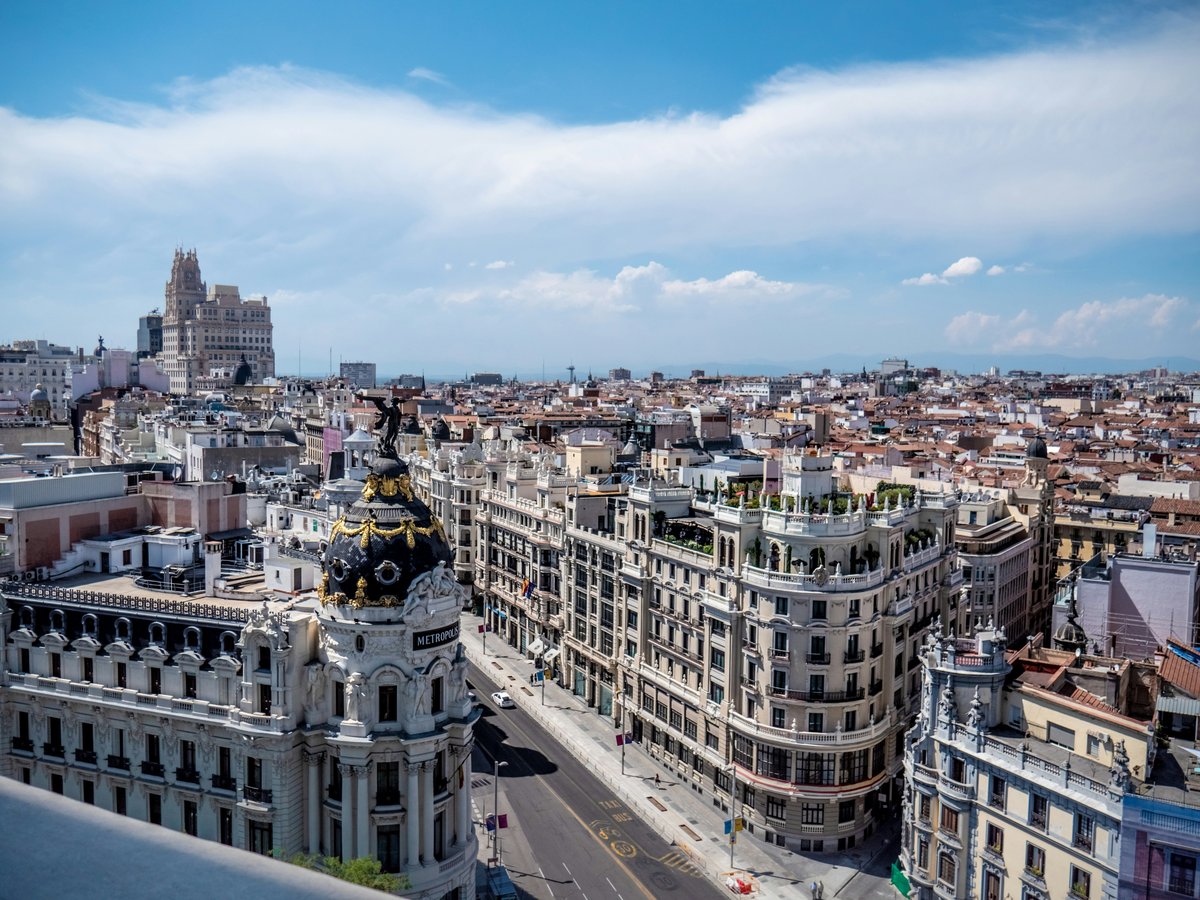
viewpointThe rooftop terrace of this cultural center on Calle de Alcalá offers a 360-degree view of Madrid's skyline, with the Telefónica building, the Metropolis building, and the distant Sierra de Guadarrama all visible. Entry costs around 5 EUR. January's clear air and low humidity mean the mountain views are often sharper than in summer. It can be cold up there, so time your visit for midday when the sun is strongest.
SolCaixaForum Madrid
museumThis converted power station near the Prado, designed by Herzog and de Meuron, hosts rotating exhibitions that tend to be less crowded than the big three museums. The vertical garden on its exterior wall stays green through winter. A solid option for a January afternoon when you want something indoors but different from the traditional painting collections.
RetiroCalle de la Cava Baja in La Latina
streetThis single street in La Latina holds one of the highest concentrations of tapas bars and traditional restaurants in Madrid. On a January Sunday after El Rastro wraps up, the bars along Cava Baja fill with locals ordering cañas and plates of patatas bravas, tortilla, and croquetas. The energy here is more neighborhood than tourist, particularly in the colder months.
La LatinaTemplo de Debod
landmarkThe relocated Egyptian temple in Parque del Oeste is one of Madrid's more unusual landmarks. In January, the western-facing temple catches the sunset over the Casa de Campo tree line, and you'll share the viewing area with locals walking their dogs rather than tour groups. The reflecting pool in front of the temple freezes over on the coldest nights, which makes for an unexpected sight.
Moncloa
Your packing checklist
Tick items off as you pack. Your progress saves in this browser.
All packed — have a great trip.
Insider tips
The Cabalgata de Reyes parade route has a less publicized section along Paseo de Recoletos between Colón and Cibeles. Most families with small children cluster near the Cibeles end, so the Colón stretch tends to offer better sightlines and fewer elbows. Arrive by 4:30 PM to claim a front-row spot along the barriers.
January's free museum evenings are well-known, but the Thyssen-Bornemisza's free Monday slot from 12 PM to 4 PM is the one most tourists miss. It falls during peak viewing hours rather than the rushed final 2 hours, and Monday is already the quietest day at most museums.
The Rebajas sales get more aggressive as January progresses. The first week after Reyes has the full selection but smaller discounts of 30-40%. By the third week, discounts of 50-70% are common, though popular sizes in clothing are harder to find. If you want the best deals and don't care about perfect selection, aim for mid-to-late January.
For cocido madrileño, the restaurant custom is to serve it only at lunch, typically between 1 PM and 3:30 PM, and often only certain days of the week. Calling ahead on the morning of your visit to confirm they are serving cocido that day saves you a wasted trip. The portions are enormous, so eat light at breakfast.
The Chocolatería San Ginés near Sol is famous and stays open nearly 24 hours, but the experience is better at 2 AM or 7 AM than at the tourist-heavy midday hours. On a cold January night after dinner in the center, stopping for churros con chocolate at a nearly empty San Ginés has a specific late-night Madrid feeling that the 11 AM crowd misses entirely.
Avoid these mistakes
- Packing for mild Mediterranean weather. Madrid is not Barcelona or Seville in January. The inland plateau location means genuinely cold temperatures, especially after dark. Visitors who show up in a light jacket and sneakers end up buying emergency scarves and coats on Gran Vía at full retail price, sometimes the same week the Rebajas slash prices a few streets over.
- Planning outdoor activities for January 6, Día de Reyes. It is a full public holiday in Spain. Nearly everything closes, including most museums, shops, and many restaurants. The streets are quiet because families are at home opening gifts. If your only free day in Madrid falls on January 6, plan for a long walk and a hotel meal, because your options will be limited.
- Trying to eat dinner at 7 PM. Madrid's dining schedule shifts later in winter, not earlier. Most restaurants still don't open for dinner service until 8:30 or 9 PM, and the kitchen might not be fully staffed until 9:30 PM. Showing up at 7 PM means either a locked door or eating alone in an empty room with a limited menu.
- Skipping the Prado's free evening hours because of the perceived line. In January, the free-entry queue at the Prado rarely exceeds 15 minutes on weekday evenings. That is a fraction of the 45-to-60-minute waits common in June. The 2-hour free window is enough to see the Velázquez and Goya rooms if you go directly to them.
Practical tips for January
Book accommodations in Malasaña, Chueca, or La Latina for walkable access to restaurants, bars, and the Metro. January room rates in these neighborhoods drop sharply after January 6. The Madrid Metro runs until 1:30 AM on weekdays and 2:00 AM on weekends, which matters because dinner often finishes after midnight. Museums on the Paseo del Arte, the stretch containing the Prado, Reina Sofía, and Thyssen-Bornemisza, are all within walking distance of each other, so plan a museum day that covers 2 of the 3 with a lunch break in between. The Abono Turístico transit pass covers unlimited Metro and bus rides and starts at around 8.40 EUR for a single zone covering central Madrid. January 1 and January 6 are public holidays with reduced transit schedules and widespread business closures. For day trips to Toledo or Segovia, check RENFE train schedules in advance as some regional services run reduced January timetables. Dress code note for flamenco tablaos and Teatro Real performances: smart casual is expected, and jeans are fine at tablaos but look out of place at the opera.
FAQ
Is January a good time to visit Madrid?
It depends on what you want. January is cold, with highs around 10.5°C (51°F) and lows near 1.5°C (35°F), and the days are short. Outdoor dining and terraza culture are off the table. That said, museum crowds drop dramatically, hotel prices fall 30-50% from peak, and the Cabalgata de Reyes in the first week is one of Spain's most spectacular public events. If you prioritize art, food, and low prices over warm weather, January works well. If you want the classic sunny Madrid experience, come in May, June, or October.
What is the weather like in Madrid in January?
Cold and mostly dry. Average daytime highs reach about 10.5°C (51°F), and nights regularly drop to 1.5°C (35°F), with occasional dips below freezing. Madrid's elevation at 667 meters and its position on an open plateau mean the cold has a sharp, dry edge to it. Rainfall averages 46mm across roughly 7 rainy days, usually in short spells. Clear, bright skies are common, and the winter light over the city can be surprisingly beautiful. Pack warm layers and a coat. Snow in the city center is rare but not impossible.
Is Madrid crowded in January?
No. January, particularly after January 6, is one of the least crowded months of the year. The major museums have noticeably fewer visitors than in spring or summer. Hotel occupancy is at its annual low. El Rastro flea market on Sundays still draws locals but has room to move. The only crowded period is the Cabalgata de Reyes parade on January 5, which packs the city center. After that, Madrid feels like it belongs to the people who live there.
What should I not miss if I visit Madrid in January?
If you are in Madrid for the first week, the Cabalgata de Reyes parade on January 5 is the highlight. Beyond that, eat cocido madrileño at a traditional restaurant in La Latina, visit the Museo del Prado during its uncrowded free evening hours, drink thick hot chocolate with churros at Chocolatería San Ginés on a cold night, and walk through El Rastro on a Sunday morning. The Rebajas sales starting around January 7 are worth a browse along Calle de Fuencarral or in the Salamanca district. Catch the sunset from Templo de Debod if the sky is clear.
Is it worth visiting Madrid in January for the sales?
The Rebajas are regulated and widespread. Discounts of 30-70% appear across nearly all retail, from Zara's Gran Vía flagship to small boutiques in Chueca and Malasaña. Spanish leather goods, shoes, and fashion labels tend to offer the strongest markdowns. If you combine cheap flights and hotel rates with Rebajas prices, January can be genuinely good value. The best selection is in the first week after January 7, while the deepest discounts appear in the second and third weeks as stores push to clear stock.
Things to Do in Madrid in January
 Free cancellation
 Avila & Segovia Tour with Tickets to Monuments from Madrid
Day trip: 9 hours, free cancellation.
via Viator Free cancellation
 Three Cities in One Day: Segovia, Avila and Toledo from Madrid
Day trip: 12 hours, free cancellation.
via Viator Free cancellation
 Toledo Tour from Madrid: Cathedral, Synagogue & St. Tome's Church
Day trip: 8 hours, free cancellation.
via Viator Free cancellation
 Madrid Essential: Historic Center, Plaza Mayor & Royal Palace
City tour: 2.5 hours, free cancellation.
via Viator Free cancellation
 Toledo Half or Full Day Tour with Optional Lunch from Madrid
Day trip: free cancellation.
via Viator Free cancellation
 From Madrid: Toledo & Segovia Day Tour with Lunch & Tickets
Day trip: 11 hours, free cancellation.
via ViatorFind a flight to Madrid
Live fares to Madrid appear here once cookies are accepted.
Last verified by automated review (v1.7.2) on . What is automated review?