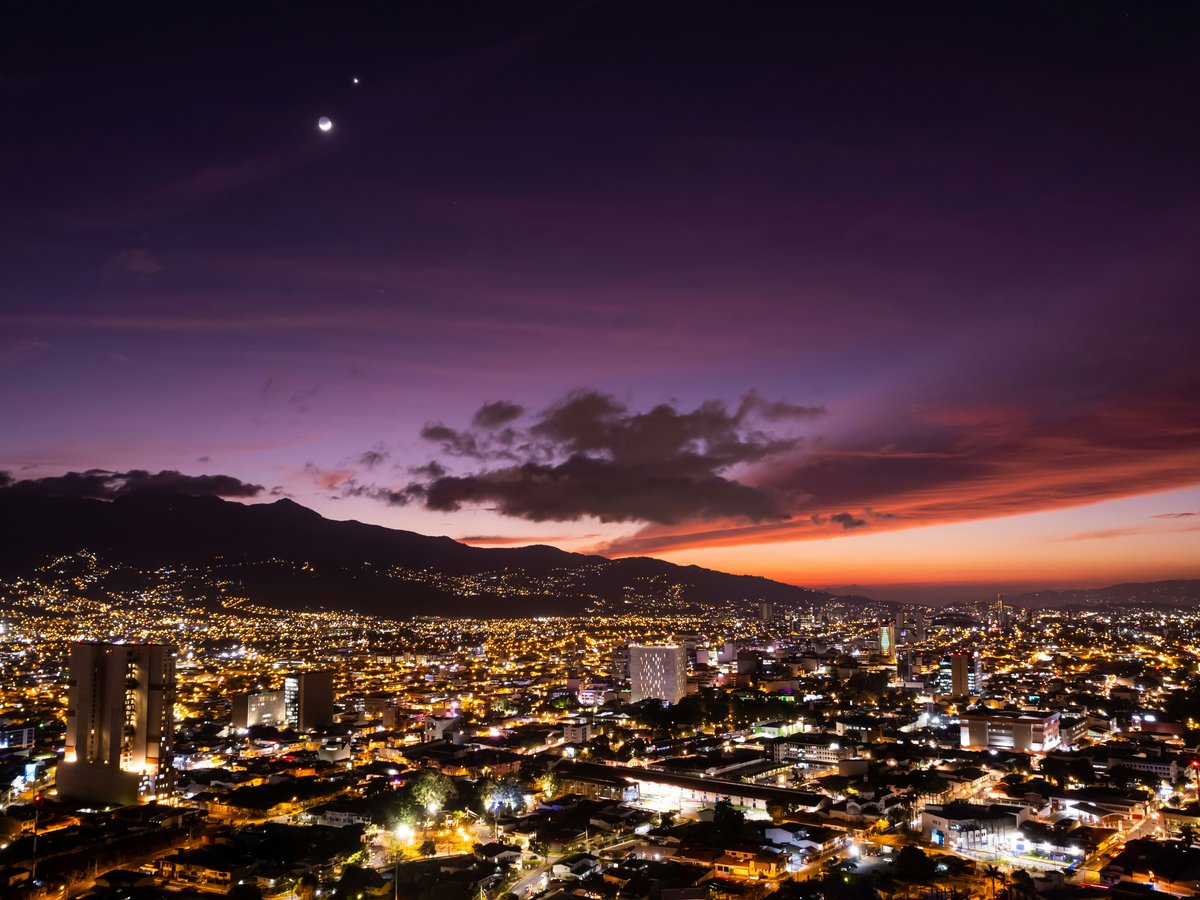
San José tends to get a bad rap from travelers who treat it as little more than an overnight layover before heading to the beaches or cloud forests. That's a mistake. The city has a stubborn, lived-in character that rewards anyone willing to walk its streets and pay attention — and a surprising amount of what makes it worth visiting costs nothing at all. The parks are generous and well-kept, several museums open their doors for free on specific days, and the neighborhoods themselves function as open-air galleries if you know where to look. The Central Valley climate helps too: it sits at roughly 1,170 meters elevation, so mornings tend to be cool and bright, afternoons warm but rarely stifling. You can spend a full day wandering from plaza to mercado to park and come back with sore feet and a full notebook, having spent zero colones on entry fees. Mind you, the city won't hand you its personality on a platter — you have to walk for it. But that's part of what makes it honest.
Free attractions
-
Parque Metropolitano La Sabana
San José's largest urban park sprawls across the grounds of the old international airport on the city's western edge. There are jogging paths that loop through eucalyptus groves, a constructed lake where locals picnic on weekends, and open fields where pickup football matches seem to materialize out of nothing on Saturday mornings. The Museo de Arte Costarricense sits at the eastern entrance — the park itself is always free and open. You'll catch the smell of grilled plantains from vendors along the perimeter, and on clear days the hills above Escazú frame the western horizon.
La SabanaPark -
Parque Nacional
Sitting between the Asamblea Legislativa and the Biblioteca Nacional, this is one of the oldest public parks in the city. The centerpiece is the Monumento Nacional — a bronze grouping depicting the five Central American nations driving out William Walker's filibusters in 1856. The park itself is compact but heavily shaded, with tall trees filtering the midday light into something almost green. Office workers eat lunch on the benches. It's a quiet pause between louder blocks.
CentroPark and Monument -
Parque Morazán and the Templo de la Música
A small park anchored by one of the city's most recognizable structures: the Templo de la Música, a domed bandstand built in 1920 and modeled on the Temple of Love in Versailles. The ironwork is ornate and a little faded, which honestly suits it. The park borders Barrio Amón, so it works naturally as a starting point for a walk through the city's best-preserved historic architecture. On weekday mornings it's calm enough that you can hear the fountain clearly.
Centro / Barrio AmónPark and Landmark -
Parque España
One block east of Morazán, smaller and more densely treed. The canopy here is thick enough that it feels several degrees cooler inside. The Casa Amarilla — Costa Rica's foreign ministry — sits along its northern edge, a yellow colonial building with heavy wooden doors. The park sometimes hosts a weekend artisan market, though schedules shift. Worth checking when you're nearby regardless.
CentroPark -
Plaza de la Cultura
The city's central public plaza, which sits above the subterranean Museos del Banco Central. The plaza itself is always free — pigeons, street performers, the occasional marimba group, and a wide-open view of the Teatro Nacional's facade. The underground museum charges admission, but the plaza life is the real draw for zero-budget visitors. Afternoons get loud and crowded; mornings are better for people-watching.
CentroPlaza -
Mercado Central
Operating since 1880, this dense warren of stalls between Avenida Central and Avenida 1 is free to enter and genuinely worth an hour of slow browsing. The smell hits you before you're through the door — roasting coffee, dried spices, raw meat, fresh herbs stacked in bundles. Vendors sell medicinal plants, leather goods, cheap kitchen tools, and some of the best casados in the city at the sodas inside. You don't need to buy anything to absorb the atmosphere, though you'll likely want to.
CentroMarket -
Museo de Arte y Diseño Contemporáneo (MADC)
Housed inside the old National Liquor Factory — part of the Centro Nacional de la Cultura complex — the MADC has maintained a free-admission policy. The exhibitions rotate and lean toward Central American contemporary work: installations, video, photography, mixed media. The building itself is striking, with thick stone walls and high ceilings that keep the interior cool even on warm afternoons. Quality of shows varies, but the strong ones are genuinely strong.
CentroMuseum -
Museo de Arte Costarricense
Located at the eastern entrance to Parque La Sabana in what used to be the airport's original terminal building, this museum focuses on Costa Rican visual art from the colonial period forward. General admission is free on Sundays — the rest of the week currently carries a modest fee. The Salón Dorado on the upper floor, with its carved and painted walls depicting Costa Rican history, is the highlight. Sunday mornings are the sweet spot: fewer visitors, good light through the old terminal windows.
La SabanaMuseum (free Sundays) -
Barrio Amón Historic Architecture
Just north of Parque Morazán, Barrio Amón is the city's best-preserved collection of Victorian and neoclassical houses built by coffee barons in the late 1800s and early 1900s. Many are now boutique hotels, galleries, or cultural centers, but the streetscape itself is the attraction. Wrought-iron balconies, tile work, carved wooden doors — the details reward slow walking. The neighborhood is compact enough to cover in forty minutes.
Barrio AmónHistoric District -
Universidad de Costa Rica Campus
The UCR campus in San Pedro is open to walk through and has a genuinely pleasant feel — mature trees, open quads, murals on faculty buildings, and an energy that changes depending on whether classes are in session. The campus also hosts free exhibitions and occasional public lectures. The surrounding streets in San Pedro have a bookish, slightly scruffy student-quarter character, with cheap cafés and secondhand shops.
San PedroUniversity Campus
Free activities
-
Walk Avenida Central Pedestrian Boulevard
The pedestrianized stretch of Avenida Central runs roughly from the Mercado Central east toward the Plaza de la Democracia, and it's the closest thing San José has to a dedicated promenade. Street vendors, buskers, the clatter of shoe-shine stands, lottery ticket sellers calling out numbers — it's sensory overload in the best way. The pace is slow, the crowd is mixed, and you'll hear more Spanish here than in the tourist-facing parts of town. It works at almost any hour, but late morning has the best energy.
CentroWalking Route -
Barrio Escalante Street Art and Café Walk
East of the center, Barrio Escalante has become San José's most talked-about food neighborhood over the past decade, but the murals and street art scattered across its walls are entirely free to see. Several buildings along Calle 33 and the surrounding blocks carry large-scale painted works — some political, some purely aesthetic. The neighborhood has a quieter, residential feel compared to the center. Good for a late-afternoon wander when the light hits the western-facing walls.
Barrio EscalanteStreet Art and Walking -
Browse the Feria Verde de Aranjuez
This organic farmers' market runs on Saturday mornings in Aranjuez, just north of the center. Browsing is free, and even without buying anything, the atmosphere is worth the walk: stalls of tropical fruit you might not recognize, local honey, handmade soaps, herbal tinctures. There's usually live acoustic music. The crowd skews local and young. It's one of the places where San José feels most like the progressive, eco-conscious city it aspires to be.
AranjuezMarket -
Explore the Cementerio General
This might sound morbid, but the Cementerio General on the northwestern edge of downtown is a legitimate cultural site and it's open to the public. Elaborate tombs and mausoleums from the late 19th and early 20th centuries trace the history of the country's prominent families. The stonework ranges from simple crosses to full neoclassical monuments with angels and columns. It's quiet, shaded, and oddly peaceful — a different tempo from the streets outside.
Centro / NorthwestCultural Walk -
Hike the Hills Above Escazú
Technically just outside San José proper, but reachable by public bus, the hills above Escazú and the road toward San Antonio offer walking trails with views back across the Central Valley. On clear mornings — usually before the afternoon clouds build — you can see the whole urban sprawl laid out below, ringed by volcanoes. No entry fee, no formal park infrastructure. Just trails, farmland, and elevation.
Escazú (Greater San José)Hiking and Viewpoint -
Self-Guided Architecture Walk Through Barrio Otoya
Neighboring Barrio Amón to the east, Barrio Otoya has its own collection of early 20th-century houses in various states of restoration. It's less polished than Amón — some buildings are crumbling behind vine-covered walls, others have been beautifully restored as cultural spaces. The Museo de Arte y Diseño Contemporáneo sits at its southern edge. The walk from Parque España through Otoya and back is roughly 45 minutes and free.
Barrio OtoyaWalking Route
Free events
-
Art City Tour (GAM Cultural)
Typically monthly or bimonthly, usually a Tuesday or Wednesday evening; schedule announced through GAM Cultural and local pressA coordinated gallery-and-museum night where dozens of cultural spaces across San José open their doors for free and stay open into the evening. Venues include galleries, independent art spaces, cultural centers, and sometimes private studios. Shuttle buses connect the participating locations along a mapped route, also free. The atmosphere is social and slightly festive — people gallery-hop in groups, grab street food between stops. Worth planning around if your dates align.
Multiple venues across San José -
Conciertos en el Parque (Banda de Conciertos)
Sundays and occasional weekday evenings; schedules published by the Sistema Nacional de Educación MusicalCosta Rica's national concert bands — the Banda de Conciertos de San José among them — perform free public concerts in parks and public spaces. The music ranges from classical arrangements to folk-influenced pieces and marches. Performances tend to happen on Sunday mornings in Parque La Sabana or the Templo de la Música in Parque Morazán, though the schedule shifts seasonally. The sound carries well in the open park air.
Parque La Sabana, Parque Morazán, and other public venues -
Transitarte Festival
Annually, typically in October (dates vary; check closer to the event)An annual arts festival that takes over a stretch of Paseo Colón with live music, dance, theater, and visual art installations — all free and open to the public. The street itself becomes the venue, closed to traffic for the duration. Crowds are large and enthusiastic. The festival has been running since 2006 and tends to draw both established and emerging Costa Rican artists.
Paseo Colón -
Festival Internacional de las Artes (FIA)
Irregular schedule; historically biennial in March or AprilWhen it runs — and scheduling has been uneven in recent years, to be fair — the FIA brings free performances, exhibitions, and workshops to public spaces across San José over roughly two weeks. Theater, dance, music, film screenings, circus arts. It's government-organized and has historically been one of the region's larger multidisciplinary arts festivals. Check whether it's scheduled for your travel dates, as it hasn't run every year recently.
Various public venues across San José -
Free Film Screenings at the Centro de Cine
Irregular, typically several times per monthThe Centro Costarricense de Producción Cinematográfica periodically hosts free screenings of Costa Rican and Latin American cinema. The screenings tend toward independent and documentary work — not blockbusters. The space is small and the atmosphere is informal. Schedules are posted on their social media and website, usually a week or two in advance.
Centro de Cine, Barrio California -
Feria Verde de Aranjuez
Every Saturday morning, roughly 7:00 AM to 12:30 PMBeyond the browsing already mentioned, the Saturday market at Aranjuez frequently hosts free live music, yoga sessions, and workshops on topics like composting or seed saving. The programming changes week to week but there's usually something beyond the market stalls themselves. It runs rain or shine, and the rainy-season editions have their own charm — everything smells sharper when it's wet.
Aranjuez, north of downtown
Neighborhoods Worth Walking for Free
San José's barrios each have a distinct personality, and walking between them is one of the city's genuinely free pleasures. Barrio Amón and Barrio Otoya, just north of the commercial center, hold the densest concentration of heritage architecture — coffee-baron mansions with tile roofs and wrought-iron railings, many now repurposed as galleries or small hotels. The streets are quieter than downtown and the sidewalks wider. Head east and you'll reach Barrio Escalante, which has transformed over the past ten years into a food and art district without losing its residential feel. The murals here are worth the walk alone. South of the center, Barrio Chino — San José's small Chinatown along Calle 9 — has a decorative gate and a handful of blocks with bilingual signage and a different visual texture from the rest of the city. It's compact, maybe fifteen minutes of walking, but the shift in atmosphere is noticeable. San Pedro, anchored by the UCR campus, has a younger and scruffier energy: secondhand bookshops, cheap student restaurants, political posters on every telephone pole. Each of these neighborhoods is free to walk, and the transitions between them tell you something about how the city layers its history.
What Free Looks Like on a Typical Day
Here's a realistic shape for a zero-budget day in San José. Start early — the city wakes up before you will — and head to Mercado Central around 7:30, when the stalls are fresh and the morning rush hasn't peaked. Walk the aisles slowly. The coffee roasters are working by then, and the scent fills the corridors between the fruit vendors and the soda counters. From there, walk east along Avenida Central's pedestrian stretch toward Plaza de la Cultura. Take a few minutes at the plaza to watch the pigeon dynamics and the street performers setting up. Continue north on foot into Barrio Amón — the walk takes about ten minutes and the noise drops sharply once you cross into the residential streets. Loop through Morazán, stop at the Templo de la Música, then continue into Barrio Otoya and down to the MADC for whatever exhibition is up. That's your morning, and you haven't spent anything. Afternoons are good for Parque La Sabana — it's big enough that you can walk for an hour without retracing your steps — or for the bus out to San Pedro to wander the UCR campus. Sunday mornings open up the Museo de Arte Costarricense for free, which pairs naturally with a La Sabana visit.
Practical Notes for Zero-Budget Visitors
A few things worth knowing before you set out. San José's sidewalks are notoriously uneven — broken tiles, sudden drops, exposed drainage — so wear shoes you can trust, not sandals. The city's elevation means mornings can be surprisingly cool, especially in the green season from May through November. A light layer is worth carrying. Rainy season brings afternoon downpours that are heavy but usually short; ducking into the Mercado Central or a covered bus stop is the standard local response. Water fountains are rare in public spaces, so carrying a bottle is wise even though it costs something to fill. Public bathrooms at major parks and museums exist but vary in condition. The city center is walkable but hilly in places — the grid looks flat on a map but the terrain disagrees. Bus fare within San José is cheap enough that it barely registers as an expense, but if you're being strict about zero colones, the central neighborhoods are all reachable on foot within about 40 minutes of each other. Safety-wise, the same common sense that applies to any Latin American capital applies here: watch your belongings in crowded areas, stay aware in quieter streets after dark, and keep your phone in a front pocket on busy Avenida Central.
FAQ
Are there any museums in San José with completely free admission?
The Museo de Arte y Diseño Contemporáneo (MADC) has maintained a free-admission policy and is currently the most reliable option for a fully free museum visit. The Museo de Arte Costarricense in Parque La Sabana offers free admission on Sundays. Most other major museums — including the Museo del Jade and the Museo Nacional — charge regular admission fees, though prices for residents and foreign visitors may differ. It's worth checking each museum's current policy before visiting, as these things shift.
Is it safe to walk around San José on foot during the day?
Generally, yes. The central neighborhoods — from Barrio Amón south through the commercial center and east into Barrio Escalante — are busy and well-trafficked during daylight hours. The main precaution is petty theft: keep valuables out of sight, use front pockets, and be extra aware in the most crowded stretches like Avenida Central and around the Mercado Central. The sidewalks are often in rough shape, so watch your footing. After dark, stick to well-lit and populated areas, and consider a short taxi ride rather than walking through quiet blocks late at night.
What is the best day of the week for free activities in San José?
Sundays tend to offer the most. The Museo de Arte Costarricense opens for free, Parque La Sabana fills with families and often hosts free concert-band performances, and the general pace of the city slows down enough that walking the center feels more relaxed. Saturdays are strong too, mainly because of the Feria Verde de Aranjuez morning market. Weekdays are quieter but the MADC and all public parks remain open and free throughout the week.
How much time should I set aside for free attractions in San José?
You could fill two solid days with free activities without repeating anything. One day for the central core — Mercado Central, Avenida Central, Barrio Amón, Barrio Otoya, the MADC, and the plazas — and a second day for La Sabana, the Museo de Arte Costarricense on a Sunday, Barrio Escalante's street art, and maybe the bus out to San Pedro for the UCR campus. If you're selective and move at a comfortable pace, even a single full day gives you a genuine feel for the city.
Are the Art City Tour gallery nights really free?
Yes, the Art City Tour events organized through GAM Cultural are free — both the gallery and museum admissions during the event and the shuttle buses connecting the venues. They typically run on a weekday evening once a month or every two months, though the exact schedule varies. The participating venues change each edition. Check GAM Cultural's website or social media for the next scheduled date, as they announce roughly two to three weeks in advance.
Is it worth visiting San José if I only have a few hours between flights?
If you have at least four or five hours free, it can be worth the trip into the city center from Juan Santamaría Airport in Alajuela — the ride takes roughly 30 to 45 minutes depending on traffic. You could walk Avenida Central, browse the Mercado Central, and see the Plaza de la Cultura and Barrio Amón in a focused loop. That said, traffic between the airport and downtown is unpredictable, especially during morning and evening rush. If your layover is under four hours total, you'll likely spend most of it in transit and it might not feel worth the stress.
Last verified by automated review (v1.7.2) on May 31, 2026. What is automated review?