What language is spoken in Cartagena?
Spanish, specifically the Caribbean costeño dialect that drops final consonants and moves twice as fast as the Bogotá accent taught on Duolingo. English proficiency in the Ciudad Amurallada and Bocagrande tourist zones sits around 5 out of 10 (sourced from EF English Proficiency Index). Hotel staff and tour guides speak English well; taxi drivers, Bazurto market vendors, and most restaurant servers outside the walled city don't.
Spanish. But Cartagena's version, called costeño, sounds nothing like the clear, measured Bogotá accent that language apps teach. Cartageneros drop the 's' at the end of syllables ("¿cómo ehtás?" instead of "¿cómo estás?"), swallow consonants, and speak at a pace that can leave even fluent Spanish speakers from Mexico City blinking. The rhythm has a musical, almost syncopated quality. If you learned Spanish in a classroom, your first conversation at a juice stand in Plaza de los Coches will feel like tuning into a different radio frequency. That's normal. Your ear adjusts within 2 to 3 days. The written language is standard Latin American Spanish, so menus, signs at the Castillo de San Felipe de Barajas, and museum placards at the Iglesia de San Pedro Claver are all readable with basic Spanish.
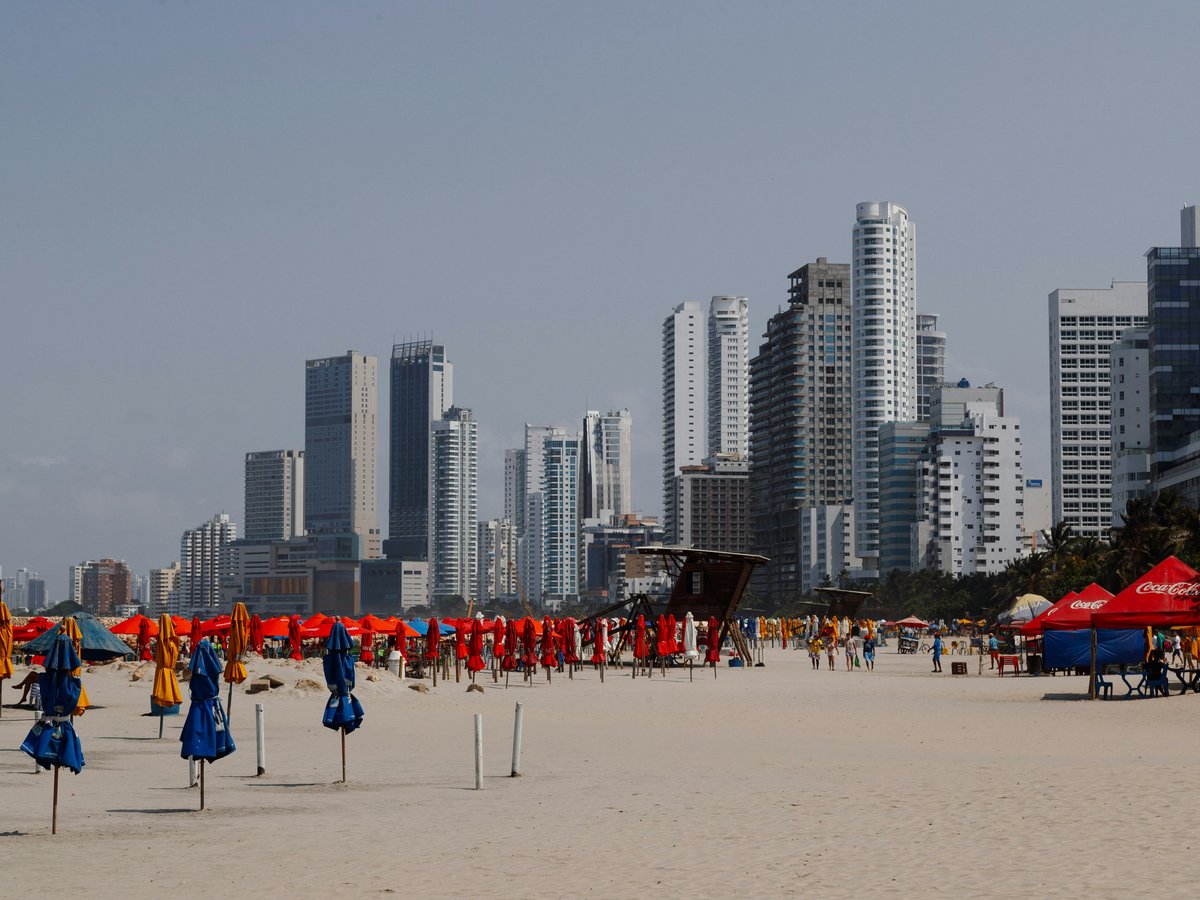
English proficiency in the tourist core, the Ciudad Amurallada and Bocagrande, sits at roughly 5 out of 10 (sourced from EF English Proficiency Index, where Colombia currently ranks in the "Low" band). Hotel front desks along Calle del Arsenal and the concierges at Bocagrande high-rises handle English fine. Tour guides at the Castillo de San Felipe, built in 1536, almost all speak English. But step into the Mercado de Bazurto, 20 minutes south by taxi, and English drops to near zero. Taxi drivers rarely speak more than a handful of set phrases. Restaurant servers in Getsemaní are hit or miss. The fruit vendors who balance metal bowls of sliced mango and piña on their heads along Playa de Bocagrande know "ten thousand" and "how many," and that covers their whole repertoire. Worth noting, younger Cartageneros under 30 tend to have stronger English, a pattern you'll notice in the bars along Calle de la Media Luna after 10 PM.
The single phrase that changes every interaction is "buenas." Not "buenos días" or "buenas tardes." On the coast, people say "buenas" at any hour, and it works as both greeting and acknowledgment. Walk into a tienda, say "buenas," and the temperature of the exchange shifts. "¿Cuánto vale?" (how much?) is costeño for asking prices. Interior Colombians say "¿cuánto cuesta?" and you'll be understood either way, but "vale" marks you as someone who has been paying attention. For taxis, "¿me lleva a..." followed by the destination works better than fumbling with a translation app. "Regálame" is the verb costeños use to ask for things. Literally "gift me." So "regálame la cuenta" (gift me the bill) or "regálame un tinto" (gift me a black coffee, around 1,500 pesos at a street cart) sounds odd in translation but is the standard polite form here. Skip it and you sound stiff.
Google Translate's camera mode reads menus and signs reasonably well for Spanish, since the script is Latin alphabet with no parsing barrier. Download the Spanish offline pack before you land at Rafael Núñez International Airport. That said, a phrasebook won't help you with costeño slang. "Bacano" means cool or great. "Chevere" means the same but is more pan-Colombian. "Dale" is the local "OK, let's do it." "Fresco" means "don't worry about it," and you'll hear it 15 times a day. If a taxi driver says "tranquilo," he's telling you the same thing. At restaurants in the walled city, most menus along Calle Santo Domingo and Plaza San Diego have English translations, though the translations can be creative. "Patacón" becomes "green plantain cake," which is technically accurate but won't prepare you for the thick, salty, fried disc that arrives with a crunch. Point at what the table next to you is eating. That works in any language.
Languages spoken
Spanish
Primary language: Spanish (Caribbean Colombian / costeño).
Useful phrases
- Hello (any time of day)BuenasBWEH-nahs
- How much does it cost?¿Cuánto vale?KWAHN-toh VAH-leh
- Please give me (polite request)Regálame...reh-GAH-lah-meh
- Take me to...¿Me lleva a...?meh YEH-vah ah
- The bill, pleaseRegálame la cuentareh-GAH-lah-meh lah KWEN-tah
- A black coffee, pleaseUn tinto, por favoroon TEEN-toh, por fah-VOR
- A coconut lemonadeUna limonada de cocoOO-nah lee-moh-NAH-dah deh KOH-koh
- No, thank youNo, graciasnoh, GRAH-see-ahs
- Do you have a set lunch?¿Tiene menú del día?tee-EH-neh meh-NOO del DEE-ah
- Cool / GreatBacanobah-KAH-noh
- Don't worry about itFrescoFREHS-koh
- OK / Let's do itDaleDAH-leh
Last verified by automated review (v1.7.2) on . What is automated review?