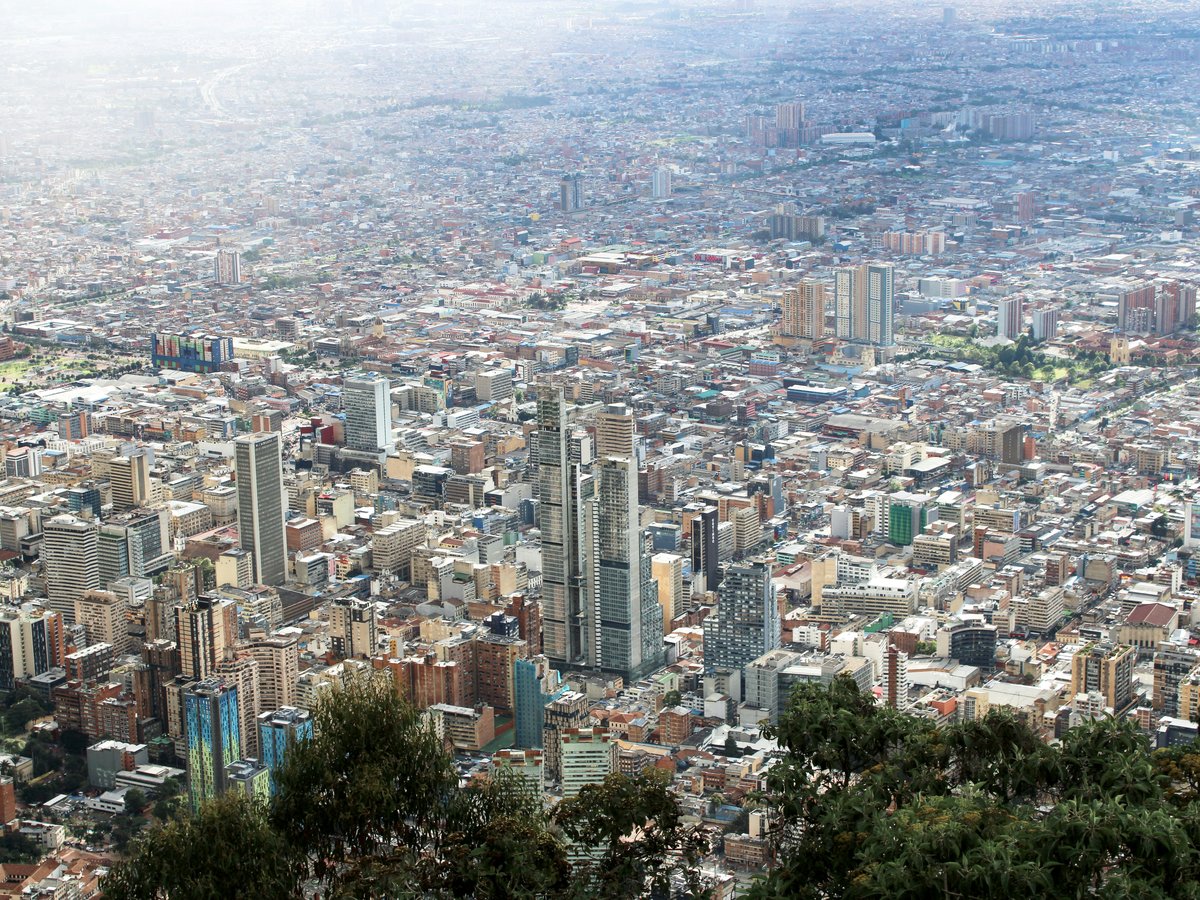
Best Time to Visit Bogota, by Season
Bogota's total annual temperature swing is 2.1°C. The real question is not heat versus cold but dry versus wet, and whether you are willing to share the driest months with everyone else. A month-by-month projection of the weather data, crowd trade-offs, and the single best window for five kinds of visitor.
Published
1 Bogota Sits at 2,640 Meters, and That Changes Every Assumption About Tropical Weather
You step off the plane at El Dorado International Airport and the air hits cool against your bare arms. Bogota sits at 2,640 meters above sea level, and the temperature outside feels nothing like the Colombia of Caribbean beach postcards. The city's average daytime high ranges from 18.6°C in July to 20.7°C in January, a total annual swing of 2.1°C. Most European capitals see a 15-20°C gap between their warmest and coolest months. Bogota's 2.1°C range barely shows up on a thermometer.
The real variation across Bogota's calendar hides in the nights. January's average low drops to 7.3°C, cold enough to see your breath on Carrera Séptima after 9 PM. May's average low sits at 9.3°C, a full 2.0°C warmer. You'll feel the gap between a 7.3°C January night and a 9.3°C May evening at an outdoor table in Zona T far more than you'll notice the 1.3°C daytime shift between those same 2 months.
Bogota's rain is the other deciding factor. The city gets two wet seasons, roughly March through May and September through November, separated by two drier windows. December through February is the primary dry season, with bright Andean mornings and a pale sky that holds clear past midday. A smaller dry stretch runs through June, July, and August, though July's 18.6°C makes the air feel more like highland autumn than anything tropical. The rain decides whether you walk La Candelaria's cobblestones under open sky or duck into a Chapinero café to wait out a 2-hour downpour.
To be fair, Open-Meteo's 5-year observation averages smooth out what any given week might deliver. But the monthly structure tells Bogota's planning story. February lands at 20.6°C high and 8.9°C low, nearly matching January's 20.7°C while delivering overnight temperatures 1.6°C milder. September recovers to 20.1°C after the mid-year trough. The largest single-month jump in the calendar is July to August, when the average high climbs 1.0°C from 18.6°C to 19.6°C.
Bogota's daytime high swings 2.1°C across the full year. Most European capitals see 15-20°C. Bogota's seasons barely register on a thermometer.
2 December and January Bring Bogota's Warmest Days and the Biggest Crowds
The smell of buñuelos frying on Calle 85 hangs in December air that sits at a comfortable 20.5°C by mid-afternoon. December is Colombia's holiday month, and Bogota fills with domestic travellers heading home or heading out. January follows at 20.7°C, the highest average daytime temperature in Bogota's 12-month calendar.
The consensus that December and January are the best months has consequences across Bogota. Accommodation in La Candelaria and Zona Rosa tends to fill weeks in advance through late December. Restaurants at Usaquén's weekend market pack tight on Saturdays. January's 20.7°C days and 7.3°C nights make for comfortable walking conditions around Parque de la 93, to be fair. December's average low of 8.4°C is milder than January's 7.3°C, so December evenings around Zona G feel slightly less sharp.
Mind you, January's 7.3°C average overnight low is the coldest of any month in Bogota's calendar. That surprises visitors who expect January's 20.7°C daytime high to mean warmth around the clock. May's overnight average of 9.3°C sits 2.0°C above January's 7.3°C. If you plan January evenings at open-air spots near Parque de la 93 or along Carrera Séptima, you'll want layers that April at 9.0°C or May at 9.3°C would not require.
January's 13.4°C gap between its 20.7°C high and 7.3°C low is the widest daily temperature swing of any month in Bogota. December's 12.1°C spread ranks third in the calendar. Packing for these 2 months means layering for mild afternoons and cold nights, a challenge that April's tighter 10.9°C range avoids.
December at 20.5°C and January at 20.7°C deliver the driest, warmest daytime conditions in Bogota's year. You pay with peak-season pricing, heavier foot traffic at La Candelaria's museums, and those wide day-night temperature swings. The Open-Meteo data points toward February at 20.6°C and 8.9°C for visitors who want the same warmth with fewer trade-offs.
3 February Is the Overlooked Sweet Spot Between Peak Season and the First Rains
The morning light in Usaquén's weekend flea market hits softer in February. The December crowds have scattered. Bogota's sky still holds that dry-season clarity over the northern hills. February's average high reaches 20.6°C, a mere 0.1°C below January's 20.7°C. By any practical measure, these 2 months deliver the same daytime warmth across Bogota.
February's nights tell a different story. The average low of 8.9°C sits 1.6°C above January's 7.3°C. That 1.6°C is the difference between a heavy jacket and a light layer at an outdoor table in Zona G. For Bogota, where nighttime temperatures shape the social calendar, February's warmer evenings across Chapinero and Usaquén are not a minor upgrade.
March is where Bogota's comfort starts to slip. The average high drops to 19.9°C, a 0.7°C decline from February's 20.6°C. That 0.7°C fall from February to March is the largest single-month daytime drop in the entire calendar, steeper than the 0.6°C slide from May's 19.4°C to June's 18.8°C. March also ushers in Bogota's first wet season. The afternoon showers that define the city's March-through-May pattern have not arrived during February, and La Candelaria's cobblestoned streets stay largely dry.
February is short at 28 days, the smallest planning window of any month in Bogota. Travellers wanting a full 3-week trip might start in late January at 20.7°C and run through mid-February to catch both months' strengths. February's 20.6°C days and 8.9°C nights hold steady for all 4 weeks. That combination of near-peak warmth at 20.6°C, milder nights at 8.9°C versus January's 7.3°C, thinner crowds than December, and dry conditions puts February at the top of Bogota's travel calendar for most visitors.
February's 20.6°C matches January's warmth. Its 8.9°C nights run 1.6°C milder. And the holiday crowds have gone.
4 March Through May Brings Rain, the Year's Warmest Nights, and Lower Prices
The first heavy rain of Bogota's year smells like wet concrete and eucalyptus from the Cerros Orientales. It arrives around mid-March, and by April the afternoon downpours have settled into the daily rhythm across La Candelaria and Chapinero. March and April both average 19.9°C during the day, a 0.8°C drop from January's 20.7°C. May falls further to 19.4°C, the third-coolest month in Bogota's calendar after July's 18.6°C and June's 18.8°C.
Bogota's overnight readings are where this stretch surprises. March's average low of 9.1°C, April's 9.0°C, and May's 9.3°C are the 3 warmest nighttime averages in the entire year. May's 9.3°C is the highest overnight reading of all 12 months. January's 7.3°C sits 2.0°C colder. For travellers who plan to eat outdoors in Chapinero or walk Carrera Séptima after sunset, the wet season's milder nights offer a genuine comfort edge over December's 8.4°C or January's 7.3°C.
Semana Santa falls in late March or April depending on the year, bringing a brief travel spike to Bogota. Residents tend to leave for warmer coastal cities like Cartagena or Santa Marta, but La Candelaria still draws foreign visitors for the religious processions. April's 19.9°C daytime average during Semana Santa week feels mild after the morning chill at 9.0°C. Outside that 1-week window, March through May is likely the quietest stretch of the year for international tourism in Bogota.
Accommodation pricing during these 3 months tends to sit well below Bogota's December-January peak. Bogota's rain is the trade-off. April and May afternoons can bring 2-3 hours of steady downpour across the city. Morning exploration of Usaquén before noon works well, followed by an evening in Chapinero once the rain clears. May's 9.3°C overnight, the warmest in Bogota's calendar, pairs with 19.4°C days and off-peak rates.
5 June and July Drop to the Year's Coolest Temperatures, but the Rain Eases
You notice the chill on your first morning walk through Chapinero in July. The air at 8 AM carries a bite that February's 20.6°C afternoons never hint at. July's average high of 18.6°C is the lowest of any month in Bogota's calendar, a full 2.1°C below January's 20.7°C. June runs slightly higher at 18.8°C. These are Bogota's coolest 2 months, and the difference shows on every terrace along Calle 59.
Bogota's nights tighten in this stretch. July's average low of 8.4°C and August's 7.8°C make evenings brisk across the northern neighborhoods. August's 7.8°C ties September for the second-coldest overnight average in the year, trailing only January's 7.3°C. You'll want a sweater at Parque de la 93 and a proper jacket for anything past 10 PM in Usaquén.
June and July trade Bogota's lowest daytime highs for noticeably drier conditions than the March-through-May wet season. The heavy afternoon downpours have eased by June across La Candelaria and Chapinero. This secondary dry window running June through August is not as reliable as the December-through-February primary season across Bogota, but the contrast with April's rain is real. July's 18.6°C comes with clearer skies than April's warmer 19.9°C. For visitors who dislike Bogota's rain more than its cool temperatures, that is a meaningful trade.
August marks the turning point in Bogota's temperature calendar. The average high jumps to 19.6°C, a 1.0°C climb from July's 18.6°C. That July-to-August leap is the single largest month-over-month increase in all 12 months. August's daytime warmth approaches October's 20.3°C and November's 20.0°C, even though its overnight low of 7.8°C stays among Bogota's coldest readings.
This June-through-August window tends to attract the fewest international visitors to Bogota. The 18.6-18.8°C daytime range does not sell a city at 6°N latitude. For digital nomads settling into Chapinero for 2-3 months, the cooler temperatures and lower accommodation demand make this Bogota's most practical long-stay window. Bogota at July's 18.6°C still runs milder than an April afternoon in London or Berlin.
6 September Through November Warms Up Fast, but Bogota's Second Rainy Season Arrives
The smell of wet brick rises from La Candelaria's cobblestones as Bogota's second rainy season settles in during September. The temperature has been climbing since August's 19.6°C, and September opens at a 20.1°C average high, a welcome recovery from July's 18.6°C trough. October nudges higher to 20.3°C. November holds at 20.0°C. The daytime readings across Bogota are approaching December's 20.5°C, but the rain has not stopped.
Bogota's overnight temperatures in this 3-month stretch run mixed. September shares August's 7.8°C average low, making it the joint second-coldest overnight reading after January's 7.3°C. October warms to 8.4°C. November reaches 8.7°C, close to February's 8.9°C. The night-by-night warming from September's 7.8°C to November's 8.7°C tracks the daytime recovery across Bogota, building toward December's return to dry-season conditions at 20.5°C high and 8.4°C low.
October tends to bring the heaviest rainfall to Bogota, though the temperature averages alone do not capture volume. What Open-Meteo's 5-year data does show is that October's 20.3°C and November's 20.0°C sit within 0.4°C of January's 20.7°C high. You're getting near-peak daytime warmth in Bogota with almost none of the December-January congestion.
That value equation makes September through November interesting for budget-conscious Bogota visitors. Accommodation across Chapinero and La Candelaria tends to run well below peak-season rates. Bogota's October rain is the cost. But flexible travellers who build mornings around outdoor activities can take advantage of the 20.1-20.3°C readings before the afternoon clouds build. A clear October morning in Zona G, with the high reaching 20.3°C by noon, is Bogota near its daytime best.
November at 20.0°C and 8.7°C overnight begins the pivot toward December's dry season across Bogota. The final week of November sometimes delivers several consecutive dry days, a preview of December's 20.5°C window at November's lower pricing. Late November might be the single most undervalued week on Bogota's 12-month tourism calendar.
7 The Single Best Window for Each Kind of Bogota Traveller
On a clear February morning, Bogota's Ciclovía fills with cyclists in t-shirts as the temperature approaches 20.6°C. The same streets in July see windbreakers and fleece at 18.6°C. That 2.0°C spread between the warmest and coolest months in Bogota's calendar shapes the answer for 5 different kinds of visitor. No month drops below 18.6°C or rises above 20.7°C in the average high. The entire range fits inside 2.1°C across Bogota's 12-month year.
Budget travellers should target May in Bogota. The daytime high of 19.4°C is cooler than February's 20.6°C, but May's overnight average of 9.3°C is the warmest of all 12 months, so evenings across Chapinero need fewer layers. Accommodation and flights to Bogota tend to sit below peak-season rates while the first wet season winds down.
Outdoor and walking-focused visitors want February in Bogota. At 20.6°C high and 8.9°C overnight, February matches January's 20.7°C daytime warmth while delivering 1.6°C milder evenings and thinner crowds than December. Bogota's dry season still holds. The 0.7°C drop to March's 19.9°C has not arrived.
Festival and culture seekers should book December in Bogota. The 20.5°C days coincide with Colombia's major holiday calendar. December's overnight low of 8.4°C is milder than January's 7.3°C, making evenings at Parque Simón Bolívar or along Zona Rosa more comfortable than peak January.
Digital nomads settling into Chapinero for 2-3 months should consider Bogota's June-through-August window. July's 18.6°C is the coolest daytime reading of the year, but the secondary dry season keeps rain lower than the March-May stretch. August's 19.6°C begins the recovery. Lower tourist presence tends to mean more space at co-working spots across Bogota's northern neighborhoods.
Solo travellers who want Bogota's mildest around-the-clock conditions should look at April. The daytime high of 19.9°C sits mid-range in Bogota's calendar. The overnight low of 9.0°C is the third-warmest of the year after May's 9.3°C and March's 9.1°C. April's day-night spread of 10.9°C runs noticeably tighter than January's 13.4°C gap, and the temperature holds more consistent from La Candelaria at noon to Zona T at midnight.
No month in Bogota drops below 18.6°C or rises above 20.7°C. The entire range fits inside 2.1°C. The right month depends on which trade-offs matter to you.
Last verified by automated review (v1.7.2_onboard-bogota-flagship-2026-09-16) on . What is automated review?