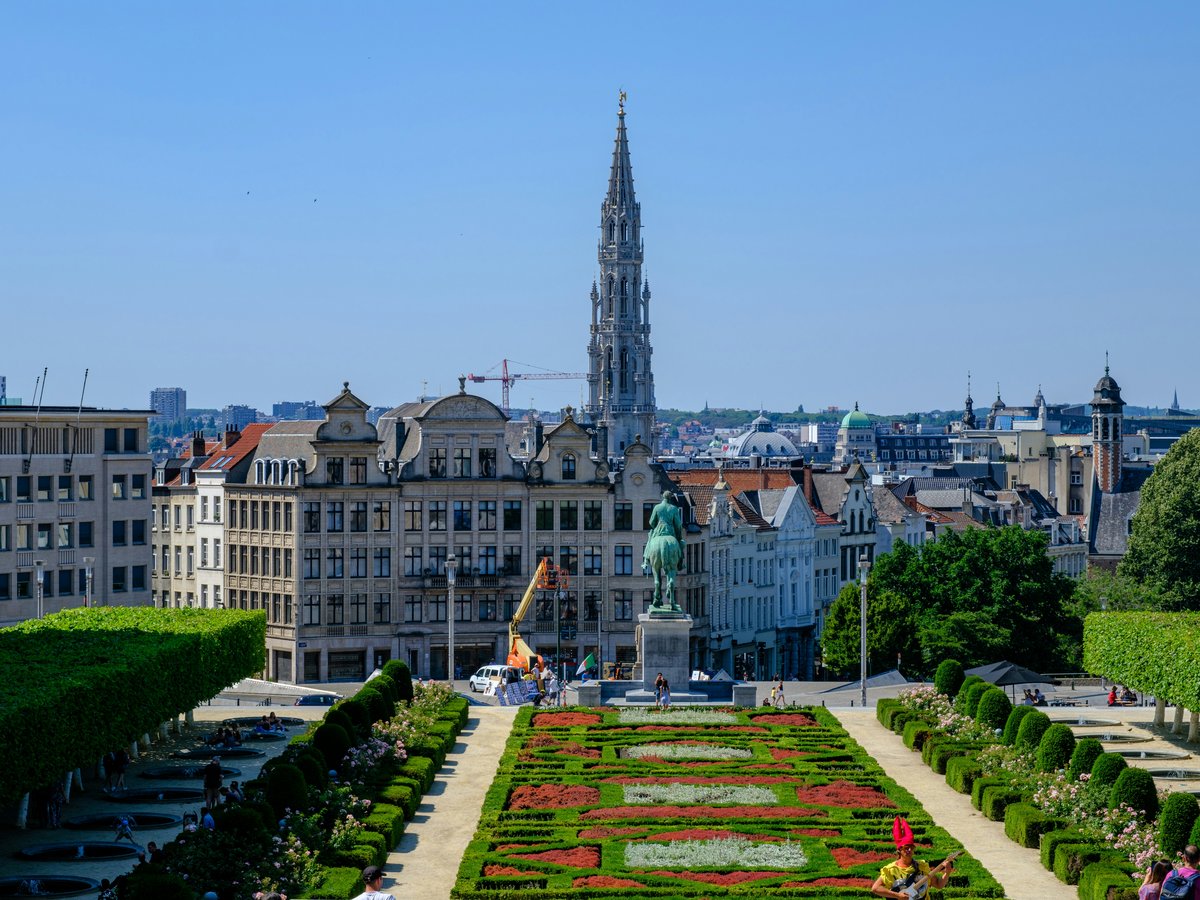
Stay in Brussels in March
91 hotels in the Trip.com pool for Brussels, from US$18 a night.
Opens Trip.com on Fri 5 Mar to Sun 7 Mar 2027; change the dates there.
March in Brussels is the month the city starts to thaw, though "thaw" might be generous. Daytime temperatures reach about 12°C (53°F), which feels mild after a Belgian winter that tends to hover near freezing, but mornings still drop to 3-4°C (38-39°F). You will want layers. The good news is that March sits in a pricing sweet spot between the dead of winter and the Easter tourist bump that typically hits in April, and the city's cultural calendar picks up noticeably after the quieter January-February stretch. The Parc de Bruxelles starts showing early crocuses by mid-month, and café terraces in the Sablon reopen with heat lamps and wool blankets for the optimists.
To be fair, March in Brussels is not anyone's idea of a beach holiday. Rain falls on roughly 12 days across the month, totaling about 58mm. That is not torrential by any measure, but the drizzle can be persistent, the kind that does not pour so much as linger for hours across the grey sky. The light shifts noticeably though. By late March, sunset pushes past 19:30, and those extra hours of daylight change the feel of the city considerably compared to the short, dark days of December and January.
What makes March genuinely appealing is access. The Musées Royaux des Beaux-Arts, the Magritte Museum, and the Atomium all have manageable queues. Weekend brunch spots in Ixelles and Saint-Gilles that require reservations in summer are walk-in territory. If you are the type of traveler who values seeing things without fighting crowds, March is quietly one of the better windows.
Why visit in March
- Hotel rates in central Brussels run 20-30% below the May-September average, making it one of the more affordable windows to stay near Grand-Place
- Museum queues at major sites like the Magritte Museum and Musées Royaux des Beaux-Arts are short, often under 10 minutes even on weekends
- The Salon du Chocolat Brussels and Art Brussels fair both fall in or near March, giving the cultural calendar real weight beyond the permanent collections
- Daylight hours increase from roughly 11 hours at the start of March to over 12.5 hours by month's end, a noticeable lift after the Belgian winter
Worth knowing
- Temperatures still feel cold, particularly in the wind corridors around the EU Quarter and along Rue de la Loi, where 12°C can feel closer to 7-8°C with wind chill
- Overcast skies dominate. Brussels averages only about 4 hours of sunshine per day in March, which can wear on mood after several consecutive grey days
- Some outdoor attractions, including the Parc du Cinquantenaire fountains and several rooftop bars in the Dansaert district, remain closed until April or May
- The transition weather makes packing tricky. A sunny morning at 14°C can turn into a 4°C drizzle by evening
Best for
Think twice if
March in Brussels is transitional. Mornings tend to feel raw, with lows around 3-4°C (38-39°F) and occasional frost on windshields in outer communes like Uccle and Woluwe. Afternoons warm to about 12°C (53°F) on an average day, though sunny spells can push that to 15-16°C. Rainfall comes in at 58mm spread across roughly 12 days, usually as light drizzle rather than heavy downpours. Humidity sits around 76%, which makes the cold feel damper than the thermometer suggests. Wind off the Senne valley corridor can be biting, particularly around the elevated Palais de Justice and the open squares of the EU Quarter. By the last week of March, you might get a preview of spring with 2-3 consecutive mild days, but do not count on it.
Year-round climate
Averages from the last 5 years.
| Month | Avg high (°C) | Avg low (°C) | Rainfall (mm) |
|---|---|---|---|
| Jan | 6 | 1 | 92 |
| Feb | 9 | 3 | 60 |
| Mar | 12 | 4 | 58 |
| Apr | 14 | 5 | 52 |
| May | 18 | 9 | 69 |
| Jun | 23 | 13 | 75 |
| Jul | 23 | 14 | 93 |
| Aug | 23 | 15 | 52 |
| Sep | 21 | 12 | 67 |
| Oct | 16 | 10 | 92 |
| Nov | 10 | 5 | 72 |
| Dec | 8 | 3 | 69 |
Holidays and festivals in March
Public holidays
- Good Friday(Goede Vrijdag)26 March 2027
- Easter Sunday(Pasen)28 March 2027
- Easter Monday(Paasmaandag)29 March 2027
Best things to do in March
Explore the Royal Museums of Fine Arts and the Magritte Museum
cultureThe complex on Rue de la Régence holds Flemish masters from Bruegel and Rubens through to the dedicated Magritte wing with over 200 works. In March, the rooms are noticeably emptier than summer. You can stand in front of Magritte's 'The Empire of Light' without someone's phone in your sightline. The Old Masters section alone could fill 2-3 hours if you linger, and the contrast between the Bruegel rooms and the surrealist wing makes for a full afternoon.
Low visitor numbers in March mean you can spend real time with the paintings instead of shuffling past them. First Sundays of the month offer free admission to the permanent collections.Booking tipBook online to skip the ticket desk, though in March walk-ups rarely face a significant wait.
Walk the Horta Art Nouveau trail in Saint-Gilles
architectureVictor Horta's four townhouses in Saint-Gilles and Ixelles are UNESCO-listed. The Horta Museum on Rue Américaine 25 is the flagship, with its original staircase ironwork, stained glass, and mosaic floors intact. From there you can walk to the Hôtel Solvay on Avenue Louise and the Hôtel van Eetvelde on Avenue Palmerston. The residential streets between them are lined with lesser-known Art Nouveau facades, many with sgraffito panels that catch the afternoon light.
March's cooler temperatures make the walking comfortable, and the bare trees along Avenue Louise open up facade views that summer foliage hides. Tour groups are minimal before April.Booking tipThe Horta Museum has limited capacity. Weekday mornings in March typically have availability, but check their online calendar before heading over.
Taste your way through the Grand Sablon chocolate shops
foodThe Place du Grand Sablon and its side streets hold the densest concentration of high-end chocolatiers in Belgium. Pierre Marcolini, Wittamer, Patrick Roger, and Frederic Blondeel all have shops within a 5-minute walk of each other. March is when spring collections appear, with new ganache flavours and seasonal ingredients. The tasting experience is unhurried in the shoulder season, and staff at smaller shops will often walk you through their process.
Spring collections launch in March, and the lower foot traffic means chocolatiers have time to explain their seasonal offerings rather than rushing through transactions.Booking tipNo reservations needed. Mid-morning on a weekday is the quietest time to visit.
Drink lambic and gueuze in the Senne valley
food_and_drinkBrussels sits in the Senne valley, the only place where the wild yeasts for spontaneous-fermentation lambic beer occur naturally. Cantillon Brewery in Anderlecht gives self-guided tours of its 1900 facility, where open coolships expose wort to the ambient air. The smell of the fermenting barrels, yeasty and sharp, fills every room. Moeder Lambic Fontainas in Saint-Gilles carries over 40 lambics on tap, and the staff knows the producers personally.
The brewing season for lambic runs from October to March, so a March visit lets you see the coolships potentially still in use. Cantillon is less crowded before the tourist season picks up in April.Booking tipCantillon does not take reservations for the self-guided tour. Arrive when they open to avoid the midday rush.
Browse the weekend antiques market at Place du Jeu de Balle
shoppingThe Marolles flea market runs every morning at Place du Jeu de Balle, but weekends bring the full spread. Dealers set up from around 6:00 and the best finds go early. The stalls carry Art Deco glassware, vintage Tintin comics, old Belgian railway signs, Congo-era colonial ephemera, and mid-century furniture. The surrounding Marolles streets have permanent antique and vintage shops that are worth checking after the market winds down around 14:00.
Fewer tourists in March means less competition for finds and more willingness from dealers to negotiate. The cold keeps casual browsers away, which works in a serious buyer's favor.Booking tipNo booking needed. Arrive by 8:00 on Saturday or Sunday for the best selection.
Visit the Atomium and the Design Museum
landmarkThe Atomium in Laeken, built for the 1958 World Expo, still looks like nothing else on earth. The top sphere gives panoramic views across Brussels on the clear days March occasionally delivers. The Design Museum inside covers Belgian mid-century design, with rotating exhibitions that change several times a year. The surrounding Heysel park area is quiet in March, and the walk from the metro through the park to the structure takes about 10 minutes.
March queues are a fraction of summer's. On a weekday you might have some of the spheres nearly to yourself, which changes the experience completely.Booking tipBuy tickets online. Combined tickets for the Atomium and Design Museum offer a small discount over buying separately.
Day trip to Ghent by train from Brussels-Midi
day_tripGhent is 35 minutes from Brussels-Midi by IC train, and a March visit avoids the summer crowds that pack Sint-Baafsplein around the van Eyck altarpiece. The Graslei waterfront, the medieval butchers' hall, and the Design Museum Gent are all walkable from Gent-Sint-Pieters station. The city's student population keeps the café and bar scene lively year-round, so the atmosphere does not feel dead in the off-season the way some Belgian towns can.
The Ghent Altarpiece at St Bavo's Cathedral is viewable without the 45-minute summer queues. The walk along the Graslei is more atmospheric with fewer selfie sticks in the frame.Booking tipIC trains run every 20 minutes from Brussels-Midi. No reservation needed, tickets available from the machines at the station.
What to eat in March
On menus now
Witloof gratin (chicons au gratin)
Belgian endive wrapped in ham and baked with béchamel and Gruyère. Witloof is at its best from November through March, and by late March the season is ending. Restaurants across Ixelles and the Marolles serve it as a cold-weather staple.
Waterzooi
A creamy stew from Ghent that Brussels restaurants serve throughout winter into March, traditionally made with chicken or North Sea fish, celery root, leeks, and cream. The Flemish original uses river fish, but Brussels versions lean toward chicken. Still warming enough for 4°C mornings.
Belgian pralines (new spring collections)
March is when chocolatiers like Pierre Marcolini, Laurent Gerbaud, and Frederic Blondeel release spring collections. The Grand Sablon chocolate shops display new flavours using early seasonal ingredients, with tastings on weekend afternoons.
Moules (tail end of mussel season)
Belgian mussel season traditionally runs from late June through March or April, depending on the year. March is the final stretch, with some restaurants in the Sainte-Catherine district still serving them from Zeeland. Quality can be inconsistent this late, so ask if they are fresh before ordering.
Street food peaks
Gaufres de Liège
Available year-round, but March's cold makes the warm, dense, pearl-sugar waffles from street vendors near the Grand-Place and Manneken Pis particularly satisfying. The caramelized sugar exterior crunches differently when the waffle is fresh off the iron in cool air.
Regular events in March
Salon du Chocolat Brussels
Multi-day chocolate fair bringing Belgian and international chocolatiers to Brussels Expo at the Heysel, with tastings, demonstrations, and a fashion show featuring chocolate-decorated garments. Typically draws over 30,000 visitors across the weekend.
Early to mid-MarchArt Brussels (preview events)Free
While the main Art Brussels contemporary art fair typically falls in April, satellite exhibitions and gallery openings across the Dansaert and Sablon districts start in late March. Galleries extend their hours and host vernissages.
Late MarchBrussels Vintage Market
Monthly vintage clothing and accessories market at Tour & Taxis, with over 50 vendors selling curated secondhand fashion from the 1960s through the 2000s. The industrial warehouse setting keeps the event running rain or shine.
One Sunday per month, variesMuseum Night Fever
Annual event where roughly 30 Brussels museums open their doors in the evening with DJ sets, performances, and guided tours. Museums across the Pentagon, Ixelles, and the EU Quarter participate. One ticket covers all venues.
Mid-to-late March (varies by year)Best places this March
Grand-Place
landmarkBrussels' central square, a UNESCO site ringed by gilded guild houses from the late 1600s. In March, the lack of crowds means you can photograph the Hôtel de Ville's 96-metre tower without dodging tour groups. Early morning light on the gold facades is worth setting an alarm for.
PentagonMusée des Instruments de Musique (MIM)
museumHoused in a 1899 Art Nouveau department store on Rue Montagne de la Cour, the MIM holds over 8,000 instruments from medieval to electronic. The rooftop café offers one of the better elevated views of Brussels. In March the upper floors are practically empty on weekday afternoons.
Mont des ArtsCantillon Brewery
breweryThe last active lambic brewery within Brussels city limits, operating since 1900 in an Anderlecht warehouse. The self-guided tour passes through rooms of oak barrels and the open coolship where wild yeasts inoculate the wort. The tasting room at the end pours straight from the cask.
AnderlechtParc du Cinquantenaire
parkA 30-hectare park built for Belgium's 50th anniversary in 1880, anchored by the triumphal arch and flanked by military and art museums. The wide gravel paths are good for walking even in wet weather. The Autoworld collection of vintage cars sits in the south hall.
EU QuarterÉglise Notre-Dame du Sablon
churchA 15th-century Brabantine Gothic church on the Place du Grand Sablon, notable for its stained glass windows that cast coloured light across the nave on sunny afternoons. Free to enter. The surrounding square has weekend antique stalls and the chocolate shops that make the Sablon a destination.
SablonPlace Flagey and the Ixelles Ponds
neighborhoodThe Art Deco Flagey building, a former radio broadcasting house, anchors a square surrounded by cafés and the two Ixelles ponds. The Saturday morning market at Flagey is one of Brussels' best, running year-round with local cheese, bread, and charcuterie vendors.
IxellesComic Strip Route
walking_routeOver 50 large-scale comic murals cover building walls across the city center, featuring Tintin, Lucky Luke, Gaston Lagaffe, and lesser-known Franco-Belgian characters. The route runs roughly from Gare Centrale through the Marolles and up to the Canal district. A printed map is available from the tourist office on Grand-Place.
Pentagon / MarollesMaison Horta
museumVictor Horta's personal residence on Rue Américaine 25 in Saint-Gilles, now a museum preserving the original Art Nouveau interiors. The staircase with its exposed iron structure and natural light well is considered one of Horta's finest spatial achievements. Limited daily visitor numbers keep the experience intimate.
Saint-Gilles
Your packing checklist
Tick items off as you pack. Your progress saves in this browser.
All packed — have a great trip.
Insider tips
The Flagey Saturday morning market is where locals shop, not the touristy stalls near Grand-Place. Arrive by 9:00 for the best bread and cheese selection. The crêpe stand at the north end of the market is consistently good.
Belgian train conductors rarely check tickets on short IC routes, but the fine for riding without one is steep. Always buy before boarding, even for the 35-minute Ghent run.
The Musical Instruments Museum rooftop café on the 10th floor has one of the best views in Brussels and most visitors skip it. The terrace is covered, so it works even in March drizzle.
If you want authentic frites, look for stands frying in beef tallow, not vegetable oil. Maison Antoine at Place Jourdan in the EU Quarter is the famous one, but Friterie Tabora near the Bourse is less of a queue for comparable quality.
Many Brussels restaurants close between lunch and dinner service, typically from 14:30 to 18:30. Plan accordingly or eat in Ixelles and Flagey, where several spots serve continuously.
The Brussels Card covers most museums and unlimited public transport. Whether it pays off depends on how many museums you plan to visit. For 3 or more major sites in a day, it likely saves money versus individual tickets.
Avoid these mistakes
- Packing only for cold weather and not bringing a layer you can remove. March afternoons can reach 14-16°C in the sun, and overheating in museums with heavy winter gear is uncomfortable.
- Visiting only the Grand-Place and the Manneken Pis, then leaving. The interesting neighborhoods are Saint-Gilles, Ixelles, the Marolles, and Dansaert. The tourist center is about 10% of what Brussels offers.
- Assuming everything is walkable. Brussels has significant hills between the lower town (Grand-Place) and the upper town (Sablon, Palais de Justice). The elevation change tires people out, especially on wet cobblestones.
- Skipping Ghent or Bruges because they seem too far. Both are under 60 minutes by train from Brussels-Midi, and the March crowds are low enough to make either a comfortable day trip.
- Ordering moules in late March without asking if they are fresh. The season is ending and some restaurants switch to frozen stock. The Sainte-Catherine district restaurants are more likely to still have fresh Zeeland mussels, but ask.
Practical tips for March
Layers are the core strategy for March in Brussels. Mornings near 4°C warm to 12-14°C by afternoon, so dress in pieces you can adjust throughout the day. Waterproof shoes are more important than they sound, because the cobblestone streets in the Pentagon and Marolles get genuinely slippery when wet. Public transport runs on the STIB/MIVB network, and a rechargeable MOBIB card avoids buying individual tickets for each tram or metro ride. Most museums close on Mondays, so plan gallery days for Tuesday through Sunday. If Easter falls in late March, expect a bump in both crowds and prices during the final week, book accommodation earlier for that stretch. Restaurant reservations are rarely necessary in March, except at a handful of popular spots in Ixelles and the Sablon on Friday and Saturday evenings. The Brussels-Midi Eurostar terminal has longer security lines on Friday evenings and Sunday afternoons, so allow extra time for return journeys.
FAQ
Is March a good time to visit Brussels?
March is a fair-to-good window depending on your priorities. The weather is cold and often grey, with temperatures around 4-12°C and drizzle on roughly 12 days. But hotel rates sit well below summer prices, museum queues are short, and the cultural calendar is active. If you care more about access and affordability than sunshine, March works well.
What should I wear in Brussels in March?
Layers are essential. Mornings start near 4°C and afternoons can reach 12-14°C, sometimes higher in the sun. A waterproof shell, mid-weight sweater, scarf, and waterproof walking shoes cover the range. Avoid heavy winter coats if you plan to spend time in heated museums, because you will overheat.
How rainy is Brussels in March?
Brussels gets about 58mm of rain across roughly 12 days in March. It is usually light drizzle rather than heavy downpours, the kind that does not pour so much as hang in the air for hours. A compact umbrella and waterproof jacket handle it. Truly dry, sunny days are a bonus, not the baseline.
Are there any major events in Brussels in March?
The Salon du Chocolat typically falls in early-to-mid March, drawing chocolatiers from across Belgium and beyond. Museum Night Fever opens around 30 museums for evening events. Art Brussels preview exhibitions start in late March. The calendar is active but not overwhelming, which suits the shoulder season.
Is it worth visiting Ghent or Bruges as a day trip from Brussels in March?
Both are worthwhile and easy by train. Ghent is 35 minutes from Brussels-Midi, Bruges about 55 minutes. March crowds are low enough to see the van Eyck altarpiece in Ghent without the long summer queue, and Bruges's canal-side streets are more atmospheric without the tour groups. Either makes a comfortable full-day trip.
Things to Do in Brussels in March
 Free cancellation
 Bruges and Ghent Day Trip from Brussels
Day trip: 10 hours, free cancellation.
via Viator Free cancellation
 Brussels Artisanal Chocolate Tasting Tour
City tour: 1.5 hours, free cancellation.
via Viator Free cancellation
 Brussels: Bean-to-Bar Belgian Chocolate Workshop & Tastings
Cooking class: 1.5 hours, free cancellation.
via Viator Free cancellation
 2.5h Belgian Chocolate Pralines Workshop in Brussels
Cooking class: 2.5 hours, free cancellation.
via Viator Free cancellation
 Brussels Highlights & Hidden Gems Private Tour with a Local Guide
Day trip: free cancellation.
via Viator Free cancellation
 Antwerp and Ghent Day Trip from Brussels With Atomium Photo Stop
Day trip: 10 hours, free cancellation.
via ViatorFind a flight to Brussels
Live fares to Brussels appear here once cookies are accepted.
Last verified by automated review (v1.7.2) on . What is automated review?