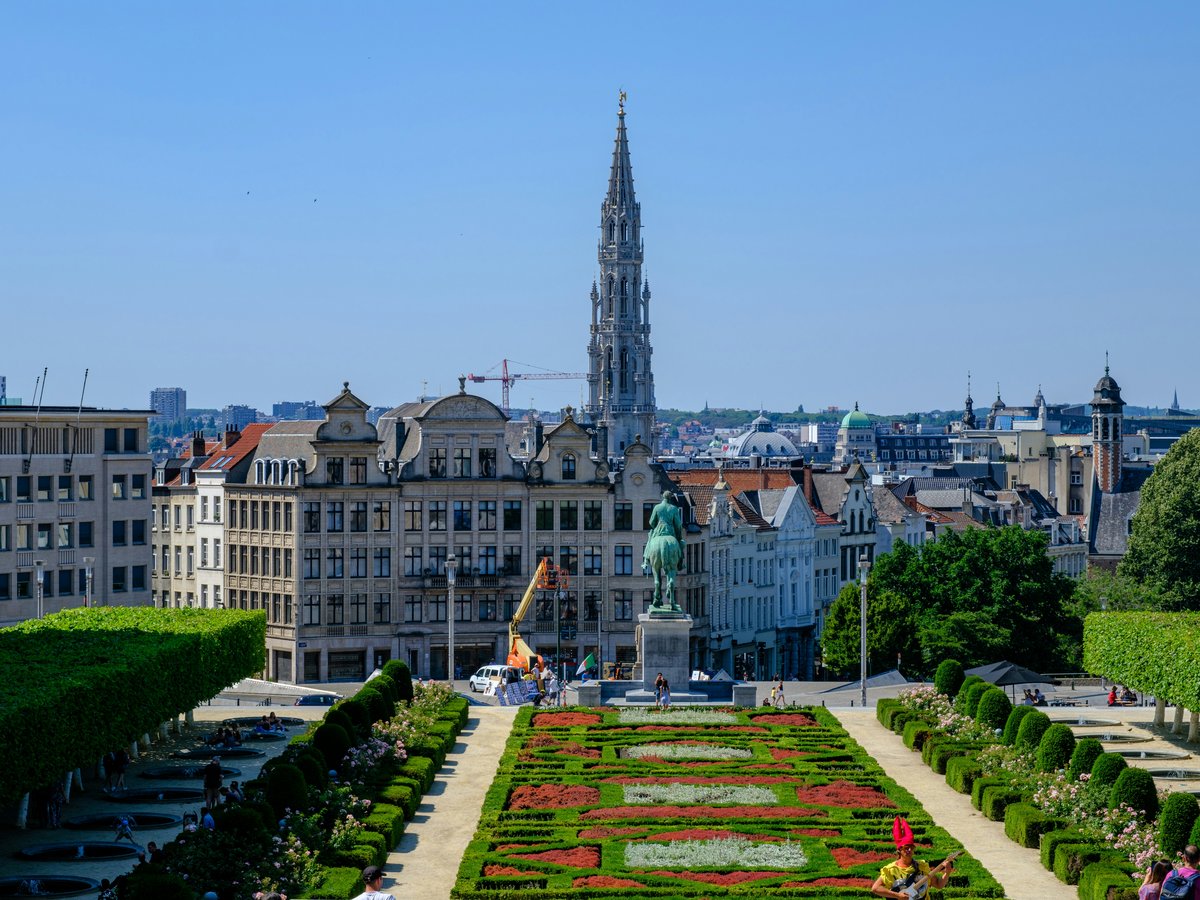
Brussels does its sightseeing in stone, bronze and steel, and this list of must-sees follows that grain. It opens with a fountain figure dated to 1619 and a landmark built as the centerpiece of Expo 58. Between those two sits a run of churches, a palace and an opera house, several of them protected monuments. The oldest church on the list dates to 1210, the cathedral to 1226, and most of what follows is ecclesiastical. If that sounds like a lot of naves, keep reading anyway: each church earns its place for a specific reason, whether that is a painter's grave or opening hours that suit a traveller with a tight morning. One entry sits outside the city on purpose, in Mechelen, as part of a UNESCO World Heritage Site, which is reason enough for a half-day. This list is for first-time visitors who want the canonical Brussels without the coach-tour pace, and for return visitors ready to swap the souvenir-shop circuit for buildings that reward an unhurried hour. Check the hours we cite before you set out, because several of these doors close earlier than you would guess.
-
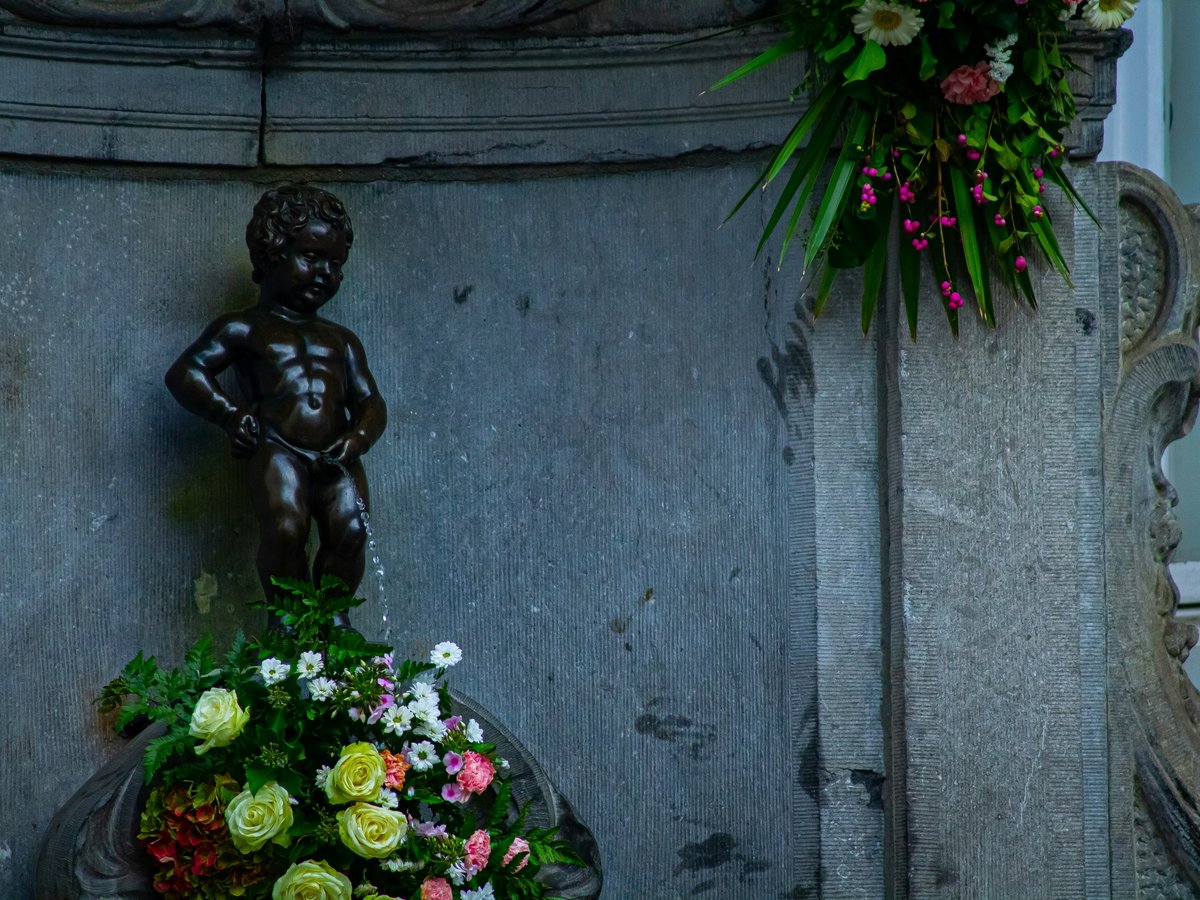
1 Manneken Pis
2 Rue du Chêne - EikstraatA bronze sculpture and fountain by Jérôme Duquesnoy the Elder, dated to 1619
At 2 Rue du Chêne - Eikstraat, the crowd around Manneken Pis is usually thick before you can even see what everyone came for. Skip the selfie-and-move-on routine most visitors give it, and look at the bronze itself, a sculpture and fountain by Jérôme Duquesnoy the Elder. Wikidata dates the figure to 1619, and it carries a protected monument designation. Yes, it is small, and everyone says so, but that misses the point. A city has kept this joke in bronze running since 1619, and has protected it too. Come early or late, give it two minutes of real attention, and let the street carry you on.
Dates from 1619 · Protected monument
-
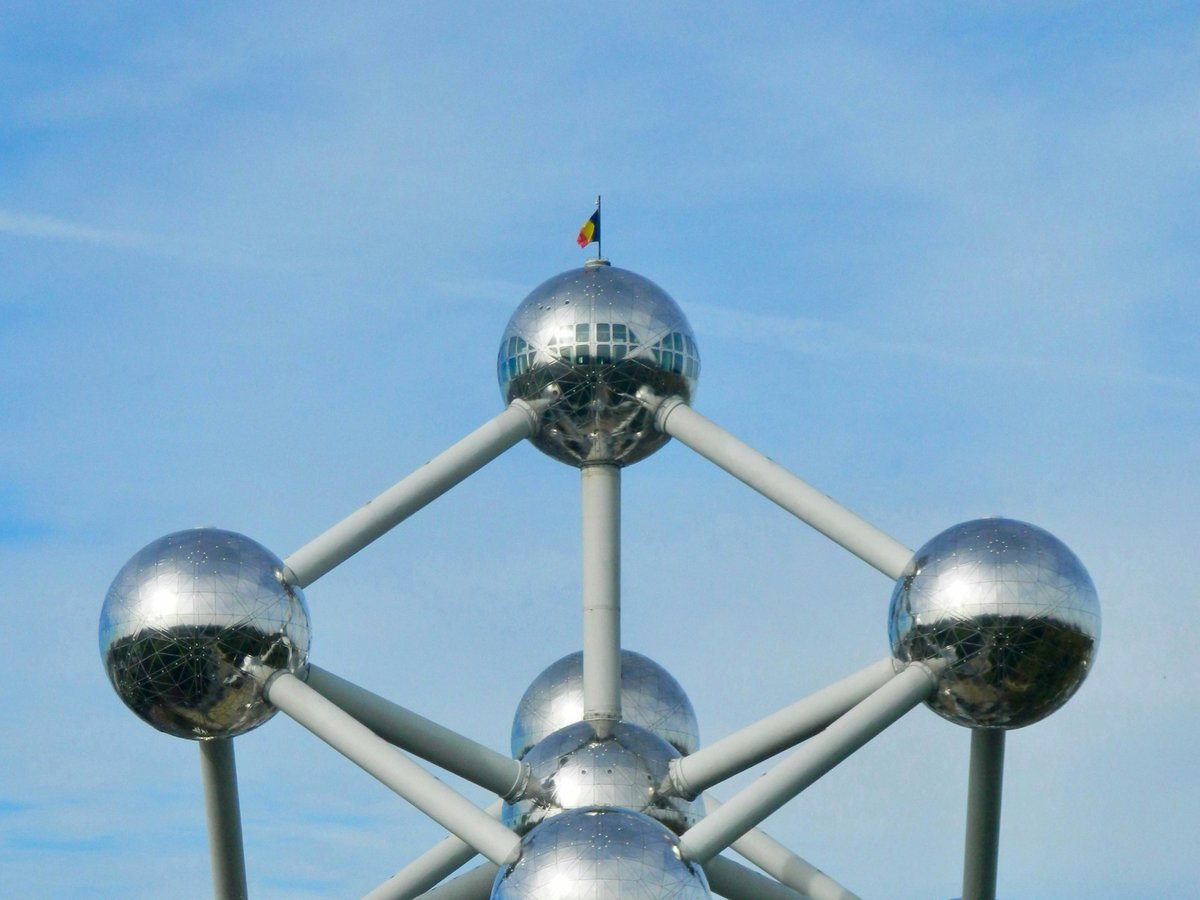
2 Atomium
1 Place de l'Atomium - AtomiumpleinThe architectural landmark built as the centerpiece of Expo 58
The Atomium at 1 Place de l'Atomium - Atomiumplein is open from 10:00 to 18:00, and no photograph prepares you for what you find at street level. Wikidata dates it to 1955, when it was built as the centerpiece of Expo 58, and the city kept it. The scale of the thing lands the moment you stand underneath and tip your head back. Plan your visit around those hours and give yourself enough of the day to stay a while, because arriving late in the afternoon means standing outside looking up at something you cannot get into. A world's fair centerpiece that survived its fair is a rare thing, and it earns a slow look rather than a snapshot taken in passing.
Dates from 1955
Hours: 10:00-18:00
-
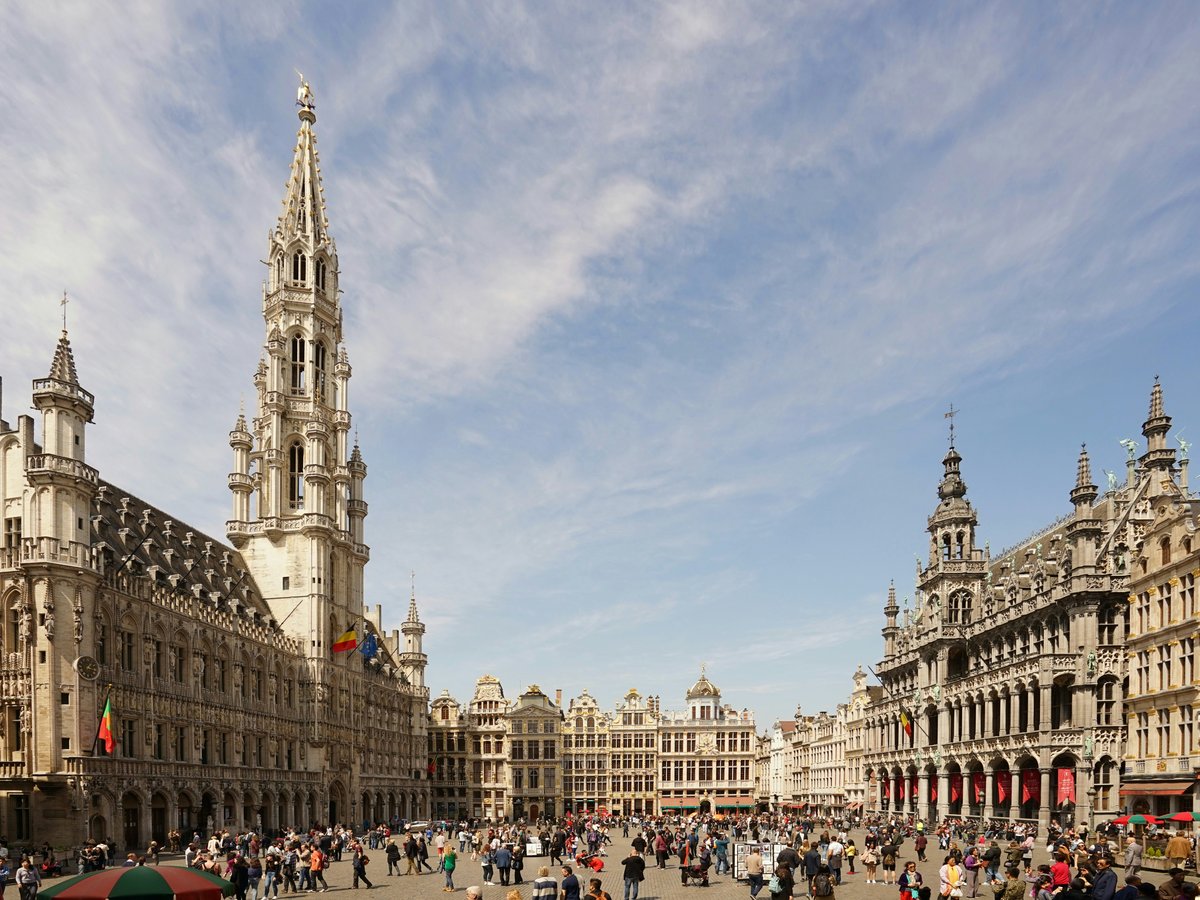
3 Cathedral of St. Michael and St. Gudula
Place Sainte-Gudule - Sinter-GoedelepleinA cathedral dated to 1226 with weekday doors open from 07:30
From 07:30 on weekdays, the Cathedral of St. Michael and St. Gudula on Place Sainte-Gudule - Sinter-Goedeleplein opens before most of the city is moving, and the early hour is the best one: the nave is quiet, and nobody is steering you along. Wikidata dates it to 1226, and it holds protected monument status. The hours shift across the week and that matters. Weekday doors close at 18:00, Saturday closes at 15:30, and on Sundays the cathedral is open from 14:00 to 18:00, meaning anyone counting on a morning visit that day will arrive to a closed door. Check cathedralisbruxellensis.be before visiting around any special occasion, then let the building set the pace.
Dates from 1226 · Protected monument
Hours: Mo-Fr 07:30-18:00; Sa 07:30-15:30; Su 14:00-18:00
-

4 Royal Palace of Brussels
PaleisstraatA protected palace dated to 1826
Dated to 1826 by Wikidata, the Royal Palace of Brussels on Paleisstraat is a palace in Brussels and a protected monument, easy enough to appreciate from the pavement even without a ticket. Don't plan a visit blind. The palace keeps its own page at monarchie.be, and that is where you find out what is open while you are in town. From the street, the 1826 building tells you how the capital wanted to present itself, and walking the full length of the facade slowly rewards you more than any quick snapshot will.
Dates from 1826 · Protected monument
-
5 National Basilica of the Sacred Heart
A national basilica dated to 1905
Late afternoon light glows on the stonework of the National Basilica of the Sacred Heart, a basilica in Brussels that Wikidata dates to 1905, and this is the one entry on the list that asks you to travel for it rather than fold it into a walk around the old centre; the effort is part of the reward. Our sources record no street address, so navigate by its mapped location rather than a house number. Check basilicakoekelberg.be before you set out. Give it an unhurried afternoon: a basilica of this ambition loses its effect when you are watching the clock for the next stop.
Dates from 1905
-
6 Royal Theatre of La Monnaie
Place de la Monnaie - MuntOpera in a protected-monument opera house
On Place de la Monnaie - Munt, the Royal Theatre of La Monnaie is an opera house in Brussels that carries protected monument status. Forget snapping the facade and walking on to the next square, and don't bother with the packaged dinner-and-show evenings sold to visitors. The locals go for one thing here: a seat in the house, the lights down, and a performance under way. Open lamonnaiedemunt.be before you fix your Brussels dates, read the season, and build one evening around whatever La Monnaie is staging. Even an opera you have never heard of is better than another round of bars chasing the tourist euro. Book early, dress as you like, and let the music, not the guidebook photo, be the thing you remember from the trip.
Protected monument
-
7 Chapel of the Resurrection, Brussels
Van MaerlantstraatA church dated to 1907 that keeps its own site at chapelforeurope.eu
On Van Maerlantstraat, the Chapel of the Resurrection, Brussels is a church that Wikidata dates to 1907. Its official site goes by chapelforeurope.eu, and that name sets the tone better than anything we could add. The locals who know it treat it as a pause, not a sight, so skip it if you came to Brussels for spectacle and come if you need ten quiet minutes between bigger things. Check chapelforeurope.eu before you walk over so you arrive when the doors are open. A list of must-sees needs one entry that lowers your pulse, and this is ours.
Dates from 1907
-
8 St. Rumbold's Cathedral
12 Onder-den-Toren, MechelenA cathedral that forms part of a UNESCO World Heritage Site
Work at St. Rumbold's Cathedral dates from 1200 by the Wikidata reckoning, and the building stands at 12 Onder-den-Toren, Mechelen, outside Brussels altogether. We include it on purpose. It is a cathedral in Mechelen and part of a UNESCO World Heritage Site, and that alone justifies taking a day away from the capital rather than joining the coach excursions that rush through several towns in one go. Give this single cathedral a proper morning. Visiting details are on kathedraalmechelen.be. Travel out, walk in slowly, and you will come back to Brussels with a sense of the country beyond it.
Dates from 1200 · Part of a UNESCO World Heritage Site
-

9 Church of Our Lady of Laeken
Parvis Notre-Dame - Onze-Lieve-VrouwvoorpleinA church in Laeken dated to 1854
Inside the Church of Our Lady of Laeken, a church in Laeken that Wikidata dates to 1854, every footstep echoes. Find it on Parvis Notre-Dame - Onze-Lieve-Vrouwvoorplein. Do not treat Laeken as somewhere you pass through without stopping, because this church is reason enough to get off the metro and leave the central grid for an hour, and it rewards anyone willing to do so. Check notredamedelaeken.be for visiting details before you go, then take your time: sit, look up, and let the building work on you. The reward for a short detour is a church you are unlikely to share with a crowd.
Dates from 1854
-
10 Church of Our Lady of the Chapel
Kapellemarkt, BrusselThe grave of Pieter Bruegel (I)
Pieter Bruegel (I) is buried in the Church of Our Lady of the Chapel, a church on Kapellemarkt, Brussel, and that one fact earns its place on this list. Wikidata dates the church to 1210, which makes it the oldest building in this list's Brussels proper, and it is a protected monument. Skip the printed Bruegel reproductions on sale around the city. Standing where the painter lies tells you more about him than any tea towel will. Go in with one of his crowded village scenes in mind, then find the grave. The jump from canvas to stone floor is the most intimate encounter with art history Brussels offers.
Dates from 1210 · Protected monument
-
11 Church of St. James on Coudenberg
Koningsplein, BrusselA protected church dated to 1849 whose parish site carries a military-parish address
The Church of St. James on Coudenberg stands on Koningsplein, Brussel, a church in Brussels that Wikidata dates to 1849 and carries protected monument status. The parish's own site at paroisse-militaire-saint-jacques-sur-coudenberg tells you what you're dealing with: a working parish with its own identity, not a shell preserved for sightseers. Most visitors walk straight past. Step inside for five minutes and you see a church the square typically reduces to scenery. Check the parish site before you go, because a working parish sets its own schedule.
Dates from 1849 · Protected monument
-
12 Church of Our Lady of Victories at the Sablon
Regentschapsstraat, Grote Zavel, BrusselLong opening hours, to 19:00 at weekends
The Church of Our Lady of Victories at the Sablon on Regentschapsstraat, Grote Zavel, Brussel is a church building in Brussels and a protected monument. It opens at 09:00 on weekdays and 10:00 at weekends, and closes at 18:30 on weekdays and 19:00 on Saturdays and Sundays. Those late weekend hours are the ones worth using: the last stretch before 19:00 on a Saturday or Sunday is when the sightseers have thinned out and the light outside has started to go. We'd skip midday entirely and save it for the end of the afternoon, stepping in when the square is winding down.
Protected monument
Hours: Mo-Fr 09:00-18:30; Sa,Su 10:00-19:00
Last verified by automated review (v1.7.2_fame1017d-1015-1279-20261017014105) on . What is automated review?