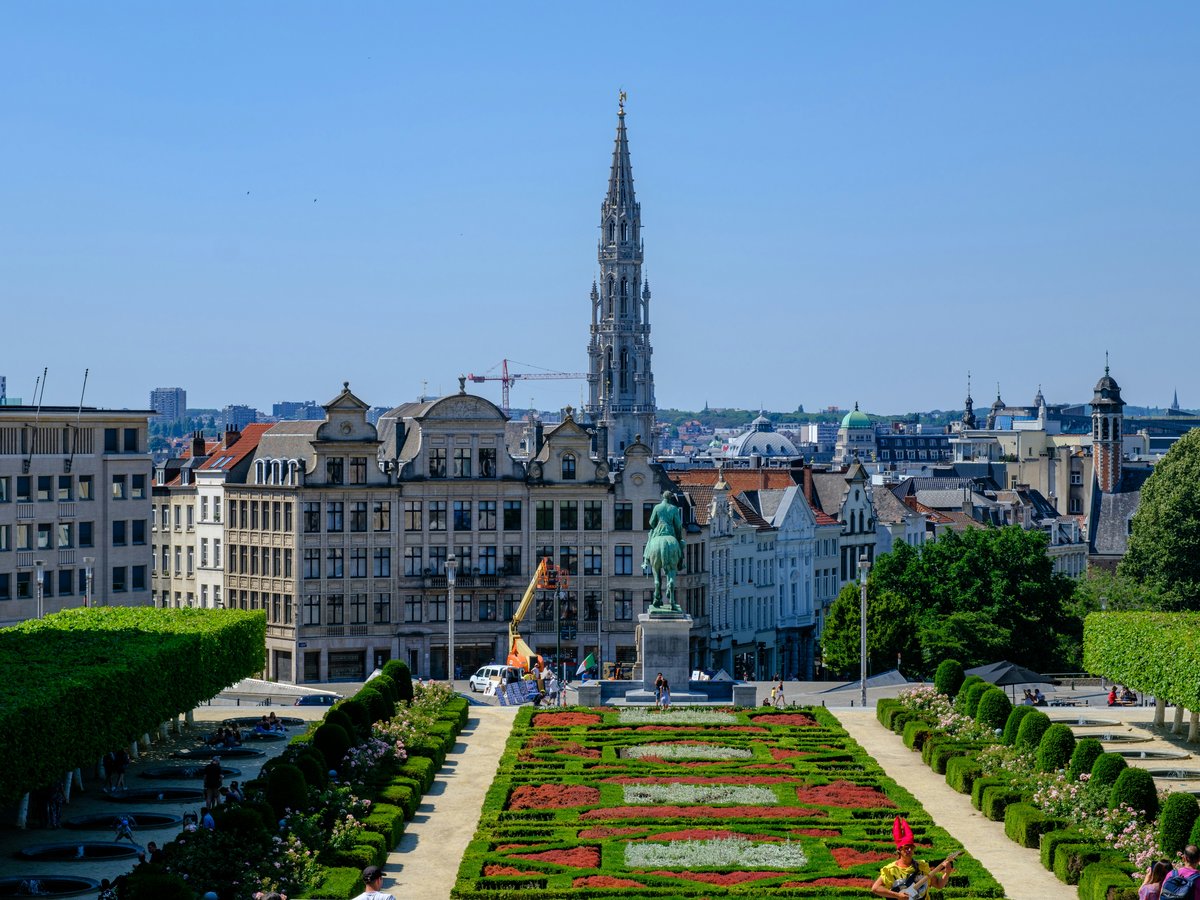
Is Brussels good for digital nomads in 2026?
Brussels scores 5.8/10 for digital nomads (sourced from TTDI's editorial rubric). Apartment fibre is generally fast, and Saint-Gilles and Ixelles have the supermarkets and laundromats a month-long stay needs. The weak points are cost and paperwork: Belgium has no digital nomad visa, so most non-EU workers stay within the Schengen short-stay limit, and a furnished one-bed costs roughly €1,200-1,600 a month.
Base yourself in Saint-Gilles or the Flagey end of Ixelles: both have a Delhaize or Carrefour Market within five minutes, a wasserette (laundromat) on most long streets, and trams 81 and 92 into the centre. By 9 am Parvis de Saint-Gilles smells of roasting coffee and frying oil, and the Sunday morning market there sells cheap vegetables until about 1 pm. The European Quarter around Schuman looks tempting on Airbnb, but skip it for a month: after 7 pm and all weekend the streets off Rue de la Loi go quiet, and a proper supermarket can be a 15-minute walk away. Sainte-Catherine and Dansaert work for a weekend, but rents are higher and on Fridays bar noise bounces off the cobbles until 2 am. Before you book, ask the host for a speed-test screenshot and which floor the router is on, because Brussels maisons de maître have thick brick walls and a Proximus box on the ground floor might give a third-floor bedroom 20 Mbps.
For a desk, Betacowork in Etterbeek is the pick for long stays: most members are freelancers and pricing is built around monthly memberships rather than tourist day passes. Silversquare runs several polished sites, including Louise and Stéphanie, and suits anyone who needs meeting rooms for calls with EU clients, but expect monthly rates of roughly €350-450. BeCentral, above Gare Centrale, has tended to offer open seating and is handy before a train. For free hours, the Muntpunt library near De Brouckère has stable wifi and plenty of sockets, while KBR on Mont des Arts has hushed reading rooms, though you need a reader's card. Cafés are the weak link: many coffee bars in Ixelles ban laptops at lunch and at weekends, and Café Belga at Flagey gets loud after 4 pm as the terrace fills, so order one coffee, about €3.50, every 90 minutes and nobody will glare.
A realistic month runs to about €2,300, or $2,580 at the 19 October 2026 rate of 1 USD to 0.8909 EUR, covering the apartment, a coworking membership, an STIB monthly pass at roughly €50-60, groceries, and two brasserie dinners a week of stoemp or moules. Belgian SIMs from Orange or Base are cheap, but install an eSIM before you land at Zaventem so the STIB app works on the airport train. Most supermarkets close on Sundays, and night shops fill the gap at a noticeable mark-up. National strike days hit Brussels repeatedly in 2025 and often stopped STIB metro lines, so keep a Villo! or Bolt bike account as a backup. Weather is the other cost: the evening of 19 October was 14°C and overcast, and a waterproof shell holds up better than an umbrella on windy Boulevard Anspach.
Here is a first month in four steps. In week one, book a trial day at a coworking space and test the apartment wifi at 8 pm, when evening load on the Telenet and Proximus networks peaks. In week two, buy the STIB pass and find your wasserette. In week three, take a Saturday train to Ghent, about 35 minutes from Brussels-Central, or to Bruges, about an hour away. In week four, decide whether to renew, and count your remaining Schengen days before you do, because border officers at Zaventem now check them against the electronic entry record.
Composite of cafe + coworking download speeds and reliability.
Apartment, coworking membership, food, and transit at a comfortable level.
Coworking spaces
- Betacowork (Etterbeek)
- Silversquare Louise
- Silversquare Stéphanie
- BeCentral (Gare Centrale)
- Fosbury & Sons
- Spaces Brussels
Visa options
Belgium has no digital nomad visa. US, UK, Canadian and Australian passport holders get 90 days in any 180 across the Schengen area, and the EU Entry/Exit System has logged those days electronically since October 2025. Staying longer requires a Belgian work route, such as the professional card for self-employed non-EU workers, which must be filed before arrival and is slow to process. EU citizens register at their local commune after three months.
Last verified by automated review (v1.7.2) on . What is automated review?