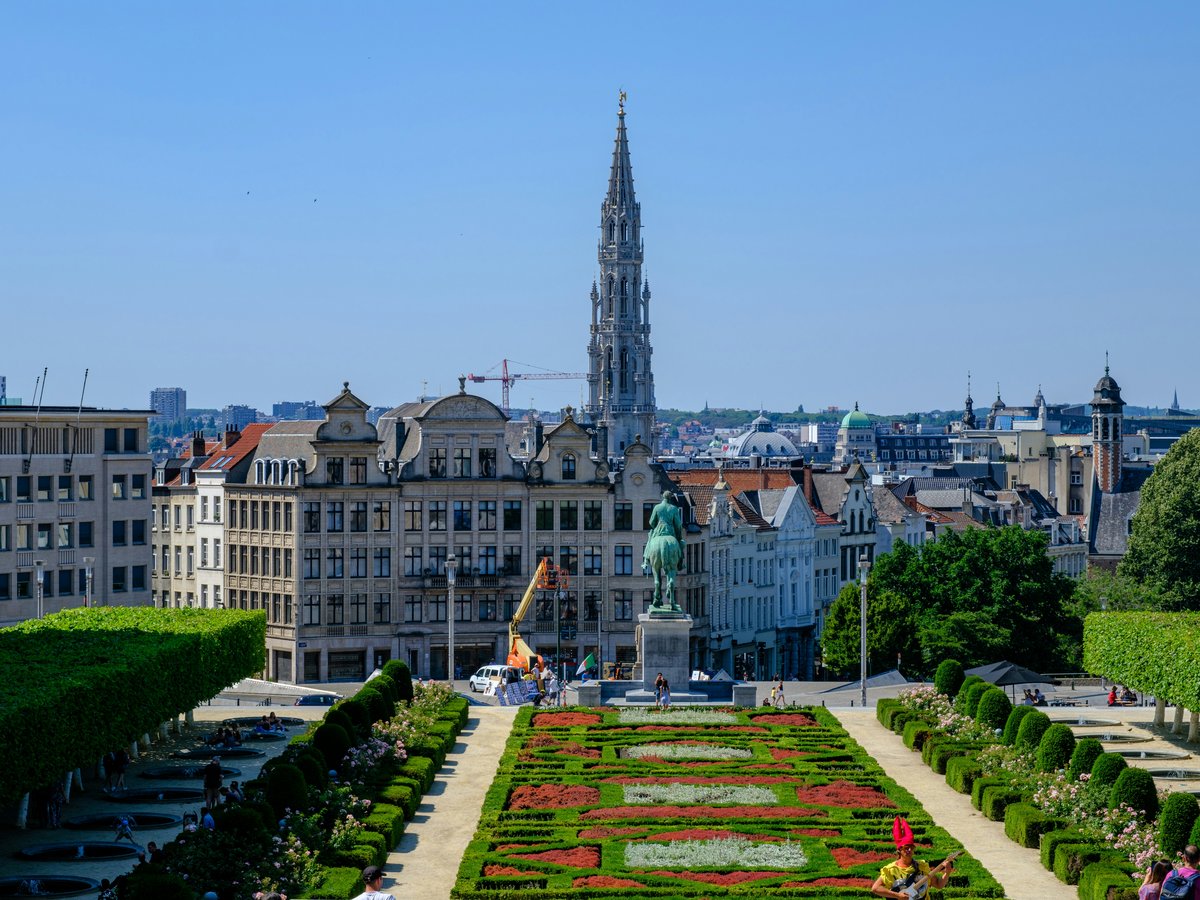
Brussels tends to catch first-time visitors off guard after dark. The city doesn't do loud, performative nightlife in the way Amsterdam or Berlin does. Instead, it leans into something quieter and stranger. A 400-year-old beer tradition meets a post-industrial electronic scene, and both share streets with Congolese bars playing soukous at full volume. The after-work crowd fills terraces around Place Saint-Géry by 6 PM on weekdays, but the real night doesn't start until 11 PM at the earliest. On weekends, plenty of bars stay open until 4 or 5 AM, and some clubs run until noon the next day. Mind you, this is a city where people will nurse a single 9% tripel for an hour and call that going out. The drinking culture here is slow and deliberate. Belgians, by and large, don't do rounds. They order individually, they sip, and they talk. The average Belgian consumed around 67 liters of beer per capita in 2023, down from over 200 liters in the 1900s, but the reverence for the drink hasn't faded. You might notice that cocktail bars have gained ground in the Dansaert and Sainte-Catherine quarters since around 2018, but beer remains the backbone of a night out in Brussels.
The Bar Scene in Brussels
Beer bars still define going out in Brussels, and that likely won't change anytime soon. The Saint-Géry neighborhood, built around the old covered market hall near Bourse, packs more bars per square meter than almost anywhere else in the city. On a Friday night, the terraces along Rue du Pont de la Carpe fill up fast, and by 10 PM you'll find people standing with glasses in hand along the cobblestones. The smell of frites from nearby stands mixes with cigarette smoke drifting from the outdoor tables. Most bars in this area carry at least 15 to 20 Belgian beers on tap and another 50 or more in bottles. The Delirium complex near Impasse de la Fidélité, off Grand-Place, lists over 2,000 beers on its menu. The main bar gets packed with tourists, but the connected spaces spread the crowd across multiple floors and themes. Worth noting, the nearby Rue du Marché au Charbon has been the center of Brussels' LGBTQ+ nightlife for decades, with a string of bars that stay open well past 3 AM on weekends. Cocktail culture has been growing steadily in Brussels since roughly 2016. The Dansaert corridor and the streets around Sainte-Catherine have seen the most openings. Expect to pay between 12 and 16 EUR for a well-made cocktail in these spots. That said, the cocktail scene here still feels less formalized than in London or Paris. Bartenders tend to be more relaxed about substitutions and off-menu requests. Dive bars are scattered across the Marolles and lower Saint-Gilles. These are the places where a Jupiler costs 2 EUR and the decor hasn't changed since the 1980s. The floors might be sticky. The lighting is usually a single fluorescent tube or a string of Christmas lights left up year-round. Rooftop bars are relatively rare in Brussels, partly because the weather cooperates for maybe 4 months of the year. A few hotel rooftops near the city center have opened seasonal terraces, but they tend to close by October. Wine bars have multiplied in the Châtelain and Flagey areas of Ixelles over the past 5 years. The natural wine movement arrived in Brussels later than in Paris, but it has settled in comfortably. Glasses of natural wine typically run 7 to 12 EUR. The crowd at these places skews toward the late 20s to early 40s demographic, and the atmosphere tends to be quieter than the beer-focused spots in Saint-Géry.
Brussels After Midnight
The club scene in Brussels has been rebuilding since around 2019, when several long-standing venues closed or relocated. The city currently supports a small but committed electronic music community. Techno and house dominate the programming at most clubs, though you'll find nights dedicated to drum and bass, disco, and Afrobeats scattered through the monthly calendars. Things don't really get going until midnight at the earliest. Peak hours at most clubs fall between 1 AM and 4 AM. Some venues run until 6 or 7 AM on Saturday nights, and a few after-parties have been known to stretch past noon on Sundays. To be fair, the all-night endurance sessions are more common in the techno-leaning spaces. Dress codes in Brussels are generally relaxed compared to cities like Paris or Milan. Dark clothing is the norm at techno nights, and sneakers are almost universally accepted. A few of the more upscale spots around Avenue Louise might turn people away in sportswear or flip-flops, but that's the exception. Most clubs don't enforce a strict dress code beyond basic cleanliness. Cover charges at electronic events typically range from 10 to 20 EUR for local DJ nights. International headliners can push entry fees up to 25 or 30 EUR. Some smaller venues and bar-clubs in the Saint-Géry area charge nothing before midnight and 5 to 8 EUR after. Guest lists are less common here than in other European capitals. The door policy at most places comes down to capacity rather than selectivity. The Flemish-Francophone split adds a layer to Brussels' club culture that outsiders might not immediately notice. Some promoters and collectives operate primarily in French, others in Dutch, and a growing number default to English. The music tends to bridge the language divide better than the social scenes do.
Live Music Across Brussels
Brussels has a dense concentration of live music venues for a city of roughly 1.2 million people in the metro area. The programming covers jazz, chanson, hip-hop, electronic, world music, and a small but persistent rock scene. Flagey, the Art Deco broadcasting building in Ixelles, hosts jazz and classical concerts in its Studio 4 hall, which seats around 800. The acoustics in that room are widely considered among the best in Belgium. Flagey's programming leans toward the experimental end of jazz, and you'll often find Belgian acts alongside international bookings. The Ancienne Belgique, known locally as the AB, is the city's main mid-size rock and pop venue on Boulevard Anspach. The main hall holds about 2,000 people, and the smaller Club room downstairs fits around 300. The AB tends to book acts on the European touring circuit, but it also gives regular slots to Belgian bands. Tickets for the main hall typically run 20 to 45 EUR. For smaller shows, the Botanique cultural center in Saint-Josse programs indie, electronic, and world music across several rooms, including the Rotonde and the Orangerie. The building itself sits in a 19th-century botanical garden, and summer shows sometimes spill into the grounds. Jazz has deep roots in Brussels. The city has been a stop on the European jazz circuit since the 1940s, and Belgian musicians like Toots Thielemans helped put it on the map. Several bars in the Matonge and Ixelles areas host weekly jam sessions, usually on Tuesday or Wednesday nights. These tend to start around 9 PM and run until the musicians decide they're done. The chanson tradition is still alive in a handful of intimate bars, mostly in the Marolles. These evenings are quieter, more seated, and the audience skews older. Jacques Brel was born in Schaerbeek in 1929, and his influence still hangs in the air in certain corners of the city.
Nightlife neighborhoods
-
Saint-Géry and Halles
The cobblestoned streets around the old market hall fill with a mixed crowd of locals, Eurocrats, and tourists from Thursday through Saturday. The sound of overlapping conversations in French, Dutch, and English bounces off the stone facades. The density of bars within a 5-minute walk is probably the highest in the city. It gets noisy and crowded by 11 PM on Fridays.
- Best for
- Groups wanting variety and walkability on a Friday or Saturday, with 20-plus bars within a few blocks
- Standouts
- The covered Halles de Saint-Géry building anchors the square, and Rue du Pont de la Carpe and Rue de la Bourse branch off into denser bar territory.
-
Matonge
Brussels' Congolese quarter, centered around Chaussée de Wavre and Galerie d'Ixelles near Porte de Namur. The smell of grilled plantain and brochettes drifts from late-night restaurants. Bars here play soukous, rumba, and Afrobeats, and the energy is different from anything else in the city. Things pick up after 11 PM and some spots stay open until dawn.
- Best for
- Dancers, music lovers, anyone looking for a night that doesn't feel like generic European nightlife
- Standouts
- The Galerie d'Ixelles covered arcade has several Congolese bars clustered together. Chaussée de Wavre between Porte de Namur and Flagey holds most of the action.
-
Flagey and Upper Ixelles
The area around Place Flagey draws a university crowd from the nearby ULB campus, mixed with young professionals from the surrounding apartments. The pace is slower than Saint-Géry. People tend to settle in for the evening at one or two places rather than bar-hopping. Wine bars and craft beer spots have been opening steadily along Rue Lesbroussart and the side streets.
- Best for
- A relaxed weeknight drink or a post-concert stop, especially for the late-20s to mid-30s crowd
- Standouts
- Place Flagey itself has several terraces that fill up in warm weather. Rue Lesbroussart stretches south with a line of smaller bars and restaurants.
-
Rue du Marché au Charbon
Brussels' established LGBTQ+ street, running south from near Grand-Place. The bars here have been fixtures for 20 to 30 years in some cases. The crowd is welcoming and mixed, particularly on weekends. The street gets lively from around 10 PM and stays that way until 4 or 5 AM on Saturdays.
- Best for
- LGBTQ+ nightlife, or anyone who prefers a more inclusive and unpretentious scene
- Standouts
- The bars line both sides of the street between Rue du Midi and Rue des Pierres, most within a 2-minute walk of each other.
-
Place du Luxembourg
The EU Parliament sits at one end of this square, and the after-work crowd is almost entirely made up of interns, lobbyists, and parliamentary staff. Thursday night is the big night here, when the EU bubble empties into the surrounding bars. The scene tends to thin out by midnight as people move elsewhere or head home. Beers in this area run 1 to 2 EUR more than the city average.
- Best for
- Thursday after-work drinks with the EU crowd, networking, early-evening socializing
- Standouts
- The bars ringing Place du Luxembourg fill their terraces from around 5:30 PM on Thursdays during the parliamentary session calendar.
-
Sablon and Louise
The upscale end of Brussels nightlife. Avenue Louise and the streets near Place du Grand Sablon host cocktail lounges and hotel bars with higher price points. A cocktail here might run 15 to 18 EUR. The pace is more restrained, and the crowd tends toward professionals in their 30s and 40s. It's quieter than Saint-Géry, which is the point.
- Best for
- Date nights, quieter cocktail evenings, or a more polished setting without the student-bar energy
- Standouts
- The side streets between Avenue Louise and Rue de Namur have seen several cocktail bar openings since 2020.
Safety after dark
Brussels is generally safe after dark, but certain practical things are worth knowing. The areas around Gare du Nord and Gare du Midi can feel rougher late at night, particularly the blocks immediately surrounding the stations. Petty theft, mostly pickpocketing, tends to concentrate in tourist-heavy zones like Grand-Place and the Ilot Sacré restaurant district rather than in the nightlife neighborhoods themselves.
Getting home is straightforward until about midnight, when the metro and most trams stop running. Night buses (Noctis) operate on Friday and Saturday nights from midnight until around 3 AM, covering 11 routes that radiate from the city center. After that, taxis or ride-hailing apps are the realistic options. A taxi from Saint-Géry to Ixelles typically costs 10 to 15 EUR. The official Brussels taxi fare starts at around 2.40 EUR with roughly 1.80 EUR per kilometer inside the region.
Drink spiking has been reported at bars and clubs across Belgium, and Brussels is no exception. Keep your drink in your hand, particularly in crowded spaces. If you feel suddenly and disproportionately intoxicated, tell someone immediately. Most bars in the center will call an ambulance or taxi without hesitation.
One scam that surfaces occasionally involves people offering "free" roses or bracelets near bar terraces in tourist areas, then demanding payment. A firm "non merci" tends to end it. The more persistent scam involves unofficial taxis near Gare du Midi charging inflated fares. Use marked taxis or an app.
Practical tips
- Tipping
- Tipping is not expected at bars in Brussels. Service is included in the price by Belgian law. Leaving small change or rounding up by a euro is common for table service, but bartenders won't expect anything on top of a beer order. At restaurants attached to bars, a 5 to 10 percent tip for good service is appreciated but not obligatory.
- Cover charges
- Most bars in Brussels charge no cover at all. Clubs typically charge between 10 and 20 EUR on weekends for local DJ nights, sometimes waived before midnight. Larger events with international acts can reach 25 to 30 EUR. A few venue-bars in the Saint-Géry area charge 5 EUR after midnight on Fridays and Saturdays.
- Payment
- Card payment is widely accepted at bars and clubs in the center. Contactless payments via phone or card work at most places. That said, a handful of older bars in the Marolles and some smaller spots in Matonge remain cash-only. Carrying 20 to 30 EUR in cash is a reasonable precaution.
- Drinking age and ID
- The legal drinking age in Belgium is 16 for beer and wine, 18 for spirits. Clubs and some bars enforce the 18-and-over rule at the door, particularly on weekend nights. Carry a photo ID. Belgian venues are legally required to check if there's any doubt about age.
- Language
- Brussels is officially bilingual in French and Dutch, but French dominates in most nightlife settings. English is widely understood in the center, Saint-Géry, Place du Luxembourg, and the tourist areas. In Matonge, French and Lingala are more common. Ordering in French, even a basic "une bière s'il vous plaît," tends to be received warmly.
- Smoking
- Indoor smoking has been banned in Belgian bars and restaurants since 2011. Most bars with terraces allow smoking outside. Some clubs have designated outdoor smoking areas, which often double as the social spaces where you'll end up meeting people. In winter, these areas are where the hardiest conversations happen, huddled under heat lamps at 2 AM.
FAQ
What time do bars close in Brussels on weekends?
There's no legally mandated closing time for bars in Brussels, which is fairly unusual in Europe. In practice, most neighborhood bars close between 1 and 2 AM on weeknights. On Fridays and Saturdays, bars in the Saint-Géry area and Rue du Marché au Charbon regularly stay open until 4 or 5 AM. Some keep serving as long as there are customers. Clubs tend to close between 5 and 7 AM.
Is Brussels nightlife expensive compared to other European cities?
Brussels sits in the middle range. A standard beer like Jupiler or Maes costs 2.50 to 3.50 EUR at a regular bar, and 4 to 6 EUR at a nicer cocktail bar. Specialty Belgian beers run 5 to 8 EUR depending on the style and strength. Cocktails range from 10 to 16 EUR. Compared to London, Paris, or Zurich, Brussels is noticeably cheaper. Compared to Lisbon or Prague, it's a step up.
What is the best night to go out in Brussels?
Friday and Saturday are the busiest nights at bars and clubs across the city. Thursday is the unofficial going-out night for the EU crowd around Place du Luxembourg, particularly during parliamentary session weeks from September through June. Wednesday has a student presence around Flagey and the ULB area. Sunday nights are quiet almost everywhere.
Do I need to speak French to go out in Brussels?
Not in most of the central nightlife areas. Staff at bars in Saint-Géry, Sablon, and around Grand-Place generally speak English. The EU quarter defaults to English much of the time. In Matonge and parts of the Marolles, French is more useful. Knowing how to order a beer and say thank you in French goes a long way, but you won't be turned away for speaking English.
Is it safe to walk around Brussels at night?
The main nightlife neighborhoods, particularly Saint-Géry, Ixelles, Flagey, and Sablon, are generally safe to walk through at night. The areas immediately around Gare du Nord and Gare du Midi are less comfortable after midnight. Standard city precautions apply. Night buses run on 11 routes on Friday and Saturday nights until about 3 AM, and ride-hailing apps work reliably for anything later.
What should I drink in Brussels if I want something local?
Start with a gueuze, the spontaneously fermented lambic beer that's been brewed in the Brussels region for centuries. It's tart, dry, and unlike anything from other beer traditions. Cantillon, still brewing in Anderlecht since 1900, is the most famous producer. Kriek, a cherry lambic, is another Brussels staple. For something less adventurous, any Belgian blonde or tripel from a Trappist brewery will be excellent. The region around Brussels, called the Pajottenland, is where the wild yeasts that make lambic possible still drift through the air.
Last verified by automated review (v1.7.2) on . What is automated review?