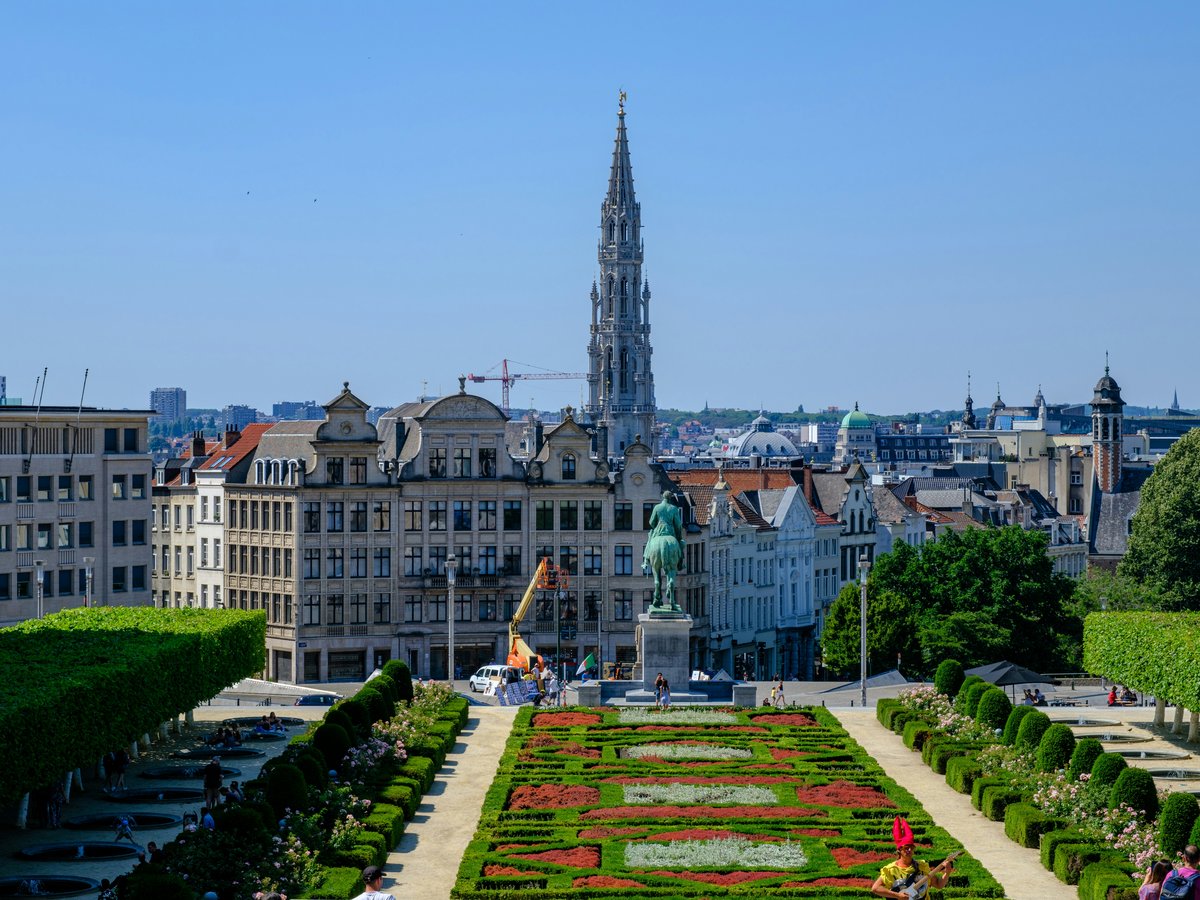
Is Brussels LGBTQ-friendly?
Brussels scores 9.5/10 for LGBTQ+ friendliness (sourced from TTDI's editorial rubric). Belgium legalized same-sex marriage over two decades ago and the capital's social climate reflects it. The queer scene has run along Rue du Marché au Charbon in Saint-Jacques since the early 1990s, with drag bars and cafe terraces filling a single cobblestoned block. Same-sex couples hold hands through the Grand-Place without drawing a glance.
Belgium's marriage equality law has been in effect longer than any EU member's except the Netherlands. For couples visiting Brussels, the practical difference shows in small things. Hotel front desks don't pause at two men or two women checking into a king room. Waiters near the Grand-Place split the check or don't, same as for anyone else. The Cathedral of St. Michael and St. Gudula (founded 1226) draws the same mixed crowd on any given afternoon. So does the Stoclet Palace (built 1905 on Avenue de Tervueren). Nobody looks twice. Brussels hosts the EU's institutional core, which brings tens of thousands of international residents. That population creates a street-level norm where same-sex couples holding hands registers about as much as someone ordering a Kriek.
Rue du Marché au Charbon in the Saint-Jacques quarter is where the queer scene has held ground for around 30 years. The street is narrow, cobblestoned, and about 200 meters long. Chez Maman opened around 1990 and the drag shows still fill the room by 10pm on Saturdays. The crowd spills onto the pavement with glasses of Chimay Bleue at €6-7 from the bar. Le Fontainas, at the boulevard end of the street, has a south-facing terrace that catches afternoon light from April through September. It feels more cafe than bar, and couples tend to settle in before dinner. Mind you, if one of you wants a late night and the other doesn't, La Demence is the answer. Fuse on Rue Blaes runs this monthly circuit party with doors at 11pm. The sound system rattles through the concrete floor. The walk back to most Grand-Place-area hotels takes under 10 minutes.
For a date night outside the scene, the Marolles neighborhood rewards a slow evening. Wine bars along Rue Haute pour natural wines at €7-12 per glass. The cheese boards arrive on slabs of grey slate, still cool to the touch. Place du Jeu de Balle empties out after the flea market wraps up. By 8pm the square is quiet enough to hear pigeons. In Ixelles, the east-facing terraces around Place Flagey catch the last hour of summer sun. The crowd tends to be 30s-40s and thoroughly indifferent to who you're sitting with. If you're splitting the day, the tram from Flagey reaches the Atomium (built for Expo 58 in 1955) in about 25 minutes. One of you goes, the other sleeps in. Belgian Pride falls in May, with the parade running from Porte de Namur through the center. The mood is closer to a neighborhood block party than a circuit event.
Same-sex PDA in central Brussels, Ixelles, Saint-Gilles, and the EU quarter is unremarkable. Molenbeek and parts of northern Schaerbeek have a more conservative social texture, but violent incidents targeting queer visitors remain rare. To be fair, every European capital has neighborhoods with this gradient. Think the difference between Le Marais and Barbès in Paris, a shift in ambient comfort rather than a safety concern. For couples booking hotels, the boutique properties in Saint-Gilles around Parvis de Saint-Gilles tend to run noticeably larger rooms than the tourist-strip hotels near the Grand-Place. They typically cost 20-30% less per night. The tram reaches the center in 8 minutes. The neighborhood has enough restaurants that you won't need to go back to the tourist zone for dinner.
Composite of legal status, social acceptance, and visible scene.
Legal status
Same-sex relations are legal
Belgium was the second country to legalize same-sex marriage, in June 2003, with comprehensive anti-discrimination law covering sexual orientation and gender identity. Brussels and Antwerp host open, established scenes.
Verified against equaldex.com and en.wikipedia.org .
The scene
Rue du Marché au Charbon in Saint-Jacques is the anchor, a narrow cobblestoned strip about 200 meters south of the Grand-Place. Chez Maman (drag bar, around since 1990) and Le Belgica anchor the block. Le Fontainas holds the terrace corner at Boulevard Anspach. La Demence, a monthly circuit party at Fuse on Rue Blaes, has run since the late 1990s and draws around 2,000 people. Belgian Pride fills the center each May with roughly 100,000 attendees.
Safety notes
Same-sex PDA in central Brussels, Ixelles, Saint-Gilles, and the EU quarter draws no attention. Molenbeek and parts of Schaerbeek have a more conservative feel. Violent incidents targeting queer visitors are rare. RainbowHouse on Rue du Marché au Charbon is both community center and reporting point. Brussels police maintain a dedicated LGBTQ liaison officer.
Last verified by automated review (v1.7.2) on . What is automated review?