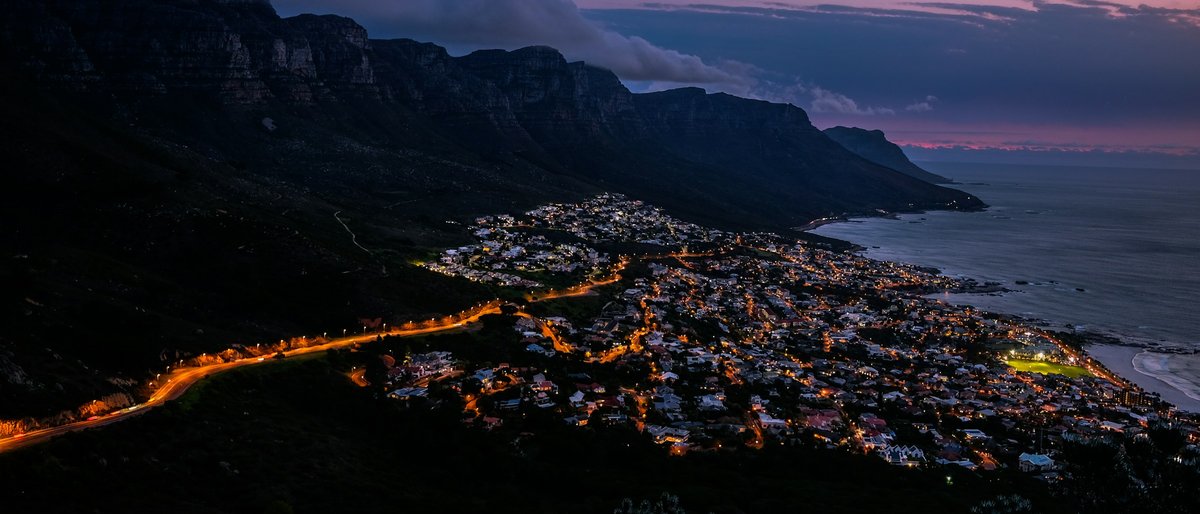
Stay in Cape Town in March
66 hotels in the Trip.com pool for Cape Town, from US$13 a night.
Opens Trip.com on Fri 5 Mar to Sun 7 Mar 2027; change the dates there.
March in Cape Town is the tail end of summer, and honestly, it might be the sweet spot that most visitors overlook. The peak-season crowds from December and January have thinned out considerably, but the weather still holds: daytime temperatures hover around 24°C (75°F) with evenings that cool to a pleasant 16°C (61°F). You'll notice the first hints of autumn creeping in. The light shifts to something warmer and lower, the kind that photographers tend to lose their minds over along the Atlantic Seaboard.
That said, March marks the transition. The bone-dry summer days are behind you, and the city starts to see its first proper rainfall: roughly 50mm across about six rainy days. Nothing dramatic, and nothing like the winter deluges that hit from June through August. But if you've heard Cape Town described as eternally sunny, March is where that story gets a bit more complicated. You might get a string of perfect beach days, or you might catch a couple of grey afternoons where the clouds settle low on Table Mountain and the wind picks up from the southeast. It's unpredictable in the way that shoulder seasons always are.
The real draw, though, is timing. This is harvest season in the Winelands: Stellenbosch, Franschhoek, and Paarl are alive with grape picking, cellar door tastings of the new vintage, and that particular smell of crushed grapes and warm earth that hangs over the valleys. The Cape Town Carnival typically falls in March, bringing samba-influenced floats and costume troupes down the Green Point Fan Walk. Hotel rates have dropped from their December-January highs. And the ocean, warmed by months of summer sun, is about as swimmable as it ever gets on the Atlantic side, which, to be fair, still means bracing. The Indian Ocean side at False Bay tends to be comfortable.
Why visit in March
- Wine harvest season in Stellenbosch and Franschhoek: cellar doors are pouring new-vintage samples and the valleys have that golden late-summer glow
- Hotel rates drop 20-30% from December-January peak while the weather remains warm enough for beaches and outdoor dining
- The Atlantic Ocean reaches its warmest temperatures of the year, making Camps Bay and Clifton slightly less shocking to swim in
- Fewer tourists at major attractions: Table Mountain cableway queues that stretch 90 minutes in January are often under 30 minutes
- The Cape Town Carnival and Jazz Festival give the city a distinct cultural energy you won't find in other months
Worth knowing
- Rainfall picks up noticeably: 50mm across roughly six days, compared to the near-zero rain of January and February
- The southeaster wind can still blow hard on some afternoons, turning beach days into sand-in-your-teeth experiences along the Atlantic coast
- Some seasonal beach bars and pop-up restaurants from the peak summer months start closing for the season in late March
- Daylight hours are shortening: sunset drops to around 18:45, cutting into those long summer evenings that make December so appealing
Best for
Think twice if
March still feels like summer most days, though the edges are softening. Mornings tend to start clear and warm, with temperatures climbing to around 24°C (75°F) by early afternoon. By evening, it cools to roughly 16°C (61°F): comfortable enough for outdoor dining with maybe a light layer. The humidity sits at about 76%, which you'll feel more on still days but the breeze off the ocean usually keeps things from getting sticky. Rainfall jumps to around 50mm for the month, spread across about six days. These are typically not all-day washouts: more like a few hours of steady rain, often in the afternoon or overnight, followed by clearing skies. The wind is the wildcard. The southeaster can still gust strongly, along the Atlantic coast, though it's less persistent than in January.
Seasonal caution
- The southeaster wind can gust above 60 km/h (37 mph) on exposed coastal areas, along Chapman's Peak Drive and at the Table Mountain upper cableway station: the cableway closes in high winds, so check conditions before heading up
- UV index remains high (7-9) despite the milder temperatures: sunburn happens fast, on overcast days when people let their guard down
Year-round climate
Averages from the last 5 years.
| Month | Avg high (°C) | Avg low (°C) | Rainfall (mm) |
|---|---|---|---|
| Jan | 26 | 17 | 12 |
| Feb | 26 | 17 | 11 |
| Mar | 24 | 16 | 50 |
| Apr | 22 | 14 | 45 |
| May | 19 | 12 | 80 |
| Jun | 18 | 11 | 150 |
| Jul | 16 | 10 | 137 |
| Aug | 17 | 10 | 96 |
| Sep | 18 | 11 | 47 |
| Oct | 22 | 13 | 24 |
| Nov | 23 | 15 | 19 |
| Dec | 24 | 16 | 32 |
Holidays and festivals in March
Public holidays
- Human Rights Day(Human Rights Day)22 March 2027
- Good Friday(Good Friday)26 March 2027
- Family Day(Family Day)29 March 2027
Headline events
Cape Town Carnival
Mid-March (usually a Saturday evening)
The largest public event in Cape Town, drawing tens of thousands to the Green Point Fan Walk for a parade of elaborately costumed dance troupes, floats, and live music. It pulls from Cape Malay, African, and Brazilian carnival traditions: a distinctly Cape Town fusion that's been running since 2010. The energy is infectious, the costumes are months in the making, and the drumming echoes off the stadium precinct walls. Free to watch from the street.
Cape Town International Jazz Festival
Late March (last weekend)
Africa's largest jazz festival, held over two days at the Cape Town International Convention Centre. Multiple stages running simultaneously with a mix of South African jazz legends and international headliners. The atmosphere spills into the surrounding streets, with fringe events and after-parties across the city. Tickets sell well in advance: this is the kind of event people fly in for.
Best things to do in March
Winelands harvest tours
food_and_drinkMarch is when the Stellenbosch, Franschhoek, and Paarl valleys are at their most alive. Tractors loaded with freshly picked grapes rumble down farm roads, the crush pads are running, and the air carries that thick, sweet smell of fermenting juice. Many estates open their working cellars for tours you can't get in other months: watching the sorting tables, the destemming, the first press. Some places let you stomp grapes the old-fashioned way, which is messier and more fun than it sounds.
The grape harvest is actively underway: this is the only time you can witness the winemaking process from vine to barrelBooking tipMidweek visits to smaller estates like Tokara or Delaire Graff tend to be less crowded than weekend trips to the bigger names
Table Mountain sunrise hike via Platteklip Gorge
outdoorsThe gorge route is the most direct path up Table Mountain: steep, unshaded, and honest about what it is. In March, the cooler mornings make the climb far more bearable than in January's heat. Start at first light and you'll have the mountain largely to yourself for the first hour. The views from the top as the sun comes up over the Hottentots Holland mountains and catches the city below are worth the burning quads.
March mornings are cooler than midsummer, making the steep ascent more comfortable, and shorter queues at the cableway mean an easy ride back downBooking tipNo booking needed for the hike itself, but check the Table Mountain Aerial Cableway website for operating hours if you plan to ride down
Kayaking with seals at Hout Bay
outdoorsPaddling out from Hout Bay harbour into the kelp forests off Duiker Island, where a colony of Cape fur seals lounges on the rocks. In March, the water is calmer than during the windier summer months, and the young seals born earlier in the season are curious and playful: they'll swim right up to your kayak, pop their heads up, and stare at you with those absurdly large eyes. The water is cold, mind you, but wetsuits are provided.
Calmer seas than peak summer, warmer water temperatures for the season, and seal pups are active and curious around kayakersBooking tipEarly morning departures tend to have the calmest conditions: the wind usually picks up after noon
Bo-Kaap cooking class
food_and_drinkThe cobblestoned streets of the Bo-Kaap, painted in their signature bright colours, are home to Cape Town's Cape Malay community. March is a good time to book a home cooking class: the neighbourhood is quieter than in peak season, and the families who run these classes have more time and attention to give. You'll learn to make samoosas, koeksisters, and that bobotie, with stories about the spice trade and community history woven in between stirring the pot.
Fewer tourists in the neighbourhood means a more intimate, less rushed experience with the families who host these classesBooking tipBook directly through community-run operators rather than large tour companies: more of the money stays in the neighbourhood
Chapman's Peak Drive at golden hour
outdoorsThis nine-kilometre road carved into the cliffs between Hout Bay and Noordhoek is dramatic at any time of year, but March's lower sun angle turns the late afternoon drive into something else entirely. The rock face glows orange and pink, the Atlantic below is that deep navy blue, and the Sentinel peak at the end catches the last light. Pull over at one of the viewpoints and just sit for a while. There's a small toll, but nobody has ever regretted paying it.
The autumn sun sits lower on the horizon, casting the cliffs in golden light that's noticeably warmer and more dramatic than midsummer's overhead sunBooking tipNo booking required: the road is open daily unless closed for maintenance or rock fall. Check the Chapman's Peak toll road website for status.
Kirstenbosch summer sunset concerts (final sessions)
entertainmentThe beloved outdoor concert series at Kirstenbosch National Botanical Garden wraps up its season in March. Bring a blanket, a picnic basket, a bottle of something from the Constantia wine route nearby, and settle onto the sloping lawns as live music fills the garden. The fynbos-scented evening air, the backdrop of Table Mountain's eastern face, the sound bouncing off the old trees: it's one of those Cape Town evenings that sticks with you.
March typically hosts the final concerts of the summer season: last chance until the following NovemberBooking tipBuy tickets online in advance; the popular acts sell out. Gates open well before the music starts, so arrive early for a good spot on the lawn.
False Bay beach hopping
outdoorsWhile the Atlantic side gets all the Instagram attention, the False Bay coast from Muizenberg through St James, Kalk Bay, and Fish Hoek offers warmer water and a more relaxed local vibe. In March, the Indian Ocean side reaches its warmest: you can swim without gasping. Muizenberg's colourful beach huts, the tidal pool at St James, the fish and chips shops along Kalk Bay harbour. Each beach has its own character. The train line runs right along the coast, so you can hop between them without a car.
False Bay water temperatures peak in late February and March, making this the most comfortable swimming month on Cape Town's warmer coastBooking tipNo bookings needed, just show up. The Simon's Town train from the city centre follows the coastline and stops at each beach.
Constantia wine route
food_and_drinkCloser to the city centre than Stellenbosch, the Constantia valley has been producing wine since the 1680s: it's the oldest wine-producing region in the southern hemisphere. Groot Constantia, Beau Constantia, and Eagles' Nest are all within a few kilometres of each other. March means harvest activity here too, and the valley feels quieter than the more touristed Franschhoek strip. The views from Beau Constantia's tasting deck over False Bay are reason enough to visit, even before the wine arrives.
Harvest season activity in a less crowded alternative to Stellenbosch, with the bonus of being a short drive from the city centreBooking tipBeau Constantia requires advance booking for their tasting deck: slots fill up even in shoulder season
What to eat in March
In season: fruit
Hanepoot and Muscat grapes
Late-summer table grapes at their sweetest: hanepoot has that honeyed, almost floral intensity that's hard to find outside of the Western Cape. You'll see them at every farm stall along the R44 and piled high at the Neighbourgoods Market.
On menus now
Cape Malay bobotie
Available year-round, but March is when the spice merchants at the Bo-Kaap start getting fresh turmeric shipments. The dish (a curried mince baked with a custard topping) sits heavier in winter, but in March the warmth still calls for it alongside a cool sambals and chutney spread.
Snoek braai
Snoek is a Cape Town staple, and March is still prime season. The fish is butterflied, smeared with apricot jam and a touch of masala, then grilled over open coals. The smell drifts across Hout Bay harbour and Kalk Bay on weekends. Best eaten with fresh bread and butter, standing up, with your fingers.
Waterblommetjie bredie
A stew made with water lilies harvested from the vleis (wetlands) around the Western Cape. The season runs through autumn, and March is when you'll start seeing it appear on restaurant menus and at home kitchens. Slow-cooked with lamb, sorrel, and white wine: earthy and tangy, local.
What to drink
New-vintage sauvignon blanc
The first pressings of the new harvest start appearing at Stellenbosch and Constantia tasting rooms. These are young, bright wines: grassy and citrusy, still a bit rough around the edges, but there's something special about tasting a wine that was grapes two weeks ago.
Regular events in March
First ThursdaysFree
On the first Thursday of each month, galleries, studios, and shops across the city centre and Woodstock stay open late. Free wine, art openings, street performers, and a lot of wandering between venues. The Bree Street and Woodstock-Albert Road strips are the main circuits.
First Thursday of MarchOranjezicht City Farm MarketFree
A weekly morning market at Granger Bay by the V&A Waterfront, focused on local produce and artisan food. In March, the stalls overflow with late-summer stone fruit, fresh herbs, and the first autumn squashes. Good coffee, better people-watching.
Every Saturday morningNeighbourgoods Market at the Old Biscuit MillFree
Woodstock's Saturday gathering: part food market, part social event. Local chefs, bakers, and producers set up stalls in the converted factory space. The rooftop bar fills up by noon. In March, you'll find seasonal produce alongside the regular favourites.
Every Saturday, 9:00-15:00Open Book Festival (some years)
Cape Town's literary festival sometimes falls in late March, depending on the year. Readings, panel discussions, and workshops at venues around the city. Worth checking if it aligns with your dates: the programme tends to feature a strong mix of South African and international writers.
Late March (varies by year)Best places this March
Groot Constantia
wine_estateThe oldest wine estate in South Africa, dating to 1685. The Cape Dutch manor house, the oak-lined avenue, the working cellar: it carries more history per square metre than almost anywhere else in the city. March means harvest activity and the chance to taste wines where they were made.
ConstantiaKalk Bay
neighborhoodA fishing village wedged between the mountain and False Bay. The main road is lined with antique shops, bookstores, cafes, and art galleries. The harbour still has working fishing boats: watch them come in with their catch and buy fresh fish right off the boat. In March, the water is warm enough to linger at the Dalebrook tidal pool nearby.
False Bay coastBo-Kaap
neighborhoodThe brightly painted houses stacked up the slopes of Signal Hill, home to a community with roots in the Cape Malay spice trade. Walk the cobblestone streets, visit the Bo-Kaap Museum, and smell the cardamom and cinnamon drifting from home kitchens. Quieter in March than the December rush.
City BowlWoodstock and the Old Biscuit Mill
neighborhoodCape Town's creative district: street art on every corner, independent design studios, and the Biscuit Mill complex where the Saturday market happens. The neighbourhood has rougher edges than the glossy waterfront, which is part of the appeal. Good coffee shops and some of the city's most interesting restaurants are tucked along Albert Road.
WoodstockBoulders Beach penguin colony
natureA colony of African penguins nesting among the granite boulders near Simon's Town. In March, many penguins are moulting after breeding season: they look a bit ragged, but the colony is active and the boardwalk gives you close views. The beach itself is sheltered and swimmable if you don't mind sharing the sand with birds.
Simon's TownLion's Head
outdoorsThe cone-shaped peak next to Table Mountain, popular for sunset and full-moon hikes. The trail takes about an hour up, with some scrambling and chain sections near the top. In March, the later sunset means you can start the hike after work and still catch the light. The 360-degree views from the summit (ocean on both sides, Table Mountain behind you, the city spread below) are the best panoramic viewpoint in Cape Town.
City BowlZeitz Museum of Contemporary Art Africa (Zeitz MOCAA)
museumHoused in a converted grain silo at the V&A Waterfront, this is the largest museum dedicated to contemporary African art. The building itself (with its hollowed-out concrete tubes forming cathedral-like atrium spaces) is worth the visit even before you look at the art. Good for a rainy March afternoon.
V&A Waterfront
Your packing checklist
Tick items off as you pack. Your progress saves in this browser.
All packed — have a great trip.
Insider tips
The Table Mountain cableway posts real-time wind conditions on their website: check before you drive up, because there's nothing worse than arriving at the lower station to find it closed for the afternoon due to southeaster gusts. Morning tends to be calmer.
If you're renting a car, fill up before heading to Chapman's Peak or the Cape Point reserve: there are no petrol stations along the peninsula's coastal road south of Hout Bay, and the distances are longer than they look on the map.
Cape Town's tap water is excellent: you don't need to buy bottled water. The city takes water conservation seriously after the 2018 drought, so shorter showers are appreciated by locals.
For the Cape Town Jazz Festival, the fringe events and free community concerts in the days leading up to the main weekend are often more interesting (and more intimate) than the packed main stages. Check local listings closer to the date.
The MyCiTi bus from the airport to the Civic Centre is the most affordable way into the city and runs a dedicated rapid-transit lane. Metered taxis and rideshare apps are also available, but check that metered taxis use their meters: some try to negotiate a flat fare that runs higher.
Skip the chain restaurants at the V&A Waterfront food court and walk ten minutes to the Biscuit Mill area in Woodstock or up Bree Street in the City Bowl for good food at better prices. The waterfront charges a location premium that the quality doesn't always justify.
Avoid these mistakes
- Underestimating the southeaster wind: planning an all-day beach outing on the Atlantic side without checking the wind forecast. The southeaster can turn Camps Bay from great destination to sandblasting in an hour. Check forecasts and have a Plan B on the False Bay side.
- Booking every Winelands estate for Saturday: the roads to Stellenbosch and Franschhoek get congested on weekends. Midweek visits are quieter, and you'll get better attention from tasting room staff who aren't juggling fifty guests at once.
- Assuming Table Mountain will be open every day: wind and weather close the cableway regularly in March. Schedule it for your first clear, calm morning and do not leave it for the last day of your trip.
- Only visiting the Atlantic coast beaches: Clifton and Camps Bay photograph well, but False Bay beaches like Muizenberg and Fish Hoek have warmer water, more local character, and far fewer crowds. The train ride along the coast is half the experience.
- Packing only summer clothes: March evenings cool down enough that you'll want a sweater or light jacket, in the Winelands where it can drop to 12-13°C after dark. The temperature swing between midday and evening surprises people.
Practical tips for March
March sits in the shoulder season sweet spot for logistics. Hotels and guesthouses that were fully booked through January now have availability, so you can often book just a week or two ahead for most accommodations outside of the Jazz Festival weekend. Car rental is similarly easier to arrange: the December fleet shortage is over and rates are noticeably lower than peak season. The MyCiTi bus network covers the airport-to-city route and the Atlantic seaboard, but for the Winelands and Cape Peninsula you'll want a rental car or to arrange private transfers. Book the Table Mountain cableway for early morning on your first clear day: wind tends to build through the afternoon and closures are common. If you're attending the Jazz Festival, book accommodation well in advance as that particular weekend still commands near-peak-season demand. Restaurants in the City Bowl and waterfront areas are easier to get into than in December, though popular spots like La Colombe and The Test Kitchen still need advance reservations. Water and load-shedding: Cape Town has largely stabilised its water supply since the 2018 crisis, but conservation habits remain. Load-shedding (scheduled power outages) can still occur: check the Eskom schedule and bring a power bank for your devices.
FAQ
Is March a good time to visit Cape Town for beaches?
March is still warm enough for beaches, with daytime temperatures around 24°C. The False Bay side (Muizenberg, St James, Fish Hoek) has the warmest water of the year, comfortable for swimming. The Atlantic side at Camps Bay and Clifton is warmer than usual but still bracing. The main risk is the southeaster wind, which can make some beach days uncomfortable. Check the forecast and be flexible about which coast you visit.
How much rain should I expect in Cape Town in March?
Roughly 50mm across about six days for the month. These are typically afternoon or evening showers rather than all-day rain. You might get a stretch of three or four perfect days followed by an afternoon of grey and drizzle. It's nothing like the winter rains from June through August, but it's enough that a packable rain jacket earns its luggage space.
Is the Cape Town International Jazz Festival worth attending?
If you have any interest in jazz, African music, or live performance, yes. It's one of the biggest music events on the continent, with multiple stages running simultaneously over two days. The fringe events in the surrounding city are also worth exploring. Tickets sell out, so book early. Even if jazz isn't your thing, the atmosphere across the city that weekend has a distinct energy.
Do I need a car to get around Cape Town in March?
For the city centre, waterfront, and Atlantic seaboard, the MyCiTi bus and rideshare apps work well. But for the Winelands, Cape Peninsula, and False Bay coast, a rental car gives you far more flexibility. Chapman's Peak Drive alone is reason to have a car. March rental rates are lower than peak season, and availability is good.
What should I budget for Cape Town in March?
Cape Town in March is noticeably more affordable than the December-January peak. Accommodation rates drop across the board, car rental is cheaper, and you'll find shoulder-season specials at many restaurants and wine estates. Budget travelers can find good guesthouse options in neighbourhoods like Observatory and Woodstock, while mid-range visitors will find the waterfront and Camps Bay hotels running promotions. The rand exchange rate typically favours visitors from Europe and North America.
Is it safe to hike Table Mountain in March?
March is generally good for hiking: cooler mornings than midsummer and clearer trails. The main risks are the southeaster wind (which can gust hard near the top) and afternoon weather changes. Start early, check the mountain weather forecast, carry water and sun protection, and tell someone your route. Platteklip Gorge is the most straightforward route up. The cableway provides an easy descent if your legs are done, but check it's running before you count on it.
Things to Do in Cape Town in March
 Free cancellation
 Wine Tour: Paarl, Franschhoek & Stellenbosch incl 3 wineries
Day trip: 8 hours, free cancellation.
via Viator Free cancellation
 Cape Point and Boulder's Penguins Full Day Tour
Day trip: 8 hours, free cancellation.
via Viator Free cancellation
 Cape of Good Hope and Boulders Penguins Day Tour from Cape Town
Day trip: free cancellation.
via Viator Free cancellation
 Table Mountain, Penguins & Cape Point Group Tour from Cape Town
Day trip: 10 hours, free cancellation.
via Viator Free cancellation
 Cape Town Hop-On Hop-Off City Tour with Optional Cruise
City tour: free cancellation.
via Viator Free cancellation
 Cape Town: Lion's Head Sunrise/Sunset Hike
Outdoor experience: 3.5 hours, free cancellation.
via ViatorFind a flight to Cape Town
Live fares to Cape Town appear here once cookies are accepted.
Last verified by automated review (v1.7.1) on . What is automated review?