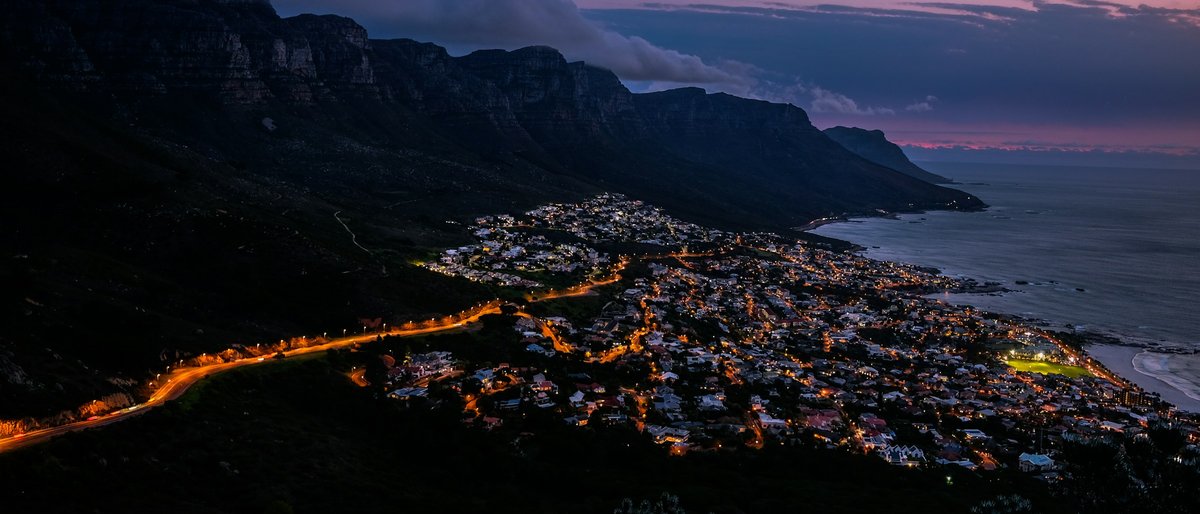
Cape Town sits in the crook of a peninsula where the Atlantic meets the Indian Ocean, with Table Mountain looming over everything like a permanent landmark you never quite stop noticing. The city's geography is unusual: you've got a national park inside the metro area, two distinct ocean coastlines with different water temperatures, and fynbos-covered mountains that start more or less where the suburbs end. The outdoor culture here tends to be casual but committed. Morning trail runs up Lion's Head before work, evening surfs at Muizenberg, weekend scrambles in the Cederberg. It seeps into daily life in a way that feels earned rather than performative. The weather cooperates most of the year, though the southeaster wind from November through March can turn a pleasant beach day into a sandblasting session pretty quickly. Winter brings rain and moody skies, but also green mountains and fewer crowds on the trails. Mind you, Cape Town's outdoors aren't always gentle: the sun is fierce, the ocean is cold, and Table Mountain's weather shifts fast enough to catch experienced hikers off guard. That said, if you pay attention and come prepared, the range of what you can do in a single day here is hard to match anywhere else on the continent.
Outdoor activities
-
Rock climbing at Silvermine and Muizenberg
The sandstone crags around Silvermine Reservoir and the bouldering along the Muizenberg coast tend to draw a mix of locals and visiting climbers. Routes range from beginner-friendly slabs to more technical overhangs. The rock is generally good quality (grippy Table Mountain sandstone) though some of the lower-grade sport routes at Silvermine can feel a bit polished in places. You'll find route information in the Tony Lourens guidebook, which most local climbers treat as gospel. Worth noting: the granite bouldering at the Kalk Bay side gets slippery when wet, so stick to dry days.
- Difficulty
- Beginner to advanced depending on route
- Duration
- Half day to full day
- Best season
- March to November (cooler months, less wind)
-
Mountain biking on Tokai Forest trails
Tokai Forest, on the eastern slopes of the Constantiaberg, has a network of singletrack and fire roads that still feels a bit under the radar compared to the hiking trails. The forest sections wind through pine plantations with some decent technical bits: root gardens, switchbacks, and a few drops if you're looking for them. The trails are generally well maintained by the local mountain bike clubs. Getting there from the city centre takes about 25 minutes, and you can park near the Tokai Arboretum entrance. On weekends you'll share the wider trails with walkers and their dogs, so keep the pace sensible on shared sections.
- Difficulty
- Moderate (some technical singletrack options)
- Duration
- 2 to 4 hours
- Best season
- Year-round, though muddier in winter
-
Paragliding from Lion's Head and Signal Hill
Tandem paragliding from Signal Hill is one of those things that sounds touristy but is pretty special. You launch from the slopes above Sea Point and drift out over the Atlantic seaboard, with Table Mountain to your left and Robben Island in the distance. The thermals tend to be best in the afternoon during summer, though your pilot will make the final call on conditions. Several operators run tandem flights daily: the flight itself is typically 15 to 25 minutes depending on wind and lift. You don't need any experience; the pilot handles everything.
- Difficulty
- Easy (tandem, no experience needed)
- Duration
- 15 to 25 minutes airborne, about 2 hours total with briefing and transport
- Best season
- October to March (summer thermals and more consistent conditions)
-
Surfing at Muizenberg
Muizenberg is where most people learn to surf in Cape Town, and for good reason. The break is gentle, the bottom is sandy, and the wave faces are forgiving enough that a first-timer can usually get standing within a lesson or two. The colourful beach huts make it easy to spot from the road. Board and wetsuit rentals line the main strip: expect to pay around R200 to R300 for a couple of hours. The water on the False Bay side is a few degrees warmer than the Atlantic coast, though you'll still want a full wetsuit year-round. Experienced surfers tend to head to Kalk Bay Reef or Long Beach at Kommetjie for something with more push.
- Difficulty
- Beginner-friendly at Muizenberg; intermediate to advanced at nearby reef breaks
- Duration
- 2 to 3 hours per session
- Best season
- Year-round, though autumn (March to May) tends to bring cleaner swells
-
Trail running on Table Mountain trails
The trail running scene in Cape Town is serious. Platteklip Gorge up the front of Table Mountain is the classic fitness test: steep, direct, not much shade. Locals use it as a time trial. The Pipe Track contour path along the Twelve Apostles offers something flatter and more scenic, running along the mountainside above Camps Bay with views you keep glancing at no matter how many times you've done it. For longer efforts, the Hoerikwaggo Trail sections can be linked into routes of 20km or more. Most trail runners here carry at least a litre of water and a wind shell, because conditions on top of the mountain are consistently different from conditions at the bottom.
- Difficulty
- Moderate to strenuous depending on route
- Duration
- 1 to 5 hours
- Best season
- March to October (cooler temperatures, less wind)
-
Abseiling off Table Mountain
There's a commercial abseil that drops you down the western face of Table Mountain: a controlled 112-metre descent that puts you face-to-face with the cliff and the Atlantic below. It's not a free rappel; you're on a guided rope system the entire time, so it's more about managing your nerves than technical skill. The views on the way down are disorienting in the best way. You take the cableway up and the abseil brings you partway down, with a short hike back to the lower cableway station. Bookings are generally needed in advance, during peak season.
- Difficulty
- Moderate (physically easy but requires comfort with heights)
- Duration
- About 1 hour for the abseil itself
- Best season
- September to April (dry conditions and calmer winds)
Day hikes
-
Platteklip Gorge to Table Mountain summit
The most direct route up the front face of Table Mountain. It's steep and exposed: you're essentially climbing a rocky gorge with stone steps for most of the ascent. Shade is minimal, so mornings are better than afternoons. The gorge funnels wind, which can be welcome or brutal depending on conditions. Once on top, the summit plateau is surprisingly large and you can wander to Maclear's Beacon, the highest point. Most people take the cableway down, which saves the knees considerably. Carry more water than you think you'll need.
- Difficulty
- Moderate to strenuous (steep, unrelenting ascent)
- Duration
- 2 to 3 hours up, 1 to 2 hours down if walking (or 5 minutes via cableway)
- Best season
- March to May and September to November (mild temperatures, less wind than summer)
-
Lion's Head sunrise or full moon hike
Lion's Head has become the social hike of Cape Town. The trail spirals around the peak with a few chain-assisted scramble sections near the summit that add just enough spice to keep things interesting. The full moon hikes are something of a local tradition: hundreds of people head up with headlamps, and there's usually a festive atmosphere at the top. Sunrise hikes are quieter and arguably more rewarding. The summit view takes in Table Mountain, the city bowl, Camps Bay, and the Atlantic. The chains section can be bypassed via a slightly longer path if you're not comfortable with exposure.
- Difficulty
- Moderate (one scramble section with chains, bypass route available)
- Duration
- 1.5 to 2.5 hours round trip
- Best season
- Year-round; full moon nights and clear winter mornings are good
-
Skeleton Gorge to Maclear's Beacon
Starting from the upper reaches of Kirstenbosch, Skeleton Gorge is a steep, shaded climb through indigenous forest and moss-covered rocks. The trail follows a stream bed and involves some scrambling over boulders: gloves are handy, and the rocks are slippery when wet. The forest section is atmospheric, with old yellowwood trees and the sound of water running through ferns. Once you emerge onto the plateau, it's a walk across the top to Maclear's Beacon. You can descend via Nursery Ravine for a circular route, or take the cableway. This one feels like proper mountain hiking.
- Difficulty
- Strenuous (steep, rocky, scrambling required in the gorge)
- Duration
- 4 to 6 hours for the full loop
- Best season
- October to April (dry conditions reduce slipperiness on rocks, though shade keeps it cool)
-
Cape of Good Hope trail in Cape Point Nature Reserve
The trails at Cape Point cover the southern tip of the peninsula, where fynbos-covered hillsides drop down to rocky shorelines. The hike from the Cape of Good Hope parking area to the old lighthouse at Cape Point takes you along cliff paths with views of the ocean stacking up to the horizon. You'll likely see baboons, bontebok, and ostriches along the way: keep your distance from the baboons, they're confident and strong. The landscape is windswept and sparse, quite different from the forested mountain trails further north. Conservation fees apply at the park gate.
- Difficulty
- Easy to moderate (well-marked paths, some uphill sections)
- Duration
- 2 to 4 hours depending on how far you explore
- Best season
- August to October (wildflower season, whale watching from the cliffs)
-
Silvermine to Noordhoek Peak
Silvermine Nature Reserve sits in the middle of the peninsula and feels surprisingly remote given its proximity to the suburbs. The route from the Silvermine Reservoir up to Noordhoek Peak passes through dense fynbos with views opening up as you gain elevation. From the peak, the panorama stretches from False Bay across to the Hottentots Holland Mountains and down over Noordhoek's long white beach. The trail is well marked with painted footprints on rocks. It's quieter than Table Mountain and you'll often have long stretches to yourself on weekdays.
- Difficulty
- Moderate (steady uphill, some rocky sections)
- Duration
- 3 to 4 hours round trip
- Best season
- March to November (cooler temperatures, green fynbos after winter rains)
Water activities
-
Sea kayaking from Simon's Town
Paddling out of Simon's Town harbour puts you into False Bay, where you'll likely encounter African penguins at Boulders Beach from the water side, and seals at the harbour wall seem to follow kayaks with genuine curiosity. The bay is generally calmer than the Atlantic coast, though wind can pick up in the afternoon. Guided trips are available for beginners and typically run 2 to 3 hours. On a calm day, the water clarity near the shoreline is surprisingly good. You might spot the dark shape of a ray gliding beneath your boat, which is a quiet thrill.
- Difficulty
- Beginner-friendly (guided options available)
- Duration
- 2 to 3 hours
- Best season
- November to April (calmer seas, warmer water, less wind in the mornings)
-
Ocean swimming at Camps Bay and Clifton
The Atlantic side of the peninsula is cold. There's no gentle way to put it: the water temperature hovers around 8 to 14°C depending on the season, and the Benguela Current keeps it that way. Clifton Fourth Beach is the most sheltered from the wind and tends to be the warmest option, relatively speaking. Camps Bay is prettier for lounging but gets the southeaster head-on. Some locals swim daily year-round, though most visitors manage a quick plunge followed by rapid retreat to a towel. For warmer water, head to the False Bay side: Muizenberg and Fish Hoek sit around 18 to 22°C in summer.
- Difficulty
- Easy (swimming ability required, cold water tolerance helps)
- Duration
- As long as you can handle it
- Best season
- December to March on the Atlantic side; October to April on the False Bay side
-
Kite surfing at Bloubergstrand and Big Bay
The southeaster wind that Cape Town is known for creates excellent kite surfing conditions from about November through March. Bloubergstrand and Big Bay, facing Table Mountain across the bay, are the main spots. The wind is consistent and strong (often 20 to 30 knots) which is why Cape Town draws kite surfers from around the world. Lessons are available from multiple schools along the beach. To be fair, the learning curve is steep and you'll spend your first sessions getting dragged through the shallows, but the conditions for progression are about as good as they get globally.
- Difficulty
- Beginner (lessons) to advanced (independent riding)
- Duration
- 2 to 4 hours per session
- Best season
- November to March (reliable strong southeaster winds)
-
Snorkelling and diving at Castle Rock and A-Frame
The kelp forests off the Cape Peninsula are thick, cold, and full of life: nothing like tropical diving, but visually striking in a different way. Castle Rock near Simon's Town has seal colonies that interact playfully with divers. A-Frame, also near Simon's Town, is a shore entry dive with good visibility on calm days. You'll see nudibranchs, cuttlefish, shy sharks (catsharks and sevengill cowsharks in certain seasons), and the light filtering through kelp fronds has a cathedral quality to it. A good 7mm wetsuit or dry suit is non-negotiable.
- Difficulty
- Moderate (cold water, some current, shore entry requires confidence)
- Duration
- 1 to 2 hours in water per dive
- Best season
- February to May (best visibility, calmer seas, sevengill cowsharks present)
-
Stand-up paddleboarding on Zandvlei
Zandvlei is a small coastal lake in the suburb of Muizenberg, connected to the sea by a narrow channel. The water is calm, sheltered from the wind by surrounding hills, and warm enough to fall into without gasping. It's where many Capetonians learn to SUP, and rentals are available at the small waterfront area. Flamingos sometimes wade in the shallows at the far end of the vlei, and you can paddle the full circuit in about an hour at a relaxed pace. A low-key afternoon activity that pairs well with a post-paddle meal in Muizenberg village.
- Difficulty
- Easy (flat, sheltered water)
- Duration
- 1 to 2 hours
- Best season
- Year-round, though calmest from September to April
Parks & gardens
-
Kirstenbosch National Botanical Garden
Kirstenbosch sits against the eastern slopes of Table Mountain and manages to feel both curated and wild at the same time. The lower sections are manicured (proteas, restios, cycads arranged by region) but the paths keep going upward into the mountain reserve where the planting gives way to natural fynbos and yellowwood forest. The Tree Canopy Walkway (the Boomslang) is a curved steel and timber bridge that lifts you into the treetops, and it's well designed, not just a gimmick. Sunday evening concerts on the lawns during summer have been a Cape Town ritual for decades. The smell of bruised fynbos on the upper paths stays with you.
Highlights: Boomslang Tree Canopy Walkway, summer sunset concerts, Protea Garden, walks into Skeleton Gorge from the upper trails
-
Green Point Urban Park
FreeA relatively new park built on what used to be a municipal dump and golf driving range next to the Cape Town Stadium. It's an honest attempt at sustainable design: indigenous planting, a biodiversity garden, outdoor gym equipment, and play areas for kids. The paths are paved and flat, which makes it popular with runners and parents with prams. On a clear day you can see Table Mountain, Lion's Head, and Signal Hill from various spots. Not dramatic, but it's a pleasant public space that locals use rather than just visit.
Highlights: Biodiversity garden with labeled fynbos species, outdoor fitness stations, easy access from the V&A Waterfront
-
Company's Garden
FreeCape Town's oldest cultivated green space, started by the Dutch East India Company in 1652 to supply passing ships with fresh vegetables. It still has something of that utility garden character, with wide paths, old oak trees, and a few oddly tame squirrels that will climb your leg if you're carrying peanuts. The South African Museum, National Gallery, and Parliament buildings border the garden, so there's a concentration of institutional architecture around the edges. A good spot to sit with a takeaway coffee from one of the Kloof Street shops, on a warm afternoon when the oak canopy provides thick shade.
Highlights: Historic oak-lined avenues, feeding the bold squirrels, proximity to museum district, heritage rose garden
-
Arderne Gardens
FreeTucked into the suburb of Claremont, this small Victorian-era garden is the sort of place you could walk past without realising it's there. Old Norfolk Island pines, a Japanese-influenced pond, and some of the largest Moreton Bay fig trees in the city. The atmosphere is quiet (bordering on sleepy) which is the appeal. Bird life is good here too, in the mornings. It's run by the City of Cape Town and tends to be empty on weekdays. A nice detour if you're in the southern suburbs anyway.
Highlights: Heritage trees including large Moreton Bay figs, birdwatching, tranquil Japanese-style pond area
-
Newlands Forest
FreeTechnically a forest reserve rather than a park, but Newlands Forest is Cape Town's most accessible woodland. Tall pines and indigenous yellowwoods line a network of paths that run along the lower slopes of Table Mountain's eastern side. The air is cool and damp under the canopy: a genuine relief in summer. You'll hear the Liesbeek River trickling through the lower sections. Trail runners, dog walkers, and families share the space, and the main paths are gentle enough for small children. The contour path connects through to Kirstenbosch, making for a good longer walk.
Highlights: Cool forest canopy walks, connection to Kirstenbosch via contour path, Liesbeek River crossings, birding
Practical tips
- Sun protection
- The UV index in Cape Town regularly hits 10 or above in summer, and the reflection off water and white sand intensifies exposure. SPF 50 sunscreen reapplied every couple of hours is the baseline, not a precaution. A buff or hat with neck coverage makes a genuine difference on exposed ridge hikes. Lip balm with SPF is easy to forget and hard to do without once your lips start cracking. Even overcast days can burn: the cloud layer at this latitude doesn't filter UV the way you might expect.
- Wind awareness
- The southeaster (locals call it the Cape Doctor) blows hard from roughly November to March, often exceeding 40km/h. It reshapes your plans. A hike on the Atlantic side that would be pleasant in calm conditions becomes unpleasant in a strong southeaster. Check the wind forecast before committing to an exposed route, and have a sheltered backup option in mind. The False Bay side and Constantia valley are often calmer when the southeaster is howling over the mountain.
- Water and hydration
- Table Mountain and the surrounding reserves have no reliable water sources on the trails. Carry at least 2 litres per person for a half-day hike, more if it's hot. The streams on the mountain look clean but shouldn't be relied upon for drinking without treatment. Refill at Kirstenbosch or the cableway station if you're extending your hike. Dehydration sneaks up quickly when the wind is drying your sweat before you notice it.
- Trail safety and navigation
- Table Mountain accounts for a surprising number of rescue callouts each year. The weather can shift from clear to whiteout fog in under an hour, and many trails above the tree line have limited markings. Download an offline trail map: the AllTrails or Wikiloc apps both have good coverage of the peninsula trails. Tell someone where you're going and when you expect to return. Solo hiking on the more remote trails is generally fine but stick to daylight hours and well-trafficked routes if you're unfamiliar with the mountain.
- Gear essentials
- Layers matter more than heavy gear in Cape Town. A moisture-wicking base layer, a fleece or light insulation, and a windproof shell will cover most conditions. The temperature difference between the city bowl and the top of Table Mountain can be 10 to 15 degrees, and it shifts fast. Good trail shoes with grip are worth the investment: the sandstone gets slick when damp, and Skeleton Gorge in particular punishes smooth soles. A small daypack with rain cover rounds out the kit for most day hikes.
- Safety and awareness
- Most outdoor areas in Cape Town are safe during busy periods, but opportunistic theft from cars at trailheads does happen: don't leave valuables visible in your vehicle. Hiking in groups is generally recommended, for less-frequented trails. The baboons at Cape Point and on the mountain itself are wild animals and can be aggressive around food; keep bags closed and don't eat near them. Emergency number for mountain rescue is 10177, but cell signal on some trails is patchy, so don't rely on your phone as your only safety measure.
FAQ
What is the best time of year to visit Cape Town for outdoor activities?
The shoulder seasons (March to May and September to November) tend to offer the best balance of mild weather, manageable wind, and fewer crowds on the trails. Summer (December to February) brings long days and warm temperatures but also the southeaster wind, which can be relentless. Winter (June to August) sees rain and cooler temperatures, though the mountains turn green and the waterfalls on Table Mountain come alive. There's no bad time, but each season shifts what's most enjoyable.
Do I need to book the Table Mountain cableway in advance?
During peak season (December and January) and on clear weekend days, the queue for the cableway can stretch to an hour or more. Online booking lets you skip most of that wait and is currently available through the official Cableway website. If you plan to hike up and take the cableway down, a one-way ticket is available. The cableway closes in high winds, so check the status on the morning of your visit: their social media channels are usually the quickest source of updates.
Is it safe to swim in the ocean around Cape Town?
Generally yes, but with caveats. The Atlantic side is cold year-round, with water temperatures that shock most visitors. The False Bay side is warmer and generally has gentler surf at beaches like Muizenberg and Fish Hoek. Rip currents exist at some beaches: swim between the flags where lifeguards are present during summer months. Shark sightings do occasionally close beaches on the False Bay side, though shark spotters are stationed at popular beaches and use a flag warning system. Check the Shark Spotters website or app before heading out.
Are there entrance fees for Table Mountain National Park?
SANParks charges a conservation fee for several areas within the Table Mountain National Park, including Cape Point, Boulders Beach, and Silvermine. The fees for international visitors are higher than for South African residents: currently around R376 for adults at Cape Point. The main Table Mountain hiking routes accessed from the city side (Platteklip Gorge, Skeleton Gorge via Kirstenbosch) do not currently have a gate fee, though Kirstenbosch itself has a separate entrance charge. A SANParks Wild Card can save money if you plan to visit multiple reserves.
Can beginners hike Table Mountain safely?
Yes, with preparation. Platteklip Gorge is steep but straightforward and doesn't require any technical skill, just fitness and water. Lion's Head is a better option for a first hike if you want something shorter with good views, though the chain section near the top adds a mild scramble. The Pipe Track along the Twelve Apostles is nearly flat and suitable for anyone with basic fitness. Start early, carry water and sun protection, and check the weather forecast beforehand. The mountain's reputation for difficulty is partly about its changeable weather rather than the trails themselves.
What should I do if the weather turns bad while hiking on Table Mountain?
Fog can roll in fast, reducing visibility to a few metres on the summit plateau. If this happens, stay on the marked path and use your offline map or GPS to navigate: do not try to shortcut down unfamiliar terrain, which is how most rescues happen. If you're on the plateau and the cableway is still running, head to the upper station. If conditions deteriorate seriously, find shelter from the wind behind rocks and call for help. The mountain rescue teams are experienced and responsive, but prevention is better: turn back early if clouds are building and you're not confident of your route.
Outdoor experiences in Cape Town
 Free cancellation
 Cape Town: Lion's Head Sunrise/Sunset Hike
Outdoor experience: 3.5 hours, free cancellation.
via Viator Free cancellation
 Vintage Train to Elgin Railway Market
Outdoor experience: 10 hours, free cancellation.
via Viator Free cancellation
 Hi5 Tandem Paragliding Cape Town
Outdoor experience: free cancellation.
via Viator Free cancellation
 2 Day Safari Experience from Cape Town
Outdoor experience: 2 days, free cancellation.
via Viator Free cancellation
 Cape Town: 25min Helicopter Flight with Complimentary Boat Cruise
Outdoor experience: 25 minutes, free cancellation.
via Viator Free cancellation
 1 Hour Coastal Catamaran Cruise from Cape Town
Outdoor experience: 1 hour, free cancellation.
via Viator Free cancellation
 Cape Town Helicopter Tour: Atlantic Coast
Outdoor experience: 20 minutes, free cancellation.
via Viator Free cancellation
 5 Day Garden Route and Addo Safari - Best of South Africa Small Group Tour
Outdoor experience: 5 days, free cancellation.
via Viator
6-Day Garden Route & Addo South African Adventure from Cape Town
Outdoor experience: 6 days.
via Viator Free cancellation
 Penguin Encounter Boulders Beach Half Tour Day from Cape Town
Outdoor experience: 5 hours, free cancellation.
via Viator Free cancellation
 3 Day Garden Route Safari
Outdoor experience: 3 days, free cancellation.
via Viator Free cancellation
 3 Day Garden Route's Best Highlights with Safari from Cape Town
Outdoor experience: 3 days, free cancellation.
via ViatorLast verified by automated review (v1.7.1) on . What is automated review?