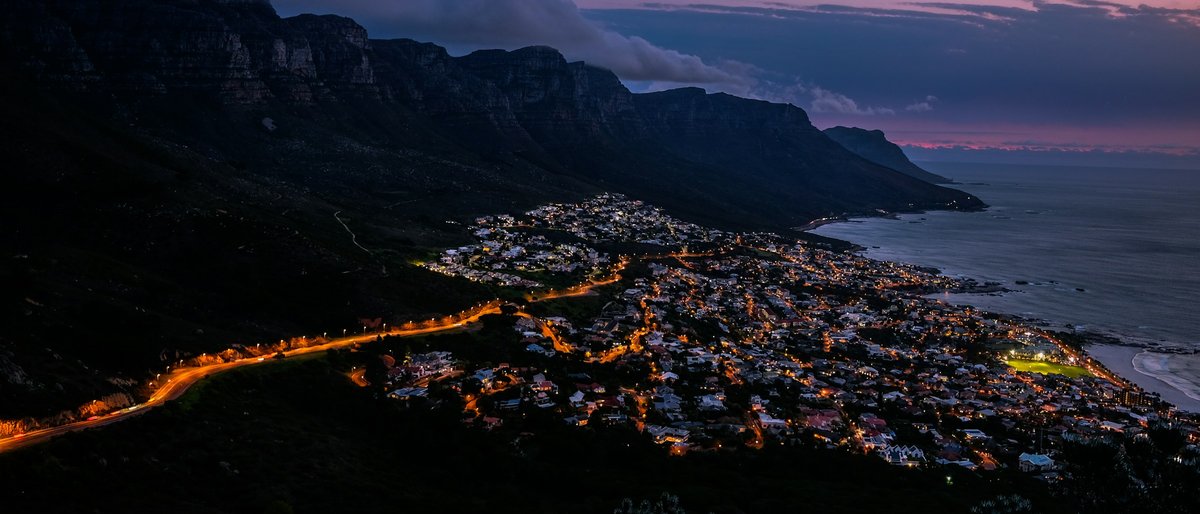
Is Cape Town good for digital nomads in 2026?
Cape Town is a strong nomad pick: 100-200 Mbps fibre in Sea Point and Gardens apartments for ~R1,000/month, coworking from R3,500/mo at Workshop17 or The Bureaux, monthly all-in ~$2,000. Load shedding appears over as of 2026. No formal digital nomad visa: 90-day visa-free entry is your realistic window. Come October through April.
Cape Town has quietly become one of the stronger nomad bases on the continent, a genuine shift from where things stood two years ago. The reason is one word: load shedding. Eskom's rolling blackouts used to kill your productivity three to six hours a day: your UPS beeping at 2 pm, your fibre ONT dying mid-Zoom call, the café going dark while your cappuccino went cold. That appears to be over, at least for now. South Africa went most of 2025 without scheduled cuts, and the grid has held into 2026. Fibre in Sea Point and Gardens apartments runs 100-200 Mbps symmetrical through Vumatel or Openserve, R800-1,200/month (~$50-75). The infrastructure is solid. The question is whether you trust it to stay stable for your three-month lease. Worth noting: most newer apartment buildings have added inverters or small solar since the bad years, so even if cuts return, your wifi likely stays up.
For a month-plus stay, Sea Point is the default, and for good reason. Pick n Pay and Checkers within walking distance, laundromats on Regent Road, and the Sea Point Promenade for your afternoon reset walk: salt air, the sharp smell of kelp on the rocks, Atlantic wind that drops the temperature 5°C in ten minutes flat. Rent for a furnished one-bedroom runs R18,000-25,000/month ($1,100-1,500). Gardens is quieter, leafier, slightly cheaper at R15,000-20,000, with Kloof Street's cafes five minutes uphill: steep hills that test your legs daily. Skip the City Bowl proper unless you enjoy car alarms at 2 am and parking garage exhaust. Observatory is cheaper (R10,000-14,000) but further from the coast, and wifi infrastructure gets patchier south of Main Road. Woodstock has creative-studio energy but grocery options thin out fast once you're past the Biscuit Mill.
Workshop17 at the V&A Waterfront (hot-desk R3,500/mo, dedicated R5,500/mo) is the polished option: harbor views through floor-to-ceiling glass, reliable backup power, strong AC against the February heat. Their Kloof Street branch is smaller, warmer in atmosphere, R500/month cheaper. Inner City Ideas Cartel on Bree Street (R4,200/mo dedicated) draws the startup crowd; expect noise after 11 am when sales teams start their call blocks. The Bureaux on Loop Street is the quiet-worker pick, no phone-booth shortage, R3,800/mo, and they don't oversell desks. For café days: Rosetta Roastery in Woodstock holds 50 Mbps (tested), smells permanently of fresh-roasted single-origin, and nobody watches the clock. Tribe Coffee on Wale Street has power at every seat and no purchase-per-hour pressure. Truth Coffee on Buitenkant: the steampunk décor is tourist-bait but the wifi holds at 40 Mbps and the staff leave laptop workers alone for hours.
Monthly all-in for a single nomad: ~$2,000. That breaks down to roughly R18,000 apartment (Sea Point one-bed), R3,500 coworking, R6,000 food and coffee: you'll eat peri-peri chicken from chain spots less than you expect; the local braai culture and weekend markets at Oranjezicht pull you toward home cooking and fresh produce. Transport runs R2,500 in Uber rides; the MyCiTi bus handles the Sea Point-to-city commute but the route map is confusing and the last bus leaves early. Visa situation: most Western passport holders get 90 days visa-free on arrival. South Africa still has no formal digital nomad visa as of early 2026, though proposals have been floated. The 90-day stamp is your realistic window. Extensions are technically possible at the Foreshore Home Affairs office, but the queue is a full-day commitment with uncertain outcome. Plan for 90 days max unless you're doing a border run to Namibia or Eswatini to reset.
Come between October and April. Cape Town's winter (June through August) brings horizontal rain, weeks of grey, and cafés where the wooden chairs feel permanently damp. The dry season starts properly in November: warm enough for the promenade in a t-shirt by 9 am, Table Mountain clear of its signature cloud most mornings, the light golden and long until 8 pm. Safety deserves directness. Don't walk alone after dark outside the main commercial strips. Uber everywhere at night: R40-80 for most inner-city trips, which is $2.50-5. Sea Point and Green Point along the main road after 10 pm feel fine. Side streets less so. Keep your laptop in a nondescript backpack, not a branded sleeve. The city has gotten safer in its tourist corridors, but property crime hasn't disappeared. A MacBook on a café table near an open door is still a target. That said, thousands of nomads work here without incident: basic awareness goes further than paranoia.
Composite of cafe + coworking download speeds and reliability.
Apartment, coworking membership, food, and transit at a comfortable level.
Coworking spaces
- Workshop17 V&A Waterfront
- Workshop17 Kloof Street
- Inner City Ideas Cartel (Bree Street)
- The Bureaux (Loop Street)
- Spin Street House
- Open (Longmarket Street)
- Craft Coworking (Woodstock)
- Rosetta Roastery (café, Woodstock)
- Tribe Coffee (café, Wale Street)
- Truth Coffee (café, Buitenkant Street)
Visa options
90-day visa-free entry for most Western passports, no formal digital nomad visa as of early 2026. Home Affairs has floated remote-worker proposals but nothing enacted. Extensions possible at Foreshore Home Affairs but expect a full-day queue with no guarantee. Border runs to Namibia, Eswatini, or Mozambique reset the 90-day clock. Minimum income proof not required for visa-free entry.
Last verified by automated review (v1.5.J.2) on . What is automated review?