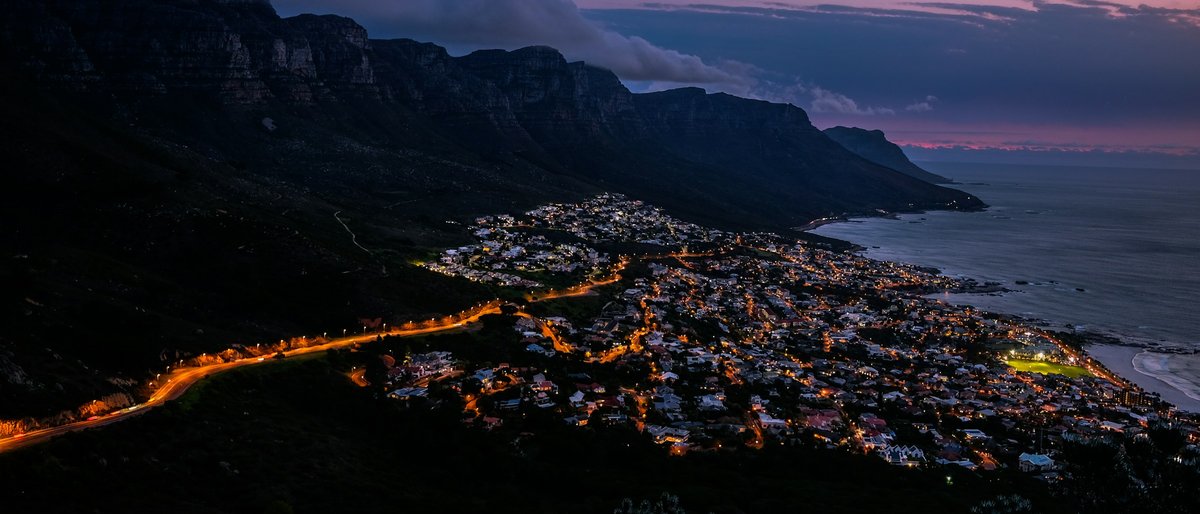
Stay in Cape Town in January
66 hotels in the Trip.com pool for Cape Town, from US$13 a night.
Opens Trip.com on Fri 1 Jan to Sun 3 Jan 2027; change the dates there.
January in Cape Town is full-blown summer, and the city knows it. This is peak season in every sense: the longest days of the year, the driest weather you'll get (just 12mm of rain across maybe three days), and seemingly half of Johannesburg decamped to the coast. Daytime temperatures sit around 25.9°C (79°F) with lows around 17.2°C (63°F), which sounds mild on paper until you factor in the South Easter wind that can turn a perfect beach day into a sandblasting session without much warning. The flip side of that wind? It keeps the air clean and the skies sharp blue.
The month kicks off with the Kaapse Klopse: Cape Town's own minstrel carnival on January 2nd, when troupes in bright satin suits parade through the city centre with banjos, drums, and a particular swagger that's been part of this city since the 1800s. It's loud, joyful, and distinctly Cape Townian. Beyond that, this is the month where everything is open, every restaurant has its outdoor terrace running, and the sundowners at Camps Bay go until nearly 8pm.
That said, you're paying for the privilege. Hotel rates are at their annual peak, popular restaurants need bookings days in advance, and Chapman's Peak Drive on a Sunday feels like a highway. If you're on a budget or prefer having a beach to yourself, this probably isn't your month. But if you want Cape Town firing on all cylinders with warm water at Clifton and vineyards heavy with grapes ready for harvest, January delivers.
Why visit in January
- The driest month of the year, just 12mm of rainfall means you can plan outdoor activities with real confidence, which is rare for a coastal city
- Daylight stretches past 8pm, giving you long evenings for sundowners at Signal Hill or late walks along the Sea Point Promenade
- Wine harvest season begins in the Stellenbosch and Franschhoek valleys, and many estates run special tastings and vineyard tours you won't find the rest of the year
- Ocean temperatures at their warmest: still bracing on the Atlantic side (around 16-18°C) but the False Bay beaches near Simon's Town and Muizenberg reach a swimmable 20-22°C
- The Kaapse Klopse minstrel carnival on January 2nd is one of Cape Town's most culturally significant and purely fun events, and it's free to watch
Worth knowing
- Peak pricing across the board: expect to pay 50-80% more for accommodation compared to winter rates, and popular Airbnbs in the City Bowl book out months ahead
- The South Easter wind (locals call it the Cape Doctor) blows hard and frequently in January, sometimes for days at a stretch, which can make beaches on the Atlantic seaboard unpleasant
- Crowds are at their highest: Table Mountain cableway queues can hit two hours on weekends, and finding parking at Camps Bay or Kalk Bay is a competitive sport
- Wildfire risk is real during January's dry heat and wind: the slopes of Table Mountain and the Winelands have seen serious fires in recent summers, and smoke haze can settle over the city
Best for
Think twice if
Cape Town's January weather is Mediterranean summer at its peak: warm, dry, and dominated by wind. Mornings typically start clear and still, with temperatures climbing toward 25.9°C (79°F) by early afternoon. By midday, the South Easter usually picks up, sometimes gusting hard enough to rearrange beach umbrellas. Evenings cool to around 17.2°C (63°F), which feels pleasant after the daytime heat. Rain is almost an afterthought: you might see 12mm across the entire month, usually in one or two brief episodes. Humidity sits around 71%, which sounds high but doesn't feel oppressive thanks to the constant wind. The UV index is extreme: Cape Town sits under one of the thinnest parts of the ozone layer, and sunburn happens faster here than almost anywhere at similar latitudes.
Seasonal caution
- UV index regularly reaches 11+ (extreme): sunburn can occur in under 15 minutes of unprotected exposure. Cape Town's latitude and ozone conditions make this more aggressive than similar temperatures elsewhere.
- The South Easter wind can gust above 60 km/h (37 mph) for consecutive days, making exposed beaches and hiking trails unpleasant or occasionally dangerous on ridgelines like Platteklip Gorge.
- Wildfire risk is elevated throughout January due to dry vegetation, high temperatures, and persistent wind. Fires on Table Mountain's slopes or in the Winelands can cause road closures and visible smoke haze over the city.
Year-round climate
Averages from the last 5 years.
| Month | Avg high (°C) | Avg low (°C) | Rainfall (mm) |
|---|---|---|---|
| Jan | 26 | 17 | 12 |
| Feb | 26 | 17 | 11 |
| Mar | 24 | 16 | 50 |
| Apr | 22 | 14 | 45 |
| May | 19 | 12 | 80 |
| Jun | 18 | 11 | 150 |
| Jul | 16 | 10 | 137 |
| Aug | 17 | 10 | 96 |
| Sep | 18 | 11 | 47 |
| Oct | 22 | 13 | 24 |
| Nov | 23 | 15 | 19 |
| Dec | 24 | 16 | 32 |
Holidays and festivals in January
Public holidays
- New Year's Day(New Year's Day)1 January 2027
Headline events
Kaapse Klopse (Cape Town Minstrel Carnival)
January 2 (main parade), competitions throughout January
Thousands of minstrels in bright satin costumes parade through the streets of central Cape Town with banjos, brass, and drums. Rooted in the freed slave celebrations of the 1800s, this is Cape Town's most distinctive cultural event: part street party, part living history, and entirely unlike anything you'll see elsewhere in the world. The main parade rolls through the city centre, and the stadium competitions continue through January.
Best things to do in January
Sunrise hike up Lion's Head
hikingThe 360-degree views from the top take in Table Mountain, the Atlantic seaboard, and the Twelve Apostles mountain range. In January the sun rises around 5:45am, and the early start means you beat both the heat and the wind, which typically kicks in by late morning. The trail involves some chain-assisted scrambling near the summit: manageable but not a casual stroll.
Long summer daylight means sunrise is early enough to finish the hike before the South Easter wind picks up, and the clear January skies give the sharpest views of the year.Booking tipNo booking needed, but parking on Signal Hill fills up fast on weekends: arrive by 5:15am or take an Uber.
False Bay beach hopping: Muizenberg to Kalk Bay
beachThe False Bay coast is Cape Town's warm-water side, and in January, ocean temperatures reach 20-22°C: cold by tropical standards, but warm enough for actual swimming without a wetsuit. Start at Muizenberg's colourful beach huts, try a surf lesson on the gentle breakers, then drive or walk along to St James tidal pool and on to Kalk Bay for fish and chips at the harbour.
Ocean temperatures on False Bay peak in January and February: the only months where extended swimming is comfortable without neoprene.Booking tipSurf lessons at Muizenberg book out on weekends: reserve midweek or book three days ahead for Saturday slots.
Winelands harvest season visits
food & drinkThe grape harvest begins in late January across Stellenbosch, Franschhoek, and Paarl. Vineyards are at their most photogenic: heavy bunches on the vine, golden light, harvest crews working the rows. Many estates offer special harvest-season tastings and cellar tours that let you see the winemaking process from grape to barrel.
Late January marks the start of harvest for early-ripening varietals like Chardonnay and Pinot Noir. This is the only time you'll see active picking and crushing.Booking tipLarger estates like Delaire Graff and Tokara don't need bookings for tastings, but smaller producers like Mullineux or Crystallum may require appointments.
Kayaking with seals at Simon's Town
water sportsPaddle out from Simon's Town harbour into False Bay where a colony of Cape fur seals will swim around and under your kayak. In January's calm morning conditions, the water is clear enough to see them diving beneath you. You'll likely spot cormorants, and occasionally dolphins show up in the bay.
Calmest ocean conditions of the year in the morning before the South Easter builds. Water visibility is at its best, and seal pups born in late spring are now playful juveniles.Booking tipMorning departures (8am-9am) are essential: afternoon wind makes paddling miserable. Book at least a week ahead in January.
Sundowner picnic on Signal Hill
scenicGrab a bottle of wine from a nearby bottle shop, some biltong and dried fruit, and drive up to the Signal Hill parking area for sunset views over the Atlantic. In January the sun doesn't set until nearly 8pm, and the light over Lion's Head turns the mountain gold and then pink. Locals do this weekly: it's a ritual, not a tourist trap.
Latest sunset of the year (around 7:55pm) means long, warm evenings good for lingering outdoors. The light quality in January is striking.Booking tipNo booking, but parking fills by 6:30pm on clear evenings. Bring a blanket: the grass is prickly.
Boulders Beach penguin colony
wildlifeThe African penguin colony at Boulders Beach in Simon's Town is active year-round, but January offers the best combination of warm weather for you and active penguin behaviour: chicks from the spring breeding season are now fledging, and adults are swimming and preening constantly.
Penguin chicks are at their most visible and active age in January, and the warm weather makes the beach visit comfortable. You can swim in the sheltered coves alongside penguins.Booking tipArrive before 9am to avoid tour bus crowds. The boardwalk entrance is less crowded than the beach entrance.
Chapman's Peak Drive
scenic drivingThis 9km road carved into the cliff face between Hout Bay and Noordhoek is one of the most dramatic coastal drives on Earth. In January, the road is reliably open (winter storms sometimes close it), the light is clear, and you can stop at viewpoints to look down 500 metres to the ocean below.
Dry January weather means the road is almost never closed for rockfall or flooding, unlike winter months when closures are common. Clear skies provide the best photography conditions.Booking tipIt's a toll road: keep small change. Drive it southbound (Hout Bay to Noordhoek) for the best ocean views from the passenger side.
Kirstenbosch Summer Sunset Concerts
entertainmentEvery Sunday evening in January, Kirstenbosch Botanical Garden hosts outdoor concerts on the sloping lawns beneath Table Mountain. Bring a picnic, a blanket, and a bottle of wine. The music ranges from jazz to Afrobeat to indie rock, and the setting (with the mountain darkening behind the stage as the sun drops) is hard to beat.
The concert series runs November through March, but January's warm, dry Sunday evenings are the most reliable for good weather. This is peak programming with the biggest acts.Booking tipBuy tickets online in advance: popular acts sell out. Gates open at 4pm; arrive early to claim a good spot on the lawn.
What to eat in January
In season: fruit
Cape watermelon
Peak ripeness in January: sold from roadside stalls across the Cape Flats and at farm stands along the N1. The cold, sweet flesh is the default beach snack.
Hanepoot grapes
These muscat grapes hit the markets in January, intensely sweet and fragrant. You'll find them at Neighbourgoods Market and farm stalls in Stellenbosch. Locals eat them straight, but they're also the grape behind many Cape dessert wines.
Stone fruit from the Boland
Peaches, nectarines, plums, and apricots flood the markets from the Boland farming region. The Saturday morning market at Stellenbosch is piled high with them, still warm from the orchard.
On menus now
Snoek braai
Snoek (a firm, oily fish caught off the Cape coast) is at its most plentiful in summer. Locals braai it whole over open coals, often basted with apricot jam. The smell of snoek on the braai is essentially the scent of a Cape Town January.
Street food peaks
Gatsby sandwich
Cape Town's signature street food: a full loaf of bread stuffed with chips, steak or polony, atjaar, and sauce. It's a meal for two people, at least. good from takeaway spots in the Cape Flats and Athlone. Hot, messy, and completely satisfying after a day on the beach.
What to drink
Pinotage rosé
January heat calls for cold pink wine, and Pinotage rosé is the local answer. Dry, fruit-forward, and made from South Africa's signature grape. Most Stellenbosch and Franschhoek estates pour their current vintage for tasting.
Regular events in January
Cape Town Art Fair (preparation and satellite shows)Free
While the main Art Fair falls in February, satellite gallery openings and preview events begin in late January across Woodstock, the Silo District, and the city centre. Keep an eye on gallery listings for opening night invitations.
Late JanuaryKirstenbosch Summer Sunset Concerts
Weekly Sunday evening concerts in the botanical gardens, running every week through January. A mix of local and international acts performing on the lawns with Table Mountain as the backdrop.
Every Sunday, gates at 4pmTweede Nuwe Jaar (Second New Year)Free
January 2nd is Tweede Nuwe Jaar, a Cape Malay and Coloured community tradition tied to the Kaapse Klopse. Beyond the main parade, neighbourhoods in the Bo-Kaap and across the Cape Flats hold their own celebrations, braais, and music.
January 2Bay Harbour Market, Hout BayFree
This covered market runs every Friday evening and weekend through January, with live music, craft beer from local breweries, and food stalls serving everything from sushi to Cape Malay curry. The vibe is relaxed and distinctly local.
Every Friday evening, Saturday, and SundayL'Ormarins Queen's Plate horse racing
One of South Africa's most prestigious horse racing events, held at Kenilworth Racecourse. It draws a dressed-up crowd and has a strong social-event atmosphere beyond the racing itself.
Mid-January (usually second Saturday)Best places this January
Kalk Bay
neighbourhoodThis fishing village on the False Bay coast feels like it belongs in a different century. In January, the harbour is full of returning fishing boats, the restaurants spill onto the sidewalks, and you can buy line fish straight off the boats. The main street is lined with bookshops, antique stores, and galleries.
False Bay coastCamps Bay Beach
beachThe Atlantic seaboard's showpiece beach, backed by the Twelve Apostles mountain range. In January the water is still cold (around 14-16°C) but the scene is the thing: sundowners at the beachfront restaurants, the palm-lined promenade, and some of the best people-watching in the Southern Hemisphere. Wind can be brutal here though.
Atlantic SeaboardConstantia Wine Route
wine regionCloser to the city than Stellenbosch, the Constantia valley has some of South Africa's oldest wine estates. Groot Constantia dates to 1685. In January the vine canopy is full and green, and tasting rooms are busy but not as overwhelmed as the Stellenbosch estates.
ConstantiaBo-Kaap
neighbourhoodThe neighbourhood of colourful houses on the slopes above the city centre is alive in early January around Tweede Nuwe Jaar. The cobblestone streets, the call to prayer from the Auwal Mosque, and the smell of cinnamon from Cape Malay kitchens make this feel like nowhere else in Cape Town.
City BowlWoodstock and the Old Biscuit Mill
market & neighbourhoodWoodstock's creative district centres on the Old Biscuit Mill, which hosts the Neighbourgoods Market every Saturday: the city's best food market by a wide margin. In January you'll find seasonal stone fruit, artisan bread, and a strong coffee scene. The surrounding streets are full of galleries and design studios.
WoodstockTable Mountain via Platteklip Gorge
hikingJanuary offers the most reliable weather for summiting Table Mountain on foot. Platteklip is the most direct route: steep, exposed, and about 2 hours up. The summit plateau is otherworldly, with fynbos plants found nowhere else and views that stretch to Robben Island. Start early to avoid wind and heat.
Table Mountain National ParkNoordhoek Beach
beachA vast, empty sweep of white sand stretching 8km between Chapman's Peak and Kommetjie. Even in peak January, you can walk for 20 minutes and barely see another person. Horses from the local stables trot along the waterline in the mornings. The water is cold and the waves are serious: this is a walking beach, not a swimming beach.
South Peninsula
Your packing checklist
Tick items off as you pack. Your progress saves in this browser.
All packed — have a great trip.
Insider tips
The Atlantic side beaches (Camps Bay, Clifton) look gorgeous in photos but the water rarely tops 16°C even in January. If you want to swim comfortably, head to Muizenberg, St James, or Fish Hoek on the False Bay side: the water is 5-6 degrees warmer and the beaches are less performative.
Table Mountain cableway queues on weekend mornings can waste two hours of your trip. Either hike up and cable down (the Platteklip Gorge route is tough but straightforward), or buy your ticket online for a specific time slot and go on a weekday. Alternatively, go in the late afternoon: the queues shrink and the light is better for photos.
The wind has a pattern: mornings are usually calm, and the South Easter builds from late morning through afternoon. Plan beach time and outdoor activities for before 11am, and save indoor things (wine tastings, museums, long lunches) for the windy afternoon hours.
Skip the V&A Waterfront restaurants for dinner: most are tourist-priced and average. Instead, eat in Woodstock (The Pot Luck Club, The Test Kitchen space), Kloof Street for casual bistros, or Kalk Bay for fresh fish. The quality gap is significant.
For the Kaapse Klopse on January 2nd, position yourself on Darling Street or Adderley Street before 11am. The crowd is festive and family-friendly. Don't try to drive into the city centre: take the MyCiTi bus or an Uber and walk.
Avoid these mistakes
- Underestimating the UV intensity: people from European or North American latitudes burn shockingly fast in Cape Town's January sun. The ozone layer is thinner in the Southern Hemisphere, and being at the beach with a breeze masks how much radiation you're absorbing. Apply sunscreen before you leave your accommodation, not when you arrive at the beach.
- Booking Table Mountain cableway for the afternoon without checking the wind forecast: the cableway closes when wind exceeds safe limits, which happens regularly on January afternoons. You'll lose your booking and waste the day. Book morning slots, or better yet, hike up.
- Planning a full day at Camps Bay beach without wind protection: the South Easter funnels through the gap between Table Mountain and Lion's Head directly onto Camps Bay. Without a windbreak or a sheltered spot, you'll be sandblasted by early afternoon. The sheltered Fourth Beach at Clifton is a better option on windy days.
- Not booking restaurants in advance: January is Cape Town's busiest month for dining, and popular spots in the City Bowl, Franschhoek, and Kalk Bay need reservations, for weekend dinners. Walking in and hoping for a table works in June, not January.
Practical tips for January
Book accommodation and car rental no later than early November: January availability in desirable areas dries up fast, and last-minute rates are punishing. A rental car is close to essential; while the MyCiTi bus serves the Atlantic seaboard and city centre, reaching Kalk Bay, Simon's Town, the Winelands, and Chapman's Peak without a car is difficult. Restaurant reservations should be made at least three days ahead for popular spots, a week for the top-tier places in Franschhoek. Dress code is relaxed everywhere: smart casual is as formal as it gets, even at high-end wine estates. Most shops and attractions operate on extended summer hours through January, though some smaller galleries close for the first week of the year. Uber works reliably throughout the city and is the safest option for nights out on Long Street or Kloof Street. Load shedding (scheduled power outages) has been less frequent recently but check the Eskom schedule app: it can affect restaurant service and ATM availability. Tipping is 10-15% at restaurants and expected.
FAQ
Is January a good time to visit Cape Town?
January is one of the two best months to visit Cape Town, along with February. You get the warmest temperatures, the least rain, the longest days, and everything is open. The trade-offs are real though: it's peak pricing, peak crowds, and the South Easter wind can be relentless. If your budget allows it and you don't mind sharing the city with a lot of other visitors, January is when Cape Town is at its most energetic and accessible.
What is the weather like in Cape Town in January?
Warm and dry. Average highs around 25.9°C (79°F), lows around 17.2°C (63°F), and only about 12mm of rain across the entire month. Humidity sits around 71% but the frequent wind keeps it from feeling muggy. The dominant weather feature is the South Easter wind, which can blow hard for days at a stretch. Mornings tend to be calm and warm; afternoons get windy. The UV is extreme: stronger than you'd expect for the temperature.
Is Cape Town crowded in January?
Yes, it's the busiest month of the year. South African domestic tourists are on school holidays, international visitors are at peak numbers, and the local restaurant and bar scene is running at full capacity. Table Mountain cableway, Camps Bay, the V&A Waterfront, and the Winelands all feel noticeably packed. That said, Cape Town is geographically spread out: places like Noordhoek Beach, the Constantia wine estates, and the eastern side of False Bay remain relatively quiet even in peak season.
How much should I budget per day for Cape Town in January?
At January peak-season rates, a mid-range trip runs roughly ZAR 3,000-5,000 per person per day (about USD 160-270) covering accommodation, meals, activities, and transport. Budget travelers sharing accommodation and self-catering can manage on ZAR 1,500-2,000. High-end travelers at boutique hotels with fine dining and private wine tours should expect ZAR 8,000-15,000+. Wine tasting fees are typically ZAR 80-250 per estate, and restaurant mains in the City Bowl average ZAR 150-280.
Is it safe to swim in the ocean in Cape Town in January?
It depends on which coast. The False Bay side (Muizenberg, Fish Hoek, Simon's Town) reaches 20-22°C in January: cool but comfortable for swimming. The Atlantic side (Camps Bay, Clifton) stays around 14-16°C, which is cold and more for quick dips than leisurely swims. The tidal pools at St James and Dalebrook are sheltered and slightly warmer. Shark risk is low but present: the city has shark spotters at popular beaches during summer, and you should follow their flag system. Rip currents can be strong at exposed beaches like Noordhoek and Long Beach.
Things to Do in Cape Town in January
 Free cancellation
 Wine Tour: Paarl, Franschhoek & Stellenbosch incl 3 wineries
Day trip: 8 hours, free cancellation.
via Viator Free cancellation
 Cape Point and Boulder's Penguins Full Day Tour
Day trip: 8 hours, free cancellation.
via Viator Free cancellation
 Cape of Good Hope and Boulders Penguins Day Tour from Cape Town
Day trip: free cancellation.
via Viator Free cancellation
 Table Mountain, Penguins & Cape Point Group Tour from Cape Town
Day trip: 10 hours, free cancellation.
via Viator Free cancellation
 Cape Town Hop-On Hop-Off City Tour with Optional Cruise
City tour: free cancellation.
via Viator Free cancellation
 Cape Town: Lion's Head Sunrise/Sunset Hike
Outdoor experience: 3.5 hours, free cancellation.
via ViatorFind a flight to Cape Town
Live fares to Cape Town appear here once cookies are accepted.
Last verified by automated review (v1.7.1) on . What is automated review?