Stay in Cape Town in May
66 hotels in the Trip.com pool for Cape Town, from US$13 a night.
Opens Trip.com on Fri 7 May to Sun 9 May 2027; change the dates there.
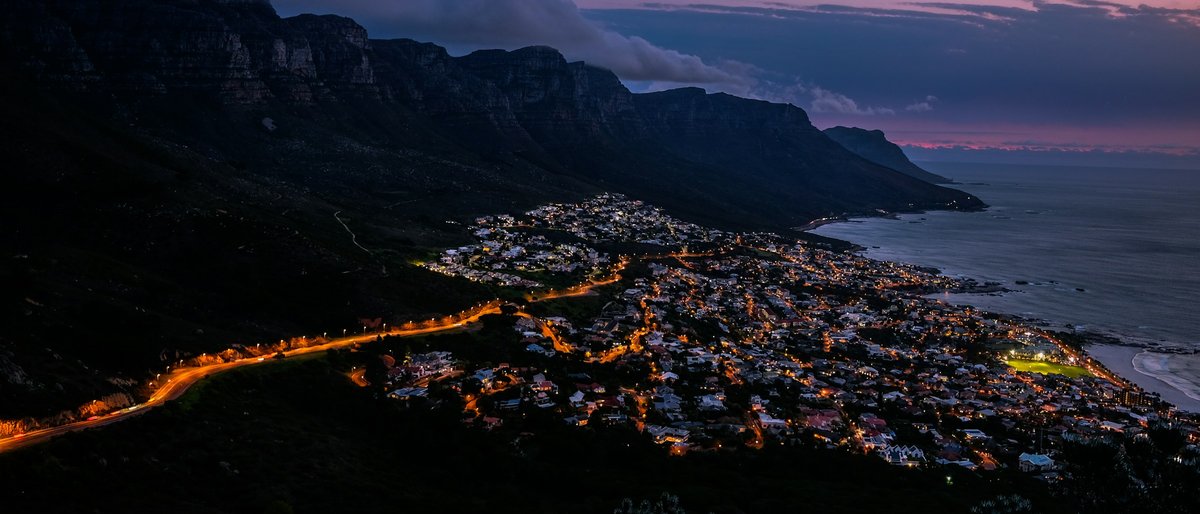
May in Cape Town marks the shift into winter, and the city feels it. The summer crowds have cleared out, the famous southeaster wind has mostly died down, and the first proper cold fronts start rolling in off the Atlantic. Expect daytime temperatures around 19°C (67°F) that feel pleasant enough in the sun, but evenings that drop to 12°C (54°F) with a damp chill that gets into your bones. Rainfall jumps to about 80mm across eight or so wet days, not a washout by any means, but a noticeable change from the bone-dry summer months. You'll get stretches of gorgeous clear autumn days mixed with grey, blustery ones where Table Mountain disappears behind its tablecloth of cloud for hours at a time.
To be fair, May sits in an awkward middle ground. It's not the deep, dramatic winter of June and July, when storm watching becomes a genuine spectacle. And it's well past the golden warmth of February and March. What you get instead is a quieter city that's starting to hunker down: restaurants light their fireplaces, the Winelands estates bring out heavier reds for tastings, and hotel prices drop to some of the lowest you'll see all year. The first Southern Right Whales begin appearing along the False Bay coastline, though the real whale watching peak is still a month or two off.
If you're the kind of traveler who doesn't mind layering up and carrying an umbrella, May rewards you with a Cape Town that feels more like a locals' city than a tourist destination. The light takes on that soft, low-angle quality that photographers chase. The fynbos on the mountain slopes turns deeper shades of green after the rains. It's not the month to plan a beach holiday, but for wine, food, culture, and hiking between the rain: it works.
Why visit in May
- Hotel rates drop significantly from peak season: you'll find accommodation at 30-50% below December and January prices, with genuine availability at properties that book out months ahead in summer
- The Cape Winelands enter their cosiest season, with estate tasting rooms lit by fires and quieter cellar doors where winemakers have time to chat with you
- Hiking conditions on Table Mountain and the surrounding trails are often better than summer: cooler temperatures mean less dehydration risk, the notorious southeaster has mostly gone quiet, and the mountain's streams and waterfalls are flowing again
- The first Southern Right Whales of the season start appearing in False Bay, giving you early access to whale sightings without the Hermanus Festival crowds that come later in the year
- Cape Town's restaurant scene shifts into winter mode with heartier menus, slower service in the best possible way, and seasonal ingredients like truffle and winter root vegetables appearing on menus across the city
Worth knowing
- Rain is unpredictable: you might get four perfect days followed by two solid days of cold, wind-driven rain that makes outdoor plans difficult
- Ocean water temperature drops to around 14-15°C (57-59°F), making beach swimming a cold-water-only proposition for all but the most committed
- Sunset comes early, around 5:45pm, cutting short the long golden evenings that make Cape Town's summer so appealing
- Some outdoor adventure operators reduce schedules or close for the season: boat-based tours and some of the coastal kayaking outfits
Best for
Think twice if
May brings Cape Town's Mediterranean climate into its wet phase. Mornings often start cool and misty, with temperatures around 12°C (54°F). By midday on a clear day, you'll get a comfortable 19°C (67°F): warm enough for a light jacket in the sun, but the moment the wind picks up or clouds roll in, it feels considerably cooler. Expect roughly 80mm of rain spread across about eight days, arriving in cold fronts that typically blow through in a day or two before clearing. Humidity sits around 80%, which you'll feel most on overcast days. The famous Cape Doctor southeaster is largely absent, replaced by northwesterly winds that carry the rain. Between fronts, you can get strikingly beautiful autumn days that remind you why people love this city.
Seasonal caution
- Cold fronts can bring strong northwesterly winds with gusts exceeding 60 km/h (37 mph), occasionally causing localized flooding in low-lying areas of the Cape Flats and temporary road closures on coastal routes like Chapman's Peak Drive
- Mountain weather changes rapidly: Table Mountain can go from clear to zero visibility in under an hour when fronts roll in. Check conditions before hiking and carry proper layers even on clear mornings
Year-round climate
Averages from the last 5 years.
| Month | Avg high (°C) | Avg low (°C) | Rainfall (mm) |
|---|---|---|---|
| Jan | 26 | 17 | 12 |
| Feb | 26 | 17 | 11 |
| Mar | 24 | 16 | 50 |
| Apr | 22 | 14 | 45 |
| May | 19 | 12 | 80 |
| Jun | 18 | 11 | 150 |
| Jul | 16 | 10 | 137 |
| Aug | 17 | 10 | 96 |
| Sep | 18 | 11 | 47 |
| Oct | 22 | 13 | 24 |
| Nov | 23 | 15 | 19 |
| Dec | 24 | 16 | 32 |
Holidays and festivals in May
Public holidays
- Workers' Day(Workers' Day)1 May 2027
Best things to do in May
Winelands tasting with fireplace season
food_and_drinkThe Stellenbosch, Franschhoek, and Paarl wine estates shift into their winter character in May. Tasting rooms light log fires, the vines turn gold and amber, and the harvest has just wrapped up so there's a sense of accomplishment and reflection at the estates. You'll get more time with the pourers and often the winemaker themselves, which rarely happens in the busy summer months. The reds (Pinotage, Cabernet Sauvignon, and Shiraz blends) pair well with the cooler weather.
Post-harvest calm means winemakers are available and tasting rooms are uncrowded. Autumn foliage across the vineyards is at its peak colour. Estates bring out winter-only food and wine pairing menus.Booking tipMost estates don't need booking in May, but a few of the top-tier spots like Delaire Graff or La Motte still fill up on weekends. Weekday visits are virtually walk-in.
Early whale watching at False Bay
natureSouthern Right Whales begin their annual migration from Antarctic feeding grounds to the warmer waters of the Western Cape for breeding. May is the very start of the season: sightings are not guaranteed, but when you do spot one from the clifftop paths between Simon's Town and Muizenberg, or from Boyes Drive above Kalk Bay, it feels like a private show. The water is calm enough on clear days for boat-based trips, and you're months ahead of the crowds that descend on Hermanus later in the season.
First arrivals of the Southern Right Whale migration. Fewer whale watchers means clifftop vantage points along the False Bay coast are quiet and unhurried.Booking tipBoat-based whale watching is weather-dependent in May: operators may cancel at short notice during cold fronts. Book flexible tickets that allow rescheduling.
Table Mountain hiking in cool weather
outdoorSummer hiking on Table Mountain means heat, dehydration risk, and the relentless southeaster. May strips all that away. The cooler temperatures make the steeper routes (Platteklip Gorge, India Venster, Skeleton Gorge) far more comfortable. The mountain's streams and seasonal waterfalls are flowing after the first rains, and the fynbos vegetation smells intensely herbal after a shower. You'll share the trails with a fraction of the summer crowd. Mind you, the trade-off is weather unpredictability: check the forecast before you head up and carry proper waterproofs.
Cool temperatures make strenuous routes comfortable. Waterfalls and streams are flowing. Trails are quiet compared to peak season. The southeaster wind is largely absent.Booking tipThe Aerial Cableway operates on a winter schedule with reduced hours and weather-dependent closures. Check their website the morning of your visit if you plan to ride down rather than hike.
Storm watching from the Atlantic Seaboard
natureWhen the cold fronts roll in, Cape Town's Atlantic coastline puts on a show. Massive swells crash against the rocks at Sea Point Promenade, Mouille Point, and along the Camps Bay beachfront. Locals grab coffee from one of the cafés along the Sea Point strip and watch the ocean put on a display that is dramatic: waves breaking over the promenade railings, spray reaching the road. It's the kind of raw natural spectacle that makes you understand why Capetonians are so attached to their city even in winter.
The first significant cold fronts of winter arrive in May, generating large Atlantic swells. Not yet as relentless as June-July, so you get dramatic storms interspersed with calm recovery days.Bo-Kaap cooking classes
food_and_drinkThe Bo-Kaap neighbourhood, with its painted houses climbing the slopes of Signal Hill, is the heart of Cape Malay cooking in Cape Town. Several home-based cooking classes operate year-round, but May's cooler weather makes the experience of standing in a warm kitchen learning to make roti, samoosas, and koeksisters appealing. The dishes themselves (rich, spiced, warming) suit the season well. You're learning from home cooks whose families have been in the neighbourhood for generations.
Winter comfort food season makes the warming Cape Malay cuisine satisfying. Cooler weather means a warm kitchen feels inviting rather than stifling.Booking tipBook at least a week ahead: the better-known home cooks like those on Wale Street take small groups and fill up even in the off-season.
Kirstenbosch winter concert-free garden walks
natureKirstenbosch National Botanical Garden without the summer concert crowds is a different experience entirely. The garden is lush and green after the autumn rains, the Boomslang canopy walkway is peaceful, and the Protea Garden comes into its own as many protea species flower through the cooler months. The Dell, a shaded ravine with a stream running through it, is at its most atmospheric when mist hangs low. Entry fees remain the same, but the experience is more contemplative.
Post-rain lushness, protea flowering season beginning, and no summer concert crowds competing for space. The garden's water features are flowing and the fynbos is at peak green.Exploring the Norval Foundation and Zeitz MOCAA
cultureCape Town's excellent art museums are year-round draws, but May is when they become appealing as wet-weather alternatives that don't feel like compromises. Zeitz MOCAA at the V&A Waterfront, housed in a converted grain silo, is architecturally striking and holds the continent's largest collection of contemporary African art. The Norval Foundation in Constantia pairs indoor galleries with sculpture gardens that look atmospheric in the grey winter light.
Rainy days make indoor cultural activities practical rather than a consolation prize. May typically has several new exhibitions opening for the winter season across Cape Town galleries.Constantia wine route
food_and_drinkIf the drive out to Stellenbosch or Franschhoek feels too ambitious on a short trip, the Constantia Valley wine route sits just twenty minutes from the city centre. Groot Constantia, Klein Constantia, and Beau Constantia all offer tastings with views of the valley's oak-lined avenues and autumn vineyards. The area's historical sweet wines (the famed Vin de Constance) are good for a rainy afternoon tasting paired with cheese.
Autumn foliage in the oak-lined valley is photogenic. Proximity to the city makes it an easy half-day option when weather cuts short outdoor plans further afield.What to eat in May
In season: fruit
Seasonal citrus
May marks the start of the Western Cape's citrus season. Naartjies (a local mandarin variety), navel oranges, and grapefruit from the nearby Citrusdal valley start appearing at markets and roadside stalls. They're cheap, intensely flavoured, and a world apart from imported supermarket citrus.
On menus now
Waterblommetjiebredie
A traditional Cape stew made with water lilies (waterblommetjies) harvested from seasonal vleis and dams during autumn and early winter. The buds have a slightly tangy, artichoke-like flavour and are slow-cooked with lamb, sorrel, and wine. You'll find it on menus at heritage restaurants and some of the Winelands estates: it's seasonal and hard to get outside of this window.
Cape Malay bobotie
While available year-round, bobotie (a spiced mince dish topped with a savoury egg custard) takes on particular appeal in the cooler months. The warming spices (turmeric, coriander, cumin) and the heartiness of the dish suit May's temperatures well. Head to the Bo-Kaap neighbourhood for versions closest to the traditional recipes.
Potjiekos
A slow-cooked stew prepared in a three-legged cast-iron pot over coals. As winter approaches, potjiekos gatherings become a social event: lamb, vegetables, and wine layered in the pot and left to cook for hours. The Winelands estates and some rural restaurants serve their own versions, though the best potjie tends to happen at someone's home.
Street food peaks
Snoek braai
Snoek, a firm-fleshed fish that runs along the Western Cape coast, is in season through the autumn months. Locals braai (barbecue) it over open coals with apricot jam glaze: an unlikely combination that somehow works. You'll smell it at Hout Bay harbour and at braai spots along the False Bay coast. The flesh is oily and smoky, nothing like the delicate white fish tourists might expect.
Regular events in May
Open Book Festival (if scheduled)
Cape Town's literary festival typically falls in late autumn, featuring South African and international authors in readings, panels, and workshops. Check dates as scheduling varies year to year. Held at various venues across the City Bowl and Woodstock.
Late April to early May (varies)First Thursdays Cape TownFree
On the first Thursday of every month, galleries, studios, and shops across the city stay open late with free wine and new exhibitions. The main circuits run through Woodstock, the East City, and Bree Street. May's edition has a cosier, more intimate feel with smaller crowds than summer months.
First Thursday of the monthNeighbourgoods Market at the Old Biscuit MillFree
The Saturday morning market in Woodstock continues through winter with indoor and covered stalls. Local food vendors, craft producers, and artisanal goods. It's less frenetic than the summer version and more focused on warming comfort food: think slow-roasted pork rolls, fresh pasta, and Cape Malay curries.
Every Saturday morningCape Town Comedy Club shows
The comedy scene picks up as winter approaches, with local and touring stand-up acts performing at the V&A Waterfront venue and various smaller clubs around the city. A solid wet-evening option when the rain makes outdoor dining less appealing.
Weekly shows throughout MayBest places this May
Kalk Bay
neighborhoodThis fishing village on the False Bay coast is arguably at its most characterful in autumn. The harbour still has its daily fish market, the bookshops and antique dealers along the main road are warm and browsable, and the restaurants (those overlooking the harbour) serve some of the freshest linefish in the city. Watch the fishing boats come in, grab a coffee at one of the cafés, and if the weather clears, walk along the tidal pool to St. James.
False BayWoodstock and the East City
neighborhoodCape Town's creative district has concentrated its energy into warehouses, old factories, and repurposed commercial buildings that work well as indoor destinations in wet weather. Street art covers the walls of Albert Road, design studios and galleries cluster around Buitenkant Street, and the craft beer scene (centred around spots in the area) is in full swing regardless of season.
WoodstockChapman's Peak Drive
scenic_driveWhen it's open (closures happen during heavy rain for rockfall risk), the drive between Hout Bay and Noordhoek is dramatic in May. The low cloud formations, the green slopes after rain, and the rough sea below create a mood that summer's harsh light never achieves. Stop at the viewpoints and you might have them entirely to yourself.
Southern PeninsulaCompany's Garden
parkThe oldest cultivated garden in South Africa, right in the City Bowl. May's rain brings out the deep greens, and the squirrels are as bold as ever. It connects the South African National Gallery, the Iziko Museum, and the Houses of Parliament: a natural starting point for a cultural walking route through the city centre.
City BowlMuizenberg
beachThe coloured beach huts are a year-round photo opportunity, but in May the beach itself takes on a wilder character. The surfing community is dedicated enough to brave the cold water (full wetsuits required), and the vintage café strip along the main road has a rainy-day charm. The warm-water tidal pool still draws swimmers when the ocean feels too rough.
False BayGroot Constantia
historic_siteSouth Africa's oldest wine estate dates to 1685. In May, the grounds are carpeted with fallen oak leaves, the manor house museum is unhurried, and the two tasting rooms (one in the old cellar, one in a modern facility) offer wines that the estate has been perfecting for over three centuries. The Gouverneur's Reserve range is worth the premium tasting fee.
ConstantiaSignal Hill sunset viewpoint
viewpointEven in winter, sunset from Signal Hill is worth the short drive. The sun sets earlier (around 5:45pm) and the angle creates golden light across the city bowl, Lion's Head, and the Atlantic. Bring a blanket and a flask of something warm. On clear evenings after a cold front has passed, the air is crisp enough to see all the way to the Hottentots Holland mountains.
City Bowl
Your packing checklist
Tick items off as you pack. Your progress saves in this browser.
All packed — have a great trip.
Insider tips
The best days in May often come right after a cold front passes: the air is crystal clear, Table Mountain looks sharp enough to cut glass, and there's a washed-clean quality to the light that photographers prize. Check the weather forecast and plan your outdoor days for the day after the rain rather than trying to guess during it.
Skip the V&A Waterfront restaurants for dinner and head to Bree Street or Kloof Street instead. The Waterfront is fine for daytime browsing, but the food scene has shifted to the city's street-front restaurants where chefs have something to prove. Winter menus at places along Bree Street tend to feature the most creative seasonal cooking in the city.
If you're renting a car for the Winelands, fill up in Stellenbosch or the N1 corridor rather than in the city: fuel queues at popular city stations on Saturday mornings can waste a surprising amount of time. And take the R44 rather than the N2 to Stellenbosch for the better drive through the countryside.
The City Sightseeing hop-on hop-off bus runs a reduced winter schedule starting in May, and some stops are cut. If you're counting on it for transport, check the winter timetable online before building your day around it: the summer route map that most guidebooks show is not what you'll get.
Table Mountain's Aerial Cableway closes for annual maintenance for about two weeks, often in late July or August, but strong wind days in May can also shut it down without warning. If riding the cable car is important to you, go on the first clear, calm day you get rather than saving it for later in your trip.
Avoid these mistakes
- Packing only for warm weather because Cape Town is in Africa: May temperatures of 12-19°C (54-67°F) with wind chill and rain will leave you cold and uncomfortable if all you brought were shorts and sandals. This is a genuine winter climate, Mediterranean in pattern, and it requires proper layers.
- Planning every day around outdoor activities with no wet-weather backup: May will give you at least two or three days where rain makes hiking, cycling, or beach plans impractical. Build in museum days, cooking classes, or wine tastings that work regardless of weather.
- Driving Chapman's Peak without checking road closure status: the road closes during heavy rain due to rockfall risk, and finding out when you arrive at the toll gate wastes an hour of driving. Check the City of Cape Town road closures page the morning of your planned drive.
- Assuming whale watching is guaranteed in May, while the first Southern Right Whales do start arriving, May is the very beginning of the season and sightings are sporadic. If whale watching is your primary reason for visiting, September or October is a far more reliable bet.
Practical tips for May
Book accommodation in the City Bowl, Gardens, or Tamboerskloof rather than the Atlantic Seaboard beachfront: in May, the beachfront areas lose their primary appeal and you'll spend more time heading into the city for restaurants and activities anyway. Most attractions keep standard hours, but check the Table Mountain Cableway's operating schedule daily as wind-related closures are common. Restaurant reservations are rarely needed in May except at the most popular spots on Friday and Saturday evenings: a welcome change from the summer months where booking days ahead is standard. If you're planning a Winelands day trip, consider hiring a driver or joining a small-group tour rather than self-driving, since the winding roads through Franschhoek Pass can be slippery after rain and you'll want to taste freely. Most car rental companies offer competitive winter rates. The MyCiTi bus system runs year-round and connects the airport, city centre, and some Atlantic Seaboard destinations reliably. Grab a myconnect card at the airport for cashless travel. Keep cash handy for parking attendants and smaller market vendors, while Cape Town is increasingly card-friendly, car guards at street parking and some market stalls still work on tips and cash.
FAQ
Is May a good time to visit Cape Town?
May is a fair time to visit, not the best, not the worst. You trade beach weather and long evenings for lower prices, fewer crowds, and a cosier atmosphere. If you enjoy wine, food, culture, and don't mind carrying a rain jacket, May has a genuine and affordable Cape Town experience. If your heart is set on swimming, sundowners on the beach, and guaranteed sunshine, hold out for November through March.
What is the weather like in Cape Town in May?
Expect average highs around 19°C (67°F) and lows near 12°C (54°F). You'll likely see about 80mm of rain spread across roughly eight days, arriving in distinct cold fronts rather than constant drizzle. Between fronts, you can get beautiful clear days. Humidity hovers around 80%. It feels like early European autumn: layering weather, not freezing but not warm enough for T-shirts at night.
Is Cape Town crowded in May?
No. May is firmly in the low season. International tourism drops off considerably, and domestic visitors from Johannesburg and Pretoria tend to visit in December-January. You'll have shorter queues at Table Mountain, easy restaurant reservations, and popular viewpoints largely to yourself. The only noticeable crowds might be at the V&A Waterfront on rainy weekends when locals head there for indoor entertainment.
Can you swim in Cape Town in May?
Ocean swimming is for the dedicated only: water temperatures sit around 14-15°C (57-59°F) on the Atlantic side and slightly warmer in False Bay. Most visitors stick to heated hotel pools or the tidal pools at St. James and Dalebrook, which feel more manageable on sunny afternoons. The Muizenberg surf community stays active year-round in full wetsuits if you want to try.
What should I wear in Cape Town in May?
Think layers. A warm sweater or fleece for evenings, a waterproof jacket for the rain, closed-toe shoes that handle wet surfaces, and sunglasses for the clear days between storms. Cape Town's restaurants lean smart-casual, so pack one decent outfit for dinners out. You won't need heavy winter coats (it's chilly, not freezing) but you'll regret packing only summer clothes.
Things to Do in Cape Town in May
 Free cancellation
 Cape of Good Hope and Boulders Penguins Day Tour from Cape Town
Day trip: free cancellation.
via Viator Free cancellation
 Table Mountain, Penguins & Cape Point Group Tour from Cape Town
Day trip: 10 hours, free cancellation.
via Viator Free cancellation
 Cape Town: Lion's Head Sunrise/Sunset Hike
Outdoor experience: 3.5 hours, free cancellation.
via Viator Free cancellation
 5-Star Small-Group: Cape of Good Hope, Penguins & Bo-Kaap Tour
Day trip: 10 hours, free cancellation.
via Viator Free cancellation
 #1 Boulders Penguins & Cape Point Full Day Tour with Pickup
Day trip: 9 hours, free cancellation.
via Viator Free cancellation
 Cape Town Wine Tour: Stellenbosch & Franschhoek +Tastings & Lunch
Day trip: 8.5 hours, free cancellation.
via ViatorFind a flight to Cape Town
Live fares to Cape Town appear here once cookies are accepted.
Last verified by automated review (v1.7.1) on . What is automated review?