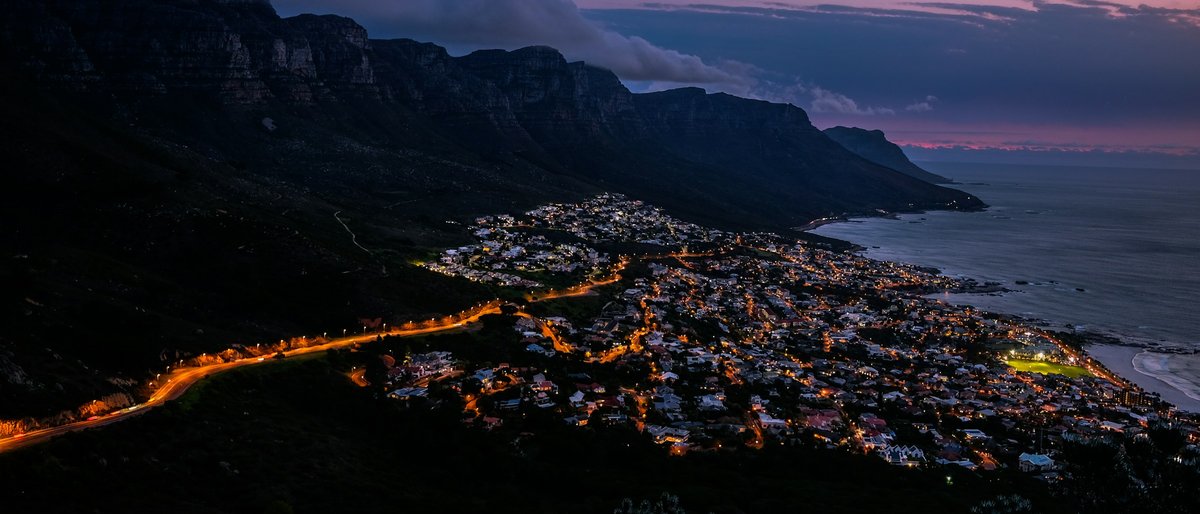
Stay in Cape Town in June
66 hotels in the Trip.com pool for Cape Town, from US$13 a night.
Opens Trip.com on Fri 4 Jun to Sun 6 Jun 2027; change the dates there.
June is the dead of winter in Cape Town, and you should know that upfront. This is the wettest month of the year (around 150mm of rain spread across roughly 12 days) and the kind of damp, penetrating cold that 11°C (52°F) at the coast produces is easy to underestimate. It's not freezing, but the wind off the Atlantic carries a chill that settles into your bones. Table Mountain spends much of the month wrapped in its famous "tablecloth" of cloud, and some days you won't see the summit at all.
That said, June has a certain moody appeal that the glossy summer photos never capture. The city quiets down considerably. Restaurant tables that require weeks of advance booking in December are yours on a whim. Hotel rates drop sharply. The Winelands turn green and lush after months of dry summer, and there's something lovely about tasting Pinotage next to a roaring fireplace in Franschhoek while rain streams down the windows. Southern right whales start appearing along the coast, and the fynbos on the mountainsides looks its richest.
But let's be honest: if you're picturing beach days at Camps Bay and sundowners with ocean views, June will disappoint you. The water temperature hovers around 13°C (55°F), sunset comes before 6pm, and you'll likely spend at least a few days rearranging plans around weather. Come with the right expectations, though, and you'll find a quieter, cheaper, more intimate version of the city that plenty of repeat visitors prefer.
Why visit in June
- Hotel rates drop 30-50% from peak summer prices: the kind of savings that let you upgrade from a guesthouse to a boutique hotel in the same neighborhood
- Southern right whales begin arriving along the False Bay coast, with early sightings from shore at Muizenberg and Fish Hoek
- The Winelands are at their most atmospheric: green vineyards, crackling fireplaces, and no tour bus crowds at estates like Boschendal or Delaire Graff
- Restaurants across the city run winter specials and prix fixe menus, and places like La Colombe or The Test Kitchen are far easier to book
- The fynbos and proteas on Table Mountain's slopes are lush from the rains, and waterfalls that barely trickle in summer are running strong
Worth knowing
- 150mm of rainfall across roughly 12 days: some storms roll in for a full day, and outdoor plans require genuine flexibility
- Daylight hours are short, with sunrise around 7:50am and sunset by 5:45pm, limiting sightseeing time considerably
- Table Mountain cableway closes frequently due to high winds and low cloud: expect at least a few days where the summit is simply not accessible
- The Atlantic Seaboard beaches are essentially off-limits for swimming, and even walking along the Sea Point promenade can feel raw in the wind
Best for
Think twice if
June is Cape Town's wettest month and the heart of winter. Expect cool, grey days punctuated by proper Atlantic storms that can bring horizontal rain and strong northwesterly winds. Temperatures sit around 17.9°C (64°F) during the day and drop to 11.1°C (52°F) at night, though wind chill along the coast makes it feel colder. You'll get roughly 12 rainy days, and when it rains, it tends to commit, not the brief tropical showers you might be used to, but half-day affairs. Humidity runs around 79%, and the dampness has a way of making the cold feel sharper than the thermometer suggests. Clear days do happen, and when they arrive, the light is gorgeous: low and golden, with crisp air and views that stretch forever. But you can't count on them.
Seasonal caution
- Strong northwesterly storms can bring sustained winds of 60-80 km/h (37-50 mph) along the Atlantic coast, making exposed walkways and coastal paths dangerous: stay away from rocky shorelines during storm warnings
- Flooding occurs in low-lying areas of the Cape Flats during heavy downpours; if you're driving, avoid underpasses and unfamiliar roads during intense rain
- Mountain rescue operations increase in winter: trails on Table Mountain and Lion's Head become slippery and visibility drops fast when cloud rolls in, so hike only on clear mornings and tell someone your route
Year-round climate
Averages from the last 5 years.
| Month | Avg high (°C) | Avg low (°C) | Rainfall (mm) |
|---|---|---|---|
| Jan | 26 | 17 | 12 |
| Feb | 26 | 17 | 11 |
| Mar | 24 | 16 | 50 |
| Apr | 22 | 14 | 45 |
| May | 19 | 12 | 80 |
| Jun | 18 | 11 | 150 |
| Jul | 16 | 10 | 137 |
| Aug | 17 | 10 | 96 |
| Sep | 18 | 11 | 47 |
| Oct | 22 | 13 | 24 |
| Nov | 23 | 15 | 19 |
| Dec | 24 | 16 | 32 |
Holidays and festivals in June
Public holidays
- Youth Day(Youth Day)16 June 2027
Best things to do in June
Whale watching from the shore at False Bay
wildlifeSouthern right whales begin their annual migration from Antarctic feeding grounds to the warmer waters of Walker Bay and False Bay. June marks the start of the season, and while peak numbers arrive in September-October, early sightings from the cliffs above Fish Hoek and Muizenberg offer the thrill of spotting the first arrivals without any crowds.
The whale migration begins in June: early arrivals mean you might have a sighting entirely to yourself, unlike the packed viewing points later in spring.Booking tipNo booking needed for shore-based viewing. Bring binoculars and check local whale hotlines or social media groups for recent sighting locations.
Winelands fireplace tastings
food and drinkThe Stellenbosch, Franschhoek, and Paarl wine regions transform in winter. Vines are bare, the mountains behind them are green, and the tasting rooms shift from terrace seating to fireside experiences. Many estates offer winter-only tasting menus that pair wines with heartier dishes: think slow-braised lamb with a reserve Shiraz.
Winter is when the Winelands are quietest and most atmospheric. Estates that feel like tourist conveyor belts in summer become intimate, and winemakers often have time to pour and chat themselves.Booking tipWeekend tastings at popular estates like Babylonstoren or Tokara still fill up: book a day or two ahead. Midweek is generally walk-in.
Kirstenbosch winter concert series and garden walks
natureWhile the famous summer sunset concerts are over, Kirstenbosch Botanical Garden has a different character in winter. The rainfall brings the indigenous gardens to life: proteas, ericas, and restios are all lush. Some years the garden hosts winter-specific events. Even without events, walking the trails after morning rain, with the mountain behind you and almost nobody around, is quietly spectacular.
June rainfall triggers a flush of growth in the fynbos collections, and the garden is nearly empty compared to summer: you'll have the boomslang canopy walkway largely to yourself.Explore the Bo-Kaap on a cooking class
culturalThe colourful houses of the Bo-Kaap look striking against grey winter skies, and this is the right season for learning Cape Malay cooking: the cuisine leans heavily on warm spices and slow-cooked stews that feel made for cold weather. Several local families run cooking classes out of their homes.
Winter dishes like bobotie, denningvleis, and bredie are what Cape Malay cooking does best, and June is when locals are making these dishes at home: the classes feel authentic rather than performative.Booking tipBook at least a week ahead, as most home-based classes take only 4-8 people.
Lion's Head sunrise hike on a clear morning
outdoorWhen the weather cooperates, a winter sunrise hike up Lion's Head is one of Cape Town's finest experiences. The air is clean after rain, the light is low and warm, and you can often see the city, both oceans, and Table Mountain all draped in mist. The catch is you need a clear morning, and in June those are a coin toss.
Winter air clarity after storms produces the sharpest, most dramatic views of the year. The cool temperatures also make the steep sections far more pleasant than climbing in summer heat.Booking tipNo booking needed. Start early: sunrise is around 7:50am, so a 6:30am departure from the parking area gives you time. Bring a headlamp and watch for wet, slippery rock sections near the chains.
Muizenberg and Kalk Bay village crawl
neighbourhoodThe stretch of the False Bay coast from Muizenberg through St James to Kalk Bay is one of Cape Town's most characterful corridors. In winter, the waves at Muizenberg are bigger (surfers love it), and Kalk Bay's string of galleries, bookshops, and cafés feels like a small fishing village rather than a tourist strip. Pop into Olympia Café for coffee and watch the harbour seals.
Winter swells bring the best surf to Muizenberg, the harbour at Kalk Bay is active with snoek boats coming in, and the village has its local rhythm back without the summer crowds.Visit Zeitz MOCAA and the V&A Waterfront
culturalZeitz Museum of Contemporary Art Africa, housed in the converted grain silo at the V&A Waterfront, is a excellent museum that deserves a rainy-day half-day. The building's carved-out concrete interiors are architecturally impressive, and the collection focuses on contemporary African art. The Waterfront itself has enough covered restaurants, shops, and the Two Oceans Aquarium to fill a full wet day.
Rainy days in June need indoor plans, and Zeitz MOCAA is the single best indoor cultural experience in the city. Wednesday mornings are free for South African citizens, keeping the museum on locals' radar.Booking tipBook online to skip the queue, on rainy weekends when everyone has the same idea.
Franschhoek Motor Museum
indoor attractionTucked inside the L'Ormarins wine estate, this museum houses a rotating collection of over 200 vintage cars spanning more than a century. It's a genuine surprise: the collection rivals dedicated European car museums, and the estate grounds are beautiful even in rain. Combine it with a tasting at L'Ormarins or lunch at nearby Marigold.
A perfect indoor option for a rainy Winelands day, which in June you'll almost certainly need. The estate is far less visited in winter, so you get an unhurried experience.Booking tipOpen most days but confirm hours, as the estate occasionally closes for private events.
What to eat in June
In season: fruit
Winter citrus
Naartjies (South African mandarins) and navel oranges hit their stride in June. The Western Cape is citrus country, and roadside farm stalls along the N1 and N2 sell bags of well ripe fruit for almost nothing. The sweetness peaks after the first cold snaps.
On menus now
Waterblommetjiebredie
A slow-cooked lamb stew made with waterblommetjies: water flowers harvested from the vleis and dams of the Western Cape during winter rains. This dish only appears on menus when the flowers are in season, and June is prime time. Rich, earthy, and local: you'll find it at traditional Cape restaurants and some wine estate kitchens.
Cape Malay bobotie
While available year-round, bobotie (spiced mince baked with an egg custard topping) is peak comfort food in winter. The Bo-Kaap neighborhood is where the dish has its deepest roots, and the warm spices (turmeric, coriander, cumin) feel well suited to grey June days.
Snoek braai
Snoek, a firm-fleshed fish from the cold Benguela current, is at its most plentiful in winter. You'll find it smoked or braaied (grilled over open coals) at fish markets in Hout Bay and Kalk Bay harbour. The smell of snoek on the braai is one of Cape Town's defining winter scents: smoky, salty, and unmistakable.
Street food peaks
Koeksisters
These braided, deep-fried dough twists soaked in cold sugar syrup are a traditional Cape treat. The crisp outside and soft, syrupy inside pair well with a hot cup of rooibos on a rainy afternoon. Find them at bakeries in the Bo-Kaap or at the Saturday Neighbourgoods Market.
What to drink
Glühwein and hot chocolate
Wine estates in Stellenbosch and Franschhoek serve their own spiced warm wine during winter months. It's become a proper tradition: mulled with cinnamon, cloves, and star anise. The hot chocolate scene in Cape Town has also levelled up, with shops like Honest Chocolate in the East City Precinct doing single-origin drinking chocolate that's worth seeking out.
Regular events in June
Wacky Wine Weekend (Winelands)
A popular Robertson Wine Valley event where estates along Route 62 open their doors with special tastings, food pairings, and live music. It draws mostly locals and domestic tourists.
First weekend of June (varies by year)Cape Town International Film Festival screenings
While the main festival typically runs in other months, June often sees satellite screenings and special film events at venues like The Labia Theatre on Orange Street, one of the oldest independent cinemas in the country.
Various dates throughout JuneYouth Day (June 16)Free
A national public holiday commemorating the 1976 Soweto uprising. Museums and cultural sites often host free or discounted events. The Hector Pieterson Memorial in Soweto gets national attention, but Cape Town marks the day at sites like the District Six Museum and Robben Island.
June 16Good Food & Wine Show Cape Town
South Africa's largest food and wine consumer show sometimes falls in late May or early June at the CTICC. Features local chefs, wine producers, and food brands, with tastings and cooking demos.
Late May to early June (check annual dates)Best places this June
Kirstenbosch National Botanical Garden
gardenThe winter rains transform these gardens into a lush, green wonderland. Proteas and other fynbos species thrive, and the boomslang tree canopy walkway is practically deserted. After rain, the streams and small waterfalls through the garden are running at full force.
NewlandsKalk Bay
neighborhoodThis fishing village on the False Bay coast comes alive with a different energy in winter: snoek boats in the harbour, surfers in the waves, and the string of independent bookshops, art galleries, and cafés along Main Road keeps you dry between browsing. Kalk Bay Books is a local institution.
False BayBo-Kaap
historic neighborhoodThe pastel-painted houses of this historic Cape Malay quarter look striking against moody grey skies. The Auwal Masjid, South Africa's first mosque, is here, and the spice-scented air from home kitchens making winter curries is part of the experience. Quieter than in summer tourist season.
City BowlConstantia Wine Route
wine regionThe oldest wine-producing region in the Southern Hemisphere, right within the city limits. Groot Constantia, Buitenverwachting, and Steenberg all offer tastings, and their proximity to the city means you don't need a full day trip. Winter greenery and fewer visitors make these estates feel more like private gardens.
ConstantiaWoodstock and the Old Biscuit Mill
neighborhoodThe Saturday Neighbourgoods Market at the Old Biscuit Mill runs year-round, and winter is when you'll get to browse comfortably instead of fighting crowds. Woodstock's street art, design studios, and craft breweries are all walking distance. The Albert Road strip has some of the city's best independent coffee.
WoodstockRobben Island
historic siteThe former prison island where Nelson Mandela was held for 18 years. Ferry crossings can be rough in winter seas, but visitor numbers drop significantly. Tours are led by former political prisoners, and the experience feels more solemn and personal with a smaller group.
Table BayChapman's Peak Drive
scenic driveOne of the world's most scenic coastal drives, winding between Hout Bay and Noordhoek. Winter storms sometimes close the road, but when it's open after rain, waterfalls cascade off the cliff face directly onto the road. It's an entirely different experience from the dry summer drive.
Atlantic SeaboardDistrict Six Museum
museumA moving museum documenting the forced removal of 60,000 residents from this inner-city neighbourhood during apartheid. It's an indoor experience that deserves a couple of hours, and the stories told by former residents who sometimes volunteer as guides are affecting.
City Centre
Your packing checklist
Tick items off as you pack. Your progress saves in this browser.
All packed — have a great trip.
Insider tips
The Table Mountain cableway posts real-time operating status online: check it first thing in the morning and be ready to go immediately on clear days. In June, you might get only two or three good windows in an entire week, and they can close midday as cloud rolls in.
Kalk Bay harbour has a tiny fish market where the boats sell their catch directly. Get there before 9am when snoek boats come in and you can buy fish that was swimming an hour ago. The harbourside restaurants will grill it for you for a small fee.
Cape Town's electricity supply is more stable now, but winter storms still occasionally knock out power in certain areas. Keep your phone charged and download offline maps: Google Maps and Maps.me both work without signal if you've cached the area beforehand.
The Labia Theatre on Orange Street is the oldest independent cinema in South Africa and sells tickets for a fraction of mainstream cinema prices. In rainy June, a double feature here is a local ritual: the building itself has real character, with worn velvet seats and an intermission tradition.
Many wine estates in Stellenbosch and Franschhoek release winter-only tasting menus that pair wines with seasonal dishes: these are often better value and more interesting than the standard summer tasting flights. Ask specifically about winter pairings when you book.
Avoid these mistakes
- Planning every day around outdoor activities without backup options: June's rain can scrub two or three consecutive days. Always have an indoor alternative ready: museums, wine tastings, cooking classes, the Two Oceans Aquarium. Locals call it having a 'Plan B and Plan C.'
- Assuming Table Mountain will be accessible during a short visit: the cableway closes frequently for wind and weather, and you cannot hike to the summit safely in poor visibility. If you only have three days in Cape Town and one clear morning presents itself, drop everything and go.
- Underestimating the cold because Cape Town is in Africa: first-time visitors regularly arrive with summer wardrobes and spend their first day buying emergency fleeces at the V&A Waterfront. It's not Arctic cold, but 12°C with 79% humidity and coastal wind cuts through cotton fast.
- Booking Robben Island for the last day of your trip: winter seas sometimes cancel ferries entirely, and you'll have no buffer day to rebook. Schedule it early in your stay so you have fallback options.
Practical tips for June
Book Table Mountain and Robben Island for the first days of your trip, not the last: weather cancellations are common in June, and early booking gives you rebooking flexibility. Most attractions keep regular hours, but some outdoor operators (paragliding, kayaking, boat tours) reduce schedules or close entirely for winter. Always confirm the day before. Restaurant reservations are rarely needed except for top-end places on weekends: the city is noticeably quiet. Uber and Bolt work well throughout the city and are the easiest way to get around, in rain. Renting a car is worth it if you're heading to the Winelands or driving Chapman's Peak, but parking in the City Bowl is tight. Youth Day on June 16 is a public holiday: some businesses close, but tourist attractions stay open. Sunset is around 5:45pm, so plan your active sightseeing for mornings and early afternoons. If you're driving the Garden Route as an extension, June rainfall affects roads around Knysna and Storms River: check conditions before setting out.
FAQ
Is June a good time to visit Cape Town?
It depends entirely on what you're after. June is the wettest, coldest month, so it's not good for beach holidays or guaranteed outdoor activities. But if you want lower prices, empty restaurants that are impossible to book in summer, atmospheric Winelands visits, and early whale watching: it has real appeal. Expect to work around the weather rather than fighting it. For most first-time visitors with limited time, October through March is a safer bet.
What is the weather like in Cape Town in June?
Cool and wet. Average highs reach about 17.9°C (64°F) and lows drop to 11.1°C (52°F). Rainfall averages 150mm across roughly 12 rainy days, and the humidity sits around 79%. The rain tends to come in proper frontal systems: a full morning or afternoon of steady rain rather than brief showers. Wind chill near the coast makes it feel colder than the numbers suggest. You will need warm layers and proper rain gear. Clear days happen and they're gorgeous, but you cannot plan around them with any certainty.
Is Cape Town crowded in June?
Not at all. June is deep low season. International tourist numbers drop significantly, and while South African school holidays in late June bring some domestic visitors, you'll find most attractions, restaurants, and accommodation far quieter than the November-March peak. The V&A Waterfront has a baseline bustle year-round, but popular spots like Kirstenbosch, Table Mountain (when open), and the Winelands feel practically private.
Can you swim at Cape Town beaches in June?
Technically yes, but realistically no: at least not comfortably. Atlantic side water temperatures sit around 10-12°C (50-54°F), and even the warmer False Bay side barely reaches 14°C (57°F). Air temperatures in the mid-teens with wind make beach swimming pretty miserable. Muizenberg surfers wear thick wetsuits year-round. If swimming matters to your trip, visit between December and March.
Is it worth visiting the Winelands in June?
Many repeat visitors argue winter is the best time for the Winelands. The summer crowds vanish, the valleys are green and lush, and tasting rooms shift to a cozy, fireside atmosphere. Estates often release winter-specific tasting menus pairing wines with hearty seasonal dishes. You'll have more personal interactions with winemakers and staff. The rain can limit vineyard walks, but the tasting experience itself is arguably richer than in the busy summer months.
Things to Do in Cape Town in June
 Free cancellation
 Cape of Good Hope and Boulders Penguins Day Tour from Cape Town
Day trip: free cancellation.
via Viator Free cancellation
 Table Mountain, Penguins & Cape Point Group Tour from Cape Town
Day trip: 10 hours, free cancellation.
via Viator Free cancellation
 Cape Town: Lion's Head Sunrise/Sunset Hike
Outdoor experience: 3.5 hours, free cancellation.
via Viator Free cancellation
 5-Star Small-Group: Cape of Good Hope, Penguins & Bo-Kaap Tour
Day trip: 10 hours, free cancellation.
via Viator Free cancellation
 #1 Boulders Penguins & Cape Point Full Day Tour with Pickup
Day trip: 9 hours, free cancellation.
via Viator Free cancellation
 Cape Town Wine Tour: Stellenbosch & Franschhoek +Tastings & Lunch
Day trip: 8.5 hours, free cancellation.
via ViatorFind a flight to Cape Town
Live fares to Cape Town appear here once cookies are accepted.
Last verified by automated review (v1.7.1) on . What is automated review?