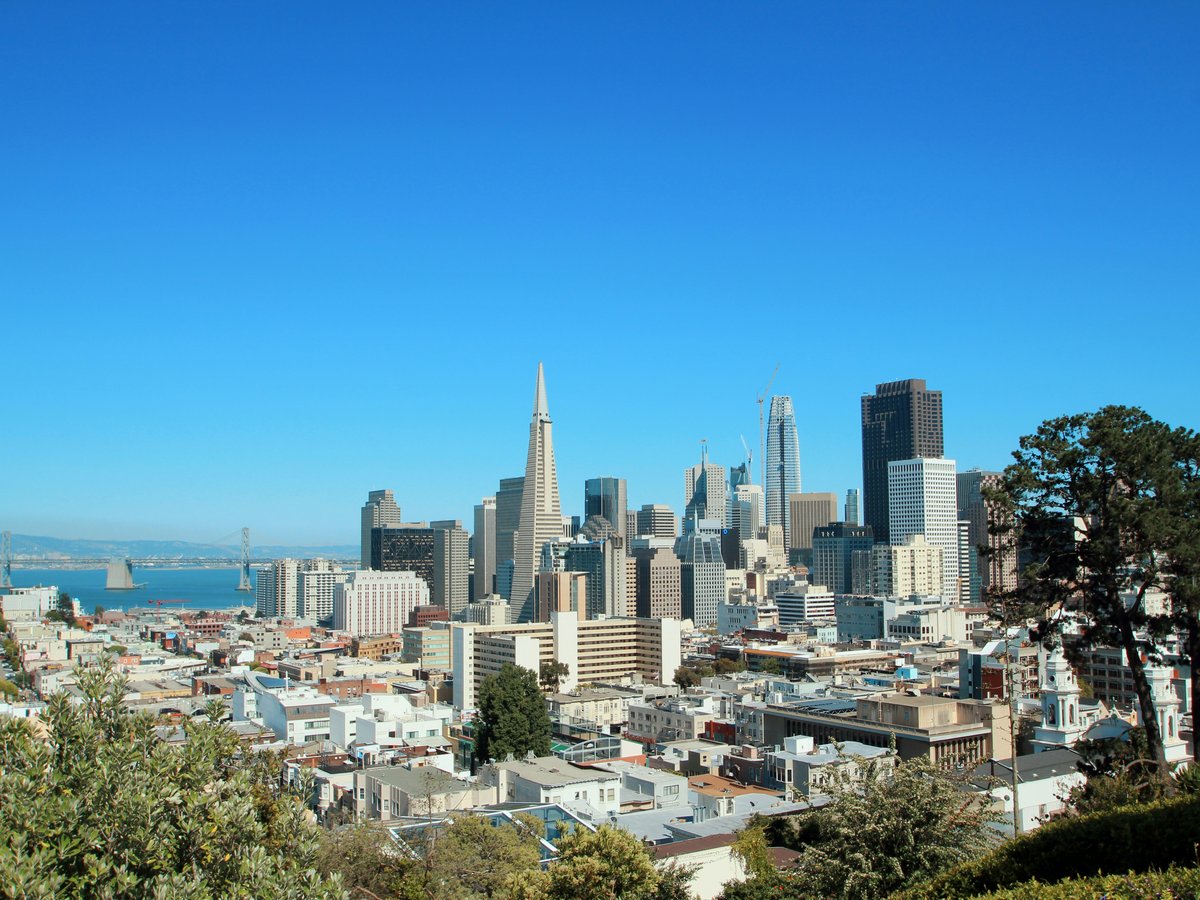
Stay in San Francisco in February
83 hotels in the Trip.com pool for San Francisco, from US$24 a night.
Opens Trip.com on Fri 5 Feb to Sun 7 Feb 2027; change the dates there.
February in San Francisco means rain, lower hotel prices, and the largest Chinese New Year celebration outside of Asia. Expect daytime highs around 14.4°C (58°F) and lows near 7.7°C (46°F), with about 89mm of rain spread across 8 days. Storms tend to roll through in 1-2 day bursts, leaving windows of clean, crisp sunshine between them. The hills look their greenest after the winter rains, and foot traffic at places like Fisherman's Wharf drops to maybe a third of what you'd see in July.
The big draw is Chinese New Year. San Francisco's parade along Kearny Street has been running since the 1860s, and the Golden Dragon alone needs over 100 people to carry its 268-foot length. The exact date follows the lunar calendar, so it shifts year to year, but it typically lands in February. For those two weeks, Chinatown fills with firecrackers, lion dancers, and the smell of sesame balls frying in oil at the bakeries along Grant Avenue. Tens of thousands of spectators line the route on parade night.
Outside of the parade, February rewards people who like eating and being indoors. Dungeness crab is at peak season, and you can still find it cracked and piled on newspaper at stalls along Jefferson Street. SFMOMA in SoMa and the de Young Museum in Golden Gate Park have room to breathe. SF Beer Week brings around 10 days of tap takeovers and tasting events at breweries across the city. If you're comfortable in layers and don't mind a rain jacket, February is a solid, affordable window to visit a city that usually charges a premium.
Why visit in February
- Chinese New Year Parade in Chinatown, the largest outside of Asia, with lion dances, firecrackers, and the 268-foot Golden Dragon carried along Kearny Street by over 100 volunteers
- Hotel rates in neighborhoods like Union Square and SoMa typically drop 30-40% below their September and October peaks
- Dungeness crab season runs through February at its prime, available fresh at the Ferry Building and Fisherman's Wharf stalls
- Shorter lines at major attractions like Alcatraz, the California Academy of Sciences, and SFMOMA compared to summer months
Worth knowing
- About 89mm of rainfall across 8 rainy days, which can wash out outdoor plans at Ocean Beach or Lands End without warning
- Daylight is limited to roughly 10.5 hours, with sunset around 5:45 PM, cutting into afternoon sightseeing at places like Twin Peaks
- The city feels noticeably gray for stretches of 2-3 days between storms, and the dampness can make 14°C (58°F) feel closer to 10°C (50°F)
- Some outdoor tour operators reduce schedules or shut down, particularly bike rental outfits and smaller boat tours near the Embarcadero
Best for
Think twice if
Cool, damp, and changeable. February sits in the back half of San Francisco's wet season, with rain arriving in Pacific storm systems that typically last 1-2 days before clearing. Mornings often start with fog or low clouds over the western neighborhoods like the Sunset and the Richmond, though the Mission District tends to stay a few degrees warmer. The 79% average humidity makes the cool air feel penetrating against bare skin. You might get 3-4 consecutive sunny days, then 2 days of steady rain. Wind picks up along the Embarcadero and at the Golden Gate Bridge viewpoints, and the salt air off the Bay carries a noticeable chill.
Seasonal caution
- Atmospheric rivers, concentrated bands of Pacific moisture, can bring 50-75mm of rain in a single 24-hour period during February. These events occasionally cause localized flooding on roads in low-lying areas near Mission Creek and parts of the Sunset District. Check the National Weather Service Bay Area forecast before planning hikes on trails at Lands End or in the Marin Headlands.
Year-round climate
Averages from the last 5 years.
| Month | Avg high (°C) | Avg low (°C) | Rainfall (mm) |
|---|---|---|---|
| Jan | 14 | 8 | 104 |
| Feb | 14 | 8 | 89 |
| Mar | 14 | 9 | 104 |
| Apr | 16 | 10 | 22 |
| May | 17 | 11 | 12 |
| Jun | 18 | 12 | 2 |
| Jul | 18 | 13 | 0 |
| Aug | 20 | 14 | 1 |
| Sep | 20 | 14 | 5 |
| Oct | 20 | 13 | 43 |
| Nov | 16 | 10 | 78 |
| Dec | 13 | 8 | 191 |
Holidays and festivals in February
Public holidays
- Lincoln's Birthday(Lincoln's Birthday)12 February 2027
- Presidents Day(Washington's Birthday)15 February 2027
Headline events
San Francisco Chinese New Year Parade
Mid-to-late February (follows the lunar calendar, can occasionally fall in late January or early February)
The largest Chinese New Year celebration outside of Asia, running continuously since the 1860s. The parade route winds through Chinatown along Kearny Street, with over 100 floats, marching bands, lion dancers, firecrackers, and the 268-foot Golden Dragon carried by a team of more than 100 people. Tens of thousands of spectators line the route. The smell of gunpowder from firecrackers mixes with the sound of drums echoing off the narrow streets around Grant Avenue.
Best things to do in February
Watch the Chinese New Year Parade in Chinatown
cultureSan Francisco's Chinese New Year Parade runs along Kearny Street through Chinatown, with over 100 floats, the 268-foot Golden Dragon, lion dancers, marching bands, and firecrackers. The parade has been running since the 1860s, and tens of thousands of spectators pack the sidewalks on parade night. The noise of drums and firecrackers bounces off the buildings, and the air smells like gunpowder and fried food from the street vendors.
The parade follows the lunar calendar and typically falls in February, making it the defining cultural event of the month in San Francisco.Booking tipArrive at least 90 minutes early to claim a spot along Kearny Street near Clay Street for the best views. Dress warmly, as you'll be standing still in evening temperatures around 8-10°C (46-50°F).
Eat Dungeness crab at Fisherman's Wharf
foodFebruary is peak Dungeness season, and the crab stalls along Jefferson Street sell freshly cracked crab on newspaper. The crabs are at their heaviest this time of year, pulled from waters off Half Moon Bay. The salty, sweet smell of crab cooking in huge pots fills the sidewalk. You can also sit down for cioppino at Sotto Mare in North Beach or warm crab rolls at Swan Oyster Depot on Polk Street.
Dungeness crabs reach peak weight and flavor in February before the season winds down through spring.Explore SFMOMA without the crowds
cultureThe San Francisco Museum of Modern Art in SoMa holds over 33,000 works across 7 floors, including pieces by Frida Kahlo, Andy Warhol, and Alexander Calder. In February, you can stand in front of a Gerhard Richter painting for 10 minutes without anyone nudging past you. The building itself, designed by Mario Botta with a later expansion by Snøhetta, feels like an exhibit on its own. The top-floor terrace has views toward Yerba Buena Gardens.
February's low tourist season means noticeably thinner crowds, shorter entry lines, and a quieter gallery experience than summer months.Walk the Lands End trail on a clear day
outdoorThe Lands End trail runs about 2.5 kilometers along the rocky coastline at the northwest corner of San Francisco, between the Sutro Baths ruins and the Eagle Point overlook. On a clear February day, the views of the Golden Gate Bridge, the Marin Headlands, and the Pacific Ocean are sharp. You'll hear waves crashing against the rocks below, and the cypress trees along the path carry a strong green, resinous scent after rain.
Winter rains turn the hillside vegetation bright green, and the clear days between storms offer some of the crispest visibility of the year.Booking tipCheck the National Weather Service Bay Area forecast the morning of your walk. February storms can make the trail slippery and the exposed sections windy.
Visit the California Academy of Sciences in Golden Gate Park
cultureThe Academy of Sciences combines a natural history museum, aquarium, planetarium, and 4-story rainforest dome under one living roof in Golden Gate Park. The rainforest dome is warm and humid, a noticeable contrast to February's cool air outside. Free-flying butterflies land on the handrails. The aquarium level holds a 7.6-meter deep Philippine coral reef tank. On Thursday evenings, the NightLife series opens the museum to adults with drinks and DJ sets.
February's low season means shorter lines at popular exhibits like the rainforest dome, where summer waits can stretch well past 30 minutes.Browse the Ferry Building Farmers Market
foodThe Saturday morning farmers market at the Ferry Building on the Embarcadero draws vendors from across Northern California. In February, you'll find Meyer lemons, blood oranges, winter greens, fresh-caught fish, and early spring vegetables. Inside the Ferry Building itself, permanent vendors sell artisan cheeses, freshly baked bread, coffee, and oysters. The space has a wet-stone-and-sourdough smell that's hard to forget.
February is peak citrus season in California, and the market stalls overflow with Meyer lemons, blood oranges, mandarins, and kumquats from Central Valley farms.Ride the cable cars on the Powell-Hyde line
sightseeingThe Powell-Hyde cable car line runs from the turntable near Union Square up and over Russian Hill, then drops steeply down toward Aquatic Park and Ghirardelli Square. In February, the typical summer wait of 45 minutes or more at the Powell Street turntable shrinks to a fraction of that. The views from the Hyde Street descent toward Alcatraz and the Bay are unobstructed. You'll feel the cold wind off the water as the car descends.
February's low crowds mean shorter waits at the turntable and more room on the car itself, which makes the experience closer to a ride than a cattle line.Explore Chinatown during the New Year festival
cultureFor about two weeks around Chinese New Year, San Francisco's Chinatown fills with lion dancers, firecrackers, and red lanterns. The bakeries along Grant Avenue and Stockton Street sell sesame balls, egg tarts, and nian gao (sticky rice cake). Incense smoke drifts from the Tin How Temple on Waverly Place, and the narrow alleys like Ross Alley fill with the sound of firecrackers. The flower fair on Grant Avenue sells kumquat trees and peonies.
Chinese New Year celebrations center on Chinatown for roughly two weeks in February, transforming the neighborhood into a festival ground.What to eat in February
In season: fruit
Meyer lemons
California's Meyer lemon harvest peaks in January and February. These sweeter, rounder cousins of regular lemons show up at the Ferry Building Farmers Market and in cocktails across the city. Bartenders at spots in the Tenderloin and Mission use them in sours and seasonal twists. You might notice them in desserts too, from tarts at Tartine Bakery in the Mission to curd-filled pastries at b. Patisserie on California Street.
Blood oranges
Blood oranges from California's Central Valley hit peak availability at Bay Area farmers markets in February. The Moro and Tarocco varieties show up at the Ferry Building Saturday market and at produce stalls in Chinatown. The deep crimson flesh has a slightly tart, berry-like quality. Worth noting, they typically disappear by mid-March.
On menus now
Cioppino
San Francisco's signature seafood stew was born among Italian fishermen in North Beach in the late 1800s. It's a tomato-based broth loaded with Dungeness crab, clams, mussels, and shrimp. On a rainy February evening at Tadich Grill downtown or Anchor Oyster Bar in the Castro, a bowl of cioppino hits differently than it would in August. The dish exists year-round, but February is when it feels most necessary, and the crab in it is at peak freshness.
In markets
Dungeness crab
February is peak Dungeness season on the Northern California coast. The crabs are at their heaviest and meatiest, pulled from cold Pacific waters off Half Moon Bay and Bodega Bay. You'll find them cracked and served cold at stalls in Fisherman's Wharf, or in warm cioppino at restaurants like Sotto Mare in North Beach. The season typically runs November through June, but February tends to be the sweet spot before prices climb in spring.
Festival food
Sesame balls
During Chinese New Year in February, the bakeries along Grant Avenue and Stockton Street in Chinatown sell sesame balls by the hundreds. These glutinous rice dough spheres, coated in sesame seeds and deep-fried, come filled with sweet red bean or lotus paste. They're warm, crunchy on the outside, and chewy inside. You'll smell the sesame oil from the sidewalk.
Regular events in February
SF Beer Week
Around 10 days of tap takeovers, brewery collaborations, and tasting events at venues across San Francisco, from brewpubs in SoMa to taprooms in the Dogpatch. Typically features over 100 individual events at participating breweries and bars.
Usually starts the second Friday of FebruaryNoise Pop Music Festival
An independent music and arts festival that has run in San Francisco since 1993, featuring around 150 bands across venues in the Mission, SoMa, and the Haight. Shows happen at places like the Chapel on Valencia Street and the Rickshaw Stop on Fell Street.
Late February, usually spanning about a weekSan Francisco Chronicle Wine Competition public tasting
The public tasting event for one of the largest American wine competitions, held at Fort Mason Center. Hundreds of award-winning wines from California and beyond are poured, and the Fort Mason waterfront location overlooks the Golden Gate Bridge.
Mid-February, usually a SaturdayTulipmania at Pier 39Free
A free flower display at Pier 39 near Fisherman's Wharf featuring over 39,000 tulips, hyacinths, daffodils, and other spring bulbs in bloom. The display typically runs from late February into early March and fills the pier's outdoor areas with color against the gray winter sky.
Late February through early MarchBest places this February
Chinatown
neighborhoodThe oldest Chinatown in North America, centered on Grant Avenue and Stockton Street. In February, the Chinese New Year decorations, red lanterns, and flower vendors transform the neighborhood. Duck into the Tin How Temple on Waverly Place, the oldest Chinese temple in the United States, dating to 1852.
ChinatownSFMOMA
museumSeven floors of modern and contemporary art in SoMa, housing over 33,000 works. The Snøhetta-designed expansion added significant gallery space. February's low season means you can linger at exhibitions without the shoulder-to-shoulder crowds of summer.
SoMaFerry Building
marketA 1898 Beaux-Arts terminal on the Embarcadero, now home to artisan food vendors and the celebrated Saturday farmers market. In February, the market is loaded with winter citrus from Central Valley farms. The permanent vendors inside sell everything from oysters to hand-pulled mozzarella.
EmbarcaderoSutro Baths ruins
landmarkThe skeletal concrete remains of Adolph Sutro's 1896 bathhouse sit at the western edge of the city, near the Cliff House site. In February, winter swells send spray up through the ruins, and the surrounding hillside is bright green. The cave at the north end of the site echoes with wave noise.
Outer RichmondGolden Gate Park
parkOver 400 hectares stretching from the Haight to Ocean Beach. February brings green grass, blooming winter flowers in the Conservatory of Flowers, and relatively empty paths. The Japanese Tea Garden, the oldest public Japanese garden in the United States (opened in 1894), is especially quiet on weekday mornings.
Inner Sunset / Inner RichmondAlcatraz Island
landmarkThe former federal penitentiary in San Francisco Bay, reached by a short ferry from Pier 33. February is one of the easiest months to get tickets, which often sell out weeks in advance during summer. The audio tour, narrated by former guards and inmates, takes about 2 hours. Wind on the island feels colder than the mainland.
San Francisco BayThe Mission District
neighborhoodSan Francisco's sunniest neighborhood, owing to its position in a microclimate pocket that often escapes the fog blanketing the western side of the city. Murals line the walls of Balmy Alley and Clarion Alley. In February, the taquerias, bakeries, and coffee shops along Valencia Street and 24th Street are lively without the summer crush.
Missionde Young Museum in Golden Gate Park
museumThe de Young holds American art from the 17th century to the present, plus collections from Africa, Oceania, and the Americas. The Hamon Observation Tower on the 9th floor offers free 360-degree views of the park, downtown, and the Pacific Ocean. On a clear February afternoon, the visibility from the tower can stretch to the Farallon Islands, 48 kilometers offshore.
Golden Gate Park
Your packing checklist
Tick items off as you pack. Your progress saves in this browser.
All packed — have a great trip.
Insider tips
The Mission District sits in a rain shadow that keeps it noticeably drier than the Sunset or Richmond neighborhoods on the city's west side. On a gray February day, the Mission might be sunny while Lands End is fogged in. Check the difference before committing to a neighborhood for the day.
For Chinese New Year Parade viewing, the stretch of Kearny Street between Clay and Sacramento Streets tends to be less packed than the Market Street end. Arrive 90 minutes early and bring a thermos of something warm, because you'll be standing still in 8-10°C evening air.
Alcatraz tickets are far easier to get in February than any month from May through October. That said, book at least 2 weeks ahead through the official concessionaire, because the reduced winter schedule means fewer daily departures.
The Ferry Building Saturday farmers market runs year-round, but the February edition is when vendors bring peak-season citrus from the Central Valley. Meyer lemons, blood oranges, and satsuma mandarins are piled high. Go before 10 AM to beat the brunch crowd.
Parking near Chinatown during Chinese New Year is nearly impossible. Take BART to the Montgomery Street station or the Muni 30-Stockton bus, which drops you right on Stockton Street in the middle of the festivities.
Avoid these mistakes
- Packing for California sunshine. February in San Francisco is 14°C and rainy, not the warm, dry weather most people picture when they hear 'California.' Visitors who show up in shorts and sandals are cold and wet by noon.
- Assuming the whole city has the same weather. San Francisco's microclimates are dramatic. The Mission can be 5°C warmer and dry while the Sunset is foggy and damp. Check conditions by neighborhood, not city-wide.
- Skipping Alcatraz because you think tickets will be available day-of. Even in low season, same-day availability is limited. Book online at least 2 weeks before your trip.
- Driving into Chinatown during Chinese New Year celebrations. Streets close for the parade and surrounding events, and the narrow streets are packed with pedestrians. Public transit or walking from a nearby BART station is the practical option.
- Waiting until evening to explore Chinatown's food scene during the New Year festival. The bakeries on Grant Avenue and Stockton Street sell out of popular items like sesame balls and egg tarts by mid-afternoon on weekends.
Practical tips for February
February in San Francisco calls for layers and flexibility. Mornings near 7.7°C (46°F) can warm to 14°C (58°F) by midday, and rain can start without much warning. Carry a compact umbrella and a waterproof shell in your day bag. Book Alcatraz ferry tickets at least 2 weeks in advance, even in low season, because the winter schedule runs fewer departures. MUNI and BART cover most of the city and are the practical choice during Chinese New Year, when street closures and parking restrictions hit Chinatown and the Financial District. Restaurant reservations at popular spots in the Mission and North Beach are easier to get than in summer, but weekend brunch still fills up. If you're visiting during the Chinese New Year Parade, dress for standing outdoors in 8-10°C evening air for 2-3 hours. Bring a thermos.
FAQ
Is February a good time to visit San Francisco?
February is a fair time to visit. You'll deal with rain, about 89mm across 8 days, and cool temperatures around 14°C (58°F). But hotel rates drop 30-40% from autumn peaks, crowds at Alcatraz and SFMOMA thin out considerably, and the Chinese New Year Parade is one of the largest cultural events in the United States. If you're comfortable with layers and a rain jacket, the tradeoff tends to work in your favor.
How cold does San Francisco get in February?
Daytime highs typically reach about 14.4°C (58°F), and nighttime lows drop to around 7.7°C (46°F). It rarely feels bitterly cold in absolute terms, but the 79% humidity and wind off the Bay make it feel cooler than the numbers suggest. Exposed spots like the Golden Gate Bridge viewpoints and Crissy Field are noticeably colder than sheltered neighborhoods like the Mission.
Does it rain a lot in San Francisco in February?
February averages about 89mm of rain across roughly 8 rainy days. The rain tends to arrive in 1-2 day storm bursts from Pacific weather systems, followed by clear intervals that can last 3-4 days. It's rarely an all-month washout, but you'll want a waterproof jacket and flexible plans.
When is the Chinese New Year Parade in San Francisco?
The parade follows the lunar calendar, so the exact date shifts each year. It typically falls in mid-to-late February, though it can occasionally land in late January or early February. The parade itself is one evening, but Chinatown hosts related events, including a flower fair, lion dances, and street festivals, for roughly two weeks around the parade date.
What food is in season in San Francisco in February?
Dungeness crab is at peak season, available cracked at Fisherman's Wharf stalls and in cioppino at North Beach restaurants. Meyer lemons and blood oranges from the Central Valley appear at the Ferry Building farmers market and in cocktails across the city. The Chinese New Year festival brings sesame balls, egg tarts, and nian gao to Chinatown's bakeries.
Do I need to book Alcatraz tickets in advance for February?
Yes, even in February. The winter schedule runs fewer ferry departures per day, and Alcatraz remains popular year-round. Booking at least 2 weeks ahead through the official concessionaire is the safe approach. Same-day tickets occasionally appear, but relying on that is a gamble.
Things to Do in San Francisco in February
 Free cancellation
 Muir Woods and Sausalito Tour (Return by Bus or Ferry)
Day trip: free cancellation.
via Viator Free cancellation
 Napa and Sonoma Wine Country Full-Day Tour from San Francisco
Day trip: free cancellation.
via Viator Free cancellation
 Small Group Yosemite and Giant Sequoias Day Trip from San Francisco
Day trip: 14 hours, free cancellation.
via Viator Free cancellation
 Yosemite and Giant Sequoias Day Tour from San Francisco w Pickup
Outdoor experience: 15 hours, free cancellation.
via Viator Free cancellation
 San Francisco Super Saver: Muir Woods & Wine Country w/ optional Gourmet Lunch
Day trip: 11 hours, free cancellation.
via Viator Free cancellation
 San Francisco Love Tour
City tour: 2 hours, free cancellation.
via ViatorFind a flight to San Francisco
Live fares to San Francisco appear here once cookies are accepted.
Last verified by automated review (v1.7.2) on . What is automated review?