Stay in Jackson Hole in April
23 hotels in the Trip.com pool for Jackson Hole, from US$123 a night.
Opens Trip.com on Fri 2 Apr to Sun 4 Apr 2027; change the dates there.
April in Jackson Hole is mud season, the awkward interlude between the ski resort's closing and summer's start. Jackson Hole Mountain Resort typically shuts down in the first or second week of the month, Grand Teton National Park's interior roads stay gated, and the valley floor at 1,900 meters (6,200 feet) thaws into a soft mess of snowmelt, gravel, and standing water. Mornings start with frost crackling underfoot. By afternoon, the sun softens everything into cold slush that smells of wet sage and thawing earth.
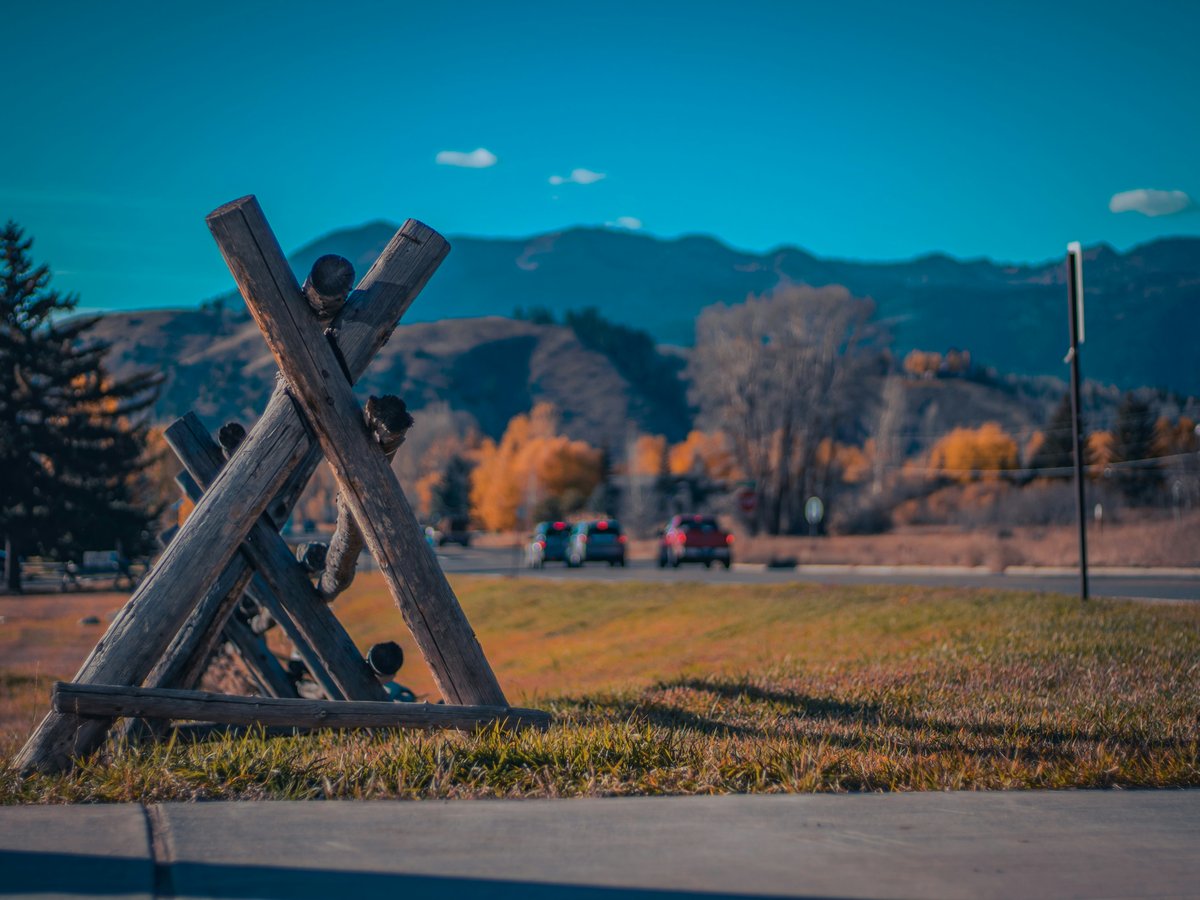
To be fair, the valley has a particular beauty this month that the summer crowds and February ski weeks never see. The Teton Range holds its deepest snowpack against sharp blue skies, and the light at this elevation has a clarity that tends to stop photographers mid-step. North of town, the National Elk Refuge's overwintering herd of roughly 7,000 animals begins its annual spring migration toward the high country. Moose browse along the Gros Ventre River, bald eagles circle the Snake River corridor, and you might have entire viewpoints to yourself for hours.
This is not a month for someone expecting a full itinerary. Teton Village, the ski base 19 kilometers (12 miles) northwest of Jackson, empties once the lifts stop turning. Wilson, the ranching community along Highway 22, keeps its handful of year-round restaurants open but offers little aimed at visitors. Downtown Jackson, centered on Town Square with its four elk-antler arches, stays active. If you want solitude, low-season pricing, and a landscape caught between two identities, April delivers. If you need guaranteed skiing or open hiking trails, pick February or July.
Why visit in April
- Accommodation rates sit at their annual low, making this the most affordable window in one of the country's most expensive resort towns.
- The spring elk migration across the National Elk Refuge creates one of the year's best wildlife-viewing windows, with minimal competition from other visitors.
- The Teton Range carries peak snowpack against clear spring skies, producing some of the most dramatic mountain photography conditions of any month.
- Crowds are at their annual minimum. You can walk into any restaurant in downtown Jackson without a reservation and find trailhead parking lots empty.
Worth knowing
- Jackson Hole Mountain Resort and Snow King Mountain typically close in the first half of April, eliminating alpine skiing for most of the month.
- Hiking trails above 2,000 meters (6,500 feet) in Grand Teton National Park remain buried under compacted snow, and the park's interior roads are gated through most of April.
- Many businesses in Teton Village reduce hours or close entirely once the ski season ends, limiting dining and shopping options outside downtown Jackson.
- Weather is genuinely unpredictable. A sunny morning can become a snow squall by 2 PM, and the daily temperature swing regularly exceeds 13 degrees Celsius.
Best for
Think twice if
April marks the slow transition from winter to spring in the Teton Valley, though 'spring' is generous for what you will experience. Daily highs average 7.7°C (46°F), warm enough to soften the snowpack by afternoon but not warm enough to feel comfortable without layers. Overnight lows average -5.6°C (22°F), and hard frost is a near-certainty most mornings. The month's 51mm of precipitation falls across roughly 12 days, arriving as cold rain in the town of Jackson and as fresh snow above about 2,400 meters (7,900 feet). Humidity averages 64%, modest by coastal standards but noticeable when wind from the northwest carries a raw bite across exposed terrain. Weather shifts come quickly. A clear blue morning can give way to a snow squall by early afternoon and clear again by sunset.
Seasonal caution
- Overnight temperatures drop to -5°C (23°F) and colder through the entire month. Exposed skin and inadequate layers create real frostbite risk during dawn wildlife-viewing sessions at the Elk Refuge or Oxbow Bend.
- Late-season snowstorms can drop 15-30 centimeters (6-12 inches) in 24 hours, even in the valley. Roads may become icy without warning, particularly the Teton Pass corridor between Jackson and Victor, Idaho.
- Avalanche danger persists in the Teton backcountry through April. Consult the Bridger-Teton National Forest avalanche advisory before any off-trail travel above treeline.
- Spring runoff makes creek crossings on lower trails unpredictable. Flat Creek and Cache Creek can rise rapidly during warm afternoon hours.
Year-round climate
Averages from the last 5 years.
| Month | Avg high (°C) | Avg low (°C) | Rainfall (mm) |
|---|---|---|---|
| Jan | -2 | -13 | 61 |
| Feb | 0 | -11 | 82 |
| Mar | 4 | -9 | 75 |
| Apr | 8 | -6 | 51 |
| May | 14 | -1 | 59 |
| Jun | 22 | 5 | 29 |
| Jul | 27 | 10 | 13 |
| Aug | 25 | 9 | 49 |
| Sep | 21 | 5 | 48 |
| Oct | 13 | -1 | 58 |
| Nov | 4 | -7 | 55 |
| Dec | 1 | -9 | 94 |
Best things to do in April
Late-season skiing at Jackson Hole Mountain Resort
skiingThe resort's final operating days offer corn snow on south-facing runs, shorter lift lines than any other period of ski season, and temperatures mild enough to ski in a light shell. The terrain still spans 2,500 acres (1,012 hectares) across Rendezvous and Apres Vous mountains, with the upper bowls holding good coverage through closing day.
The resort typically closes in the first or second week of April. These final days deliver some of the season's most relaxed skiing, with soft spring snow and minimal crowds.Booking tipCheck the resort's announced closing date well before booking. It shifts by a week or more depending on snowpack year to year.
Spring elk migration viewing at the National Elk Refuge
wildlifeThe refuge's overwintering herd begins moving north toward summer range in the Gros Ventre highlands and Yellowstone backcountry. You can watch from the refuge perimeter road or designated pullouts along Highway 26/89 north of Jackson. Bring binoculars. The animals cluster in groups of 50-200 across the open flats, and the sound of thousands of hooves on softening ground carries a surprising distance.
April is the primary migration window. The herd disperses from its winter concentration, and sightings are frequent from the road without needing to hike.Booking tipNo booking needed. Drive or walk the refuge road at dawn for the most active movement.
Cross-country skiing on Teton Park Road
skiingThe main road from Moose Junction toward Jenny Lake is closed to motor vehicles from November through early May, creating a 13-kilometer (8-mile) Nordic skiing corridor through the heart of Grand Teton National Park. The Teton Range fills the western skyline the entire route, and the plowed surface makes for smooth, easy skiing with massive views.
April's longer days and softening snow surface make this the most comfortable month for the route. You share it with no cars, and conditions remain reliable.Booking tipPark at the Taggart Lake trailhead near Moose. Bring your own gear or rent cross-country skis in Jackson.
Wildlife photography at Oxbow Bend
photographyThe Snake River overlook near Moran Junction offers reflections of Mount Moran in still water, often framed by morning fog in April. Moose, bald eagles, trumpeter swans, and great blue herons are all active here as spring migration and calving season overlap. The cold, damp air at dawn smells of river willow and wet gravel.
April morning temperatures create fog layers over the river that burn off by 9 AM, producing a narrow window of dramatic light and wildlife activity that summer's warmth eliminates.Booking tipArrive by 6:30 AM for the best fog conditions. The pullout fills even in April on clear mornings.
National Museum of Wildlife Art
cultureThe museum, opened in 1987, houses 14 galleries with over 5,000 works spanning 2,500 years of wildlife art. The building itself is carved into a hillside east of town, designed to evoke a Scottish ruin and overlooking the Elk Refuge below. Rotating spring exhibitions typically open in late March or early April.
Mud season means near-empty galleries. You can spend a half-day with major works by Carl Rungius, John James Audubon, and Georgia O'Keeffe without competing for sightlines.Booking tipNo advance booking needed in April. Check the museum's website for spring exhibition openings.
Jackson National Fish Hatchery spring spawning
natureThe hatchery, established in 1950, begins its spring Snake River cutthroat trout spawning operations in April. You can watch fish in the outdoor raceways, hear the rush of water through the concrete channels, and walk the interpretive trail along Flat Creek. Free admission year-round.
April's spawning activity brings the raceways to life after a quieter winter period. The interpretive displays explain native trout conservation across the Greater Yellowstone ecosystem.Booking tipNo booking required. Open daily, though hours may be reduced in shoulder season.
Early-season fly fishing on the Snake River
fishingCatch-and-release fly fishing opens on certain Snake River sections in April, with native cutthroat trout becoming active as water temperatures inch upward. The river below Jackson Lake Dam is the primary spring fishery. Nymphing with stonefly patterns tends to produce in the cold, slightly off-color water, and the sensation of a tight line in near-freezing current is its own kind of reward.
Snowmelt begins warming the river from winter lows, triggering the first insect hatches and bringing trout to feeding lanes. The river is quiet before summer's guide-boat traffic arrives in June.Booking tipBook a guide at least a week ahead. April guide availability is better than summer, but the best outfitters fill early.
What to eat in April
On menus now
Elk medallions with root vegetables
Game meat is central to Teton Valley dining year-round, but April's cold evenings make slow-braised elk with cellar-stored root vegetables the defining comfort plate of mud season. Most restaurants in downtown Jackson feature some variation.
Bison chili
Thick, slow-cooked bison chili appears on bar menus across downtown Jackson and Wilson as the shoulder-season staple. The lean meat comes from regional ranches in the Greater Yellowstone ecosystem.
Huckleberry pancakes
The Teton region's signature wild berry is harvested in late summer, but preserved huckleberries dominate breakfast menus through spring. Persephone Bakery and the Bunnery in downtown Jackson are known for their versions.
Snake River cutthroat trout
Early catch-and-release fly fishing opens on certain Snake River stretches in April. Restaurants source Yellowstone cutthroat from sustainable operations and typically serve it pan-seared with brown butter and foraged herbs.
What to drink
Wyoming craft whiskey
The state's small-batch distilleries supply local bars, and quiet shoulder-season evenings in Jackson tend to end with a pour of regional bourbon or rye. Spring tasting events occasionally surface during the slower April weeks.
Regular events in April
Pole Pedal PaddleFree
Jackson Hole's signature multi-sport relay race, with roots in the mid-1970s. Teams ski at the resort, then cycle, run, and paddle the Snake River in sequence. The transition zones at the base of Rendezvous Mountain are chaotic, loud, and fun to watch. Free for spectators.
Early to mid-April, typically the first or second Saturday of the monthJHMR Closing Day and Pond SkimFree
The resort's last day of ski season features costumed skiers and snowboarders attempting to cross a man-made pond at the base area. Crowds line the slope with lawn chairs and thermoses. A spectator tradition that draws most of the valley's permanent residents. Free to watch.
First or second weekend of April, tied to the resort's announced closing dateEarth Day Jackson HoleFree
Community cleanup events and environmental education programming centered on Town Square and along Cache Creek. Local conservation organizations set up tables and lead volunteer trail work on lower-elevation paths near town.
April 22Best places this April
Chapel of the Transfiguration
historic siteThis 1925 log chapel in the Moose area of Grand Teton National Park frames the Cathedral Group of the Tetons through a large window behind the altar. April's heavy snowpack on the peaks makes the view through that window particularly dramatic. The chapel sits in a clearing surrounded by bare cottonwoods, giving unobstructed sightlines in every direction.
MooseGeorge Washington Memorial Park
parkDowntown Jackson's central green space, a few blocks from the antler arches. By late April, early wildflowers begin pushing through along the park's walking paths. The park hosts some of the Earth Day programming and serves as a quiet gathering point for locals year-round.
Downtown JacksonSchwabacher Landing
viewpointA river access point along the Snake River south of Moose Junction, known for its Teton reflection photographs. April mornings bring fog layers over the water that produce atmospheric, soft-edged light you will not find in summer. Beaver lodges are visible from the bank, and moose frequently browse in the willows nearby. The gravel road in may be muddy but is generally passable.
MooseSnow King Mountain
mountainJackson's original ski hill, rising directly from the east edge of town. The lower slopes clear of snow before the higher Teton trails, and by mid-to-late April the base area's hiking paths may be passable. The summit view spans the valley floor, the full Teton Range, and the Gros Ventre mountains to the east.
Downtown JacksonCache Creek Trail
trailA lower-elevation trail system east of downtown Jackson, popular with locals for dog walking, running, and early-season mountain biking. South-facing sections often clear enough for a muddy hike by the second half of April, though north-facing slopes hold icy patches through month's end.
East JacksonMurie Residence and Ranch Historic District
historic siteThe historic home of conservationists Olaus and Mardy Murie in Moose, part of a cluster of early 20th-century buildings that helped shape American wilderness protection policy. The grounds are walkable in April, and the quiet of mud season gives the site a contemplative atmosphere that summer tour groups tend to disrupt.
MooseTown Square and surrounding galleries
cultural districtThe antler arches at Jackson's center anchor a concentration of Western art galleries on the surrounding blocks. April is the most relaxed time to browse, with gallery owners unhurried and willing to talk through their collections in a way the summer crowds make impossible.
Downtown Jackson
Your packing checklist
Tick items off as you pack. Your progress saves in this browser.
All packed — have a great trip.
Insider tips
The Stagecoach Bar in Wilson keeps its Sunday-night live-music tradition going through mud season. It has run for decades, and the warm, wood-paneled room fills with fiddle and steel guitar by 8 PM even when most of Teton Village sits dark.
The weeks between the ski resort's closing and the park's interior roads reopening to cars are the quietest in the valley. If you want to photograph the Tetons with zero other tourists at a given pullout, this is the window.
Check Grand Teton National Park's road-status page before planning your route each morning. Road openings shift yearly based on snowpack, and a stretch that was gated on Tuesday might open by Friday.
The elk viewing pullouts along Highway 26/89 north of town are better than the refuge's main entrance for spotting the herd during migration. The animals often cluster within 100 meters (330 feet) of the road at dawn. Arrive before 7 AM.
Avoid these mistakes
- Assuming you can hike the major Grand Teton backcountry in April. Cascade Canyon, Lake Solitude, and the Paintbrush Divide trail are still under meters of consolidated snowpack. Only the lowest-elevation trails near Jackson are reliably passable.
- Booking late April expecting resort skiing. Jackson Hole Mountain Resort typically closes in the first half of the month, and Snow King tends to follow shortly after. Check announced closing dates before planning around lift-served terrain.
- Heading toward Jenny Lake without checking the seasonal road-status page. The park's main through-road typically stays gated well into May, and the Moose-Wilson Road opens even later.
- Packing for a mild spring trip. April nights in the Teton Valley are still winter-cold, and the elevation amplifies the chill. Visitors who arrive with a light jacket and sneakers end up buying emergency layers at the shops around Town Square.
Practical tips for April
Book accommodation in the town of Jackson itself, not Teton Village, for an April visit. The village empties once the resort closes, and most restaurants and shops there reduce hours or shut entirely. In town, businesses stay open year-round. The free START Bus still connects Jackson and Teton Village in April, but service runs less frequently on the shoulder-season schedule, so check departure times the day before. Layering is non-negotiable. A single day can swing from hard frost at dawn to warm enough for a light jacket by early afternoon, then plunge back toward winter after sunset. Carry your full layer system in a daypack even on short outings. If you plan to drive into Grand Teton National Park, top off fuel in Jackson. The Moose Junction gas station may have reduced spring hours, and there is no fuel available further into the park during the shoulder period. Cell service is unreliable throughout much of Grand Teton and the Elk Refuge corridor. Download offline maps before heading out for wildlife viewing or skiing on the closed park road.
FAQ
Is April a good time to visit Jackson Hole?
April is mud season, honestly one of the less conventionally appealing months. The ski resort closes in the first half of the month, summer hiking trails remain snowbound, and many Teton Village businesses shut down. That said, it offers the lowest accommodation rates of the year, excellent wildlife viewing as the elk migrate and migratory birds return, and a rare chance to experience the Teton landscape without crowds. It works well for photographers and budget-conscious travelers who value solitude over a packed schedule.
What is the weather like in Jackson Hole in April?
Cold and variable. Daytime highs sit in the single digits Celsius (mid-40s Fahrenheit), while overnight temperatures drop well below freezing. Precipitation shows up regularly throughout the month, split between rain in the valley and snow at higher elevations. Sunny mornings can become afternoon squalls. Pack for winter conditions, and you will be prepared for anything April delivers.
Is Jackson Hole crowded in April?
Not at all. April is the quietest month in the valley. Once the ski resort closes, visitor numbers drop sharply. You might be the only person at a given trailhead or viewpoint. Downtown Jackson's shops and restaurants remain open, but you will not wait for a table anywhere. This is one of the genuine advantages of a mud-season visit.
Can you still ski in Jackson Hole in April?
It depends on when in April. Jackson Hole Mountain Resort typically operates into the first or second week, and the exact closing date shifts by snowpack. After the resort shuts down, cross-country skiing on the closed Teton Park Road offers an excellent Nordic corridor through Grand Teton National Park, and conditions on that route tend to remain reliable through late April.
Is Jackson Hole safe for solo travelers in April?
Jackson Hole rates 8.3 out of 10 for solo-traveler safety (see the TTDI Solo-Safety Index). The town of Jackson is walkable and well-lit year-round. The primary April consideration is backcountry safety, since trails above the valley floor may be icy or buried under snow, and avalanche danger persists in the Teton mountains through spring. Stick to lower-elevation routes and check the Bridger-Teton avalanche advisory unless you carry proper backcountry equipment.
Things to Do in Jackson Hole in April

Jackson:Yellowstone Old Faithful, Waterfalls & Wildlife Day Tour
Day trip: 13 hours.
via Viator Free cancellation
 Yellowstone National Park - Full-Day Lower Loop Tour from Jackson
Day trip: 12 hours, free cancellation.
via Viator
Yellowstone and Grand Teton 4 Day 3 Night Wildlife Adventure
Outdoor experience: 4 days.
via Viator Free cancellation
 Half-Day Grand Teton Wildlife Safari & Sightseeing Tour
Day trip: free cancellation.
via Viator Free cancellation
 Half Day Group Sunrise Wildlife Safari
Day trip: free cancellation.
via Viator Free cancellation
 Half Day Group Sunset Wildlife Safari
Day trip: free cancellation.
via ViatorFind a flight to Jackson Hole
Live fares to Jackson Hole appear here once cookies are accepted.
Last verified by automated review (v1.7.2) on . What is automated review?