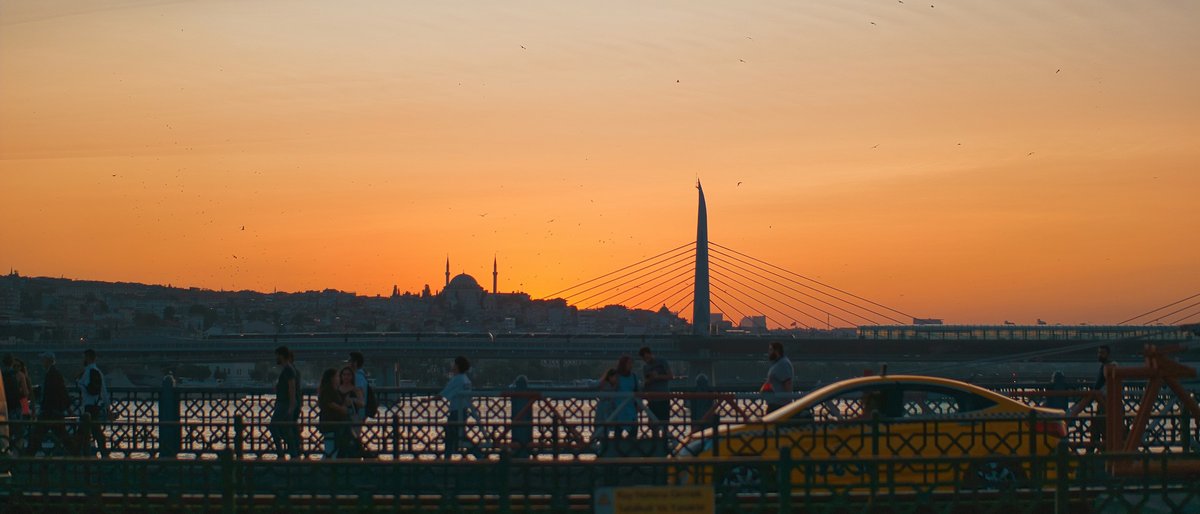
Best Time to Visit Istanbul, by Season
Istanbul's temperature swings from February's 3.7°C lows to July's 30.2°C highs: a 26-degree range that creates wildly different cities depending on when you arrive. Here is the honest trade-off for each season, built from the actual monthly numbers, with a single best window named for each kind of traveller.
Published · Updated
1 April's 16.8°C Average Is the Number That Sells Istanbul: Here's Why It Should
Step out of the Sultanahmet tram stop in mid-April and the first thing that registers is not the Blue Mosque's silhouette: it is the temperature. The air sits at a comfortable cool, the kind where a light jacket works at breakfast and feels unnecessary by noon. That comfort has a number behind it: April's average high lands at 16.8°C with lows around 8.7°C, a range that lets you walk the city's hills for hours without wilting or shivering.
Compare that to March, where highs barely reach 12.4°C and overnight lows drop to 4.9°C. March still feels like winter's tail end: the Bosphorus wind carries a bite, puddles linger on the cobblestones in Balat, and outdoor seating at the waterfront tea gardens stays folded up. April breaks the pattern. The 4.4-degree jump in average highs between March and April is the single largest month-over-month swing in Istanbul's climate year, and you feel every degree of it on the walk from Galata Bridge up through Beyoğlu.
To be fair, April is not flawless. Rain still shows up (pack a light shell) and the occasional grey morning can make the Golden Horn look more industrial than romantic. But here is what matters: the peak-season compression that turns Hagia Sophia's interior into a shuffling queue and the Grand Bazaar's lanes into shoulder-to-shoulder gridlock generally kicks in later, once temperatures push past 20°C and European school holidays align.
Mind you, April's nighttime low of 8.7°C means evenings along the Bosphorus still carry a chill. If you are planning to linger in Karaköy's bar streets or ride a late ferry back from Kadıköy, bring something warm. The gap between day and night comfort is roughly 8 degrees (wider than most visitors expect) and it catches people who packed for the afternoon.
For photographers, the light in April is genuinely something else. Low-angle sun through slightly hazy skies gives the minarets and waterfront a warm, diffused glow that harsh July sun at 30.2°C strips away. The city photographs better when it is not baking. That alone might justify the timing.
The 4.4-degree jump from March's 12.4°C to April's 16.8°C is the single largest month-over-month swing in Istanbul's climate year, and you feel every degree.
2 May Pushes Past 21°C and the City Tilts Outdoors
There is a morning in early May (you will know it when it happens) where you walk outside and the warmth is not a surprise anymore. It is expected. May's average high reaches 21.3°C with lows settling at 12.5°C, and that shift from April's 16.8°C changes what Istanbul feels like underfoot. Sandals appear on Istiklal Avenue. The rooftop terraces on the Asian side fill before sunset. The smell of grilled corn from street carts drifts further because the air is still, not pushed around by March's wind.
That said, May is where the trade-off sharpens. The weather is close to ideal (warm enough for shirtsleeves, cool enough that the walking does not punish you) but the tourist infrastructure knows this. Hagia Sophia's queue builds faster. The Eminönü-to-Kadıköy ferry fills earlier. Centrally located accommodation prices tend to climb through the month as demand stacks up.
Worth noting: May's 12.5°C overnight low still allows comfortable evening walks along the Bosphorus without layering up. Compare that to April's 8.7°C, where by 9 PM you are reaching for a jacket. The nearly 4-degree difference in nighttime comfort makes May the first month where Istanbul's rooftop dining scene genuinely works from sunset through midnight, and the rooftop scene here is not a gimmick, it is a whole category of restaurant.
The competition for May is June, which averages 26.6°C high with lows of 17.9°C. June is warmer, yes, but that warmth starts tipping toward sticky in the historic peninsula's narrow streets, where old stone walls trap heat and shade is scarce around Sultanahmet Square. May gives you June's outdoor lifestyle without June's sweat.
If you are choosing between April and May, here is the honest split: April for fewer crowds and cooler walking weather, May for warmer evenings and outdoor dining that does not require a jacket. Families with small kids who fade in heat should lean April. Couples who want that Bosphorus-view dinner at 10 PM should lean May. Neither is wrong, but they are different trips.
The one thing May does not offer is solitude. This is Istanbul's most popular travel month for a reason, and that reason is 21.3°C with a breeze off the strait.
3 July Hits 30.2°C and Hagia Sophia Becomes an Endurance Test
You smell it before you feel it: that baked-stone scent rising off the pavement outside the Grand Bazaar at noon in July. The sun does not politely warm Istanbul in high summer. It presses down. July's average high reaches 30.2°C, with lows that only retreat to 20.9°C overnight. That overnight figure matters more than people think. When the air does not cool below 21°C, the old stone buildings in Sultanahmet never fully release the previous day's heat. By your third morning, you feel it compound.
August barely offers relief: 29.9°C average highs, 21.5°C lows. The two months are functionally interchangeable from a comfort standpoint: roughly 30 degrees by day, 21 by night, the kind of heavy warmth where every air-conditioned interior becomes a destination in itself.
To be fair, some travellers handle heat well and prefer these months anyway. The Bosphorus catches a breeze that the Sultanahmet core does not, and if your itinerary leans toward the waterfront neighborhoods (Bebek, Ortaköy, the Kadıköy fish market strip) your experience will differ from someone grinding through museum queues in the walled city. Proximity to water is the variable that matters most in summer.
Here is the uncomfortable truth about peak summer though: Istanbul's most famous indoor sites have ventilation designed for a different century. The interior of Hagia Sophia in July is warm, packed, and loud with the hum of portable fans. The queue to enter stretches into direct sun. The Basilica Cistern (theoretically cool underground) fills precisely because everyone else had the same escape idea.
The smart move for summer visitors: flip your schedule entirely. Start on the Asian side in the morning when the sea breeze is strongest, cross the Bosphorus before noon, and hit indoor sites after 4 PM when the worst heat breaks. But consider this: June at 26.6°C and September at 25.5°C both deliver long daylight and full outdoor access without the overnight heat that makes city-centre sleep difficult. July and August are not the months Istanbul shows you its best face.
When the air doesn't cool below 21°C overnight, the old stone buildings in Sultanahmet never fully release the previous day's heat. By your third morning, you feel it compound.
4 September at 25.5°C Is the Month Smart Travellers Book First
The light changes in September. If you have been here in August, you might not notice the shift right away: it is subtle, a softening around the edges of the afternoon. But stand on the Galata Bridge in mid-September around 5 PM and you will see it: the sun hits the water at a lower angle, the Golden Horn turns amber instead of white, and the fishermen's lines catch the glow in a way they simply do not under July's overhead glare. The thermometer reads 25.5°C on average, with lows of 17.7°C. Comfortable. Genuinely comfortable.
Here is the comparison that should change your booking: June averages 26.6°C high with 17.9°C low. September averages 25.5°C high with 17.7°C low. The numbers are nearly identical: barely a degree apart on both ends. But the crowd level is not. June sits at the front edge of peak season, when the European school-holiday wave is still building. September sits at the back edge, after that wave has receded.
You get June's weather without June's density. That trade is the closest thing to a free lunch in Istanbul travel planning.
Mind you, September has its quirks. The month starts warm and ends noticeably cooler: by late September, evening temperatures dip below 17°C, and you will want a layer for the ferry ride back from Üsküdar after dark. October's average high drops to 20.1°C with lows of 13.3°C, so the transition toward autumn is already underway in September's final week.
The counterargument is rain. September typically sees more rainfall than the summer months, and when it rains in Istanbul, the steep cobblestone streets in Beyoğlu and Balat get slick fast. Wear shoes with real grip. Not a dealbreaker, just the honest caveat.
For the traveller who wants warm-weather Istanbul without the peak-season squeeze, September is the answer. It runs warmer than May on both counts (May: 21.3°C high, 12.5°C low) with less competition for everything from restaurant tables to ferry seats. Book September first. Change your plans only if you have a concrete reason to.
June averages 26.6°C. September averages 25.5°C. The numbers are nearly identical, but the crowds are not.
5 October Through November: 20°C Dropping to 10°C and the Crowds Finally Thin
October in Istanbul smells like roasted chestnuts and diesel from the ferries. The street vendors materialize along the Eminönü waterfront with their carts as if someone flipped a switch, and the smoke curls into air that finally feels autumnal. Average highs sit at 20.1°C in October with lows of 13.3°C (still pleasant for full days on foot) but the slide into November changes the character of the city. November's average high of 16.8°C with lows of 10.3°C puts you firmly in jacket weather, and earlier darkness reshapes how you plan your afternoons.
That October-to-November slide is worth mapping against the rest of the year. November's 16.8°C average high is identical to April's 16.8°C. Same number on the thermometer. But the feel is different. April is warming toward the comfort of May's 21.3°C; November is cooling toward December's 12.4°C. Same reading, opposite trajectory, and psychologically, cooling days feel colder than warming ones. Your body keeps a ledger that the thermometer does not.
Worth noting: October's 13.3°C overnight low is still manageable for evening walks and outdoor dining with a proper jacket. You are not layering up the way you would in December at 7.0°C lows or January at 4.7°C. The window for eating outdoors is closing, but it has not shut.
The real advantage of these two months is access. Hagia Sophia in late October is a different experience from Hagia Sophia in July. The queues shorten. The interior feels calmer. You can stand in the nave, look up at the dome, and hold the thought without being pushed forward by the person behind you. The Basilica Cistern regains its atmosphere when the crowd thins: the sound of dripping water that the summer noise buries.
For budget-conscious travellers, autumn shoulder season tends to bring lower accommodation prices compared to the May-through-September stretch, and flight costs from European hubs often follow the same curve downward. The trade-off is shorter daylight and the honest possibility of grey, rainy stretches: November especially can string together overcast days that turn the Bosphorus from blue to pewter. If you are here for the food and the interiors rather than the light and the terraces, that trade works.
6 December Through February Bottoms Out Below 5°C at Night, and That's When Istanbul Gets Interesting
There is a sound winter Istanbul makes that summer visitors never hear: the low horn of a cargo ship moving through fog on the Bosphorus before dawn, followed by the slap of small waves against the Karaköy wharf. You hear it because the city is quieter. You notice it because you are standing outside with cold hands wrapped around a tulip glass of Turkish tea, watching the mist dissolve above the water. December's average high of 12.4°C with lows of 7.0°C is cool but workable: you need a proper coat, not a fashion layer, especially near the strait where the wind adds a factor the thermometer misses.
January and February are the real test. January averages 10.4°C high and 4.7°C low. February is the coldest month by overnight temperature: 10.1°C high, 3.7°C low. Those sub-4°C nights put you into genuine winter territory. The wind off the Bosphorus adds a cut that raw numbers do not capture: the waterfront walk from Karaköy to Beşiktaş in February feels colder than 3.7°C suggests.
That said, winter has a case to make, and it is a strong one. The hamam experience (Istanbul's historic bathhouses) transforms when the outside air bites. Walking from a street at 4°C into a marble chamber at 40°C is one of the most dramatic sensory transitions the city offers. In summer, the hamam feels like adding heat to heat. In February, it becomes the entire point of your afternoon.
The Grand Bazaar in winter operates at a different pace. The aisles are navigable. The shopkeepers have time to talk. The tea appears faster because they are not juggling eight simultaneous sales. You might have a real conversation about the kilim you are considering rather than being herded past it.
For food-focused visitors, winter is when Istanbul's warming dishes come into their own: thick red lentil soup, slow-braised lamb stews, the particular comfort of a simit bought from a street cart while rain drips off your hood. The smell of wet stone and coal smoke and bread is a winter-only combination that the heat-shimmer months cannot replicate.
The honest downside: shorter daylight, frequent rain, and the possibility of snow in January and February. If your trip depends on rooftop dining or long Bosphorus deck time, winter is not your window. If your trip is about food, hamams, bazaar culture, and a city that reveals a quieter personality once the crowds leave: February at 3.7°C lows might be exactly right.
Walking from a street at 4°C into a marble hamam chamber at 40°C is one of the most dramatic sensory transitions the city offers. In summer it's heat on heat. In February it becomes the point of your afternoon.
7 The Verdict: One City, Seven Windows, and the Month That Fits Your Trip
Stand at the spice market entrance in Eminönü and the air carries cumin, dried mint, and the faintly sweet dust of ground sumac regardless of the month. Istanbul does not stop being Istanbul when the calendar turns. But what you get from the city (and what it asks of you in return) shifts across a 26-degree range, from February's 3.7°C overnight lows to July's 30.2°C afternoon highs. Same streets. Completely different trip.
Here is the direct verdict, traveller by traveller.
The first-time visitor who wants the full spread: book September. The 25.5°C high and 17.7°C low land you in comfortable walking weather with open-air dining well into the evening, and the summer peak crowd has thinned enough that the major sites feel approachable. If September does not work, May at 21.3°C high and 12.5°C low is the mirror pick on the other side of summer: warmer evenings than April, cooler days than June.
The budget traveller: target late November through February. December's 12.4°C high is brisk but not punishing, and January's 10.4°C high means you are bundled up but moving freely through sites that charge the same admission year-round with a fraction of the queues. Accommodation prices and flight costs from European hubs both tend to follow the thermometer down.
The photographer: April. The 16.8°C average high keeps the minarets and waterfront in diffused, warm light without the harsh shadows and blown-out skies that July's 30.2°C brings. Lower foot traffic means fewer heads in your frames and more patience from anyone you ask to step aside.
The food-focused traveller: January or February. Not despite the cold: because of it. February's 10.1°C high and 3.7°C low are the conditions that make hamam visits a revelation and lentil soup a serious experience. Winter food in Istanbul is a different repertoire from summer food, and it rewards the trip.
The heat-tolerant traveller chasing long beach days on the Princes' Islands: June at 26.6°C high, not July or August. You still get extended daylight and warm water without the compounding overnight heat that July's 20.9°C lows and August's 21.5°C lows create: the kind that turns city-centre lodging without air conditioning into a sleepless ordeal.
Avoid July and August unless you specifically seek heat and do not mind queues. The 30.2°C and 29.9°C averages are not extreme by global standards, but combined with Istanbul's hills, summer crowds, and limited shade across the historic core, they make the city harder to enjoy than it needs to be. September at 25.5°C is right there: open skies, shorter lines, the same Bosphorus. That is the month. Book it first.
September at 25.5°C is right there: open skies, shorter lines, the same Bosphorus. That is the month. Book it first.
Last verified by automated review (v1.7.0_2026-05-20-s17-v2-batch) on . What is automated review?