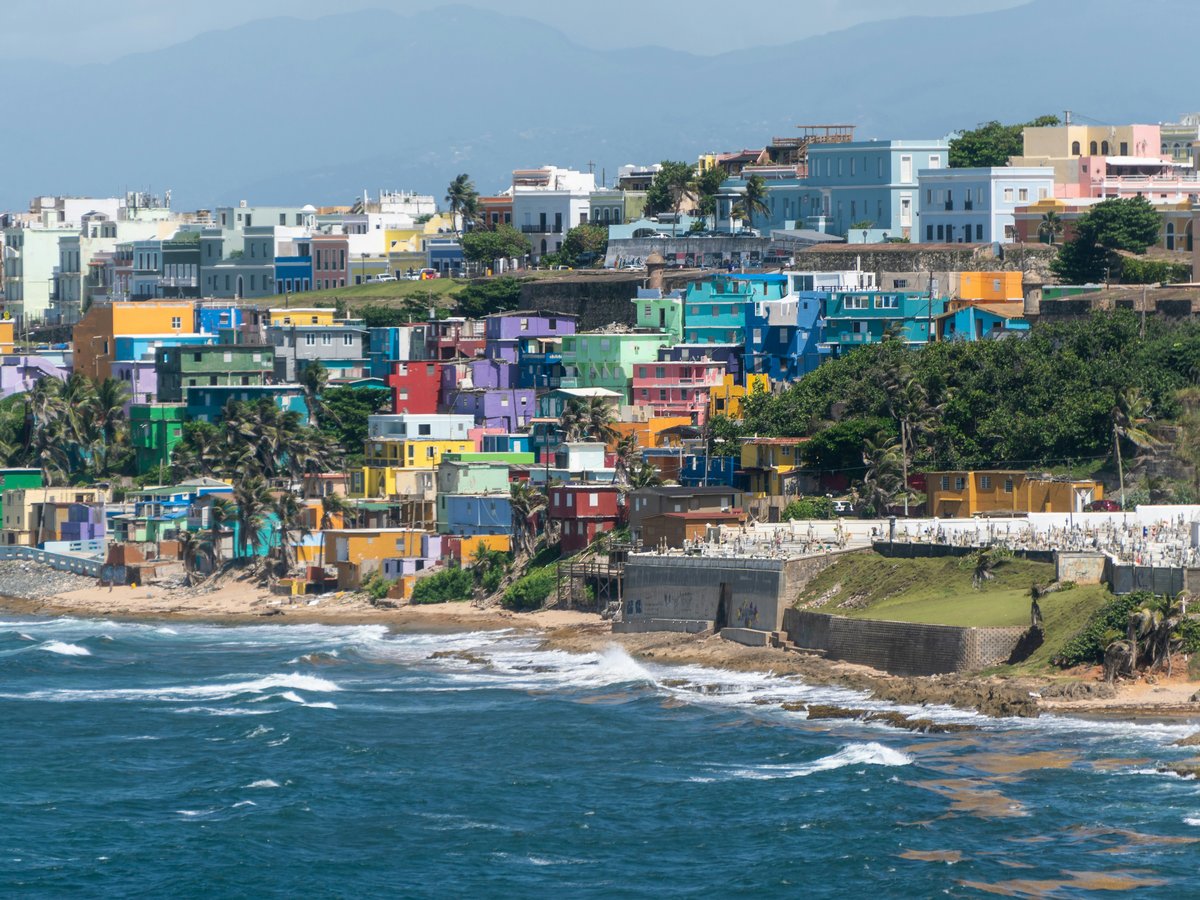
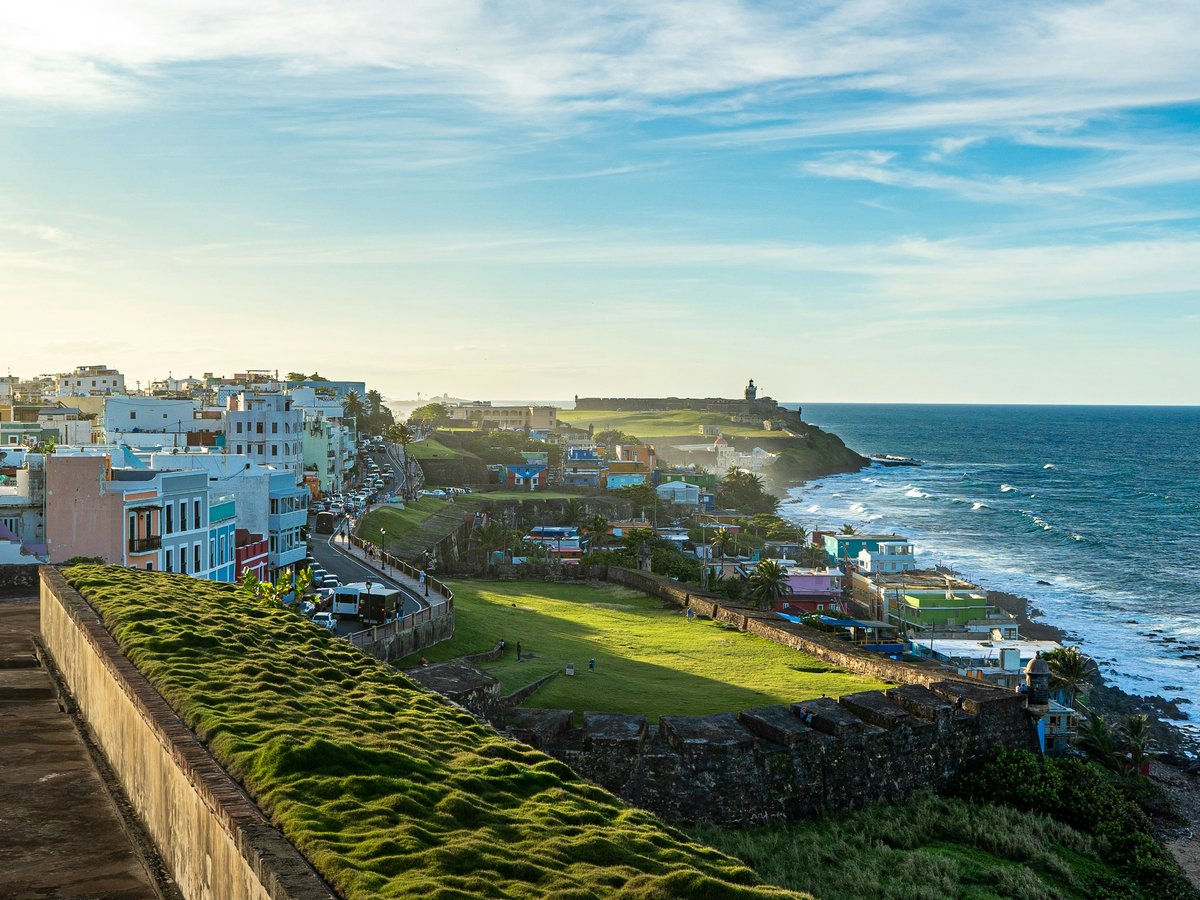
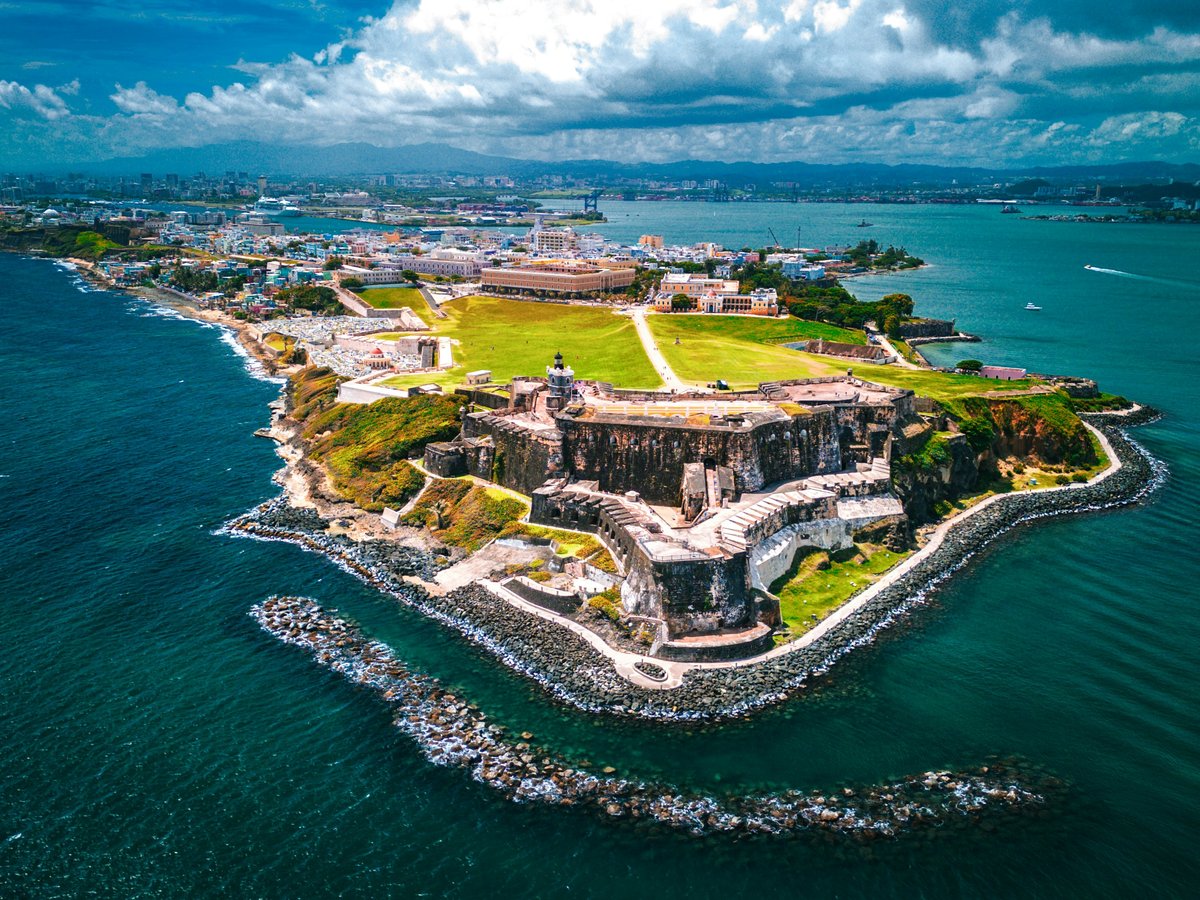
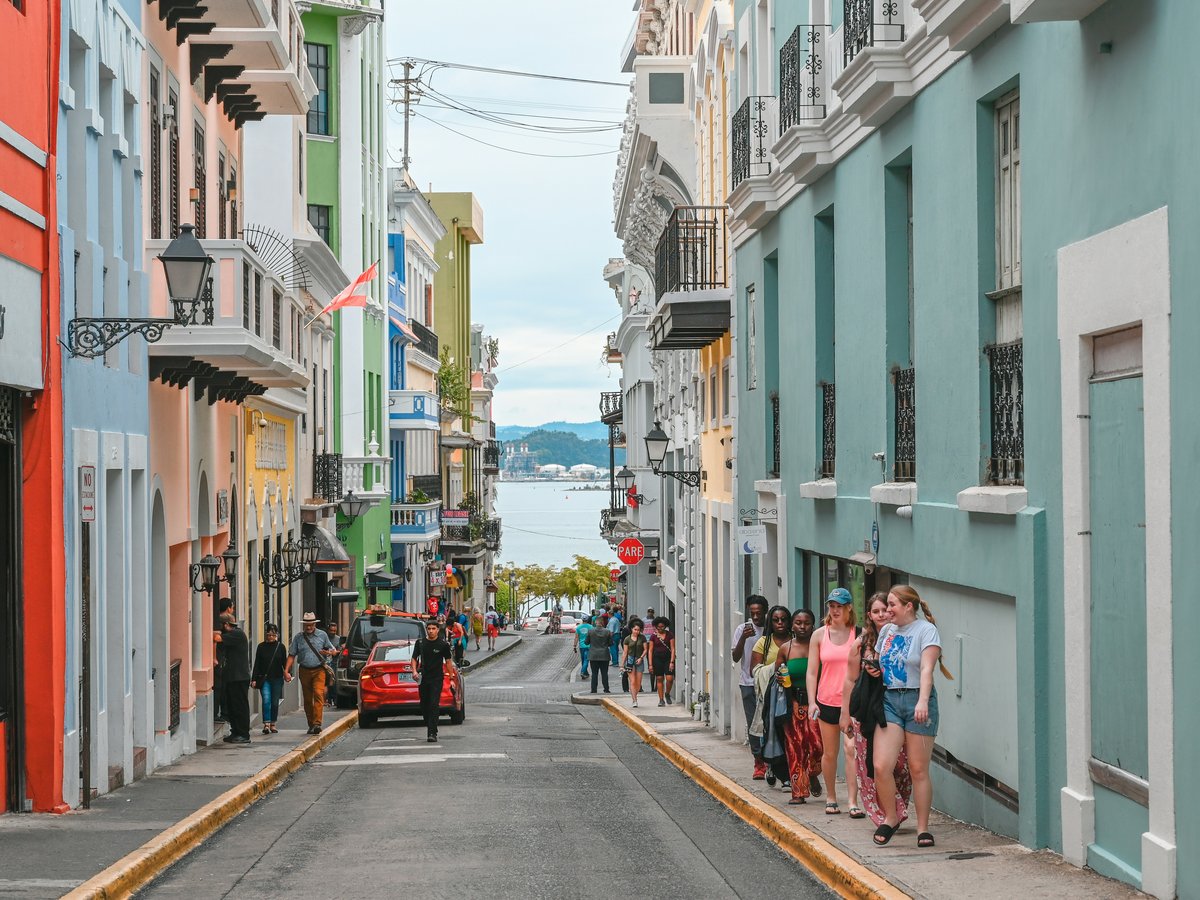
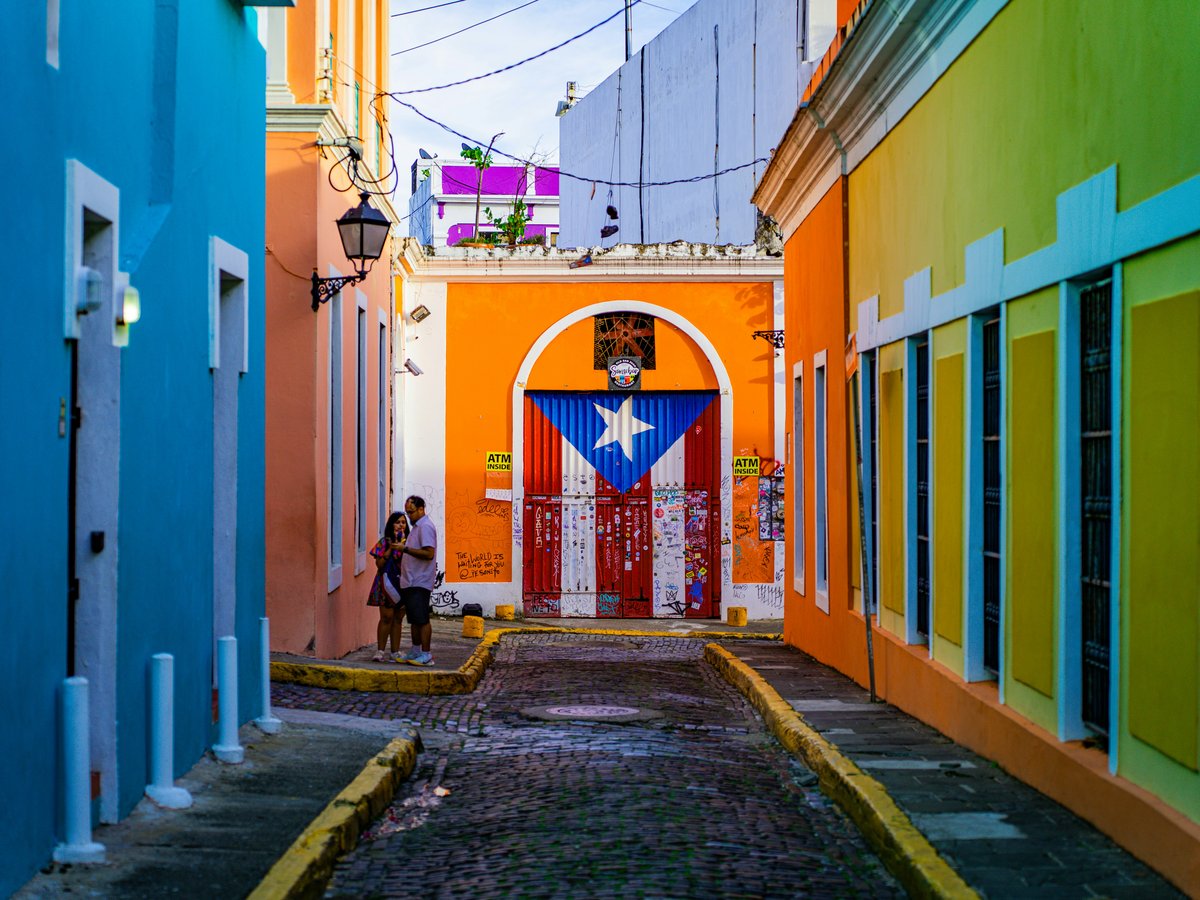
San Juan sits on a narrow Atlantic coastline where a natural harbor carved into the island's northern edge made it the oldest European-founded capital city in United States territory. Ponce de León established the settlement in 1521, and the blue cobblestones lining Old San Juan were carried from Spain as ballast in the holds of galleons, paving streets that predate Plymouth Rock by a century. The fortifications tell the story plainly: El Morro's six levels of ramparts and San Cristóbal's tunneled outworks held off the English and the Dutch across three centuries, and today they anchor a neighborhood where colonial townhouses painted in ochre, sea-foam green, and deep coral crowd shoulder to shoulder along streets barely wide enough for a single car. Walk south from the forts through the residential blocks of Old San Juan and you cross into Puerta de Tierra, where the Capitol building faces the water and joggers loop Parque Luis Muñoz Rivera along the bluff. East of that, Condado runs its hotel strip along Ashford Avenue, the beach public and the water warm enough to wade fifty yards out, the restaurant row behind it leaning Puerto Rican rather than resort-generic with mofongo and whole fried snapper served at counters alongside craft cocktail bars. Santurce, one neighborhood inland, is where the city's working creative life still happens: Calle Loíza carries the Afro-Caribbean cultural line that older travel guidebooks underplay, its murals and small restaurants reflecting a community that long predates the art-district branding. The practical rhythm matters too. San Juan runs on Atlantic Standard Time year-round with no daylight saving adjustment, which puts it one hour ahead of New York in winter and level with it in summer, a small detail that catches first-time visitors off guard when their dinner reservation lands an hour earlier than expected.
San Juan in photos
San Juan right now
Answers about San Juan
-
Airport to city
Luis Muñoz Marín International Airport (SJU) sits in Carolina, 15 km east of Old San Juan. Uber or Lyft to Condado runs $12-18 and takes about 20 minutes in normal traffic. Fixed-rate taxis cost slightly more per zone. No rail link reaches the airport. Skip the rental car counter until day two or three.
Read the full answer → -
Best time to visit
Mid-December through April is San Juan's dry season, when northeast trade winds cool the coast and rain falls fewer than 10 days per month. January is the strongest pick for first-timers. The Fiestas de la Calle San Sebastián fills Old San Juan with live bomba during the third weekend. Avoid August through October, when hurricane risk and humidity both peak.
Read the full answer → -
Cost per day
Budget travelers spend around $65/day in San Juan, covering a hostel dorm in Santurce ($25-35), fonda lunch plates ($7-9), and AMA bus rides at $0.75 each. Midrange lands near $150. Puerto Rico uses USD with no conversion fees, but the 11.5% sales tax and 7-9% hotel room tax inflate every listed price.
Read the full answer → -
Cultural etiquette
The error most first-timers make in San Juan is treating Puerto Rico as a foreign country. Puerto Ricans are US citizens, the dollar is the currency, and questions about passports land badly. Greet with "buenos días" before any request, tip 15 to 20 percent but check first for an added service charge, and keep swimwear off the streets of Old San Juan.
Read the full answer → -
Best day trips
El Yunque and Luquillo Beach make the strongest single-day pair from San Juan, 45 minutes east by car. Culebra's Flamenco Beach is worth the early ferry from Ceiba if you commit to the 5:30 AM departure. Ponce works for couples who want architecture and food over sand. Casa Bacardí in Cataño takes 2 hours and costs $15 per person.
Read the full answer → -
Digital nomads
San Juan scores 7.8/10 for digital nomads (sourced from TTDI's editorial rubric), and US citizens need no visa. Fibre in Ocean Park and Santurce runs 300 Mbps to 1 Gbps, with a month coming to about $3,200 all-in. The catch is LUMA Energy's grid, so book a rental with a building generator or a home battery.
Read the full answer → -
Family-friendly
San Juan scores 7.8/10 for family friendliness (see the TTDI Family-Friendliness Index), and the beaches earn most of it. Balneario El Escambrón suits toddlers, the El Morro lawn suits kite-flying kids of any age, and US pharmacies carry familiar brands. Old San Juan is the weak spot: blue cobbles and steep hills defeat lightweight strollers.
Read the full answer → -
Food culture
San Juan's food culture runs on mofongo, alcapurrias, and lechón asado. Each neighborhood cooks them differently. Piñones kiosks along Route 187 fry alcapurrias for weekend crowds, while Santurce's La Placita market shifts from produce stalls to an open-air food district by evening. US tipping norms apply at 15-20%.
Read the full answer → -
Getting around
Walking handles Old San Juan's 7-block colonial grid. Uber connects the tourist corridor from Condado through Isla Verde. The Tren Urbano metro runs a single line from Sagrado Corazón to Bayamón but misses every beach neighborhood. Rent a car only for day trips beyond the metro area.
Read the full answer → -
How to get there
Luis Muñoz Marín International Airport (SJU), 14 km southeast of Old San Juan, receives direct flights from over 20 US cities. JetBlue, United, Delta, Spirit, and Southwest fly nonstop from the East Coast in 2.5 to 4 hours. US citizens need no passport. Round-trip fares from New York or Miami run $200-450, with low-season dips in September and October.
Read the full answer → -
Is it safe?
San Juan scores 5.8 out of 10 for solo-traveler safety (see the TTDI Solo-Safety Index). Puerto Rico is US territory, so 911 works and federal law applies. The real risks are phone snatches and car break-ins in tourist corridors, not violent crime against visitors. Old San Juan and Condado feel safe after dark. La Perla and Lloréns Torres are no-go zones.
Read the full answer → -
Language basics
San Juan has two official languages, Spanish and English, though daily life runs in Spanish. English works almost everywhere in Condado, Isla Verde, and at the National Park Service desks at Castillo San Felipe del Morro, but at the Piñones fry kiosks and the Río Piedras market stalls, expect Spanish. Learn five phrases and get used to the clipped Boricua accent before you land.
Read the full answer → -
Layover guide
Yes, if you have six hours or more. SJU sits about 25 minutes by taxi from Old San Juan, which leaves you around two hours for Castillo San Felipe del Morro and the blue-cobbled lanes nearby. With less than five hours, a 10-minute cab to Isla Verde beach is the smarter call. International arrivals clear US immigration here, so US visa and ESTA rules apply.
Read the full answer → -
LGBTQ-friendly
San Juan rates 7.5/10 for LGBTQ+ friendliness (sourced from TTDI's editorial rubric), and that plays out visibly on Ashford Avenue in Condado, where same-sex couples hold hands without anyone looking twice. Nightlife for queer travellers centres on Condado and Santurce. Old San Juan feels more Catholic and family-heavy, and attitudes cool once you drive into the mountain towns of the interior.
Read the full answer → -
Where locals go
Santurce south of Calle Loíza on weekday evenings, Río Piedras near UPR's campus before 2pm, and La Placita de Santurce on Thursday nights before the weekend tourist wave. Ocean Park's residential streets between McLeary and Santa Ana draw the longest-term residents. Skip Old San Juan after 10am on cruise-ship days, which run 4-5 days per week from October through April.
Read the full answer → -
Must-see
Castillo San Felipe del Morro, the 6-level Spanish fortress on the northwest headland of Old San Juan. Walk through its tunnels and gun emplacements before 10am, when the Atlantic breeze still tempers the heat and the cruise-ship crowds haven't arrived. Entry is $10 and covers both fortresses in the San Juan National Historic Site. No reservation needed.
Read the full answer → -
Solo travel
San Juan removes most of the friction from a first solo trip in the Caribbean: it runs on US dollars, English is widely spoken across Condado and Old San Juan, and Uber serves Luis Muñoz Marín airport. TTDI's solo-traveler safety score is 5.8/10 (see the TTDI Solo-Safety Index), so we'd stay in Condado, Ocean Park, or Old San Juan and book cars after dark.
Read the full answer → -
This week
San Juan's week runs on the cruise schedule and the weekend, so ships pack Old San Juan by late morning and the place to be when it opens is Castillo San Felipe del Morro. Nights from Thursday to Saturday center on La Placita de Santurce and Calle San Sebastián, and on Sundays locals go to the beach. Plan walks for early morning and late afternoon, because short afternoon storms are normal this time of year.
Read the full answer → -
3-day itinerary
Day 1 covers Old San Juan on foot. El Morro fortress at 9 AM, the Cathedral of San Juan Bautista, Paseo de la Princesa at sunset. Day 2 shifts east to Condado Beach and the Santurce food scene around La Placita. Day 3 is the Piñones coastal bike trail and Ocean Park. About 26 kilometres total, most of it flat.
Read the full answer → -
What to avoid
Cruise-port dining on Calle Fortaleza runs 40-60% above neighborhood prices. Eat in Santurce or along Calle Loíza instead. Old San Juan's 1520s street grid punishes drivers with $25-30 daily parking and slick cobblestones. Hotel-desk excursions to El Yunque and Cataño cost 2-3 times a self-drive alternative. Hurricane season peaks in September, and rip currents follow storms at Condado Beach.
Read the full answer → -
What to pack
Pack rubber-soled shoes for Old San Juan's adoquín cobblestones, quick-dry clothes for 28-33°C and 80%+ humidity, and reef-safe mineral sunscreen (Puerto Rico banned oxybenzone formulas in 2024). Skip the umbrella, pack a rain shell for afternoon squalls instead. US travelers need no passport or plug adapter. Buy insect repellent and rum cheaper on the island.
Read the full answer → -
Where to stay
Condado for first-timers. It sits on a narrow strip between Laguna del Condado and the Atlantic, with beach access, walkable restaurants along Ashford Avenue, and a 15-minute Uber to Old San Juan. Budget $130-220 for a mid-range room. Old San Juan works better if you came for the forts and 16th-century streets, but expect $180-320 and nonexistent parking.
Read the full answer →
Deep guides for San Juan
Curated lists for San Juan
accommodation
-
Best boutique hotels
San Juan's hotel map splits along a line that runs roughly east to west. On the western end, the colonial grid of Viejo San Juan packs centuries-old architecture into a walkable headland between two forts; its accommodation is intimate, boutique, and priced more modestly than the setting warrants. Cross the Condado Lagoon heading east and the character shifts to Atlantic-facing beach strips: Condado, Ocean Park, and the high-rise corridor near the convention district. In between sits the Isla Grande waterfront and the residential blocks of Miramar, where room rates drop without losing access to either world. The practical question is not which neighborhood is best; it is which trade-off you want. Colonial atmosphere and cobblestone walks cost you beach proximity. Beachfront towers deliver surf but thin out the neighborhood texture. The mid-band areas, Bolívar and Las Américas, stay cheap and connected but offer little reason to linger outside your hotel. Ten neighborhoods, each with a distinct walking radius, and the right one depends on whether your trip starts at a fortress wall or a beach towel.
See the picks → -
Best luxury hotels
San Juan's luxury tier spreads across three coastal zones, from Playita del Condado through Playa Ocean Park to Playa Isla Verde. The four hotels on this list hold luxury classification on Trip.com, and their nightly rates run from USD 208 to USD 309. That hundred-dollar spread is deceptively narrow; the real distance between these properties is geographic, not financial. Two of the four share the Condado strip while the other two anchor Ocean Park and Isla Verde. The zone you pick determines the beach at your door and the streets you walk at night. Start with the zone that fits your trip. The right hotel here is the one whose surroundings match what you want from San Juan, not the one with the highest number beside its name.
See the picks → -
Where to stay
San Juan spreads its hotel inventory across a coastal strip that runs from the colonial walls of Viejo San Juan east through Condado's beachfront towers to the airport-adjacent sands of Isla Verde. The neighborhoods between those anchors differ sharply in character, price tier, and what lands within walking distance. The old city trades beach access for cobblestone streets and fortress views. Condado and Ocean Park split the mid-island coastline between resort towers and low-rise residential blocks. Farther east, Isla Verde packs the highest concentration of beachfront luxury near the airport. Inland pockets like Bolívar, Miramar, and Isla Grande cluster budget and mid-range rooms where rates drop and restaurant density rises. The 10 areas below follow hotel density: the thickest clusters first, the thinnest last. Prices range from $33 hostel bunks in Ocean Park to $309 beachfront suites in Isla Verde, and the gap between those figures maps neatly onto walking radius. Cheaper rooms sit farther from the sand; pricier ones put the surf within earshot. The practical question is not which hotel, but which trade-off: colonial atmosphere versus beach, nightlife versus quiet, taxi dependence versus walkability. Start with the neighborhood, and the hotel picks itself.
See the picks →
attractions
-
Best free attractions
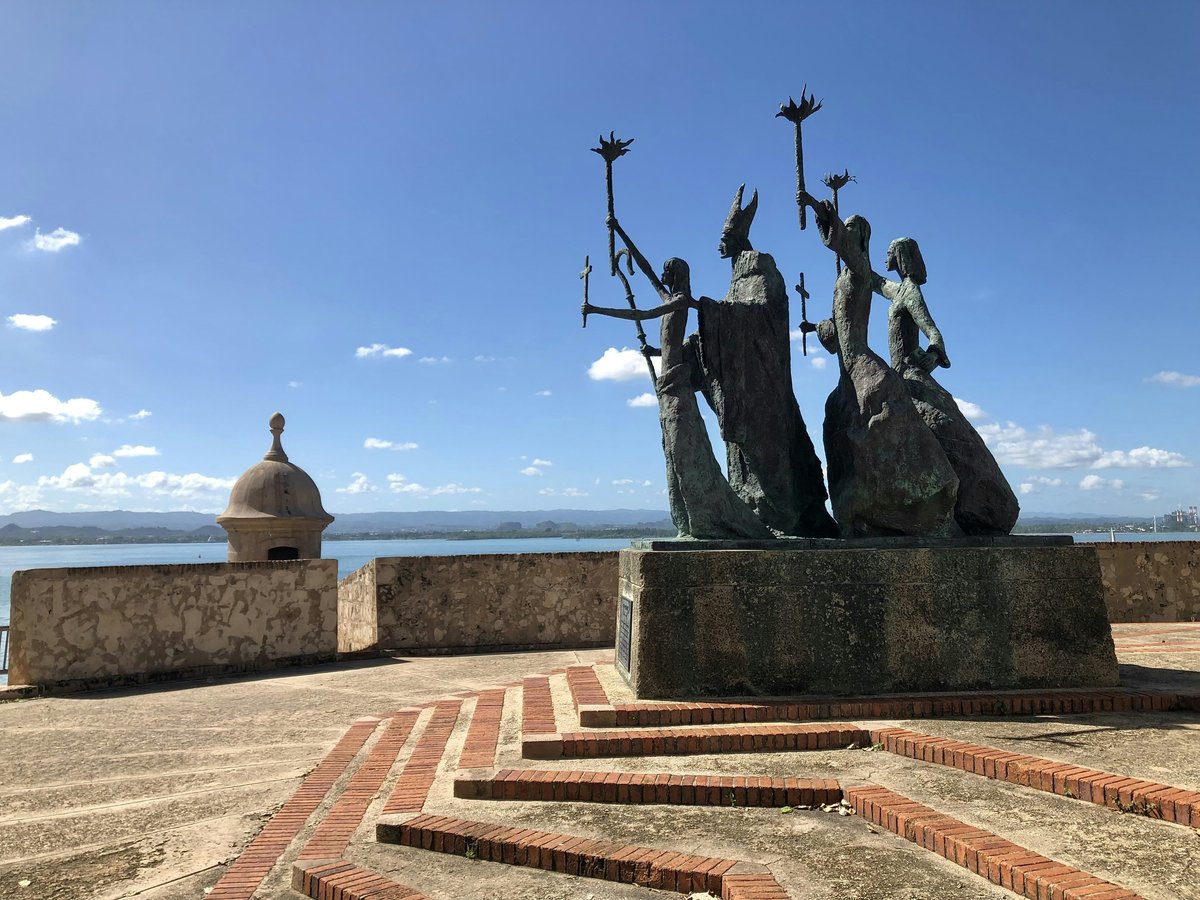
San Juan's best free hours are spent outside, and the city knows it. The old walled quarter is stitched together by plazas, each with its own temperament and its own hour when it comes alive; the modern city answers with parks that stretch from the shoreline out into Bayamón and the botanical acreage on the edge of Río Piedras. This list covers seven such addresses: four historic squares in Old San Juan, two municipal parks, and a working botanical garden, none of them charging you a peso to walk in. They are for the traveller who has budgeted for the forts and the ferries and would rather spend an unhurried afternoon reading the city the way locals do: on a bench under a laurel, with a paper cone of shaved ice, watching the light shift on the paving stones. Coordinates and Wikidata identifiers ground every entry so you can plot a walking morning through the old town or a longer bus ride south to the greener acreage; the editorial pass is a local's read of which square rewards which hour, and which park is worth the cab.
See the picks → -
Best museums
San Juan's museums reach well beyond the old city. The serious art collections are in Santurce: the Puerto Rico Museum of Art and the Puerto Rico Museum of Contemporary Art are both there. Push further and the trail crosses municipal lines, with Bayamón holding its own art museum and an educational and recreational park, while Guaynabo has a transport museum and Caparra, a former settlement that dates from 1508. This list is for the visitor who wants more from the metro area than one afternoon of colonial facades: painting and contemporary work first, then a science park for families, then cars and the oldest ground on the list. We've been candid where a listing needs it. One entry is now recorded as a former museum, and another is a historic site rather than a gallery. Check opening days before you set out, because the art museums we have hours for open Wednesday to Sunday.
See the picks → -
Must-see attractions
Most of what San Juan puts forward as must-see is stone, faith, and government, and most of it is old. La Fortaleza dates from 1533 and remains the official residence and office of the Governor of Puerto Rico. Not everything here is colonial: Our Lady of Lourdes Chapel dates from 1908, and the Luis A. Ferré Performing Arts Center from 1981. Two picks on this list ask more of you: our source still describes the San Juan Puerto Rico Temple as under construction, and the Puerto Rico National Cemetery is a United States military cemetery in Bayamón. This list suits a visitor who puts history first, checks opening times on the day, and would rather spend an hour standing inside old walls than queuing for a photo of them.
See the picks →
Browse by traveler type
Find a flight to San Juan
Live fares to San Juan appear here once cookies are accepted.
Last verified by automated review (v1.7.2) on . What is automated review?