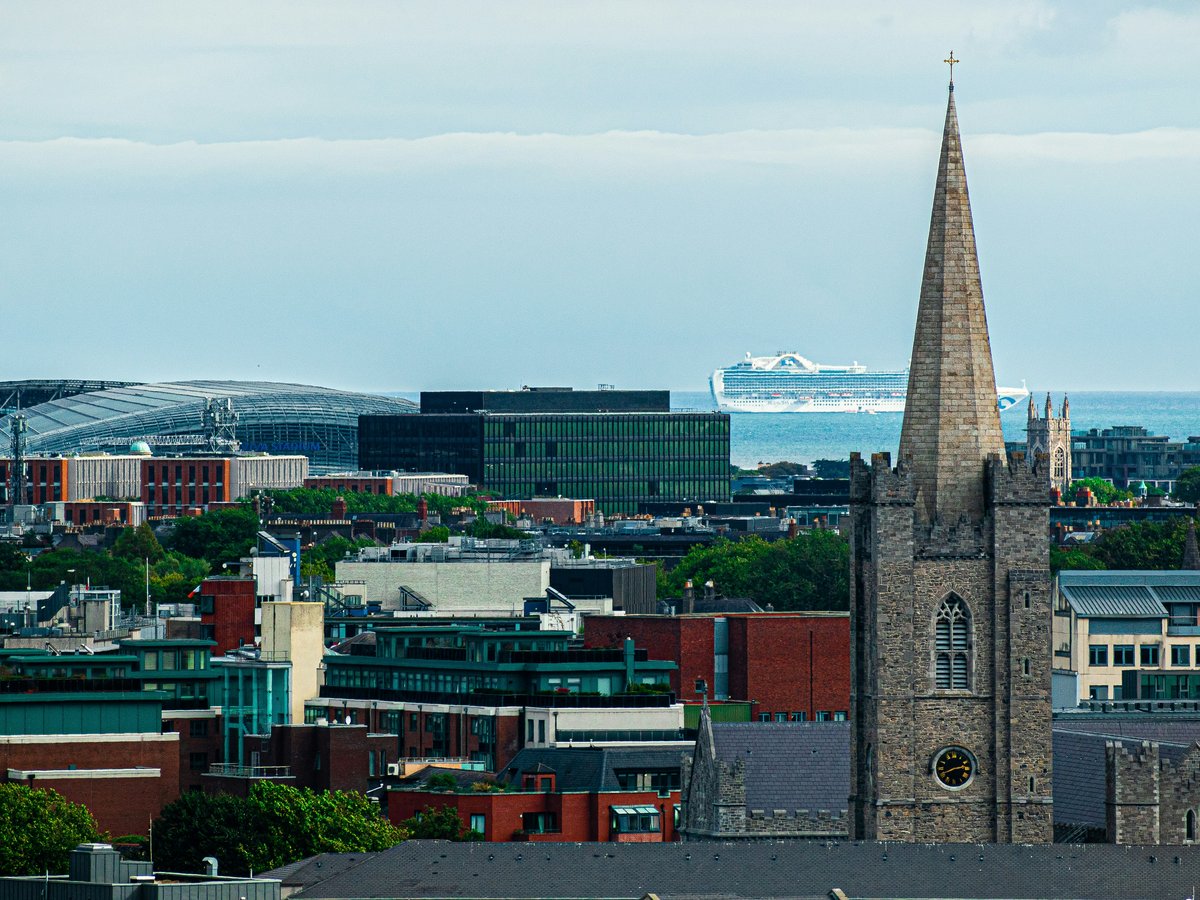
Stay in Dublin in March
100 hotels in the Trip.com pool for Dublin, from US$23 a night.
Opens Trip.com on Fri 5 Mar to Sun 7 Mar 2027; change the dates there.
March in Dublin is, above all else, about St. Patrick's Day. The festival around March 17th pulls roughly half a million people onto the streets for the parade alone, and the energy across the city shifts for a solid week beforehand: traditional music sessions spill out of pubs in Smithfield, the Georgian facades along O'Connell Street get draped in green bunting, and you can hear bodhrán drums warming up in laneways behind Dame Street. If there's a single month that captures Dublin at its most uninhibited and self-celebratory, this is probably it. Daytime temperatures sit around 10.8°C (51°F) and drop to roughly 5.3°C (42°F) after dark, so you'll want a proper coat, and you'll want it to be waterproof.
Outside the festival bubble, March in Dublin is still firmly late winter. The 78mm of rain that falls across about 13 days doesn't arrive as dramatic storms: it's more of a fine, soaking mist that settles on everything and makes the cobblestones in the Liberties genuinely treacherous underfoot. Eighty percent humidity means your clothes take on a damp weight by mid-afternoon. That said, the days are stretching in a way that feels like a small victory after December's 4pm darkness: you'll get proper evening light past 6pm by mid-month, and sunsets push toward 7:30pm by the 31st. Daffodils start appearing in St. Stephen's Green. The gorse on Howth Head turns a sharp, almost aggressive yellow. There's a sense of the city shaking itself loose from winter, even if the thermometer hasn't quite cooperated yet.
To be fair, March isn't the month to come for warm weather or long afternoons on a pub terrace. It's the month to come for a city showing you what it's made of, and it happens to coincide with the one festival the entire country treats as a genuine national moment. If that appeals, you'll have a good time. If you mostly want outdoor dining and dry sightseeing, wait until June.
Why visit in March
- St. Patrick's Festival is a genuine world-class cultural event: four or five days of street theatre, live music, céilí dancing, and one of Europe's biggest parades, not just a drinking holiday
- Daylight hours expand rapidly through the month, from roughly 11.5 hours on March 1st to over 13 hours by the 31st: the psychological lift after winter darkness is real
- Traditional music sessions hit their peak intensity during festival week: pubs like The Cobblestone in Smithfield host internationally known musicians who drop in unannounced alongside regulars
- Major attractions like Trinity College, Kilmainham Gaol, and EPIC The Irish Emigration Museum have noticeably shorter queues than summer, outside of St. Patrick's week itself
Worth knowing
- The damp cold is relentless: 10°C with 80% humidity and a stiff breeze off the Irish Sea makes it feel several degrees colder than the reading suggests, and the chill finds its way through most light jackets
- St. Patrick's week accommodation prices spike well above Dublin's already steep baseline, and Dublin is consistently one of the priciest capitals in Europe for hotel rooms regardless of season
- Rain on roughly 13 of 31 days, arriving as a persistent fine drizzle that you barely register until you realize your jacket is soaked through and your shoes are squelching
- Some coastal day trips and cliff walks can be weather-limited: Atlantic storms still roll in through March, and exposed routes like Bray to Greystones get properly battered on those days
Best for
Think twice if
Still wintry despite the calendar claiming spring. Expect grey skies more often than not, with a persistent dampness that makes the temperature feel harsher than the numbers suggest. Rain arrives as a fine, soaking mist rather than dramatic downpours, and the 80% humidity means nothing fully dries out. The wind tends to funnel down the Liffey quays and hit you broadside on the Ha'penny Bridge. That said, the light shifts noticeably through the month: sunsets push past 6pm by mid-March and approach 7:30pm by month's end, and on the clear days you do get, the sky over Dublin Bay can be startlingly sharp.
Year-round climate
Averages from the last 5 years.
| Month | Avg high (°C) | Avg low (°C) | Rainfall (mm) |
|---|---|---|---|
| Jan | 8 | 4 | 71 |
| Feb | 10 | 5 | 69 |
| Mar | 11 | 5 | 78 |
| Apr | 12 | 6 | 82 |
| May | 15 | 9 | 67 |
| Jun | 18 | 12 | 71 |
| Jul | 20 | 13 | 92 |
| Aug | 20 | 13 | 72 |
| Sep | 17 | 12 | 107 |
| Oct | 15 | 10 | 120 |
| Nov | 11 | 7 | 82 |
| Dec | 10 | 6 | 89 |
Holidays and festivals in March
Public holidays
- Saint Patrick's Day(Lá Fhéile Pádraig)17 March 2027
- Good Friday(Aoine an Chéasta)26 March 2027
- Easter Monday(Luan Cásca)29 March 2027
Headline events
St. Patrick's Festival
March 14-18 (centered on March 17)
Ireland's national celebration, centered on March 17th but stretching across four or five days of parades, street theatre, live music, outdoor céilí dancing, and the Spectacle of Light installations. The main parade down O'Connell Street and through the city centre draws upwards of half a million spectators. The festival program runs from roughly March 14th through the 18th, though the exact dates shift slightly year to year. This is the single event that defines Dublin's March: people plan international trips around it, and the city reshapes itself for the week.
Best things to do in March
St. Patrick's Festival parade and street performances
festivalThe main parade runs from Parnell Square down O'Connell Street and through to St. Patrick's Cathedral, with giant puppets, marching bands, dance troupes, and floats that are genuinely creative rather than corporate. The street theatre performances scattered through Temple Bar and around City Hall in the surrounding days are often more interesting than the parade itself: smaller, stranger, more willing to take risks.
The festival only happens in March, centered on the 17th, and the parade is the defining spectacle of the entire Irish calendarBooking tipNo tickets needed for the parade, but arrive at your viewing spot at least two hours early for O'Connell Street positions: the crowds are serious
Traditional music sessions in Smithfield and Temple Bar
cultureThe Cobblestone on King Street North is the gold standard: a front bar where musicians sit in a loose circle and play jigs, reels, and slow airs without amplification, the sound bouncing off the low ceiling. During festival week, the sessions start earlier and run later, and the calibre of musicians who turn up unannounced goes up several notches. You might hear a concertina player from Clare alongside a fiddle player from Donegal, working out arrangements in real time.
Festival week draws musicians from across Ireland and overseas, raising the quality and intensity of sessions well beyond the usual standardBooking tipNo booking, just arrive early enough to get a seat near the musicians, ideally by 8pm
Kilmainham Gaol guided tour
historyThe old prison where the leaders of the 1916 Easter Rising were executed. The tour takes you through the cold, dim corridors and into the Stonebreakers' Yard where the firing squads did their work. The guides are knowledgeable and tend to be history graduates who clearly care about getting the details right. The atmosphere in March (raw weather outside, stone walls holding the chill inside) adds something that a sunny July visit doesn't quite capture.
Proximity to the Easter Rising anniversary in April means heightened programming, additional exhibits, and a palpable historical weight that the guides lean intoBooking tipBook online at least a week ahead: tours sell out regularly, and March is busier than you'd expect for an indoor attraction
Howth Cliff Walk
natureThe loop from Howth village out along the cliff edge and back takes roughly two to three hours, depending on how often you stop to stare at the sea. In March, the gorse is beginning to bloom: that sharp yellow against the grey-green headland with the Irish Sea below. You'll likely have sections to yourself on weekday mornings. The wind can be fierce on the exposed stretches, but that's part of the appeal if you're dressed for it.
The gorse starts flowering in late February and is at its most vivid through March, and the trails are far less crowded than the summer monthsBooking tipTake the DART train from Connolly Station: roughly 30 minutes, and it drops you right at the harbour
EPIC The Irish Emigration Museum at the CHQ Building
museumA museum that traces the Irish diaspora across centuries, housed in the old customs warehouse on the docklands. The interactive exhibits are well-designed without being gimmicky, and the section on the Famine emigration ships is genuinely affecting. March visitors get a particular context: St. Patrick's Day started as a diaspora celebration, and seeing the museum during the festival week connects those threads.
The St. Patrick's Festival programming often includes special events and extended hours at EPIC, and the thematic connection between diaspora history and the national celebration adds resonanceGlasnevin Cemetery Museum tour
historyWhere the founders of the Irish state are buried: Daniel O'Connell, Michael Collins, Éamon de Valera, Countess Markievicz. The guided tours weave personal stories through the political history, and the round tower gives a panoramic view across the city. There's a dampness to the place in March that feels appropriate, the old headstones darkened by rain, moss on everything.
The approaching Easter Rising centennial period and March's proximity to key republican anniversaries means the guides often expand on the revolutionary history sectionsExploring the Liberties neighbourhood
neighbourhoodDublin's oldest residential area, stretching west from Christ Church Cathedral. The streets are narrow, the buildings low, and the character is distinctly working-class Dublin in a way that the polished Georgian quarters around Merrion Square aren't. March brings the smell of malt from the Guinness brewery drifting through the laneways: heavier in the damp air, almost sweet. The antique shops along Francis Street are worth a slow browse.
The damp March air carries the Guinness brewery's malt smell further through the narrow streets than in drier months, and the neighbourhood's indoor antique shops and cafés suit the weather perfectlyBook of Kells and Trinity College Library
cultureThe illuminated manuscript displayed in the Old Library at Trinity is one of those things that genuinely lives up to the reputation. The Long Room upstairs: barrel-vaulted ceiling, 200,000 of the oldest books in the collection, marble busts lining the aisle: smells of old paper and beeswax, and in March you can sometimes hear the rain on the roof above. The crowds in March are a fraction of what they are in July.
Visitor numbers are significantly lower outside of St. Patrick's week, meaning you can spend time with the manuscript pages rather than being shuffled past in a queueBooking tipBook a timed entry online, even in March, walk-up slots can sell out by mid-morning
What to eat in March
On menus now
Dublin Bay oysters
Still in the R-month season through April, which means they're at their briny, mineral-rich peak. You'll find them served simply with lemon juice and brown soda bread at seafood spots around Howth harbour and the handful of raw bars in the city centre. The cold waters keep them firm and clean-tasting: there's a salinity that fades once the water warms up in May.
Colcannon
This mashed potato dish with curly kale or cabbage, butter, and spring onions tends to appear on more menus around St. Patrick's Day, partly as tradition and partly because the first young kale of the season is just coming in. The good versions use an almost reckless amount of butter: you can smell it from across the table.
Irish soda bread
Bakeries and cafés lean into soda bread hard through March. The brown variety (dense, slightly sweet from the wholemeal flour, with a crackly crust) is what locals eat daily. You'll find it warm from the oven at places like Bread 41 on Pearse Street, still steaming when they slice it.
Irish stew
The weather practically demands it. Lamb shoulder, root vegetables, potatoes, and thyme, slow-cooked until the meat falls apart. March is when this dish earns its reputation: you come in from the raw wind along the quays and a bowl of it genuinely restores something. Most traditional pubs serve a version, though quality varies.
Boxty
A potato pancake with a slightly crispy exterior and a dense, starchy centre: one of those dishes that sounds simple until you taste a properly made one. It turns up on more menus during March as restaurants lean into traditional Irish fare for the festival crowds. The texture is somewhere between a crêpe and a hash brown.
Regular events in March
TradFest Temple Bar
A multi-day festival of traditional and folk music that sometimes overlaps with early March, featuring concerts in Dublin's historic venues including City Hall, St. Patrick's Cathedral, and the Round Room at the Mansion House. The acoustics in these old stone buildings do something electric to a fiddle and pipes session.
Late January to early February, sometimes extending into early MarchSt. Patrick's Festival Spectacle of LightFree
Light installations and projections mapped onto buildings around the city centre during festival week. The Custom House on the quays is usually the centrepiece, its neoclassical facade becoming a canvas for animated projections that draw large crowds along the boardwalk. Best viewed after full dark, around 8pm onward.
March 14-18Six Nations Rugby: Aviva Stadium
Ireland's home fixtures in the Six Nations Championship sometimes fall in March, and the atmosphere around Lansdowne Road on match day is something else entirely. The pubs in Ballsbridge fill up hours before kickoff, and the roar from the Aviva carries across the canal. Even without tickets, the city's energy on an Ireland match day is worth experiencing from any pub with a screen.
Varies by year: check the Six Nations scheduleWorld Irish Dancing Championships
The CLRG World Championships rotate between cities but have been held in Dublin multiple times. When they land here in late March or early April, the convention centre fills with competitors from dozens of countries, and you'll see kids in elaborate costumes and ringlet wigs practicing steps in hotel lobbies across the city. A subculture most visitors never encounter.
Late March or early April (rotating host city)Best places this March
The Cobblestone
pubA pub in Smithfield that takes its traditional music seriously, no screens, no amplification, just musicians in a circle in the front bar playing jigs, reels, and airs. During St. Patrick's Festival week the sessions are longer, louder, and feature musicians who've travelled specifically for the occasion. The back room hosts ticketed gigs with bigger names.
SmithfieldSt. Stephen's Green
parkThe Georgian-era park in the city centre where daffodils start appearing in March, the first reliable sign that winter is loosening its grip. The formal gardens are pretty but the real pleasure is the paths around the lake, where you can sit on a bench and watch Dubliners power-walking on their lunch breaks while ducks argue over bread.
City CentreHowth Head and harbour
natureA fishing village turned commuter suburb at the end of the DART line, with a harbour full of trawlers and a cliff walk that circles the headland. The seafood restaurants along the harbour pier serve fish that was landed that morning. In March the gorse on the headland blazes yellow against the grey sky, and the wind off the Irish Sea will remind you where you are.
HowthKilmainham Gaol
historyThe 18th-century prison that became the execution site for the 1916 Rising leaders. The guided tour through the cold corridors and into the yards where fourteen men were shot is sobering at any time of year, but there's something about seeing it in March (the same raw, overcast weather they would have experienced) that strips away the abstraction.
KilmainhamChester Beatty Library
museumA free museum in the grounds of Dublin Castle housing one of the finest collections of manuscripts, rare books, and decorative arts in Europe: East Asian scrolls, Qur'anic illuminations, medieval European prayer books. Small enough to see properly in two hours, and in March it's quiet enough that you might have entire galleries to yourself. The rooftop garden has views over the castle grounds.
Dublin 2Guinness Storehouse
attractionThe old fermentation plant at St. James's Gate, converted into a seven-storey exhibition on how the stout is made. The Gravity Bar at the top gives a panoramic view over Dublin: on a clear March day, you can see the Wicklow Mountains to the south and Howth to the north. The exhibition itself is polished but informative, and tasting a fresh pint at the source is noticeably different from what you get elsewhere.
The LibertiesMarsh's Library
museumThe oldest public library in Ireland, built in 1701, tucked behind St. Patrick's Cathedral. Dark oak cages where readers were once locked in with valuable books, manuscripts from the 16th century, and an atmosphere so quiet you can hear the floorboards settle. Almost nobody visits, which is part of its charm. In March, the light through the old windows has a particular grey-gold quality.
The LibertiesPhoenix Park
parkOne of the largest enclosed urban parks in Europe: bigger than all the London Royal Parks combined. The herd of fallow deer has been here since the 1660s, and in March they're often visible grazing near the Papal Cross or the Magazine Fort. The Wellington Monument catches the low March light late in the afternoon. Bring a windbreaker; the open ground means the wind has nothing to slow it down.
Phoenix Park
Your packing checklist
Tick items off as you pack. Your progress saves in this browser.
All packed — have a great trip.
Insider tips
The Cobblestone's back room in Smithfield hosts ticketed gigs during festival week that are far better than most of the official programme: check their social media for announcements, as they tend to sell out fast through word of mouth
The best parade viewing spots aren't on O'Connell Street: they're further along the route near Christ Church Cathedral, where the crowds thin out and you can see the performers' faces rather than the backs of people's heads
Dublin Bus runs extra late-night services during St. Patrick's Festival weekend, which saves you from the taxi queue chaos that builds after midnight along Dame Street and around St. Stephen's Green
The Chester Beatty Library in Dublin Castle is free and almost always quiet, even during festival week: it's one of the finest small museums in Europe and most tourists walk right past it to the Guinness Storehouse
If you want to see the deer in Phoenix Park, go early on a weekday morning in March: they tend to graze near the Fifteen Acres area, and the low morning light through the bare trees is worth setting an alarm for
Avoid these mistakes
- Assuming St. Patrick's Day is just a drinking holiday: the festival programme has genuinely world-class street theatre, dance, music, and visual art that many visitors miss entirely because they never look beyond the pub crawl
- Packing an umbrella but no waterproof jacket: Dublin rain in March is a sideways mist that an umbrella barely touches, and you'll end up soaked from the shoulders down while your head stays dry
- Not booking Kilmainham Gaol tickets in advance: the tours sell out days ahead in March, and showing up without a reservation means you're not getting in, full stop
- Staying exclusively in Temple Bar during festival week: it's the most overcrowded, overpriced square kilometre in the city; the locals are in Smithfield, Stoneybatter, and the pubs around Portobello
- Underestimating the wind chill: the thermometer might read 10°C but with 80% humidity and an Irish Sea breeze, it feels closer to 5°C, and most visitors dressed for 10°C are cold within an hour
Practical tips for March
Book accommodation as early as possible if your trip overlaps with St. Patrick's Festival week: the city fills up fast and last-minute options tend to be far from the centre or sharply overpriced. The Leap Visitor Card covers unlimited bus, tram, and DART travel and is worth picking up at the airport on arrival, especially since you'll want the DART for Howth and the Luas for Kilmainham. Restaurants in the city centre get busy during festival week, so booking dinner is wise even at places that normally take walk-ins. The weather can shift several times in a single day: checking the Met Éireann forecast each morning is a better guide than any weekly prediction. If you're planning the Howth cliff walk, check wind conditions before heading out; exposed sections get genuinely dangerous in strong gusts. Most museums close on Good Friday if Easter falls in March, so check dates carefully.
FAQ
Is Dublin worth visiting in March if I'm not interested in St. Patrick's Day?
Honestly, it depends on what you're after. Outside of festival week, March is still firmly late winter: grey, damp, and cold. The attractions are quieter, which is a genuine advantage if you want unhurried time at Trinity College or Kilmainham Gaol. But if you're looking for warm weather, outdoor dining, or long daylight hours, you'd likely enjoy Dublin more between May and September. March without the festival is a perfectly fine city break, just not a standout one.
How far in advance should I book accommodation for St. Patrick's Festival?
Two to three months is the comfortable window. By six weeks out, the well-located options in areas like Smithfield, Portobello, and around Merrion Square tend to be gone or priced at a steep premium. If you're flexible on location and willing to stay in suburbs like Drumcondra or Glasnevin (both on good bus and DART routes) you'll have more options closer to the date, though you'll still want at least a month's lead time.
What should I wear to the St. Patrick's Day parade?
Dress for standing still in cold, damp conditions for two to three hours. Waterproof jacket with a hood, warm layers underneath, waterproof shoes, scarf, and gloves. You'll be pressed into a crowd and unable to move much, so you won't generate body heat from walking. A hat helps since the drizzle comes from every direction. Green clothing is entirely optional: plenty of locals don't bother.
Is it safe to walk around Dublin at night during St. Patrick's Festival?
The main festival areas (O'Connell Street, Temple Bar, Grafton Street, Smithfield) are busy with people and have a visible Garda presence through the festival nights. The usual city-at-night awareness applies: stick to well-lit streets, keep an eye on your belongings in crowded pubs, and be aware that the late-night crowds around Temple Bar can get rowdy. The areas around the canals and through Phoenix Park are quieter and less well-lit: best avoided alone late at night.
Can I do day trips from Dublin in March?
You can, but check the weather first. The Wicklow Mountains (Glendalough, Powerscourt, the Sally Gap) are beautiful in March but the roads can be affected by late-season weather, and the exposed passes get cold. The Howth cliff walk is the easiest day trip and runs from the end of the DART line. Malahide Castle is another DART-accessible option. The Boyne Valley sites (Newgrange, Knowth) are about an hour's drive north and tend to be quiet in March, though the visitor centre can close in severe weather.
Things to Do in Dublin in March
 Free cancellation
 Dublin to Cliffs of Moher, including Wild Atlantic Way and Galway
Day trip: 13 hours, free cancellation.
via Viator Free cancellation
 Dublin to Cliffs of Moher, Burren, Wild Atlantic Way, Galway Tour
Outdoor experience: 12.5 hours, free cancellation.
via Viator Free cancellation
 Kilkenny, Wicklow and Glendalough Sheepdog Trials from Dublin
Day trip: 10 hours, free cancellation.
via Viator Free cancellation
 Dublin to Glendalough, Wicklow and Kilkenny Full Day Guided Tour
Day trip: 9.2 hours, free cancellation.
via Viator Free cancellation
 Dublin to Dunluce Castle, Giant's Causeway, Dark Hedge, Belfast
Outdoor experience: 12.5 hours, free cancellation.
via Viator Free cancellation
 Dublin Book of Kells, Castle and Molly Malone Statue Guided Tour
City tour: 2.5 hours, free cancellation.
via ViatorFind a flight to Dublin
Live fares to Dublin appear here once cookies are accepted.
Last verified by automated review (v1.7.2) on . What is automated review?