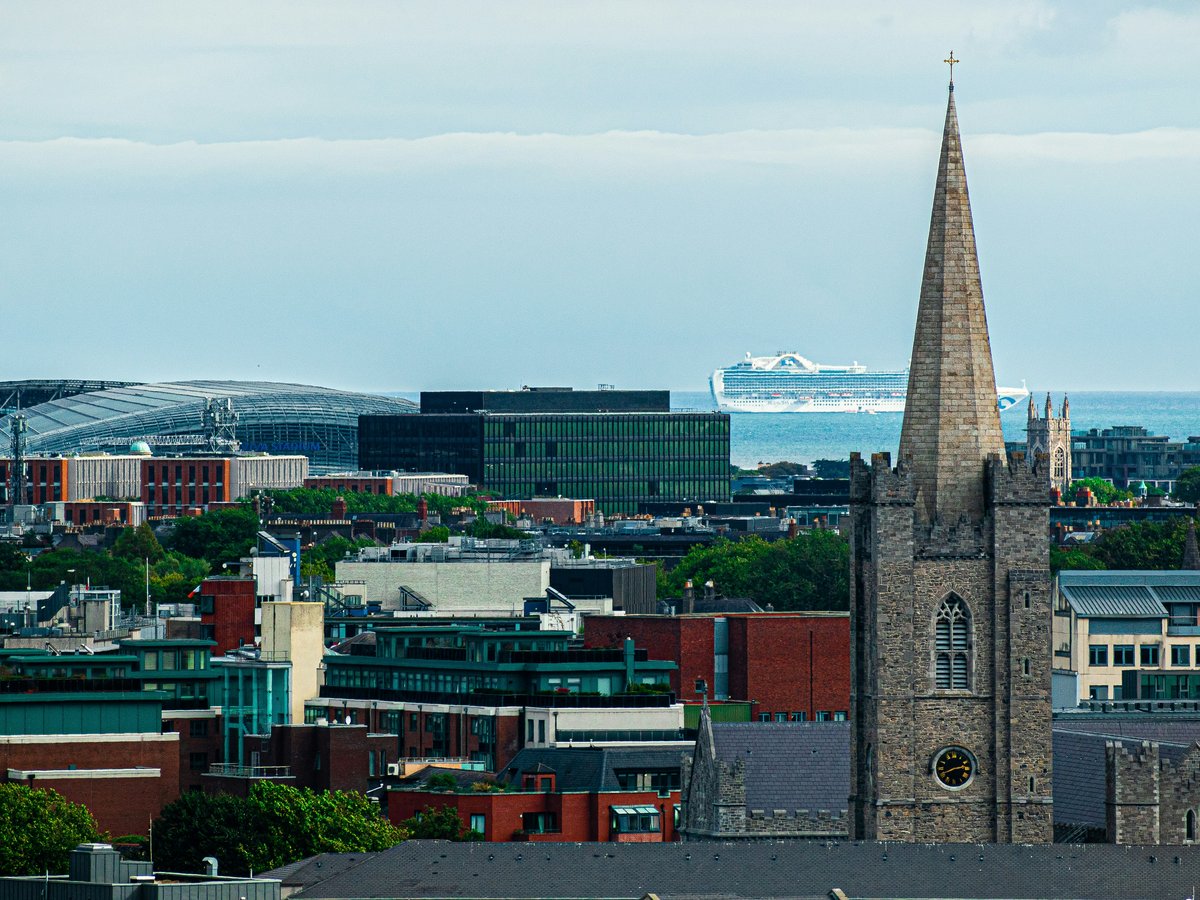
Dublin is a compact city split down the middle by the River Liffey, and that north-south divide still carries real weight in how locals think about the place. Southside tends toward Georgian terraces, leafier streets, and higher rents. Northside is grittier in spots, more working-class in its bones, though that line has blurred considerably over the past decade or so. The canal ring (the Grand Canal to the south, the Royal Canal to the north) acts as a kind of second boundary. Most of what visitors want sits within a 30-minute walk of O'Connell Bridge, which is the rough center of everything. The numbered postal districts matter here: Dublin 2 is the tourist core, Dublin 1 is the northside center, Dublin 4 is old-money south, Dublin 8 is the one that's been changing fastest. You can walk between most neighborhoods in 15 to 20 minutes, which means your choice of where to stay is less about logistics and more about what kind of Dublin you want to wake up in.
Neighborhoods
-
Temple Bar
Temple Bar is loud, cobblestoned, and perpetually sticky underfoot on weekend mornings. It's the part of Dublin that exists primarily for visitors, and locals tend to avoid it after dark, though they'll rarely admit they had fun there in their twenties. During the day, it's quite pleasant: narrow lanes, a Saturday food market in Meeting House Square with decent crepes and Irish farmhouse cheese, a few gallery spaces tucked between the pubs. At night, it becomes a wall of amplified trad sessions and stag parties. The architecture is a jumble of old merchant buildings painted in deep reds and blues, crammed shoulder to shoulder.
- Best for
- First-time visitors who want to be in the thick of it, pub crawl enthusiasts, and anyone who doesn't mind noise at 2 AM on a Tuesday
- Key streets
- Fleet Street for the slightly calmer end, Crown Alley for coffee shops, Curved Street for the outdoor performers, and Meeting House Square for the weekend markets and the occasional outdoor film screening
-
Georgian Quarter (Dublin 2: Merrion Square to St Stephen's Green)
This is Dublin at its most composed. Tall red-brick Georgian townhouses with painted doors in every color, iron railings, fanlights overhead. Merrion Square still has Oscar Wilde lounging on a rock in the park corner. The pace is slower here: government buildings, the National Gallery, the Natural History Museum with its creaky Victorian taxidermy cases. It smells like cut grass and old stone after rain. Restaurants skew toward the white-tablecloth end, though there's been a quiet shift toward more casual spots along Baggot Street. You'll hear your own footsteps on some of these streets, which is unusual for central Dublin.
- Best for
- Culture-focused travelers, couples who want something quieter, architecture enthusiasts, and anyone who'd rather be near museums than pubs
- Key streets
- Merrion Square for the door colors and park benches, Fitzwilliam Street for the longest unbroken Georgian terrace in the city, Baggot Street Lower for restaurants and wine bars, and Kildare Street for the museum cluster
-
Portobello and the South Circular Road
Portobello sits along the Grand Canal just south of the center, and it has the feel of a neighborhood that got interesting without really trying. The canal itself is the anchor: on warm evenings, people sit along the banks with takeaway pints and cans of craft beer, feet dangling toward the water. The streets behind the canal are residential, with red-brick terraces and the occasional corner shop that hasn't changed its signage since the 1980s. There's a Jewish heritage here that most visitors miss entirely: the old synagogue, the Leonard Cohen mural (he lived nearby briefly). Restaurants are good without being showy. The traffic on the South Circular can be grim during rush hour, mind you.
- Best for
- Return visitors who already know the center, people who want a neighborhood feel within walking distance of everything, food-focused travelers who prefer casual over formal
- Key streets
- Lennox Street for Fumbally, one of Dublin's best brunch spots housed in a former furniture workshop. Richmond Street South for Assassination Custard coffee and a cluster of independent restaurants. The canal walk itself from Portobello Bridge toward Charlemont.
-
Stoneybatter and Smithfield (Dublin 7)
Stoneybatter is the northside neighborhood that southsiders cross the river for, which tells you something. It's a former working-class village that's been slowly filling with coffee roasters, natural wine bars, and small restaurants without losing its older character entirely. You'll still see betting shops next to specialty bakeries, and the local pub (Walsh's or Kavanagh's, depending on your corner) still has regulars who've been drinking there for decades. Smithfield Square, a few blocks east, is a massive cobbled plaza that feels a bit Soviet in its proportions but comes alive during markets. The old Jameson chimney still stands at one end. The streets are narrow, the buildings are mostly two-story Victorian terraces, and the pace is noticeably slower than the southside center.
- Best for
- Travelers who've done Dublin's tourist core before, food and drink explorers, anyone wanting a lived-in neighborhood rather than a hotel district
- Key streets
- Manor Street for the old-school butchers and the Lighthouse Cinema (Dublin's best arthouse screen), Stoneybatter main street for the pub-to-restaurant ratio, Smithfield Square for weekend mornings, and Grangegorman for the walk toward Glasnevin
-
Liberties and Dublin 8
The Liberties is Dublin's oldest neighborhood, and it still has a roughness that the rest of the center has smoothed over. The Guinness brewery dominates: you can smell the hops on certain days when the wind is right, a warm bready sweetness that settles over the surrounding streets. Thomas Street is the spine, wide and loud with bus traffic, lined with a mix of old pubs, halal butchers, Asian groceries, and the National College of Art and Design. The architecture is unpredictable: Georgian fragments, social housing blocks from the 1960s, medieval church ruins, and brand-new apartment complexes all occupying the same block. The Digital Hub brought some tech-sector polish, but it hasn't erased the older character. This part of Dublin still feels like it belongs to the people who live here rather than the people who visit.
- Best for
- Travelers comfortable with rougher edges, history enthusiasts, anyone interested in how Dublin works rather than how it presents itself, and budget-conscious visitors: accommodation here tends to be cheaper than Dublin 2
- Key streets
- Thomas Street for the full spectrum, Francis Street for antique shops and the Iveagh Market building (still mostly empty, frustratingly), Meath Street for the old market traders and Fumbally Lane for the Saturday markets, and Crane Lane toward the cathedral
-
Ranelagh
Ranelagh is what happens when a south Dublin village gets swallowed by the city but refuses to stop acting like a village. The main street (Ranelagh Road) is a tight strip of cafes, restaurants, and small shops where you'll see the same faces on a Saturday morning. The triangle at the village center, where Ranelagh Road meets Chelmsford Road, is the gathering point. Houses are a mix of Victorian red-brick terraces and Edwardian semis, gardens slightly overgrown in the way that suggests money rather than neglect. It's residential above all else, quiet at night, maybe ten minutes by Luas tram from St Stephen's Green. The food scene punches above its weight: Pickle on Camden Street (technically the border) does some of the best Indian food in Dublin, and there are enough brunch spots to fill every weekend.
- Best for
- Couples and families who want walkable calm without feeling isolated, anyone staying longer than a few days who wants a neighborhood routine, foodies who prefer locals-heavy restaurants over tourist-facing ones
- Key streets
- Ranelagh Road itself for the village strip, Chelmsford Road toward the park, Dunville Avenue for the residential character, and the Luas stop that connects you to the center in minutes
-
Glasnevin and Phibsborough (Dublin 9 / Dublin 7)
Phibsborough (or Phibsboro, nobody can agree on the spelling) is the northside equivalent of what Portobello was ten years ago: still rough in patches, filling up with independent cafes and restaurants, but not yet polished to the point where it's lost its edge. The Phibsborough Road itself is a working main street, not a curated one: charity shops, the old Bohemian FC ground behind Dalymount Park, a few excellent pubs like The Back Page that double as board-game bars. Glasnevin, further north, is greener and quieter. The Botanic Gardens are genuinely beautiful: massive Victorian glasshouses, riverside paths along the Tolka, and that particular quality of Dublin light filtering through old trees. Glasnevin Cemetery next door is where half of Irish history is buried, literally. Together, these neighborhoods give you a very different Dublin than the tourist spine.
- Best for
- Budget travelers: hotels and Airbnbs are notably cheaper here. Return visitors looking for something different. Anyone who wants a local pub culture that hasn't been dressed up for tourists.
- Key streets
- Phibsborough Road for the main drag, Blessington Street Basin for the hidden park (a former city reservoir, now a quiet pond with benches), Botanic Road toward the gardens, and the walk through Glasnevin Cemetery if you treat it as the outdoor museum it essentially is
-
Docklands and Grand Canal Dock (Dublin 2 / Dublin 4)
This is new Dublin, and it still feels slightly unfinished in the way that purpose-built districts often do. Glass-and-steel offices for Google, Meta, and a dozen other tech firms. The Grand Canal Theatre (a Daniel Libeskind building that looks like a tilted glass prism) anchors one end. The waterfront along Grand Canal Dock is pleasant enough, with wide walkways and a few restaurants perched along the basin. But the residential streets behind are quiet to the point of feeling deserted on weekends when the office workers are gone. The Bord Gáis Energy Theatre (nobody calls it that, they say the Grand Canal Theatre or just 'the Libeskind') brings crowds for shows. There's a tension here between the architecture trying to announce a new era and the surrounding older neighborhoods (Ringsend, Irishtown) that are some of the most traditionally working-class in the city.
- Best for
- Business travelers, conference attendees, tech workers who want to be near the office, and anyone who values modern hotel stock and doesn't mind a slightly sterile atmosphere in exchange for waterfront views
- Key streets
- Grand Canal Square for the theatre and the restaurants around it, Barrow Street for the walk toward Ringsend, Sir John Rogerson's Quay along the Liffey for the older warehouse conversions, and Hanover Quay for the canal basin itself
-
Drumcondra (Dublin 9)
Drumcondra is functional Dublin, and that's meant as a compliment. It's where you stay when you want a clean B&B within walking distance of Croke Park and a bus ride from the center, without paying Dublin 2 prices. The main road is lined with guesthouses in converted Victorian homes: net curtains, full Irish breakfasts, owners who'll draw you a map of the bus routes. It's residential and quiet, the kind of place where you hear birds in the morning. The proximity to Croke Park means it comes alive on match days: the entire neighborhood transforms when 82,000 people descend for an All-Ireland final. On non-match days, it's one of the calmest parts of inner Dublin.
- Best for
- Budget-conscious visitors, GAA fans (Croke Park is right there), families who want quiet accommodation with easy bus access to the center, and anyone who prefers a guesthouse to a hotel
- Key streets
- Drumcondra Road Upper for the B&B strip, the walk along the Tolka River toward the Botanic Gardens, Griffith Avenue for one of Dublin's grandest residential streets (a dead-straight tree-lined avenue that runs for over a kilometer), and the walk to Croke Park along Clonliffe Road
FAQ
What is the best neighborhood to stay in Dublin for a first visit?
For a first visit, staying in the Georgian Quarter around Merrion Square or St Stephen's Green puts you within walking distance of most major sights, restaurants, and the main shopping streets. You're ten minutes from Temple Bar without being on top of it, which matters at 1 AM. Hotels here tend to be mid-range to expensive. If budget is a concern, Drumcondra's guesthouses offer clean, friendly accommodation with a 15-minute bus ride to the center, and considerably lower prices than anything in Dublin 2.
Is it safe to walk between Dublin's neighborhoods at night?
Central Dublin is generally safe for walking at night, particularly the well-lit areas around Grafton Street, Temple Bar, Merrion Square, and the main thoroughfares. The northside center around O'Connell Street can feel rougher after midnight, and the quays along the Liffey are best avoided late at night simply because they're poorly lit and deserted rather than specifically dangerous. Stoneybatter, Ranelagh, and Portobello are all fine at night. Use the same awareness you'd apply in any European capital: stick to lit streets, keep your phone in your pocket, and trust your instincts if a street feels empty.
How does Dublin's north side compare to the south side for visitors?
The north-south divide is real but often overstated by locals. Southside neighborhoods like Ranelagh, Portobello, and the Georgian Quarter tend to be wealthier, quieter, and more polished. Northside areas like Stoneybatter and Phibsborough have more grit and, currently at least, better value: both for accommodation and for eating out. The tourist infrastructure is heavier on the southside, but some of the most interesting food and pub scenes are now north of the Liffey. Most visitors stick to the south without realizing what they're missing, which is part of the northside's appeal.
Can you get around Dublin without a car?
You absolutely should not drive in Dublin: the one-way systems are confusing, parking is expensive and scarce, and the bus lanes mean half the roads are effectively single-lane during rush hour. The city center is compact enough to walk across in 30 to 40 minutes. The Luas tram connects Ranelagh and the southern suburbs to the center, and the DART coastal train is excellent for day trips to Howth or Dún Laoghaire. Dublin Bus covers the rest, though routes can be irregular on Sundays. Download the TFI Live app for real-time arrivals: it's the one piece of transport tech that works reliably here.
When is the best time of year to visit Dublin?
Late May through early September gives you the longest days: Dublin at midsummer has light until nearly 11 PM, which changes the entire feel of the city. People sit outside until late, the canals come alive, and the parks fill up after work. That said, September and early October can be lovely: the tourist crush eases, hotel prices drop, and the city settles back into its own rhythm. Winter is dark (genuinely dark, with sunset around 4 PM in December) but the pubs are warmer for it, and the Christmas markets around the Docklands and Smithfield have improved over the past few years. Rain is year-round, rarely heavy but persistently drizzly. Bring layers regardless of the month.
Which Dublin neighborhoods have the best food scenes right now?
Stoneybatter and Phibsborough are currently where the most interesting openings are happening on the northside: small, chef-driven spots that would cost twice as much in Dublin 2. Portobello and the Camden Street corridor remain strong for the southside, with Fumbally, Assassination Custard, and a rotating cast of pop-ups. Ranelagh punches above its size for a residential village. The Liberties around Meath Street still has the best old-school market food. The Docklands has corporate lunch spots but tends to empty out at dinner. Temple Bar, to be honest, is where food goes to be overpriced: there are exceptions, but you need to know which doors to walk through.
Last verified by automated review (v1.7.2) on . What is automated review?