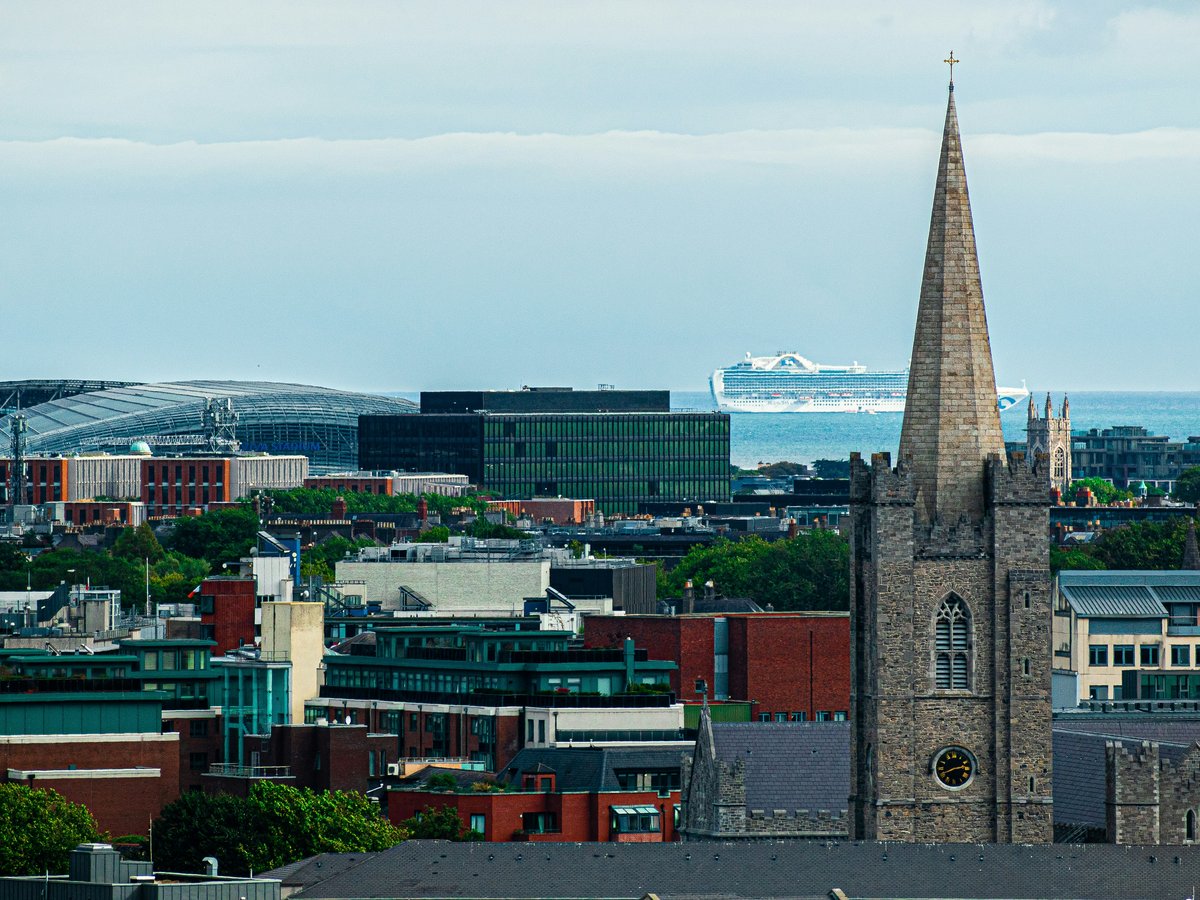
How do I get around Dublin?
Walk for most of the city center: it's compact enough that Temple Bar to St Stephen's Green takes ten minutes on foot. Luas tram and Dublin Bus cover anything beyond walking range; load a Leap Card at any newsagent for capped fares. Free Now or Bolt handle late nights. Skip the rental car entirely.
Book the connection
One search across trains, buses & flights: live times and prices for Dublin.
Dublin's center is small enough to wrong-foot you. People budget for taxis between Trinity College and the Guinness Storehouse: that's a twenty-minute walk along the quays, the brackish smell of the Liffey catching you somewhere around Four Courts. For anything inside the canal ring (basically everything a first-timer needs), your feet are the primary mode. Cobblestones in Temple Bar will punish flimsy shoes, and the rain that rolls in off the Irish Sea makes a hood more useful than an umbrella: wind kills umbrellas here. The Luas tram fills the one gap walking can't: the Green Line runs from St Stephen's Green south to Sandyford, while the Red Line connects Heuston Station east to the Docklands. A Leap Card from any newsagent or Spar costs €5 deposit; load €20 and you're covered for several days at capped fares: about €1.60 per Luas hop versus €2.30 at the platform machine.
Dublin Bus and Go-Ahead Ireland split the network: same Leap Card, same real-time app (TFI Live), different livery on the vehicles. Route numbers changed under BusConnects, so any printed guide from before 2024 is likely useless; use TFI Live or Google Maps instead. Routes worth knowing: the 39A runs from the city center out to Phoenix Park's Ashtown Gate, and the 145 connects Heuston Station to Dún Laoghaire along the coast. Cash fares are exact change only, which is another reason the Leap Card earns its deposit back immediately. For the coast, take the DART. This suburban rail hugs Dublin Bay from Malahide in the north down through Howth, past Sandymount Strand (the wet sand stretching flat toward the horizon at low tide) and south to Dalkey and Bray. Connolly to Howth takes twenty-five minutes, about €2.75 on Leap.
Free Now is the dominant ridehail app here. Bolt works too and tends slightly cheaper during surge. Uber technically operates but only through licensed taxi drivers, so the experience is identical to Free Now with a different logo. Flagfall sits around €3.80 during the day, rising after 8 PM; a typical ride from Temple Bar to Glasnevin or Rathmines runs €10-14. Mind you: Friday and Saturday nights between midnight and 2 AM, the taxi ranks on Dame Street and O'Connell Street grow queues thirty deep, the damp cold working through your jacket while you shuffle forward. Book through the app twenty minutes before you want to leave. The Luas Green Line still runs until 00:30 on weekends (later than most people expect) and saves both the queue and the surge pricing.
Do not rent a car for Dublin city. The one-way system around Christ Church Cathedral will have you circling the same block three times, parking runs €4-6 per hour in city-center garages, and clampers patrol constantly: a wheel clamp release costs €125. The biggest gap in Dublin's network: no rail link to the airport. Aircoach and Dublin Express run coaches from the city center to Dublin Airport for €7-8 one way, 30-45 minutes depending on M1 traffic. A regular Dublin Bus covers the same ground for your standard Leap fare, just expect it to take longer in morning rush. Save the rental for when the DART line ends at Bray and you want to keep going south: the Wicklow passes, Sally Gap, Glendalough. That's where having wheels matters.
On-the-ground: ride-hail apps work.
Primary modes of transit
- Walking
- Luas tram
- Dublin Bus
- DART suburban rail
- Ridehail (Free Now, Bolt)
- Airport coach (Aircoach, Dublin Express)
Dublin's network by the timetable
Read from the published timetables, not from memory: 28 operators, 237 routes and 3,665 stops within 11 km of the centre.
- Operators, by routes here
- Bus Átha Cliath – Dublin Bus (108)
- Go-Ahead Ireland (32)
- Nitelink, Dublin Bus (12)
- Bus Éireann (11)
- Swords Express (11)
- Aircoach (5)
- Citylink (5)
- Express Bus (5)
- and 20 more
- Routes by mode
- 230 Bus
- 5 Rail
- 2 Tram
- Weekday service
- 00:00 to 30:08 (06:08 the next morning)
- Fares in the timetable
- not published
- Timetables valid
- 2026-09-13 to 2027-09-13
Read 2026-09-14, version F2C81B2E-E569-42B0-9AA7-47DE9BD14E77, from one feed:
- Transport for Ireland (TFI) (the operator's own local feed, Mobility Database source 2364). Licence: not stated in the catalog; the agency's terms apply.
Popular connections from Dublin
Lowest fares and fastest times for the most-booked departures, as observed on Omio in August 2025. Live prices vary.
Dublin to Belfast
Check times & book on Omio →Mode Fare from Fastest Train from £24.27 2 h 8 min Bus Most booked from £10.40 2 h 30 min Dublin to Rome
Check times & book on Omio →Mode Fare from Fastest Flight Most booked from £38.62 3 h 5 min Dublin to London
Check times & book on Omio →Mode Fare from Fastest Bus from £36.41 10 h 45 min Flight Most booked from £21.66 1 h 5 min Dublin to Paris
Check times & book on Omio →Mode Fare from Fastest Flight Most booked from £21.93 1 h 35 min Dublin to Amsterdam
Check times & book on Omio →Mode Fare from Fastest Flight Most booked from £22.15 1 h 35 min Dublin to Edinburgh
Check times & book on Omio →Mode Fare from Fastest Flight Most booked from £21.66 1 h 5 min
Ready to book the connection?
Compare trains, buses & flights to and around Dublin on Omio: live times & prices in one search.
Compare on Omio →More transport questions
How do I get from the airport to Dublin?
Dublin Airport (DUB) has no rail link: buses are how you get into town. Take the Dublin Express to O'Connell Street: €7 (~$8), about 30 minutes, every 15-30 minutes until midnight. Aircoach runs the same route 24 hours for €8. Taxis cost €25-35 to most central neighborhoods.
Full answerHow do I get to Dublin?
Dublin Airport (DUB) sits 10 km north of the city centre and handles all scheduled traffic. Direct transatlantic flights from the US East Coast take 7 hours on Aer Lingus and Delta at $550-900 round-trip. From London, Ryanair and Aer Lingus run 15+ daily departures for £30-150. US preclearance at DUB means you land stateside as a domestic passenger.
Full answerWhat are the best day trips from Dublin?
Howth is the easiest win: 25 minutes on the DART, cliff walk with harbor seals below, fish and chips at the pier after. For a full day, Glendalough's monastic valley in Wicklow needs five to six hours but rewards with silence you won't find anywhere in Dublin. Kilkenny works if you catch the 7:35 train.
Full answerLast verified by automated review (v1.7.2) on . What is automated review?