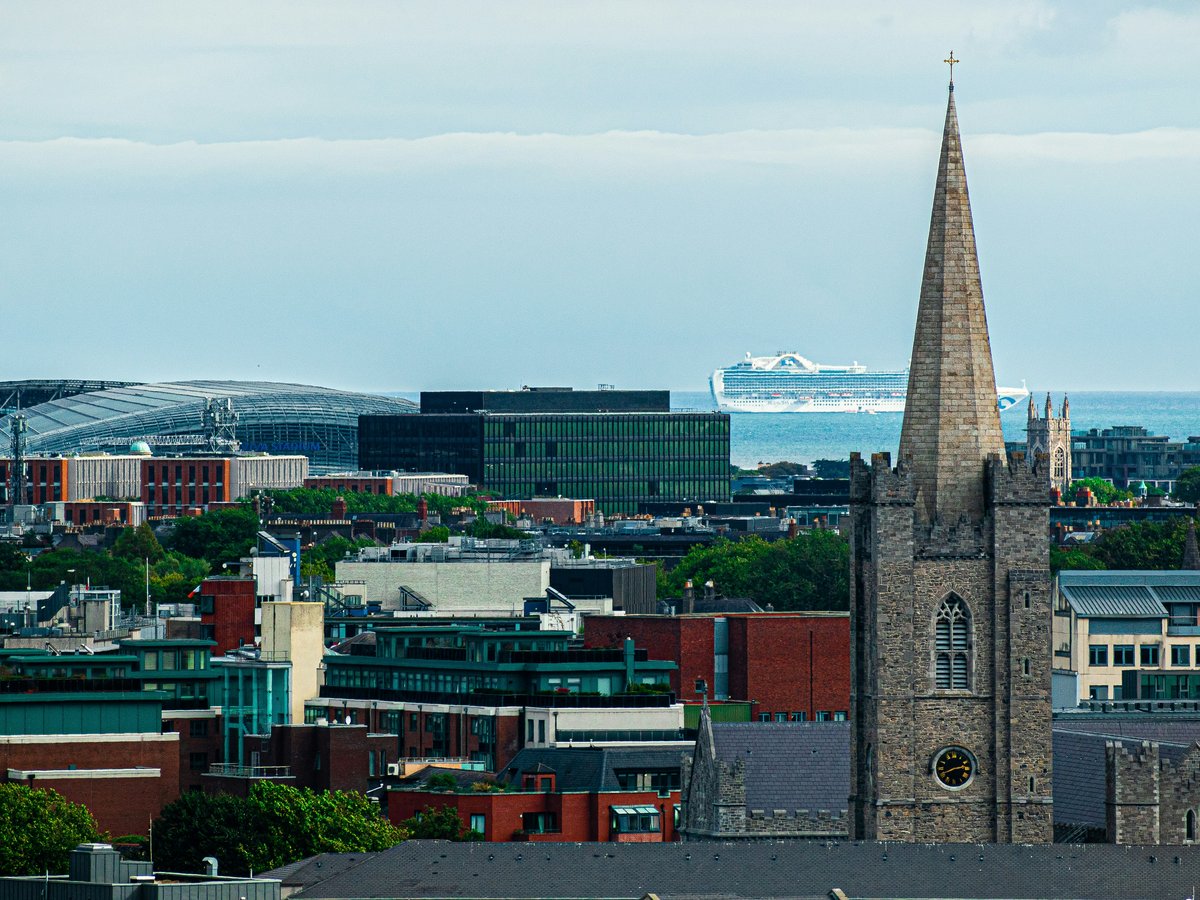
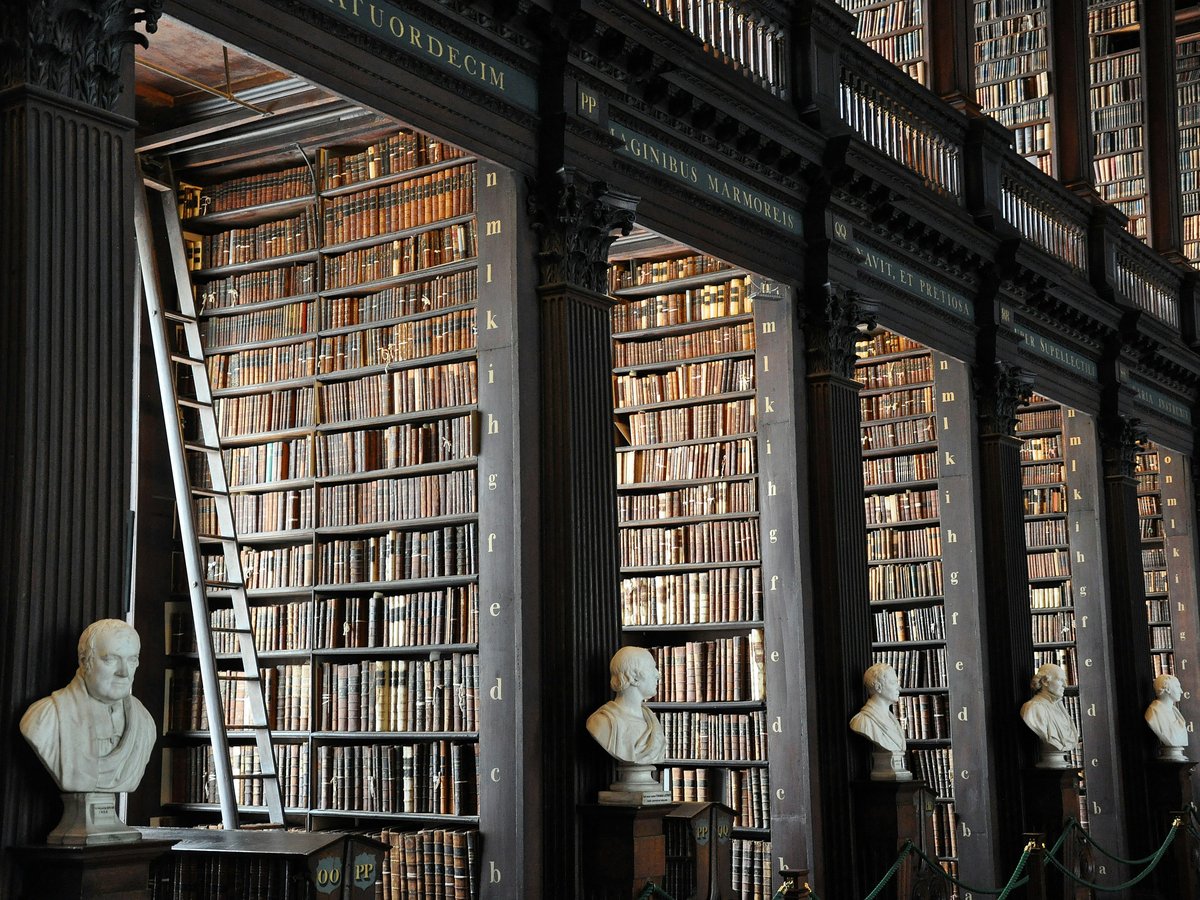
Dublin sits on the mouth of the Liffey where it empties into Dublin Bay, a city compact enough that a thirty-minute walk carries you from the Georgian doorways of Merrion Square to the converted warehouse bars of Smithfield. With roughly 592,000 residents in the city proper, it is small by European capital standards, closer to Edinburgh than London, and that compression gives it a particular quality: the same publican who pours your morning coffee knows the fiddle player who'll be in the corner that night. The Liffey divides the city into northside and southside, a split Dubliners talk about with a conviction that borders on tribal. Southside holds Trinity College, whose Long Room library predates the United States, and the tight streets around George's Street where independent restaurants have largely displaced the old chain pubs. Northside claims Stoneybatter, a former working-class village now lined with natural wine bars and secondhand bookshops, and Phibsborough, where weekend mornings revolve around the farmers' market and flat whites from cafés that didn't exist five years ago. The city's historical arc runs from Viking trading post through centuries of English rule to the 1916 Rising: the bullet holes are still visible on the General Post Office facade on O'Connell Street, and then a rapid transformation from one of western Europe's poorer capitals in the 1980s to a tech-economy boomtown whose housing costs now rival Amsterdam's. What this means for a first-time visitor is a city where a medieval cathedral and a Google campus coexist within a fifteen-minute bus ride, where the weather will almost certainly involve horizontal rain at some point regardless of season, and where the pub remains the actual unit of social infrastructure. Dubliners do not meet for dinner; they meet for pints, and dinner happens when someone gets hungry around half nine.
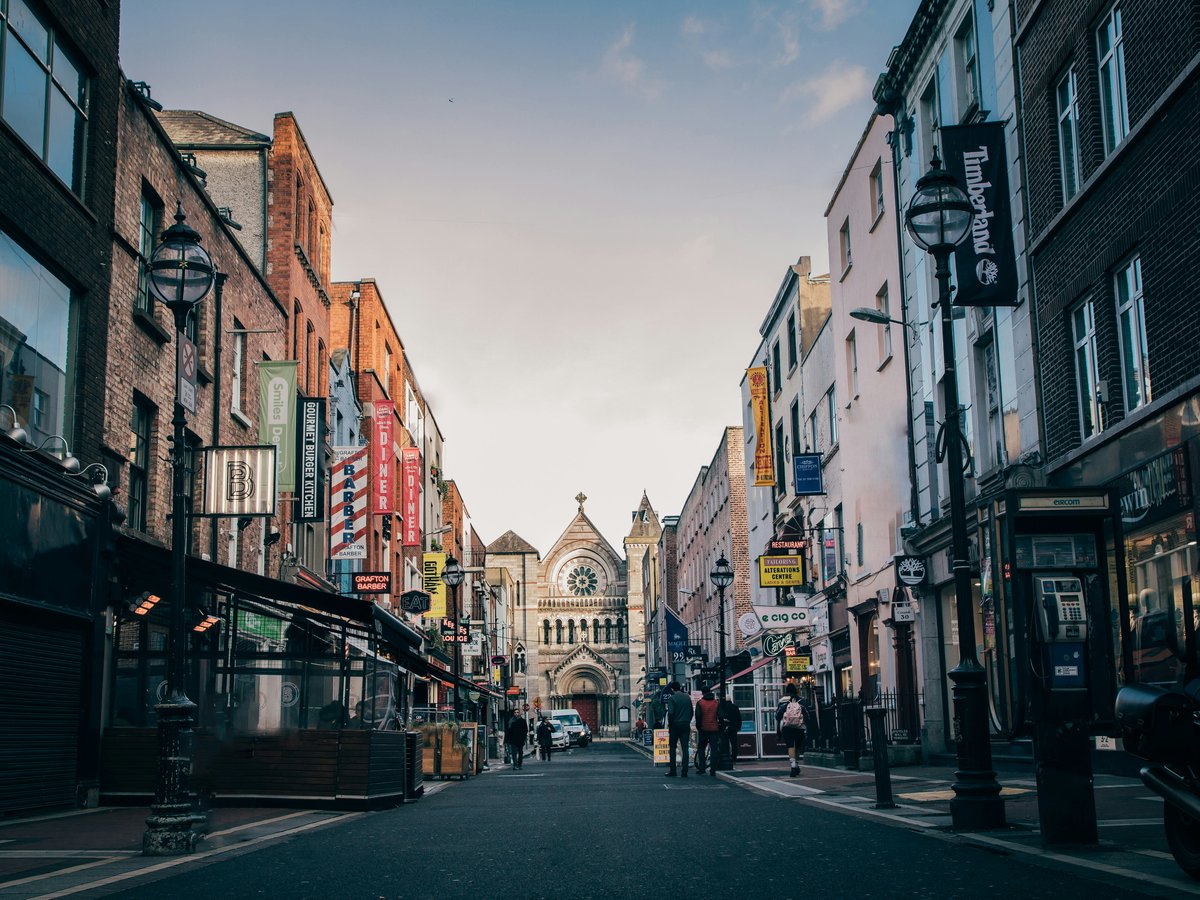
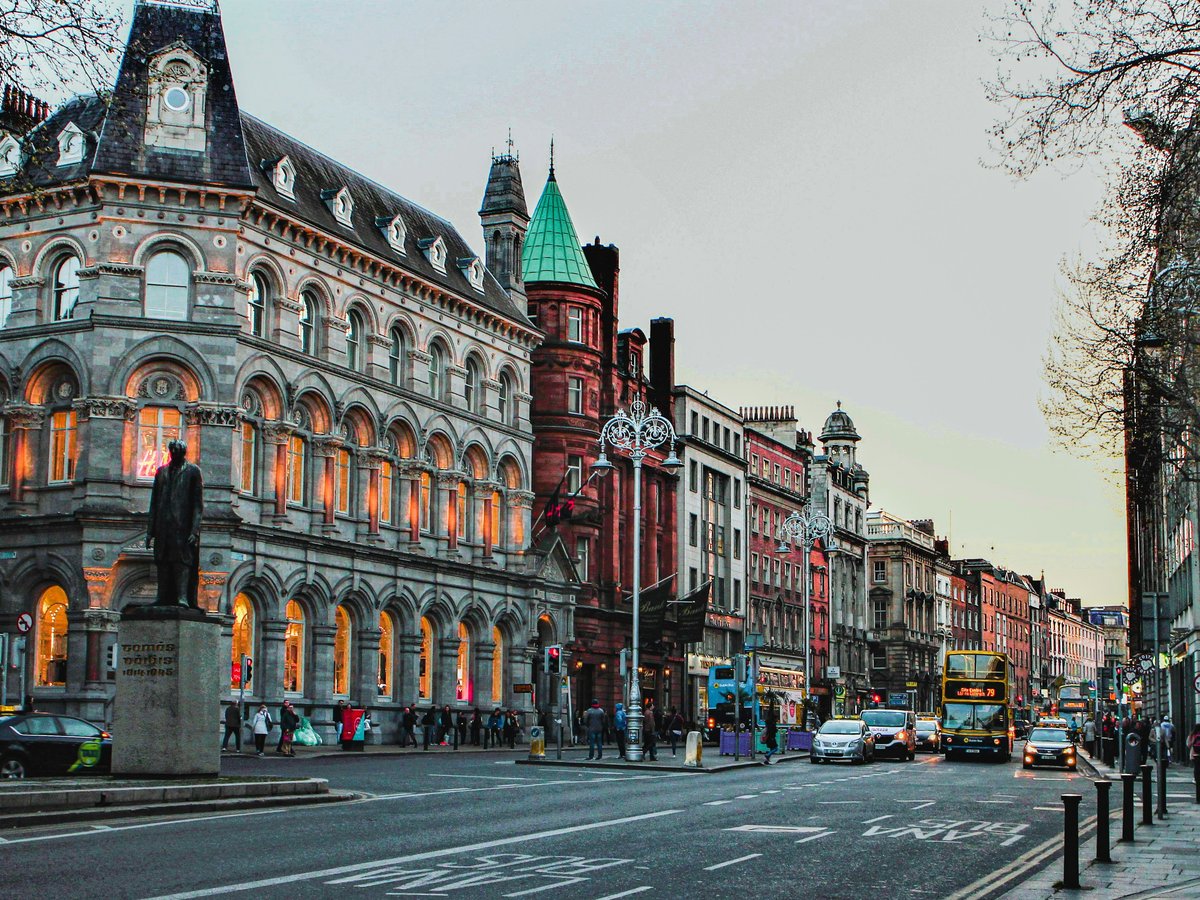
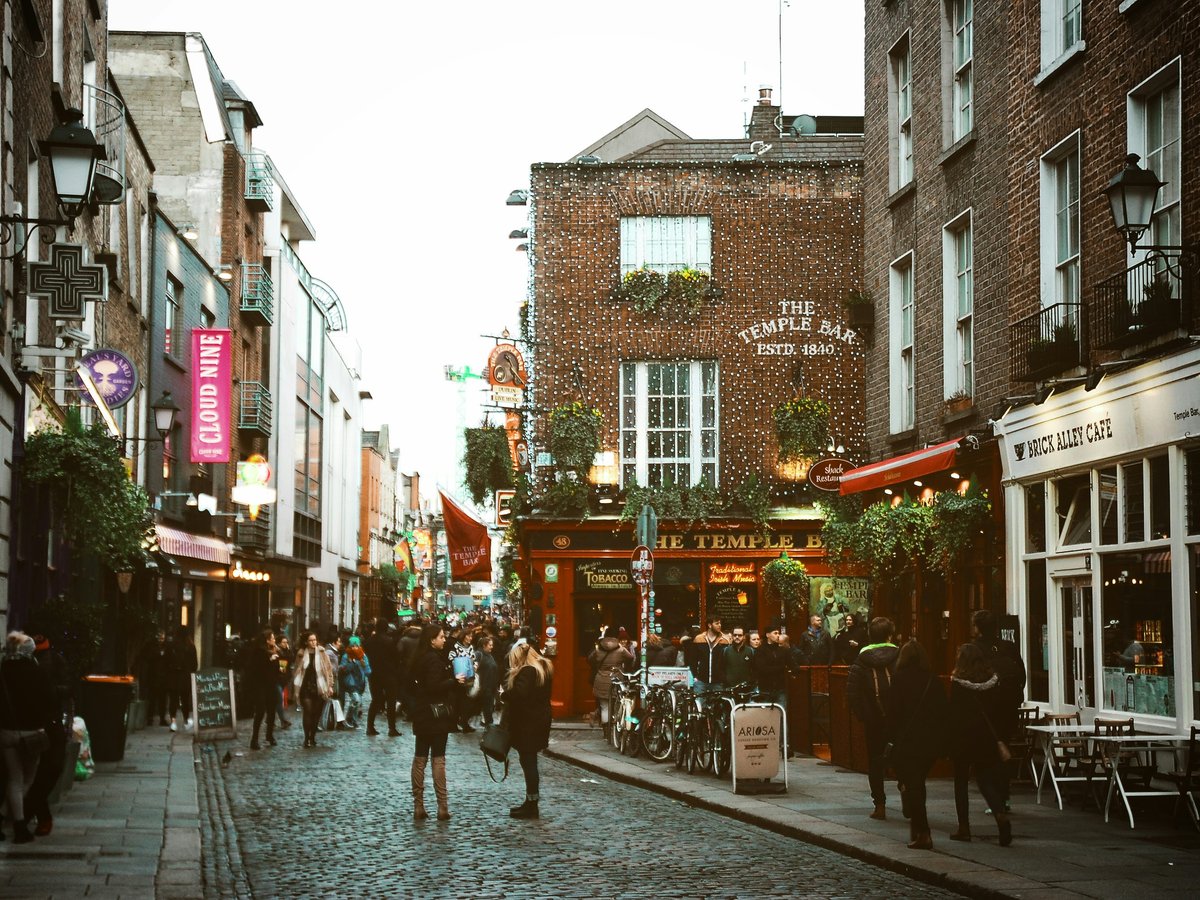
Dublin in photos
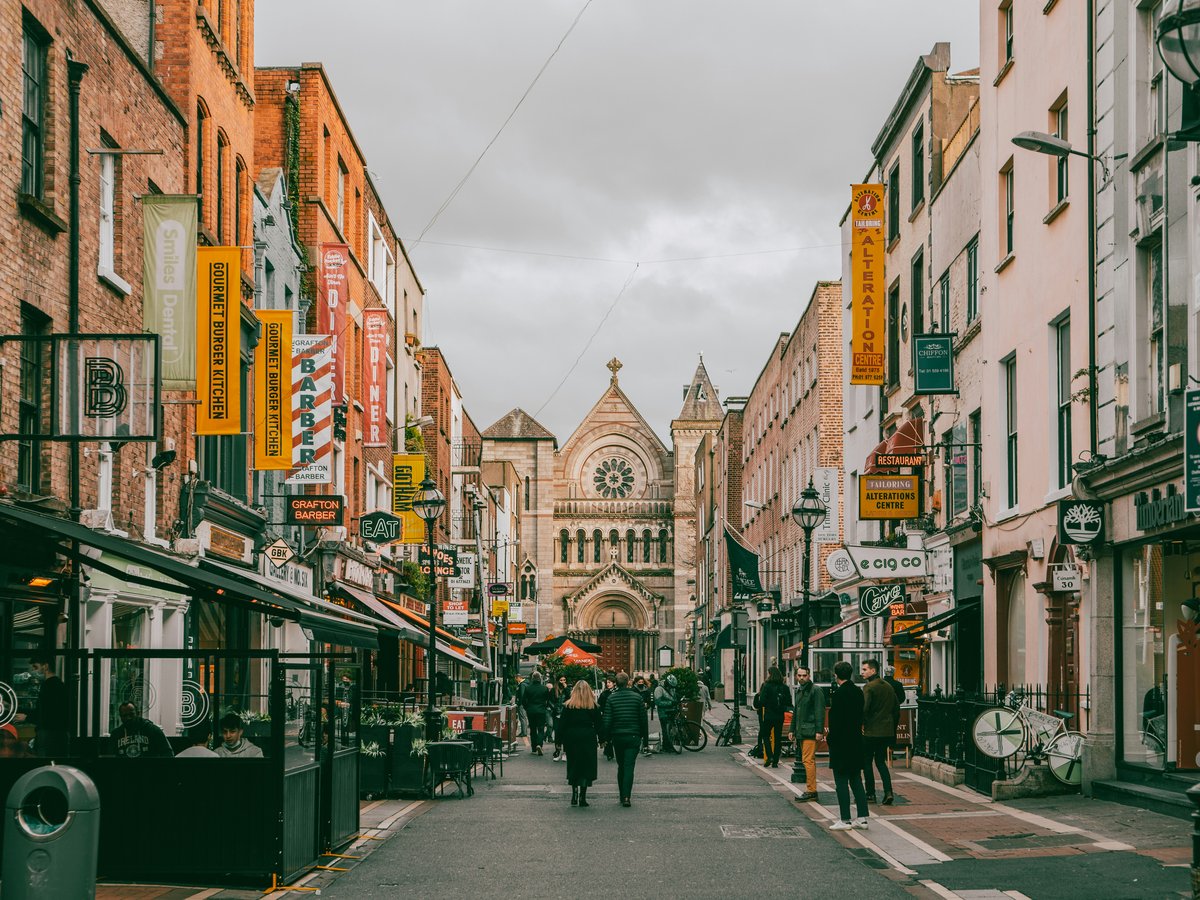

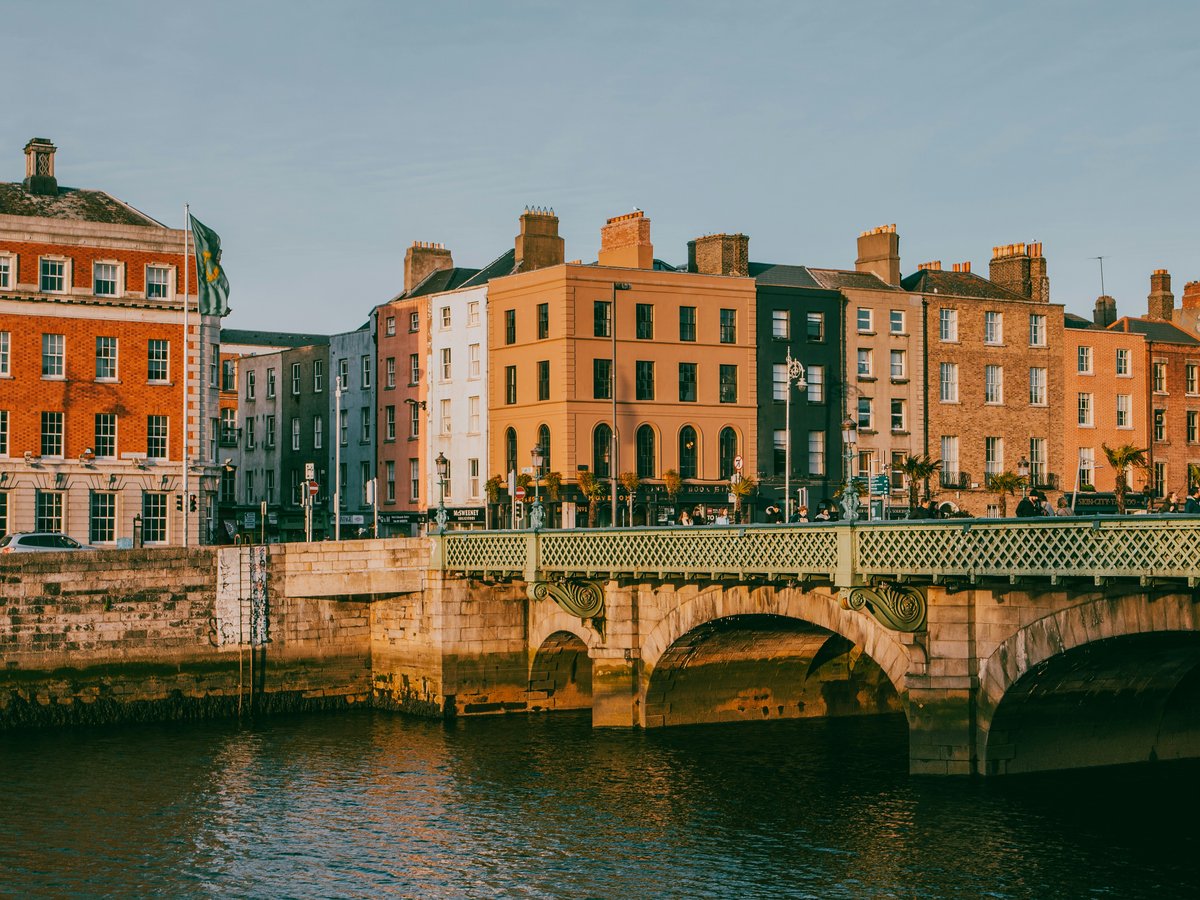
Dublin right now
Answers about Dublin
-
Airport to city
Dublin Airport (DUB) has no rail link: buses are how you get into town. Take the Dublin Express to O'Connell Street: €7 (~$8), about 30 minutes, every 15-30 minutes until midnight. Aircoach runs the same route 24 hours for €8. Taxis cost €25-35 to most central neighborhoods.
Read the full answer → -
Best time to visit
Go in late May, June, or September. June gives Dublin about 17 hours of daylight and highs near 19°C, and September stays almost as warm with fewer people and cheaper rooms than July and August. Avoid St Patrick's week in March, when hotel rates jump, and give November to February a miss as well: the sun sets shortly after 4pm in December.
Read the full answer → -
Cost per day
Budget €50/day ($58) covers a hostel dorm on Gardiner Street, Leap card buses, and deli lunches. Midrange €170/day ($197) gets a three-star near Grafton Street plus two restaurant meals. Luxury starts at €390/day ($450) with the Shelbourne or Merrion Hotel. Dublin's biggest hidden cost is the Temple Bar zone, where pints cost €2-3 above the citywide average.
Read the full answer → -
Cultural etiquette
Dublin runs on informality: first names from the start, a handshake over a hug, and the expectation that you'll buy your round at the pub. The single biggest faux pas is skipping your turn in a round of drinks. Tipping is modest: 10-12% at sit-down restaurants, nothing at pubs.
Read the full answer → -
Best day trips
Howth is the easiest win: 25 minutes on the DART, cliff walk with harbor seals below, fish and chips at the pier after. For a full day, Glendalough's monastic valley in Wicklow needs five to six hours but rewards with silence you won't find anywhere in Dublin. Kilkenny works if you catch the 7:35 train.
Read the full answer → -
Digital nomads
Dublin scores 5.2/10 for digital-nomad suitability (sourced from TTDI's editorial rubric). 300-Mbps fibre is standard in city-centre apartments, and coworking hot-desks run €250-350 a month at Dogpatch Labs or The Tara Building. The 5.2 reflects a brutal housing market, no nomad visa, and a monthly all-in near $3,200. English-speaking, strong tech scene, terrible weather.
Read the full answer → -
Family-friendly
Dublin is family-friendly at 8.2/10 (see the TTDI Family-Friendliness Index). Phoenix Park covers 707 hectares with Dublin Zoo, fallow deer, and three playgrounds. LUAS trams are level-boarding and stroller-accessible. Rain is the main caveat, but free museums on Merrion and Kildare Streets handle wet afternoons from toddlers to teens.
Read the full answer → -
Food culture
Dublin's food culture runs on two tracks: the old-school coddle-and-chipper tradition that still fills city-centre takeaways after midnight, and a newer wave of restaurants in Stoneybatter, Portobello, and Ranelagh where chefs treat Irish dairy, shellfish, and seaweed as serious ingredients. Breakfast is late. Dinner is later. The pub carvery still matters more than any Michelin list.
Read the full answer → -
Getting around
Walk for most of the city center: it's compact enough that Temple Bar to St Stephen's Green takes ten minutes on foot. Luas tram and Dublin Bus cover anything beyond walking range; load a Leap Card at any newsagent for capped fares. Free Now or Bolt handle late nights. Skip the rental car entirely.
Read the full answer → -
How to get there
Dublin Airport (DUB) sits 10 km north of the city centre and handles all scheduled traffic. Direct transatlantic flights from the US East Coast take 7 hours on Aer Lingus and Delta at $550-900 round-trip. From London, Ryanair and Aer Lingus run 15+ daily departures for £30-150. US preclearance at DUB means you land stateside as a domestic passenger.
Read the full answer → -
Is it safe?
We put Dublin at 6.8/10 for solo-traveler safety (see the TTDI Solo-Safety Index), and most visitors move around the city without incident. Violent crime against tourists is rare, and the real exposure is phone snatching and pickpocketing around Temple Bar and O'Connell Street, plus open drug use and late-night confrontations on the north quays and the Luas Red Line. Dial 112 or 999 in an emergency.
Read the full answer → -
Language basics
Dublin speaks English, fast, with a Dublin accent and its own slang. Irish (Gaeilge) is the first official language and appears on every street sign, Luas stop and bus screen, but almost nobody will speak it to you. Learn three words first: An Lár on a bus means city centre, Mná on a toilet door means women, and 'grand' means fine.
Read the full answer → -
Layover guide
Dublin Airport sits 10 km north of the city center. The Airlink 747 bus covers it in 30-40 minutes for €7 one way. With Irish immigration on both ends (Ireland is outside Schengen), you need at least 6 hours to make a city run work. That gives you roughly 2 hours on foot between Trinity College and Dublin Castle.
Read the full answer → -
LGBTQ-friendly
Dublin scores 9/10 for LGBTQ+ friendliness (sourced from TTDI's editorial rubric). Same-sex couples hold hands freely on Grafton Street and through Temple Bar. The queer scene runs along two walkable streets north and south of the Liffey, with pubs that feel more like someone's front room than a nightclub. Legal protections here are among Europe's strongest.
Read the full answer → -
Where locals go
Locals drink and work in Stoneybatter, Smithfield and Phibsborough, north of the Liffey, and avoid Temple Bar. Kavanagh's in Glasnevin has no TV and no music, while The Cobblestone on North King Street has trad music in the front bar every night. Two Boys Brew in Phibsborough is quiet before 10am on weekdays. The Forty Foot regulars in Sandycove swim at 7am all year round.
Read the full answer → -
Must-see
Chester Beatty Library, inside the Dublin Castle grounds on Dame Street. Free admission, rarely crowded, and the collection (illuminated Qurans, Japanese woodblock prints, Egyptian papyri dating to 1160 BC) is better than what most European capitals charge €20 to show you. Go mid-morning, then walk the castle courtyard before lunch.
Read the full answer → -
Solo travel
Dublin scores 6.8/10 for solo-traveler safety (see the TTDI Solo-Safety Index) and works well for 5-to-10-day solo trips. The pub culture practically forces conversation, single diners face zero stigma in most neighborhoods, and the DART coastal rail gives you independent day-trip range without renting a car. Budget solo stays run €30-45 per night in private hostel rooms.
Read the full answer → -
This week
Dublin's week turns on pub-session nights and Saturday markets. The Temple Bar Food Market fills Meeting House Square from 10am Saturday. Traditional music peaks Thursday through Saturday north and south of the Liffey. Monday some galleries close. Days currently sit around 18°C, overcast, with 20-minute rain spells most afternoons.
Read the full answer → -
3-day itinerary
Day 1 walks the Georgian south side: Trinity College, Grafton Street, the National Gallery. Day 2 heads west through medieval Dublin to Kilmainham Gaol and the Guinness Storehouse. Day 3 takes the DART to Howth for the cliff walk and harbour seafood. Three geographic themes, no backtracking, roughly 26 kilometres of walking total.
Read the full answer → -
What to avoid
Skip night-one pints in Temple Bar, where Guinness costs roughly 40% more than at Grogan's on South William Street. Skip the Cliffs of Moher coach on a jet-lagged first day, a 13-hour round trip. Don't rent a car inside the M50, and after dark, avoid the Liffey Boardwalk and the lanes off O'Connell Street.
Read the full answer → -
What to pack
A proper rain jacket, not an umbrella, Dublin wind turns them inside out within minutes. Layers for 8-18°C swings in a single day, broken-in walking shoes for wet cobblestones around Trinity College, and a UK-style Type G plug adapter for Ireland's 230V outlets. Skip packing toiletries and cheap layers: Penneys on O'Connell Street sells them for less than airport shops charge.
Read the full answer → -
Where to stay
Stay near St. Stephen's Green in Dublin 2 for a first visit: ten minutes on foot to Trinity College, five to Grafton Street, and on the Luas green line south. Budget €130–220 ($150–255) for a three-star double. Portobello, fifteen minutes south along the Grand Canal, runs €90–150 and feels more like a neighbourhood than a hotel district.
Read the full answer →
Deep guides for Dublin
-
Dublin With Kids: What Works
Dublin earns an 8.2 for family friendliness, a number that maps to a specific daily rhythm of Phoenix Park mornings, free museum afternoons, and DART escapes to Howth. Follow that shape and the city delivers. Break it and you are queuing for the Book of Kells with a screaming toddler.
Read the guide → -
Best Time to Visit Dublin, by Season
Dublin's entire year fits inside an 11-degree temperature window. The real question isn't whether the weather will cooperate (it probably will, within reason) but whether you're optimizing for light, price, solitude, or the narrow stretch where all three align.
Read the guide →
Curated lists for Dublin
accommodation
-
Best boutique hotels
Dublin's hotel stock clusters along both banks of the Liffey and fans out into postal-code neighborhoods that feel nothing alike once you step off the tram. The south side, from Dublin 2's Georgian squares to the cobbled noise of Temple Bar, carries the tourist gravity and the price premium that comes with it. Cross the river north and rates soften around Dublin 1's O'Connell Street corridor, while the docklands at North Dock trade pub culture for glass-fronted offices and waterfront quiet. Farther west, Dublin 7 and Dublin 8 stretch toward Phoenix Park and the Guinness brewery, where the streets get steeper, the tourists thin, and the pubs stay local. Baggotrath East and Fitzwilliam Land South Dublin push into residential stretches where nightly rates dip below what the center demands. The range across these neighborhoods runs from about $114 at the docklands to $198 near the north-side Liffey quays, and the mid-range ratings hold above 8.7 across the board. Choosing a neighborhood here is choosing a pace: Georgian calm on the south side, market noise near Christchurch, or the seafront at Sandymount Strand. This is not a city where you need to stay central to move freely; the Luas tram and DART rail connect every cluster within a short ride.
See the picks → -
Best hostels
Dublin's hostel beds follow the Liffey like a spine, splitting north and south with the river and clustering hardest where the tram lines cross. The postal-code system the city uses tells you more than any booking filter: south of the Liffey, Dublin 2 and Temple Bar pack the foot traffic and the pub noise; north of it, Dublin 1 runs from O'Connell Street toward Smithfield with quieter blocks and slightly higher nightly rates. Dublin 8 sits further west along the South Circular Road toward Kilmainham, where hostels draw a repeat-traveler crowd that trades proximity for breathing room. The price spread across all five neighborhoods is tighter than most European capitals: $23 to $34 a night covers every area on this list, and the ratings run from 8.1 to 9.0. What separates the areas is not cost but noise tolerance, transit access, and which side of the river you want to wake up on. Pick the neighborhood first; the beds sort themselves.
See the picks → -
Best luxury hotels
Dublin's luxury hotel market concentrates more tightly than the city's reputation suggests. Nightly rates on this list range from just over USD 200 to nearly USD 700, and the gap between the most affordable entries and the highest-rated is narrower than you would expect. Properties scoring above 9.0 on Trip.com start below USD 250 a night, which means the visitor paying three times as much is buying a specific amenity set or a specific street, not a categorically better stay. The choice between these twelve properties comes down to which block, which zone, and which trade-offs suit the trip. Some addresses prioritize walkability and a strong guest score; others invest in parking, restaurants, and spa facilities for the visitor who treats the hotel as a destination. Each paragraph below grounds its recommendation in verified facts, so you know what you are booking before you land.
See the picks → -
Where to stay
Dublin's accommodation map splits along the River Liffey and then fractures further by postal code, canal boundary, and walking distance to the nearest Luas stop. South of the river, Dublin 2 holds the heaviest concentration of hotels, from Georgian townhouse conversions near St Stephen's Green to budget hostels tucked behind Grafton Street. Cross the Liffey north and Dublin 1 picks up the slack along O'Connell Street, where rates drop and the architecture shifts from red brick to broader commercial blocks. Temple Bar draws the weekend crowd with its pub-lined lanes, but the rooms above those pubs carry the noise premium you would expect. Further west, Dublin 8 anchors around the Liberties, a neighborhood that trades tourist footfall for brewery heritage and lower nightly rates. The financial district on the north quays, Smithfield's Dublin 7 corridor, and the quieter residential stretches south toward Sandymount each serve a different traveler: the business commuter, the kitchen-equipped longer stay, the family looking for green space over nightlife. Prices range from $23 hostel beds to $696 design suites, and the gap between an 8.1 and a 9.6 on Trip.com often comes down to whether you want a staffed lobby or a self-service pod. The neighborhood you pick matters more than the hotel you book.
See the picks →
attractions
-
Best free attractions
Dublin's best free hours are spent outdoors, on grass and gravel that has been public for a very long time. The city is unusually well-supplied with squares, parks, and botanical grounds: a legacy of Georgian planning that left the southside laced with railed gardens, and of nineteenth-century civic ambition that gave the north its bigger green rooms. This list is twelve of them, ranked by how much they reward a walk-in visitor with nothing to spend. Some are enormous, working parks with cricket pitches and glasshouses; others are pocket squares you would miss if you were not looking for the gate. All of them are inside Dublin, all of them are free, and all of them are the kind of place a local goes when the pub is too loud and the museum queue is too long. Bring a coat. The weather is the price of entry, and the light (when it comes) is the reason to stay.
See the picks → -
Best museums
Dublin's museums are defined by their national institutions, and the oldest among them still carry the most weight. The National Gallery of Ireland dates from 1854, the National Library of Ireland from 1877, and the Royal Hibernian Academy, which is an art school, museum and society at once, from 1823. Kilmainham Gaol is a former prison and a National monument of Ireland, and the Chester Beatty Library sits inside Dublin Castle. Two picks are further out: the James Joyce Tower and Museum on Sandycove Point and the Irish Museum of Modern Art on Military Road. We put this list together for travellers who would trade a few hours of shopping for galleries, reading rooms and cells, and for families who want something lighter, like Dublinia or the folk museum on Jervis Street. Check opening times before you go, because Saturdays are short at the library, which closes at 12:45, and IMMA lists no Monday hours.
See the picks → -
Must-see attractions
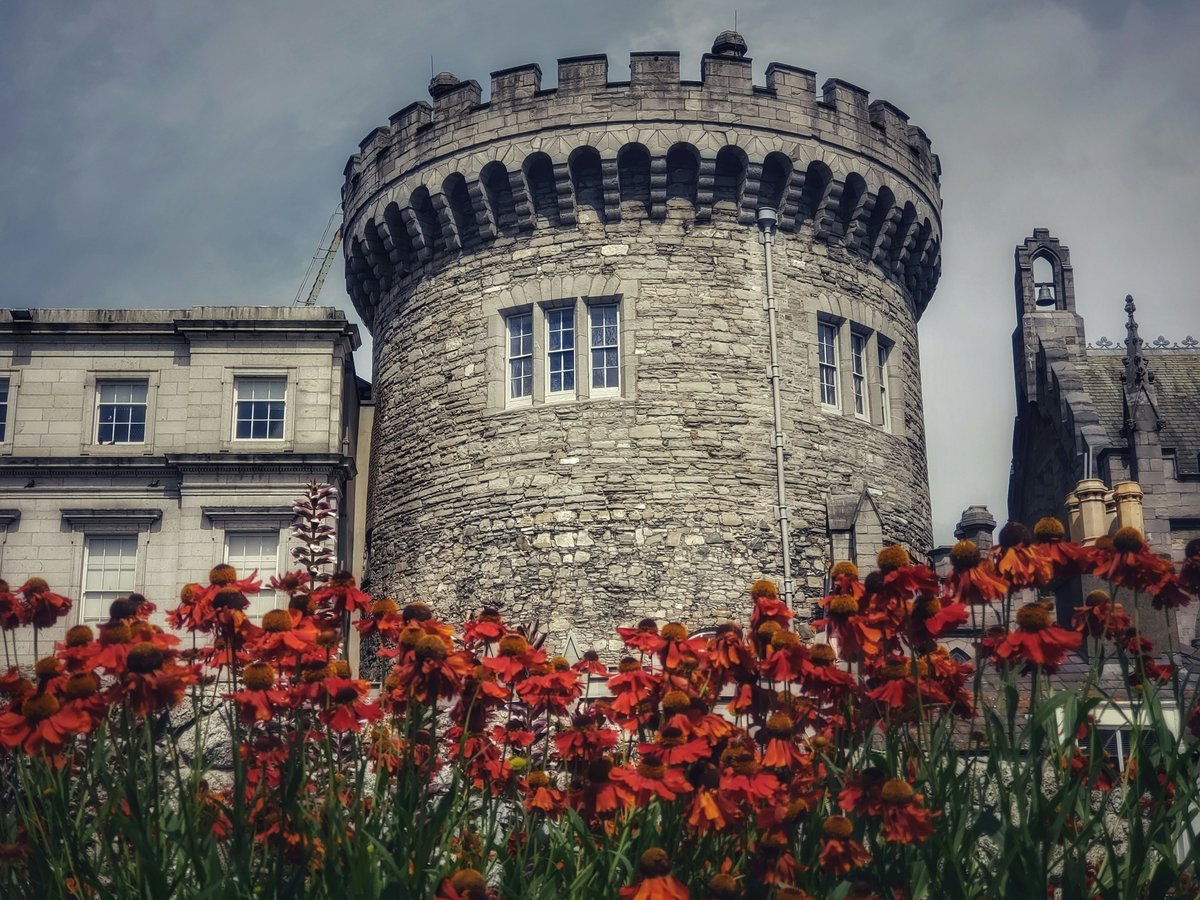
Dublin's must-sees are mostly buildings rather than attractions built for visitors, and their dates span a long stretch: Christ Church Cathedral dates to 1031, St Patrick's Cathedral to 1191, and Dublin Castle to 1204, while at the other end sit the Spire of Dublin, from 2003, and the cable-stayed Samuel Beckett Bridge, from 2009. In between are the building that houses the parliament of Ireland, a major court complex, the country's largest non-denominational cemetery, a footbridge over the River Liffey, and two theatres that still put on shows at night. This list is for the visitor who wants the city's working spine, not a checklist of photo stops. Several of these places keep tight or split hours, and Sunday in particular can catch you out, so we give the opening times wherever the record has them. Read the times before you set the route. Several places on this list can't be walked into on a whim, and a planned day here beats an improvised one.
See the picks →
food
-
Best cafes
Dublin's cafe culture sits between two poles: the second-wave chains that made espresso an office staple and the third-wave roasters and Iberian pastelarias that made it a craft again. The city is small enough to walk between them in an afternoon, which is what this list assumes. What ties the twelve places below together is honesty of format: a functional counter, a short menu, a phone the barista will pick up, an address you can walk to. What separates them is intent: some are for a lunch you eat standing, some for a two-hour flat white with a book, some for a late chocolate after the shops close. The order below is our own; the addresses, hours, and websites come straight from public records so you can verify each before you go.
See the picks → -
Best restaurants
Dublin's restaurant map does not reward the traveller who follows the crowd down Grafton Street or into Temple Bar. The interesting cooking has spread onto Marlborough Street, onto Abbey Street Lower, along Ormond Quay Lower where the river does the marketing, and out along the O'Connell Street spine, the corners visitors tend to walk past on the way to a postcard. This is a working list of twelve, picked for the north-city and quay-side blocks where an English-reading visitor can eat well without paying the tourist-quarter surcharge: a steakhouse open from breakfast, a Telugu-inflected canteen, a Mediterranean brunch counter, a late-hours burrito bar, a proper sushi room, a wood-fired kitchen, a two-shift grill room, a chain that earns its place by keeping honest hours, a wine-bar Italian, a bakery-cafe, a burger counter that refuses to pad the menu, and an Irish room that has stopped pretending. Addresses, phones, websites and service hours all trace to their public sources; the opinions are the editor's.
See the picks →
Browse by traveler type
- For foodies
Dublin for foodies
- For families with kids
Dublin for families
- For digital nomads
Dublin for digital nomads
- For solo travelers
Dublin for solo travelers
- For couples
Dublin for couples
- For budget travelers
Dublin on a budget
- For luxury travelers
Dublin for luxury travelers
- For first-timers
Dublin for first-time visitors
Book experiences in Dublin
 Free cancellation
 Dublin to Cliffs of Moher, including Wild Atlantic Way and Galway
Day trip: 13 hours, free cancellation.
via Viator Free cancellation
 Dublin to Cliffs of Moher, Burren, Wild Atlantic Way, Galway Tour
Outdoor experience: 12.5 hours, free cancellation.
via Viator Free cancellation
 Kilkenny, Wicklow and Glendalough Sheepdog Trials from Dublin
Day trip: 10 hours, free cancellation.
via Viator Free cancellation
 Dublin to Glendalough, Wicklow and Kilkenny Full Day Guided Tour
Day trip: 9.2 hours, free cancellation.
via Viator Free cancellation
 Dublin to Dunluce Castle, Giant's Causeway, Dark Hedge, Belfast
Outdoor experience: 12.5 hours, free cancellation.
via Viator Free cancellation
 Dublin Book of Kells, Castle and Molly Malone Statue Guided Tour
City tour: 2.5 hours, free cancellation.
via Viator Free cancellation
 Dublin to Belfast Titanic Dunluce Castle Giants Causeway Tour
Outdoor experience: 13 hours, free cancellation.
via Viator Free cancellation
 Dublin Hop-On Hop-Off Bus Tour with Guide and Little Museum Entry
City tour: free cancellation.
via Viator Free cancellation
 Wild Wicklow Tour: Wicklow Mountains, Glendalough & Guinness Lake
Day trip: free cancellation.
via Viator Free cancellation
 Cliffs of Moher, Burren and Galway Day Tour from Dublin
Outdoor experience: 13 hours, free cancellation.
via Viator Free cancellation
 Big Bus Dublin Hop-on, Hop-off Sightseeing Tour with Live Guide
City tour: 1.8 hours, free cancellation.
via Viator Free cancellation
 Dublin to Rock of Cashel Cork City and Blarney Castle Guided Tour
Day trip: 12 hours, free cancellation.
via ViatorBrowse by interest
Compare Dublin with
Find a flight to Dublin
Live fares to Dublin appear here once cookies are accepted.
Last verified by automated review (v1.7.2) on . What is automated review?