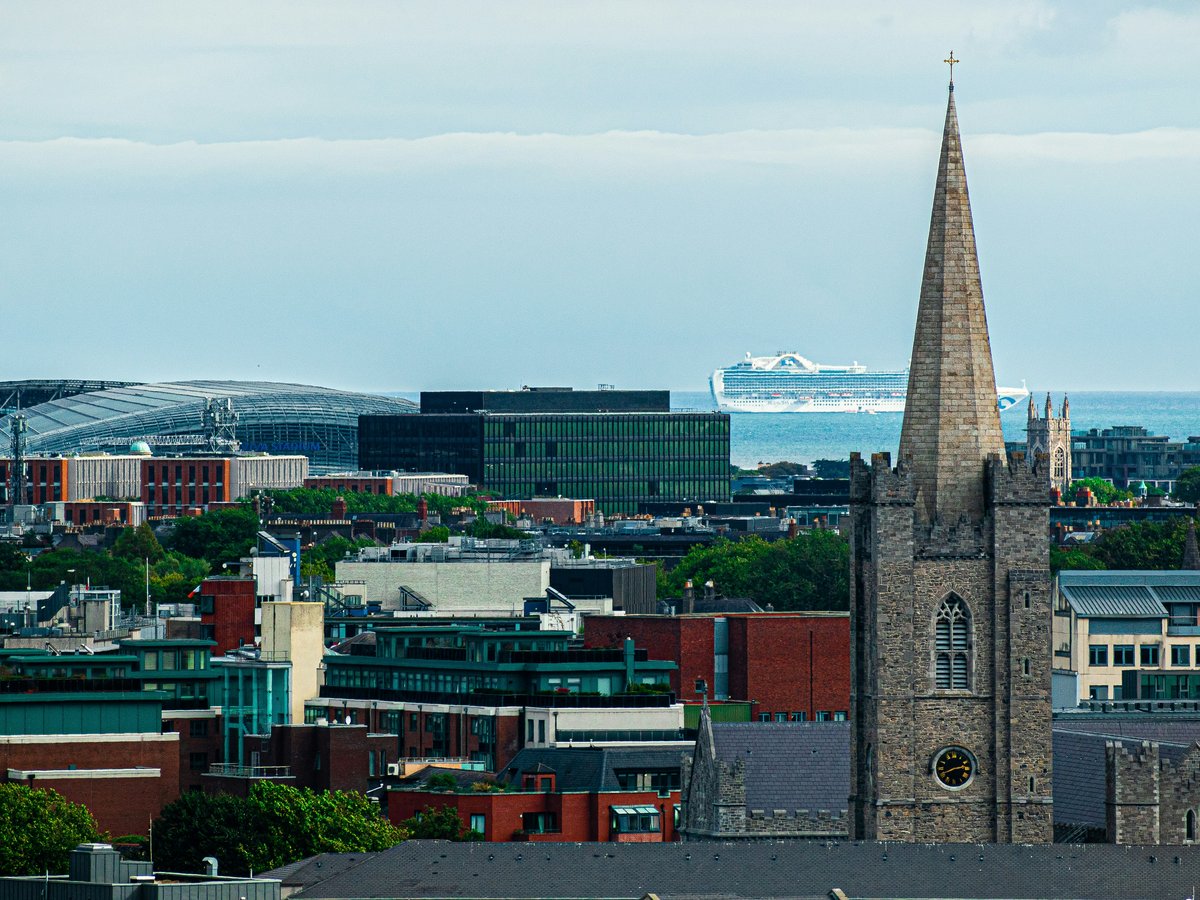
Best Time to Visit Dublin, by Season
Dublin's entire year fits inside an 11-degree temperature window. The real question isn't whether the weather will cooperate (it probably will, within reason) but whether you're optimizing for light, price, solitude, or the narrow stretch where all three align.
Published · Updated
1 Dublin's Year Lives Inside an 11-Degree Window: Your Decision Isn't About Temperature
The wind off the Liffey in January has a specific texture: wet, persistent, the kind that finds the gap between your collar and your neck before you've crossed the bridge. Stand on any crossing over that river in the dead of winter and the average afternoon air reads 8.1°C. Walk that same route on the warmest afternoon July can offer, and the thermometer reaches 19.5°C. The entire annual swing, coldest average high to warmest, spans just 11.4 degrees.
This matters more than any single month's numbers. In a city like Moscow or Montreal, picking the wrong month is a punishment: you're choosing between tolerable and brutal. Dublin's compressed band, from January's 3.5°C overnight low to July's 13.4°C low, means the difference between winter and summer is the weight of your jacket, not whether you need survival gear. February's average high of 9.8°C is cool but completely walkable. October at 14.8°C is genuinely pleasant with the right layer.
The variables that swing between months aren't temperature but daylight, rainfall frequency, hotel pricing, and crowd density. A May afternoon at 15.3°C with fifteen hours of usable light and room to breathe feels like a different city from a December afternoon at 9.5°C when darkness settles before five o'clock. August's 19.5°C high matches July exactly, but school holidays across Europe mean you're sharing every pub garden and museum queue with the continent.
What follows is a month-by-month breakdown built from verified daily-observation averages: January's 8.1°C high through to December's 9.5°C: with the honest trade-offs layered on. The question isn't whether Dublin's temperature will ruin your trip. It probably won't, at any time of year. The question is what you're after: light, value, solitude, or the narrow window where all three happen to overlap.
The entire annual range, coldest average high to warmest, spans just 11.4 degrees. Dublin doesn't punish you for picking the wrong month: it rewards you for picking the right one.
2 January and February Belong to the Budget Traveller Who Owns a Raincoat
There's a quality to Dublin's January light that no photograph quite captures: a low, pewter wash that hangs over Georgian rooftops and barely shifts between morning and afternoon. The sun shows up late, leaves early, and in between the city operates under a kind of permanent grey. January's average high of 8.1°C pairs with a low of 3.5°C, and that narrow 4.6-degree daily range tells you something: Dublin in deep winter doesn't swing between cold days and freezing nights. It just stays persistently, uniformly damp.
February offers a marginal upgrade. The average high reaches 9.8°C, the low climbs to 5.1°C: a gain of 1.7 degrees on the top end that your body barely registers. What you will notice is the light shifting. By late February, sunset pushes past half five, and that extra forty minutes of afternoon daylight changes the whole mood of the city.
The case for visiting in these two months is financial. Hotels and guesthouses that charge their ceiling rates when July and August's 19.5°C highs bring peak crowds drop their prices substantially through January and February. Galleries and museums run quiet enough that you can stand still in front of things. The trade is straightforward: January's 8.1°C and 3.5°C evenings buy you the cheapest and emptiest version of Dublin available.
The trade-off is equally direct. Any plan that depends on dry weather at these temperatures is a gamble you'll likely lose. January's 8.1°C makes a coastal walk viable in proper layers, but the combination of 3.5°C after dark and horizontal Atlantic drizzle means you need flexibility built into every outdoor day. February's 9.8°C is not sitting-outside-a-pub temperature, whatever the locals demonstrate to the contrary.
Mind you, Dublin's strongest suit has always been what happens behind walls: the session music, the theatre, the bookshop browsing, the long conversations over slow pints. At those temperatures, you're pushed indoors, which is where the city tends to be at its best.
3 March Through May: Spring Unfolds Slowly, Then Hands You 15.3°C and Long Light
March in Dublin still carries the scent of winter: wet stone, damp earth from parks that never fully dried out, and the faint mushroom smell of old leaves composting along canal paths. The average high of 10.8°C with a low of 5.3°C sits only a degree above February's 9.8°C high and 5.1°C low. On the thermometer, March is still a winter month wearing a different name. The gains over February are so slight: 1.0°C on the high, 0.2°C on the low: that they register statistically but not physically.
April is where the needle starts to move. The average high reaches 12.0°C, the low 6.1°C, and the feel of the city shifts with it. Walking along the canals or through the Georgian squares becomes something you choose for pleasure rather than efficiency. The rain still arrives, but in shorter, less committed bursts between stretches of watery sunshine.
May is the reveal. The average high climbs to 15.3°C, the low to 9.1°C, and the 3.3-degree jump from April's 12.0°C is the single largest month-on-month gain in Dublin's entire annual cycle. You feel every degree of it. The parks fill out. The light stretches past nine in the evening. The city's outdoor life, dormant since October, reappears as if someone turned a switch.
The practical argument for spring (particularly late April and May) is the crowd-to-weather ratio. May's 15.3°C delivers genuinely comfortable conditions at a fraction of what June's 18.0°C commands in hotel rates and queue lengths. The gap between May and June is just 2.7 degrees on the high side, but the gap in pricing and density is disproportionate. If 9.1°C evenings don't bother you (and a decent jacket handles them entirely) May gives you most of summer's upside without summer's costs.
To be fair, March at 10.8°C and 5.3°C overnight still asks you to pack for winter. April's 12.0°C is firmly transitional. But May's 15.3°C paired with long northern light is the month where spring's promise finally delivers, and the summer markup hasn't yet arrived.
4 June Through August Charges Premium for 19.5°C and You'll Pay It Anyway
The smell of hops from the Guinness brewery drifts across the Liberties differently in summer: thicker, hanging in air that's finally warm enough to hold it. June's average high of 18.0°C with an 11.7°C low is the city crossing into territory where short sleeves feel right during the day. Those 11.7°C evenings, though, will still have you reaching for a layer by nine o'clock. Dublin summer is not Mediterranean summer. It's comfortable. Rarely hot.
July and August are the thermal ceiling, and they're functionally identical: both land on an average high of 19.5°C, with lows of 13.4°C and 13.3°C respectively. That 0.1-degree overnight difference between July and August is noise, not signal. Choose between them based on pricing and crowds: the thermometer will not help you.
Here's the honest part. That 19.5°C average high is pleasant for walking, fine for sitting outside at lunch, tolerable for a beach trip if you're committed. It is not sunbathing weather for anyone accustomed to southern European summers. July's 19.5°C paired with 13.4°C nights means you're still carrying a jacket everywhere. August's matching 19.5°C and 13.3°C changes nothing on that front.
What you are paying for in summer is the light. Sunset past ten o'clock in late June, barely any true darkness at all by the solstice. That extended golden hour over Dublin Bay and the Georgian terraces is the one thing about Dublin summer that exceeds its reputation rather than falling short. June's 18.0°C paired with the longest days is, for many visitors, reason enough.
The cost side is blunt. Hotels that sat at reasonable rates in February at 9.8°C command their annual maximum when July and August's 19.5°C coincides with school holidays across Europe. Every restaurant, every walking tour, every rental car peaks simultaneously. Early June: still hitting 18.0°C, still bathed in late light, but ahead of the worst crush: is the smarter call for anyone not locked to school-holiday dates.
You're paying premium for 19.5°C. That is not hot. It's not even reliably warm by continental standards. Dublin summer is comfortable, and the light, not the heat, is the real product.
5 September at 17.1°C Is Dublin's Best Month and Nobody Seems to Know
The particular pleasure of Dublin in September hits the senses before the statistics. The light drops lower in the sky and turns golden a full hour earlier than it did in August. You can smell turf smoke drifting from chimneys in certain neighborhoods again: a scent that vanishes entirely during the milder summer stretch. The pavement still holds some warmth through the afternoon. September's average high of 17.1°C with an 11.6°C low puts it just 2.4 degrees below July's peak of 19.5°C on the high side, and the overnight difference narrows to 1.8 degrees below July's 13.4°C low.
Those numbers deserve a second look. September gives back less than two and a half degrees from peak summer. In return, you get noticeably thinner crowds, lower hotel rates, and a city that has dropped its tourist-season performance and returned to its own rhythm. The crush that fills every pub garden and clogs the pedestrian bridges from June's 18.0°C through August's 19.5°C thins out sharply once the school year restarts across Europe.
At 17.1°C, Dublin is still warm enough for everything you'd want to do outdoors: coastal walks, long park circuits, lunch outside. The 11.6°C evenings mean a proper layer after dark, but that's true of every month in Dublin including peak July at 13.4°C. The comfort sacrifice is minimal. The savings are not.
For budget-conscious travellers specifically, September offers the calendar's single best value proposition: shoulder-season pricing for near-peak-season conditions. The window is narrow, though. October drops to 14.8°C and 10.0°C: a loss of 2.3 degrees on the high side from September, and by then the gap from July's 19.5°C widens to 4.7 degrees, which you start to feel in your plans and your wardrobe.
That said, September still shares Dublin's baseline rain. Showers are as likely as any other month. But at 17.1°C, getting caught in one is a minor inconvenience, not the bone-level chill it becomes at January's 8.1°C.
September gives back less than two and a half degrees from peak summer. In return: thinner crowds, lower prices, and a city that has dropped its tourist-season performance.
6 October Through December: The Slide From 14.8°C to 9.5°C Is Steeper Than It Looks
October has a particular sound in Dublin: the scrape of dry leaves along cobblestones, the sharper clack of footsteps now that summer's softer pace has ended. The air carries a crispness that September's 17.1°C only hinted at. October's average high of 14.8°C with a 10.0°C low means the city hasn't surrendered to winter yet, but the direction is clear. Autumn is no longer arriving. It's settled in.
November changes the character of the place. The average high drops to 11.2°C, the low to 6.9°C, and the light contraction matters more than the temperature itself. Darkness falls before half five. The 3.6-degree drop from October's 14.8°C to November's 11.2°C is the second-steepest monthly decline in the entire year, and it lands alongside the shortest usable daylight window. November at 11.2°C is not brutal by any northern European measure. But damp air at that temperature, in fading afternoon light, feels colder than a thermometer alone suggests.
December splits the difference between atmosphere and comfort. The average high of 9.5°C with a 5.5°C low positions it close to February's 9.8°C and 5.1°C: Dublin's winter months cluster in a narrow band between January's 8.1°C floor and February's 9.8°C ceiling, and December sits squarely inside it. What December offers that January and February lack is festive energy: streets dressed in lights, the markets along the quays, the particular warmth of a city leaning into its pub culture against the cold.
The candid assessment: October at 14.8°C and 10.0°C evenings still works well for visitors who like autumn light and aren't chasing warmth. November at 11.2°C and 6.9°C is for people who specifically want Dublin, not people who want good weather: it lacks both the festive pull December at 9.5°C provides and the deep discounts January at 8.1°C delivers. December's 9.5°C matches January's general ballpark while charging holiday-season rates, which is a fair trade only if the Christmas atmosphere matters to you. For everyone else, January at 8.1°C offers nearly identical temperatures at significantly lower cost.
7 The Final Verdict: One Month Per Kind of Traveller, No Hedging
Spread the year out like a map on a pub table, pint rings and all, and the pattern in Dublin's numbers comes clear. January's 8.1°C high and 3.5°C low anchor one end. July and August's shared ceiling of 19.5°C with 13.4°C and 13.3°C overnight hold the other. The full annual range fits inside 11.4 degrees: narrow enough that no month is off-limits, wide enough that some months suit specific travellers far better than others.
Budget travellers: January and February. Average highs of 8.1°C and 9.8°C with lows of 3.5°C and 5.1°C respectively. Cold, grey, damp, and the cheapest rooms and quietest galleries of the year. Dublin's strongest offerings happen indoors, and these months push you there. Bring proper rain gear and you'll spend a fraction of what July visitors pay for a city that's arguably more itself without the crowds.
First-time visitors: May or early June. May's 15.3°C high and 9.1°C low deliver comfortable walking weather before peak pricing fully arrives. Early June pushes to 18.0°C with 11.7°C evenings and the year's longest light. Between the two, May wins on value, June wins on weather. Either outperforms July and August on the crowd-to-temperature ratio: you're losing just 1.5 to 4.2 degrees from the 19.5°C peak but gaining back your breathing room.
Couples and photographers: September. The 17.1°C high and 11.6°C low sit close enough to summer that the comfort difference is trivial, while autumn light through Dublin's Georgian squares produces the year's finest golden hours. You trade June's extreme late sunset for something better: warmer-toned light at a lower angle, without the crowds.
Families and festival-goers: late June through mid-July. The 18.0°C to 19.5°C range coincides with the longest days and the densest event calendar. Expect to pay accordingly.
The month to avoid, if you have any flexibility at all: November. The 11.2°C high and 6.9°C low arrive with the year's steepest daylight contraction, and November lacks both the festive atmosphere that December at 9.5°C provides and the rock-bottom pricing that January at 8.1°C delivers. Every variable trends unfavorable at once.
The month to avoid if you have any flexibility: November. Every variable (temperature, daylight, atmosphere, pricing) trends unfavorable at the same time.
Last verified by automated review (v1.7.0_onboard-dublin-flagship-2026-06-01) on . What is automated review?