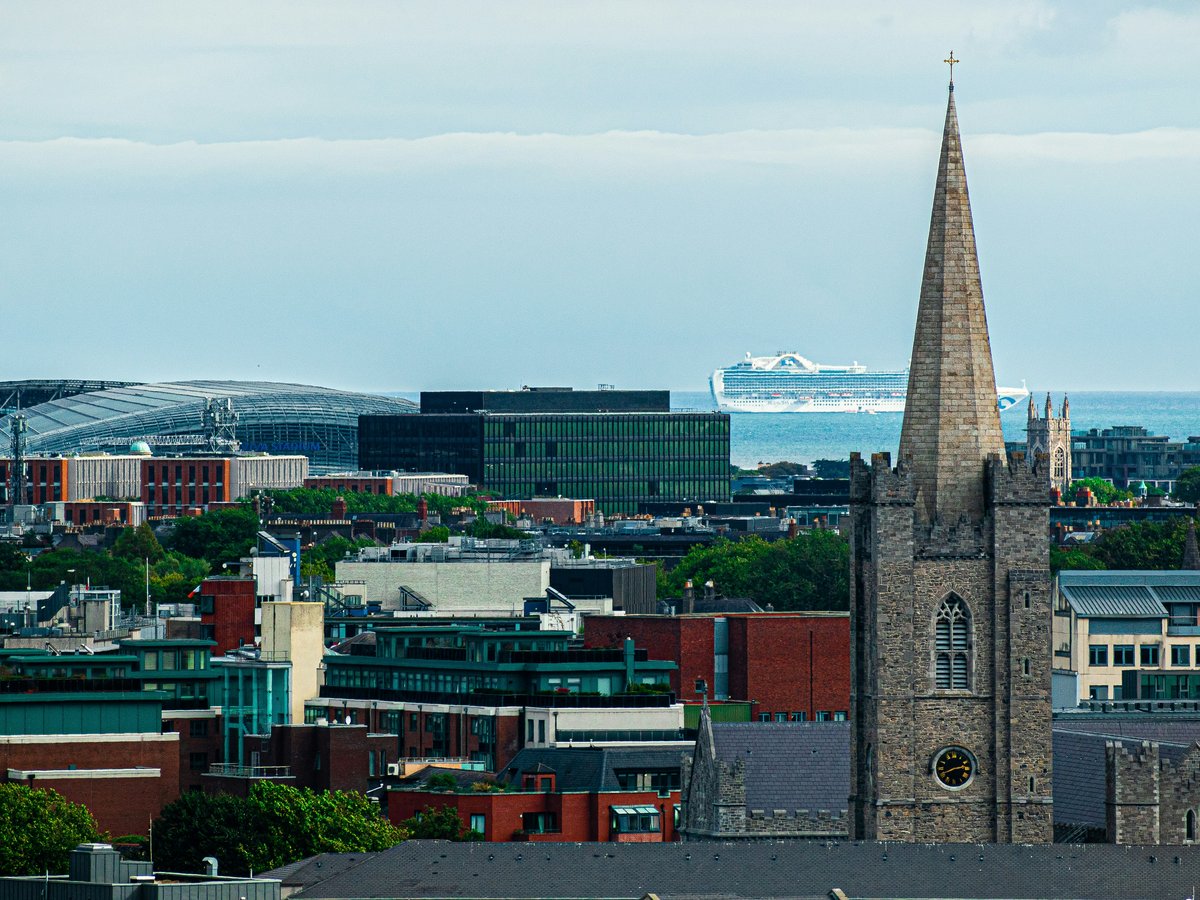
Stay in Dublin in September
100 hotels in the Trip.com pool for Dublin, from US$23 a night.
Opens Trip.com on Fri 25 Sep to Sun 27 Sep 2026; change the dates there.
September in Dublin is defined by rain. That's the honest starting point. With 107mm of rainfall spread across roughly 13 wet days, this is one of the wettest months of the year: only October is worse. Daytime highs settle around 17°C (63°F), which feels cooler than it sounds when the wind picks up off the Liffey. The long, bright evenings of June and July are visibly fading, and you'll notice the shift: sunset slips before 8pm by month's end, and there's a crispness in the morning air around 12°C (53°F) that tells you summer is done.
That said, September has something the peak summer months lack: Dublin's cultural calendar goes into overdrive. The Dublin Fringe Festival takes over venues across the city for most of the month, the All-Ireland GAA Finals pack Croke Park with 82,000 people in a wall of noise you can hear from Drumcondra, and Culture Night opens every gallery, theatre, and museum door for free on a single Friday evening. If you care about arts and sport more than sunburn-free afternoons, September might suit you better than July.
Crowds thin noticeably once the schools go back in the first week. Temple Bar is still busy (it's always busy) but you'll find shorter queues at Kilmainham Gaol, breathing room in the Book of Kells exhibition at Trinity College, and hotel rates that have quietly dropped from peak. It's a shoulder-season month that rewards flexibility. Bring a good rain jacket, accept that you'll get wet at least twice, and you'll likely have a fine time.
Why visit in September
- Dublin Fringe Festival runs most of September, filling pubs, warehouses, and black-box theatres across the city with experimental performance: most shows are affordably priced
- The All-Ireland GAA Finals at Croke Park deliver an atmosphere that rivals any major sporting event on earth, with 82,000 fans singing and roaring in unison
- Summer tourist crowds have thinned since schools resumed, so popular spots like the National Gallery, EPIC The Irish Emigration Museum, and the Guinness Storehouse are noticeably less packed
- Hotel and guesthouse rates typically drop 15-25% from July-August peak, with better last-minute availability across most neighborhoods
- Culture Night (Oíche Chultúir) opens hundreds of venues for free on a single September Friday: galleries, studios, historic buildings, and performances you'd normally pay for
Worth knowing
- September is one of Dublin's rainiest months at 107mm: you'll encounter drizzle or outright showers on roughly half the days you're there
- Daylight hours shrink noticeably through the month, from about 13.5 hours at the start to under 12 by the end, which limits outdoor time compared to June or July
- Temperatures around 17°C (63°F) and persistent cloud cover mean the city rarely feels warm: outdoor dining is a gamble at best
- Wind off the Irish Sea can make the actual felt temperature considerably lower than the numbers suggest, particularly along the coast at Sandycove or Howth
Best for
Think twice if
September marks Dublin's slide into autumn. Expect grey skies more often than blue, with temperatures that feel mild indoors but cool the moment you step outside: especially when the wind gets going. Rain tends to arrive in spells rather than all-day downpours: you might get an hour of steady drizzle, then a break, then another shower by evening. Mornings often start damp, around 12°C (53°F), and the afternoon high of 17°C (63°F) only feels comfortable if you're moving. Humidity sits around 81%, which gives the air a persistent dampness that seeps into lighter clothing. The first week still carries a trace of summer, but by the last week, the light has changed: shorter days, lower sun, and that particular Irish-autumn quality where everything feels slightly golden before the clouds roll back in.
Year-round climate
Averages from the last 5 years.
| Month | Avg high (°C) | Avg low (°C) | Rainfall (mm) |
|---|---|---|---|
| Jan | 8 | 4 | 71 |
| Feb | 10 | 5 | 69 |
| Mar | 11 | 5 | 78 |
| Apr | 12 | 6 | 82 |
| May | 15 | 9 | 67 |
| Jun | 18 | 12 | 71 |
| Jul | 20 | 13 | 92 |
| Aug | 20 | 13 | 72 |
| Sep | 17 | 12 | 107 |
| Oct | 15 | 10 | 120 |
| Nov | 11 | 7 | 82 |
| Dec | 10 | 6 | 89 |
Headline events
All-Ireland GAA Finals
First and third Sundays of September (hurling final typically early September, football final mid-to-late September)
The climax of the Gaelic games season, held at Croke Park in Drumcondra. The hurling and football finals draw 82,000 fans each, and the atmosphere: county colours everywhere, singing in the stands, pubs heaving for hours before and after: is something you won't experience at any other sporting event in Ireland. Even if you don't fully understand the rules, the raw intensity is worth witnessing. Tickets are hard to get through official channels, but the atmosphere in the pubs around Jones' Road and Drumcondra on match day is nearly as good.
Dublin Fringe Festival
Mid-September through early October (roughly September 14 to October 1)
Ireland's largest performing arts festival fills theatres, pubs, warehouses, and unusual spaces across the city with over 200 shows spanning theatre, dance, comedy, live art, and music for roughly three weeks. The Fringe tends to be more experimental and risk-taking than the main Dublin Theatre Festival that follows in October. Performances pop up in places like Smock Alley Theatre, Project Arts Centre, and improvised venues in the Liberties. Most shows are wallet-friendly, and there's a genuine sense of discovery: you might catch the next big Irish playwright in a room above a pub in Stoneybatter.
Best things to do in September
Attend a Dublin Fringe Festival show
cultureWith over 200 performances scattered across the city: some in proper theatres, others in rooms above pubs, converted warehouses, or open-air spaces: the Fringe is a choose-your-own-adventure through Dublin's performing arts scene. The programming leans experimental: you might see a one-person show about grief performed in a bathroom, or a dance piece in a derelict building in the Liberties. The quality varies, which is part of the charm.
The Fringe runs for roughly three weeks starting mid-September, and many shows sell out quickly as the festival builds momentumBooking tipCheck the programme when it drops in late August and book early for shows with buzz: popular venues like Smock Alley and Project Arts Centre fill fast
Experience the All-Ireland GAA Finals at Croke Park
sportEven if you've never heard of hurling or Gaelic football, the atmosphere at Croke Park on final day is visceral: 82,000 people, county jerseys turning entire sections of the stadium into blocks of colour, and a noise level that rattles your chest. The hurling final is typically early September, the football final later. The surrounding streets become an open-air party, with pubs on Drumcondra Road and Jones' Road heaving from mid-morning.
The All-Ireland Finals only happen in September: this is the single chance each year to witness the climax of Ireland's indigenous sportsBooking tipOfficial tickets are allocated through county boards and tend to sell out through GAA channels: if you can't get in, the pub atmosphere nearby is genuinely worth the trip on its own
Walk the Howth Cliff Path
outdoorsThe cliff walk from Howth village out to the summit and back takes roughly two to three hours and offers views across Dublin Bay that feel disproportionately dramatic for a city suburb. In September, the heather is still purple along the hillside, seabirds wheel below the path, and you can smell salt and gorse on the wind. The loop is well-marked and manageable for anyone with reasonable fitness, though it gets muddy after rain, which in September means most days.
Cooler temperatures make the walk far more comfortable than summer, the heather is still blooming, and the path is less crowded after the tourist peakBooking tipTake the DART train from Connolly or Tara Street station directly to Howth, no booking needed, and the journey along the coast is part of the experience
Culture Night (Oíche Chultúir)
cultureOn a single Friday evening in September, hundreds of cultural venues across Dublin open their doors for free. Galleries, theatres, museums, artists' studios, historic buildings, and churches that are normally locked offer tours, performances, workshops, and exhibitions. The streets between venues fill with people wandering from one event to the next, and there's a festival atmosphere that feels spontaneous even though it's tightly organised. The National Gallery, Chester Beatty Library, and Dublin Castle are highlights, but some of the best discoveries are smaller venues off the main circuit.
Culture Night is a single-evening event held on one Friday in late September: it doesn't repeat, and the free access to otherwise ticketed venues makes it genuinely specialBooking tipSome popular workshops and tours fill up quickly once the programme is released: check the official Culture Night website a few weeks before and reserve any guided tours or limited-capacity events early
Explore Kilmainham Gaol
historyThis decommissioned prison is one of Dublin's most powerful historical sites: the leaders of the 1916 Easter Rising were executed in the stonebreakers' yard, and walking through the cold, echoing corridors gives you a visceral sense of Irish independence history. The guided tour is the only way in, and the guides are sharp, knowledgeable, and clearly invested. In September, you'll find the queues shorter than summer, and the grey autumn light filtering through the chapel skylights adds to the sombre atmosphere.
Post-summer crowds mean shorter waits for the popular guided tours, which sell out hours in advance during July and AugustBooking tipBook your timed slot online in advance, even in September, same-day availability can be limited, especially on weekends
Day trip to Glendalough in the Wicklow Mountains
outdoorsAbout an hour south of Dublin, Glendalough is a glacial valley with a sixth-century monastic settlement, two lakes, and walking trails through oak and pine forests. In September, the surrounding hills are turning russet and gold, the bracken is browning, and the valley has a quiet, contemplative quality that's harder to find in summer. The round tower and ruined churches look like they belong in a history book illustration, which (to be fair) they do. Longer walks to the Upper Lake reward with near-solitude if you go midweek.
Early autumn colours are starting to appear in the Wicklow hills, cooler temperatures make the longer hikes more pleasant, and summer coach tours have thinned outBooking tipPublic transport options are limited: St Kevin's Bus runs a service from Dublin, or consider renting a car to explore the wider Wicklow area at your own pace
Browse the Temple Bar Food Market
foodEvery Saturday morning, the cobbled Meeting House Square in Temple Bar fills with stalls selling artisan cheese, fresh oysters, organic bread, charcuterie, smoked fish, and seasonal produce. In September, you'll see the first of the autumn harvest: wild mushrooms, blackberries, and new-season apples alongside the year-round regulars. The smell of toasting sourdough mixes with coffee from the neighbouring stalls, and the atmosphere is relaxed and genuinely local despite the tourist-heavy location.
September brings the first proper autumn produce: wild mushrooms, late-season berries, and apple varieties that only appear for a few weeks: alongside the oyster season openingBooking tipArrive before 11am for the best selection and to avoid the midday crowds that build once the nearby pubs start filling up
What to eat in September
In season: fruit
Blackberries
Wild blackberries ripen along hedgerows and canal paths across Dublin in September. You'll spot people picking them on walks along the Royal Canal or out toward Howth. They show up in crumbles and tarts on restaurant menus, and the Saturday farmers' markets at Temple Bar and Dun Laoghaire pile them high. Slightly tart, deeply purple, and they stain everything they touch.
On menus now
Irish stew
As the temperature drops, Irish stew reappears on pub menus with a vengeance. The traditional version (lamb, potatoes, carrots, onions, slow-cooked until everything collapses) is the kind of food that makes sense when you've just come in from a wet afternoon. Every pub has its own version, and arguing about whose is best is practically a local pastime.
Brown bread and smoked salmon
A year-round staple, but September is when the wild Atlantic salmon season is winding down and the last of the fresh catch gets smoked. Paired with dense, nutty Irish brown soda bread and a smear of butter, it's the kind of simple combination that tastes better than it has any right to. You'll find it at breakfast in most guesthouses and as a starter in nearly every restaurant.
Coddle
Dublin's own comfort dish: a slow-cooked one-pot of sausages, rashers, potatoes, and onions in a peppery broth. It's not pretty to look at. Tastes like home if home were a slightly damp Georgian terrace. Traditionally a working-class dish, it's having a quiet revival in some of the city's newer Irish-focused restaurants, though the best versions are still the ones served in older pubs and family kitchens.
In markets
Native Irish oysters
The native flat oyster season opens on September 1st: a date oyster lovers mark on their calendars. You'll find them at seafood restaurants across Dublin, typically served on ice with a squeeze of lemon and maybe a drop of Tabasco. The texture is briny, metallic, and completely different from the Pacific rocks served year-round. Pubs along the quays and in Temple Bar tend to feature them prominently once the season opens.
Regular events in September
Culture Night (Oíche Chultúir)Free
One Friday evening in late September when hundreds of cultural venues across Dublin open for free: galleries, museums, theatres, studios, historic buildings, and churches offer tours, performances, and workshops. The city centre fills with people drifting between venues, and the atmosphere is festive and slightly chaotic in the best way.
Third or fourth Friday of SeptemberDublin Theatre Festival (opening)
While the main festival runs through October, the final days of September often overlap with its opening programme. The focus is on established Irish and international theatre companies, and the tone is more polished than the Fringe. Performances at the Abbey Theatre, Gate Theatre, and other major venues.
Late September into OctoberHard Working Class Heroes
A multi-venue music showcase spotlighting emerging Irish bands and solo artists across clubs, pubs, and small venues in the city centre. Think of it as a concentrated dose of Ireland's underground music scene: guitar bands, electronic acts, singer-songwriters, and everything between, often playing in rooms small enough that you're standing next to the drummer.
Late September or early OctoberDublin Gallery WeekendFree
A coordinated open-doors weekend where commercial galleries and artist-run spaces across Dublin hold openings, talks, and tours. A good way to see parts of the art scene that don't usually advertise to visitors, particularly the studios clustered around Francis Street in the Liberties and the newer gallery spaces in Stoneybatter and Smithfield.
Late SeptemberBest places this September
Croke Park and the GAA Museum
sportEven outside of match day, Croke Park is worth visiting for the museum and stadium tour. The Skyline walk across the stadium roof gives panoramic views of Dublin, and the GAA Museum does a genuinely good job of explaining the history and culture of Gaelic games, which, unless you grew up with them, can be baffling to outsiders. On match days, the surrounding streets are the real show.
DrumcondraThe Chester Beatty Library
museumTucked inside Dublin Castle, this is arguably the finest small museum in Ireland, and it's free. The collection of manuscripts, prints, and rare books from across Asia, the Middle East, and Europe is staggering for its breadth. In September, it's one of the Culture Night highlights, and the rooftop garden offers a quiet retreat from the crowds below. Worth noting: the Islamic collection is particularly strong.
Dublin 2Glasnevin Cemetery and Museum
historyThe resting place of Michael Collins, Daniel O'Connell, and hundreds of other figures from Irish history. The guided walking tours through the Victorian headstones are part history lesson, part ghost story, part social commentary. September's cooler mornings and the first of the autumn leaves among the graves give the place an atmosphere that suits it. The museum underneath the round tower adds context, but the outdoor tour is the main draw.
GlasnevinSt Stephen's Green
parkDublin's central park is at its transitional best in September: still green but with the first hints of yellow in the chestnut trees. The lunchtime crowds thin after summer, and the bandstand area and lake are peaceful enough for a slow walk between sightseeing. The duck population seems unfazed by the season.
Dublin 2EPIC The Irish Emigration Museum
museumLocated in the vaults of the CHQ Building on the north quays, EPIC traces the story of Irish emigration through interactive exhibits that manage to be genuinely moving without being maudlin. September's lower visitor numbers mean you can take your time with the individual stories rather than being shuffled through. The building itself (a restored 1820s tobacco warehouse) has thick stone walls that stay cool.
DocklandsHowth
outdoorsThe fishing village at the end of the DART line is a half-day trip that feels like leaving Dublin entirely. The harbour has fresh seafood stalls where you can eat fish and chips watching the trawlers come in, the cliff walk offers serious coastal scenery, and Howth Market on weekends has crafts and food worth browsing. September means fewer day-trippers and the chance of seeing seals in the harbour.
HowthMarsh's Library
historyIreland's oldest public library, built in 1701 and largely unchanged since. The dark oak shelves, caged reading alcoves (where scholars were locked in to prevent book theft), and 25,000 volumes give it a density of atmosphere that most Dublin attractions can't match. It's never crowded, and the silence inside is the kind that feels intentional rather than empty.
Dublin 8
Your packing checklist
Tick items off as you pack. Your progress saves in this browser.
All packed — have a great trip.
Insider tips
The Fringe Festival programme drops in late August: serious theatre-goers build their schedule immediately and book the buzzed-about shows within days. If you wait until you arrive, the standout performances are often sold out, though returns and walk-ups do happen
For the All-Ireland Finals, the real atmosphere is often in the pubs rather than inside Croke Park itself. The streets around Drumcondra and the pubs on Dorset Street fill with fans from mid-morning, and even without a ticket you'll get swept up in the energy. Bring a county jersey if you can borrow one: it starts conversations
The DART coastal train from Connolly to Howth or south to Dun Laoghaire and Bray is one of Dublin's best-kept visitor secrets. The route hugs the coast, the views are striking, and it costs a fraction of what you'd pay for a tourist bus. Use a Leap Card for the cheapest fares
Culture Night is free but not unlimited: the most popular guided tours and workshops fill up once the programme is published online. Check the website a couple of weeks before, book the things that interest you most, and leave the rest of the evening for wandering between open-door venues
September's shoulder-season pricing extends to restaurants too. Places that were fully booked through July and August often have midweek availability, and some run early-bird set menus that represent genuinely good value compared to peak-season à la carte
Avoid these mistakes
- Packing for summer: September in Dublin is NOT warm. Visitors who arrive in shorts and trainers based on the calendar date spend their first afternoon buying emergency layers in Penneys on O'Connell Street
- Underestimating rain duration: checking the forecast and seeing 'showers' doesn't mean a brief drizzle. Dublin rain can settle in for hours, and a morning forecast of partial cloud can turn into a solid grey afternoon. Always carry rain gear, even on days that start clear
- Trying to walk Temple Bar on a Friday or Saturday night expecting a quiet pub experience: it's the loudest, most tourist-saturated strip in the city after dark. Walk ten minutes in any direction (Stoneybatter, the Liberties, Portobello) for pubs where locals drink
- Not booking Kilmainham Gaol in advance, even in September, the guided tours sell out, and there's no other way in. Check availability online a week or two before your trip and book a specific time slot
- Assuming Dublin is small enough to walk everywhere: the city centre is compact, but attractions like Howth, Glasnevin Cemetery, and Kilmainham are spread out. The DART, Luas tram, and Dublin Bus save significant time, and a Leap Card makes public transport straightforward
Practical tips for September
Book accommodation midweek for the best shoulder-season rates: weekends tighten up around Fringe Festival shows and GAA Final dates. A Leap Card for public transport is cheaper than individual tickets and works on DART, Luas, and Dublin Bus. Layers are your daily strategy: mornings start cool and damp, afternoons might briefly warm up, and evenings drop again. Most restaurants and pubs accept cards, but a few market stalls and smaller shops still prefer cash. If you're planning day trips to Glendalough or the Wicklow Mountains, check bus schedules in advance: services run less frequently than you might expect. Sunset shifts from around 8pm to 7pm through the month, so plan outdoor activities and photography for earlier in the day as the weeks progress.
FAQ
Is September a good time to visit Dublin?
September is a solid shoulder-season choice. The crowds from summer have thinned, accommodation rates drop noticeably from peak, and Dublin's cultural calendar (particularly the Fringe Festival and All-Ireland GAA Finals) is at its busiest. The trade-off is weather: expect rain on roughly half the days, temperatures around 17°C, and shortening daylight. If you prioritise arts, sport, and atmosphere over sunshine, September ranks well.
How rainy is Dublin in September?
Quite rainy, honestly. September averages around 107mm of rainfall across roughly 13 wet days. Rain tends to come in spells (an hour of drizzle, a break, another shower) rather than all-day downpours. A good waterproof jacket is non-negotiable, and you should plan indoor alternatives for any outdoor activity. That said, dry spells do happen, and the city is well set up for ducking into pubs, museums, and galleries when the sky opens.
What should I wear in Dublin in September?
Layers, waterproofing, and comfortable shoes. Mornings hover around 12°C and afternoons reach about 17°C, but wind off the Liffey makes it feel cooler. A waterproof shell jacket, a fleece or wool mid-layer, and quick-dry trousers for walking days are the core. Avoid jeans on rainy days: they get heavy and cold when wet. Waterproof shoes with decent grip handle the cobblestones and wet pavements.
Can I get tickets to the All-Ireland GAA Finals?
It's difficult but not impossible. Tickets are officially distributed through GAA county boards, and demand far exceeds supply for the hurling and football finals. Your best options are checking the GAA's official resale channels or asking at your accommodation: some hotels and guesthouses have local connections. Worth noting: even without a ticket, the atmosphere in the pubs surrounding Croke Park on match day is a genuine experience in itself, and many locals prefer watching from a pub for the atmosphere and the commentary.
Is Culture Night worth planning around?
If you have any interest in arts, architecture, or Irish culture, it is genuinely worth adjusting your travel dates for. Hundreds of venues open for free on a single Friday evening, including spaces that are normally closed to the public or charge admission. The atmosphere in the city centre is festive: people wandering between galleries, churches, theatres, and studios with a sense of shared discovery. Check the programme when it's published and book any limited-capacity events early.
Things to Do in Dublin in September
 Free cancellation
 Dublin to Cliffs of Moher, including Wild Atlantic Way and Galway
Day trip: 13 hours, free cancellation.
via Viator Free cancellation
 Dublin to Cliffs of Moher, Burren, Wild Atlantic Way, Galway Tour
Outdoor experience: 12.5 hours, free cancellation.
via Viator Free cancellation
 Kilkenny, Wicklow and Glendalough Sheepdog Trials from Dublin
Day trip: 10 hours, free cancellation.
via Viator Free cancellation
 Dublin to Glendalough, Wicklow and Kilkenny Full Day Guided Tour
Day trip: 9.2 hours, free cancellation.
via Viator Free cancellation
 Dublin to Dunluce Castle, Giant's Causeway, Dark Hedge, Belfast
Outdoor experience: 12.5 hours, free cancellation.
via Viator Free cancellation
 Dublin Book of Kells, Castle and Molly Malone Statue Guided Tour
City tour: 2.5 hours, free cancellation.
via ViatorFind a flight to Dublin
Live fares to Dublin appear here once cookies are accepted.
Last verified by automated review (v1.7.2) on . What is automated review?