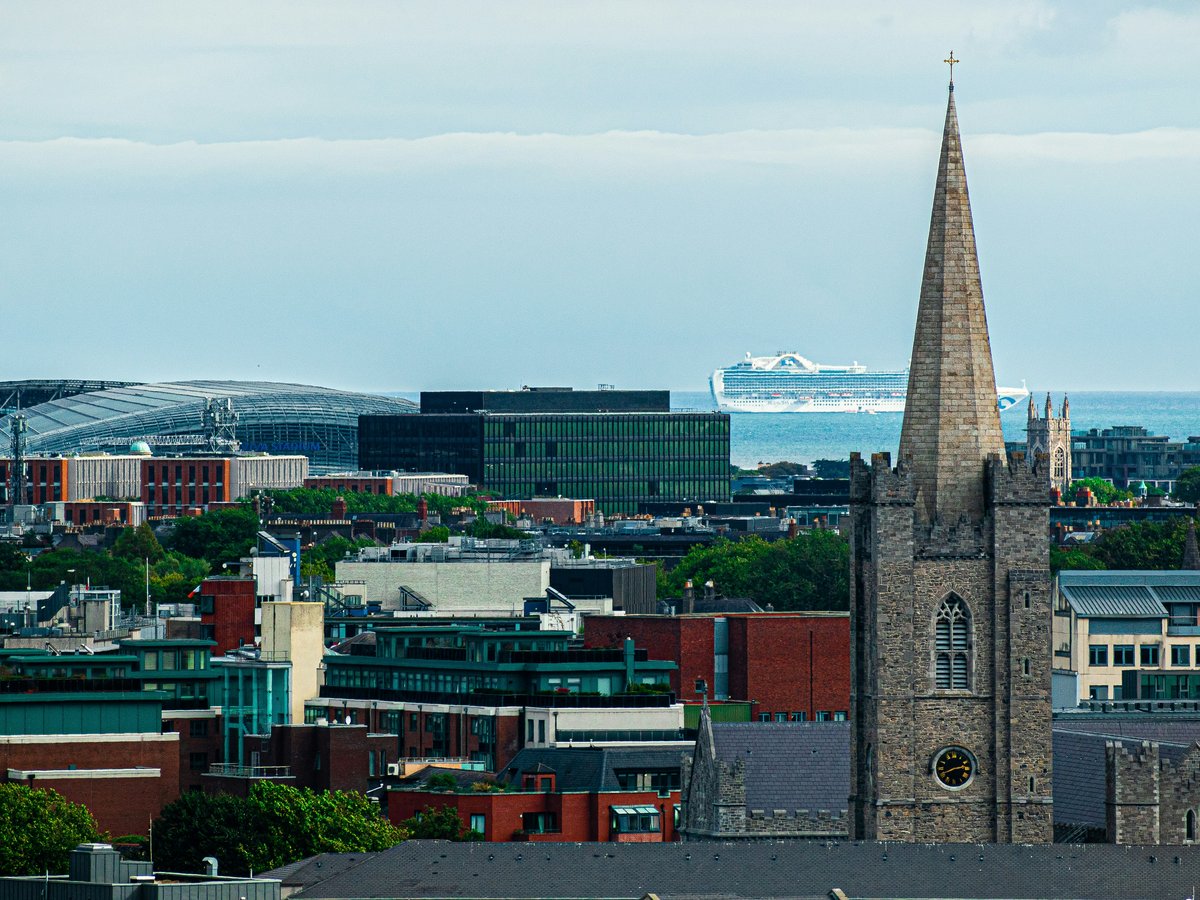
Stay in Dublin in February
100 hotels in the Trip.com pool for Dublin, from US$23 a night.
Opens Trip.com on Fri 5 Feb to Sun 7 Feb 2027; change the dates there.
February in Dublin is cold, grey, and damp, and honestly, there is no sense pretending otherwise. Daytime temperatures hover around 10°C (50°F), dropping to about 5°C (41°F) after dark, and you will get roughly eight and a half hours of daylight at the start of the month, stretching closer to ten by month's end. The rain is real: Dublin sees about 69mm spread across 13 or so rainy days in February, and much of it arrives on a slant, pushed by the wind that funnels up the Liffey from Dublin Bay. The damp has a particular quality here, not the heavy downpour you would get in the tropics, but an Atlantic moisture that works its way past your collar and stays there.
That said, February has a case going for it if you are the right kind of visitor. The Six Nations rugby championship kicks off, and when Ireland has a home match at the Aviva Stadium in Ballsbridge, something shifts across the city: pubs along Baggot Street and in Ranelagh fill hours before kickoff, green scarves appear on every second person walking down Grafton Street, and the collective roar from the stadium carries across blocks on a still evening. The Dublin International Film Festival typically opens in the last week of February, scattering screenings across venues in Temple Bar and the city centre. And because tourist footfall drops sharply after Christmas, you will find the Book of Kells at Trinity College blissfully queue-free, restaurant bookings easy to come by in Portobello and Stoneybatter, and hotel rates sitting 30–40% below what you would pay in July.
If you are comfortable with layers, early darkness, and spending your days moving between warm pubs, galleries, and restaurant corners rather than lounging in parks, February gives you a Dublin that feels more honest: a working city going about its winter business, not performing for anyone.
Why visit in February
- Hotel and flight prices drop 30–40% from summer peak: February is one of the cheapest months to visit Dublin, with mid-week city-centre stays often available at rates that would be impossible from May through September
- Major attractions have minimal queues: walk into the Book of Kells at Trinity College, Kilmainham Gaol, and the Chester Beatty Library without the hour-long waits that define the summer months
- Six Nations rugby match days bring an atmosphere to the whole city that is difficult to replicate during tourist season: pubs packed, strangers talking to strangers, a collective energy that runs well past the final whistle
- Traditional music pub sessions reach their most honest state in winter: fewer visitors in places like The Cobblestone in Smithfield mean the musicians are playing for the room, not for cameras
Worth knowing
- Daylight is limited: sunrise around 7:45am and sunset by 5:15pm at the start of the month, which seriously constrains outdoor sightseeing and photography, especially on a short trip
- The damp cold is deceptive: 5–10°C (41–50°F) with 80% humidity and wind off the Irish Sea feels significantly colder than those numbers suggest, and it settles into your bones if you are underdressed
- Some of Dublin's strongest draws involve being outside (the Georgian streetscapes, Phoenix Park, coastal walks at Howth) and February weather discourages lingering, so you will find yourself darting between indoor spots more than you would probably like
- A handful of smaller restaurants and seasonal attractions run reduced hours or close entirely for annual maintenance, particularly outside the city centre
Best for
Think twice if
February sits in the thick of Dublin's winter, though the Gulf Stream keeps it milder than much of northern Europe at the same latitude. Expect overcast skies on most days, with temperatures ranging between 5°C (41°F) at night and 10°C (50°F) during the day. Rain arrives in short, wind-driven bursts rather than all-day downpours: out of 28 days you might see 13 with measurable rainfall, but many of those amount to just a few hours of drizzle followed by clearing. Humidity sits around 80%, which makes the cold feel sharper than the numbers alone suggest. Wind is the underrated factor here: gusts off the Irish Sea add a real bite, particularly along the quays and out toward Howth and Sandymount Strand. The month does brighten as it progresses: you will notice the difference between early February's roughly 8.5 hours of daylight and the nearly 10.5 hours by the 28th.
Year-round climate
Averages from the last 5 years.
| Month | Avg high (°C) | Avg low (°C) | Rainfall (mm) |
|---|---|---|---|
| Jan | 8 | 4 | 71 |
| Feb | 10 | 5 | 69 |
| Mar | 11 | 5 | 78 |
| Apr | 12 | 6 | 82 |
| May | 15 | 9 | 67 |
| Jun | 18 | 12 | 71 |
| Jul | 20 | 13 | 92 |
| Aug | 20 | 13 | 72 |
| Sep | 17 | 12 | 107 |
| Oct | 15 | 10 | 120 |
| Nov | 11 | 7 | 82 |
| Dec | 10 | 6 | 89 |
Holidays and festivals in February
Public holidays
- Saint Brigid's Day(Lá Fhéile Bríde)1 February 2027
Headline events
Six Nations Championship: Ireland Home Matches
Weekends in February and March, schedule varies annually
The annual Six Nations rugby tournament runs from early February through mid-March, and when Ireland hosts a match at the Aviva Stadium in Ballsbridge, it transforms Dublin for the entire weekend. Rugby fans from visiting nations pour into the city, pubs screen every fixture, and the atmosphere on Lansdowne Road before and after the match is worth experiencing even without a ticket. Ireland typically has one or two home fixtures in February, though the exact schedule shifts year to year.
Best things to do in February
Six Nations match day at the Aviva Stadium
sportEven without a match ticket, the atmosphere around the Aviva Stadium on game day is worth the trip out to Ballsbridge. Pubs along Baggot Street, Bath Avenue, and in Ranelagh fill up hours before kickoff with fans from both nations singing and talking over pints. If you do have a ticket, the experience of 51,000 people singing Ireland's Call under February floodlights stays with you long after. Post-match, the celebrations or commiserations spill into every pub within walking distance.
The Six Nations tournament opens in February: Ireland's first home fixture of the championship typically falls in the opening rounds, making this the earliest chance to catch the match-day atmosphereBooking tipMatch tickets sell out months in advance through the IRFU. If you miss the official allocation, watch the match in a pub instead: book a table at pubs near the Aviva by Wednesday of match week at the latest.
Dublin International Film Festival screenings
cultureDIFF typically runs for around ten days starting in late February, screening Irish premieres, international features, documentaries, and short films at venues around Temple Bar and the wider city centre. It draws filmmakers and industry figures but remains accessible: you can buy single-screening tickets and drop into post-screening Q&A sessions without needing a full festival pass. The programming leans toward independent and arthouse work rather than mainstream releases.
The festival is scheduled for late February each year, making it a fixed-date draw that does not exist in any other monthBooking tipThe full programme usually drops about two weeks before opening night. Headline screenings sell out quickly: buy those in the first few days of ticket sales. Weekday afternoon screenings rarely fill up.
Traditional music sessions in Smithfield and Stoneybatter
cultureWinter is when Dublin's trad scene feels most alive, partly because the musicians playing sessions in pubs like The Cobblestone in Smithfield are playing for the room, not performing for a crowd of tourists with phone cameras. February sessions tend to be looser and more spontaneous: a fiddler might sit in uninvited, a tune set might stretch for fifteen minutes. The Cobblestone's back room hosts organised sessions most nights, while the front bar sees more impromptu playing.
Tourist numbers thin out dramatically in February, which shifts the dynamic of pub sessions from staged performance to communal music-making for its own sake: something you will not feel in JulyBooking tipNo booking needed: arrive by 9pm to get a seat near the musicians. Sessions typically start between 9 and 9:30pm.
Kilmainham Gaol guided tour
historyThe former prison where leaders of the 1916 Rising were executed is one of Dublin's most powerful historical sites, and the guided tour through its cold stone corridors feels oddly appropriate in February: the chill inside is not artificial. Summer tours run back to back with long waiting lists. In February, smaller tour groups and the quiet of the building make the experience more direct and harder to shake off.
Summer waiting lists for Kilmainham Gaol can stretch to three weeks: in February, same-week bookings are usually available and tour groups are smaller, which suits the sombre subject matterBooking tipBook online through the OPW Heritage Ireland site at least a few days ahead: walk-ups are not guaranteed even in low season.
Whiskey distillery tours in The Liberties
food and drinkDublin's distillery district in The Liberties has several working distilleries offering tours and tastings: Teeling Distillery and Pearse Lyons Distillery are both in the neighbourhood, walking distance from each other. Tours run about 90 minutes and finish with guided tastings of single malts, pot stills, and blends. On a wet February afternoon, spending an hour inside a warm distillery beside copper pot stills beats standing in the rain at any viewpoint.
Cold, wet weather makes indoor tasting experiences particularly welcome, and winter means you can often get a same-day booking for afternoon tours that would require a week's lead time in summerBooking tipWeekday afternoon slots are easiest to book last-minute. Saturday tours at Teeling fill first: book a few days ahead for weekend visits.
Gallery day around Merrion Square
cultureThe National Gallery of Ireland on Merrion Square West is free, holds a world-class collection, and houses Caravaggio's The Taking of Christ: one of the most significant paintings in any European gallery outside Italy. From there you are a short walk to the Natural History Museum on Merrion Street (the so-called Dead Zoo, also free), the Hugh Lane Gallery up in Parnell Square, and IMMA at the Royal Hospital Kilmainham to the west. February rain makes a gallery day feel like the right call rather than a consolation prize.
Wet, cold weather pushes indoor cultural attractions to the top of the list, and low winter attendance means you can stand in front of the Caravaggio without anyone else in the room: nearly impossible in summerBooking tipNo booking required for any of the free national galleries. IMMA sometimes needs timed tickets for special exhibitions: check their site a few days ahead.
Howth Cliff Walk on a clear day
outdoorThe Bog of Frogs loop from Howth village along the sea cliffs takes about two hours and gives you views up the coast toward Lambay Island and back across Dublin Bay. In February, the winter sea is rough and loud: waves crash against the rocks below in a way the calm summer water does not. The path can be muddy and exposed to wind, but on one of February's occasional clear, cold days, the low-angle light on the water is worth the chill. You finish in Howth village, where a bowl of seafood chowder in one of the harbour restaurants is the obvious reward.
Winter seas along the cliffs are far more dramatic than summer's calm water, and you will likely have long stretches of the path to yourself: in July this walk gets congested enough to feel like a slow queueBooking tipTake the DART train from Connolly or Tara Street station: it runs every 15–20 minutes and takes about 30 minutes. Check Met Eireann for the morning forecast and go on a dry day; the walk is exposed and quite miserable in heavy rain.
Chester Beatty Library at Dublin Castle
cultureFrequently ranked among the best free museums in Europe, this collection of manuscripts, prints, and rare books from across Asia, the Middle East, and Europe is the kind of place you enter for an hour and emerge from three hours later. The illuminated Qur'an pages and Japanese woodblock prints are particularly striking. It is small enough to see in a single visit but rich enough to reward close attention, and its location within the grounds of Dublin Castle places you in the medieval heart of the city.
Low February visitor numbers mean you can take your time with the exhibits, and rainy days make this warm, quiet space feel like a proper refuge rather than a tourist checkboxBooking tipFree admission, no booking needed. Closed Mondays. The rooftop garden is lovely but not worth lingering in during February weather: spend your time on the collections inside.
What to eat in February
On menus now
Dublin coddle
The city's own winter dish: a slow-cooked one-pot of pork sausages, rashers of back bacon, potatoes, and onions in a light broth. It is a Saturday-night tradition in working-class Dublin neighbourhoods, and February is peak coddle weather. The texture is soft and soupy, closer to a thick stew than anything crisp. Pubs in The Liberties and Stoneybatter tend to have the most straightforward versions.
Native Irish oysters
February falls within the traditional oyster season (months with an R), and native flat oysters from Galway Bay and Carlingford Lough are at their briny, mineral best in cold water. You will find them on raw bars and restaurant menus across the city, often served simply with a squeeze of lemon and a pint of stout alongside. The cold months seem to concentrate their flavour in a way that summer oysters do not quite match.
Irish stew
The canonical winter comfort food: lamb or mutton, potatoes, onions, and carrots, slow-simmered until the broth thickens and the meat falls apart. February is when you want a bowl of it, not in July when every tourist restaurant offers it regardless of the weather. The best versions keep things simple: no trendy additions, just the base ingredients cooked long and slow.
Colcannon
Mashed potatoes folded with buttered curly kale or cabbage, a staple side dish that peaks in the colder months when both kale and potatoes are at their starchy, earthy best. Often served with a well of melted butter pooling in the centre. It appears on pub menus and home tables across Dublin from about October through March, and February sits in the heart of that window.
What to drink
Hot whiskey
Ireland's answer to the common cold and to February evenings generally. A measure of Irish whiskey, hot water, a slice of lemon studded with cloves, and a spoonful of honey: every pub has its own slight variation on the formula. Ordering one while rain taps against the window is one of February Dublin's quiet pleasures. The clove-and-citrus steam rising off the glass warms you before the first sip does.
Regular events in February
TradFest Temple BarFree
A multi-day celebration of traditional Irish and folk music across venues in Temple Bar and the wider city centre, mixing free outdoor performances with ticketed concerts in churches, pubs, and cultural spaces. The lineup typically features established names in Irish trad alongside newer acts. It gives Temple Bar a focused musical energy quite different from its usual tourist-pub atmosphere.
Late January into early February, usually runs about 5 daysSt. Brigid's DayFree
Ireland's newest public holiday, established in 2023, falls on the first Monday on or after February 1st. Named after both the Celtic goddess and the early Christian saint, it marks the traditional start of spring in the old Irish calendar. Some cultural venues and heritage sites run special programming, and you may notice St. Brigid's crosses (woven from rushes in a distinctive diamond pattern) appearing in shop windows around the city. Banks and some high-street shops close, though restaurants and tourist attractions remain open.
First Monday on or after February 1Dublin International Film Festival
Around ten days of Irish premieres, international features, documentaries, retrospectives, and filmmaker Q&A sessions across multiple city-centre venues. DIFF occupies a particular niche: smaller and more selective than the big European film festivals, which makes it accessible for casual filmgoers who want to catch a few screenings without committing to a full pass.
Late February into early MarchBest places this February
Phoenix Park
parkOne of the largest enclosed public parks in any European capital, Phoenix Park stretches to over 700 hectares on Dublin's west side. In February the trees are still bare, which makes it easier to spot the roughly 600 fallow deer that roam freely across the grassland: they tend to gather in herds near the Papal Cross and along Chesterfield Avenue. The park is quieter in winter, and early-morning walks here have a stillness you will not find in summer when half the city seems to be jogging through it. Mind you, the wind can be bracing across the open ground.
Chapelizod / Parkgate StreetThe Long Hall
pubA Victorian-era pub on South Great George's Street that has barely changed since it opened in the 1860s: ornate carved wood, polished brass fittings, etched mirrors, and a long mahogany bar that gives the place its name. In February, with a pint of plain and the gas heaters working, it feels like the kind of pub that exists outside of time. No food gimmicks, no screens, no live music, just a well-poured drink in a room with genuine character.
City Centre SouthMerrion Square
parkA Georgian square ringed by some of Dublin's finest townhouses, now largely occupied by government offices and cultural institutions. The National Gallery sits on the west side, and the park in the centre (where a reclining Oscar Wilde statue leans on a boulder) is pleasant even in February if the rain holds off. On weekends, the railings along the square host an outdoor art market that continues through winter, though with fewer stalls than in summer.
Georgian DublinSmithfield
neighborhoodA big cobblestoned square on the north side that has quietly become one of Dublin's more interesting neighbourhoods. The Cobblestone pub is here, the Jameson Distillery Bow St. sits at one corner, and the Light House Cinema screens independent and arthouse films year-round. On a February evening, Smithfield feels local in a way that Temple Bar does not: it is where Dubliners go to drink and listen to music without the tourist markup.
SmithfieldSt. Stephen's Green
parkA formal park at the top of Grafton Street, right in the commercial heart of the city. February strips it back to bare branches and empty benches, which has its own appeal: the Victorian bandstand and the lake with its ducks and swans are still there, and you will have most of the paths to yourself. It works best as a short cut-through between sightseeing stops rather than a destination in itself this time of year, but on a dry afternoon the light through the bare trees can be quietly lovely.
City Centre SouthThe Liberties
neighborhoodOne of Dublin's oldest neighbourhoods, centred roughly around Thomas Street and the Guinness Storehouse. This is where the distillery district sits (Teeling and Pearse Lyons are both here) and the streets have a working-class character that predates Dublin's tech-boom transformation. The antique shops along Francis Street are worth a look, and the area around Digital Hub has a mix of old pubs and newer coffee spots that gives it a layered feel.
The LibertiesHowth village and harbour
villageA fishing village on a headland about 30 minutes northeast of the city centre by DART train. In February the harbour is quieter than summer, the fishing boats are still active, and the seafood restaurants along the West Pier serve chowder and crab claws that benefit from the cold-water catch. After the cliff walk, or even without it, sitting in a harbour restaurant watching the boats come in while the wind rattles the windows outside is a proper February afternoon in Dublin.
Howth
Your packing checklist
Tick items off as you pack. Your progress saves in this browser.
All packed — have a great trip.
Insider tips
Skip Temple Bar for drinking: the pubs along the cobblestoned strip charge tourist prices and the atmosphere tends toward stag parties and hen dos. Walk ten minutes in any direction and you will find better pints at lower prices. The Stag's Head on Dame Court, Kehoe's on South Anne Street, and Mulligan's on Poolbeg Street are all within easy reach and charge normal Dublin prices.
If Ireland has a Six Nations home match during your visit, do not waste the evening trying to find a walk-in table at restaurants near the Aviva Stadium. Instead, head to Ranelagh or Portobello: the match-day energy reaches those neighbourhoods but the restaurants are not as overrun as Ballsbridge on game night.
The Chester Beatty Library at Dublin Castle is, by some distance, the best free museum in Dublin and possibly in Ireland. Most visitors head to the Guinness Storehouse or the Book of Kells and miss it entirely. Budget at least 90 minutes.
For traditional music, check what is on at The Cobblestone in Smithfield before heading to Temple Bar. The front-bar sessions are free and start most nights around 9:30pm. Arrive by 9pm on Fridays and Saturdays to get a seat with a sightline to the musicians.
February is a good month to eat in Dublin without spending peak-season money. Many restaurants in Portobello, Stoneybatter, and Phibsborough run early-bird menus or mid-week specials between January and March that disappear once tourist season picks up.
Avoid these mistakes
- Packing an umbrella as your only rain protection: Dublin's February wind makes umbrellas unreliable at best. Visitors who arrive without a waterproof jacket spend the first day buying an overpriced one on Grafton Street. Bring the jacket from home.
- Planning a full day of outdoor sightseeing without accounting for the early sunset: at the start of February it is dark by 5:15pm, and the light starts fading before that. Front-load any outdoor plans to the morning and early afternoon, then shift to indoor activities.
- Spending every evening in Temple Bar because it is the neighbourhood they have heard of: the prices are higher, the crowds are louder, and the experience is less representative of actual Dublin nightlife than almost anywhere else. Cross the river to Stoneybatter or head south to Camden Street for a very different evening.
- Not booking Kilmainham Gaol in advance because they assume February is quiet enough for walk-ups: the tour groups are small by design, and weekend slots fill even in low season. Book online at least a few days ahead to avoid a wasted trip out there.
Practical tips for February
Book Kilmainham Gaol tickets online at least a week ahead, even in February, the limited tour-group sizes mean weekend slots can fill. St. Brigid's Day, the public holiday on the first Monday of February, closes banks and some high-street shops, though restaurants, pubs, and tourist attractions remain open as normal. Dublin Bus and the LUAS tram run their standard timetables throughout the month. Pub closing hours are worth knowing: most close at 11:30pm Sunday through Thursday and 12:30am Friday and Saturday, with late bars open until 2:30am; on weekends, arrive at popular spots before 11pm or you may not get past the door. Tipping at sit-down restaurants runs 10–15% and is appreciated but not compulsory; bar staff do not expect tips, though rounding up is a nice gesture. If you are visiting for a Six Nations weekend, book your post-match restaurant in Ballsbridge or Ranelagh before you leave home: walk-ins on match Saturday are a lost cause. Consider the LEAP Visitor Card for unlimited travel on Dublin Bus, LUAS, and DART commuter rail if you are staying more than two days. It pays for itself after about four or five journeys.
FAQ
Is February a good time to visit Dublin?
It depends on what you want from the trip. February is cold, wet, and dark: average highs around 10°C (50°F), sunset before 5:30pm, and rain on roughly half the days. If you are looking for warm weather or long outdoor days, wait until May or June. But if you are drawn to Dublin for its pubs, galleries, music, and history, February delivers all of that at lower prices and without the crowds. Six Nations rugby weekends add a particular energy. It is fair to call it a good month for the right traveler and a poor one for the wrong one.
What is the weather like in Dublin in February?
Expect daytime highs of about 10°C (50°F) and nighttime lows around 5°C (41°F), with roughly 69mm of rain spread over 13 days. Humidity sits near 80%, which makes the cold feel more penetrating than the temperature alone suggests. Wind is a constant factor, especially near the river and coast. Snow is rare but not unheard of. The month is not dramatically different from January or March weather-wise, but daylight hours increase noticeably from about 8.5 hours at the start to nearly 10.5 by the end.
Is Dublin crowded in February?
No: February is one of the quietest months for tourism. You will not encounter the queues or crowds that characterise summer visits. The exception is Six Nations match weekends, when the area around the Aviva Stadium and pubs city-wide get genuinely busy with fans. Outside of match days, you will likely find shorter queues at every major attraction and easier bookings at popular restaurants.
What should I wear in Dublin in February?
Layers are more useful than a single heavy coat. Start with a merino or thermal base, add a mid-layer like a fleece or wool jumper, and finish with a windproof waterproof jacket. Waterproof shoes or boots are important: the combination of rain and cobblestones will soak regular footwear quickly. A scarf and warm hat are not optional extras when the wind picks up along the Liffey. Jeans are a poor choice for rainy days since they absorb water and stay cold; quick-dry trousers are far more practical.
Are there any festivals or events in Dublin in February?
The biggest draw is the Six Nations rugby championship, with Ireland's home matches at the Aviva Stadium turning the whole city into a party on match days. TradFest Temple Bar, a traditional music festival, runs in late January and sometimes extends into early February. St. Brigid's Day, a public holiday on the first Monday of February, brings some cultural programming. The Dublin International Film Festival typically opens in late February with around ten days of screenings. None of these are on the scale of St. Patrick's Day in March, but they give the month more shape than you might expect.
Things to Do in Dublin in February
 Free cancellation
 Dublin to Cliffs of Moher, including Wild Atlantic Way and Galway
Day trip: 13 hours, free cancellation.
via Viator Free cancellation
 Dublin to Cliffs of Moher, Burren, Wild Atlantic Way, Galway Tour
Outdoor experience: 12.5 hours, free cancellation.
via Viator Free cancellation
 Kilkenny, Wicklow and Glendalough Sheepdog Trials from Dublin
Day trip: 10 hours, free cancellation.
via Viator Free cancellation
 Dublin to Glendalough, Wicklow and Kilkenny Full Day Guided Tour
Day trip: 9.2 hours, free cancellation.
via Viator Free cancellation
 Dublin to Dunluce Castle, Giant's Causeway, Dark Hedge, Belfast
Outdoor experience: 12.5 hours, free cancellation.
via Viator Free cancellation
 Dublin Book of Kells, Castle and Molly Malone Statue Guided Tour
City tour: 2.5 hours, free cancellation.
via ViatorFind a flight to Dublin
Live fares to Dublin appear here once cookies are accepted.
Last verified by automated review (v1.7.2) on . What is automated review?