Compare every Greece city in July →
July is Mykonos at full volume. This is the island's peak month, when every beach club sunbed fills by 11am, ferries from Piraeus arrive packed to capacity, and hotel rates hit their annual ceiling. Daytime temperatures sit around 29°C (84°F), which sounds manageable on paper. The Aegean sun at this latitude is fierce, though. The saving grace is the Meltemi, a dry northern wind that blows steadily across the Cyclades most July days, sometimes gusting to force 7 on the Beaufort scale. It keeps the heat from becoming oppressive but can turn north-facing beaches like Panormos into a churning mess of whitecaps. You'll feel it the second you step off the ferry at the new port.
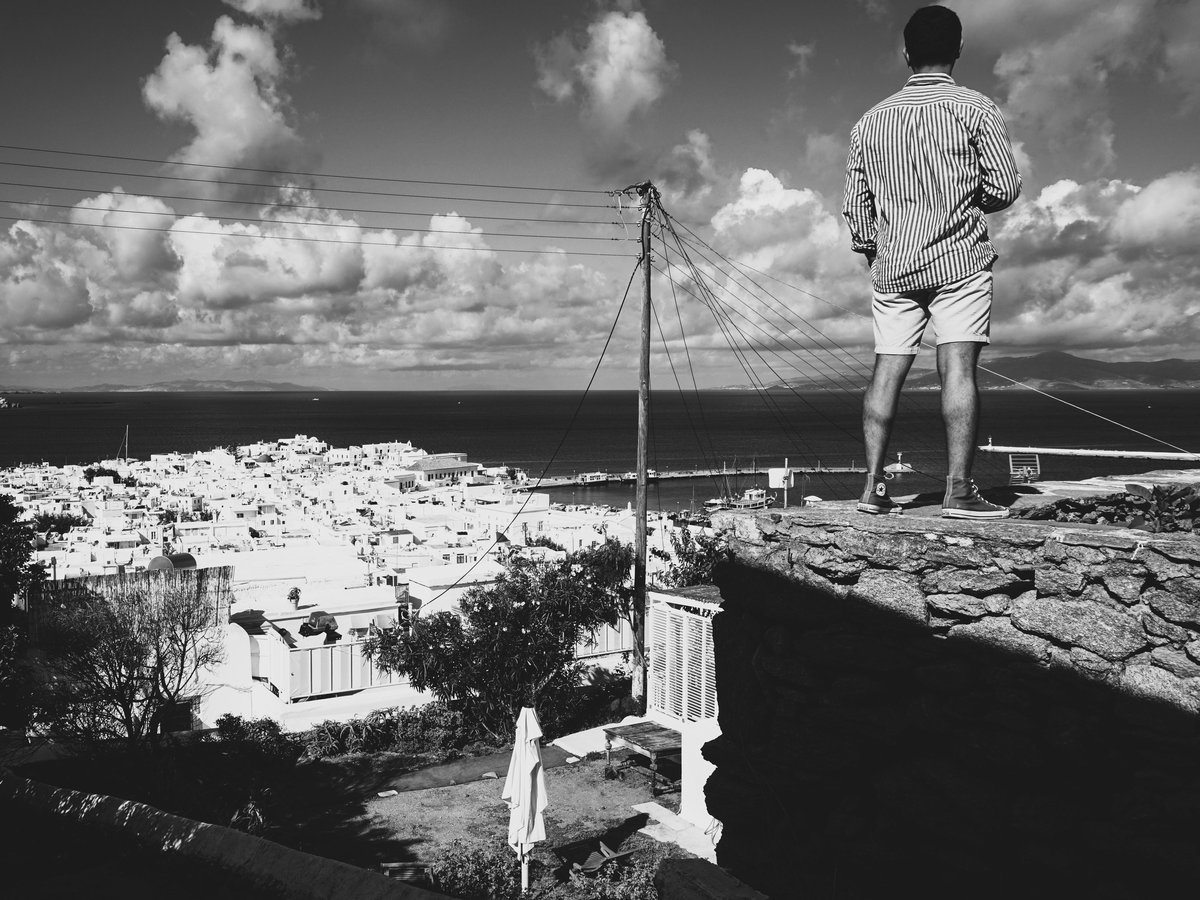
If you're coming for the scene, the beach clubs at Psarou, the late-night bars along Matoyianni Street, the sunset crowds at Little Venice, July delivers all of it at peak intensity. That said, you'll share the experience with roughly 100,000 other visitors on an island of about 10,000 permanent residents. Restaurant reservations that were optional in June become necessary. The narrow lanes of Chora fill shoulder-to-shoulder after dark. A souvlaki plate that cost a few euros in May might run nearly double in July.
Worth noting, the island still has quieter pockets. The inland village of Ano Mera, centered around the 16th-century Panagia Tourliani monastery, stays relatively calm even in peak season. South-coast beaches beyond Agrari tend to draw fewer day-trippers. And the 20-minute boat to Delos, the uninhabited UNESCO archaeological site, remains one of the best half-day trips in the Aegean. But if you want a quiet Greek island escape, July on Mykonos is not where you'll find it.
Why visit in July
- Near-zero rainfall and consistent sunshine. In a typical July, Mykonos records about 5mm of rain across the entire month, and many years see none at all. You can plan outdoor activities with near-total confidence.
- The Meltemi wind keeps temperatures at 29°C (84°F) rather than the 35°C-plus that mainland Athens endures in July. In the shade, with the breeze, it feels genuinely comfortable even at 2pm.
- Every beach club, restaurant, and nightlife venue operates at full capacity. Seasonal spots that close in October and don't reopen until May are all running, including the larger DJ-driven venues near Paradise Beach and Super Paradise.
- Sea temperature reaches about 24-25°C (75-77°F), the warmest of the year. Swimming is comfortable without any adjustment period, and snorkeling visibility near Delos and Rhenia island is at its best.
- Daylight lasts until nearly 9pm, with golden-hour light over Little Venice starting around 8:15pm. The late sunsets give you long, full days with no pressure to rush.
Worth knowing
- Crowds reach their annual peak. The island's resident population of roughly 10,000 swells past 100,000 in July, and the narrow lanes of Chora become shoulder-to-shoulder after 7pm.
- Hotel rates run 50-80% above the annual average, and popular properties in Chora, Ornos, and Platis Gialos often sell out 3-4 months ahead. Budget stays are scarce.
- The Meltemi wind, while cooling, can gust to 50-75 km/h and churn north-facing beaches like Panormos and Ftelia into rough surf. It also causes 2-3 ferry cancellations per month on the Delos route.
- Restaurant reservations in Chora become necessary for Friday and Saturday dinners. Walk-in seating at waterfront spots is largely gone by 9pm on weekends.
Best for
Think twice if
Hot, dry, and defined by the Meltemi wind. Daily highs average 29.1°C (84°F) and lows sit around 24.3°C (76°F), though the persistent north wind makes it feel cooler than the thermometer suggests. Rainfall is essentially zero, with the 5-year average showing about 5mm for the entire month and zero rainy days. Humidity stays around 62%, noticeable mostly on the rare still evenings when the wind drops. Skies are clear almost every day. The UV index runs high, typically 9-10, so unprotected skin can burn in about 15 minutes at midday.
Seasonal caution
- The Meltemi wind gusts to 50-75 km/h (force 6-7 Beaufort) on several days each July, turning north-facing beaches into rough surf zones and occasionally canceling ferry crossings to Delos. Check wind forecasts daily and plan beach choices around wind direction.
- UV index reaches 9-10 throughout July. Combined with water reflection on boat trips, this causes severe burns even on days that feel breezy and comfortable. Reapply sunscreen every 90 minutes, especially on the water.
Year-round climate
Averages from the last 5 years.
| Month | Avg high (°C) | Avg low (°C) | Rainfall (mm) |
|---|---|---|---|
| Jan | 15 | 12 | 56 |
| Feb | 14 | 11 | 38 |
| Mar | 16 | 12 | 36 |
| Apr | 19 | 14 | 36 |
| May | 22 | 17 | 16 |
| Jun | 27 | 22 | 5 |
| Jul | 29 | 24 | 5 |
| Aug | 29 | 24 | 3 |
| Sep | 26 | 22 | 4 |
| Oct | 22 | 19 | 24 |
| Nov | 20 | 16 | 51 |
| Dec | 16 | 13 | 64 |
Best things to do in July
Day trip to Delos archaeological site
cultureThe UNESCO-listed sacred island sits 20 minutes by boat from the old port in Chora. July's calm southern seas make the crossing reliable, and extended summer hours let you explore the Terrace of the Lions (7th-century BC marble originals now in the on-site museum, replicas along the Sacred Way), the House of Masks with intact floor mosaics, and the ancient theatre without the 3pm rush to catch the last boat back.
Calm seas and extended summer operating hours make July one of the most reliable months for the crossing. Boats run until late afternoon instead of the reduced spring schedule.Booking tipBuy tickets the evening before from the kiosk near the old port pier or online. The 9am and 10am departures sell out first. Bring water, a hat, and sunscreen. There is almost no shade on Delos.
South-coast beach hopping by water taxi
beachThe Meltemi blows from the north, which means the south-facing beaches stay sheltered and swimmable even on strong wind days. Water taxis connect Platis Gialos to Paraga, Super Paradise, Agrari, and Elia in 5-10 minutes each. You can hit 3-4 beaches in a day without renting a vehicle.
The Meltemi shelters south-coast beaches while north-facing shores like Panormos can be rough for days. Choosing south is the defining beach strategy of a July visit.Booking tipSunbed reservations at popular beach clubs should be made 1-2 days ahead for weekend visits. Water taxis run on a loose schedule from Platis Gialos pier starting around 10am.
Sunset at Little Venice and Kato Mili windmills
sightseeingSunset doesn't arrive until about 8:45pm in early July, casting long golden light across the waterfront houses of Mikri Venetia and the row of 16th-century Kato Mili windmills above. Grab a table at one of the waterfront bars by 7:30pm or watch from the walkway for free. The light on the white facades turns orange, then pink, then deep rose.
July has the latest sunsets of the year, around 8:45pm, and the most reliable clear skies for unobstructed golden-hour light over the Aegean.Morning swim at Agios Sostis beach
beachOne of the few undeveloped beaches left on Mykonos, with no sunbeds, no bars, and no music. The water is clear over sandy bottom, and the north-facing bay is usually calm in the early morning before the Meltemi picks up around midday. Bring your own shade, water, and snacks. Total quiet.
The Meltemi typically stays light before 11am in July, giving you a 3-4 hour window of calm conditions at this exposed north-facing beach that would be rough by afternoon.Booking tipNo facilities means no reservations needed. Arrive before 9am for the calmest water. The dirt road from Ano Mera takes about 15 minutes by car or ATV.
Evening walk through Chora's back lanes
nightlifeAfter dark, Chora's maze of whitewashed lanes turns into an open-air social scene. The area between Matoyianni Street and the Panagia Paraportiani church fills with galleries (including Rarity Gallery), cocktail bars, and small restaurants. The energy typically peaks around 11pm to midnight in July, and the labyrinth layout means you'll stumble onto something new each night.
All seasonal venues are open and the after-dark scene runs latest in July and August, often until 4-5am. The warm, dry air makes walking the lanes comfortable well past midnight.Visit Ano Mera and Panagia Tourliani monastery
cultureThe island's second settlement, about 7km inland from Chora, stays noticeably quieter than the coast even in peak July. The 16th-century Panagia Tourliani monastery has a carved marble fountain in its courtyard and a small museum of ecclesiastical art and vestments. The central plateia has a handful of tavernas where locals still outnumber visitors at lunch.
In July, coastal Mykonos hits maximum density. Ano Mera offers a genuine contrast, with pace and prices closer to what the rest of the island felt like 15 years ago.Full-day sailing trip around Mykonos and Rhenia island
boat tourSeveral operators run day trips that circle the island, stopping at otherwise-inaccessible coves on the south and east coasts, with a swim stop at uninhabited Rhenia (the island between Mykonos and Delos). Most trips include lunch on board and snorkeling gear. The water temperature sits around 24-25°C (75-77°F), warm enough for extended time in without a wetsuit.
July seas are among the calmest and warmest of the year, making full-day boat trips comfortable. Visibility for snorkeling near Rhenia can reach 25-30 meters on still mornings.Booking tipBook at least 3-4 days ahead. Smaller boats with 10-12 passengers tend to visit quieter coves than the larger catamarans.
What to eat in July
In season: fruit
Karpouzi (watermelon)
Cycladic watermelons peak in July, served chilled at nearly every taverna as a complimentary dessert course after the meal. You'll also find slices at beach kiosks across Ornos and Platis Gialos. The cold sweetness after a salty swim is one of July's simple pleasures.
Fresh figs (syka)
Early fig varieties begin ripening in late July on Mykonos. You'll see them at the small produce shops in Ano Mera before they show up in Chora, often alongside local thyme honey. When they appear together on a plate with kopanisti cheese, that is a peak Mykonos bite.
On menus now
Tomatokeftedes (tomato fritters)
Cycladic cherry tomatoes reach peak sweetness in July, and these fried fritters appear on nearly every menu in Chora. The best versions use onion, fresh mint, and a splash of ouzo in the batter. They arrive hot and crisp, with a soft, almost jammy center.
What to drink
Freddo espresso
Greek-style iced espresso, shaken over ice until frothy, is the island's default caffeine delivery in July heat. You'll see locals and visitors drinking 2-3 a day at the cafes along Matoyianni Street and the harbor. Served sweet (glykos), medium (metrios), or plain (sketos).
In markets
Kopanisti cheese
Mykonos's own PDO-protected soft cheese, peppery and tangy, traditionally made during the hot summer months when fermentation is fastest. Spread it on barley rusks (paximadi) with chopped Cycladic tomato for a Mykonian take on dakos. Most tavernas in Chora and Ano Mera carry it.
Louza
Mykonos's air-dried pork loin, seasoned with pepper and spices, sliced thin like Italian bresaola. It appears on meze boards island-wide in summer and pairs well with the local kopanisti cheese and a glass of cold Assyrtiko wine.
Regular events in July
Feast of Agia Marina (Panigiri)Free
A traditional panigiri (saint's day celebration) at the chapel of Agia Marina on the coast, with outdoor liturgy followed by local food, wine, and Cycladic folk music into the night. The atmosphere is distinctly local rather than tourist-oriented.
July 17Feast of Profitis Ilias (Prophet Elias)Free
Panigiri at the monastery of Prophet Elias on Mykonos's highest hill, about 340 meters above sea level. Local musicians play traditional Cycladic nisiotika songs, and the church serves loukoumades (honey puffs) and wine to attendees. The hilltop views of the island and surrounding Aegean are worth the climb even without the festival.
July 20Feast of Agia Paraskevi (Panigiri)Free
One of the larger saints' day gatherings on the Mykonos summer calendar, celebrated with traditional food, local wine, and Cycladic music in the area near Ano Mera village. The celebration often runs well past midnight. A good chance to see Mykonians celebrating their own traditions rather than catering to visitors.
July 26Best places this July
Little Venice (Mikri Venetia)
historic districtA row of 18th-century captains' houses built directly over the sea in western Chora, with their wooden balconies nearly touching the water at high tide. July's late sunsets make this the island's prime sunset-watching spot, with the light hitting the white and colored facades around 8:15-8:30pm. The waterfront bars fill by 7:30pm, but you can watch for free from the walkway.
ChoraDelos archaeological site
archaeological siteThe uninhabited island 2km southwest of Mykonos, considered the birthplace of Apollo and Artemis in Greek mythology. The site includes the Terrace of the Lions (7th-century BC), the House of Masks with intact floor mosaics, the ancient theatre seating 5,500, and a small but excellent on-site museum. UNESCO World Heritage since 1990. There is no shade and no food on the island. Bring both.
Panagia Paraportiani
landmarkFive interconnected chapels built between the 14th and 17th centuries, forming a whitewashed asymmetric structure in the Kastro neighborhood of Chora. Likely the most photographed building in the Cyclades. In July, arrive before 8am if you want a photo without 40 other people in the frame.
Kastro, ChoraAno Mera village and Panagia Tourliani monastery
village and monasteryThe island's second settlement, 7km east of Chora, with a central plateia shaded by trees and ringed by traditional tavernas. The 16th-century Panagia Tourliani monastery has a carved Tinian marble fountain, an ornate wooden iconostasis, and a small museum. In July, this is where you come to remember that Mykonos is a real place where people live, not only a resort.
Ano MeraArchaeological Museum of Mykonos
museumSmall but well-curated museum near the old port, with pottery and grave stelae from Delos and Rhenia dating to the 7th century BC. The notable piece is a large 7th-century BC pithos (storage jar) decorated with relief scenes of the Trojan War and the fall of Troy. A good Meltemi-day alternative when north beaches are blown out.
ChoraKato Mili windmills
landmarkA row of 16th-century stone windmills on the ridge above Little Venice, originally built to mill grain arriving by ship at the port below. Five still stand. They're illuminated after dark in July and serve as a good waypoint between dinner in upper Chora and sunset drinks at Little Venice below.
ChoraFokos Beach
beachA remote, undeveloped beach on the northeast coast reached by a bumpy dirt road from Ano Mera. No facilities, no sunbeds, no music. In July you might share it with 20-30 people at most. The Meltemi can make it rough, so check wind conditions before driving out. On a calm morning, it feels like a different island entirely.
northeast coast
Your packing checklist
Tick items off as you pack. Your progress saves in this browser.
All packed — have a great trip.
Insider tips
The Meltemi typically stays light before 11am. If you want to visit a north-facing beach like Fokos or Agios Sostis, go early and plan to relocate to a south-coast beach after lunch when the wind picks up. Locals do this routinely.
Delos tour boats from the old port sell out by mid-morning in July. Buy your tickets the evening before from the kiosk near the pier or through the official site. The 10am departure tends to have smaller crowds than the packed 9am boat.
Restaurants on the back lanes of Chora, particularly the area between the Skandinavian Bar and the Aegean Maritime Museum, tend to charge noticeably less than the waterfront spots while serving comparable or better food. You'll eat surrounded by locals and repeat visitors rather than cruise-ship day-trippers.
The KTEL Mykonos bus system runs from Fabrika Square in Chora to major beaches including Platis Gialos, Ornos, Elia, and Kalafatis. In July, frequency increases to every 15-20 minutes on main routes. The fare is a few euros per ride and saves you the cost and hassle of an ATV rental.
If you're visiting a church or monastery, including Panagia Tourliani in Ano Mera, cover your shoulders and knees. At 29°C it's easy to forget, but you'll be turned away at the door in beachwear. A sarong or light scarf handles this.
Avoid these mistakes
- Booking a north-coast hotel without researching Meltemi wind patterns. Beaches like Panormos, Ftelia, and Agios Sostis face directly into the prevailing July wind and can be unwimmable for 3-4 consecutive days. If guaranteed daily swims matter to you, stay near Ornos, Platis Gialos, or Psarou on the sheltered south coast.
- Scheduling the Delos day trip for your last day. Ferry cancellations from Meltemi wind happen 2-3 times per month in July. Put Delos early in your itinerary so you have a backup day if the crossing gets cancelled.
- Underestimating UV exposure on boat trips. The combination of direct July sun and water reflection causes severe burns, even on breezy days that feel comfortable. The wind masks how intensely the sun is hitting your skin. Reapply sunscreen every 90 minutes on the water.
- Arriving at waterfront restaurants in Chora without a reservation on Friday or Saturday evening. By 9pm, walk-in tables are gone at most popular spots. Book at least the day before for weekend dinners.
Practical tips for July
Book accommodation 3-4 months ahead for July stays, especially in Chora, Ornos, and Platis Gialos, where popular properties sell out by April. Ferry tickets from Piraeus or Rafina should be booked 2-3 weeks ahead on high-speed routes (the fastest crossings run about 2.5 hours). Mykonos airport (JMK) has seasonal direct flights from several European cities in July, but slots fill fast. Dress code on Mykonos is relaxed by day, though upscale beach clubs and some Chora restaurants expect smart-casual for evening dining. Swimwear is fine at beach tavernas but not appropriate in town. ATMs in Chora can run low on cash during peak weekends, so withdraw early in the day. Cards are widely accepted, but carry some euros for small beach kiosks and the KTEL bus. Pharmacies in Chora stock sun care products at premium prices, so bring your essentials from the mainland or home. Shops in Chora stay open late in July, often until 11pm or midnight, while Ano Mera businesses tend to close by 9pm. Scooter and ATV rentals are popular but the roads between Chora and the beaches are narrow and busy in July, so drive carefully, especially at night.
FAQ
Is July a good time to visit Mykonos?
July is the peak of Mykonos's summer season. The weather is hot, dry, and reliable, with average highs around 29°C (84°F) and essentially no rain. Every venue, beach club, and nightlife spot is open and running at full capacity. The trade-off is real, though. Crowds are at their annual maximum, hotel prices run 50-80% above the yearly average, and the Meltemi wind can rough up north-facing beaches for days at a time. If you want the full Mykonos experience and don't mind paying peak prices for it, July delivers. If you want similar weather with fewer people and better rates, June or September tend to be the smarter months.
What is the weather like in Mykonos in July?
Expect consistent sunshine, near-zero rain, and the Meltemi wind as a constant companion. Average highs reach 29.1°C (84°F) and lows sit around 24.3°C (76°F). Humidity is about 62%, which feels manageable when the wind is blowing. The Meltemi, a dry north wind, blows on most July days. It keeps the heat comfortable but can gust to 50-75 km/h and churn north-facing beaches into rough surf. Rain is almost unheard of. The 5-year average shows about 5mm for the entire month across zero rainy days.
Is Mykonos crowded in July?
Yes, significantly. July and August are the two busiest months on the island. Mykonos has a permanent population of around 10,000, and in July that number swells past 100,000 with tourists, seasonal workers, and day-trippers from cruise ships. Chora's lanes are packed after dark, popular south-coast beaches fill their sunbeds by late morning, and restaurant reservations become necessary rather than optional. Quieter spots still exist. Ano Mera village, remote east-coast beaches like Fokos and Merchia, and early mornings at north-coast beaches before the Meltemi picks up all offer some breathing room.
How far in advance should I book a hotel for Mykonos in July?
At least 3-4 months ahead for well-located properties in Chora, Ornos, or Platis Gialos. Budget options and smaller guesthouses fill even earlier, sometimes by March for peak July weeks. Last-minute availability typically means either high-end luxury suites at top rates or inconveniently located rooms far from the main beaches and town center. If you have specific dates and a preferred area, booking by March or April is the safest approach.
Is the Meltemi wind a problem in Mykonos during July?
It depends entirely on how you plan around it. The Meltemi keeps temperatures comfortable and the air dry, which is genuinely pleasant for walking around Chora and dining outdoors. But it can make north-facing beaches like Panormos and Ftelia too rough for swimming, sometimes for 3-4 days running, and it occasionally cancels the Delos ferry crossing. The south coast (Ornos, Platis Gialos, Psarou, Elia) stays sheltered. If you base yourself there and check wind forecasts daily, the Meltemi is more of a feature than a problem. If you ignore it and book a north-coast hotel, you might lose several beach days to blown-out surf.
Things to Do in Mykonos in July
 Free cancellation
 Mykonos: Brand-New Catamaran Cruise with Meal, Drinks & Transport
Day trip: 5 hours, free cancellation.
via Viator Free cancellation
 Catamaran Day & Sunset Cruises with meals Drinks and transportation
Day trip: 5 hours, free cancellation.
via Viator Free cancellation
 Mykonos Small Group Tour for Cruise Passengers — Port Pickup
Day trip: 4 hours, free cancellation.
via Viator Free cancellation
 Local Tour with Cruise/Hotel Pick-Up(Small Group or Private)
Day trip: 3.5 hours, free cancellation.
via Viator Free cancellation
 Mykonos Shore Excursion with Pickup from Cruise Ship Terminal
Day trip: 4 hours, free cancellation.
via Viator Free cancellation
 Small-Group Half-Day Tour in Mykonos
Day trip: 4.5 hours, free cancellation.
via ViatorFind a flight to Mykonos
Live fares to Mykonos appear here once cookies are accepted.
Last verified by automated review (v1.7.2) on . What is automated review?