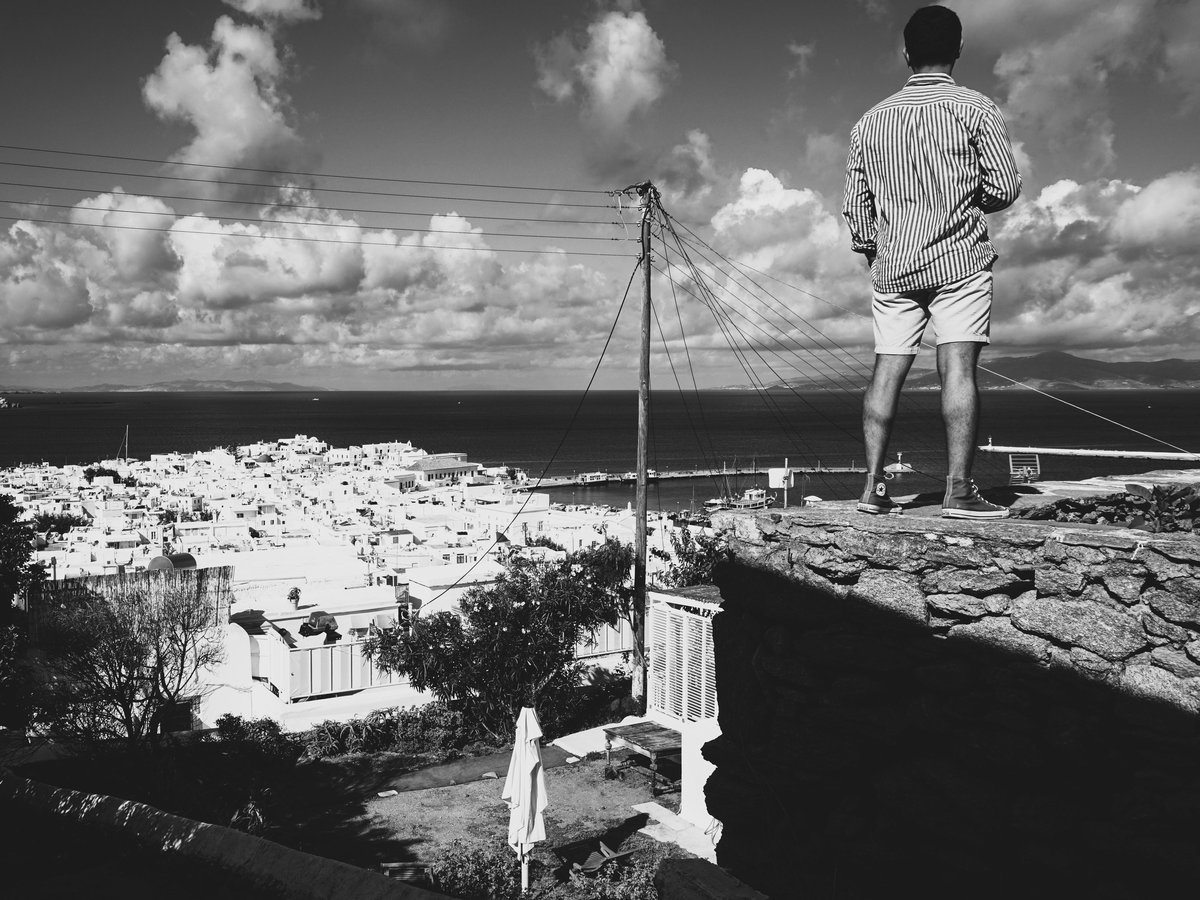
Mykonos has been Greece's party island since the 1960s, when the first wave of international bohemians landed on its shores. The nightlife still runs on that reputation, though the crowd has shifted from artists to bottle-service tourists over the past 15 years. Things tend to follow a distinct rhythm here. Sunset drinks in Little Venice start around 7 PM, the bars along Matogiannia Street fill up by 11 PM, and the bigger clubs don't hit their stride until 2 or 3 AM. Peak season runs from mid-June through early September, and during those months the island's population of about 10,000 residents swells to over 100,000. You'll find a mix of Greek weekenders from Athens, European holiday groups, and a long-established LGBTQ+ scene that has shaped the island's identity for decades. Worth noting, Mykonos currently skews more commercial than its reputation might suggest. The small, scrappy beach bars of the 1990s have largely given way to polished operations with international DJ lineups and 20-euro cocktails. That said, the old Chora backstreets still hold a few spots where you can drink raki with locals and hear Greek pop drifting out of open doorways past 4 AM.
The Bar Scene in Mykonos Town and Beyond
The cocktail bar scene in Mykonos clusters around two areas. Matogiannia Street in Chora is the main artery, a narrow pedestrian lane where bars sit shoulder-to-shoulder for about 400 meters. Most open around 9 PM and stay full until 2 AM. Cocktails here typically run 15 to 22 euros, with some places pushing closer to 28 for premium spirits. The mood is loud, social, and unapologetically tourist-facing. You'll hear Top 40, deep house, and the occasional Greek pop remix bleeding between doorways. Little Venice is the other anchor. The waterfront bars here are famous for sunset, and they earn the hype. You sit at the edge of the Aegean with waves occasionally splashing against the stone terrace below. By 7 PM in July, every seat faces west. Drinks cost roughly the same as Matogiannia, sometimes a few euros more for the view. After dark, the energy in Little Venice tends to mellow. It becomes more of a wine-and-conversation spot than a party starter. For wine specifically, Mykonos does not have a deep wine bar culture compared to Athens or Thessaloniki. A handful of spots in Chora pour Greek varietals from Santorini, Nemea, and Crete, and an Assyrtiko by the glass might cost 10 to 14 euros. You'll find these tucked into the quieter lanes south of the main strip. Rooftop bars exist but are less common than you might expect, given the island's low-rise architecture. A few hotels in Chora offer terrace bars with views over the town's whitewashed rooftops and the harbor. These tend to attract a slightly older, better-dressed crowd and often require a reservation during August. As for dives, a couple of the old-school spots near the port still serve cheap Mythos beer and ouzo to locals who have been coming for 30 years. The floors are sticky and the music is whatever the owner feels like playing. They close when the last person leaves.
Clubs on Mykonos, from Beach Parties to Big Rooms
The club scene on Mykonos splits between two locations. The beach clubs at Paradise Beach and Super Paradise Beach have been drawing crowds since the 1970s, and they remain the island's signature party experience. During peak season, the beach parties start in the afternoon, around 4 PM, and build through sunset into full-scale club nights that can run until 7 or 8 AM. Cavo Paradiso at Paradise Beach has hosted international headliners for over 30 years, booking DJs from the house, techno, and EDM circuit. Entry fees there can range from free on slower weeknights to 40 euros or more for marquee events, and that price sometimes includes a drink. Super Paradise Beach tends to attract a mixed crowd, with a strong LGBTQ+ presence that has been part of the beach's identity since the 1980s. The music leans toward house and progressive, and the dress code is essentially swimwear during the day transitioning to resort casual by evening. In Chora itself, the clubs sit along or near the harbor and the Matogiannia strip. These tend to be smaller than the beach venues, holding maybe 300 to 500 people. The music varies by night. Monday and Tuesday are typically the quietest. Thursday through Saturday is when the bigger names play, and Sunday can be surprisingly strong because many weekend visitors extend their trips. Dress codes are loose by European standards. Most places expect closed shoes and a shirt, but Mykonos is not Ibiza's Pacha. Smart casual works almost everywhere. Sneakers are fine at most venues. Greek clubbers from Athens, who make up a significant share of the weekend crowd from June through September, tend to arrive at clubs around 1:30 to 2 AM. If you show up at midnight, you might find yourself in a half-empty room. The real peak is typically 2:30 to 4 AM. Bottle service is common at the higher-end spots and can start around 300 euros for a basic bottle, reaching well into four figures for premium champagne.
Live Music on an Island That Runs on DJs
Mykonos is not really a live music destination. The island's identity is built around DJ culture, and that is where most of the booking budgets go. That said, live music does exist in smaller pockets. Several tavernas and restaurants in Chora bring in acoustic acts during dinner service, typically a guitarist and vocalist performing Greek folk standards and contemporary laika. These tend to run from about 9 PM to midnight, and you'll find them more often in the quieter streets away from Matogiannia. No cover charge for these. You eat, you drink, the music happens around you. During the summer months, the municipality of Mykonos occasionally stages cultural events at open-air venues, including performances of traditional Cycladic music. These are worth catching if you happen to overlap with one. Check local listings at the Mykonos Town Hall or the island's cultural association pages, as schedules tend to appear only a few weeks in advance. Greek pop and laika remain what locals listen to. On any given Friday night in July, you might hear Stelios Kazantzidis or Despina Vandi coming from a car radio near the port. The clubs play international house and techno, but Greek music still fills the gaps. A few of the late-night spots in Chora switch to Greek hits after 3 AM, once the tourist-facing portion of the evening winds down. Mind you, if you're looking for a serious live jazz or rock scene, Mykonos is not the island for it. Athens is a 2.5-hour ferry ride or a 30-minute flight away, and its Exarchia and Gazi districts have what Mykonos lacks in that department.
Nightlife neighborhoods
-
Matogiannia and the Chora Bar Strip
Narrow pedestrian lanes packed with bars, each spilling music and crowds into the alley. The sound of ice in shakers mixes with 6 different genres bleeding through open doorways. Warm light from overhead bulbs reflects off whitewashed walls. It smells like cologne, spilled cocktails, and grilled souvlaki from the gyro stand at the corner.
- Best for
- Pre-club drinks, bar-hopping on foot, groups of friends who want variety within a 5-minute walk
- Standouts
- Skandinavian Bar has been a fixture on the strip for decades and remains one of the most recognized names in Chora nightlife.
-
Little Venice
Cocktails at the waterline with the Aegean 2 meters below your feet. The sunset hour is genuinely beautiful. Spray from the waves mists your ankles if you sit at the front tables. After dark, the pace slows and the conversations get longer. Candlelit tables, the smell of salt air, and the sound of water lapping against stone.
- Best for
- Couples, sunset drinks, a slower start to the evening before heading to the Matogiannia strip or the clubs
- Standouts
- Several well-known waterfront cocktail bars line the stretch, most operating since the 1990s or earlier.
-
Paradise Beach
The original Mykonos party beach, still going strong after 50-plus years. By mid-afternoon in July, the bass from the beach clubs carries across the sand. The smell of sunscreen and sea salt mixes with cigarette smoke. Bodies everywhere. It transitions from beach party to open-air club as the sun drops.
- Best for
- All-day-to-all-night partying, international DJ sets, groups who want to dance in the sand and stay until sunrise
- Standouts
- Cavo Paradiso sits on the clifftop above the beach and has hosted some of the biggest names in electronic music since the early 1990s.
-
Super Paradise Beach
Historically the LGBTQ+ beach, still welcoming to everyone but retaining that identity. The crowd is more mixed than Paradise, and the energy tends to be warmer, less bottle-service-oriented. The water is clear turquoise in the shallows, and the DJ booth sits close enough to the shoreline that you can dance with your feet wet.
- Best for
- LGBTQ+ travelers, anyone looking for a friendlier beach party atmosphere, daytime-into-evening sessions
- Standouts
- The main beach bar operation has changed hands and names over the years but remains the social hub of the cove.
-
The Port and Harbour Area
Late-night spillover territory. After 3 AM, when some Chora bars wind down, people drift toward the port. A few late-night cafes and snack spots stay open, and you'll see groups sitting on the harbor wall eating gyros at 4 AM with the fishing boats bobbing nearby. The smell of diesel and frying oil. Quiet by party standards, but it has a distinct 4 AM character.
- Best for
- Post-club decompression, late-night food, people who want to wind down rather than keep going
- Standouts
- No single standout venue here. The appeal is the informality and the late-night food options.
Safety after dark
Mykonos is generally safe at night by Mediterranean standards, and violent crime against tourists is rare. That said, a few things are worth keeping in mind. Taxis on Mykonos are famously scarce, especially between midnight and 4 AM during peak season. The island has a limited fleet, roughly 30 to 40 licensed cabs, for a population that can exceed 100,000 in August. Hotel transfers and pre-booked rides are more reliable than flagging one down on the street. Some venues and restaurants have arrangements with specific drivers.
Drink awareness matters here as it does anywhere. Mykonos bars are generally legitimate operations, but the sheer volume of tourists during July and August attracts opportunists. Watch your drinks in crowded venues, and be cautious with strangers buying rounds. Overcharging is the more common issue. Check prices before ordering, especially at beach clubs where a cocktail can quietly cost 25 euros.
The walk between Chora and the beaches is not practical at night. Paradise Beach is about 6 kilometers from Mykonos Town, and the roads are dark with no sidewalks. Do not walk it. Arrange transport before you go out. Several beach clubs run shuttle services, and these tend to be more reliable than the public bus after midnight.
Scams are relatively low-level on Mykonos. The most common is the unlicensed taxi or transfer driver who quotes a flat rate well above the metered fare. Ask your hotel what the standard fare should be. For context, a metered cab from Chora to Paradise Beach might cost 15 to 20 euros, depending on time of night. If someone quotes 50, walk away.
Pocket theft happens in crowded bar areas, particularly on the Matogiannia strip during peak hours. Keep valuables in front pockets or a crossbody bag.
Practical tips
- Cover charges
- Most bars in Chora have no cover charge. Clubs vary widely. Entry to the bigger beach clubs during headline DJ events can run 30 to 50 euros and sometimes includes one drink. On quieter nights, entry might be free or 10 to 15 euros. Prices often appear on the club's social media pages a few days before the event.
- Tipping
- Greece does not have the American-style tipping culture. At bars, rounding up or leaving 1 to 2 euros per round is appreciated but not expected. At sit-down venues, 5 to 10 percent on the total is standard. Many places add a small cover charge for bread and water at the table, typically 1 to 3 euros per person, which is normal in Greece and not a scam.
- Getting around at night
- Pre-book transfers through your hotel or a local service. The public bus from Mykonos Town to Paradise Beach runs until around midnight during summer, but after that you'll need a taxi, shuttle, or private transfer. ATV and scooter rentals are common on the island, but driving one after drinking is both dangerous and illegal. The roads are narrow, poorly lit, and full of other drivers in the same condition.
- When to go out
- The Mykonos night unfolds in stages. Sunset drinks from 7 to 9 PM in Little Venice. Dinner around 9:30 to 10:30 PM. Matogiannia bars from 11 PM to 1:30 AM. Clubs from 1:30 AM onward, peaking around 3 AM. If you arrive at a club before midnight, you will likely be one of very few people there. Friday and Saturday are the biggest nights, but Mykonos in July and August treats every night like a weekend.
- Dress code
- Mykonos is casual by European club standards. For Chora bars, anything goes. For clubs, most places expect closed-toe shoes and a shirt, but you will not need a blazer or heels unless you're aiming for a specific VIP table. Beach clubs during the day are swimwear territory. By evening, linen pants and a button-down or a summer dress fit the room. Avoid sportswear at the nicer spots.
- Drink prices and what to order
- Cocktails in Mykonos bars run 14 to 25 euros depending on the venue and the spirit. Beer is cheaper, with a Mythos or Fix lager costing 6 to 10 euros. If you want to drink like a local, order a tsipouro or raki with ice. These grape spirits cost less than cocktails, typically 5 to 8 euros, and are what many Greek islanders drink when they go out. Wine by the glass ranges from 8 to 15 euros at most bars.
FAQ
What time do clubs open and close on Mykonos?
Most clubs in Mykonos Town open around midnight, but they stay nearly empty until 1:30 or 2 AM. Peak hours tend to fall between 2:30 and 4:30 AM. Many clubs stay open until 6 or 7 AM during high season, from late June through August. Beach clubs like those at Paradise Beach start earlier, around 4 PM for the afternoon party, and can run through the night on event days.
Is Mykonos nightlife expensive compared to other Greek islands?
Mykonos is consistently the most expensive island in Greece for nightlife. Cocktails average 15 to 22 euros in Chora, compared to 8 to 12 euros on islands like Naxos or Paros. Club entry can reach 40 to 50 euros for headline events, while comparable nights on Ios or Corfu might cost 10 to 20 euros. Bottle service starts around 300 euros and can climb well above 1,000 euros at the top venues.
Is Mykonos a good destination for LGBTQ+ nightlife?
Mykonos has been one of Europe's leading LGBTQ+ destinations since the 1970s. Super Paradise Beach has historically been the focal point, and several bars in Chora remain welcoming and LGBTQ+-oriented. The island hosts Pride events during the summer months. The scene is well-integrated rather than segregated, so most venues on the island are friendly regardless of orientation.
Do I need to make reservations at Mykonos bars and clubs?
For most Chora bars, no reservation is needed. You walk in or wait a few minutes for space. For beach club events with headline DJs, buying tickets in advance through the venue's website or social media is a good idea, as popular nights can sell out during August. VIP tables and bottle service almost always require a reservation, especially on Fridays and Saturdays from mid-June through early September.
When is the best month for Mykonos nightlife?
July and August are the peak months, with the largest crowds, the biggest DJ bookings, and every venue operating at full capacity. Late June and early September still offer strong nightlife with slightly smaller crowds and somewhat lower prices. May and October are shoulder season. Some bars stay open, but many clubs close or operate only on weekends. The island largely shuts down for nightlife from November through April.
How do I get back to my hotel after a night out in Mykonos?
Taxis are scarce on Mykonos, with roughly 30 to 40 licensed cabs serving the whole island. Pre-arranged hotel transfers are the most reliable option. Some beach clubs offer shuttle buses back to Mykonos Town, typically running until 3 or 4 AM. The public bus system stops around midnight. Ride-hailing apps have limited availability on the island. Ask your hotel about their recommended transport before heading out, and always confirm a return plan before the evening starts.
Last verified by automated review (v1.7.2) on . What is automated review?