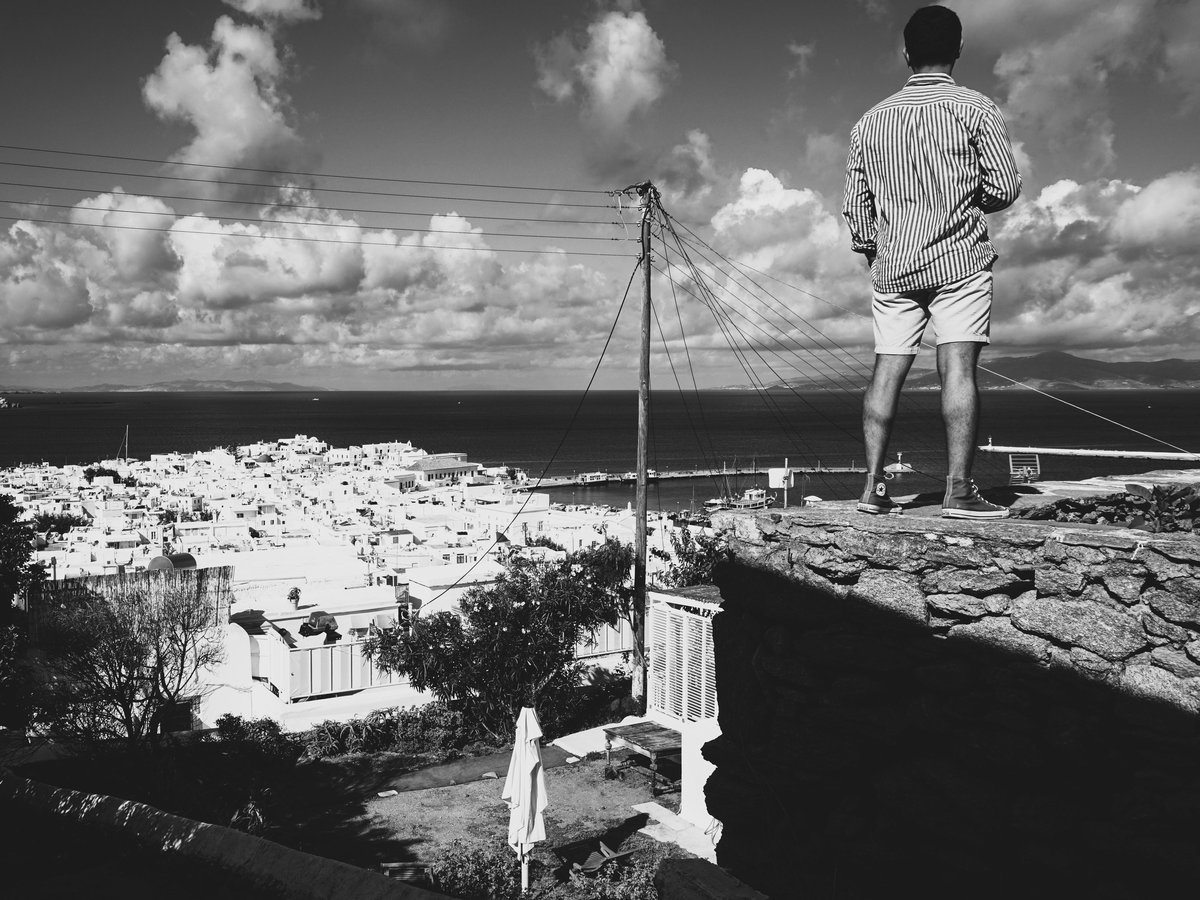
Mykonos has a reputation as a 500-euro-a-night island, and to be fair, the beach clubs and waterfront cocktail bars do their part to earn it. But the Cycladic light that hits the whitewashed walls of Chora around 7pm costs nothing. Neither does the 14th-century Panagia Paraportiani, or the labyrinth of marble-paved lanes that locals still navigate by memory, or the long crescent of sand at Elia Beach. The island's geography tends to reward anyone willing to walk. From the Kato Mili windmills perched above Little Venice to the monastery courtyard of Panagia Tourliani in Ano Mera, roughly 7km inland, the finest parts of Mykonos sit in open view with no cover charge. Greek law guarantees free public access to every beach on the island. That means around 25 stretches of coastline are yours for a towel and some sunscreen. You might spend nothing all day and still come away with salt-crusted skin, a mental catalog of 15 shades of blue you never knew existed, and the fading sound of evening bells bouncing off the stone walls of Kastro.
Free attractions
-
Panagia Paraportiani
This whitewashed church is likely the most photographed building in the Cyclades, and it has been standing in the Kastro quarter since the 14th century. It's 5 chapels fused into one asymmetrical mass over a few hundred years. The plaster surface catches the late-afternoon light in a way that shifts from warm cream to pale amber depending on the hour. Free to enter when open, though visiting hours tend to be limited and somewhat unpredictable. Worth noting, the exterior is the main draw anyway.
Kastro, ChoraChurch -
Kato Mili (Lower Windmills)
The row of 5 thatched-roof windmills above Little Venice has been an island landmark since the 16th century, when they ground grain from ships arriving at the port below. You can't enter them, but the terrace they sit on is freely accessible and offers wide views south toward Delos and Rhenia. The wind up there can be fierce in July and August. Sunset turns the straw caps a deep gold. Go before 7pm in summer to beat the crowd that gathers with phones raised.
Above Alefkandra, ChoraLandmark and viewpoint -
Mikri Venetia (Little Venice)
A strip of medieval houses built with their wooden balconies cantilevered directly over the Aegean. The buildings date to the 18th century, when wealthy ship captains chose this spot for its defensive sightlines. Walking the narrow waterfront promenade is free, and waves slap the stone foundations at high tide. The salt mist here leaves a fine residue on your skin within minutes. This stretch runs roughly 200 meters from the Scarpa quarter toward the windmills.
Alefkandra, ChoraWaterfront promenade -
Laografiko Mouseio Mykonou (Folklore Museum of Mykonos)
Housed in an 18th-century captain's residence in the Kastro area, this small museum has been run by the Mykonos Folklore Preservation Society and has traditionally offered free admission. The collection includes Cycladic textiles, ceramics, old nautical instruments, and a reconstructed 19th-century Mykonian kitchen. It currently opens from April through October, though hours can vary by season. The ground-floor rooms still smell faintly of aged wood and linen.
Kastro, ChoraMuseum (free admission) -
Spiti tis Lenas (Lena's House)
A preserved middle-class Mykonian home from the 19th century, maintained as a branch of the Folklore Museum near Tria Pigadia. Free to enter when open. The rooms are furnished with the original beds, lace curtains, wooden chests, and hand-embroidered linens. It feels more like walking into someone's grandmother's house than visiting a museum. The house gives you a sense of how a merchant family on a small Cycladic island lived around 1850, down to the ceramic washbasin and the iron stove.
Tria Pigadia, ChoraMuseum (free admission) -
Archaiologiko Mouseio Mykonou (Archaeological Museum of Mykonos)
The Archaeological Museum sits near the old port and holds pottery, grave stelae, and small sculptures from the neighboring island of Rhenia, where the Athenians relocated graves from Delos during a purification in 426 BC. Its most notable piece is a large 7th-century BC pithos depicting the fall of Troy. Standard admission currently runs around 4 euros, but Greek state museums offer free entry on the first Sunday of each month from November through March, and on select holidays including May 18 (International Museum Day) and October 28 (Ohi Day). Worth planning around if your visit falls in the off-season.
Old Port area, ChoraMuseum (free on select days) -
Panagia Tourliani Monastery
This 16th-century monastery sits in the central square of Ano Mera, the island's only inland village, about 7km east of Chora. Free to enter, with a carved marble fountain in the courtyard and a painted wooden iconostasis inside the church attributed to Florentine craftsmen. The courtyard garden is one of the few genuinely green spaces on this dry island, with potted bougainvillea and old cypress trees offering shade. Mind you, modest dress is expected. Long pants or a sarong and covered shoulders will keep you from being turned away at the door.
Ano MeraMonastery and garden -
Plateia Manto Mavrogenous (Manto Square)
The main harbor square in Chora, named after the heroine of the 1821 War of Independence who was born on Mykonos. A bronze bust of Manto stands at the center, surrounded by a few palm trees and stone benches. It currently serves as the island's main gathering point, where the bus station, taxi rank, and ferry-ticket offices converge. Not exactly a park in the leafy sense, but it's the closest thing to a public green in a town built on bare rock. Pelicans from the harbor sometimes wander through.
Harbor, ChoraPublic square -
Plateia Tria Pigadia (Three Wells Square)
A small square in Chora named after 3 stone-capped wells that have been here since at least the 17th century. The wells once supplied much of the town's drinking water. Today it's a quiet spot surrounded by whitewashed walls and bougainvillea, slightly removed from the main shopping lanes. A local legend claims that unmarried women who drink from the wells will find a husband. The square sits near Lena's House and makes a natural stop on a walking circuit through the backstreets.
ChoraPublic square and historic site -
Ano Mera Village Square (Plateia Ano Meras)
The open square in front of Panagia Tourliani is the social center of this 2,000-person village. A few tavernas line the edges, and older residents still gather under the trees in the late afternoon. The square has a distinctly different pace from Chora. No cruise-ship crowds, no thumping bass from beach bars. The monastery bell marks the hours. If you walk here from Chora on the main road, the route takes about 90 minutes and passes through scrubby hillside dotted with dry-stone walls and the occasional goat.
Ano MeraVillage square and green space
Free activities
-
Walking the Chora Labyrinth
Mykonos Town was deliberately built as a maze to confuse raiding pirates, and the layout still works on first-time visitors. The narrow lanes are paved with whitewashed stone, with painted lines marking the edges. You'll pass hand-painted wooden doors, cats asleep on blue shutters, and the occasional shrine tucked into a wall niche with a flickering oil lamp. Start from the old port and aim roughly toward Kastro. Getting lost is the point. The town measures about 800 meters across, so you can't stay lost for long.
ChoraWalking route -
Matoyianni Street Window Shopping
The main commercial lane runs from Manto Square into the heart of Chora. It's paved in smooth stone, lined with designer boutiques, jewelry shops, and galleries that stay open until midnight in peak season. Browsing is free, and the street has an energy after 9pm that feels more like a promenade than a shopping strip. The smell of grilled octopus and thyme drifts from the side alleys. Matoyianni connects to a web of smaller lanes that eventually lead to Little Venice if you keep trending west.
ChoraMarket and promenade -
Sunset Watching at Little Venice
The west-facing waterfront at Alefkandra has a sunset that tends to draw a crowd by 7:30pm in summer. You don't need to buy a drink at the bar terraces to watch. The rocky ledge below the windmills and the stone quay along the waterfront are both free vantage points. On calm evenings the sea turns from turquoise to copper in about 20 minutes. The sound of waves against the old foundations mixes with conversation in 6 or 7 languages. By mid-September the sun sets noticeably earlier, around 7pm, and the crowds thin out.
Alefkandra, ChoraScenic experience -
Beach Day at Agios Sostis
A sandy beach on the north coast, about 6km from Chora, with no sunbed vendors, no music, and no beach bar. That said, the taverna of Kiki's sits near the top of the path down, though you'll still need to bring your own water and shade. The beach faces north, which means it catches the meltemi wind in July and August. On calm days the water is clear enough to see the sandy bottom at 3 meters. Agios Sostis tends to attract locals and repeat visitors who prefer their beaches quiet.
North coastBeach (free access) -
Beach Day at Fokos
One of the most remote beaches on Mykonos, reachable by a partially unpaved road on the northeast coast. There are no facilities at all. The beach is a mix of sand and pebble, backed by low dunes and dry scrubland. Fokos has a wild, windswept character that feels closer to a minor Cycladic island than to the Mykonos of the brochures. Bring everything you need, including shade. The drive from Chora takes roughly 25 minutes, and the final stretch can be rough on low-clearance rental cars.
Northeast coastBeach (free access) -
Coastal Walk from Chora to Agios Stefanos Beach
A mostly flat walk of about 2km along the coast north of the old port, passing the small chapel of Agios Charalambos and a few rocky swimming spots along the way. Agios Stefanos is a sheltered, family-friendly beach with views across to Tinos, roughly 12km to the northeast. The walk takes about 30 minutes at a relaxed pace. In the early morning the path is almost empty, and the water along the rocks has that glassy, deep-green quality that disappears once the wind picks up after noon.
North of ChoraWalking route and beach -
Old Port Fish Market Area
The small fish market near the old port of Chora still operates in the early mornings, roughly 7am to 9am, when the boats come in. Watching the catch get sorted and weighed on the stone counters is free and surprisingly engaging. You'll see red mullet, octopus, squid, and the occasional swordfish. The smell is briny and immediate. The adjacent waterfront has a row of pelicans, descendants of the original Petros, who tend to loiter near the fishmongers hoping for scraps. It's a 3-minute scene that feels distinctly Mykonian.
Old Port, ChoraMarket and local culture
Free events
-
Panigiri (Patron Saint Festivals)
Various dates, mainly summer and autumn (check Orthodox calendar)Greek islands celebrate their patron saints with open-air feasts that are traditionally free for anyone who shows up. On Mykonos, the largest panigiri tends to be for Agios Artemios on October 20, and for Panagia Tourliani at the Ano Mera monastery in late August. These festivals typically feature live folk music, communal dancing, and free food including roasted goat, louza (cured pork), and local wine served from large jugs. The atmosphere is warm and chaotic in the best way. Locals and visitors mix freely. Dates are tied to the Orthodox calendar and can shift slightly by year.
Various churches and village squares across Mykonos -
International Museum Day Free Admission
May 18 annuallyOn May 18 each year, Greek state museums offer free entry to mark International Museum Day. On Mykonos this applies to the Archaeological Museum, which normally charges around 4 euros. The museum is small enough to see thoroughly in about 45 minutes, and the 7th-century BC pithos with scenes from the Trojan War is worth the visit alone. If you happen to be on the island in mid-May, this is an easy addition to a morning walk through Chora.
Archaeological Museum of Mykonos, Old Port area -
First Sunday Free Museum Entry (Winter Season)
First Sunday of each month, November through MarchGreek state museums, including the Mykonos Archaeological Museum, offer free admission on the first Sunday of every month from November through March. Mykonos in winter is a different island altogether. The population drops from a summer peak of around 40,000 visitors per day to a few thousand residents. The museum is quiet enough that you might have the gallery to yourself. The off-season weather is cool but often sunny, with temperatures around 12 to 15 degrees Celsius.
Archaeological Museum of Mykonos -
Mykonos Municipal Summer Cultural Events
June through September (schedule varies annually)The Municipality of Mykonos has organized free outdoor cultural events during the summer months, including open-air film screenings, traditional music performances, and small exhibitions in public spaces around Chora. The schedule tends to be announced locally in late May or June. Events are typically held in Manto Square or near the old port. Worth checking with the municipal cultural office or local notice boards on arrival, as the program varies by year and is not always published far in advance.
Manto Square and public spaces, Chora
The Best Free Beaches on Mykonos
Every beach in Greece is public by law, which means no one can charge you to lay a towel on the sand. That said, the experience varies wildly depending on which beach you pick. The south-coast party beaches like Paradise and Super Paradise have wall-to-wall sunbed operators, and finding a free patch of sand requires arriving before 9am. The north and east coasts are a different story. Agios Sostis, about 6km north of Chora, has no commercial infrastructure at all. The sand is coarse and golden, the water is clear, and the only sound tends to be the wind. Fokos, on the northeast, is even more remote. You'll need a vehicle to reach it, and the last stretch of road is unpaved. Kapari, a small cove near Agios Ioannis, requires a short scramble down a rocky path but rewards you with relative solitude even in August. Ftelia, on the north coast near the wetland at the head of a shallow bay, is popular with windsurfers and kitesurfers. The meltemi wind blows hard here from roughly late June through mid-September, which keeps the sunbathing crowd away but creates good conditions for board sports. The beach is wide and sandy, and the walk from the road takes about 5 minutes. Elia Beach, on the south coast, stretches for nearly a kilometer. The eastern end is clothing-optional and tends to be less commercialized than the western section near the access road. Merchia, between Korfos and Vathia Lagada, is a small pebble beach that sees very few visitors because there's no road access. The 15-minute walk from the nearest track keeps it quiet. For families, Ornos and Agios Stefanos both have gentle, shallow entries and calmer water because they face away from the prevailing north wind. Ornos gets busy in peak season, but Agios Stefanos, about 2km north of Chora, stays relatively relaxed.
Practical Tips for a Zero-Budget Day on Mykonos
Water is the biggest hidden cost on a hot Cycladic island. Bottled water from the mini-markets in Chora currently runs about 0.50 to 1 euro for 500ml, and at beach bars it can reach 3 euros. Bringing a refillable bottle saves real money over a week. Tap water on Mykonos is technically safe but tastes strongly of desalination. Many locals drink it, mind you, but most visitors prefer bottled. The bus network, operated by KTEL Mykonou, connects Chora to Ano Mera, Elia, Kalafatis, Ornos, Platis Gialos, and the airport. A single ticket currently costs around 1.80 to 2.60 euros depending on the route. Not free, but far cheaper than a taxi from Chora to a south-coast beach, which can run 15 to 20 euros one way in summer. Chora's public restrooms are near the old port and at Manto Square. They're free and reasonably maintained. Beach restrooms are typically attached to a taverna and expected to be used by customers, though enforcement tends to be relaxed outside peak hours. Timing matters. Mykonos between mid-July and late August is at full capacity, with cruise ships discharging 3,000 to 5,000 passengers per day into Chora. The free attractions are still free, but the lanes are shoulder-to-shoulder by 11am. Early June and September offer the same weather with roughly a third of the crowd. The sea is warmer in September, usually around 24 degrees Celsius, compared to about 21 in early June. For food on a tight budget, the bakeries along the back lanes of Chora sell spinach pies (spanakopita) for around 2.50 to 3 euros. Not free, but close to the cheapest meal on the island. The supermarkets near Fabrika Square stock bread, tomatoes, and feta for a picnic that comes in under 5 euros per person.
Free Viewpoints and Photo Spots
The windmill terrace at Kato Mili offers the widest panorama in Chora, covering Little Venice, the old port, and the open sea toward Delos. It's accessible 24 hours and has no fence or gate. The light is best between 5pm and 7pm, when the low sun rakes across the white buildings below. Boni's Windmill (Anemomylos tou Boni), located on a hill above the bus station, gives a 360-degree view of Chora and the surrounding coastline. The windmill itself has been restored by a local agricultural preservation group and is sometimes open to visitors. Even when it's closed, the hilltop terrace is freely accessible and tends to be less crowded than Kato Mili because it requires a short uphill walk. The rooftop terrace of the Kastro area, near Panagia Paraportiani, looks west across the sea. On clear days you can make out Syros, about 20km to the northwest. The light at this spot during the blue hour, roughly 30 minutes after sunset, turns the whitewashed surfaces a deep violet-blue that photographs well without any filter. From the path between Chora and Agios Stefanos, about halfway along, there's an elevated section where the coastline of Tinos becomes visible across the strait. The strait between Mykonos and Tinos is about 2km wide at the narrowest point, and in the early morning you can sometimes hear the ferry horn echoing off the water before you see the boat. In Ano Mera, the monastery forecourt of Panagia Tourliani looks south over the terraced fields toward the center of the island. It's a quieter vantage point with a different character from the coastal views. The landscape here is brown and dry in summer, green and surprisingly lush in late February and March after the winter rains.
FAQ
Are all beaches on Mykonos really free to access?
Yes. Greek law (Article 24 of the Constitution and the 2001 Coastal Zone Act) guarantees free public access to every beach in the country. No one can legally charge you to enter a beach or sit on the sand. Sunbed and umbrella rental is a separate commercial service. You can always lay your own towel on any part of the beach. In practice, some popular south-coast beaches like Paradise and Super Paradise have sunbed operators covering most of the sand, but they cannot prevent you from placing your towel in an open spot. The north-coast beaches like Agios Sostis and Fokos have no commercial operators at all.
Is the Folklore Museum of Mykonos really free?
The Folklore Museum in the Kastro area of Chora has traditionally offered free admission. It is run by the Mykonos Folklore Preservation Society rather than the Greek state, so its operating schedule and policies can change. It has generally been open from April through October, with limited hours. Lena's House near Tria Pigadia, which functions as a branch of the Folklore Museum, has also traditionally been free. Worth confirming hours locally on arrival, as small volunteer-run museums on the islands sometimes adjust their schedules without much advance notice.
When can I visit the Archaeological Museum for free?
The Archaeological Museum of Mykonos follows the Greek state museum free-admission policy. Entry is free on the first Sunday of each month from November through March, and on several national and international holidays including March 6 (Melina Mercouri Day), April 18 (International Monuments Day), May 18 (International Museum Day), the last weekend of September (European Heritage Days), and October 28 (Ohi Day). During the summer high season from April through October, standard admission applies at around 4 euros.
Can I walk everywhere in Mykonos Town without paying for transport?
Chora is compact and almost entirely pedestrianized. The town measures roughly 800 meters across, and you can walk from the old port to Kato Mili windmills in about 10 minutes. For destinations outside Chora, distances add up quickly. Agios Stefanos beach is a manageable 2km walk north. Ano Mera is about 7km east on a road with no shade, which is fine in spring or autumn but punishing in July heat. For the south-coast and north-coast beaches, you'll likely need the KTEL bus, which runs regular routes from Chora for 1.80 to 2.60 euros per ticket.
What is the best time of year to visit Mykonos on a budget?
Late May, early June, and September tend to offer the best balance. The weather is warm, with daytime temperatures around 25 to 28 degrees Celsius. The sea is swimmable, especially by September when it reaches about 24 degrees. Accommodation prices in these shoulder months can be 40 to 60 percent lower than in the July to August peak. The free attractions are all open, and the crowds in Chora are manageable. October is still warm but some museums and smaller businesses begin closing for the season. Winter, from November through March, is very quiet, with fewer than 10,000 people on the island. Most tourist-facing businesses close, but the free museum days apply and the walking is pleasant on mild days.
Last verified by automated review (v1.7.2) on . What is automated review?