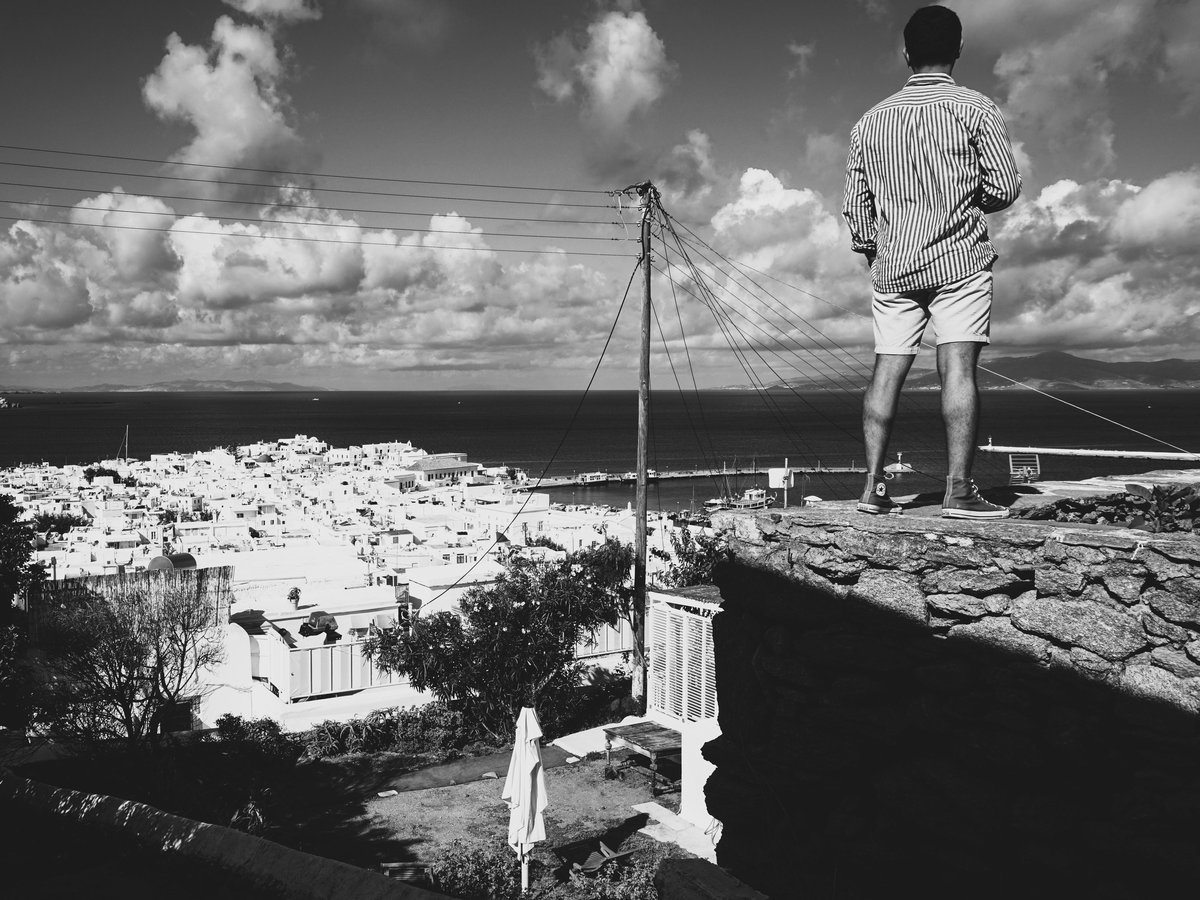
Mykonos Town, known locally as Chora, sits on the western coast of the island and accounts for roughly 80% of the accommodation visitors book. The town fans out from the Old Port in a tangle of narrow whitewashed lanes that were deliberately built to confuse pirates. Most neighborhoods bleed into each other with no hard borders. You'll walk from the Kastro quarter into Little Venice in about 90 seconds without realizing you crossed a line. Beyond Chora, the island scatters a handful of coastal settlements along the southern shore, each anchored to a beach. Ornos sits 2.5 km south. Platis Gialos is another kilometer past that. Ano Mera, the only real inland village, lies 8 km east and feels like a different island entirely. The KTEL bus network connects most beach areas to Chora's Fabrika Square station, with service running roughly every 30 minutes in peak season. Taxis are famously difficult to get between 11 pm and 2 am, which is worth factoring into where you sleep.
Neighborhoods
-
Chora (Mykonos Town Center)
The old town is a low-rise labyrinth of whitewashed walls, blue-painted wooden doors, and bougainvillea spilling over balconies at head height. The ground is paved with uneven stone slabs that get slippery after rain. It tends to be quiet in the morning, almost eerily so, and then the noise builds steadily from around 6 pm as the bars along Matogianni Street open their sound systems. By midnight the lanes near Skandinavian Bar carry a steady hum of music and conversation that bounces off the walls. The architecture is Cycladic cubic, rarely more than two stories, with the occasional Catholic chapel squeezed between shops.
- Best for
- First-time visitors, couples who want to walk everywhere, and anyone who'd rather stumble home from dinner than call a taxi at 1 am
- Key streets
- Matogianni Street is the main pedestrian shopping spine, running roughly north-south through the center. Enoplon Dynameon runs parallel and stays quieter. Kalogera Street has the higher-end boutiques and a few galleries. Manto Mavrogenous Square, at the harbor end of Matogianni, is the default meeting point and taxi stand.
-
Little Venice (Mikri Venetia)
A row of 18th-century merchant houses built directly over the water along the western seafront, with wooden balconies that hang over the waves. The buildings are painted in faded reds, blues, and ochres rather than the standard white. Wind hits hard here. The tramountana comes in from the north and sea spray reaches the bar tables during rough weather. Sunset crowds pack the area from about 7:30 pm in summer, and the handful of cocktail bars charge accordingly. Caprice Bar and Galleraki have had the prime spots for decades. The sound is mostly waves against stone, clinking glasses, and the mechanical clicking of hundreds of phone cameras.
- Best for
- Photographers, sunset watchers, and couples willing to pay a premium for rooms with direct sea views and the sound of waves at night
- Key streets
- The waterfront promenade has no formal street name that anyone uses. Locals say 'Little Venice' and point. The path connects to the Paraportiani church area to the north and runs south toward the famous row of windmills on Kato Mili hill. The narrow lane behind the seafront houses, accessible from several gaps between buildings, has a few quieter tavernas.
-
Kastro (Castle Quarter)
The oldest part of Chora sits on its northern edge, built around the remains of a medieval fortress. The lanes are even narrower here than in the main town, some barely wide enough for two people to pass. Whitewash is thicker and rougher on the walls, applied in layers over centuries. The Church of Paraportiani, five chapels fused into one asymmetric white mass, anchors the quarter's northern tip. This area stays quieter than the Matogianni zone even at peak hours. Cats tend to congregate around the church steps. The architecture feels less polished than central Chora, more crumbling plaster and exposed stone lintels.
- Best for
- History-oriented travelers, architecture enthusiasts, and anyone who wants to sleep in the old town without the noise of the bar district
- Key streets
- The path from Paraportiani church loops south past the Folklore Museum and connects to Little Venice. The lane running east from the church toward Lena's House museum is one of the most photographed in the Cyclades. Ag. Anargiron street passes several small chapels.
-
Ano Mera
The inland village sits 8 km east of Chora at a slightly higher elevation, centered on Plateia Ano Meras, a dusty square with a few tavernas and the 16th-century Panagia Tourliani monastery. The pace here is noticeably slower. Roosters still wake you up. The architecture shifts to more traditional farmhouse style, with dry stone walls and flat roofs. Restaurants serve dishes like louza (cured pork) and kopanisti (spicy soft cheese) that you won't find on most Chora menus. Prices for a taverna meal tend to run 30 to 40% lower than waterfront Chora.
- Best for
- Budget-conscious travelers with a rental car or scooter, families who want quiet evenings, and anyone who finds the Chora scene exhausting
- Key streets
- Plateia Ano Meras is the village's single focal point. The monastery sits on its eastern edge. A handful of lanes radiate out, but the village is small enough to walk end to end in 10 minutes.
-
Ornos
A purpose-built resort area centered on a sheltered, south-facing bay about 2.5 km from Chora. The beach is sandy and shallow for roughly 30 meters out, which is why families gravitate here. The built environment is mostly mid-range hotels and apartment complexes from the 1990s and 2000s, whitewashed but more modern and boxy than anything in Chora. A small commercial strip runs behind the beach with minimarkets, a pharmacy, and several Greek-international restaurants. Noise drops sharply after midnight. The water in Ornos Bay stays calmer than the northern beaches because the headlands block the meltemi wind.
- Best for
- Families with children under 10, travelers who want beach proximity without the party scene, and anyone using Mykonos as a base for day trips to Delos
- Key streets
- The main road from Chora terminates at the beach, where a small roundabout marks the center of the settlement. The beachfront path runs east past sunbed concessions. Boats to Delos and to other southern beaches depart from the small pier on the bay's western side.
-
Tourlos (New Port Area)
Tourlos sits 2 km north of Chora, built around the island's new port where the large ferries and cruise ships dock. The area has seen rapid hotel development since the port moved here in the early 2000s. The architecture is newer and less picturesque than Chora. A coastal road connects Tourlos to town, walkable in about 25 minutes along a path that can feel exposed in the afternoon heat. The main appeal is proximity to the ferry terminal and lower accommodation prices. A few fish tavernas along the waterfront serve grilled octopus and fried calamari at prices closer to 12 to 15 euros per plate, compared to 18 to 22 in Little Venice.
- Best for
- Budget travelers, anyone catching an early morning ferry, and visitors who prefer to stay outside the main town's density
- Key streets
- The coastal road to Chora runs along the waterfront and has a narrow pedestrian path. The port area itself has a taxi rank and a bus stop with service to Fabrika Square every 20 to 30 minutes.
-
Agios Stefanos
A small, quiet beach settlement about 3 km north of Chora, visible across the bay from the Old Port. The beach faces west and gets sunset light. The sand is coarse and the water deepens gradually. A handful of tavernas and small hotels line the road behind the beach. The area feels residential in a way that Ornos does not. Greek families still own homes here. Noise is minimal after 10 pm. The old airport runway used to end nearby, and though the current airport is on the eastern side of the island, you'll still hear occasional prop planes on approach.
- Best for
- Couples seeking a quieter base within walking distance of Chora, older travelers who want calm evenings, and repeat visitors who've outgrown the town center
- Key streets
- The single road from Tourlos curves past the beach. A footpath along the coast connects to Tourlos in about 15 minutes on foot. The beach has one main access point near the cluster of tavernas.
FAQ
Is it possible to walk between neighborhoods in Mykonos Town?
Chora is compact enough that walking covers everything. Little Venice, Kastro, and the Matogianni area are all within a 5 to 10 minute walk of each other. The lanes are pedestrian-only, so there's no alternative to walking once you're inside the old town. Wear flat shoes with grip, because the marble-like stone paving gets slick, especially near the port where fishermen hose down the walkways in the morning.
Which area should I choose if I want to avoid the party noise at night?
Ano Mera is the quietest option by a wide margin, though you'll need a car or scooter. Within closer range, Ornos and Agios Stefanos are both noticeably calmer after midnight. In Chora itself, the Kastro quarter and the lanes north of Paraportiani tend to be the least affected by bar noise, though sound carries unpredictably through the narrow alleys. Avoid anything within 200 meters of Matogianni Street or the Little Venice bar strip if sleep before 2 am matters to you.
Do I need a car if I stay in Chora?
Not for daily life in town. Chora is entirely walkable and cars can't enter the old town lanes. If you want to reach beaches like Elia, Kalafatis, or Super Paradise on your own schedule, a rental car or ATV helps. The KTEL bus covers Ornos, Platis Gialos, Paradise Beach, and Ano Mera, but service drops to roughly hourly after 8 pm. Taxis are scarce during peak evening hours. Many visitors rent an ATV for 25 to 40 euros per day, though the roads get narrow and the meltemi wind can make two-wheelers tricky on exposed stretches.
When does the meltemi wind affect where I should stay?
The meltemi blows strongest from mid-July through late August, typically from the north. Beaches and accommodations on the northern coast, including Agios Stefanos and parts of Tourlos, get hit directly. Southern beaches like Ornos, Platis Gialos, and Psarou are more sheltered. Within Chora, Little Venice catches significant spray on strong meltemi days. If you're visiting in that window and are sensitive to wind, staying on the southern side of town or in Ornos will make a noticeable difference.
What is the best area for eating well on a moderate budget?
Ano Mera has the lowest restaurant prices on the island, with full taverna meals for 2 running 40 to 60 euros including wine. In Chora, the lanes behind Matogianni, particularly around Kalogera and the streets near Fabrika Square, have tavernas where a main course stays in the 14 to 18 euro range. Avoid the waterfront restaurants in Little Venice and the Old Port for budget meals. Those locations charge 20 to 28 euros for a main course, and portions are not necessarily larger. The gyro shops near Fabrika Square sell solid pork gyros for 4 to 5 euros and stay open past 3 am.
Last verified by automated review (v1.7.2) on . What is automated review?