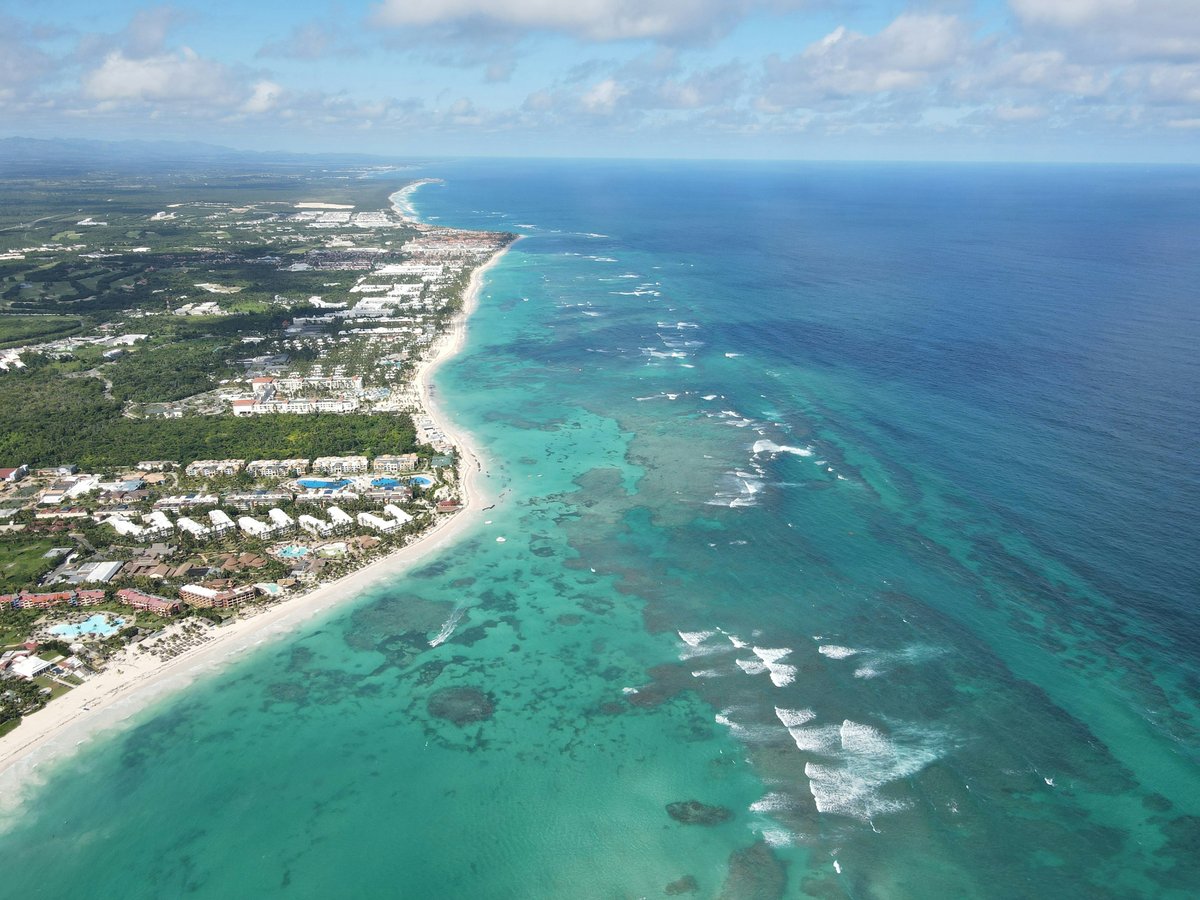
Best Time to Visit Punta Cana, by Season
Punta Cana's average high swings just 3.3°C across the year, from February's 27.0°C to September's 30.3°C. The real seasonal variation is what you pay, who you share the beach with, and how much weather risk you accept.
Published
1 Punta Cana's 3.3-Degree Range: Why the Calendar Matters More Than the Thermometer
Step off the plane at Punta Cana International in February and the air hits your face at 27.0°C. Come back in September and the reading is 30.3°C. The entire annual swing in average daily highs spans 3.3 degrees Celsius, less than one setting on your hotel thermostat.
That 3.3-degree band fools first-timers, but the 26-kilometer resort strip from Cabeza de Toro north through Bavaro to Uvero Alto lives by seasonal rhythms that go well beyond the thermometer. December through April, when highs hold between 27.0°C and 27.8°C, the all-inclusive corridors along Bavaro Beach fill to capacity. Walk El Cortecito village in January and you will hear more Russian and German than Spanish at the sidewalk tables. Visit the same strip in September and half the beachfront kitchens run skeleton crews.
The calendar determines whether your all-inclusive room costs double for functionally the same weather. Whether Saona Island's catamaran excursion launches into calm Caribbean water or choppier swells kicked up by a tropical disturbance 500 kilometers to the east. Whether Scape Park's Hoyo Azul cenote trail feels pleasantly warm or like a steam room.
May through October carry thicker, more humid air alongside those 29°C-to-30°C highs. Atlantic hurricane season runs June 1 through November 30, peaking in September. The walk from Arena Gorda's sand to your resort lobby feels twice as long in August as it does in March.
December through April, trade winds blow drier across the eastern coast. Mornings at Playa El Cortecito carry a crispness that seems impossible for the tropics. The air smells of salt and dry palm thatch, not the heavy wet-green scent that hangs over Cap Cana's marina in the summer months.
October's 30.0°C and March's 27.6°C feel like the same afternoon when you're ankle-deep in the Caribbean, but October costs half as much at resorts along the Bavaro strip.
That 3.3-degree gap amounts to less than one setting on your hotel thermostat.
2 December Through February: Peak Season Buys You 27°C and the Biggest Crowds
The breeze off the Caribbean hits differently in January. The air reaches 27.1°C on average, but there is a dryness to it that makes the sand at Bavaro Beach feel cooler under your feet than the number suggests. December, January, and February form Punta Cana's coolest quarter, with average highs of 27.5°C, 27.1°C, and 27.0°C. These are also the three months when the resort strip operates near capacity.
North American holiday travel drives December rates highest, particularly the two weeks around Christmas and New Year's Eve. January brings the snowbird influx from the northeastern United States and eastern Canada. February adds Valentine's Day couples and Presidents' Day weekenders. The pool deck at a typical Bavaro all-inclusive might cycle through 200 or more guests a day during this window.
This is the best quarter for excursions that depend on calm seas. Catamaran trips to Saona Island run daily from Bayahibe, about 90 minutes southwest of Bavaro. The water between the mainland and Saona tends to be flatter December through March, which matters on the 40-minute open-water crossing. Humpback whale-watching tours to Samaná Bay run mid-January through late March, when an estimated 1,500 to 2,000 whales gather to breed and calve. The 3-hour drive from Punta Cana to Samaná makes it a full-day commitment, but it is likely the most memorable wildlife encounter in the Dominican Republic.
Closer to the resorts, peak season is when El Cortecito village feels most alive. Restaurants like Restaurante Yadah and El Rincón del Marisco fill up after 7 PM in January. The smell of grilled lobster and mofongo drifts from the beachfront kitchens along Playa El Cortecito.
If you insist on peak season, aim for mid-January through early February. The holiday rush has faded, February's 27.0°C average high is the year's absolute coolest, and you avoid the Presidents' Day bump at month's end.
Humpback whale-watching tours to Samaná Bay run mid-January through late March, when 1,500 to 2,000 whales gather to breed and calve.
3 March and April: The Shoulder Window That Delivers Peak Weather Without Peak Prices
Walk the sand at Bavaro Beach in late March and you notice the crowd before the climate. Beach chairs have gaps between them along the Arena Gorda strip. The breakfast line at your all-inclusive moves in 5 minutes, not 20. March at 27.6°C average high delivers nearly identical conditions to February's 27.0°C. The difference of 0.6°C would need a laboratory thermometer to register on the sand.
March and April form Punta Cana's most underrated travel window. April warms to 27.8°C, still well below the May threshold of 28.9°C where the feel of the air starts to shift. Hurricane season is two months out. The trade winds still blow dry across the Cap Cana coastline, and the championship courses at Corales and Punta Espada play fast on firm fairways.
The resorts along the Bavaro strip see lighter bookings across these two months, with exceptions. Semana Santa drives a surge each year, and North American spring break can spike prices in mid-March. The weeks between those holidays tend to be the quietest along the 26-kilometer resort corridor. Late March through mid-April, outside the Easter window, delivers peak-season conditions at shoulder-season rates.
This is a strong window for Scape Park at Cap Cana. Hoyo Azul, the limestone cenote at the park's interior, sits cooler in April's 27.8°C than it will in August's 30.0°C. The trails down to the swimming hole are drier than they will be once the wetter months arrive. The zipline across the jungle canopy is more comfortable in March's drier air, and the views across to Juanillo Beach tend to be clearer than in the humid summer.
For families, April is the natural pick. April's 23.4°C overnight low matches January's figure exactly. For couples without school constraints, late March at 27.6°C tends to offer even better value, with conditions nearly identical to the February peak that commands a premium along the Bavaro corridor.
April's 23.4°C overnight low matches January's figure exactly.
4 May Through July: The Heat Arrives and the Resorts Breathe
You feel the shift the first morning in May. The air is thicker when you step onto the balcony at your Bavaro resort, and the palm fronds hang still over the pool deck. Punta Cana's average high leaps from April's 27.8°C to May's 28.9°C, a 1.1-degree jump that is the largest single-month increase on the calendar.
May, June, and July trace a steady climb. May averages 28.9°C, June reaches 29.6°C, July hits 29.7°C. By July, the air barely cools after sunset. The breeze off the water at Macao Beach still cuts through the heat in the mornings, but by noon the sand is too hot for bare feet.
Atlantic hurricane season opens June 1. Mind you, early-season storms rarely target the eastern Caribbean directly. June and July sit in the lower-risk portion of the season, well before the September peak. That said, a tropical storm watch can appear on any June or July forecast for Hispaniola.
This three-month stretch marks the start of Punta Cana's low season, and the rates reflect it. Resorts along the Bavaro corridor and south into Cap Cana drop rates to fill rooms. The pool deck at the Hard Rock Hotel, which can feel like a Las Vegas convention in January, turns quiet enough to claim a cabana without a 7 AM towel sprint.
Tour operators along Bavaro run smaller groups from May through July because demand is lower. A snorkeling trip to the reef off Cabeza de Toro might carry 8 guests instead of 30. Scape Park's Hoyo Azul cenote is warm enough for a long swim, and the trails see fewer visitors than any other season.
For budget-conscious couples, late May tends to be the sweet spot before the June 1 hurricane season start. May's 28.9°C is warm but a full degree below June's 29.6°C. For solo travelers who want heat and solitude, July at 29.7°C delivers Punta Cana at its most languid, with the sand at Arena Gorda still warm at 9 PM.
The pool deck at the Hard Rock Hotel, which can feel like a Las Vegas convention in January, turns quiet enough in July to claim a cabana without a 7 AM towel sprint.
5 August Through October: The Hottest Quarter, the Cheapest Rates, and the Real Tradeoff
The afternoon sun in September hits the pool deck like a weight. The concrete along Bavaro Beach is too hot to walk on barefoot before 5 PM. September's average high of 30.3°C is the year's peak, and the air holds that heat after dark with an overnight low of 25.7°C.
August, September, and October form Punta Cana's hottest corridor. The three months stay within 0.3°C of each other on highs, from August's 30.0°C through September's 30.3°C to October's 30.0°C. August posts the warmest overnight low of the year at 25.9°C. The sand along Arena Gorda still radiates warmth at 9 PM.
This is the heart of hurricane season. September is statistically the most active month for Atlantic tropical cyclones, and Punta Cana sits on Hispaniola's eastern edge, exposed to storms tracking west. Worth noting that direct hits on Punta Cana's coast remain relatively rare. Hurricane Fiona brought significant flooding to the eastern Dominican Republic in September 2022, but at lower intensity than the region's worst-case scenarios. If you book September, confirm your resort's rebooking policy for named storms.
This is Punta Cana's absolute low season, and the pricing reflects it. All-inclusive packages at Bavaro resorts that cost double in December sit near their annual floor. Reservations at restaurants outside the all-inclusives, places like AmaLuna and Chez Gourmet, are easier to secure. Spa services at Cap Cana properties sometimes run promotional rates during this quarter.
For budget travelers who can flex dates, late October tends to be the strongest play. October's 30.0°C has started retreating from September's 30.3°C, and hurricane activity is winding down. Indigenous Eyes Ecological Park, the private reserve near Puntacana Resort, is at its most lush after months of summer rain. The 12 freshwater lagoons sit full, and the forest canopy filters the 30°C air down to something pleasant on the shaded trails.
All-inclusive packages at Bavaro resorts that cost double in December sit near their annual floor in September.
6 November: The One Month Between Storm Season and Holiday Prices
There is a particular quality to a Punta Cana morning in November. The sun sits lower than it did in August. The trade winds off the Atlantic carry a drier edge that you notice on the walk to the beach. The average high has dropped to 28.7°C, down 1.3°C from October's 30.0°C. That 1.3-degree decline is the sharpest single-month fall on the calendar.
November is Punta Cana's pivot month. Atlantic hurricane season officially ends November 30, though activity typically tapers by mid-month. High season, with its December benchmark of 27.5°C and full resorts, is still weeks from arriving. Low-season rates along the Bavaro corridor often extend through the first three weeks of November before Thanksgiving travel pushes demand upward.
The water temperature off Bavaro Beach still hovers around 28°C to 29°C in November, warmer than the air at dawn. Morning dives at sites like the Astron wreck near Cabeza de Toro benefit from calm transition seas and warm water. Scape Park at Cap Cana is at its best in November. The summer rains have greened the trails, Hoyo Azul's water level is high, and the 28.7°C air temperature makes the hike down to the cenote comfortable rather than punishing.
The restaurant scene outside the all-inclusives is easier to navigate in November. Soles Beach Club and Veni Vidi Vici in the Bavaro area take walk-ins more readily than they do in February. The stretch of sand between Playa El Cortecito and Arena Gorda, which felt shoulder-to-shoulder in peak season, has room to breathe.
For couples or solo travelers, the two weeks before Thanksgiving offer the best intersection of weather, crowds, and price that Punta Cana delivers all year. November's 24.5°C overnight low is 1.4°C cooler than August's 25.9°C. Warm enough for open-air dining at Cap Cana's marina, cool enough that you sleep well with the balcony door cracked at a Bavaro resort.
At 28.7°C, November runs 1.2°C warmer than December but 1.6°C cooler than September's 30.3°C.
7 The Verdict: Four Travelers, Four Different Best Months
Stand at the water's edge on any Punta Cana beach and the Caribbean is warm enough to walk straight in, hovering between 26°C and 29°C year-round. The question was never whether February's 27.0°C or September's 30.3°C would make or break a beach trip. It was about what comes with each month's price tag, risk profile, and crowd level.
For the budget traveler, late October is the window. October's 30.0°C has started retreating from September's peak. Hurricane season is winding down across the eastern Caribbean. Resort rates along the Bavaro corridor sit near their annual floor. You trade heat and residual storm risk for the lowest prices of the year, plus near-empty pools and excursion boats to Saona Island carrying a fraction of their January capacity.
For families, early April delivers the strongest package. April's 27.8°C average high lands within a degree of peak-season conditions, and its 23.4°C overnight low matches January's reading exactly. School calendars line up with Semana Santa breaks. Hurricane season is two months away. Scape Park and the beaches at Macao are comfortable at April temperatures without the February crowds. The runner-up is late March at 27.6°C, if your spring break window falls early.
For couples who want quiet, mid-November before Thanksgiving is the pick. November's 28.7°C sits in the center of the annual range. Low-season pricing along Bavaro Beach tends to extend through the first three weeks. The restaurant scene at El Cortecito and Marina Cap Cana is accessible without advance reservations, and the dive sites off Cabeza de Toro are at their calmest.
For weather purists who accept peak-season pricing, mid-January through mid-February delivers the year's minimum at 27.0°C. This window avoids the December holiday premium and the late-February spring break ramp. It is also the window for humpback whale-watching excursions from Samaná Bay, running mid-January through late March.
Punta Cana's full annual high-temperature range spans 3.3°C, from February's 27.0°C floor to September's 30.3°C ceiling.
Last verified by automated review (v1.7.2_onboard-punta-cana-flagship-2026-09-14) on . What is automated review?